Unlocking the Past the Vintage Collectors Guide to Determining the Value of Your Old Steamer Trunk: appraisal and value basics
Unlocking the Past the Vintage Collectors Guide to Determining the Value of Your Old Steamer Trunk research should start with identification, condition, provenance, and item-specific market evidence. Use this guide to compare the signals that matter before paying for a formal appraisal or deciding whether to sell.
Old steamer trunk value checklist
Steamer trunks compress the romance of grand tours and ocean crossings into a single, sturdy box. They were the go-to luggage from roughly the 1850s to the 1930s, and they survive in attics, barns, and basements by the millions. Yet not all trunks are created equal. Some are decorative and common; others are rare artifacts that command four or five figures. If you’re a collector or simply curious about that old trunk you’ve inherited, this guide will help you identify what you have, understand what drives value, and decide whether to conserve, restore, sell, or keep.
Know What You Have: Types, Timelines, and Features
Trunks evolved with travel. Knowing the form and era immediately narrows value and desirability.
Common forms:
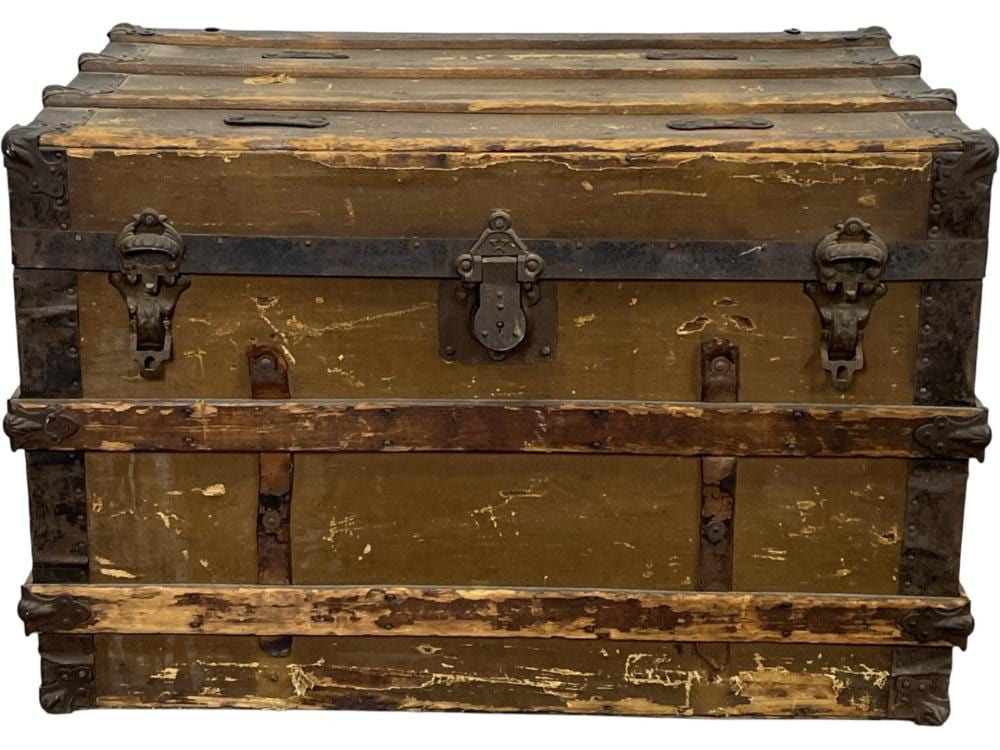
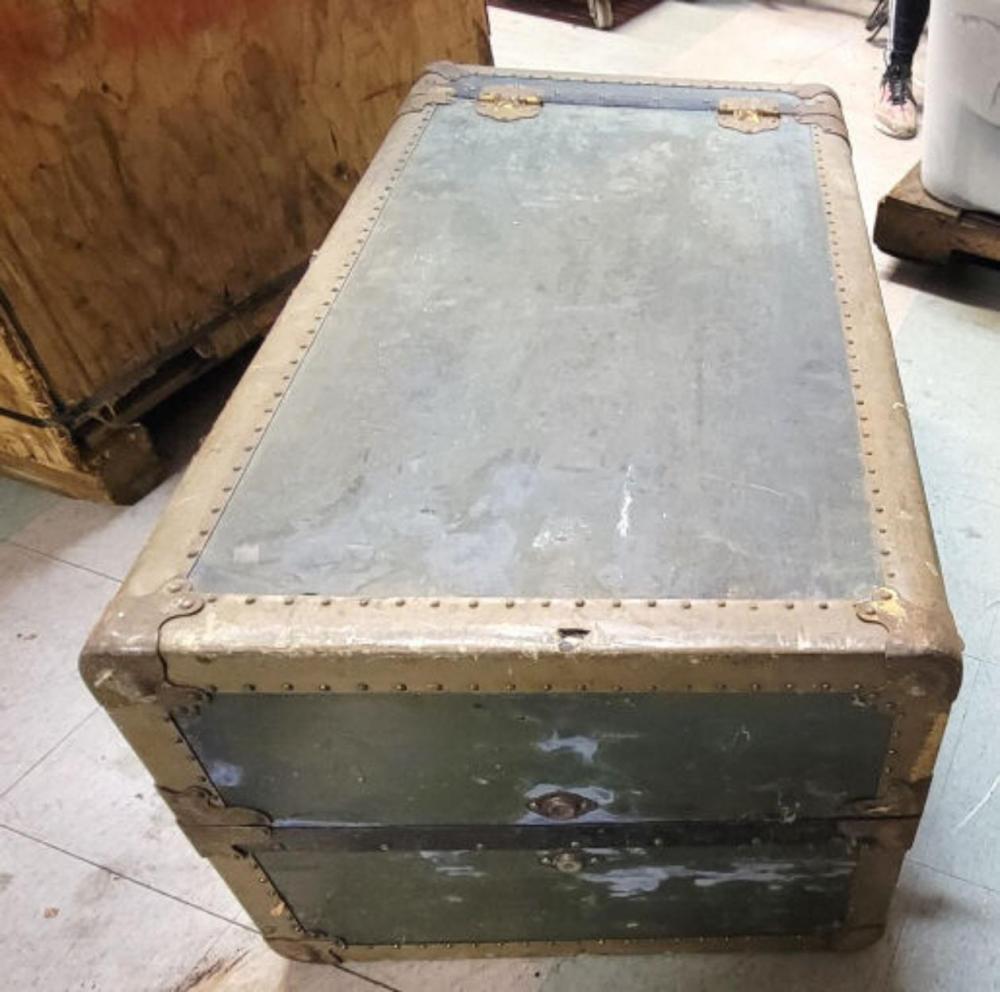
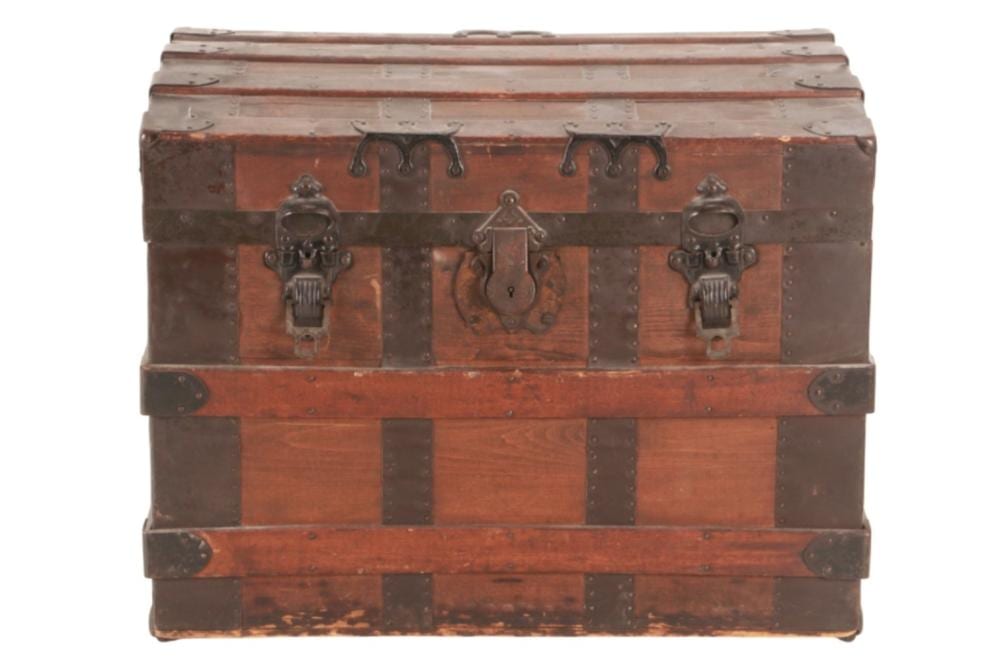
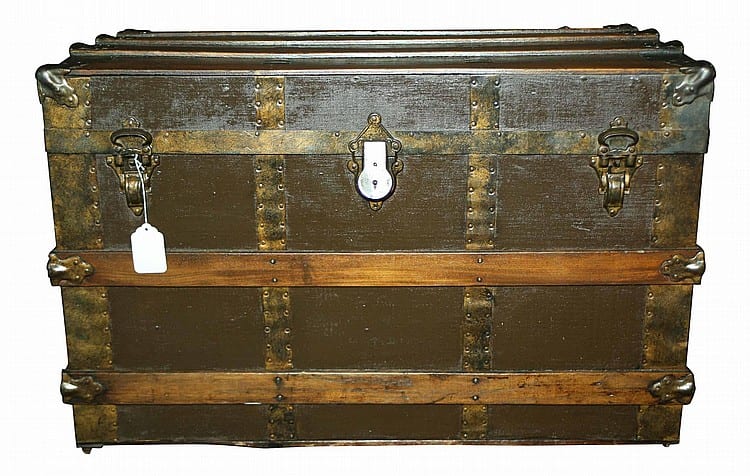
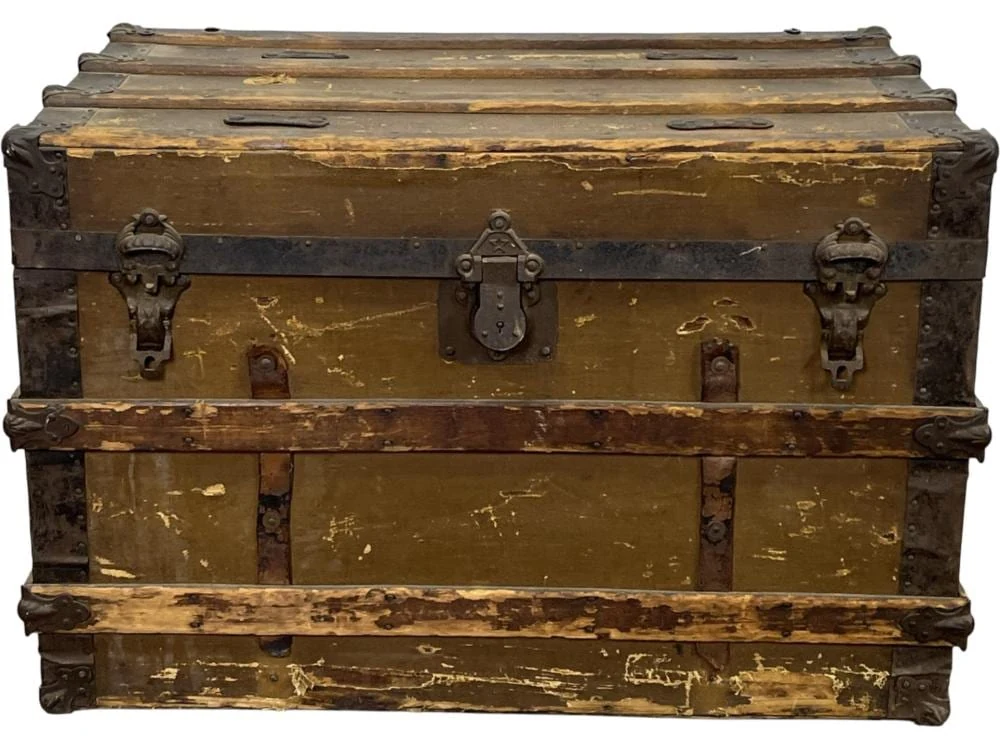
- Flat-top or “steamer” trunks (c. 1870–1910): Practical for stacking in ship holds. Highly popular with decorators today because they double as coffee tables.
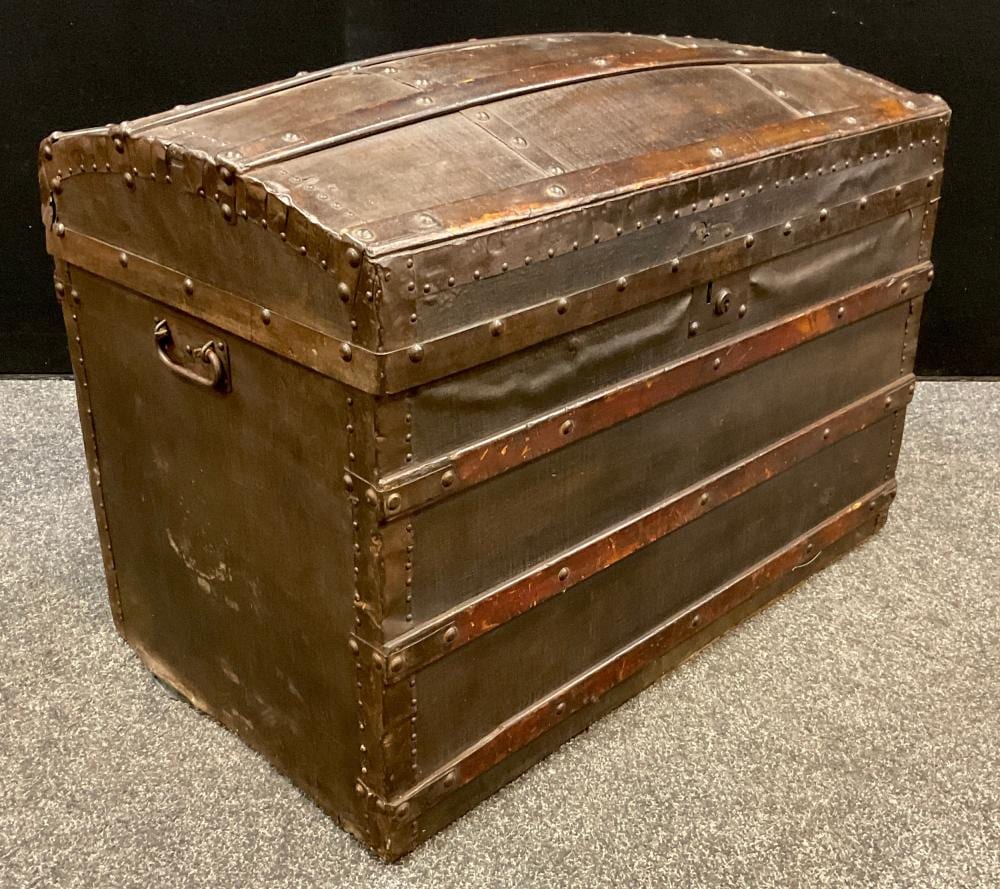
- Dome-top and barrel-top trunks (c. 1875–1900): Arched lids, often with wood slats and decorative embossed tin or canvas. Eye-catching; mid-market collectibles.
- Saratoga trunks (c. 1860–1885): High-end, heavy, and bristling with compartments and high-quality hardware. Scarcer and more valuable when complete.
- Jenny Lind trunks (c. 1850s): Distinctive hourglass/oval top profile associated (legend says) with the famous soprano. Earlier and scarce; strong collector interest.
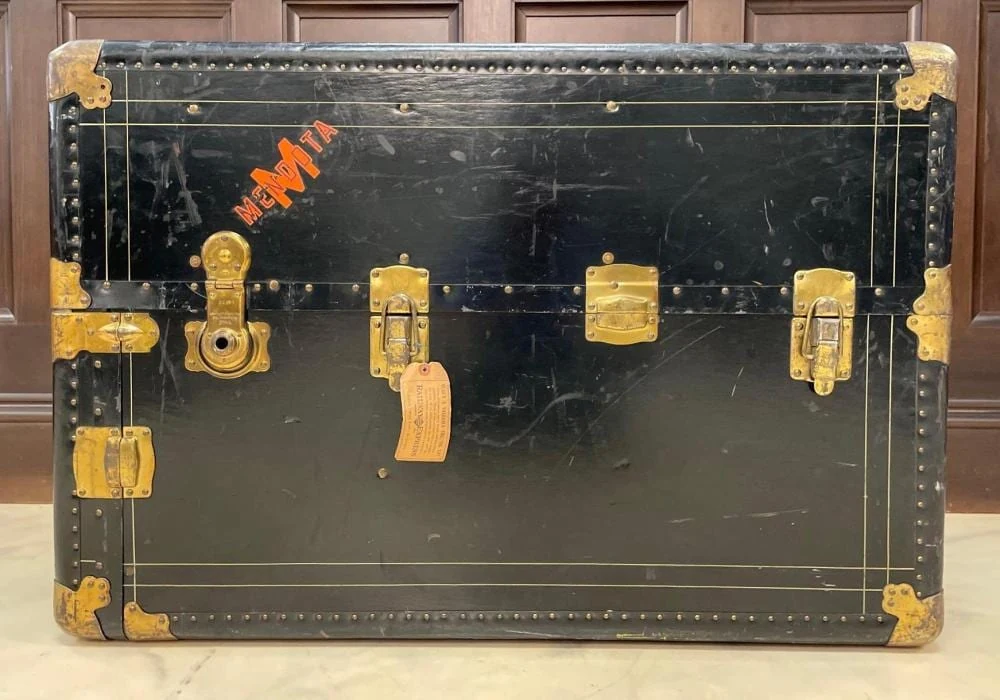
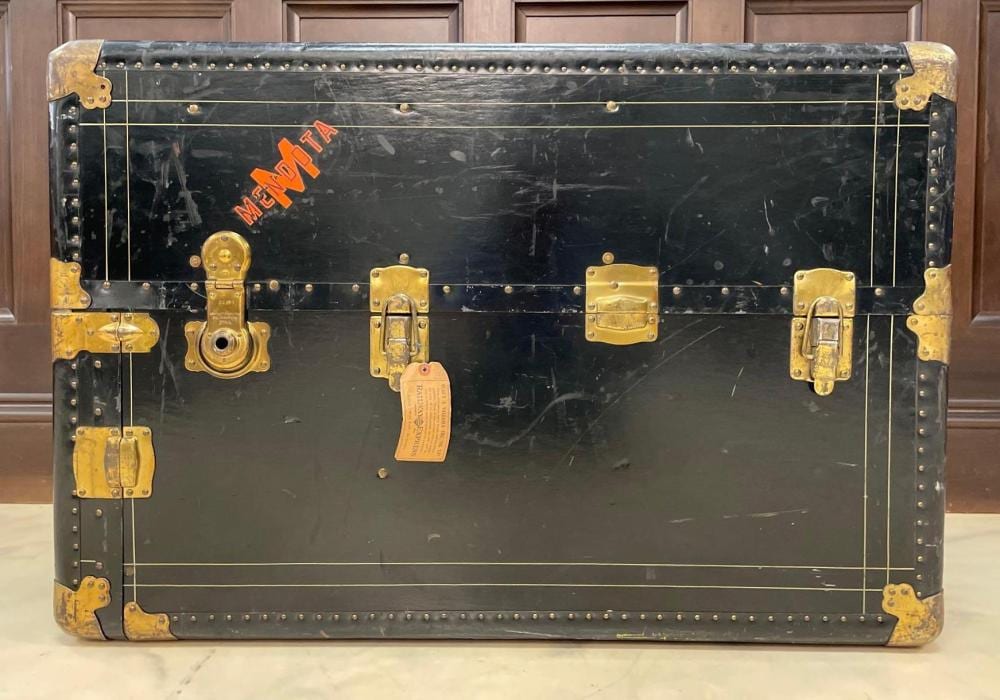
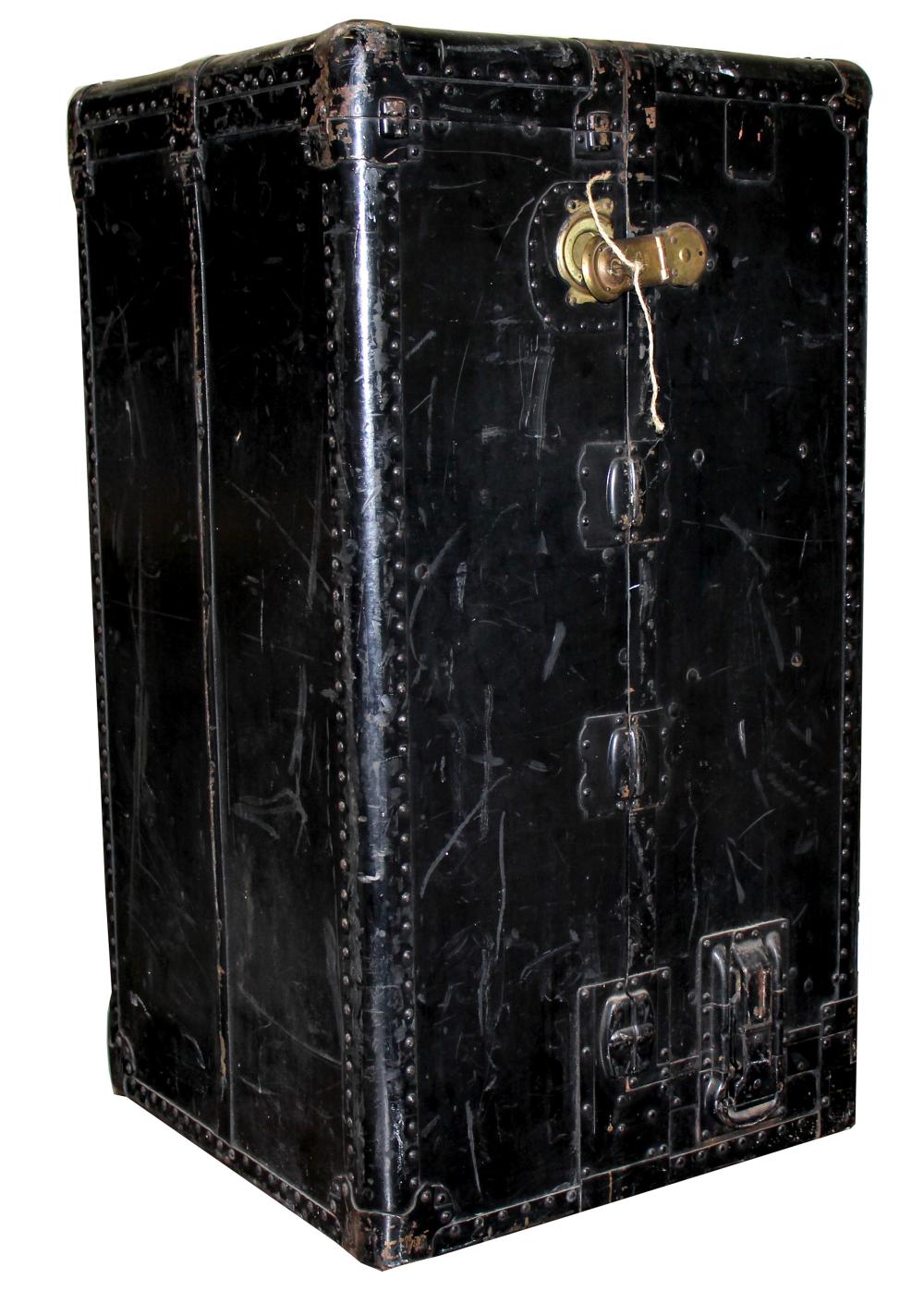
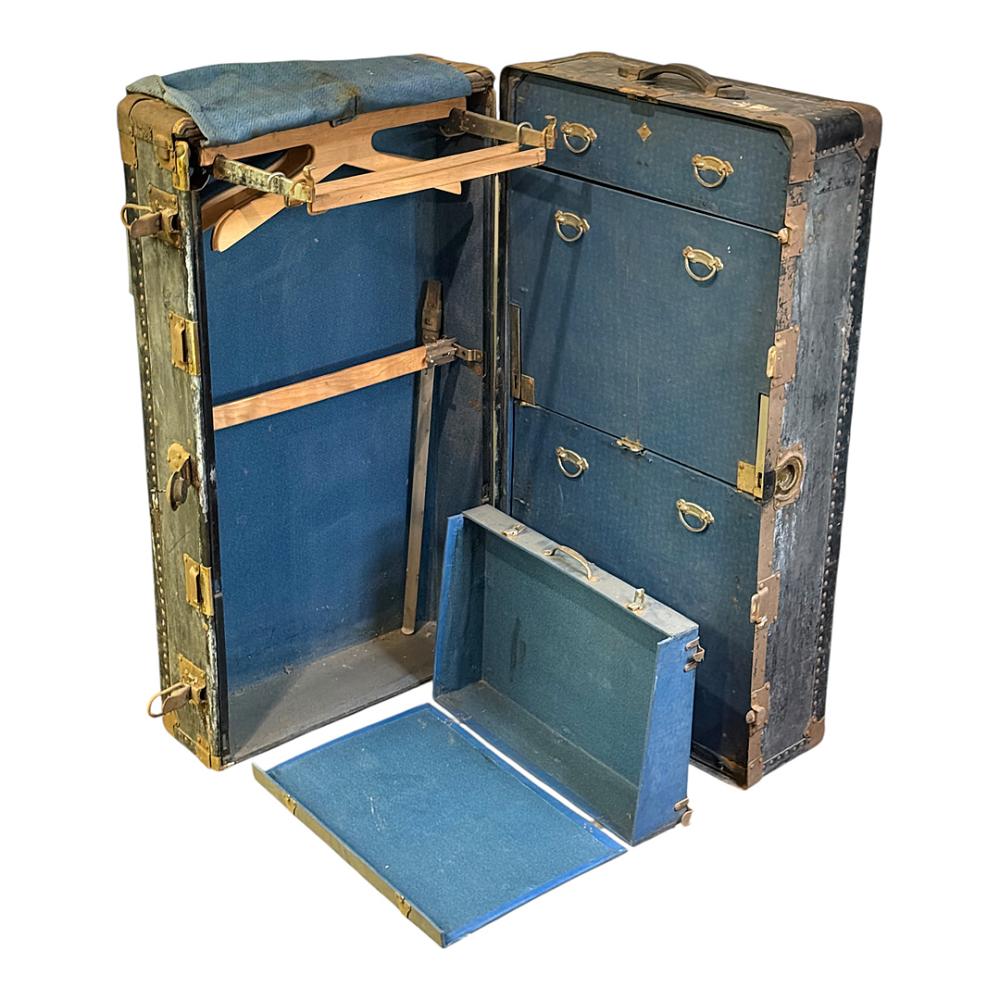
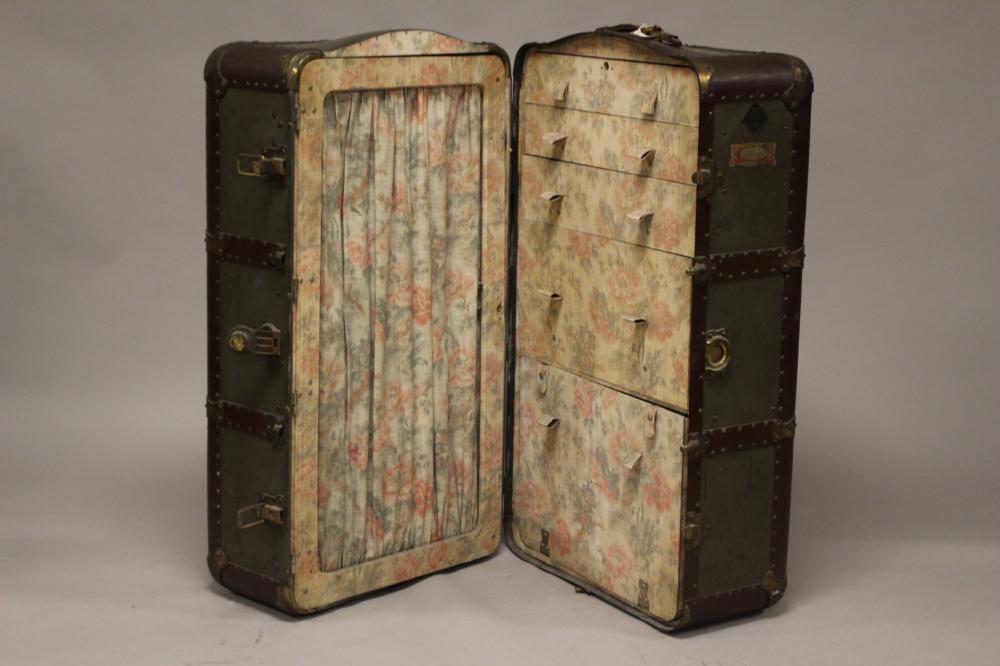
- Wardrobe trunks (c. 1910–1930): Upright “closet” trunks with hangers and drawers, popular in the early 20th century. Larger; desirability depends on brand and completeness.
- Hat trunks and cabin trunks: Smaller, portable trunks made for short voyages or specific items. Decorative appeal; prices vary widely by maker.
Materials and construction:
- Bodies are usually softwood (pine, poplar) with nailed or riveted construction and exterior coverings: canvas, leather, vulcanized fiber (fiberboard), or embossed metal/tin.
- Trim: hardwood slats (oak, ash) with steel, iron, nickel-plated, or brass hardware. Slat clamps, corner caps, hinges, and locks can be plain or ornate.
- Interiors: paper linings, sometimes with decorative lithographed papers and manufacturer labels; trays, compartments, hat boxes, and tie-down straps.
- Locks and hardware often bear maker or patent marks. Common lock makers include Yale & Towne, Corbin, Star, and Eagle.
Dating cues:
- Pre‑1870: Early forms (Jenny Lind), hand-wrought elements more likely, sparse hardware, leather coverings more common.
- 1870–1900: Boom years; embossed metal coverings, wood slats, branded locks, and ornate hardware proliferate.
- 1900–1930: More standardized construction; wardrobe trunks; fiber coverings; branded American luggage companies (Belber, Oshkosh, Hartmann).
- 1890 onward: Patent dates stamped on locks give a “no earlier than” date (terminus post quem).
Dimensions matter. “Steamer” trunks suitable for under-berth storage typically run roughly 30–36 inches long, 18–22 inches wide, and 12–24 inches tall. Oversize wardrobe trunks can be substantially taller when upright.
Maker, Marks, and Dating: How to Identify Your Trunk
A maker’s label or stamp can double or triple value. Take a methodical approach:
Where to look:
- Inside the lid: paper labels, lithographs, or stenciling.
- Under or inside removable trays and compartments.
- On the lock plate and keyhole escutcheon; sometimes on the back of locks (visible only if removed).
- On slat clamps and hardware backs; occasionally on the underside of the trunk.
- Inside wardrobe trunks: drawer fronts, hanger brackets, and mirror backs often carry decals or embossing.
Notable makers and their signals:
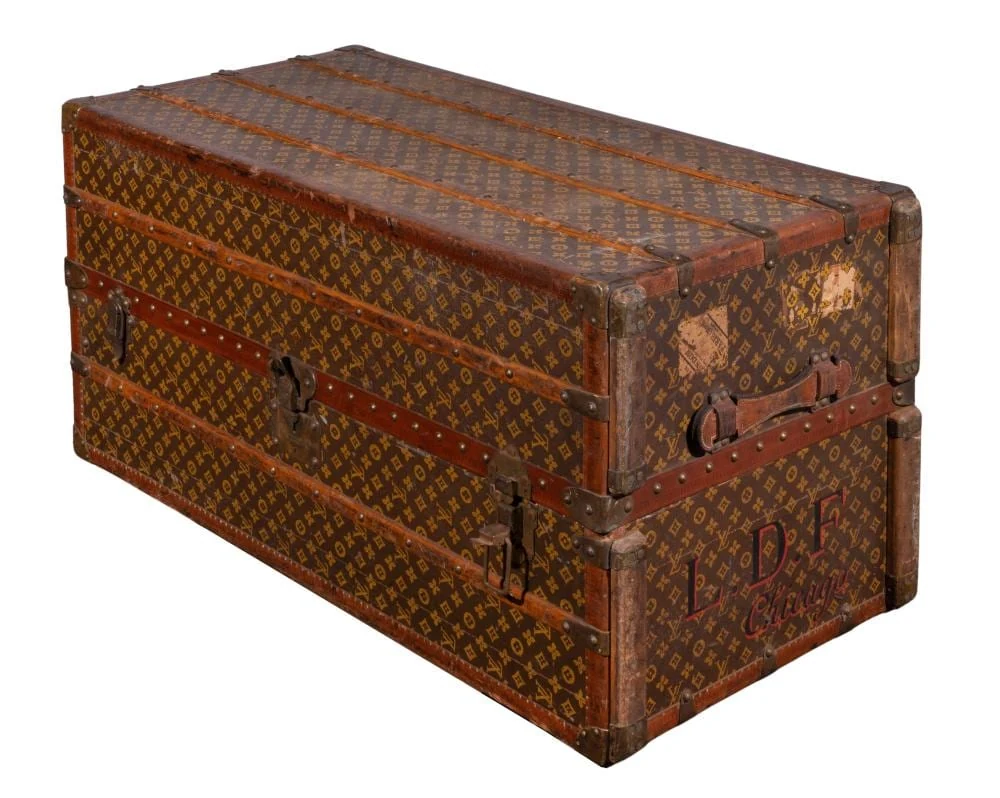
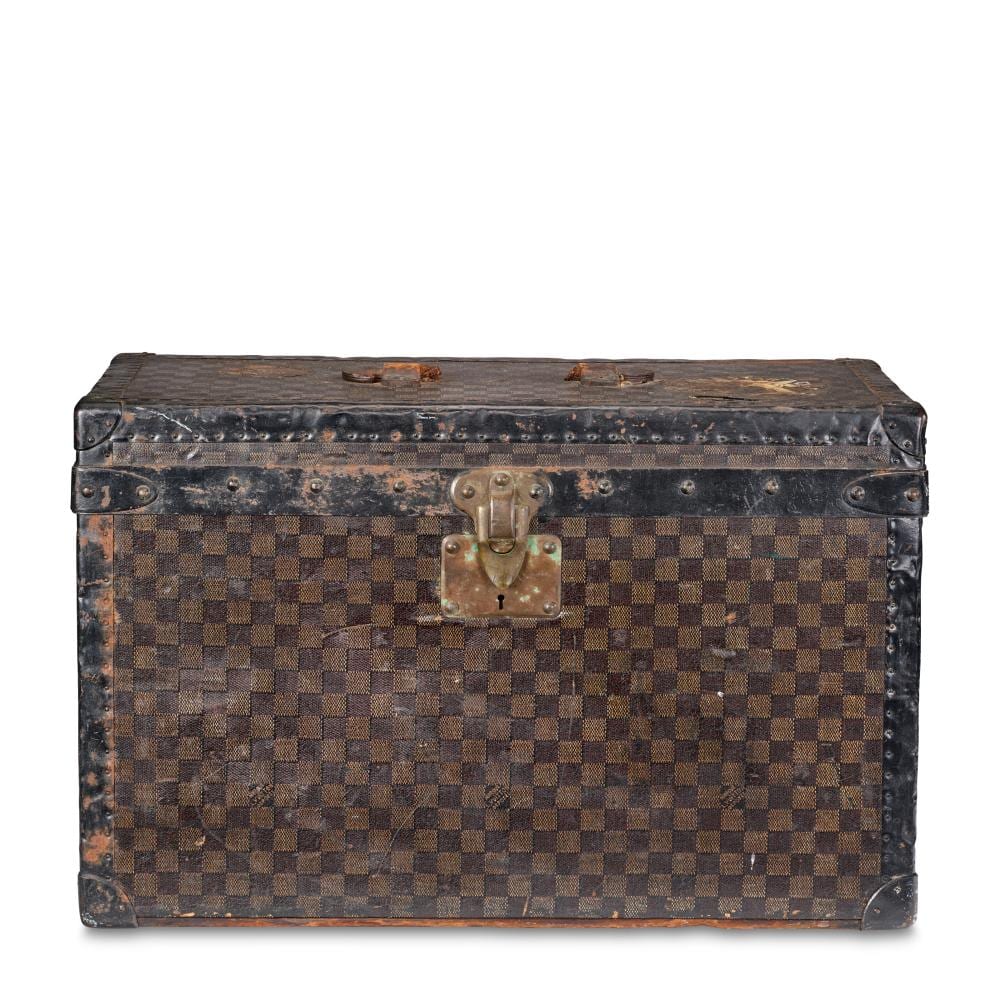
- Louis Vuitton (mid-19th century onward): Branded canvas patterns (Trianon gray, striped, Damier, Monogram), serial numbers, and lock plates stamped with LV. Hardware and canvas quality are high; interior labels include Paris addresses that help date. Authenticity is vital—details of pattern alignment, rivets, and label fonts matter.
- Goyard, Moynat: French luxury houses with distinctive chevron or hand-stenciled canvases and high-grade brass hardware; labeled interiors.
- Oshkosh, Hartmann, Belber, Innovation, Seward: American companies (late 19th–early 20th century) with embossed labels and standard hardware; wardrobe trunks common.
- Regional and specialist makers: Martin Maier (Detroit), Romadka (Milwaukee), Excelsior, Haskell, R.M. Hudson, C.A. Taylor, Pooley—often paper-labeled inside lids.
Dating by clues:
- Patent dates on locks/hardware (e.g., “Pat’d 1882”) set earliest possible manufacture date.
- Canvas types and patterns changed over time; vulcanized fiber coverings usually indicate 20th-century production.
- Hardware finish: full brass hardware is generally higher-end; nickel-plated or japanned steel is common on mid-market pieces.
- Form and fit of construction: hand-cut leather handles, early embossed tin patterns, and hand-set tacks suggest earlier manufacture.
Document everything. Clear photos of labels, lock plates, corners, and interior details help confirm identity and support valuation.
What Drives Value: The Big Factors (With Realistic Ranges)
Not all trunks carry premium price tags. Value is primarily driven by a handful of factors:
- Maker prestige and authenticity
- Luxury houses (Vuitton, Goyard, Moynat) command the highest prices when authentic and complete. Depending on size, condition, and canvas pattern, genuine Louis Vuitton trunks vary widely in price, so compare recent sales of the same size, form and canvas. Authenticity verification is essential.
- Recognized American makers with strong labels (Hartmann, Oshkosh, Belber, Martin Maier) generally see solid mid-market prices.
- Form, rarity, and decorative appeal
- Saratoga trunks with elaborate interiors and quality brass hardware: sell at a premium when original and complete.
- Jenny Lind trunks: priced by size, hardware, and condition.
- Dome/barrel-top slat trunks with embossed tin: attractive examples sell well.
- Flat-top “steamer” trunks (most common): modest in average unrestored condition; noticeably more when clean, structurally sound, and decor-ready.
- Wardrobe trunks: modest for generic examples; considerably more for branded, complete examples with hangers and drawers.
- Size and usability
- Flat tops are decorator favorites (coffee tables), which keeps demand healthy.
- Very large wardrobe trunks are impressive but can be hard to ship and place, suppressing prices unless branded.
- Originality and completeness
- Intact interiors with original paper lining, maker label, trays, and straps are worth significantly more.
- Replaced handles and missing trays are common; sympathetic, period-correct replacements are acceptable but adjust value.
- Condition and eye appeal
- Clean surfaces, even patina, solid structure, and functioning lock (key optional) draw buyers. Water damage, rot, heavy rust, mold, or severe odors push value down sharply.
- Provenance and graphics
- Documented ownership, travel stickers from glamorous routes, and retailer decals add story and value.
- Market and logistics
- Local markets favor pickup; distant buyers factor shipping. Freight on a trunk can be expensive, affecting what a buyer will pay.
These comparisons reflect typical retail/collector demand in North America and Europe; regional variance is normal, so check recent local sales.
Condition, Preservation, and Restoration: What Helps vs Hurts
Condition drives value, but “over-restored” trunks lose authenticity. Aim for reversible, conservation-minded work.
Helpful conservation practices:
- Dry clean first: soft brush and HEPA vacuum to remove dust. Work gently to avoid lifting paper lining.
- Surface cleaning: a damp (not wet) microfiber cloth with a few drops of pH-neutral soap (like a mild dish soap) for canvas or fiber; immediately dry with a soft towel. Test an inconspicuous area first.
- Metal hardware: remove loose rust with 0000 steel wool used lightly or a fiber abrasive pad; stop at clean and stable. Avoid mirror-polishing brass; preserve aged tone. Seal with microcrystalline wax to inhibit corrosion.
- Wood slats: avoid oily finishes that darken over time. A light clean and a thin coat of paste wax retains patina and adds protection.
- Leather: clean gently with a slightly damp cloth; condition sparingly with a high-quality, non-darkening leather conditioner. Crumbling leather may not tolerate conditioners—consider leaving as-is or replacing handles with period-style reproductions.
Odor and mold:
- Air out in a shaded, dry, ventilated area. Place bowls of baking soda or activated charcoal inside for a week; replace as needed.
- Light mold: wipe with a cloth lightly dampened with 70% isopropyl alcohol; dry thoroughly. Always wear gloves and a mask; keep humidity low.
- Avoid ozone treatment and heavy fragrance sprays; both can degrade materials or trap odors in finishes.
What to avoid (value-killers):
- Stripping original canvas, paint, or paper lining “to bare wood” as a default. Original surfaces carry value.
- Polyurethane or thick glossy finishes on exterior wood slats—these look new and irreversible.
- Aggressive sanding that erases patina, maker stamps, or embossed patterns.
- Re-lining interiors with modern wallpaper that covers labels and decals. If a reline is necessary, use archival paper and leave labels uncovered.
- Hardware swaps that introduce modern screws or mismatched metals. Keep original fasteners whenever possible.
Repairs done right:
- Structural splits: use reversible adhesives (hot hide glue or fish glue) and appropriate clamping. Avoid construction adhesive.
- Handle replacement: if handles are missing or disintegrated, period-style reproductions secured with split rivets can be acceptable; note the change for buyers.
- Locks: non-working locks don’t devastate value; drilling locks does. If locked shut, consult a locksmith familiar with antique trunk locks.
Researching Comparables, Pricing, and Selling
Even with good identification, your price needs market context.
How to gather comps:
- Search recent sales from reputable auction houses, estate auctions, and antique dealers to find like-for-like examples by form, maker, and condition.
- For luxury trunks, be careful: ask for multiple points of authentication (serial/label photos, interior label addresses, lock markings) when comparing prices.
- Adjust comps for condition differences (missing trays, re-line, hardware damage) and for logistics (local pick-up listings can be priced higher due to convenience).
Photography that helps sell:
- 8–12 clear, natural-light photos: overall front/back/left/right; top; interior; close-ups of labels, lock, corners, slats, and any damage.
- Include a ruler or tape for scale in one shot. Provide exact dimensions and an approximate weight.
Pricing strategy:
- Retail/dealer asking prices can be 1.5–3x typical auction hammer prices for the same piece in the same condition.
- Decide on “sell fast” vs “maximize value.” A quick sale often prices 15–25% below strong comps; a patient retail sale requires excellent presentation and may take months.
- For very high-end luxury trunks, authentication and a specialist auction or dealer will usually net better results than a general marketplace.
Shipping and handling:
- Whenever possible, offer local pickup; it widens the buying pool to decorators and collectors who avoid freight.
- If shipping, pad interior trays to prevent movement; protect corners and hardware with foam; wrap in multiple layers of cardboard and bubble; double-box or crate for wardrobe trunks. Insure to replacement value.
The Appraiser’s Shortlist: Features That Command a Premium
- Strong, original maker label and matching brand marks on lock/hardware.
- Complete interiors: trays, hat boxes, hangers, mirror, straps, and original paper lining.
- Rare forms: Saratoga, early Jenny Lind, unusual sizes (very small hat trunks or oversized exhibition pieces).
- High-grade hardware: thick brass corners, ornate hinges, unique slat clamps.
- Graphic appeal: intact stenciling, travel labels from storied destinations, retailer decals.
- Working lock with original key (a bonus, not a requirement).
- Provenance: documented ownership or period photographs.
Practical Checklist: Determining Your Trunk’s Value
- Identify form: flat-top, dome/barrel, Saratoga, Jenny Lind, wardrobe, hat/cabin.
- Measure and note size and weight; take clear photos inside and out.
- Locate and photograph all labels, stamps, patent dates, and hardware marks.
- Assess condition: structure, hardware completeness, interior lining, odor/mold.
- Note originality: are handles, lining, and finish original or replaced?
- Record standout features: rare hardware, decorative tin, travel labels, trays.
- Research comparables of similar maker/form/condition and note sale prices.
- Decide on conservation steps; avoid irreversible “makeovers.”
- Choose a selling route: local dealer, specialist auction, or private sale; factor shipping.
- Set a realistic price anchored to comps and market demand.
FAQ
Q: Should I restore my trunk before selling? A: Light conservation—cleaning, stabilizing hardware, addressing odor—usually helps value. Major overhauls (stripping, full re-line, glossy refinishes) often reduce value by erasing originality. If it’s a luxury or rare form, consult a specialist before doing anything irreversible.
Q: How can I tell if a Louis Vuitton trunk is authentic? A: Look for consistent LV branding: correct canvas pattern and alignment, a period-appropriate interior label with Paris addresses that match the era, a serial number, LV-stamped lock and hardware, and high-quality construction. Compare details to verified examples. When in doubt, seek expert authentication.
Q: My trunk smells musty. What’s safe to do? A: Air it out in dry shade, use baking soda or activated charcoal inside for a week, and wipe mildew with a cloth lightly dampened with 70% isopropyl alcohol. Avoid soaking interiors or using ozone generators and heavy perfumes.
Q: Are wardrobe trunks collectible? A: Yes, especially branded and complete examples with hangers, drawers, and a clean interior. However, their size and shipping cost can limit buyers. Strong brands in great condition sell for considerably more than generic examples.
Q: Do reproduction handles or missing trays ruin value? A: They reduce value, but don’t ruin it. Honest, period-appropriate handle replacements are widely accepted. Missing trays are more significant on high-end forms (Saratoga, luxury brands) than on generic flat-top trunks. Always disclose replacements or losses.
With a careful eye for maker marks, form, originality, and condition, you can confidently place your trunk on the spectrum from charming decor to museum-worthy artifact—and price accordingly.