What to do next
Curious what your trunk might be worth?
Upload photos for a free first look, inspect the signed-report sample if you want proof, and use the paid appraisal path only when you need documentation.
Unlocking the Past Discovering the Hidden Value of Antique Steamer Trunks: appraisal and value basics
Unlocking the Past Discovering the Hidden Value of Antique Steamer Trunks research should start with identification, condition, provenance, and item-specific market evidence. Use this guide to compare the signals that matter before paying for a formal appraisal or deciding whether to sell.
Antique steamer trunk value checklist
Antique steamer trunks are more than vintage décor. They’re compact archives of materials science, craftsmanship, industrial design, and travel culture spanning the mid‑19th to early‑20th centuries. Whether you’re evaluating a newly inherited trunk or fine-tuning an insurance appraisal, this guide gives you the frameworks and details to identify, date, preserve, and value these enduring icons.
What Counts As An Antique Steamer Trunk? A Short History And Types
“Steamer trunk” broadly refers to portable chests used for travel during the steamship and railway age, roughly 1850–1930. Most were wood-framed and covered in canvas, leather, metal, or vulcanized fiber, reinforced with hardwood slats and metal hardware. Key types and date ranges:
- Jenny Lind (c. 1850s–1860s): Distinctive “hourglass” or figure-eight profile from above. Early construction, often with simple iron hardware and paper or fabric linings. Scarcer than later forms.
- Saratoga (c. 1860s–1880s): Premium, large, heavily slatted trunks with ornate hardware and complex interiors. Often high value when original.
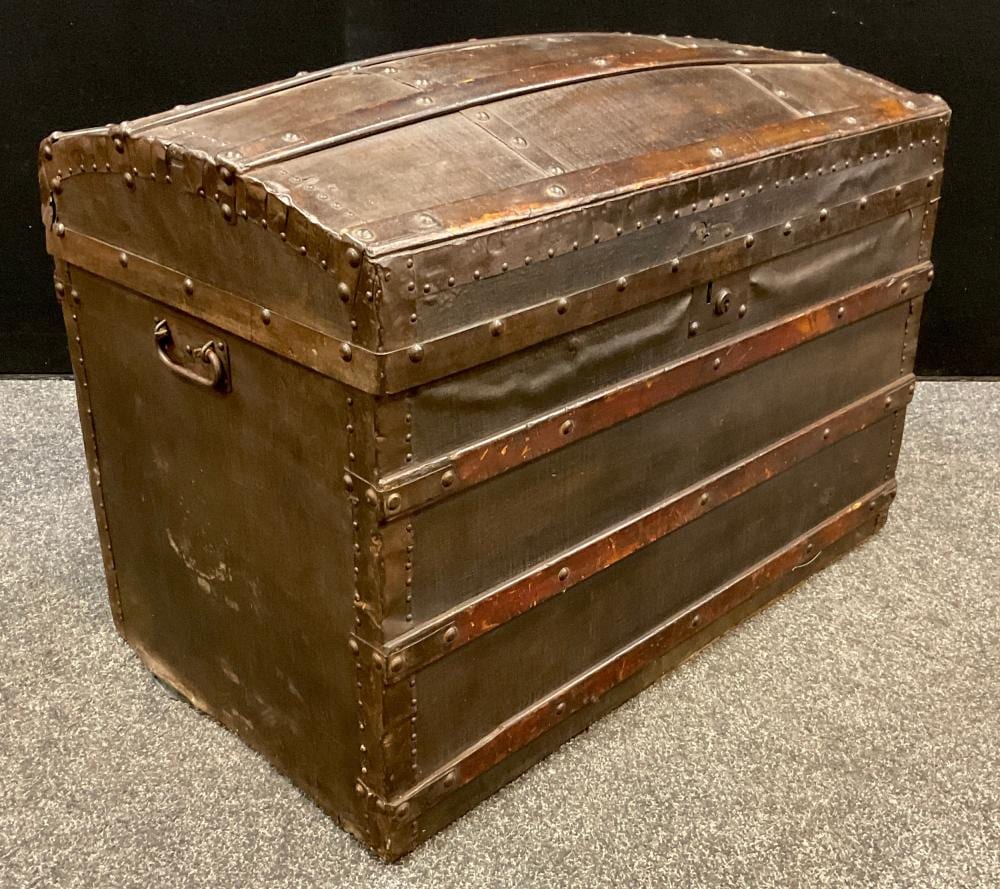
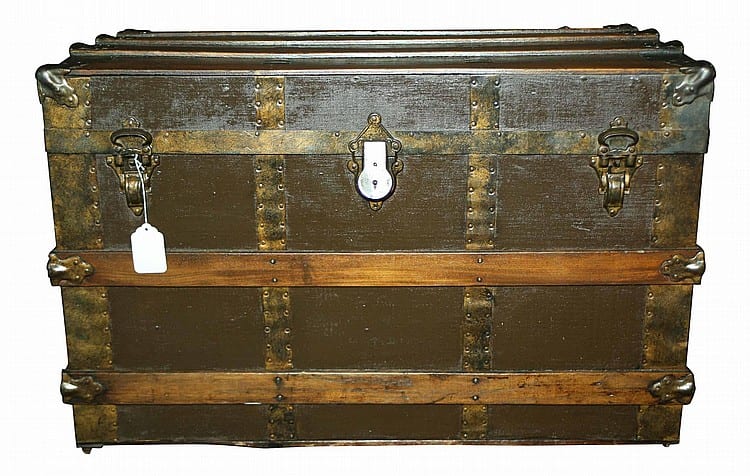
- Dome-top/Camelback/Humpback (c. 1870s–1890s): Arched lid to shed water and discourage stacking; common in decorative embossed sheet metal or canvas.
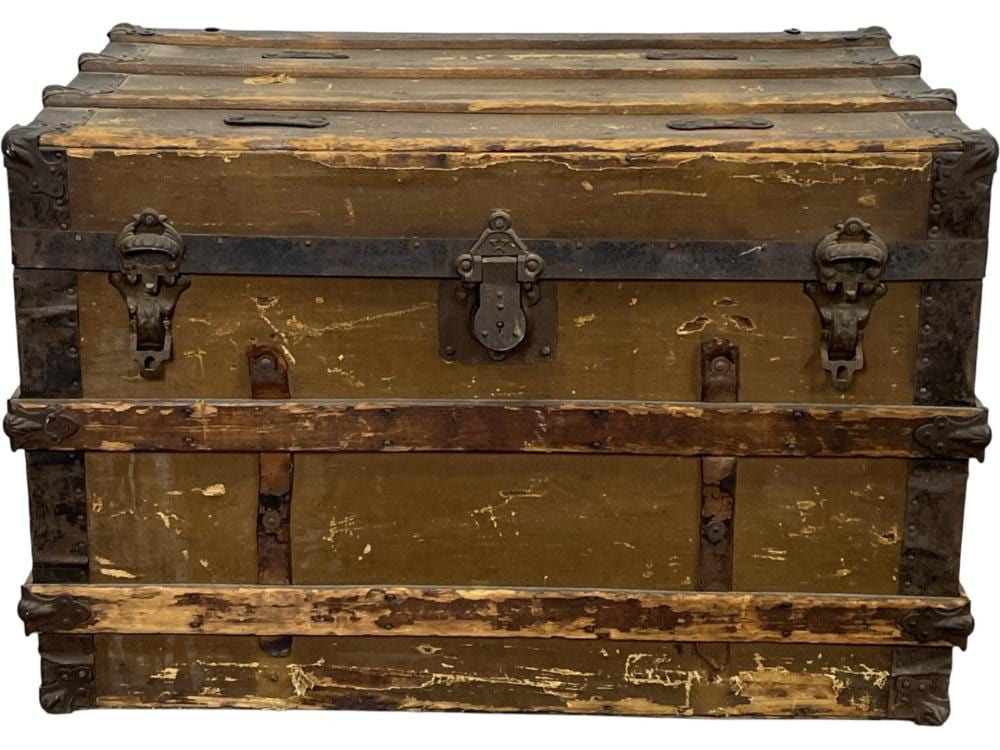
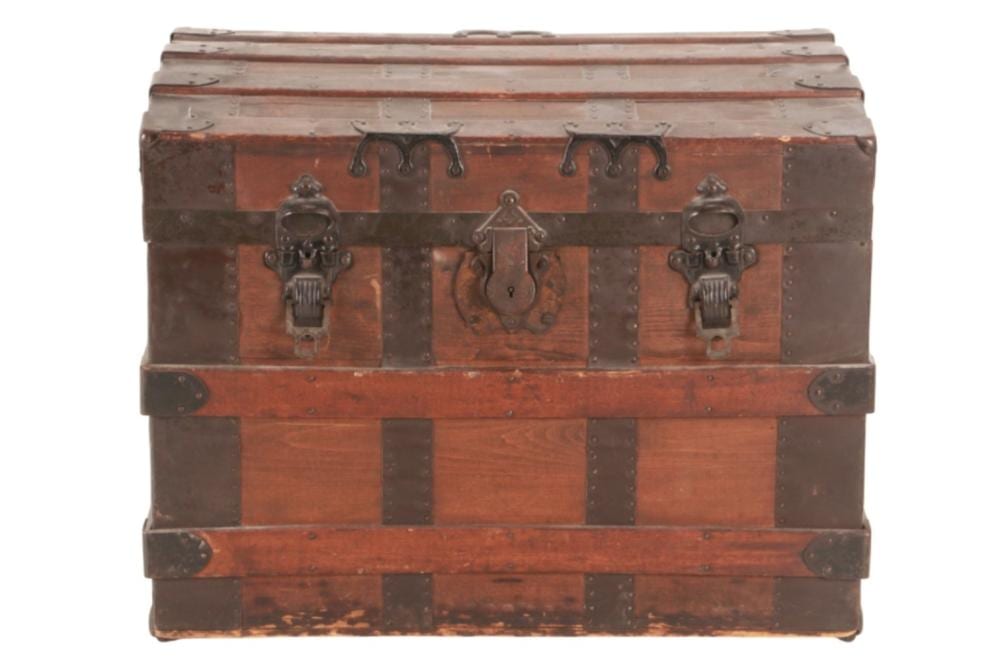
- Flat-top/Cabin (c. 1880s–1910s): Preferred by steamship lines because they stack. A staple among travelers; highly desirable in the modern décor market for practical use.
- Monitor-top/Barrel-top variants (c. 1870s–1890s): Subtle arcs or shallow domes; often tin- or canvas-clad.
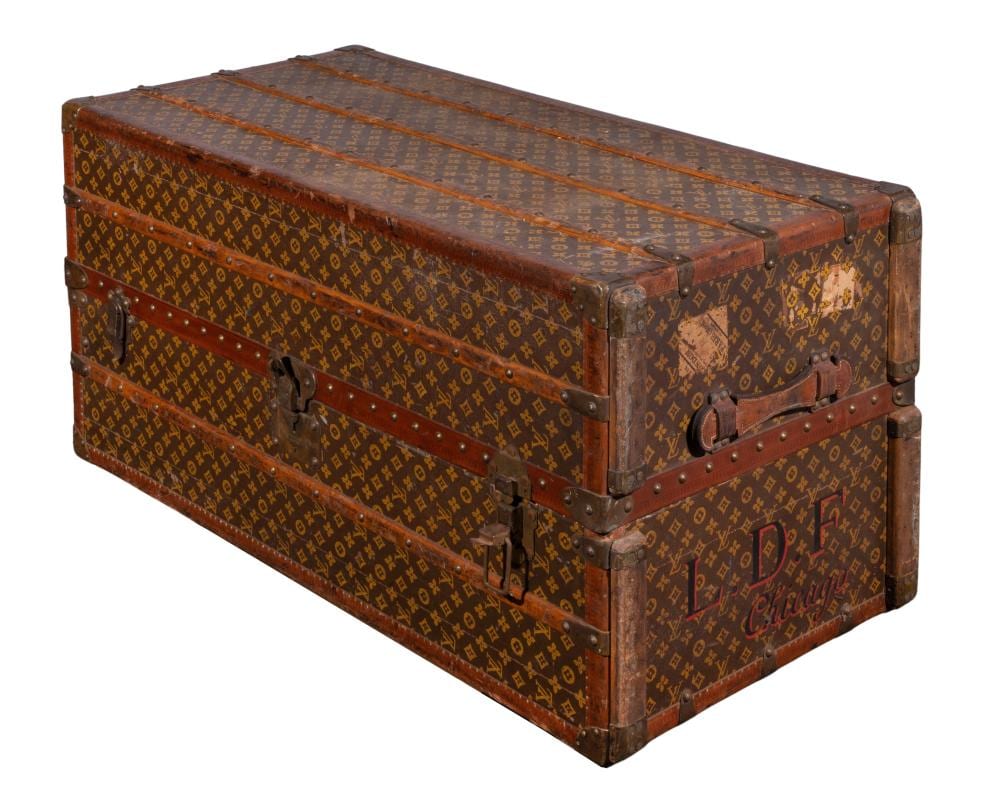
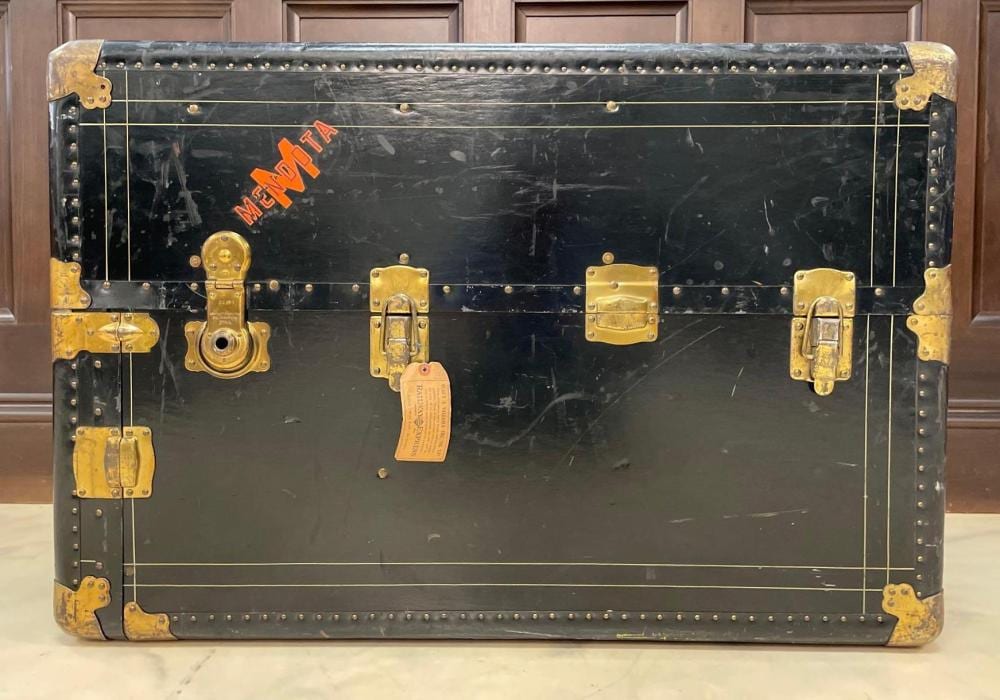
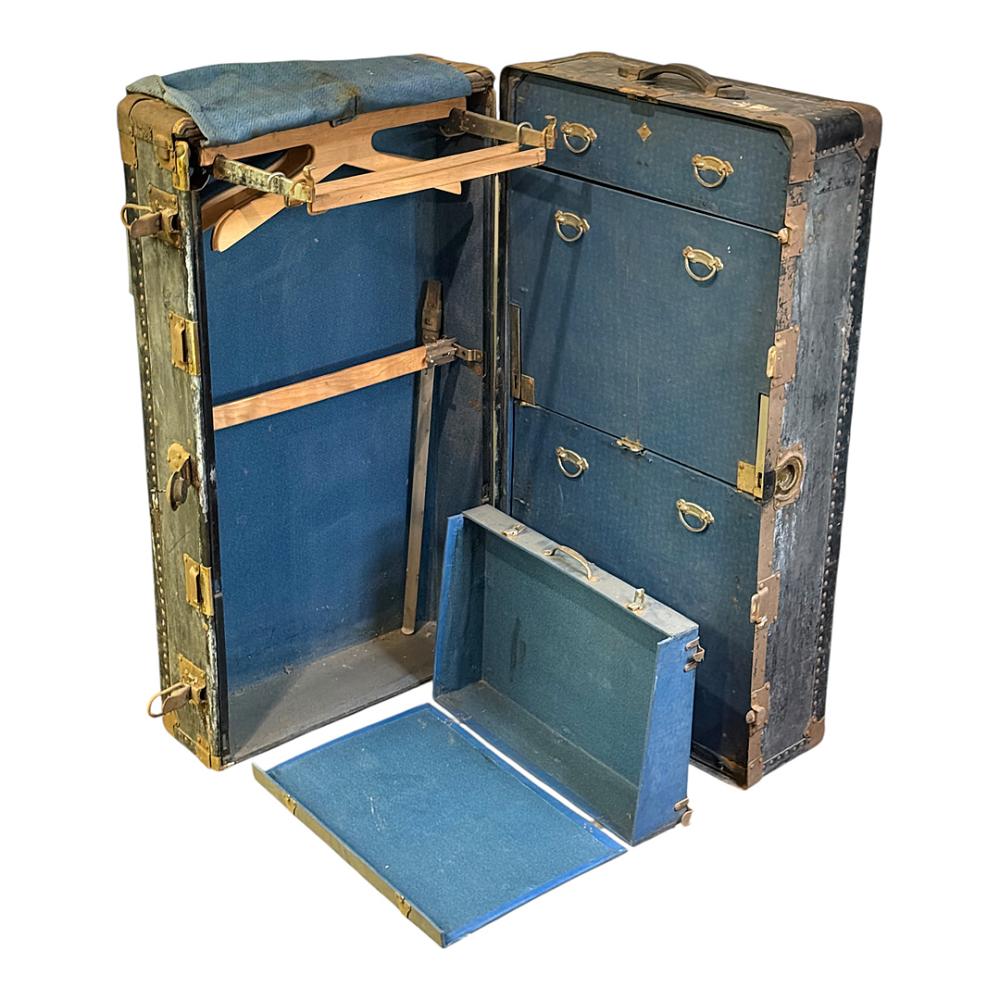
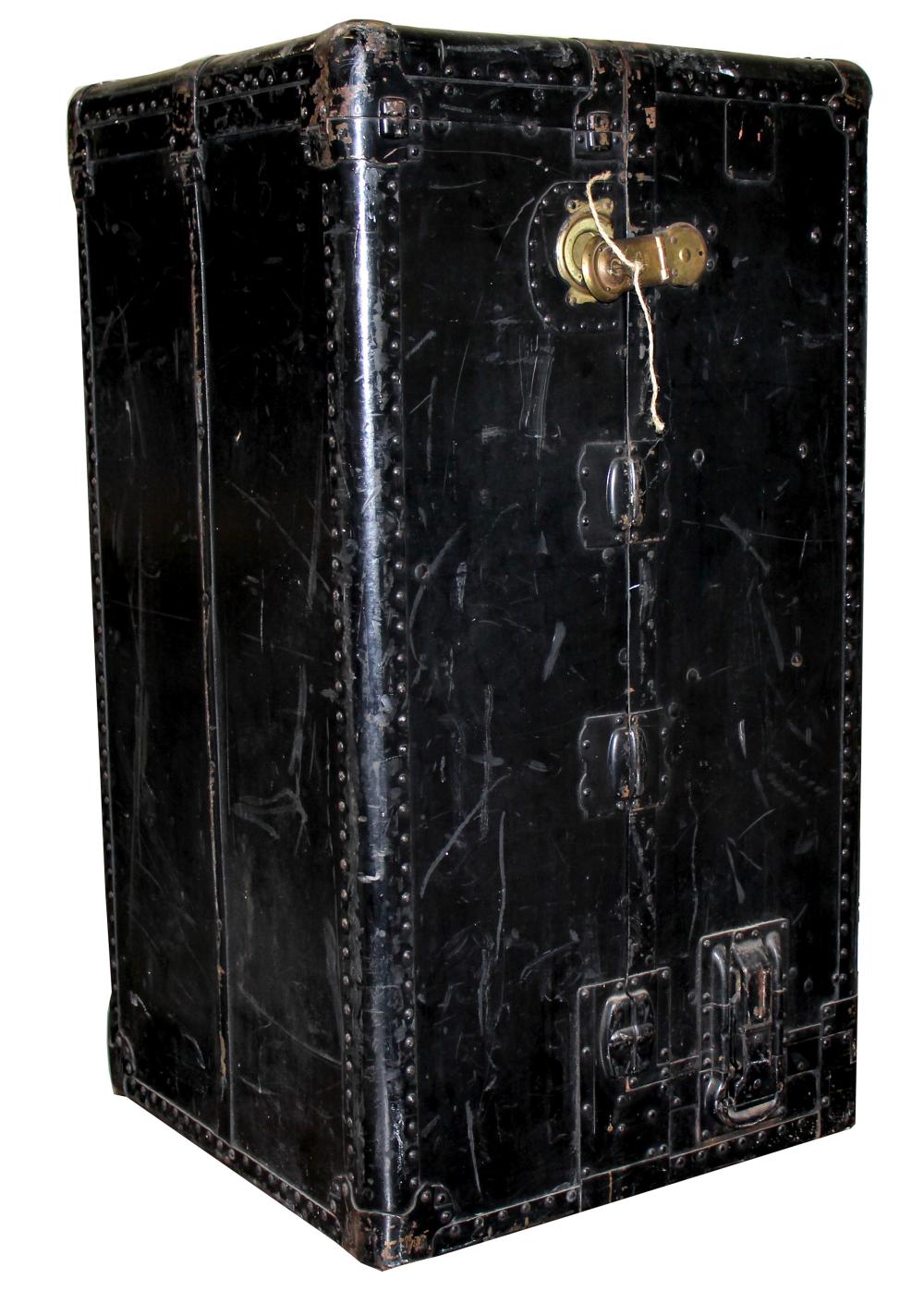
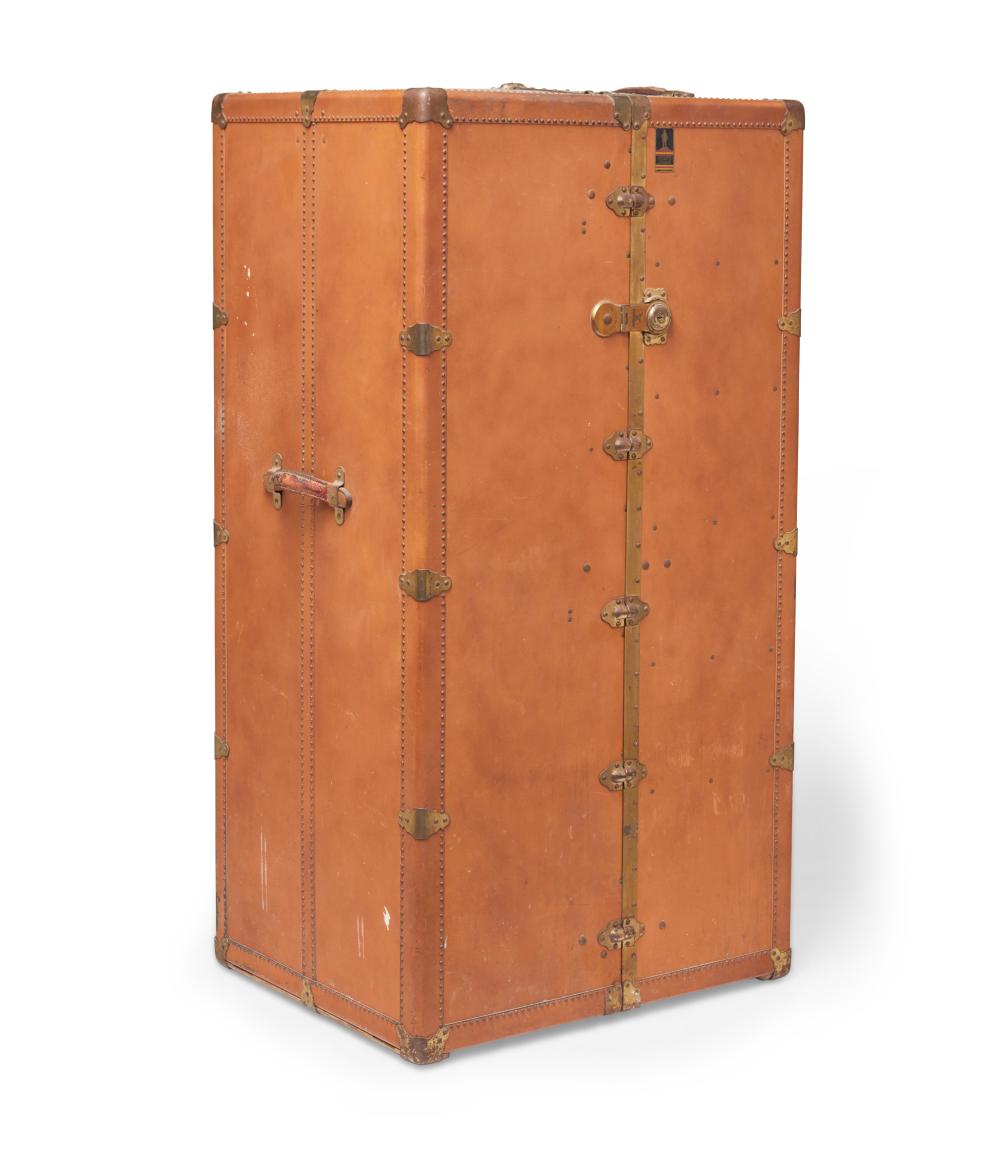
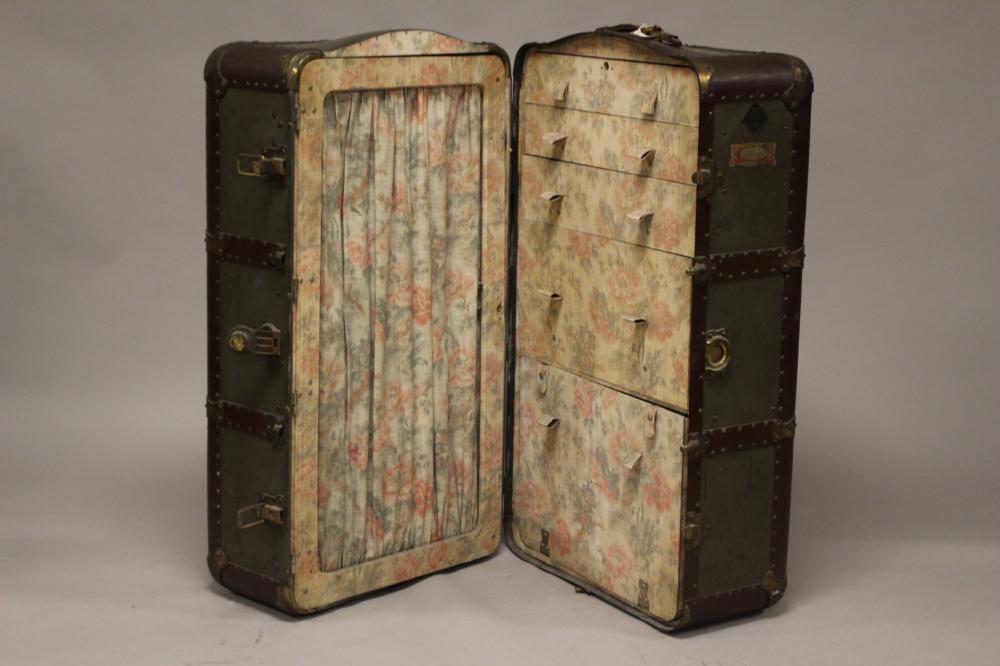
- Wardrobe/Upright trunks (c. 1900s–1930s): Stand-up trunks with drawers and hangers. Later period, cross-over between trunk and luggage.
Materials and coverings:
- Canvas (painted, oiled, or raw), duck cloth
- Leather (full-grain or split; watch for dry rot)
- Embossed tin or sheet metal (patterns: “walrus,” “alligator,” floral)
- Vulcanized fiber (early 20th century; tough paper-fiber board)
- Wood species commonly pine or poplar core with oak, ash, or hickory slats
Hardware materials span iron, steel, brass, and mixed metals. Interiors range from plain paper to printed Victorian wallpapers, lift-out trays, hat compartments, and lithographed maker cards.
What drives value: the appraiser's shortlist
Most trunks can be triaged with five signals. Capture these before comparing marketplace prices.
| Factor | What to check | Why it changes value |
|---|---|---|
| Maker | Labels, stamped hardware, lock names, serials, and retailer marks. | Luxury and known American makers can move the trunk into a different buyer pool. |
| Originality | Covering, slats, corners, handles, lock, trays, lining, and keys. | Original completeness usually beats shiny but heavy restoration. |
| Condition | Frame alignment, rust, odors, water damage, active mold, insect traces, and weak joints. | Structural problems and active deterioration lower usability and trust. |
| Form and size | Flat-top, dome-top, wardrobe, specialty interior, and shipping practicality. | Decorator demand, freight cost, and display use affect realized price. |
| Provenance | Travel labels, monograms, receipts, family notes, and prior appraisals. | Documentation gives buyers confidence and supports insurance or estate use. |
How to identify makers and date your trunk
Do not rely on one clue. Date the trunk by cross-checking hardware, covering, construction, and interior evidence.
| Clue | What to photograph | How to use it |
|---|---|---|
| Locks and patent marks | Lock plate, latch backs, hasps, keys, and readable dates. | Patent dates give a not-earlier-than date and help identify suppliers. |
| Covering and slats | Canvas grain, leather, embossed tin, slat wood, clamps, nails, and tacks. | Materials and fasteners narrow the production era and quality tier. |
| Interior | Trays, dividers, lithographs, retailer cards, lining paper, and odors. | Completeness and untouched interiors support higher confidence. |
| Repairs | New screws, replaced handles, re-covered panels, relining, and polished hardware. | Disclosed repairs are manageable; hidden modernization can reduce collector value. |
Luxury maker signs to photograph
For Louis Vuitton, Goyard, Moynat, and similar trunks, photograph canvas pattern, lock, tacks, serials, retailer labels, handles, corners, and any owner initials. Consistency across parts matters more than one logo.
Conservation and restoration: do, avoid, ask
| Situation | Best first move | Risk to avoid |
|---|---|---|
| Dry dirt or dust | Soft brush, screened HEPA vacuum, and careful documentation. | Water, solvents, or scrubbing fragile paper and canvas. |
| Rust or loose hardware | Stabilize gently and keep original parts labeled. | Over-polishing or replacing hardware without noting it. |
| Musty interior | Air in a dry shaded place; use charcoal or zeolite for odor control. | Perfumes, ozone, and sealing moisture inside the trunk. |
| Luxury or high-value trunk | Ask a conservator before re-covering, relining, or repainting. | Removing original surfaces that create collector value. |
The Market And Appraisal Today
Demand divides into two overlapping buyers: collectors of branded/high-art trunks and decorators seeking character-rich storage. Shipping and local supply meaningfully affect realized prices.
How the main types compare at retail (unaltered, honest condition; geography varies, so check recent local sales):
- Generic flat-top trunks (canvas/embossed tin): the most common and least expensive; exceptional examples sell for more.
- Dome-top/camelback: priced on surface and hardware quality.
- Saratoga and ornate early forms: a premium with strong originality.
- Wardrobe trunks (upright): generic examples are modest; branded examples higher.
- Louis Vuitton cabin/steamer trunks: the top of the market, depending on canvas type, era, completeness, and condition. Early monogram or rare canvases sell for the most.
- Goyard/Moynat: also at the luxury end, with premium for early, untouched examples.
Auction vs retail:
- Auctions can yield deals for bulky items due to shipping friction; top-brand pieces with documentation often exceed estimates.
- Retail dealers add value via curation and light conservation; expect higher asking prices.
- Restored decorative pieces may sell well to interior markets but can be discounted by purist collectors if heavily altered.
Appraisal best practices:
- Document everything: Measurements, high-resolution photos of all sides, underside, hardware close-ups, interior labels, patent marks, and any numbers on lock plates or slats.
- Note all interventions: Replaced handles, relined interiors, refinished slats, polished hardware.
- Provide provenance: Bills of sale, family history, shipping labels, and monograms. Even partial stories add value and confidence.
- Distinguish insurance vs fair market value: Insurance should reflect retail replacement cost; fair market reflects typical sell prices between willing buyers and sellers.
Field evaluation checklist
Use this as the photo list for a free first look or a signed appraisal.
| Area | Photos to capture | Notes to add |
|---|---|---|
| Whole trunk | Front, back, sides, top, bottom, and a ruler or tape for scale. | Dimensions, weight if known, and whether the lid closes squarely. |
| Hardware | Locks, latches, hinges, corners, wheels, slat clamps, handles, and keys. | Which pieces are original, replaced, broken, or missing. |
| Interior | Tray, lining, labels, retailer cards, stains, odors, mold, and insect traces. | Whether the trunk was relined or still has original paper/fabric. |
| Market evidence | Provenance, travel labels, receipts, prior appraisal, or family history. | Whether the value question is resale, insurance, estate, donation, or curiosity. |
FAQ
How can I date a steamer trunk without a maker label?
Use hardware patent dates, nail and fastener type, covering material, interior lining, and construction details together. One clue is rarely enough.
What is the safest way to remove a musty odor?
Air the trunk in a shaded dry place, vacuum through a screen, and use activated charcoal or zeolite. Avoid perfume, ozone, and wet methods on fragile interiors.
Should I restore or leave it as found?
Preserve first. Gentle cleaning and reversible stabilization usually protect value better than re-covering, heavy polishing, or new interiors.
Are missing handles a deal-breaker?
Usually no, but note replacements clearly. Original or period-style handles are preferable to modern mismatched parts.
What should I send for an appraisal?
Send whole-trunk photos, hardware close-ups, labels, interior views, dimensions, repairs, damage, and any provenance or receipts.
Read the trunk as evidence first: maker, surface, hardware, interior, condition, and documentation. That will tell you whether a free screen is enough or a signed report is worth ordering.