Unlocking the Past Discover the Hidden Value of Antique Trunks: appraisal and value basics
Unlocking the Past Discover the Hidden Value of Antique Trunks research should start with identification, condition, provenance, and item-specific market evidence. Use this guide to compare the signals that matter before paying for a formal appraisal or deciding whether to sell.
Antique trunk value checklist
Antique trunks are time capsules that combine craft, travel history, and design. Whether you’re attracted to rugged campaign chests, whale-back dome-tops, or iconic monogrammed luggage, knowing how to identify, date, appraise, and conserve a trunk turns curiosity into confident collecting. This guide gives you the tools to unlock both historic and market value—without over-cleaning, misattributing, or overlooking rare details.
A Brief History and the Main Types of Antique Trunks
Trunks evolved with travel. As railways, steamships, and global commerce scaled up in the 19th century, so did the need for robust, stackable luggage. Styles often reflect their purpose and the fashion of the day.
- Jenny Lind (c. 1840s–1860s): Distinctive hourglass silhouette named after the Swedish singer. Typically pine or poplar, often covered in leather or early canvas, with brass or iron hardware.
- Saratoga (c. 1860s–1880s): High-grade trunks with complex trays and fittings; frequently leather-covered, with fancy brass hardware. Considered a luxury American form.
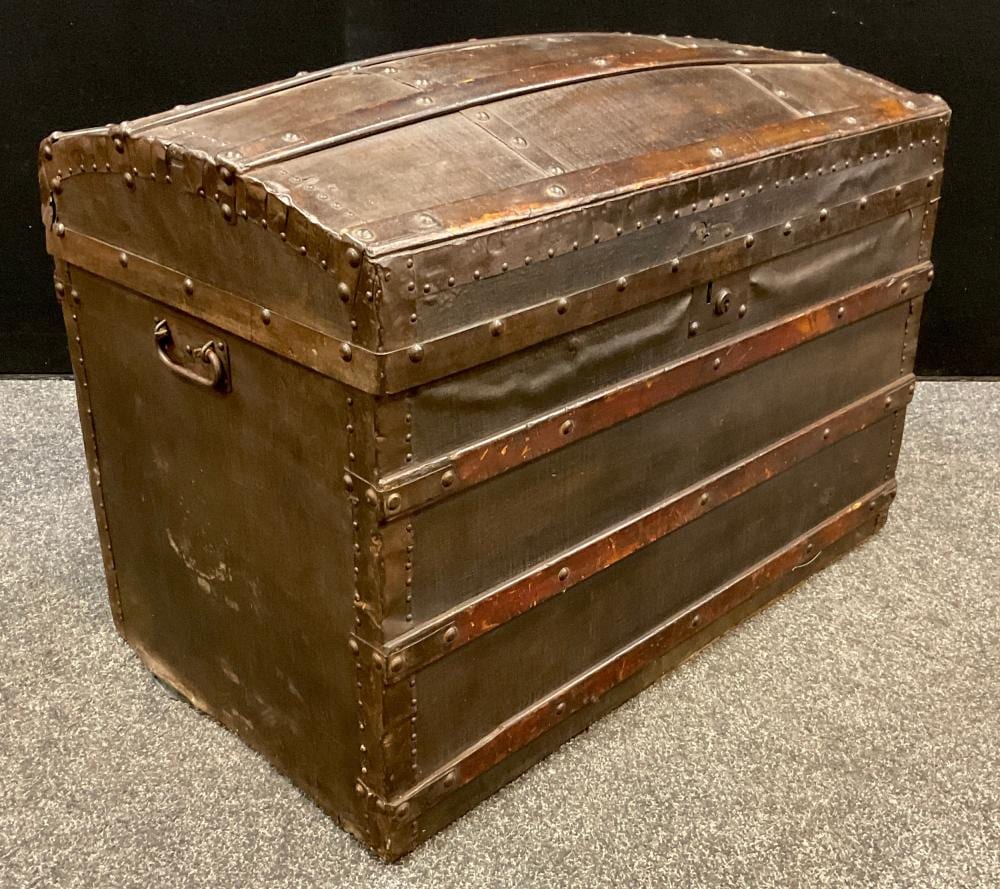
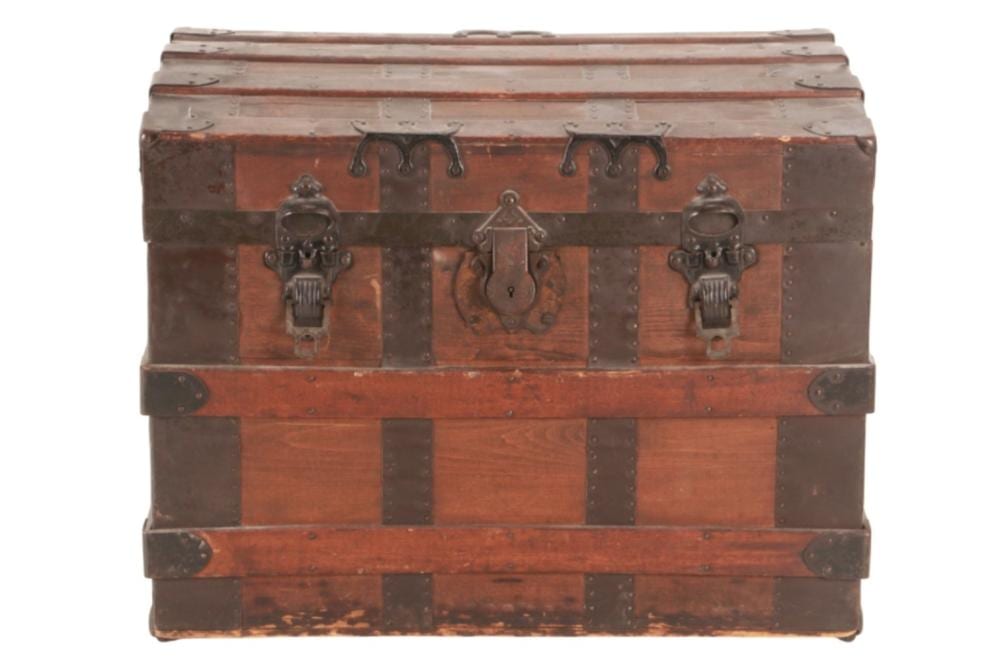
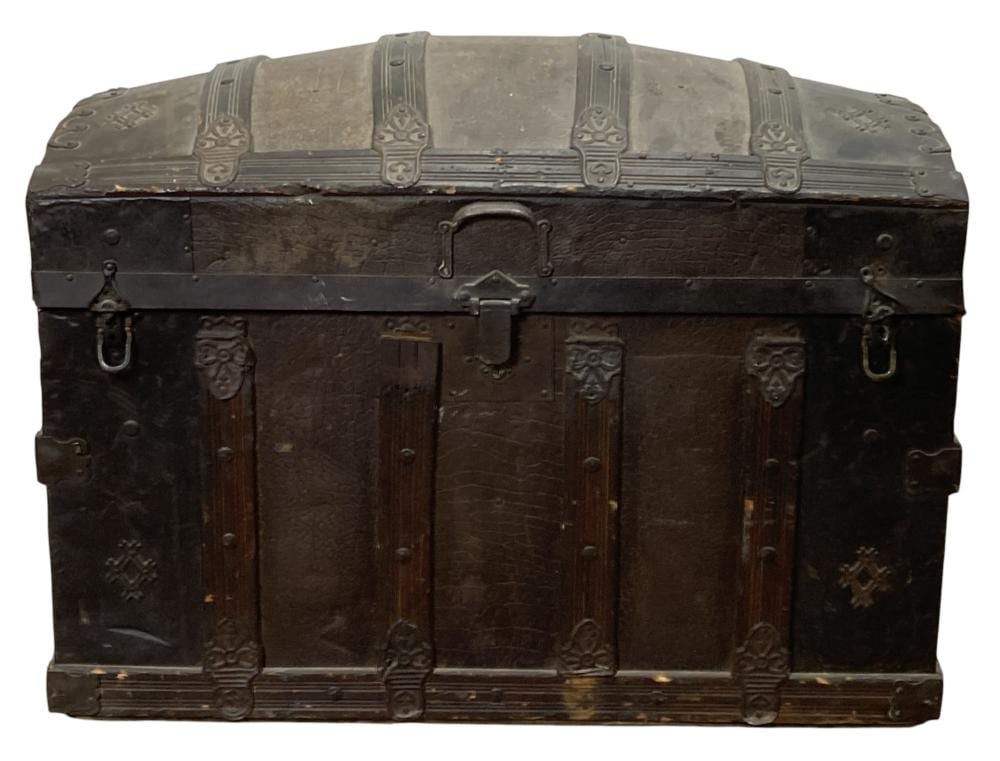
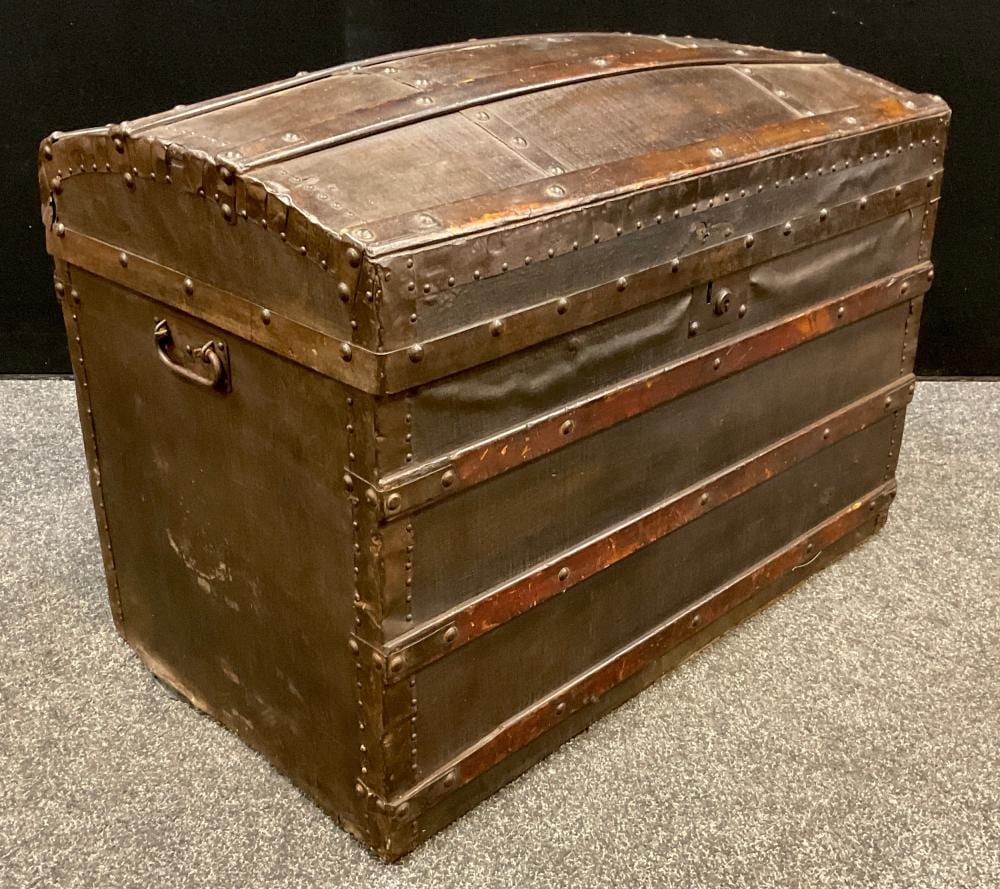
- Dome-top/Camelback (c. 1870s–1890s): Curved lids, decorative slats (sometimes bent), designed to deter stacking and protect contents. Very common, condition and quality drive value.
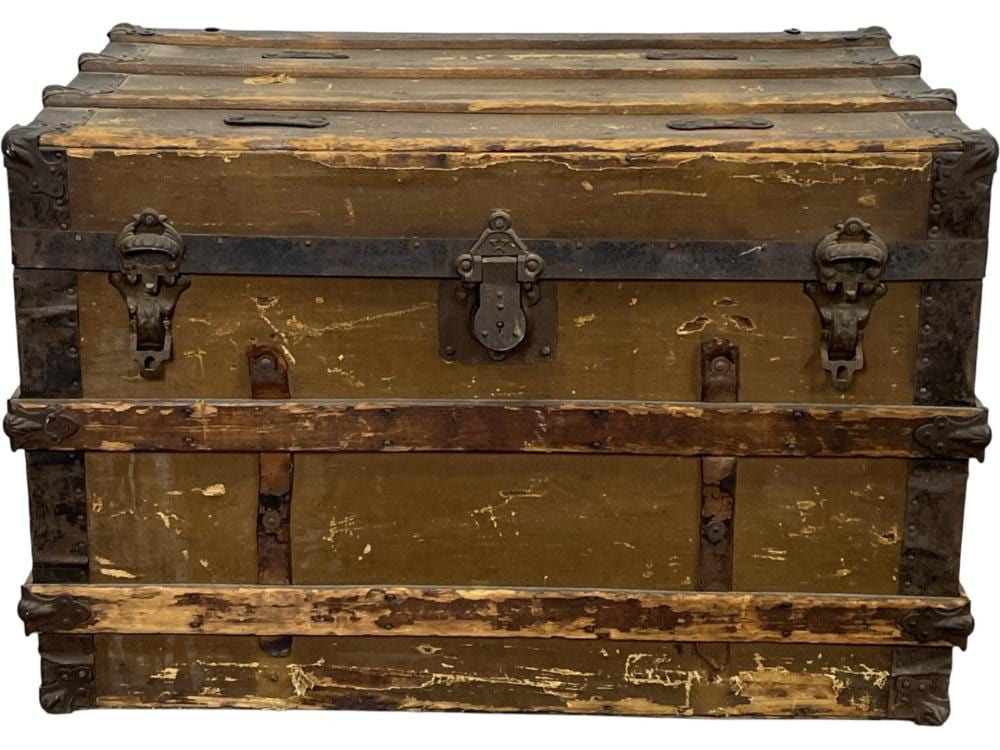
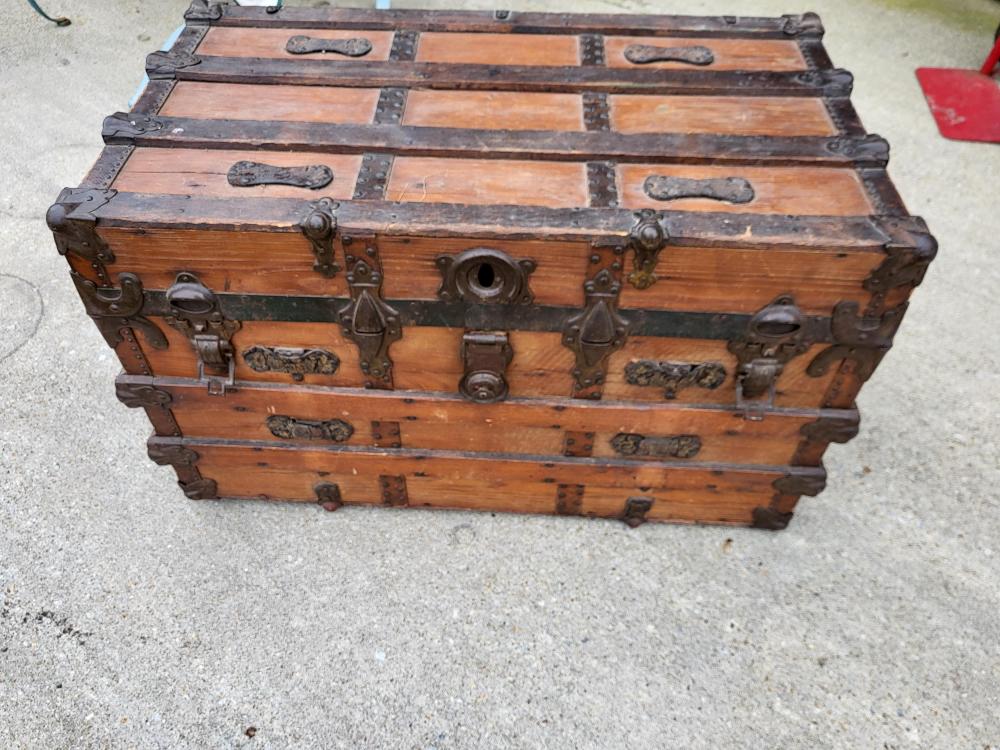
- Flat-top/Slat trunks (c. 1870s–early 1900s): Practical, stackable, often with hardwood slats and metal or vulcanized fiber cladding. Workhorse form for railway/steamship travel.
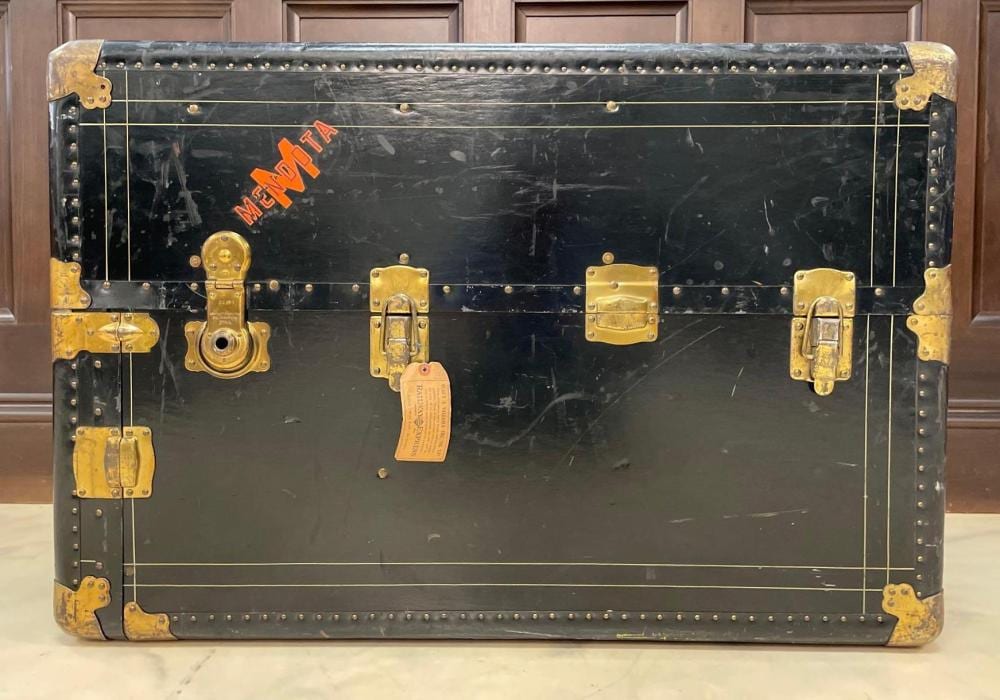
- Steamer trunks (c. 1880s–1930s): Low-profile, sized to fit under ship berths. Early examples may be canvas or leather; later ones often fiberboard with steel edges.
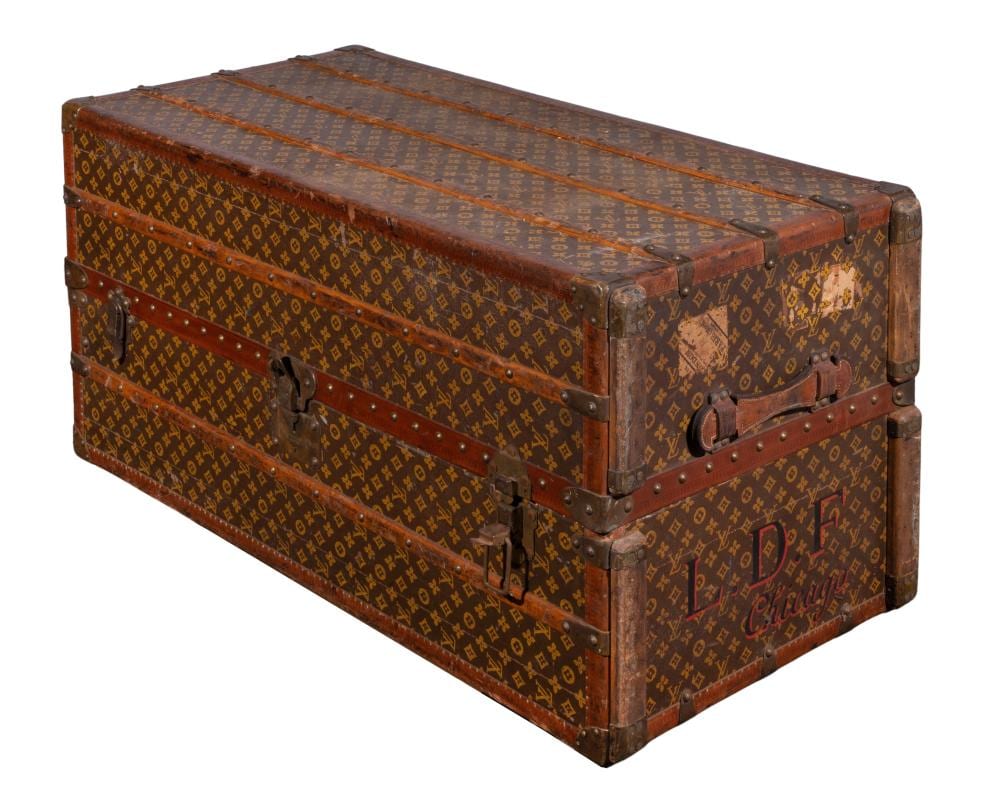
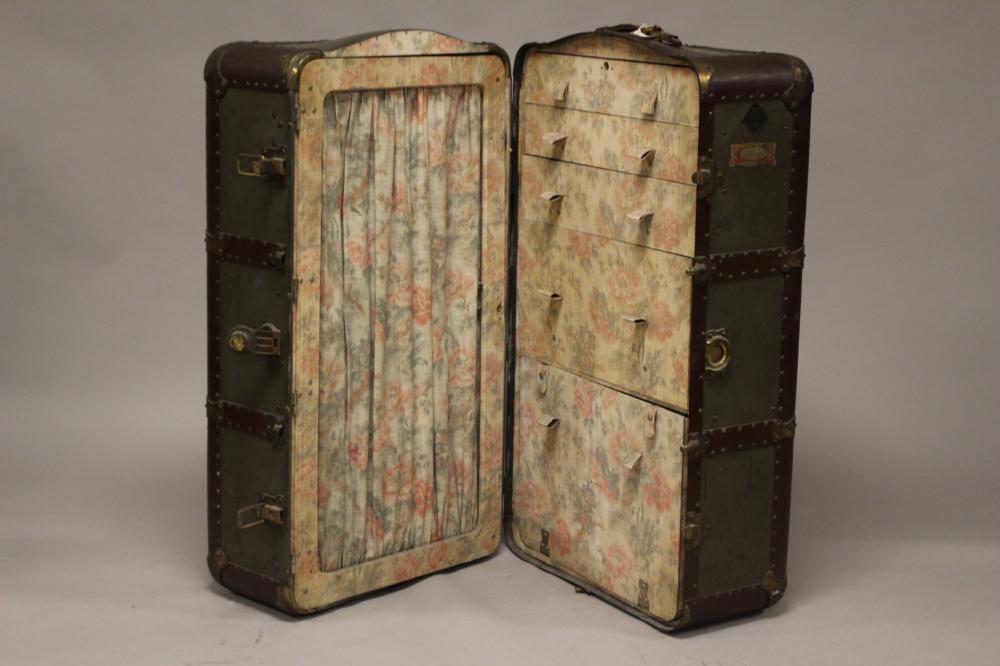
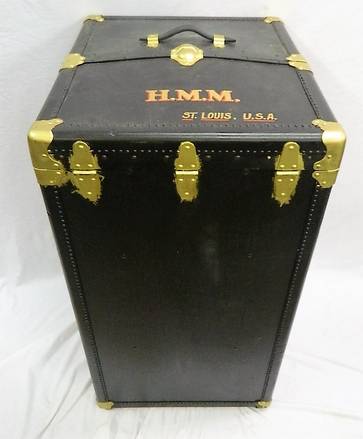
- Wardrobe trunks (c. 1900s–1930s): Upright “portable closets” with drawers and hangers. Popularized by luxury makers; cumbersome but collectible in high-grade examples.
- Campaign and Military trunks (varied 18th–early 20th c.): Rugged chests built to travel, often with brass corners, recessed handles, and regiment or owner markings.
- Immigrant/dowry/folk-painted trunks (18th–19th c.): European and Scandinavian chests with painted floral or geometric decoration, often dated and initialed. Strong decorative market.
- Nautical sea chests (18th–19th c.): Shipboard storage with till boxes inside; desirable when original paint and rope beckets survive.
Knowing where a trunk sits in this lineage helps set expectations for materials, hardware, and potential value.
What Drives Value: The Appraiser’s Shortlist
- Maker and Brand: Top-tier names command premiums. Louis Vuitton, Goyard, and Moynat dominate the luxury segment; notable American makers include Martin Maier (Detroit), Romadka (Milwaukee), Haskell Bros., Excelsior, Hartmann, and Oshkosh. Lesser-known labels can still be valuable in superior condition or rare forms.
- Age and Rarity: Early or transitional forms, unusual sizes (very small “hat” trunks, very large cabin trunks), and limited-production models are more valuable.
- Materials and Construction: Hardwood slats, quality leather, thick canvas, dovetailed cases, brass hardware, and original interiors rank higher than thin fiberboard and stamped steel fittings.
- Condition and Originality: Original covering, lock, hardware, and interior paper or trays dramatically influence value. Refinished or heavily restored trunks can drop in value unless done at museum standards.
- Provenance: Travel labels, owner’s name, shipping stencils, and sales or maker labels amplify interest. Trunks linked to known figures or luxury houses can see multiples.
- Aesthetics: Original decorative paint, folk motifs, early stencils, and desirable patina all attract buyers. Over-polished brass and newly stained wood are usually value-neutral to negative.
- Market Trends and Region: Folk-painted immigrant trunks can be strongest in regions aligned with their origin; luxury luggage has global demand.
Think in terms of premiums: originality premium, brand premium, rarity premium. Conversely, deduct for missing trays, replaced locks, relined interiors, and aggressive refinishing.
How to Identify and Date a Trunk
Appraisal starts with a systematic walkaround. Photograph each side, the bottom, lid interior, all hardware, and any labels before you clean.
- Case construction:
- Wood: Pine and poplar are common; walnut or oak indicate better grade. Dovetailed corners often signal earlier, quality work; nailed-and-battened corners are later or lower grade.
- Covering: Leather, canvas, embossed metal (zinc, tin), vulcanized fiber. Early leather often shows hand-stitched seams; canvas may be linen-based on older examples.
- Hardware:
- Locks: Look for stamped makers (Corbin, Eagle, Yale for American; French locks often signed on the hasp or lock plate). Luxury trunks use substantial brass with serial numbers.
- Corners, clamps, and slat clamps: Brass or copper alloy on higher-end pieces; iron/steel on utilitarian trunks. Note screw types—hand-cut screws and square nails suggest earlier manufacture; uniform machine screws are later.
- Tacks: Star or rosette tacks can indicate specific makers or eras; check for branded tacks on luxury trunks.
- Labels and marks:
- Interior paper labels may show the maker, patent dates, and addresses. Compare address changes to narrow date ranges.
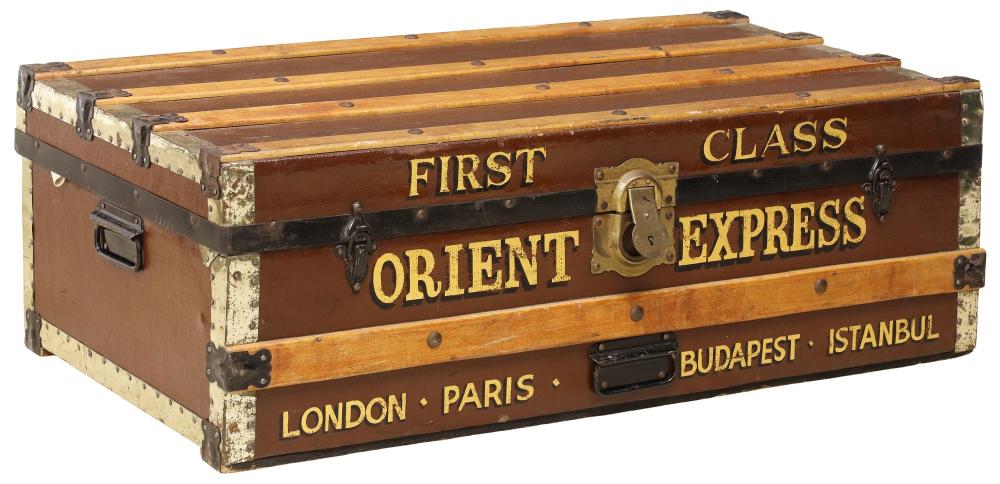
- Shipping labels and hotel decals can position the trunk in time and place; leave them intact.
- Interior:
- Trays, hat compartments, secret tills, and original wallpaper-lining add both charm and value. Hand-blocked or stenciled linings often signal earlier date.
- Form clues:
- Jenny Lind hourglass form suggests mid-19th century.
- Wardrobe trunks generally date to 1900–1930.
- Dome-top proliferation peaks in late 19th century; slat-rich, well-arched lids and thick leather handles point to better grade.
- Luxury identifiers:
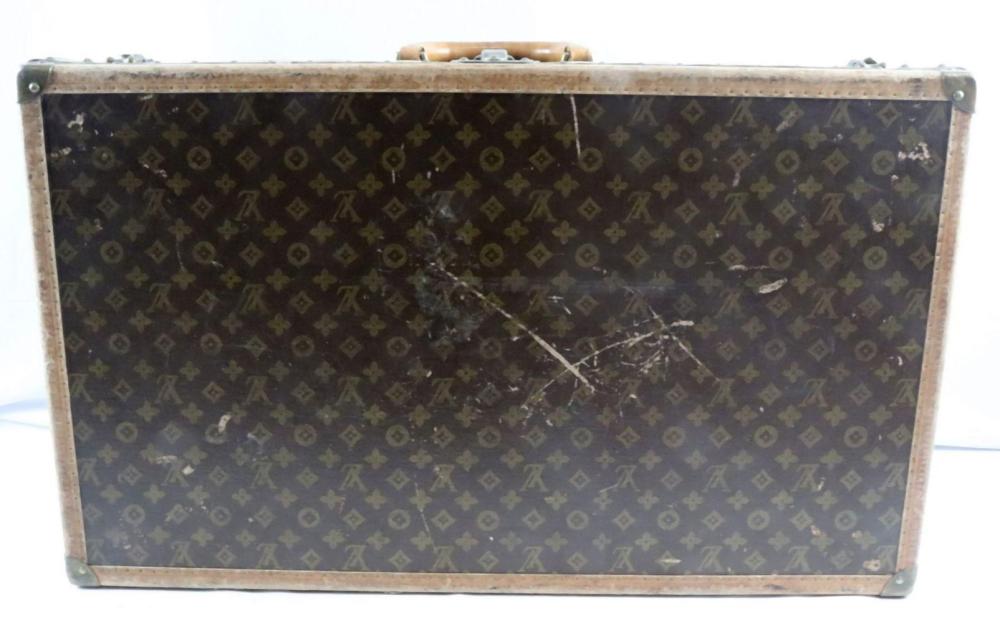
- Louis Vuitton: Brass lock plates and clasps typically stamped; lock numbers; canvas patterns should align across seams; early trunks may feature striped or checkered canvas before the monogram era.
- Goyard: Early chevrons were hand-stenciled; edges bound in leather; hardware of high quality. Labels and shop addresses help date.
- Moynat: Quality brasswork, refined proportions, and distinct labels; leather-covered examples with exceptional fit and finish.
Date ranges are best triangulated: style + construction + label address + hardware technology.
Market Benchmarks and Realistic Price Ranges
Values vary by region and condition, but this is how the main types compare (assuming largely original condition):
- Common American dome-top (c. 1875–1895): the most common and most affordable; exceptional slatwork or a maker label sells for more.
- Flat-top/slat trunks (c. 1875–1910): also common; premium woods/hardware sell for more.
- Jenny Lind (c. 1850–1865): priced on condition; superior leather and hardware bring more.
- Saratoga (c. 1860–1885): sought after by collectors; top-tier examples higher with provenance.
- Wardrobe trunks (c. 1905–1930): priced on completeness and condition; luxury-branded examples sell for far more.
- Campaign/military trunks: priced on condition and markings; regimental-marked or officer-owned examples sell higher.
- Folk-painted immigrant/dowry trunks: priced on the paint; early dated Scandinavian or Alpine pieces sell higher when paint is untouched.
- Nautical sea chests: original paint, beckets, and tills lift value.
- Luxury makers:
- Louis Vuitton: priced on size, canvas, and condition; rare forms far higher.
- Goyard: strong demand, especially for early chevron examples.
- Moynat: also at the luxury end; exceptional or rare forms higher.
Condition multipliers matter. As a rough heuristic:
- Originality premium: +20–60% for untouched lining, hardware, finish.
- Restoration penalty: −10–50% for heavy sanding, poly finishes, relining, or replaced hardware.
- Size premium: Small “hat” or miniature salesmen’s samples can bring multiples; massive cabin trunks incur shipping friction that can cap prices.
Document any changes. A trunk with tasteful, reversible cleaning can outperform an aggressively refinished example.
Conservation, Cleaning, and Ethical Restoration
A good conservation plan preserves history and market value. Over-restoration is the most common, costly mistake.
- Start dry:
- Vacuum gently with a soft brush attachment to remove dust and grit from seams and hardware.
- Use a dry microfiber cloth to lift surface grime.
- Cleaning, light-touch:
- Wood: Lightly wipe with a barely damp cloth and pH-neutral soap solution; dry immediately. Apply a thin coat of microcrystalline wax for sheen and protection. Avoid polyurethane and heavy sanding that destroys patina and labels.
- Leather: Test first; use a minimal, high-quality leather cleaner/conditioner sparingly. Avoid neatsfoot oil on old leather—it can darken and weaken fibers over time.
- Brass/copper hardware: Clean conservatively. If polishing, keep to removable tarnish only, avoid polishing compounds that leave residue on surrounding material, and do not over-polish engraved marks.
- Canvas and paper: Surface clean only. Do not soak. Stabilize lifting canvas with reversible, conservation-grade adhesive applied sparingly.
- Interior lining:
- Retain original paper linings when possible; they carry value. Re-adhere loose edges with pH-neutral, reversible adhesive. Avoid modern wallpapers and strong glues.
- Odors and mold:
- Air the trunk in a dry, shaded, ventilated space. Use enclosed containers with odor absorbers (activated charcoal, zeolite) rather than perfumes.
- For light mold, wipe surfaces with a lightly dampened cloth in a 70% isopropyl alcohol, 30% water solution; test first. Wear a respirator and gloves. Allow to dry fully.
- Structural repairs:
- Tighten loose slats with original fasteners where possible. If replacing missing screws or tacks, match head style, metal, and patina; keep all originals bagged and documented.
- Replace missing handles with period-appropriate reproductions only if necessary; disclosure is essential.
- Ethics:
- Reversibility and documentation are core. Photograph every step, keep removed parts, and record materials used. A documented light conservation usually outperforms an undocumented “refinish.”
When in doubt, stop. The leap from careful cleaning to irreversible “improvement” is swift.
Authentication and Spotting Fakes or Marriages
The market for luxury trunks invites reproductions and “marriages” (mismatched parts).
- Red flags:
- New-looking canvas with artificially darkened hardware.
- Misaligned monograms or patterns at seams and around locks.
- Generic locks paired with brand-marked hasps or vice versa.
- Modern Phillips screws in places that should have slotted screws or tacks.
- Overly uniform patina; genuine age shows varied wear.
- Check the story:
- Do lock numbers correspond to the key or lock maker’s period?
- Are labels period-correct for the address and style?
- Does the hardware suite match across corners, latches, and hinges (same metal, aging, maker)?
- Interior tells:
- Trays, labels, and linings are hard to fake convincingly. Modern papers, bright white glues, and machine-cut foam inserts are signs of later tampering.
- Provenance and paperwork:
- Travel stickers, shipping stencils, old repair tags, and shop labels form a credible chain. Keep and photograph everything.
A rare label on a common body is a marriage until proven otherwise. Trust construction logic and consistency over branding alone.
Sourcing, Selling, and Logistics
- Where to find:
- Estate sales, country auctions, and old luggage shops.
- Maritime, militaria, and folk art dealers for specialized forms.
- Trunk restorers sometimes resell; look for those who document work.
- Buying tips:
- Prioritize originality over shine. Original lining, untouched hardware, and intact labels outperform refinished examples long-term.
- Factor in missing keys, handles, and interior components; replacements exist, but they reduce value.
- Inspect the bottom: Rot, active woodworm, and structural cracks can be costly to address.
- Selling smart:
- Provide measurements, weight, high-resolution photos (all sides, lock close-ups, labels, interior).
- Disclose repairs, replacements, and odors. Transparency protects price and reputation.
- Consider regional demand and shipping costs. Large wardrobe trunks may sell best locally; luxury cabin trunks can justify crating.
- Shipping:
- Use rigid foam corners, double boxes or custom crates, and desiccants. Protect protruding hardware. Insure for full value and photograph packing.
Quick Checklist: Antique Trunk Appraisal and Care
- Identify the form: Jenny Lind, Saratoga, dome-top, flat-top, wardrobe, campaign, immigrant, sea chest.
- Confirm construction quality: dovetails, hardwood slats, brass hardware, leather/canvas condition.
- Hunt for labels and marks: interior maker labels, lock stamps, patent dates, shipping decals.
- Assess originality: covering, hardware suite, lock and key, interior trays/lining.
- Note condition issues: woodworm holes, rot at base, torn canvas, missing parts, heavy refinishing.
- Evaluate value drivers: brand, age, rarity, provenance, size, aesthetics.
- Clean conservatively: dry clean first; minimal moisture; reversible adhesives; light wax.
- Document everything: photos, measurements, serials/lock numbers, any intervention.
- Decide on restoration: only to stabilize and preserve; avoid irreversible refinishing.
- Plan storage: dry, stable environment; off the floor; breathable dust cover; no plastic wraps.
FAQ
Q: How do I remove a musty odor without damaging the trunk? A: Air the trunk in a shaded, dry, well-ventilated space. Place odor absorbers (activated charcoal or zeolite) inside for a week or more. Avoid scented sprays. For persistent mildew, lightly wipe affected interior areas with a 70% isopropyl alcohol solution after testing in a hidden spot, and allow to dry fully.
Q: Does restoration increase or decrease value? A: Light, well-documented conservation that stabilizes and cleans typically preserves or enhances value. Heavy refinishing—sanding, relining, replacing hardware—usually lowers value, especially for rare or branded trunks. Aim for reversible, minimal intervention.
Q: Do I need the original key for the trunk to be valuable? A: No, but original working locks and keys add a modest premium. A missing key is common and not fatal; mismatched or replaced locks can be more problematic for value.
Q: How should I store an antique trunk? A: Keep it off concrete floors, in a dry room with stable temperature and humidity. Use a breathable cover (cotton sheet), avoid plastic wraps, and don’t stack heavy items on top—especially on dome-tops.
Q: How can I verify a luxury brand trunk’s authenticity? A: Check consistency across lock stamps, hardware quality, canvas pattern alignment, label address versus era, and construction details. Look for serials on locks, period-correct fasteners, and original interior labels or trays. Incoherence across these points is a red flag.
Antique trunks reward careful looking. With a structured assessment, ethical care, and a focus on originality, you can recognize undervalued pieces, avoid over-restoration, and build a collection that tells authentic stories—while holding or growing market value.