Unlocking the Charm Discover the Hidden Value of Vintage Polaroid Cameras: appraisal and value basics
Unlocking the Charm Discover the Hidden Value of Vintage Polaroid Cameras research should start with identification, condition, provenance, and recent comparable sales. Use this guide to compare the signals that matter before paying for a formal appraisal or deciding whether to sell.
Vintage Polaroid camera value checklist
Instant photographs have always felt a bit like magic—press the shutter, watch an image bloom, and hold a memory in minutes. For collectors and appraisers, vintage Polaroid cameras deliver something else: a rich mix of design history, engineering ingenuity, pop-culture relevance, and a market that rewards informed eyes. This guide distills what matters most when identifying, valuing, testing, and conserving classic Polaroid models.
The Appeal And Economics Of Vintage Polaroid
Polaroid’s legacy weaves together industrial design, democratized imaging, and cultural moments—think SX‑70s in fashion editorials, Andy Warhol’s Big Shot portraits, corporate and scientific fieldwork, and family snapshots. That broad resonance translates to a durable collector base and price stability for the best examples.
Key reasons collectors pay up:
- Iconic design and materials: folding SLRs, leather cladding, brushed metal, distinctive plastics.
- Usability: many integral film models can still shoot new film.
- Rarity and associations: short-run professional models, artist connections, and special editions.
- Display value: even non-functional early models can be meaningful as design objects.
Market reality in 2025:
- Integral film (SX‑70/600/i‑Type) is available new, supporting demand for compatible cameras.
- Peel-apart pack film (Type 100) is discontinued; remaining fresh stock is scarce and costly, driving selective demand for high-end packfilm bodies or conversion-ready platforms.
- Roll-film (Type 40) is long obsolete; roll-film cameras trade primarily as display pieces.
In short: Functionality plus design equals value. Scarcity of film doesn’t kill interest; it shifts where the money goes.
Formats And Film: Roll, Pack, Integral
Understanding format is the fastest way to predict value and usability.
Roll Film (late 1940s–1960s, e.g., Model 95 series)
- Film status: obsolete; no new production.
- Typical value: decorative/display. Collectors prize early or pristine examples, boxed sets, and historically significant variants.
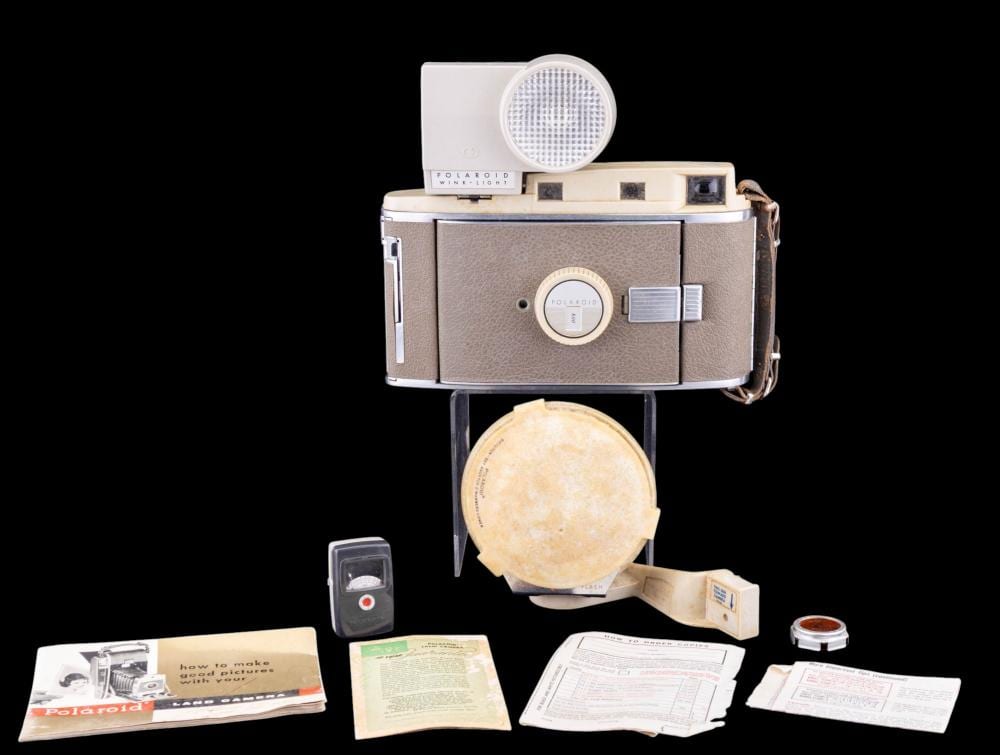
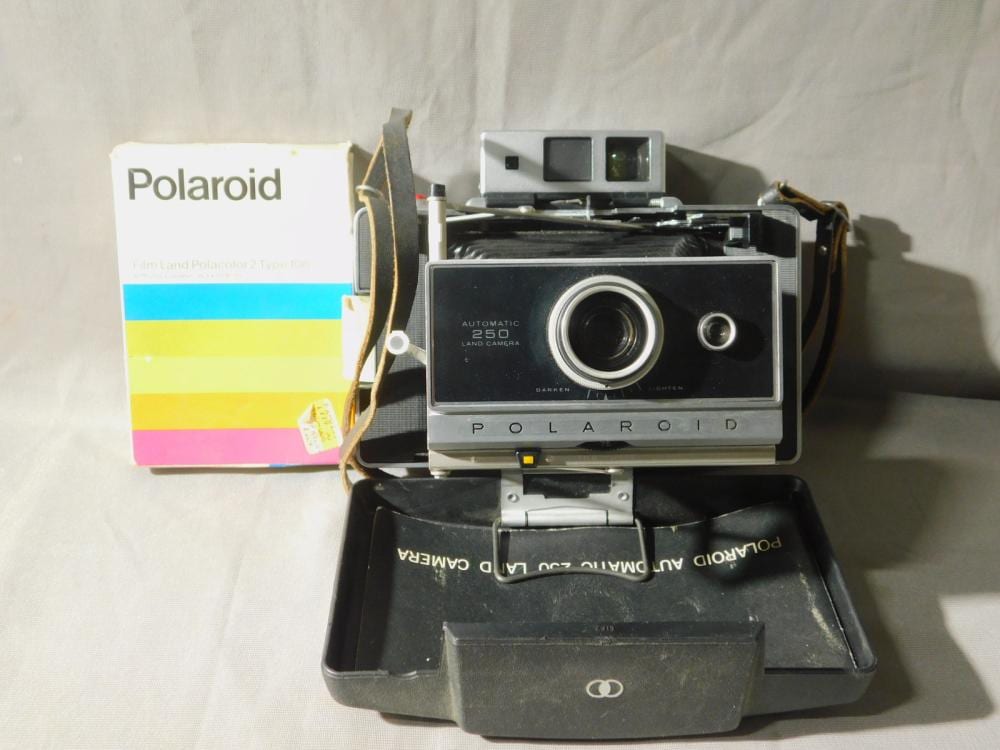
Pack Film Type 100 “peel-apart” (1960s–2000s, e.g., Land Cameras 100–400 series, professional 180/195, Big Shot)
- Film status: discontinued. Remaining Fuji FP‑100C and older black-and-white stocks are expired and expensive; results vary.
- Market effect: main interest centers on top-tier manual models (180/195/185), Zeiss rangefinder variants (250/350/360), and culturally significant bodies (Big Shot). Some cameras are valued as platforms for Instax Wide conversions, which can raise price.
Integral Film (1970s–present, e.g., SX‑70, 600 series, Spectra/Image, SLR 680/690)
- Film status: current production for SX‑70 and 600 formats (and i‑Type for newer bodies). Spectra/Image wide-format film is discontinued; only expired stock circulates.
- Market effect: strong. Cameras that shoot currently available film generally hold or appreciate in value.
Practical compatibility notes:
- SX‑70 cameras require lower-ISO film than 600 models; using 600 film in an SX‑70 typically needs a neutral density filter or a camera speed modification.
- 600 series and SLR 680/690 use 600-speed integral film.
- Integral film packs supply power to the camera via an internal battery; packfilm cameras drew power from batteries inside the camera.
- Spectra/Image bodies are wider-format integral; film is effectively unavailable new, curbing user demand but preserving display and rarity value for select editions.
Models That Command Premiums
Values fluctuate with condition, special editions, and market momentum, but this is how working, cosmetically strong examples with no major faults compare in today’s private-sale market. Check recent sold listings for the exact model before pricing.
SX‑70 Folding SLR (Model 1/Alpha 1/Model 2/Model 3)
- Why: Landmark design, still shootable, rich accessory ecosystem, easy to display.
- Typical value: one of the most sought-after Polaroids; rare finishes and pristine boxed sets higher.
SX‑70 Sonar (autofocus)
- Why: Autofocus convenience, later production refinements.
- Typical value: priced on condition; mint boxed higher.
SLR 680 / 690 (folding SLRs using 600 film with Sonar AF)
- Why: Best-in-class shooters; 600-speed film practicality; high demand.
- Typical value: among the highest of the integral-film cameras, depending on condition, region, and recent comps (690 often at the higher end).
600 Series “Box” Cameras (Sun 600, OneStep CloseUp, themed editions)
- Why: Entry-level; pop-culture tie-ins (Barbie, Spice Cam, Taz) create niche demand.
- Typical value: inexpensive; special editions and NOS/boxed examples sell for more.
Spectra/Image System
- Why: Sleek design, wider format; film scarcity limits shooter demand.
- Typical value: modest; premium for rare editions and complete sets.
Land Packfilm Professional Models (180/195/185)
- Why: Fully manual shutters with high-quality glass; no reliance on auto-exposure electronics; desirable for conversions.
- Typical value: strong demand, with complete, clean examples fetching more.
Land Packfilm Zeiss Rangefinder Series (250/350/360)
- Why: Better build, glass lenses, Zeiss rangefinder; collectible even with film scarcity.
- Typical value: priced on condition; add for working meters, clean bellows, and accessories.
Big Shot (portrait camera, 1971)
- Why: Warhol connection; distinctive look; cultural cachet.
- Typical value: priced on condition; higher with original flash and pristine cosmetics.
Early Roll-Film Land Cameras (95, 95A, 95B)
- Why: Industrial design history; display value only.
- Typical value: modest; exceptional provenance and condition sell higher.
Other value levers:
- Special editions (gold-tone SX‑70 variants, clear-bodied 600s, corporate promos).
- MiNT or expert-modified SX‑70 conversions (e.g., SLR670-type speed mods) can elevate prices.
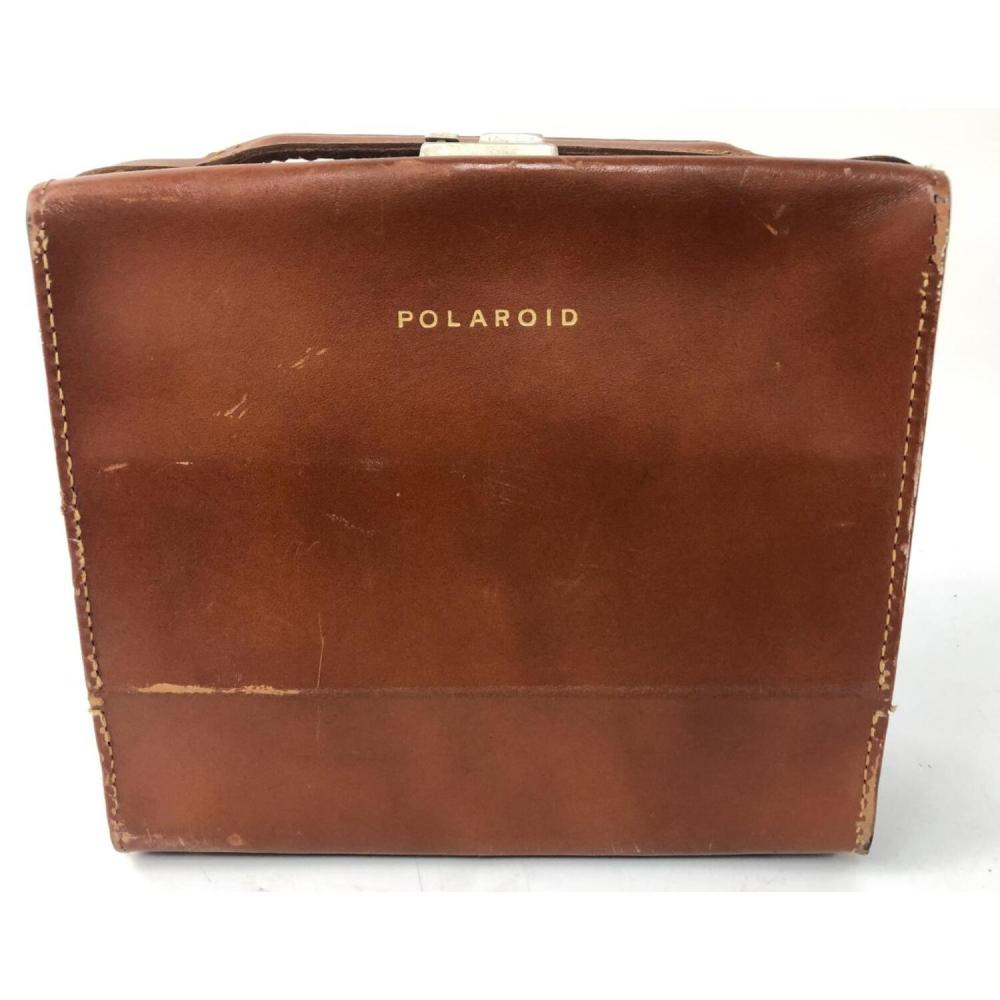
- Original packaging, matched accessories (tripod, case, flashbars, manuals), and documented provenance substantially boost value.
Condition, Originality, And Provenance
Collectors pay for originality, complete function, and clean cosmetics. Appraisers should evaluate:
- Optics and viewing systems
- SX‑70: inspect mirror, focusing screen, and finder prism for haze; lens for fungus or separation.
- Packfilm pro models: check glass lenses for scratches/haze; rangefinder patch brightness and alignment (especially Zeiss units).
- Bellows and light seals
- Dark-room flashlight test for pinholes. Repair patches affect value less on packfilm workhorses than on display pieces.
- Shutter, exposure, and rollers
- Integral cameras should cycle the dark slide and spin rollers crisply. Check the lighten/darken wheel movement. On packfilm cameras, ensure shutter actuates consistently and rollers are smooth and clean (no crystallized chemistry).
- Electronics and power
- Integral film packs contain the battery; an empty test pack with a charged cell can verify basic function. Packfilm cameras use in-body batteries; older mercury sizes require modern adapters or rewiring to common cells.
- Materials and finishes
- Leather on SX‑70s shrinks and lifts; tasteful, period-appropriate re-skins can be collectible but originality typically appraises higher. For plastic-bodied 600s, avoid cracks near the hinge and film door latch.
- Accessories and completeness
- Original boxes, paperwork, straps, lens kits, flashbars, electronic flashes, portrait/close-up kits, and tripod brackets add real value.
- Provenance
- Institutional or artist use, corporate gifts, and documented celebrity ownership command premiums. Maintain documentation: invoices, letters, exhibition catalogs, and contextual photos.
Conservation and ethical care:
- Cleaning: use a blower and soft brush first; mild camera-safe cleaners sparingly. Keep alcohol and acetone away from leatherette, painted markings, and plastics.
- Corrosion: neutralize battery leakage carefully; excessive corrosion reduces value and can be a deal-breaker.
- Do not over-restore: avoid repainting logos or polishing away anodizing. Preserve original patina on metal parts.
- Storage: cool, dry environment; store bellows cameras closed but exercise mechanisms periodically. Keep integral cameras without a film pack inserted to prevent spring deformation.
Rapid Appraisal Checklist
- Identify the format
- Roll, pack, or integral? This sets usability and demand.
- Confirm the exact model and key features
- Glass vs plastic lens; rangefinder type (Zeiss on certain packfilm models); sonar autofocus; SLR vs box.
- Evaluate cosmetics and originality
- Leather, coverings, logos, and body panels. Prefer unmodified finishes; note tasteful re-skins separately.
- Inspect optics, bellows, and seals
- Haze, fungus, scratches; bellows pinholes; foam seals on later bodies.
- Test function
- Integral: use an empty tested film pack to verify power, shutter, rollers, and ejection.
- Packfilm: check shutter actuation, meter if present, roller condition; confirm a practical battery solution exists.
- Check power/battery compartments
- Look for corrosion; note battery type or needed adapter for packfilm cameras.
- Assess accessories and completeness
- Box, manual, straps, flash, lens kits, filters, cases, timers; match serials if applicable.
- Consider film availability
- Shooting today? Integral wins. Packfilm value concentrates in pro or collectible models.
- Establish provenance
- Record any documentation or stories; verify where possible.
- Price with comps
- Use recent completed sales for the same model and condition, not just asking prices. Adjust for film reality and completeness.
FAQ
Q: Can I still shoot with a vintage SX‑70? A: Yes. New SX‑70 film is available. Make sure the camera cycles properly with a test pack, the rollers are clean, and the lighten/darken control operates. Bright light is helpful given the film’s lower ISO.
Q: What about packfilm cameras—are they useless now? A: Not at all. While new peel-apart film is discontinued, top models (180/195, Zeiss rangefinder variants, Big Shot) remain collectible. Some are converted to use Instax Wide or other systems, and many collectors value them as design or historical objects.
Q: How do I safely test an integral Polaroid without wasting film? A: Use an empty film pack with a good battery (saved from a recent pack). Insert it to power the camera, fire the shutter, check the sonar or focus mechanism if present, and verify the ejection motor runs. Do not force the film door.
Q: Do refurbished or re-skinned SX‑70s appraise higher? A: It depends. Professionally serviced cameras with documented mechanical work can command a premium, especially for shooters. Re-skins in high-quality, period-appropriate materials can help, but originality in excellent condition is usually worth more to purist collectors.
Q: What’s the biggest value killer I should look for first? A: Functional faults tied to corrosion or optical damage. Battery leakage in packfilm cameras and mirror/prism haze in SX‑70s can be expensive to correct. For any folding model, bellows pinholes are a close second.
Final thought: Vintage Polaroid cameras reward knowledge. If you can quickly identify film format, verify function, and distinguish pro-grade optics from entry-level builds, you’ll separate charming shelf pieces from true collectibles—and confidently appraise the instant icons that still make images feel like magic.