
T W maker's marks

These are reconstructions for comparison, not source photographs: how far a match goes.

4 mark variants2 cited sources

T W: Two block letters are retained in the same left-to-right arrangement inside the single rectangular cartouche; line reconstruction.Line

Mark variant 1 of 4

Medium confidence comparison reconstruction.

Two block letters are retained in the same left-to-right arrangement inside the single rectangular cartouche.
Other recorded variants

3 variants
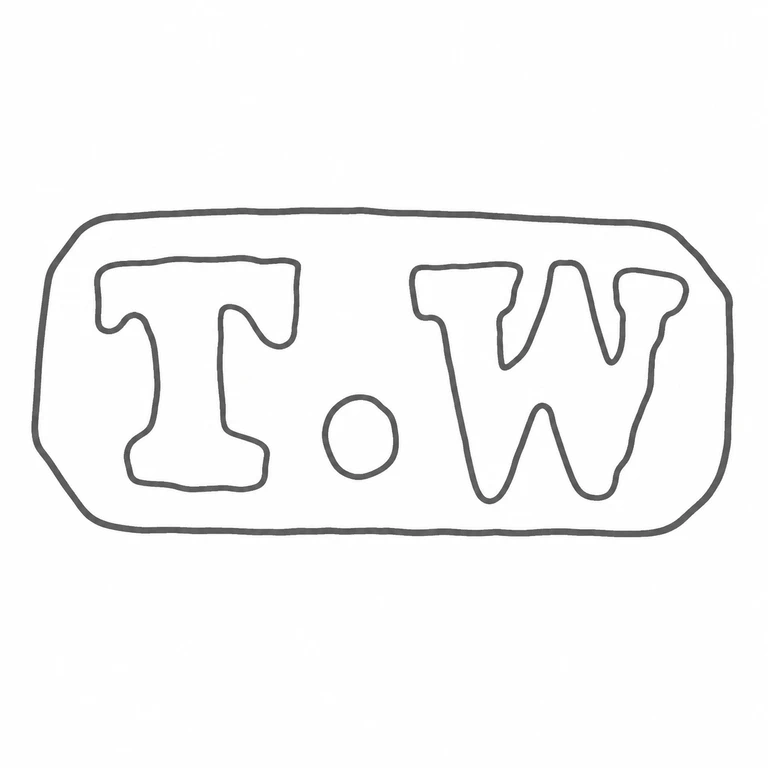
T W: Single cartouche retains T, one intervening stop and W in their original left-to-right order; line reconstruction.Line

Mark variant 2

Medium confidence comparison reconstruction.

Single cartouche retains T, one intervening stop and W in their original left-to-right order.
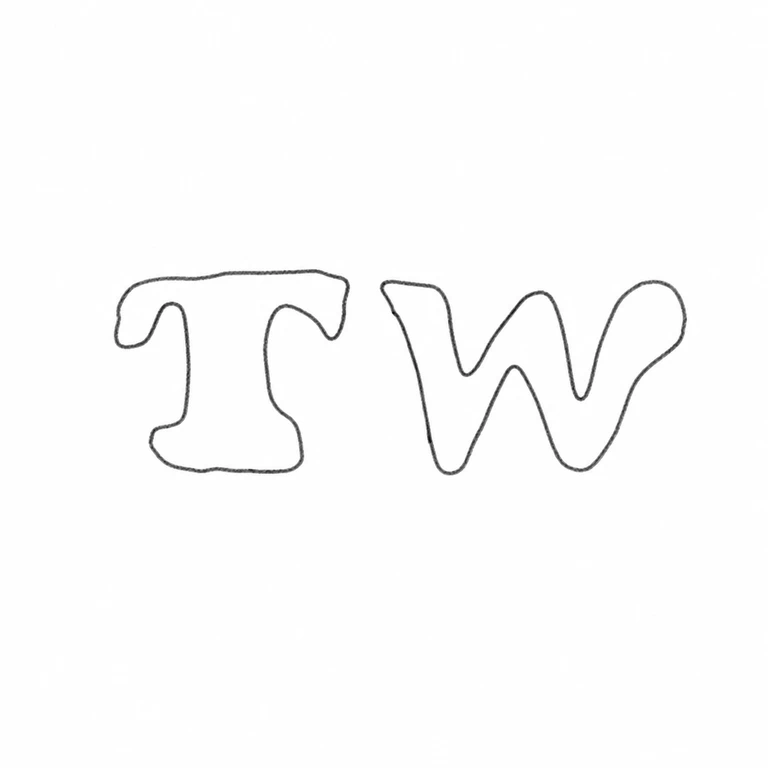
T W: Unbordered TW lettering is retained left-to-right; line reconstruction.Line

Mark variant 3

Medium confidence comparison reconstruction.

Unbordered TW lettering is retained left-to-right.

T W: The bordered T. W mark preserves its centered solid stop and broad letter placement; line reconstruction.Line

Mark variant 4

Medium confidence comparison reconstruction.

The bordered T. W mark preserves its centered solid stop and broad letter placement.

Source record

Assay office
Birmingham · London
Recorded items
Box, salt spoon, scent flask, vinaigrette · Jar lid · Trophy · Cruet · Watch case
Source dates
1978 · 4 more source statements

Original source statements:

  • 1978
  • 1858
  • 1897
  • 1769
  • 1791..1814
Source notes
  • Mark not recorded in Birmingham Early Silver Hallmarks database
  • Included by Grimwade Grimwade, Arthur - London Goldsmiths, 1697-1837: Their Marks and Lives, ; Faber & Faber, 1990 as an "Unregistered Mark" but identified by him as "?Thos. Wallis". It was probably recorded in the lost 1758-1773 Largeworkers' Register.
  • Note: this mark not shown in Culme Culme, John - Directory of Gold and Silversmiths, Jewellers and Allied Traders 1838-1914, ; Antique Collectors' Club, 1987

Sources

2 cited sources

Source labels and comparison limits

Photograph your object — free first look