Lot description
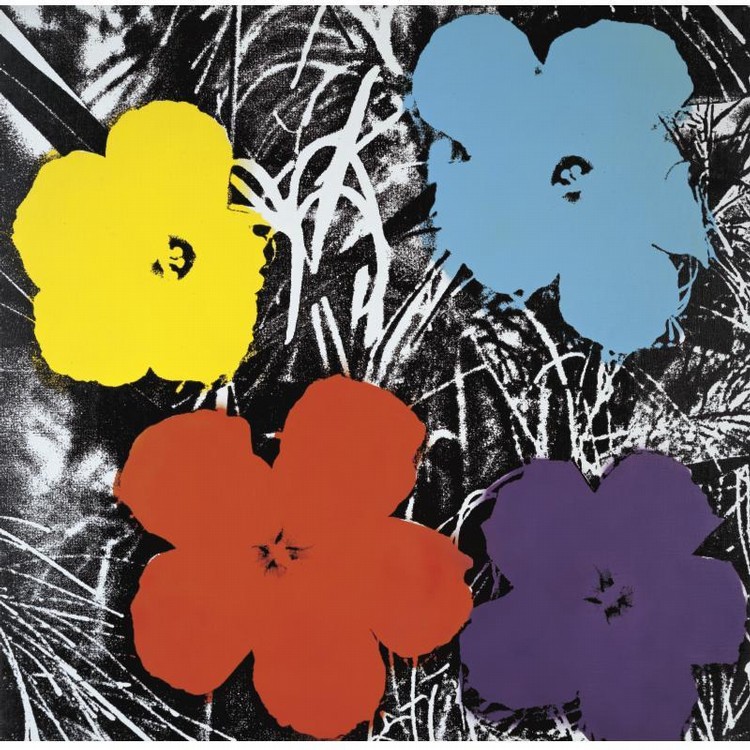
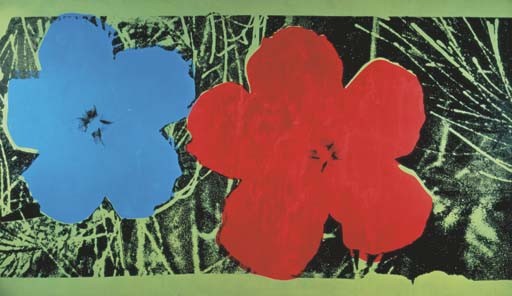
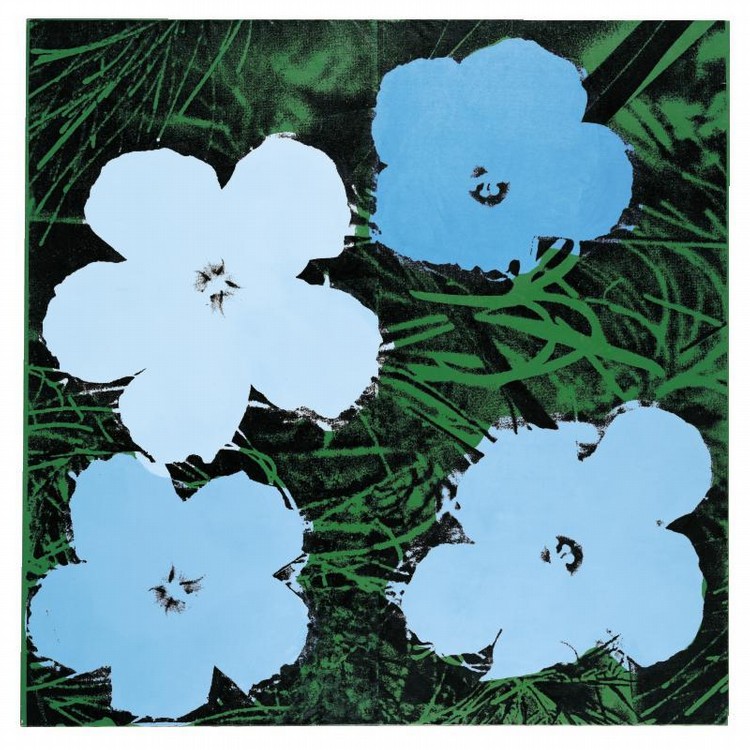
PROPERTY FROM A PRIVATE EUROPEAN COLLECTOR 1928-1987 FLOWERS 82 x 82 in. 208.3 x 208.3 cm. acrylic and silkscreen ink on canvas Executed in August - September 1964. PROVENANCE Leo Castelli Gallery, New York (LC #135) The Bert Kleiner Foundation, Beverly Hills Bruno Bischofberger, Zurich Acquired by the present owner from the above EXHIBITED New York, Leo Castelli Gallery, Andy Warhol, November - December 1964 Worcester Art Museum, The New American Realism, February - April 1965, n.p., illustrated Krefeld, Kaiser Wilhelm Museum, extended loan, November 1983 - April 1984, cat. no. 402, p. 72, illustrated in color and illustrated in color on the back cover Krefeld, Kaiser Wilhelm Museum, extended loan, 1997 Krefeld, Museum Haus Lange, Werke der Pop Art, March - April 2002, p. 4, illustrated in color (installation view) and p. 9, illustrated in color LITERATURE Rainer Crone, Andy Warhol, New York, 1970, cat. no. 572 Rainer Crone, Andy Warhol, New York, 1976, cat. no. 924 Dieter Honisch and Jens Christian Jensen, Amerikanische Kunst von 1945 bis heute, Berlin, 1976, p. 182 Heiner Bastain, John Coplans and Jean Baudrillard, Andy Warhol: Silkscreens from the Sixties, New York, 1990, pl. no. 58, n.p., illustrated in color Georg Frei and Neil Printz, eds., The Andy Warhol Catalogue Raisonné: Paintings and Sculptures, Volume 2A: 1964 - 1969, New York, 2004, cat. no. 1325, p. 298, illustrated in color, fig. 55-56, p. 301, illustrated twice (installation views from Leo Castelli Gallery, 1964) and fig. 60c, p. 347, illustrated in color (installation view from Leo Castelli Gallery, 1964, during a poetry reading by Gerard Malanga on December 16, image reversed) NOTE One of the indelible images of twentieth-century art, Flowers is one of only three canvases of this image in the 82-inch format exhibited at Andy Warhol's first sell-out show at the Leo Castelli Gallery in New York in 1964. Hung in the centre of a row of three, the blue petals of varying hues in the present work were juxtaposed with a canvas of virginal white flowers on the left and crimson flowers on the right. Warhol only produced a small number of paintings in this size. To date, nine canvases from the summer of 1964 and two others from late 1964/early 1965 have been recorded. Having left Stable Gallery at the end of the previous season, Warhol was comparatively free during the summer of 1964 to concentrate on preparing work for his inaugural show at Leo Castelli scheduled in November of that year. An artist who regularly worked in series, Warhol characteristically preferred to dedicate his gallery exhibitions to a single theme, subject or sequence, as epitomized by the seminal exhibition of 32 Campbell's Soup Cans at the Ferus Gallery in 1962. Warhol's move to Leo Castelli provided the catalyst for a new set of works that all sold immediately and quickly became synonymous with the Pop movement which was rapidly gaining international credence. Warhol appropriated his source image from a colour photograph of seven hibiscus blossoms printed as a fold-out in the June 1964 issue of Modern Photography, intended to illustrate the varying visual effect of different exposure times and filter settings. No doubt the seriality of the images held immediate appeal for Warhol, however it was through a sequence of interventions and manipulations-- cropping the image and rotating one of the flowers 180 degrees -- that Warhol derived his final composition. The square format, witnessed in Flowers, appealed because of the denial of a fixed upright and the range of orientations that it affords: "I like painting on a square because you don't have to decide whether it should be longer-longer or shorter-shorter or longer-shorter: it's just a square."(David Bourdon, Warhol, New York, 1989, p. 191) The installation at Leo Castelli exploited this to its full pictorial potential, arranging the canvases like tesserae on the walls to elicit subtle variances and rhythmic patterns across the matrix of square canvases, the amorphous curvilinear forms of the quasi-abstract petals dematerialising the rectilinear grid-like structure created by the gaps between the canvases. Between June and September 1964, Warhol's studio -- the Factory -- became a production line for Flower paintings of different sizes. Throughout this phase of his artistic development, Warhol pioneered and refined the screenprinting process that he had made his own. The first artist to make extensive use of this revolutionary process, Warhol was attracted by its affinity with the mass-producing image-making machines of consumer culture and by its anonymous, luxuriously slick facture which effaced the individual hand of the artist. By removing himself from the creative equation, Warhol sought to communicate more directly and guilelessly in an established currency of exchange that blended high and low culture imagery. Each canvas is made up of three distinct phases: firstly, the forms of the flowers are stencilled, masked and the coloured paints applied by hand onto the primed canvas; once dry, the flowers are masked and the green acrylic of the surrounding ground is applied with a wide brush in broad swathes, leaving barely discernible traces of the artist's brush; finally the screenprint image is applied over the dried image. In the 82-inch series, given the size of the canvases, two oblong screens were used to make up the square, leaving a barely visible vertical seam running down the center of the composition. The idea to make flowers the subject of a major series was apparently suggested to Warhol by Henry Geldzahler, then curator of the Metropolitan Museum of Art in New York. By choosing to depict the disarmingly innocuous motif of flowers, Warhol was consciously and wilfully engaging with an established canon of still-life painting stretching back to bygone centuries: "With the Flowers, Andy was just trying a different subject matter. In a funny way, he was kind of repeating the history of art. It was like, now we're doing my Flower period! Like Monet's water lilies, Van Gogh's flowers, the genre." (Gerard Malanga as cited in A Year in the Life of Andy Warhol, New York, 2003, p. 74).Warhol's updated interpretation of this age-old motif, however, is consciously banal and synthetic: in the first instance he rejects the hierarchical compositions of the Dutch still-life tradition in favour of an overhead perspective which banishes the horizon and flattens and distorts the shape of each petal; secondly, the complex colour harmonies of, say, Monet's water lilies are dispensed with in favour of planar zones of flat color. Indeed, throughout the series and particularly with the blue in the present work, Warhol tended to choose synthetic, unnatural colours whose artificial hues belied the natural expectation. Further, when Warhol converted the original colour photograph into a two-tone screen he radically heightened the contrast so that in the registration of the image on canvas the details are lost and the forms become increasingly abstract. As a result, the Flower paintings are the most abstract works that Warhol produced in the 1960s. After the Death and Disaster series of 1962-1963 -- which depicted sensational images of electric chairs, suicides and horrendous car crashes -- the motif of four blossoming hibiscus flowers appears almost anodyne, a palliative to the horror and violence of previous imagery. Despite its apparent decorative quality, however, which doubtless appealed to Warhol in his program to make a truly popular art form, the motif is laced with the tragedy and morbidity that permeates Warhol's entire oeuvre. Forever striving to capture the intangible transience of fame, the motif of the flourishing hibiscus serves as a metaphor for the brevity and unsustainability of celebrity -- the flash of beauty that suddenly becomes tragic under the viewer's gaze. Exuberant now, but soon to perish, the flower can also be seen on a more generic level as a symbol of the fragility of life, a haunting contemplation of death that is never far removed from Warhol's work.