Appraisal for IRS Purposes: Qualified Report Evidence

Prepare an appraisal for IRS purposes by documenting fair market value, report use, qualified appraiser credentials, timing, Form 8283 needs, photos, and records.

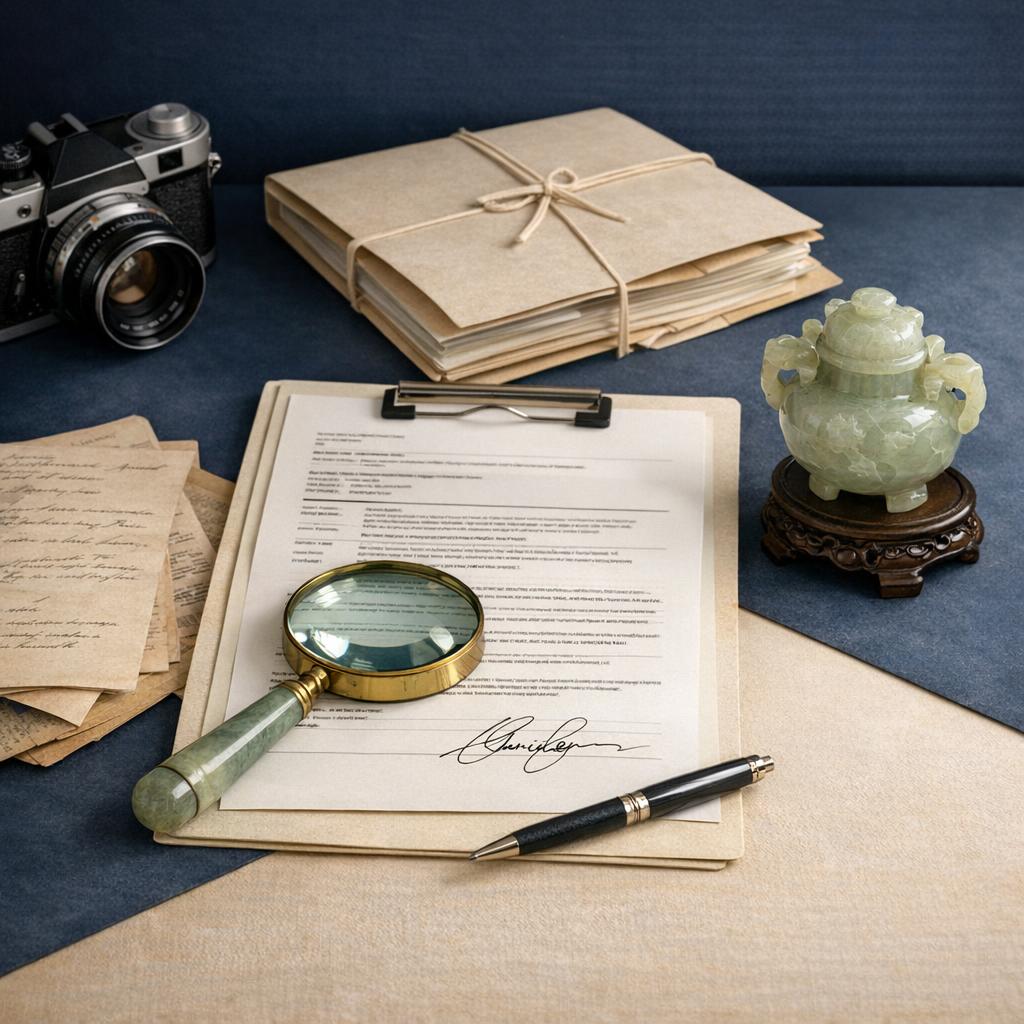
Reference image for documenting appraisal for IRS purposes including fair market value, report use, qualified appraiser credentials, timing, Form 8283 needs, photos, and records
Reference image for documenting appraisal for IRS purposes including fair market value, report use, qualified appraiser credentials, timing, Form 8283 needs, photos, and records. Reference image; item-specific appraisal depends on submitted photos and documentation.

Turn this research into action

Start an IRS-purpose appraisal intake

Upload photos, dimensions, condition, ownership records, donation or estate timing, value purpose, prior reports, and any Form 8283 or tax-documentation requirements.

  • 15k+collectors served
  • 24havg delivery
  • A+BBB rating

Secure Stripe checkout · Full refund if we can’t help

Start IRS appraisal

How We Research Valuation Data

Our appraisal guides are based on auction results, dealer pricing data, and professional appraiser insights. We may earn a commission when you use our free professional appraisal service. Learn about our editorial standards.

Start an IRS-purpose appraisal intake

Upload photos, dimensions, condition, ownership records, donation or estate timing, value purpose, prior reports, and any Form 8283 or tax-documentation requirements.

  • Expert report with photos and comps
  • Fast turnaround
  • Fixed, upfront pricing
Start IRS appraisal

No obligation. Secure upload.

The Why and What of Appraisal for Irs Purposes: appraisal and value basics

The Why and What of Appraisal for Irs Purposes research should start with identification, condition, provenance, and recent comparable sales. Use this guide to compare the signals that matter before paying for a formal appraisal or deciding whether to sell.

When art, antiques, and collectibles cross paths with taxes, definitions and documentation matter. The IRS relies on appraisals to support fair market value (FMV) for noncash charitable contributions, estate and gift tax reporting, and certain losses.

This guide focuses on the practical: when an appraisal is required, what “qualified” means in IRS terms, how to structure a defensible report, and how to build an audit-ready file without overpaying for the wrong type of valuation.

Educational content only — not tax or legal advice. Always follow the latest IRS instructions and consult a qualified tax professional for your situation.

Two-step intake

Need an IRS-ready value for your item?

Share your object details and your tax purpose (donation, estate, gift). We’ll route it to the right specialist and tell you what photos and documentation matter before you file.

Step 1 of 2

Secure intake. Routed to the right specialist. Checkout only if you decide to proceed.

Fair market value (FMV) vs. other value types

The IRS anchor is fair market value: the price at which property would change hands between a willing buyer and willing seller, neither under compulsion, both having reasonable knowledge of relevant facts. For art and antiques, FMV is typically supported by recent sales of comparable works in the appropriate market (often auction; sometimes reputable dealer sales).

Don’t confuse FMV with:

  • Retail replacement value (insurance): often higher than FMV.
  • Liquidation value (forced sale): rarely the correct IRS standard.
  • Cost/basis: important for limits and gain/loss, but not the FMV starting point.

For large holdings, appraisers may analyze “blockage” or market absorption (whether selling many similar items would depress prices). Whatever the conclusion, the IRS expects the appraiser to show the reasoning and the evidence.

At-a-glance: common IRS thresholds & paperwork (donations)

Thresholds can change and special categories exist (vehicles, publicly traded securities, inventory, etc.). Use this as a quick checklist and confirm with current IRS instructions.
Reference image for documenting appraisal for IRS purposes including fair market value, report use, qualified appraiser credentials, timing, Form 8283 needs, photos, and records
Decision tree for typical donation thresholds (educational summary). Credit: Appraisily (SVG)
Scenario Typical requirement What to keep/attach
Total noncash contributions > $500 (year) Form 8283 Donation records + item description + basis info
Any item (or group of similar items) > $5,000 Qualified appraisal + 8283 Section B Signed appraisal + appraiser + donee signatures
Art valued > $20,000 Attach full signed appraisal Appraisal + images sufficient to identify work
Any property valued > $500,000 Attach qualified appraisal Appraisal as filed + complete support file

What the IRS means by “qualified appraiser” and “qualified appraisal”

In practice, a compliant IRS appraisal is less about fancy formatting and more about independence, specialization, and a defensible method anchored to the correct effective date.

Must-have element What it looks like in a real report
Specific identification Medium, measurements, signatures/marks, condition notes, and photographs
Correct value standard FMV (not insurance replacement), with an effective date (donation date, date of death, etc.)
Evidence + adjustments Comparable sales with rationale and adjustments for condition, size, edition, provenance, venue
Independence No contingent fee; clear scope, intended use, and credentials (often USPAP)

Photo checklist: the images that strengthen an IRS appraisal file

Even before you hire an appraiser, you can create a clean evidence trail. Photograph the parts that identify the object and explain value differences.

Reference image for documenting appraisal for IRS purposes including fair market value, report use, qualified appraiser credentials, timing, Form 8283 needs, photos, and records
Hallmarks & purity stamps (jewelry/silver). Credit: Appraisily (GPT Image)
Reference image for documenting appraisal for IRS purposes including fair market value, report use, qualified appraiser credentials, timing, Form 8283 needs, photos, and records
Raking light reveals repairs and surface issues (paintings). Credit: Appraisily (GPT Image)
Reference image for documenting appraisal for IRS purposes including fair market value, report use, qualified appraiser credentials, timing, Form 8283 needs, photos, and records
Casting seams/chasing marks (bronze sculpture). Credit: Appraisily (GPT Image)
Reference image for documenting appraisal for IRS purposes including fair market value, report use, qualified appraiser credentials, timing, Form 8283 needs, photos, and records
Signature details (paintings/works on paper). Credit: Appraisily (GPT Image)
Reference image for documenting appraisal for IRS purposes including fair market value, report use, qualified appraiser credentials, timing, Form 8283 needs, photos, and records
Edition marks and emboss chops (prints). Credit: Appraisily (GPT Image)
Reference image for documenting appraisal for IRS purposes including fair market value, report use, qualified appraiser credentials, timing, Form 8283 needs, photos, and records
Date/variety and mint mark (coins). Credit: Appraisily (GPT Image)
Reference image for documenting appraisal for IRS purposes including fair market value, report use, qualified appraiser credentials, timing, Form 8283 needs, photos, and records
Caseback reference marks (watches). Credit: Appraisily (GPT Image)
Reference image for documenting appraisal for IRS purposes including fair market value, report use, qualified appraiser credentials, timing, Form 8283 needs, photos, and records
Maker label and joinery evidence (furniture). Credit: Appraisily (GPT Image)
  • Take one “whole object” shot from multiple angles, then add detail shots for signatures/marks.
  • Include a measurement reference (ruler/tape) and capture serial/model/edition details.
  • Document condition honestly: cracks, repairs, missing parts, overpainting, replaced stones, etc.

What a qualified appraisal report should contain (collector-friendly)

Collectors often think “appraisal” means a single number. For IRS purposes, the safer mindset is: a file the IRS can follow.

  • Scope & purpose: donation vs estate vs gift vs loss; intended use; effective date.
  • Identification: full description + photos sufficient to identify the property.
  • Method: valuation approach (often sales comparison) and why that market level was chosen.
  • Comparable sales: citations with venue/date/lot/price, plus adjustments and weighting.
  • Condition: disclosed issues and how they affect value.
  • Appraiser qualifications & independence: specialty, education/experience, no contingent fee.

Common IRS appraisal pitfalls (and how to avoid them)

  • Using insurance replacement value instead of FMV for a deduction.
  • Weak identification (no measurements, no mark photos, no condition disclosure).
  • Unexplained comps (no rationale, wrong market level, or outdated sales).
  • Contingent fees or conflicts that undermine independence.
  • Missing signatures/timing for Form 8283 Section B or missing attachment rules for high values.

Practical checklist: from object to IRS filing

  1. Define the purpose and effective date. Donation (date of contribution), estate (date of death), gift (date of gift), loss (before/after event).
  2. Choose the right appraiser. Specialty alignment + verifiable credentials; independent; ideally USPAP-compliant.
  3. Assemble documentation. Invoices, provenance, prior appraisals, conservation reports, COAs, exhibition/publication records.
  4. Confirm the correct value standard. FMV for IRS (not retail replacement).
  5. Support value with comps. Recent, relevant, explained; adjust for meaningful differences.
  6. Check thresholds and attachments. Form 8283 at $500; qualified appraisal around $5,000; attach appraisal for high values.
  7. Complete signatures and timing. Appraisal date windows and required appraiser/donee signatures where applicable.
  8. Retain a complete file. Keep the report, comps, images, correspondence, and any expert reports.

FAQ: quick answers for donors and executors

Does an insurance appraisal work for the IRS?
Usually not. Insurance appraisals often use retail replacement value; the IRS standard is FMV.

Can I use an online marketplace listing as my value?
Listings are not the same as realized prices. A qualified appraisal typically relies on credible sales evidence (often auction results) and explains adjustments.

What if the charity sells my donated item?
If the charity disposes of certain donated property within three years, it may file Form 8282. Keep your paperwork and watch for correspondence.

What if the item sold in another currency?
A defensible appraisal documents the conversion method and date, so the FMV conclusion is coherent in USD.

Recent auction comps (examples)

To help ground this guide in real market activity, here are recent example auction comps from Appraisily’s internal database. These are educational comparables (not a guarantee of price for your specific item).

Image Description Auction house Date Lot Reported price realized
Warrington Colescott, Your Friends At The IRS, Etching RoGallery 2022-04-14 47 USD 400
Warrington Colescott, Your Friends At The IRS, Etching RoGallery 2021-02-18 124 USD 325
Warrington Colescott, Your Friends At The IRS, Etching RoGallery 2015-06-25 1096 USD 350
Warrington Colescott, Your Friends At The IRS, Etching RoGallery 2014-07-17 114 USD 500
Reference image for documenting appraisal for IRS purposes including fair market value, report use, qualified appraiser credentials, timing, Form 8283 needs, photos, and records Hammer-s/s double rifle Unknown Ferlach manufacturer (Veratschnig?) Cal. 8 x 57 IRS #6249 § C Joh. Springer's Erben Auctioneers 2025-11-13 620 EUR 5,500
Reference image for documenting appraisal for IRS purposes including fair market value, report use, qualified appraiser credentials, timing, Form 8283 needs, photos, and records 1965 Triumph TR4 A IRS Humer Granner & Co 2024-10-19 9 EUR 9,800
Reference image for documenting appraisal for IRS purposes including fair market value, report use, qualified appraiser credentials, timing, Form 8283 needs, photos, and records ** R. WILKE (NAUEN) A HEYM-ENGRAVED STENDEBACH 1905 PATENT 8X57 IRS LEVER-COCKING TRIGGERPLATE ACTION NON-EJECTOR DOUBLE RIFLE, no. 171 Holts Auctioneers 2023-07-11 1208 GBP 15,000
Reference image for documenting appraisal for IRS purposes including fair market value, report use, qualified appraiser credentials, timing, Form 8283 needs, photos, and records Irsam (Klaten, C. Java, 1942 - 2007) - Mythical Figures Sidharta Auctioneer 2019-08-03 23 IDR 12,000,000
Reference image for documenting appraisal for IRS purposes including fair market value, report use, qualified appraiser credentials, timing, Form 8283 needs, photos, and records IRSAM | A Mother's Love 2 (Kasih Ibu 2), 2000 Global Auction 2025-06-22 151 SGD 1,900
Reference image for documenting appraisal for IRS purposes including fair market value, report use, qualified appraiser credentials, timing, Form 8283 needs, photos, and records IRSAM | Beloved Bird (Burung Klangenan), 1998 Global Auction 2025-05-24 84 SGD 3,200

Disclosure: prices are shown as reported by auction houses and are provided for appraisal context. Learn more in our editorial policy.

Search variations collectors ask

Readers often Google:

  • what is a qualified appraisal for IRS donation purposes
  • do I need an appraisal for Form 8283 over 5000
  • IRS appraisal requirements for art over 20000
  • how to determine fair market value for donated antiques
  • what documents do I need for an IRS appraisal report
  • can an insurance appraisal be used for IRS fair market value
  • what happens if charity sells donated artwork within 3 years
  • how to choose a qualified appraiser for IRS purposes

Each question is addressed in the checklists and examples above.

References (official IRS resources)

Choose your next step

Use the path that matches the decision you need to make about the item.

Need a signed report?

Use this for insurance, estate, donation, resale, or documented value decisions.

Start a signed report

Not sure it is worth appraising?

Start with a lower-friction screen to understand the likely category, evidence, and next step.

Use the free screener

Need local or specialist help?

Compare directory options when the work needs in-person review or a specialist near you.

Find local specialists

See what the report looks like

Sample reports show how photos, comparable evidence, condition notes, and a value conclusion are documented.

Start an IRS-purpose appraisal intake

Upload photos, dimensions, condition, ownership records, donation or estate timing, value purpose, prior reports, and any Form 8283 or tax-documentation requirements.

  • Expert report with photos and comps
  • Fast turnaround
  • Fixed, upfront pricing
Start IRS appraisal

No obligation. Secure upload.

Continue your valuation journey

Choose the next best step after reading this guide

Our directories connect thousands of readers with the right appraiser every month. Pick the experience that fits your item.

Antique specialists

Browse the Antique Appraiser Directory

Search 300+ vetted experts by location, specialty, and response time. Perfect for heirlooms, Americana, and estate items.

Browse antique experts

Modern & fine art

Browse the Art Appraisers Directory

Compare fine art, contemporary, and design appraisers by city and specialty in our public directory.

Browse art experts

Machine-readable summaries

Use these machine-friendly references for AI and crawler discovery of Appraisily content.

Ready for pricing guidance?

Start a secure online appraisal

Upload images and details. Certified specialists respond within 24 hours.

Start IRS appraisal