
Spy Uncle Sam Ward print: appraisal and value basics
Spy Uncle Sam Ward print research should start with publication details, print process, sheet size, margins, condition, provenance, and item-specific market evidence. Use this guide to compare the signals that matter before paying for a formal appraisal or deciding whether to sell.
The phrase “Vanity Fair print” is used by collectors to mean the full-length color caricatures published weekly in the British magazine Vanity Fair (1868–1914). The most famous artist was Sir Leslie Ward (1851–1922), who signed many portraits as “Spy.”
If you have a sheet labeled “Uncle Sam” Ward, January 1880, your item is usually the Samuel Ward caricature published by Vanity Fair on 10 January 1880, either pulled from the magazine or sold as a standalone print. Value is driven less by the historical celebrity and more by originality (period vs later reprint), condition (foxing, folds, trimming), and presentation (clean margins and archival framing).
What similar items actually sold for
To help ground this guide in real market activity, here are recent example auction comps from Appraisily’s internal database. These matched sales are market context only, not an object estimate or identification, and they do not guarantee a price for your specific vanity fair spy.
Shown USD range: USD 10-USD 325. Median of these 13 USD examples: USD 50.
| Comparable | What sold | Auction house | Date | Lot | Source-reported amount |
|---|---|---|---|---|---|
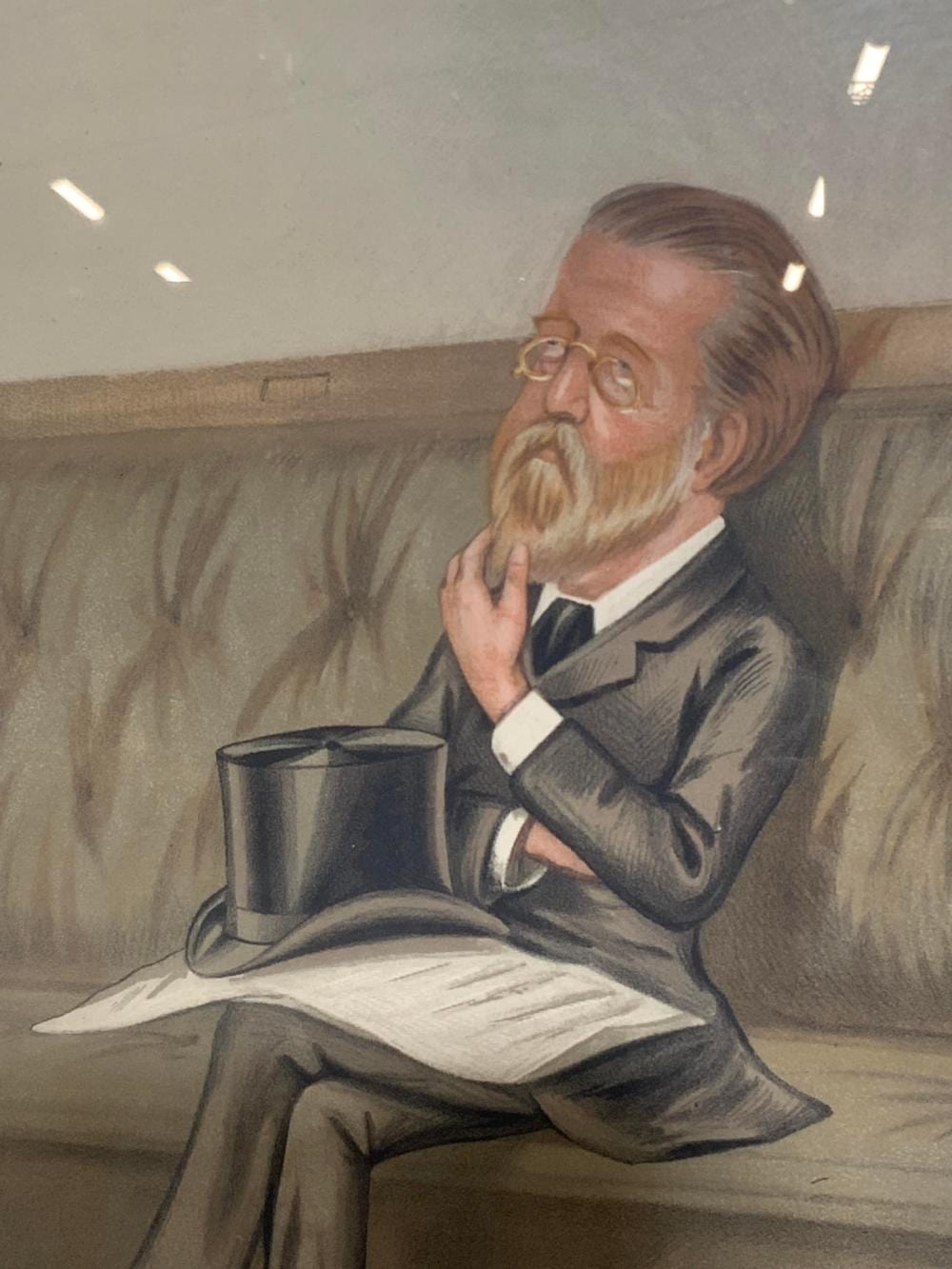 |
Spy Mcarthy VANITY FAIR Irish History Lithograph | The Benefit Shop Foundation Inc. | 2022-01-19 | 98 | USD 15 (buyer’s-premium treatment unknown) |
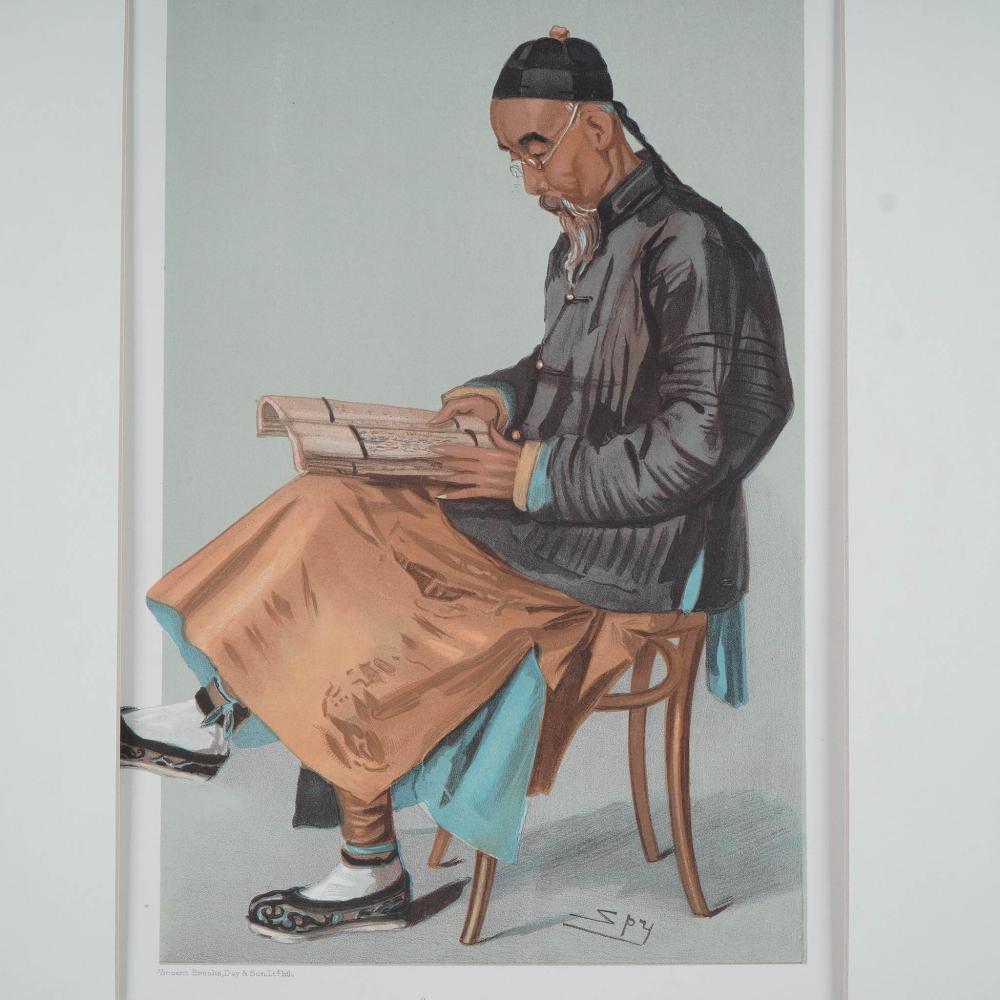 |
Spy, Vanity Fair Antique Lithograph China in London | Lion and Unicorn | 2025-05-04 | 272 | USD 25 (buyer’s-premium treatment unknown) |
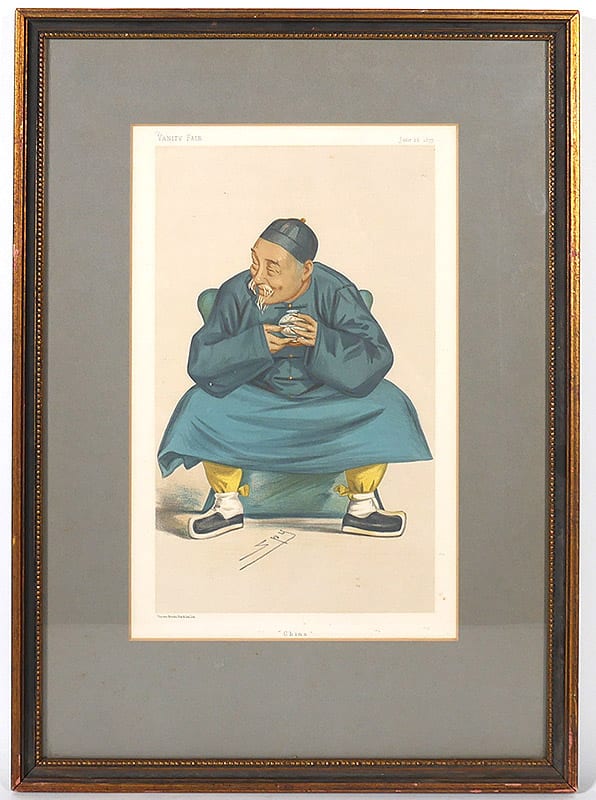 |
Vanity Fair 1877 "China" Colored Lithograph Spy | Blackwell Auctions LLC | 2017-05-13 | 232 | USD 50 (buyer’s-premium treatment unknown) |
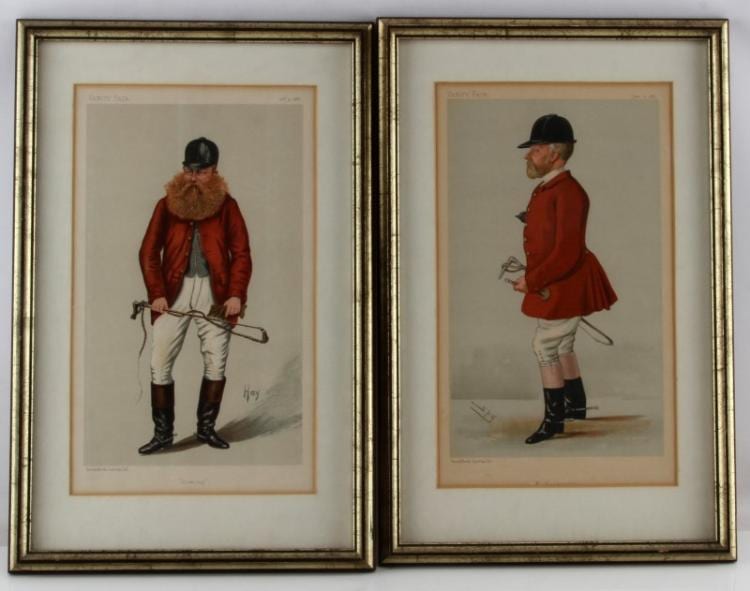 |
LESLIE WARD SPY & HAY VANITY FAIR ART LITHOGRAPH | Affiliated Auctions & Realty LLC | 2018-04-19 | 9003 | USD 10 (buyer’s-premium treatment unknown) |
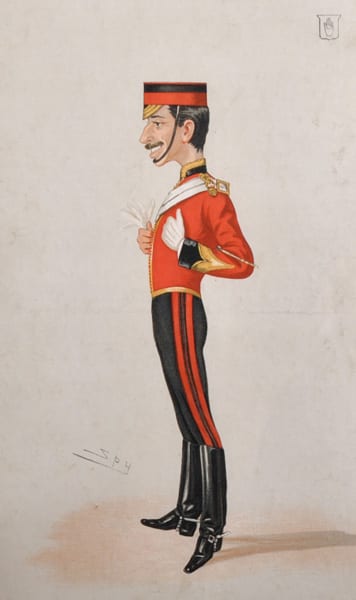 |
After Leslie Matthew Ward 'Spy' (1851-1922) British. "The Mite", a Vanity Fair, Print, 12.5" x 7.5". | John Nicholson's Fine Art Auctioneers & Valuers | 2017-08-02 | 29 | GBP 30 (buyer’s-premium treatment unknown) |
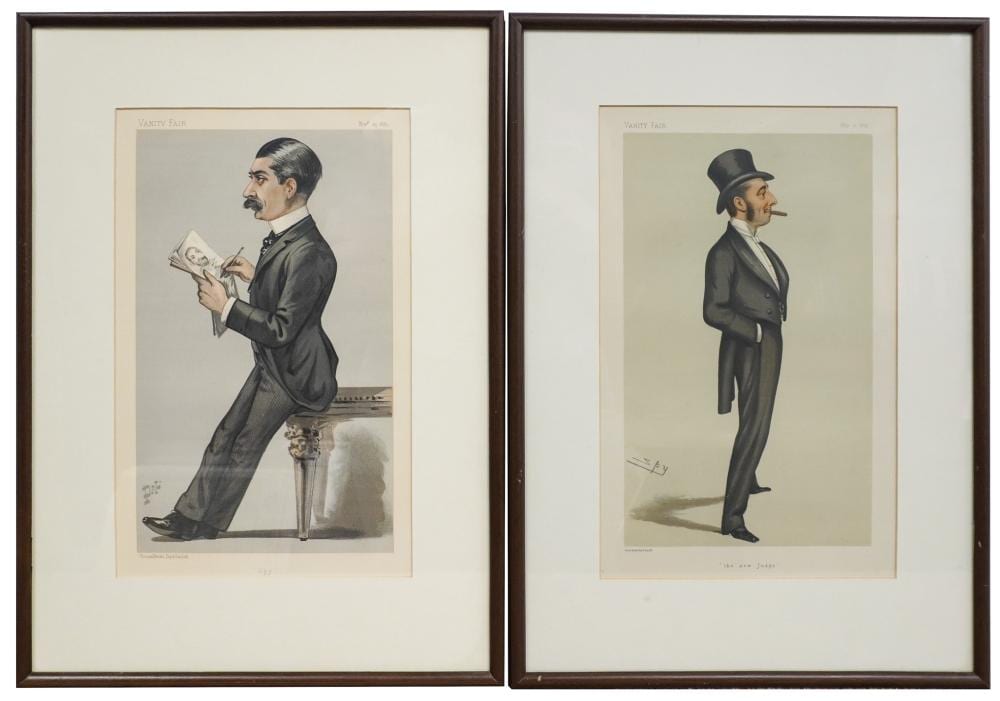 |
After Sir Leslie Matthew Ward (British 1851 - 1922), 'Spy' and ' The New Judge', Two Vanity Fair Caricatures, Each a Lithograph in Color, Frame of Each: 20 x 14 in. (50.8 x 35.6 cm.) | Weschler's | 2026-04-28 | 660 | USD 100 (buyer’s-premium treatment unknown) |
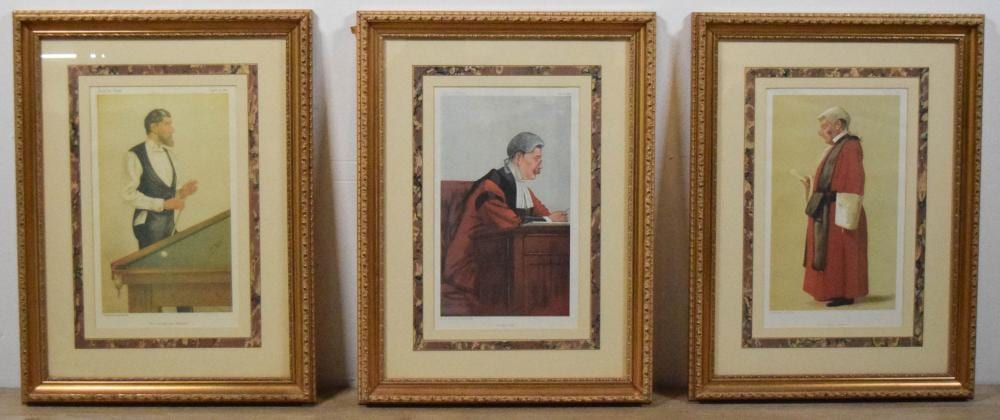 |
3 Vanity Fair Spy Prints | Willow Auction House | 2025-07-10 | 46 | USD 50 (buyer’s-premium treatment unknown) |
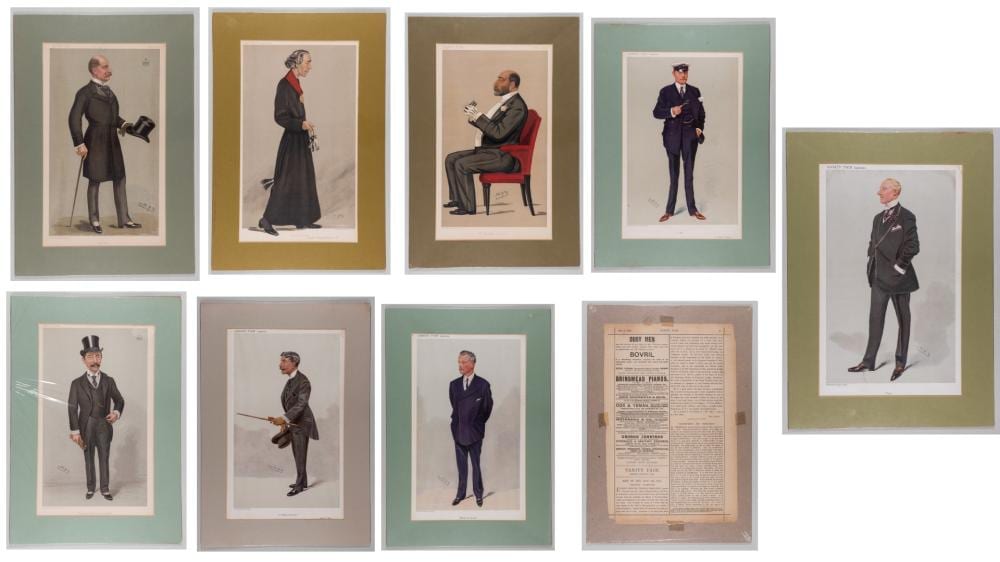 |
8 VANITY FAIR SPY PRINTS | Fairhill Auction LLC | 2022-11-22 | 454 | USD 100 (buyer’s-premium treatment unknown) |
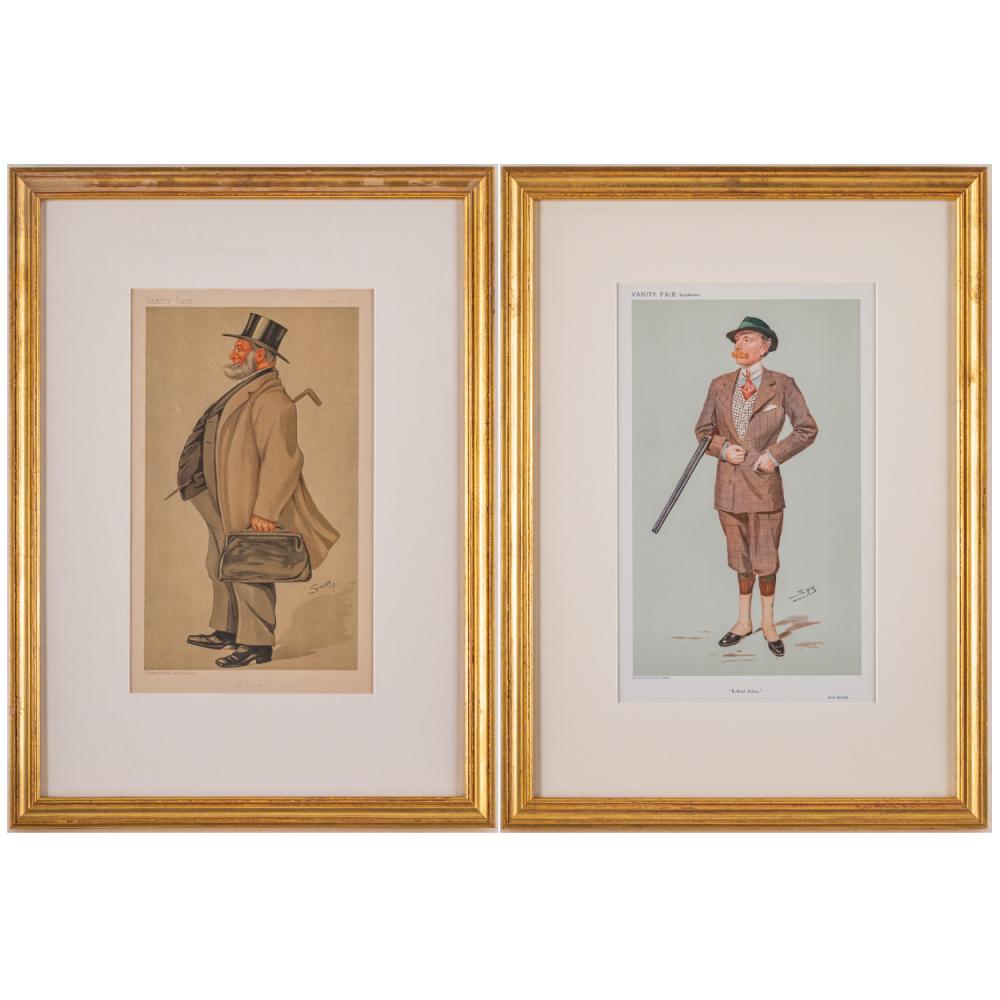 |
Two Original Vanity Fair Spy Cartoons | Gray's Auctioneers | 2023-12-06 | 237 | USD 60 (buyer’s-premium treatment unknown) |
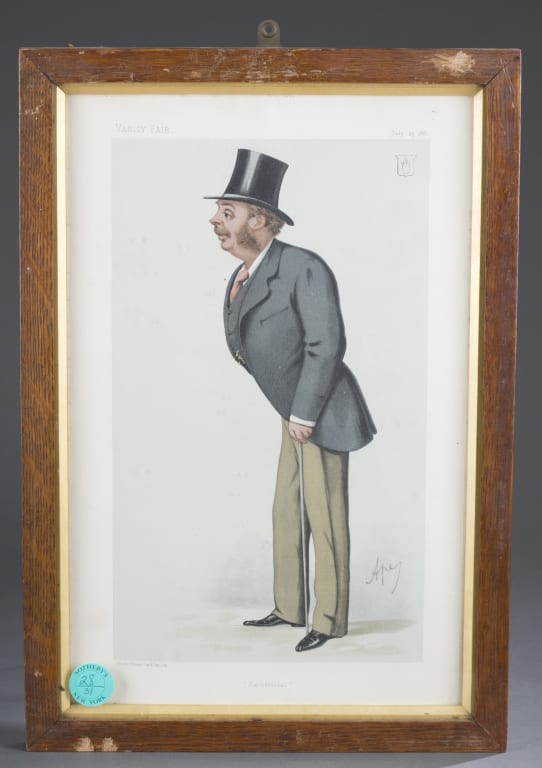 |
Set of Five Vanity Fair Spy Prints | Quinn's Auction Galleries Central Virginia | 2015-09-26 | 498 | USD 100 (buyer’s-premium treatment unknown) |
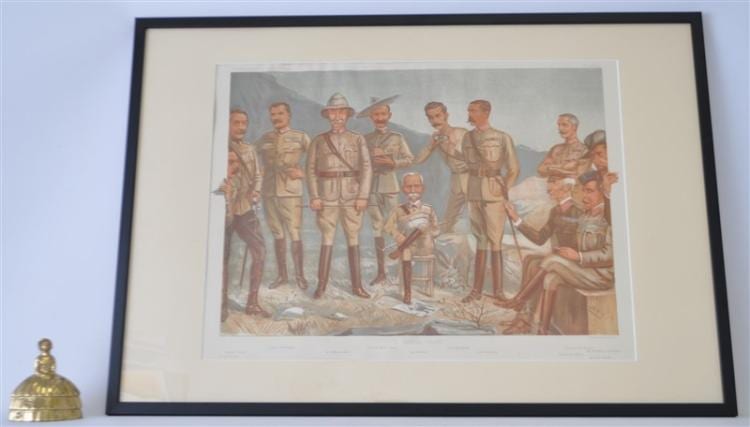 |
1900 FRAMED A GENERAL GROUP VANITY FAIR SPY | Charleston Estate Auctions | 2016-09-25 | 98 | USD 100 (buyer’s-premium treatment unknown) |
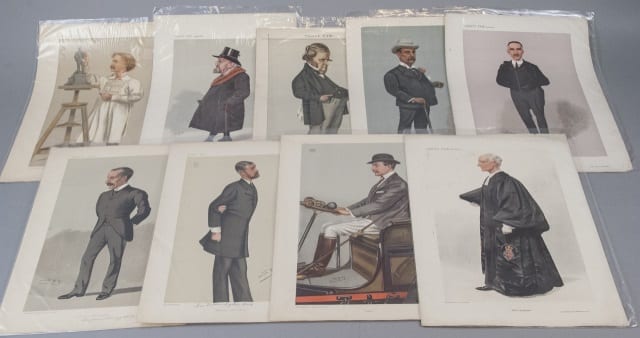 |
19th Century Vanity Fair SPY Lithography Prints | Greenwich Auction | 2018-02-11 | 587 | USD 20 (buyer’s-premium treatment unknown) |
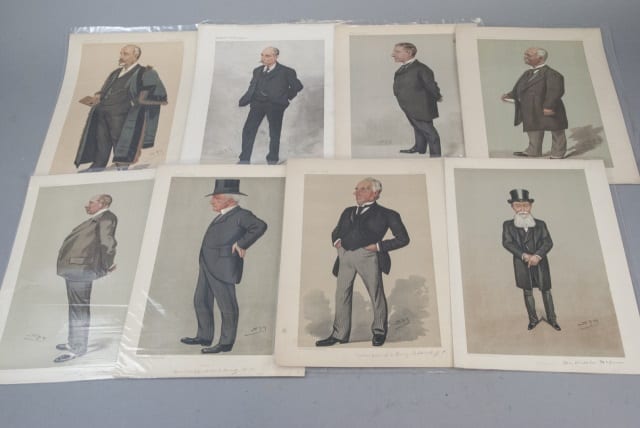 |
19th Century Vanity Fair SPY Lithography Prints | Greenwich Auction | 2018-02-11 | 580 | USD 20 (buyer’s-premium treatment unknown) |
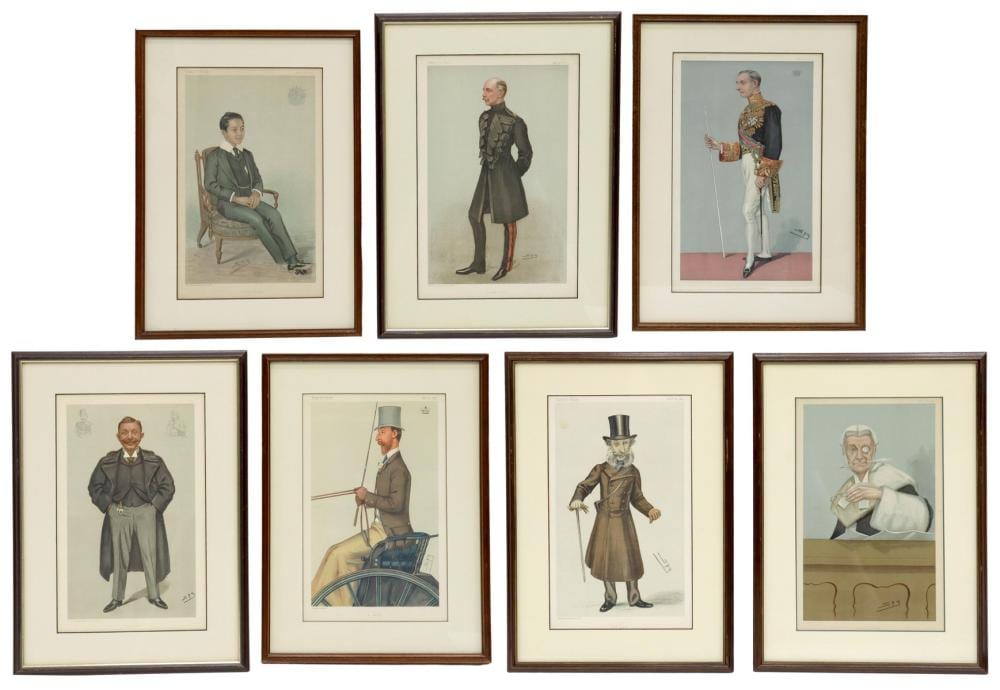 |
(7) VANITY FAIR SPY CARICATURE CHROMOLITHOGRAPHS | Austin Auction Gallery | 2021-03-21 | 1484 | USD 325 (buyer’s-premium treatment unknown) |
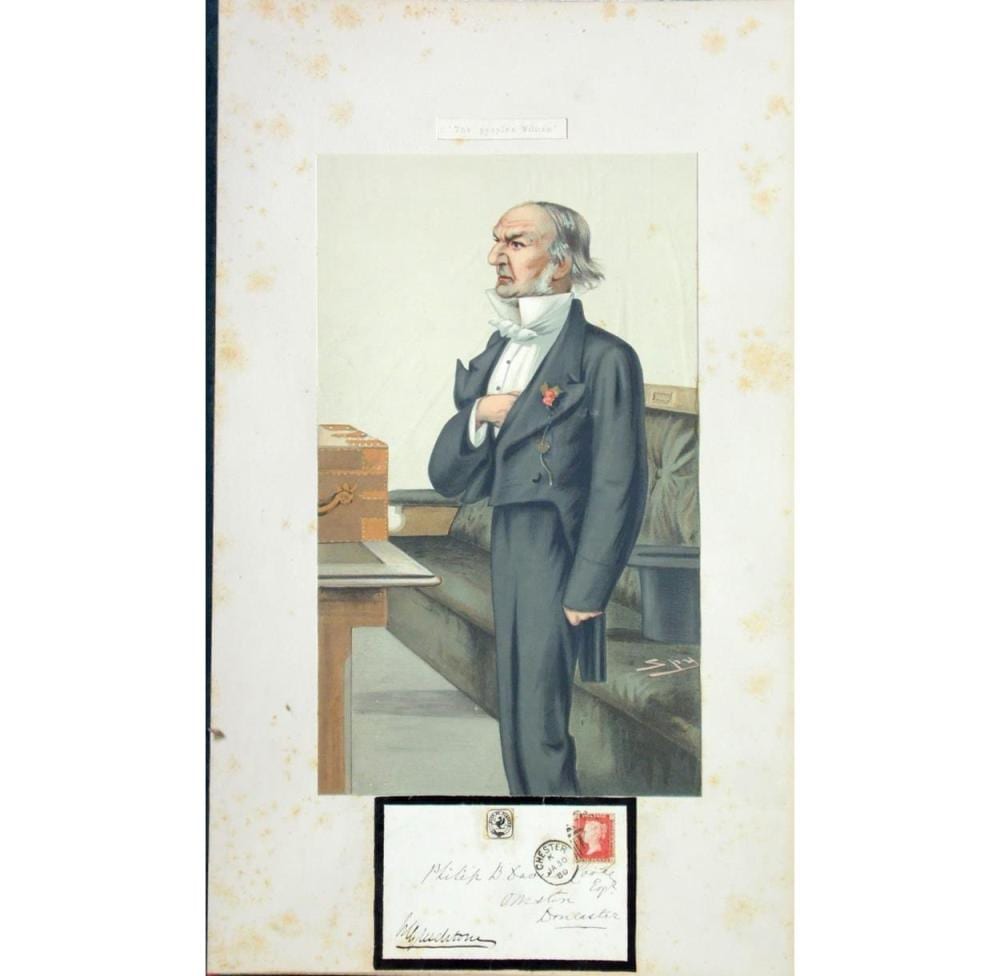 |
Victorian Scrapbook Collection of Original Autographs,Footnotes with Spy,Vanity Fair Spy,Watercolour Cartoon of : William Gladstone,Dr Charles John Vaughan,Sir Tatton Sykes,James Lowther M.P.,Mr Christopher Sykes M.P.,Mr Henry Cecil Rakes M.P.Lord Wharncliffe Etc. | Cooper Barrington LLP | 2018-10-20 | 104 | GBP 47 (buyer’s-premium treatment unknown) |
How these auction records were verified
Each row retains its exact source URL, lot identity, retrieval time, access result, and immutable record hash. Inspect the public comparable provenance record.
Disclosure: prices are shown as reported by auction houses and are provided for appraisal context. Learn more in our editorial policy.
Free instant estimate
Not sure if your print is worth appraising? Let us take a look.
Upload a photo, tell us what you know, and get a free first read. If a full appraisal makes sense, we will say so.
Free. No card needed. Takes about two minutes.
How We Research Valuation Data
Our appraisal guides are based on auction results, dealer pricing data, and professional appraiser insights. We may earn a commission when you use our free professional appraisal service . Learn about our editorial standards .
Who is “Uncle Sam” Ward — and who is “Spy”?
Samuel Cutler Ward (1814–1884) was an American lobbyist, bon vivant, and political operator who became famous in Washington society after the Civil War. The nickname “Uncle Sam” here refers to Ward personally (and his reputation), not the national personification.
The artist “Spy” was Sir Leslie Ward, the dominant caricaturist for Vanity Fair. In the magazine, portraits were painted as watercolors and then reproduced as chromolithographs for publication. Collectors often call these “Spy prints,” even when the artist is another contributor.
What you likely have (and what it’s not)
Most examples of the Ward portrait that appear in estates and frames are period chromolithographs, either:
- Magazine pull: a sheet removed from the weekly issue (may show faint binding stress near the gutter).
- Standalone print: sold and framed as a decorative piece, often with cleaner margins.
It is usually not an “original drawing” by Ward. The watercolor/ink original would be a unique artwork with entirely different value and provenance requirements.
Attribution review: the fast checks that catch most reprints
The quickest way to avoid overpaying for a later reproduction is to examine the paper, printing method, and the editorial text elements around the image.
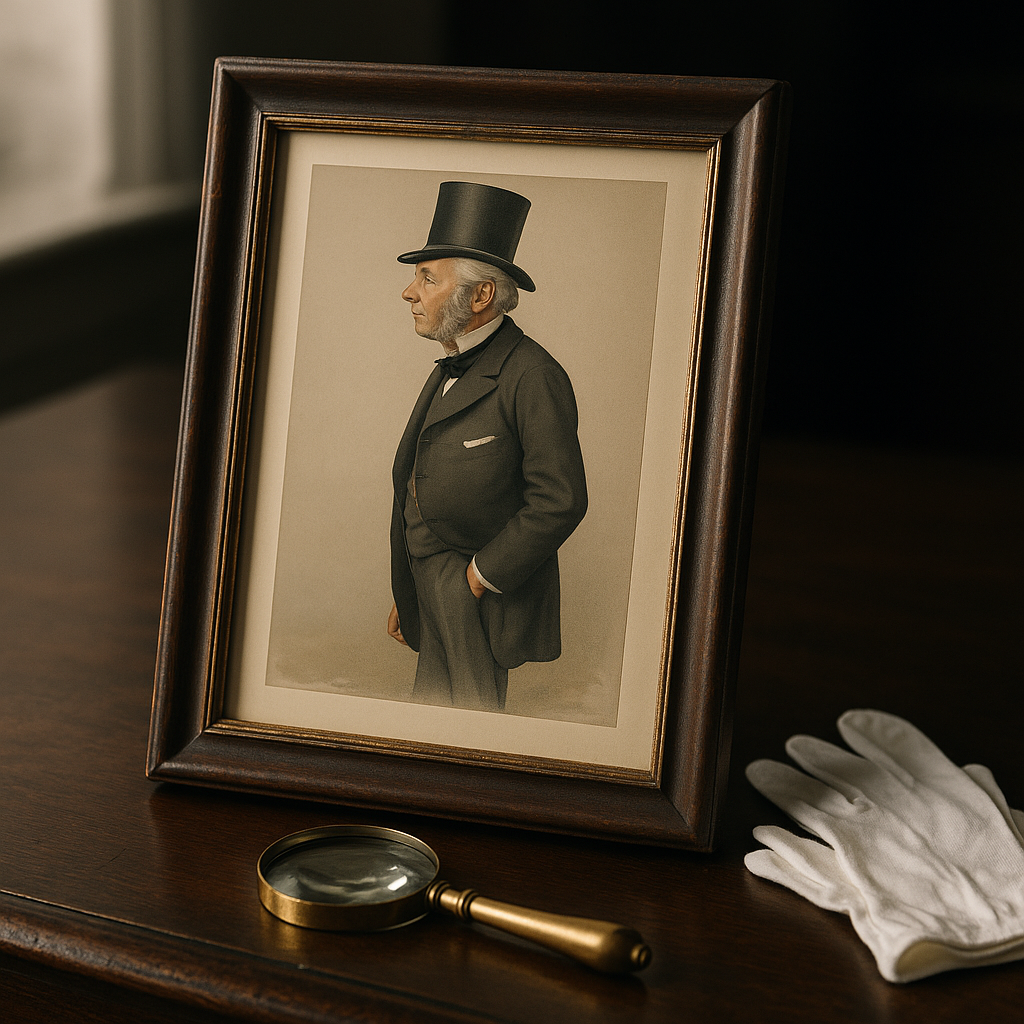
- Date + issue formatting: many genuine sheets show the issue date at top right and a consistent typographic layout.
- Imprint line: look for a printer/publisher line (commonly a lithographic printer credit) on documented sheets.
- Plate mark / impression: some printings show an impression or plate-related edge; reprints may look flat.
- Color handling: period hand-coloring has natural variation; later photo-mechanical color can look overly uniform.
- Paper feel: late 19th-century paper is typically a sturdy wove stock; modern paper is often whiter and smoother.
Condition issues that matter most to value
Condition is the most common reason two copies of the same Vanity Fair portrait sell for wildly different prices. For 1880-era sheets, buyers pay up for clean margins and good color.
- Foxing: brown speckling from age/moisture; heavy foxing reduces value even if framed.
- Trimming: margins cut tight to fit a frame hurt collector appeal.
- Folds and creases: center folds (from storage) are common; sharp breaks or tears are not.
- Sun fading: reds and blues fade first in bright rooms.
- Acidic mats: old mats can burn the edges; archival reframing can help presentation (but it doesn’t “undo” damage).
What is the value of the “Uncle Sam” Ward Vanity Fair print?
Direct current retail listings for the same Samuel Ward Vanity Fair image are modest: one original lithograph listing is priced at GBP 25, while another authentic 10 January 1880 chromolithograph listing is priced at GBP 34. Auction evidence for broader Leslie Ward/Spy and Vanity Fair chromolithograph material can reach higher, but the ordinary single-sheet market is usually condition-led and affordable.
- GBP 20 to GBP 40 is a realistic retail/listing band for a clean ordinary original sheet with normal age toning.
- Below GBP 20 is plausible when margins are trimmed, foxing is heavy, or the sheet is a later decorative reproduction.
- $100 to $300+ needs stronger presentation, a desirable subject, unusually clean paper, archival framing, or auction-room competition.
The Ward portrait is historically interesting, but it is not usually among the highest-demand Vanity Fair sitters. The biggest value questions are whether the sheet is period, complete, clean, and described accurately.
Upload the date line, title, imprint, margins, and frame-back photos. The free screener can flag period versus reprint clues before you order a signed report.
Upload photos for a free first lookHow to sell a Vanity Fair “Spy” print (without leaving money on the table)
- Photograph it like a print dealer: take a straight-on shot, plus close-ups of the title, date line, any imprint, and the paper edges.
- State what you can verify: “chromolithograph,” “Vanity Fair,” “Spy (Leslie Ward),” “January 1880,” and dimensions.
- Don’t promise “original drawing”: if you can’t document the original art, describe it as a period print.
- Choose the right venue: eBay/Etsy for quick turnover; a print dealer or auction for better curation if it’s unusually nice.
Quick valuation checklist
- Is it trimmed? Full margins usually sell faster.
- Any foxing or mat burn? Note it clearly; hidden defects cause returns.
- Is the date visible? Buyers like confident dating.
- Is it archivally framed? UV glass + acid-free mat helps presentation value.
- Is the subject in demand? Prime ministers, royals, and iconic figures outperform.
Search variations people use
- Is the “Uncle Sam” Ward Vanity Fair print original or a reprint?
- How do you tell a real Spy (Leslie Ward) Vanity Fair print?
- What is a 1880 Vanity Fair caricature print worth?
- Does foxing on a Vanity Fair print reduce value?
- Best way to sell vintage Vanity Fair “Spy” prints online
- What does the printer imprint mean on Vanity Fair caricatures?
- Are Vanity Fair prints hand-colored or lithographed?
- How to date Vanity Fair caricature prints by issue line
Each question is answered above (attribution review markers, condition flags, and comparable auction pricing).
References
- Vanity Fair (British magazine, 1868–1914) overview and collecting notes (general reference).
- Biographical references for Sir Leslie Ward (“Spy”) and Samuel Cutler Ward (historical background).
- Appraisily auction dataset entries cited in “Recent market comps” above.
Want an expert valuation for your Vanity Fair print?
Upload photos (front, margins, and any imprint lines) and get a written appraisal.
- Market evidence support
- Attribution review guidance
- Fast turnaround
No obligation. Private upload.
Next steps
If you want a faster answer, start here:
Have a Vanity Fair print?
Get an expert appraisal
Upload images and details. Specialists respond within 24 hours.
Upload photos for a free first look View signed report sample