
Reed and Barton sugar bowl: appraisal and value basics
Reed and Barton sugar bowl research should start with maker marks, soldered or plated stamps, condition, monograms, pattern numbers, and item-specific market evidence. Use this guide to compare the signals that matter before paying for a formal appraisal or deciding whether to sell.
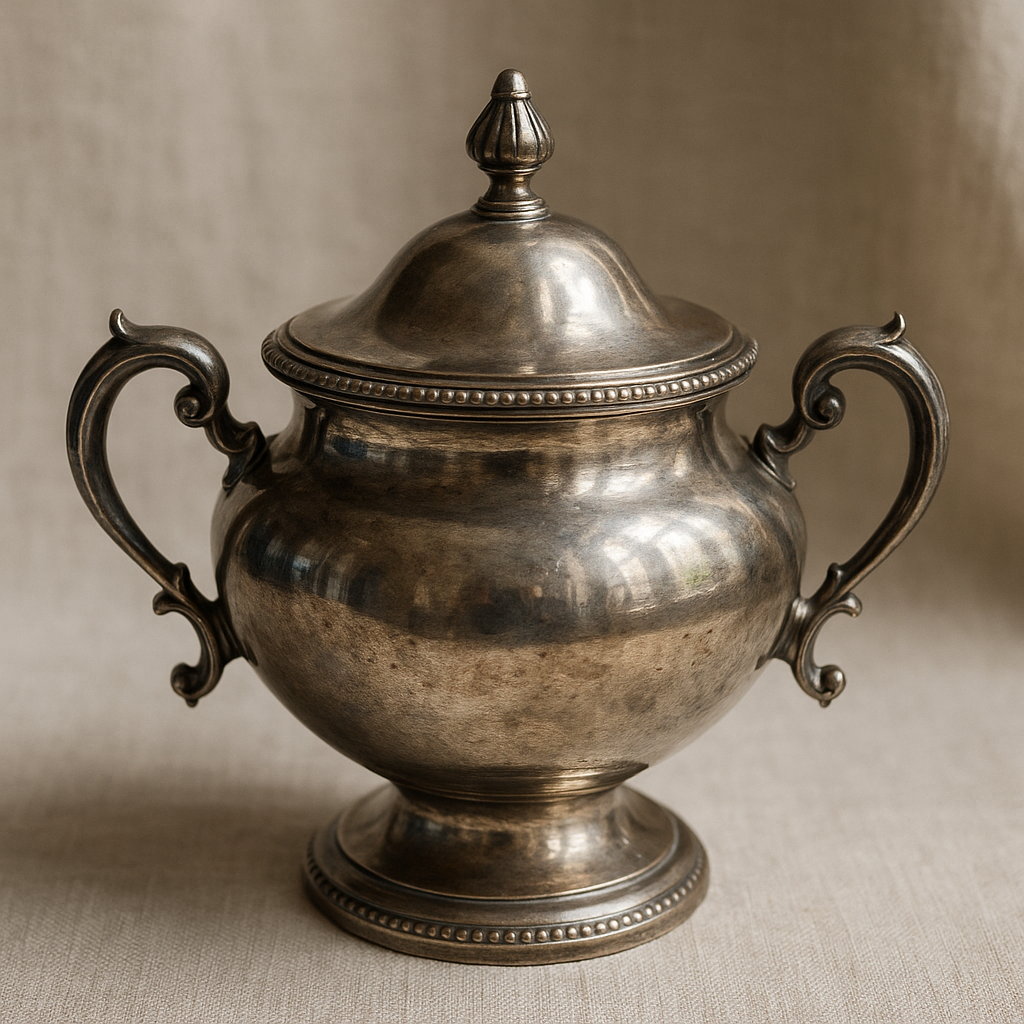
A Reed & Barton sugar bowl can look like “solid silver” at first glance because the bright white metal takes a polish and reflects light like sterling. But many Reed & Barton household pieces were made as silverplate (a thin layer of silver over base metal), or as silver-soldered hollowware (construction methods that use silver-bearing solder).
In the original WordPress appraisal that this article is migrating, the owner noted engraving such as “N. de A” on one side and “R. de A” on the other, plus a hand-engraved number that looked like 84230. Those clues are useful: monograms rarely add value unless they’re tied to a notable family, while numbers can sometimes correspond to pattern or inventory identifiers.
The good news is that you can usually determine the metal class in minutes without damaging the piece. The key is to interpret the marks correctly and to inspect the high-wear areas where plating fails first.
Free first read
Check whether your sugar bowl is worth a full appraisal
Upload a clear photo of the underside stamp, rim wear, dents, and monogram. Start with a free first read on likely metal type and whether a paid report is useful.
Free first read · Private upload · No checkout required to start
Quick value snapshot for Reed & Barton sugar bowls
For a single Reed & Barton sugar bowl, the first split is sterling versus silverplate. Recent Valuer comps show a standalone Reed & Barton sterling sugar bowl at USD 425, a small grouped sterling lot including a sugar bowl at USD 250, and full sterling tea services with sugar bowls from about USD 1,300 to USD 3,400.
- Common silverplate examples: often low three figures or less when plating is worn, dented, or monogrammed.
- Standalone sterling sugar bowl: recent comp support around USD 425 before adjusting for weight, pattern, and condition.
- Matched sterling tea service: the sugar bowl becomes more valuable as part of a complete service.
If it turns out to be sterling (clearly marked “STERLING” or “925”), value is driven by both the silver weight and the pattern. If it is silverplate or silver-soldered hollowware, condition and buyer demand matter more than metal value.
Note: We couldn’t find relevant auction comps in our database for this topic right now. If you’re valuing a specific item, try searching by maker/model/material and we’ll expand coverage over time.
What similar items actually sold for
To help ground this guide in real market activity, here are recent example auction comps from Appraisily’s internal database. These are educational comparables (not a guarantee of price for your specific item).
| Image | Description | Auction house | Date | Lot | Reported price realized |
|---|---|---|---|---|---|
| No relevant auction comps found for this topic right now. | |||||
Disclosure: prices are shown as reported by auction houses and are provided for appraisal context. Learn more in our editorial policy.
Need to check sterling, plating, or service value?
Upload the underside mark, monogram, lid, rim wear, dimensions, and weight. The free screener can tell you whether the piece looks like sterling, silverplate, or a service component worth documenting.
What “silver soldered” means on vintage hollowware
“Silver soldered” is a construction description, not a purity statement. In simple terms, a maker can build hollowware from multiple pieces of metal (bowl, foot, handles) and join them with a solder that contains silver.
Some silver-soldered wares are then plated; others are simply labeled that way to describe manufacturing. The key takeaway: a “silver soldered” stamp does not mean the object is sterling.
Where to look for Reed & Barton marks and pattern numbers
On a sugar bowl, the most useful information is almost always on the underside. Look for:
- Maker stamp (Reed & Barton name or symbol)
- Metal statement (STERLING / 925 / EPNS / SILVER PLATE / etc.)
- Pattern number (sometimes a 4–6 digit number, sometimes combined with letters)
- Capacity or model code (less common, sometimes used by hotels/restaurants)
How to tell sterling vs silverplate (without destroying value)
For a Reed & Barton bowl, sterling is usually straightforward: you should see “STERLING,” “925,” or a clearly sterling-specific set of marks. If you only see “Reed & Barton,” a pattern number, and vague wording, treat it as plated until proven otherwise.
1) Read the words literally
- Sterling is typically marked “STERLING” or “925.”
- Silverplate often says “SILVERPLATE,” “SILVER PLATED,” “EP,” “EPNS,” or similar.
- Silver soldered describes manufacturing and is not a purity hallmark.
2) Inspect the wear points for color change
Check the rim, lid finial, and foot. If you see a warm yellow/brassy tone emerging under the bright silver color, that’s classic plate wear. Some bases are white metal (nickel silver), so you may see a dull gray instead of yellow.
3) Magnet test (quick, not definitive)
Sterling silver is not magnetic. Most silverplate base metals are also not strongly magnetic, so this is only helpful if the piece is clearly attracted to a magnet (which suggests a steel core and points away from sterling).
4) Avoid scratch testing on the outside
Acid tests can work, but they require exposing the base metal. If you do test, do it on a hidden area (inside the foot or under the rim) or let a jeweler do it.
5) Best confirmation: XRF or an expert read of the marks
Most pawn shops and many jewelers can XRF-test metals without scratching. For silverplate, the XRF result often shows base metal (copper, nickel, zinc) rather than a thick sterling alloy.
Does a monogram (like “N de A” / “R de A”) add value?
In most cases, no. A monogram personalizes the piece and can make it harder to sell to a general buyer. It can add value only when:
- It matches a known historical family or documented provenance.
- The piece is rare enough that collectors accept the engraving as part of its story.
- It’s part of a larger matched service where the monogram is consistent across many pieces.
What that number (like 84230) might mean
Pattern and production numbering varies by maker and era. A 4–6 digit number may correspond to:
- A pattern or form number used internally by Reed & Barton
- A retailer’s inventory code
- A hotel/restaurant service identifier (common on durable silverplate)
If the number is hand engraved rather than stamped, it’s more likely an owner/estate inventory number than a factory pattern number.
Value drivers for Reed & Barton sugar bowls
- Condition: dents, lid fit, hinge/finial stability, and how much plating remains.
- Completeness: lid present and correct (original lid matters a lot).
- Pattern demand: some patterns and styles sell faster (and higher) than others.
- Monogram: typically a negative unless tied to provenance.
- Weight (if sterling): sterling hollowware may have weighted parts; only the silver content counts for melt.
How to sell (and what to avoid)
For most silverplate sugar bowls, the best market is online because buyers search by maker and pattern. Good listing practices:
- Photograph the underside marks clearly (straight on, well-lit).
- Show the rim, lid edge, and foot (wear points).
- Measure diameter and height with the lid on.
- Use keywords like “Reed & Barton,” “lidded sugar bowl,” and the pattern number (if present).
Avoid aggressive polishing or buffing wheels. Over-polishing can soften details and make plate loss worse. A gentle clean and light hand polish is usually enough.
Search variations people ask
These are common searches when people try to identify and price a Reed & Barton sugar bowl:
- what does silver soldered mean on a sugar bowl
- reed and barton silver plated sugar bowl value
- how to tell reed and barton sterling from silverplate
- reed & barton pattern number lookup for hollowware
- is a monogram on silverplate worth anything
- how to clean silver plated sugar bowl without damaging
- does silverplate have scrap value
- where are reed & barton marks located on a sugar bowl
Each question is addressed above (marks, metal tests, dating clues, and value drivers).
How We Research Valuation Data
Our appraisal guides are based on auction results, dealer pricing data, and professional appraiser insights. We may earn a commission when you use our free professional appraisal service. Learn about our editorial standards.
References
- Smithsonian: collections care and handling
- U.S. National Park Service Conserve O Gram
- Encyclopaedia Britannica: silver (overview)
Wrap-up
Most Reed & Barton sugar bowls that say “silver plated” or “silver soldered” are collectible tableware, but they’re priced like decorative silverplate rather than bullion. The fastest path to an accurate value is a clear photo of the underside marks plus closeups of wear points and the lid fit.