Does this serving piece belong on the list?
This list is for someone holding a tray, tea service, tureen, candlestick, pitcher, or serving fork and trying to decide whether it is table silver or a melt lot.
The strongest tells are visible from a photo:
- A readable STERLING, 925, or town hallmark versus a plate mark.
- Completeness: lids, liners, underplates, and matching partners still together.
- Construction: a solid body versus a weighted base or a plated tray under a sterling set.
- A named maker struck on the underside, not only a style word on a tag.
- Honest wear at rims and handles, not fresh solder at a join.
A mark is a lead, not proof. Form, completeness, and whether the silver is solid are what change the decision.

1. Large sterling tray or salver
A dinner salver is judged by the chased border and the span of the rim, not by how dull the face looks. Floral chasing, a footed Mexican salver, and a small signed card tray are three different objects.
Gorham or other tea services are often catalogued with a waiter that is not the same metal as the pots. Read that waiter as its own object before anyone melts the group.
Check first: Photograph the underside and the chased rim together; a small card tray is not a dinner salver.
2. Complete tea service
Buyers pay for a matched lineup: teapot, hot-water pot, sugar, creamer, waste bowl, and lids that actually seat. Pattern identity has to run across every vessel, including a named American or Italian service.
A missing handle, an unmatched sugar, or a kettle without its stand is a broken group, not a “close enough” set.
Check first: Line the pieces up by pattern and count lids before you treat the group as one service.
What similar items actually sold for
To help ground this guide in real market activity, here are recent example auction comps from Appraisily’s internal database. These matched sales are market context only, not an object estimate or identification, and they do not guarantee a price for your specific 10 silver serving pieces worth appraising before you.
Shown USD range: USD 60-USD 6,000. Median of these 5 USD examples: USD 125.
| Comparable | What sold | Auction house | Date | Lot | Source-reported amount |
|---|---|---|---|---|---|
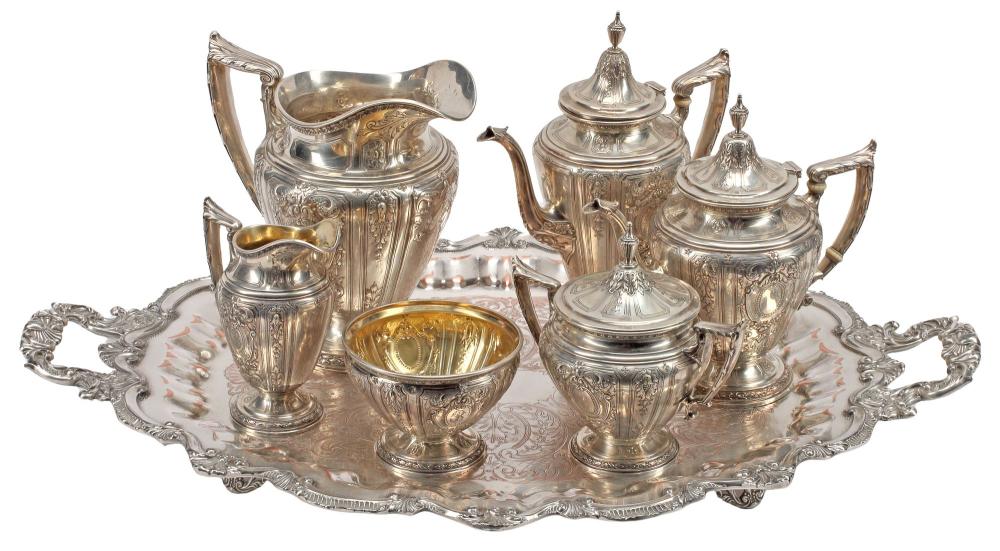 |
(7) GORHAM 'MAINTENON' STERLING SILVER TEA & COFFEE SERVICE ON SILVERPLATE TRAYSource blocked; provenance matched | Austin Auction Gallery | 2025-12-07 | 3218 | USD 6,000 (buyer’s-premium treatment unknown) |
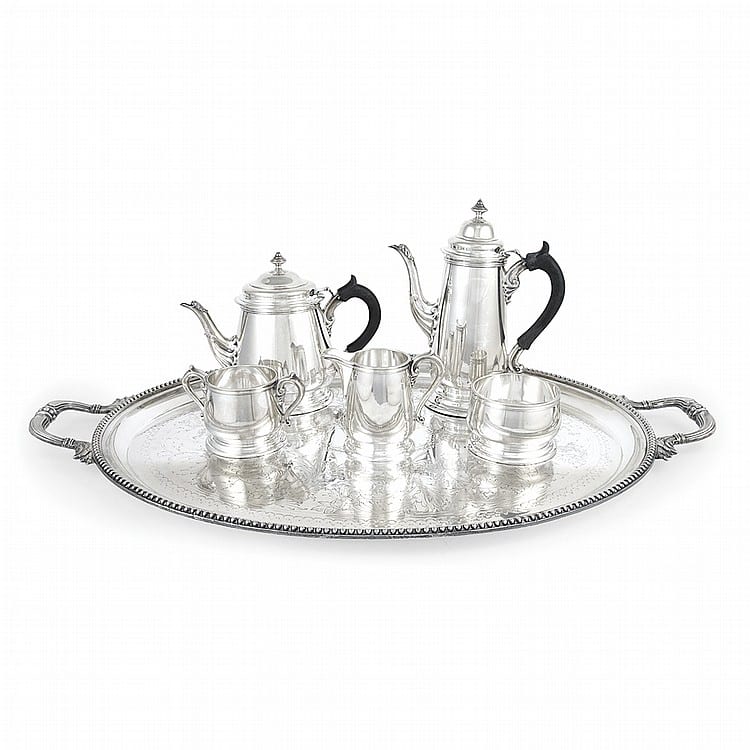 |
American Sterling Silver Five-Piece Tea and Coffee Service; Together with a Silver Plated Two Handled TraySource blocked; provenance matched | DOYLE Auctioneers & Appraisers | 2015-01-14 | 306 | USD 1,188 (buyer’s-premium treatment unknown) |
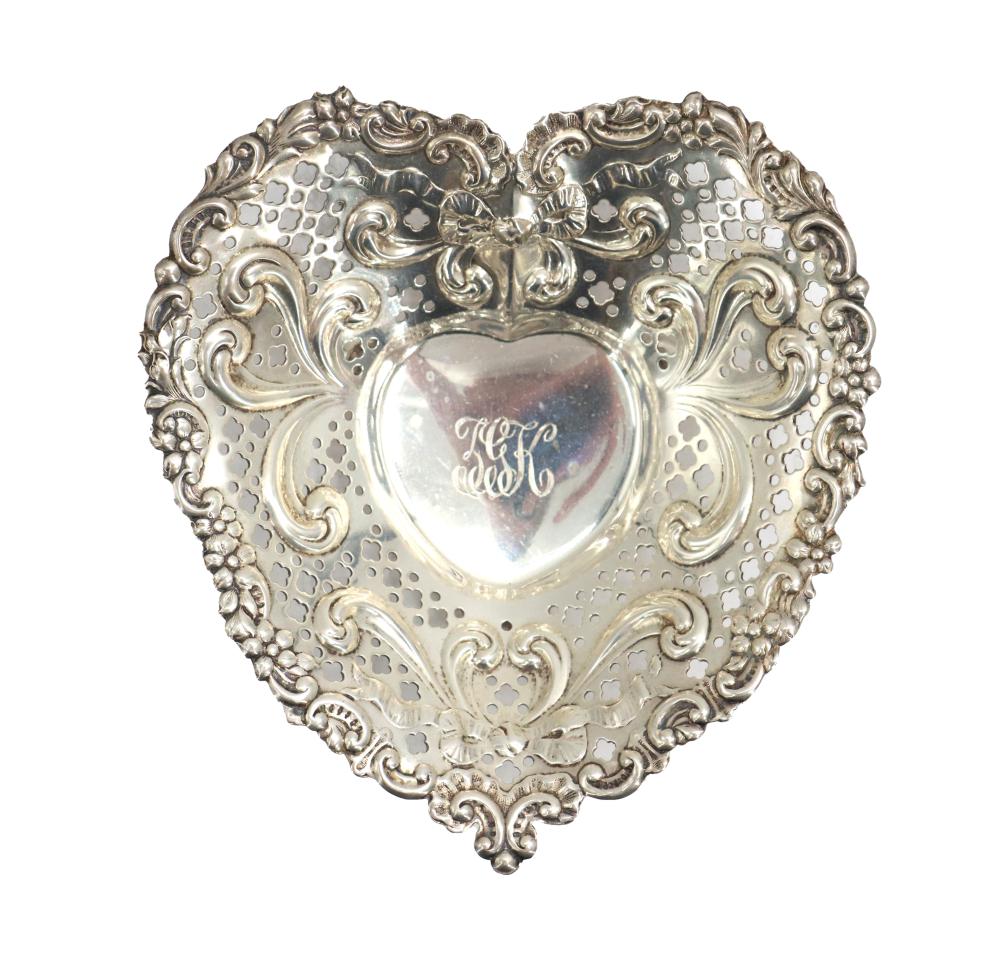 |
Gorham Heart-Shaped Sterling Silver Tray - 2.40 ozt.Source blocked; provenance matched | Sarasota Estate Auction | 2025-11-09 | 1623 | USD 80 (buyer’s-premium treatment unknown) |
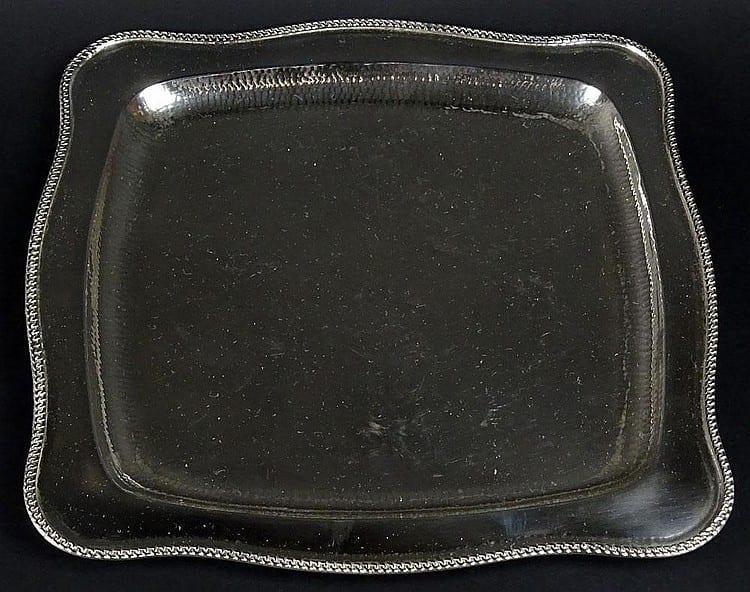 |
Sterling Silver Tray. Hammered, Gadrooned Rim. Signed 925. Measures 10 Inches Square and Weighs Approx. 10.48 Troy Ounces. Shipping $55.00Source blocked; provenance matched | Kodner Galleries | 2015-05-06 | 165 | USD 125 (buyer’s-premium treatment unknown) |
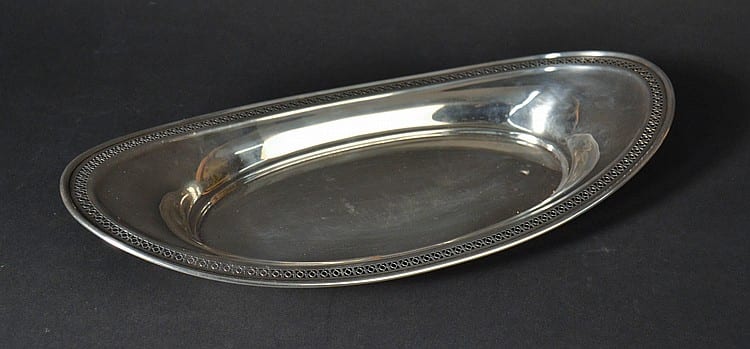 |
20TH CENT. INTERNATIONAL STERLING SILVER BREAD TRAYSource blocked; provenance matched | Keene Auctions | 2015-05-02 | 72C | USD 60 (buyer’s-premium treatment unknown) |
How these auction records were verified
Each row retains its exact source URL, lot identity, retrieval time, access result, and immutable record hash. Live source access was blocked; the exact record matched Appraisily's immutable pipeline provenance. Inspect the public comparable provenance record.
Disclosure: prices are shown as reported by auction houses and are provided for appraisal context. Learn more in our editorial policy.
3. Covered serving dish or tureen
The cover is the object. A tureen shell without the lid, or a lid that will not seat on this rim, is closer to metal than to table silver. Hallmarks on the body and cover should agree.
A named-pattern covered dish, including a heavy American floral tureen, is collected as hollowware. Any liner that still fits belongs in the same photograph.
Check first: Lift the cover and see whether it seats on this shell, then look for a liner.
4. Candlesticks or candelabra
The selling unit is a pair with the same height, the same base diameter, and matching punches. A single stick is a leftover.
Many later sticks hide a weighted plug or a filled base. Removable bobeches and inserts should still travel with the pair.
Check first: Unscrew or lift the base for a weighted plug, then measure both sticks against each other.
5. Pitcher, ewer, or water jug
A water pitcher is a tall pouring form with a balanced handle, not a cream jug from a tea set and not overlay glass with a silver skin. A named Mexican City workshop jug is still a pitcher even when the surface is plain.
Handle solder and the spout lip fail first. Overlay versus solid sterling is the material question before anyone talks about ounces.
Check first: Press the handle join and look inside the spout before you call it a water jug.
6. Sauceboat or gravy boat
Sauceboats are small hollowware, often collected in a named pattern with the underplate still present. A Gorham Chantilly boat with its stand is a different object from a lone pouring lip in a mixed drawer.
If the boat will not sit level, the foot or the tip is already damaged. That is a condition fact, not a polishing problem.
Check first: Set the boat on a table and see whether an underplate still travels with it.
7. Sugar bowl and creamer pair
These two almost always travel inside a tea or coffee service rather than as a dedicated pair. The appraisal question is whether they still belong to that parent set.
An open sugar without its lid, or a creamer whose punches do not match the teapot, is two leftovers. Matching feet, handles, and pattern keep them together.
Check first: Fit the sugar lid and compare both marks to the teapot they came with.
8. Compote or footed serving bowl
A compote is a display bowl on a stem. Chasing or piercing on the bowl only helps if the foot join is original and the stem is not crushed.
A later disk foot under an older bowl, or a thin shell with no sterling punch, is not the same object as a hallmarked English or Elkington footed bowl.
Check first: Turn the bowl and inspect the foot join for a later disk or a dented stem.
9. Serving dish, platter, or bread tray
Flat platters look like scrap once they are dull or monogrammed. A named-maker platter with a broad border, a Kirk serving plate, or a divided Mexican dish is still table silver.
Rim warp and worn chasing cut the decorative bid. A Gorham tea-tray platter at table scale is still a serving dish, even when the face is heavily monogrammed.
Check first: Sight down the rim for a warp, then read the maker struck on the reverse.
10. Asparagus server, fish slice, or cold-meat fork
Long-handled servers get tossed because they look like extra spoons. An asparagus server, fish slice, or cold-meat fork in a named pattern is a serving tool, not a leftover teaspoon.
Georg Jensen Acorn, Tiffany, or Gorham and Whiting groups show why the pattern name on the reverse matters. A mixed drawer still has to be counted as one pattern before anyone prices it by weight.
Check first: Turn the handle over for the pattern name and count whether the server still belongs to a larger set.
Typical estate-drawer scenario
A typical estate-sale drawer is tagged as scrap because the tray is dull and the candlesticks look heavy. The buyer turns the tray, seats the tea-service lids, and stands the sticks side by side.
If the waiter is plated and one stick has a filled base with no partner, the lot stays in the melt lane. If the salver is solid, the lids fit, and the sticks match, it does not.
Photo gallery: the shapes worth checking
Use these single-subject images to compare silhouettes before you sort a drawer by weight.


References and sourcing
- Auction prices and lots in the comps table come from Appraisily’s internal auction results database for educational context.
- For valuation standards, sourcing disclosure, and update policy, see Editorial policy.
Long-tail search variations
- How do I know if a silver tray is sterling before scrapping it?
- What hallmarks add value to a complete silver tea service?
- Are weighted silver candlesticks worth appraising first?
- Does a monogrammed silver platter still sell above scrap?
- What makes a gravy boat collectible instead of melt-only?
- Is a sugar bowl and creamer pair worth more as a set?
- Which silver serving pieces bring the strongest maker premium?
- How do I separate plated serving pieces from sterling quickly?
Each phrase maps back to the forms, weights, makers, and completeness checks above.