The short answer: give the assistant a hallmark catalog
A chat assistant on its own guesses at silver marks. Connected to Appraisily, it looks them up in a catalog of maker records instead:
- Add the connector once. Paste https://mcp.appraisily.com/mcp as a custom connector in Claude or ChatGPT, with authentication set to None. No API key, no account.
- Type what you can read on the piece. Letters, symbols in order, and any word such as STERLING, COIN, or EP. For example: “Use Appraisily to search silver hallmarks for lion anchor G.”
- Compare shapes, then dates. Up to six maker records come back, each with active dates, a line drawing, an oxidized comparison view, and sold-to-melt context when enough lots exist.
Fast conclusion: the connector turns a guess into a short list of documented makers you can check against your own mark. It does not see your photo, and a match is not a value.
Upload photos of your silver and its marks for a free first look
Why a general chat model invents silver marks
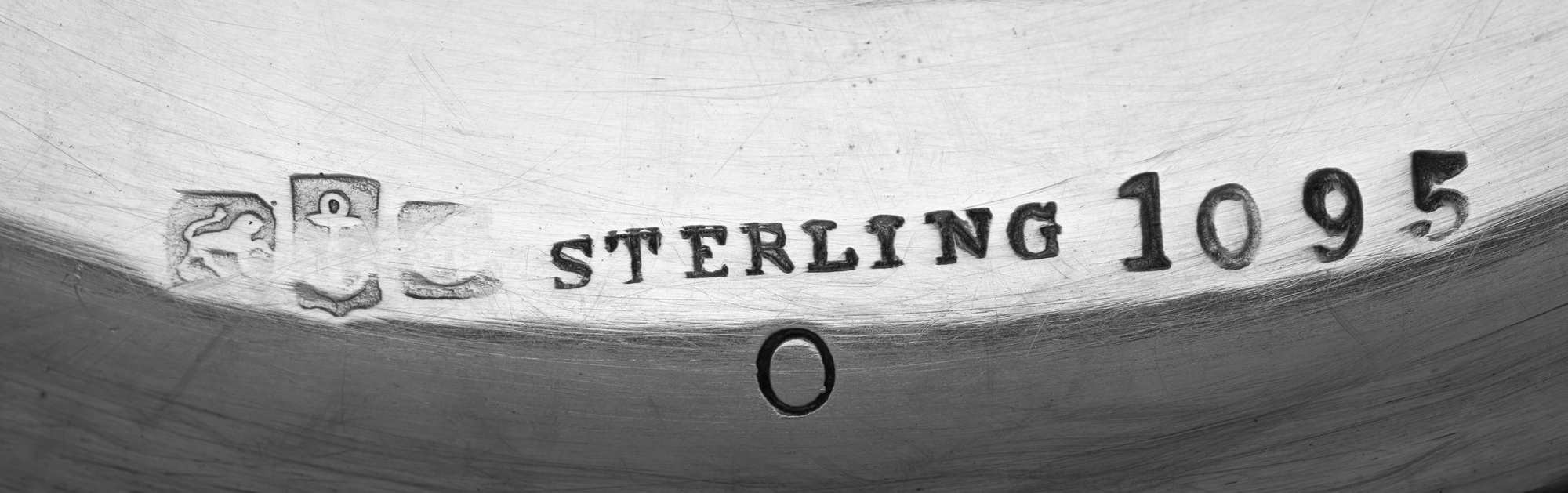
Hallmarks are small, worn, and repetitive. A lion, an anchor, and a letter in a row look like an English assay group, but on American silver the same three symbols can be a maker’s own device with no assay meaning at all. A language model without a lookup fills that gap from patterns in its training text, so it tends to name the most famous maker that ever used a lion and to describe the piece with more certainty than the mark supports.
The costly mistakes are about material, not maker. STERLING or 925 marks solid sterling. COIN on American silver usually marks coin silver, a solid alloy below sterling. EP, EPNS, and “silver soldered” mark electroplate over a base metal, worth a fraction of solid silver by weight. A reply that reads EPNS as sterling, or COIN as a maker’s name, sends the whole conversation in the wrong direction. Our guide to telling sterling from plate by its markings covers those words in detail.
Connect Appraisily in Claude or ChatGPT
The connector URL is the same everywhere: https://mcp.appraisily.com/mcp, authentication None. Only the menus differ, and both companies move them between releases. The Appraisily connector setup page keeps the current click paths.
In Claude (web or desktop)
- Open the connector settings. Go to Customize → Connectors → Add custom connector.
- Paste the URL. Name it Appraisily, paste https://mcp.appraisily.com/mcp, and leave authentication as None.
- Test it. Start a chat and ask Claude to use Appraisily for a hallmark search.
In ChatGPT (paid plans)
- Turn on Developer mode. On a paid plan, open Settings → Developer mode and turn it on. Workspace admins may need to allow connectors first.
- Create the connector. Choose Create connector, name it Appraisily, paste the same URL, and set authentication to None.
- Ask by name. In a chat, mention Appraisily so ChatGPT routes the question through the connector.
In Cursor and other MCP clients
Paste the same URL, or search the official MCP Registry for com.appraisily/mcp. A local package also exists (npx appraisily-mcp), but it can lag the hosted server; for the hallmark tools, use the URL.
What the hallmark tools return
Two tools do the work. search_silver_hallmarks takes a maker name or the mark text you can read and returns up to six maker records. get_silver_hallmark opens one record by its catalog slug and adds every recorded variant of the mark. Both return the same core fields:
| Field | What it is for |
|---|---|
| Maker, place, and active dates | Narrows the period before you look at style or form |
| Mark text | The letters and symbols the catalog records, in order |
| Line drawing | A clean outline of the punch for shape comparison |
| Oxidized view | An AI-assisted reconstruction showing the punch in relief on tarnished silver |
| Sold-to-melt | How past auction lots for the maker compared with their silver value |
| Limitations | What the record cannot tell you, returned with every answer |
Example: Gorham & Co., lion, anchor, G
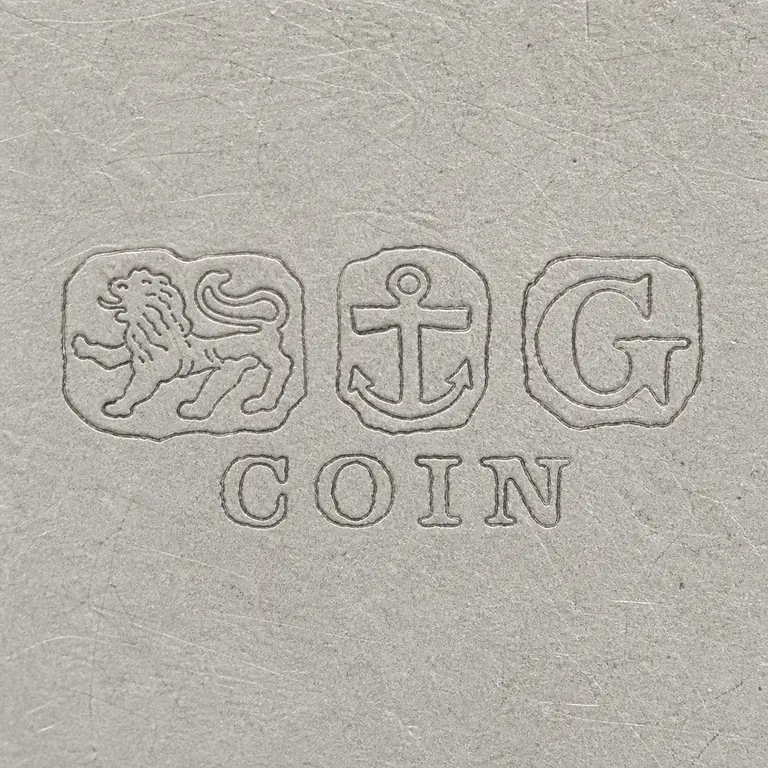
A search for “lion anchor G” returns Gorham Mfg. Co., Gorham & Co., and another maker with a similar device. Opening Gorham & Co. gives Providence, Rhode Island, active about 1852–1865, before the firm became Gorham Mfg. Co. One recorded variant is the lion, anchor, and G in three separate punches with COIN beneath: coin silver, not sterling. The record reports a median of 0.77× melt (middle half 0.68–0.82×) across 8 auction lots from 7 houses.
Example: Tiffany sterling versus Tiffany silverplate
The same name can lead to two different materials. The catalog keeps them apart:
| Record | Mark text | Dates | Sold-to-melt (median) |
|---|---|---|---|
| Tiffany & Company | Tiffany & Co, makers, sterling silver | 1853 to present | 1.23× across 11 lots |
| Tiffany & Co. silverplate | Tiffany & Co, EP; “Makers, Silver Soldered, EP” | Plate from about 1865 | 0.79× across 28 lots |
The EP in the second mark is the point. If the assistant names Tiffany without saying which record matched, ask it to show the mark text it relied on.
How to read a sold-to-melt ratio
A sold-to-melt ratio compares the auction results of a maker’s past lots with the value of their silver by weight. Below 1× is common for hollow or weighted pieces, worn plate, and mixed lots offered by weight. Above 1× means buyers paid for the maker, the design, or the form, not just the metal. The figure describes a maker’s market across a handful of lots; it is not a multiplier you can apply to your piece, and records with too few lots show no figure at all.
Three prompts to copy
- “Use Appraisily to search silver hallmarks for ‘lion anchor G’ and show the maker dates and line drawing.”
- “Open the Appraisily hallmark record for Gorham & Co., show the oxidized reconstruction URL, and summarize the sold-to-melt context.”
- “Compare Tiffany & Company sterling marks against Tiffany & Co. silverplate marks and recent sold auction prices on Appraisily.”
The third prompt also calls the auction search, which returns up to six realized lots. For that side of the connector, see how to check past auction prices in Claude.
Where a hallmark match stops
- An oxidized reconstruction is an AI-assisted visual aid. It is not a photograph of the object and not proof of authenticity.
- A mark does not measure weight, and it does not show repairs, removed monograms, fills, or condition.
- Marks were copied, reused, and struck by successor firms; the catalog dates a mark, not your piece.
- The connector cannot see your photos, orders, or reports. It only reads the public catalog and auction records.
When the piece matters for a sale, an estate, insurance, or an IRS donation, the next step is evidence about the object itself. Browse the full silver makers’ marks catalog, read how a silver appraisal works, or start with a free photo-based first look. A signed appraisal is prepared and signed by Andrés G., Professional Appraiser.
Common questions about hallmark lookups
Is the Appraisily hallmark lookup free in Claude and ChatGPT?
Yes. The connector is free, read-only, and needs no API key or Appraisily account. Whether you can add a custom connector depends on your Claude or ChatGPT plan; in ChatGPT it needs a paid plan with Developer mode.
Can Claude or ChatGPT read the hallmark from my photo?
The assistant can describe what it sees, but the connector does not inspect your photo. You type the letters and symbols you see, and the connector returns matching maker records with dates, line drawings, and comparison views. Comparing the shapes against your own mark is still your job.
Is the oxidized view a photograph of a real mark?
No. It is an AI-assisted reconstruction of the catalog variant, made to show how the punch looks in relief on tarnished silver. It is a visual comparison aid, not a photograph of any object and not evidence of authenticity.
Does a hallmark match tell me what my piece is worth?
No. A mark points to a maker and a period. The sold-to-melt figure is maker-level market context from past auction lots, not an estimate for your object. Weight, form, condition, repairs, and monograms all change the number.
How many hallmark records does one search return?
Up to six. If the right maker is not among them, search again with the exact letters, the symbol shapes, or the city you can read on the piece.
Sources and further reading
- Appraisily: connect Appraisily in Claude, ChatGPT, and Cursor, the setup page with the connector URL.
- Appraisily silver makers’ marks catalog, the records the hallmark tools read.
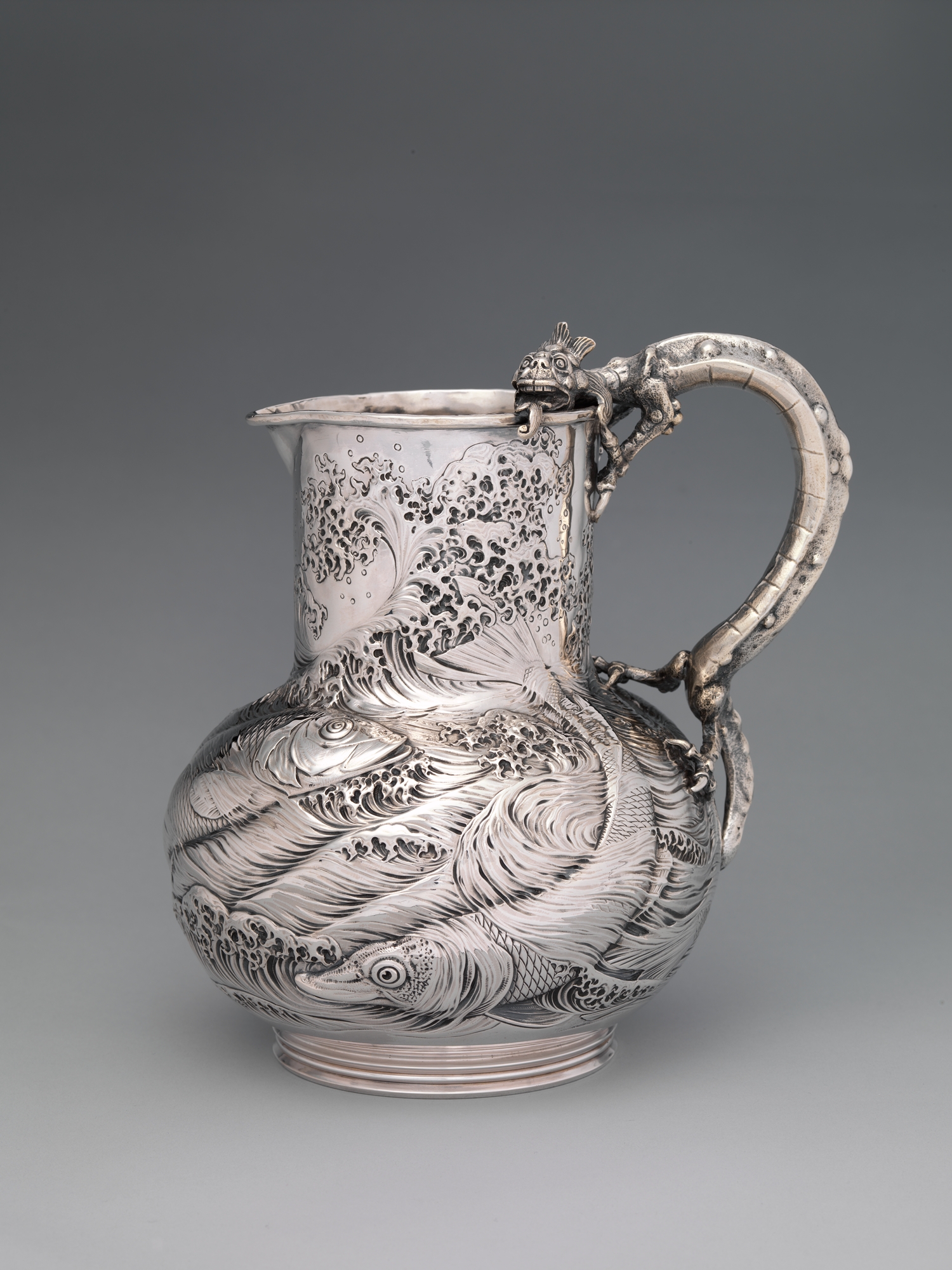
- The Metropolitan Museum of Art: Gorham pitcher, 2013.26, source of the documentary mark photograph.
- Model Context Protocol, the open standard behind Claude and ChatGPT connectors.
Connector menus describe Claude and ChatGPT as of November 2026; both change over time. Catalog records and sold-to-melt figures are maker-level research context, not appraisals of individual pieces.