
French Breton buffet: appraisal and value basics
French Breton buffet research should start with regional carving, oak construction, hardware, patina, condition, restoration, provenance, and item-specific market evidence. Use this guide to compare the signals that matter before paying for a formal appraisal or deciding whether to sell.
A “French Breton buffet” (often written as buffet breton) is a carved wood storage piece associated with Brittany in northwest France. In English listings, the same cabinet is frequently described as a sideboard, buffet, or server. Many examples are lower, two-door sideboards; others are taller “two-body” cabinets (buffet deux corps).
In real-world selling, these pieces can be miscategorized as “French Renaissance” or “Henri II style” because the carving vocabulary overlaps. What matters for value is less the exact label and more the quality of carving, the wood and construction, scale, and condition.
Free first read
Check the buffet before paying for a report
Upload the front, side profile, interior shelves, drawer joinery, hardware, and any shipping or provenance notes. Start with a free screener read so we can flag the likely period, market tier, and whether a signed report is worth it.
Private upload. A signed report is optional after the initial screen.
How We Research Valuation Data
Our appraisal guides are based on auction results, dealer pricing data, and professional appraiser insights. We may earn a commission when you use our free professional appraisal service . Learn about our editorial standards .
Appraisal value: what a Breton/Brittany buffet can sell for
Carved French regional furniture has two different markets: auction hammer prices, where large furniture must sell under time and shipping pressure, and retail asking prices, where dealers may wait for the right local buyer. Recent auction comps for Breton, French provincial, and carved oak buffet deux corps pieces show a practical auction band from about $300 to $2,300, with ordinary heavy cabinets often selling below optimistic retail expectations.
- $300 to $600 is common for large carved oak buffets with average condition, limited shipping, or local-pickup constraints.
- $600 to $1,800 is a defensible middle range for clean, attractive French provincial or Breton-style examples with strong proportions.
- $2,000+ usually requires exceptional carving, large scale, documented 19th-century construction, strong presentation, and a buyer market that can absorb freight.
Shipping is part of the valuation. A tall two-body cabinet can cost as much to move as it realizes at auction, so local demand and pickup terms can change the net value dramatically.
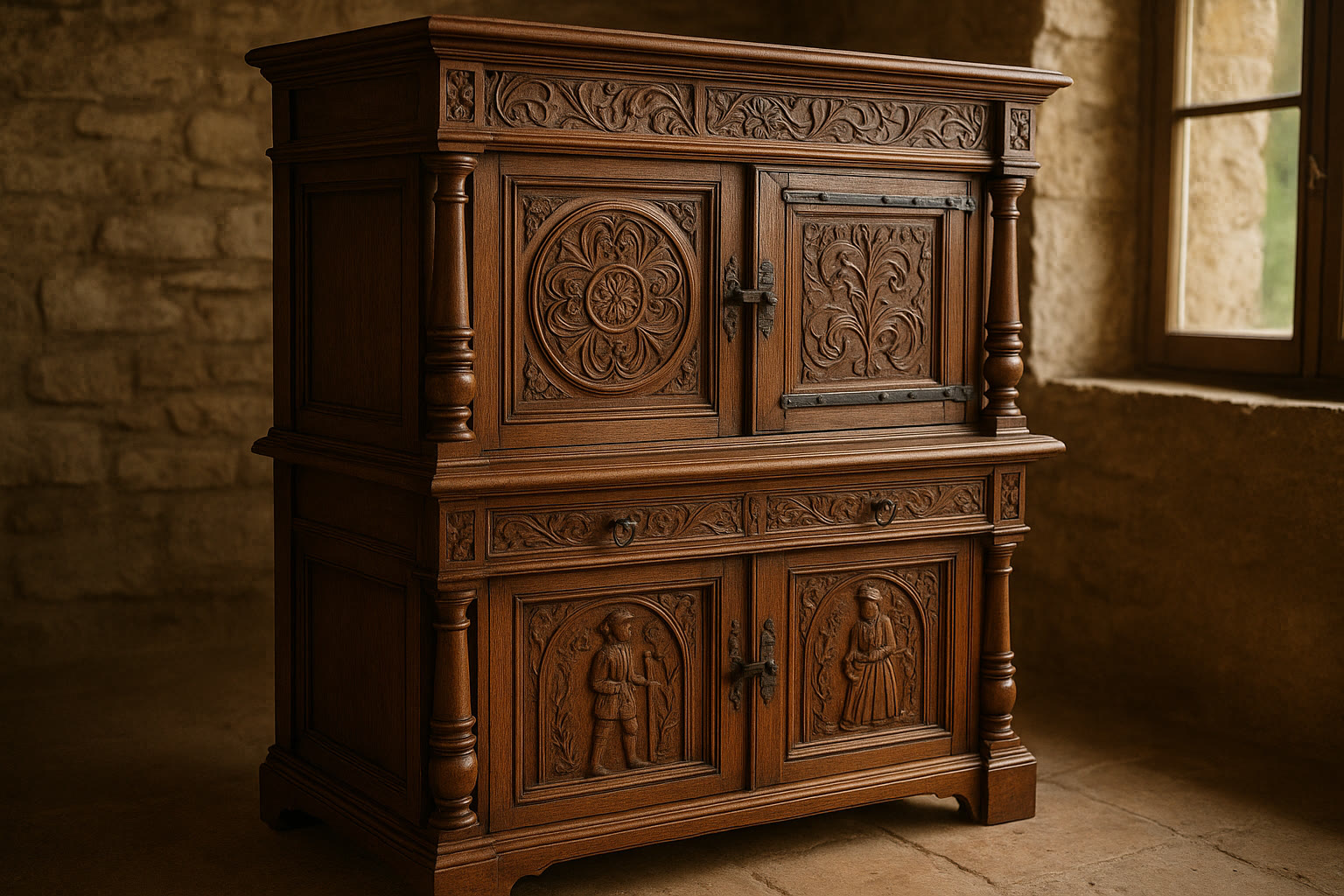
What makes a buffet look “Breton” (Brittany regional character)
Brittany furniture is regional and varied, but many buffets and sideboards share a recognizable rustic-built look—solid framing, thick doors, and bold carved ornament that reads well from across a room.
- Deep relief carving (floral rosettes, stylized leaves, geometric bands, or symbolic regional motifs) rather than shallow machine engraving.
- Heavy paneled doors and stiles/rails that feel structural, not veneer-based.
- Iron hardware (strap hinges, lock escutcheons) that can be original or later replacements.
- Practical interior: shelves and a simple case, sometimes with a row of drawers for linens or flatware.
Construction checklist (how to tell solid antique work from modern “Breton style”)
Breton-style furniture is still made today, so the goal is to confirm age using construction evidence. These checks take 5–10 minutes.
- Back panels: older pieces often use multiple vertical boards (sometimes irregular widths) with age shrinkage and dark oxidation.
- Drawer joinery: hand-cut dovetails show slight irregularity; perfectly identical dovetails can indicate later machine production.
- Screws: slotted screws are common on earlier hardware; Phillips screws generally indicate later work or later repairs.
- Tool marks: look for plane/scraper marks under the top or inside the case—areas that restorers don’t polish.
- Carving: hand carving has small asymmetries and “life” at the edges; modern reproductions can look soft or overly uniform.
Dating clues: hardware, patina, and wood movement
Many “late 19th century” attributions come from a combination of hardware style and how the wood has aged. Here’s what an appraiser looks for.
- Hinges and locks: hand-forged or early industrial ironwork with wear at contact points can support 1800s–early 1900s. Bright new hinges on an otherwise old cabinet may be a replacement.
- Finish: a mellow, thin finish with grime in recesses can be documented. A thick glossy polyurethane layer is usually later.
- Wood movement: minor splits in panels, slight warp, and shrinkage gaps can be normal age indicators (not necessarily damage).
- Smell and feel: old interiors often smell dry/woody, not strongly of fresh stain or solvent.
Condition & restoration: what hurts value (and what doesn’t)
Condition drives price more than people expect because shipping and restoration costs are high for large furniture. Common value reducers include:
- Active woodworm (fresh dust/frass) or widespread historic worm channels.
- Loose joints (racked case, failing mortise-and-tenon joints).
- Severe stripping that removes the original surface character and rounds carving edges.
- Major missing elements (backs, shelves, doors, crest rail on a tall buffet).
Good news: honest wear, minor veneer loss (if present), and small edge chips can be acceptable—collectors often prefer “lived-in” patina over a heavily refinished look.
Recent auction comps for Breton and carved French buffets
Use Breton-specific results first, then widen to French provincial or Henri II-style carved oak buffets when the construction, scale, and condition are similar. The strongest comps below show why catalog wording and logistics matter: a local-pickup Breton cabinet can sell much lower than a well-presented provincial buffet deux corps with wider buyer appeal.
| Photo | Sale | Date | Lot | Realized | Notes | Source |
|---|---|---|---|---|---|---|
| Image unavailable | Swisher Bros. Auction, antique 19th-century French Breton style carved oak buffet or sideboard | Mar 29, 2026 | 239 | $600 | Breton-specific comp; no shipping/pickup terms likely constrained the buyer pool. | Invaluable |
| Image unavailable | Atlanta Auction Gallery, 19th French Breton carved oak double buffet cabinet | Jul 24, 2021 | 217 | $2,300 | Higher-end Breton double-buffet comp; compare scale and carving quality closely. | Invaluable |
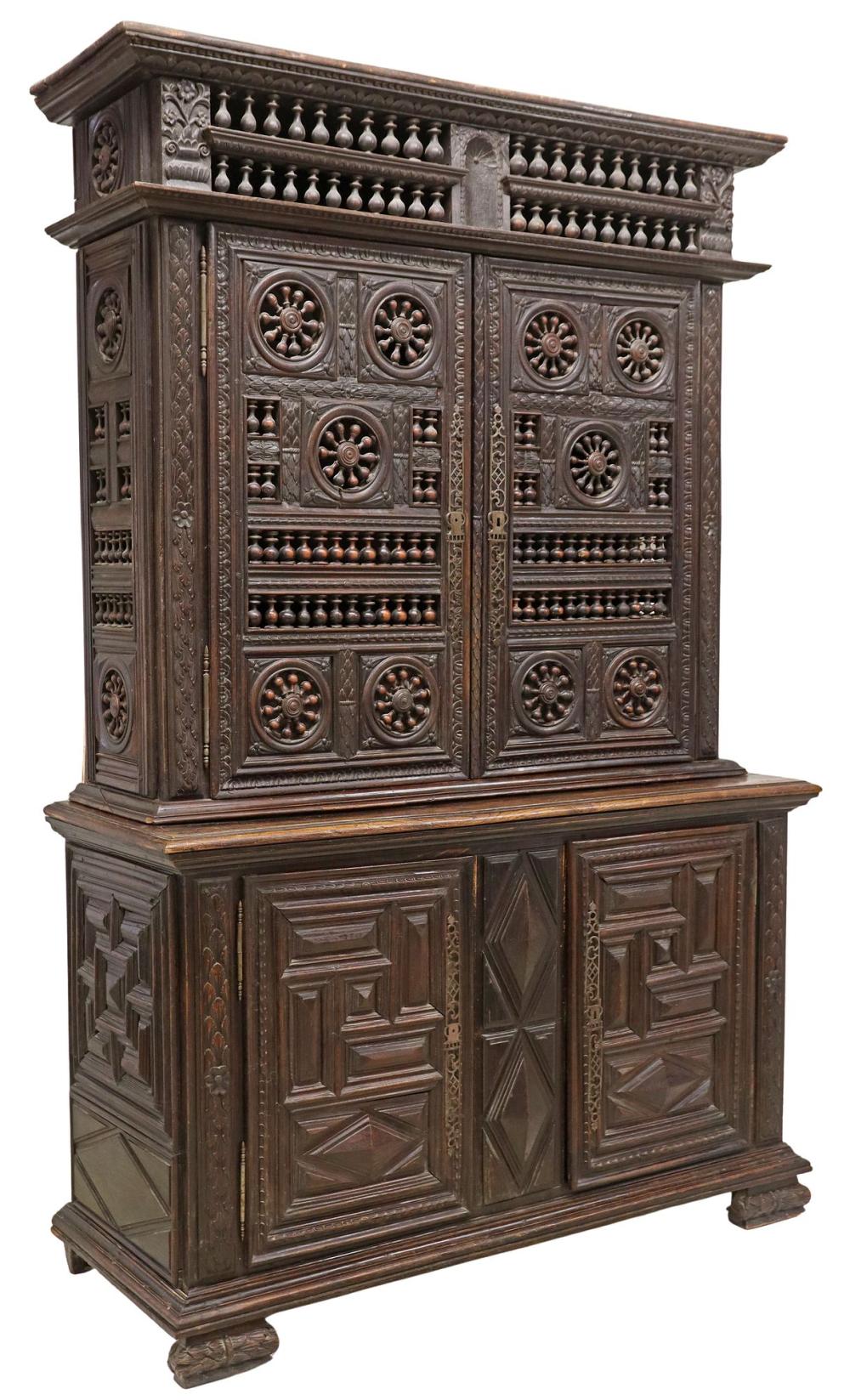
|
Austin Auction Gallery, large French Breton carved oak spindled buffet deux corps | Jan 24, 2025 | 1347 | $400 | Large 98.5-inch example; illustrates how scale and freight can suppress auction prices. | Appraisily auction dataset |
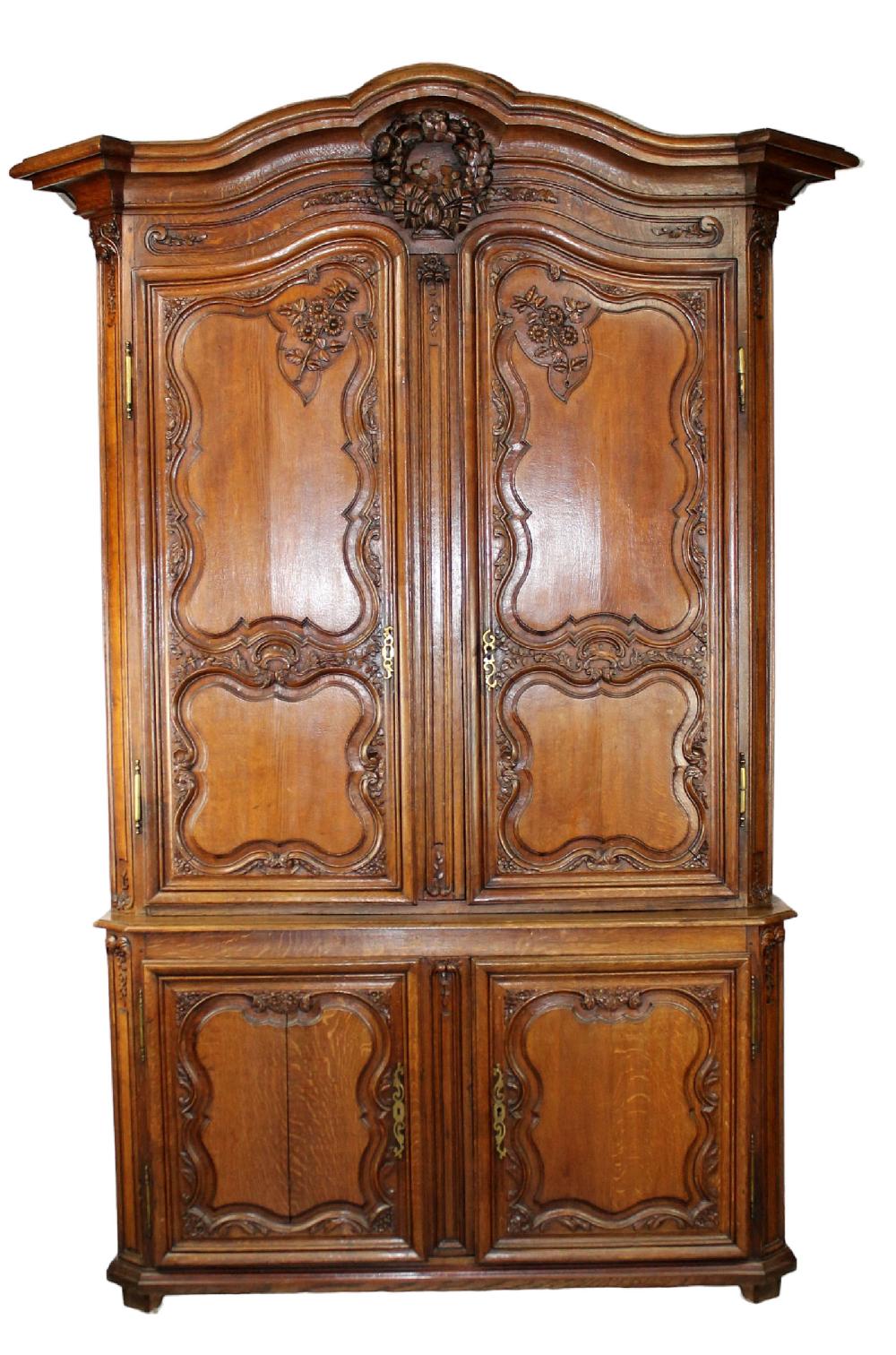
|
King Galleries, French provincial carved oak buffet deux corps | Nov 4, 2023 | 243 | $1,800 | Broader French provincial comp; useful when the piece is clean, architectural, and buyer-ready. | Invaluable |
| Image unavailable | Abell Auction, antique French provincial carved oak buffet a deux corps | Apr 24, 2025 | 540 | $300 | Lower auction comp for carved oak provincial form; condition and local demand matter. | Invaluable |
These comps are not interchangeable with dealer asking prices. They are sale evidence for large carved French furniture, where transport cost, pickup rules, and local taste can move the final number as much as the carving itself.
Want comps matched to your exact cabinet?
Upload front, side, interior, joinery, hardware, and condition photos. The free screener can sort Breton, Henri II, and provincial comps before you order a formal report.
Upload photos for a free first lookHow to sell it (and avoid common listing mistakes)
Large carved buffets are expensive to ship, so your selling strategy depends on whether you can sell locally or need a nationwide buyer pool.
- Online local pickup (Facebook Marketplace, Craigslist) works if you live near a major metro with antique buyers.
- eBay / Etsy can work, but be careful: freight shipping costs can exceed the hammer price, which suppresses demand.
- Regional auction houses are often best if you want a fast, real sale price (not an optimistic asking price).
For photos, prioritize what appraisers and serious buyers need:
- Full front shot (doors closed) and a 45° angle showing depth.
- Close-up of carving quality, corners, and feet (where repairs show).
- Inside shelves/drawers and a shot of drawer dovetails or runners.
- Hardware close-ups (hinges, lock, key if present).
Search variations people ask
These are common questions collectors search while identifying and pricing French Breton/Brittany buffets:
- how to identify a French Breton buffet sideboard
- what is a buffet deux corps in French furniture
- Henri II style buffet vs Breton buffet differences
- how to date carved oak French sideboards by hardware
- value of a late 19th century carved oak buffet
- should I refinish an antique French buffet or keep patina
- best way to ship a heavy antique sideboard safely
- what photos does an appraiser need for a buffet valuation
Each question maps to the inspection and pricing guidance above.
References
Wrap-up
For most carved French Breton/Brittany buffets, the fastest path to a trustworthy value is to document construction and condition and compare your piece to real sales in the carved oak/walnut “Henri II / provincial” buffet market. If you want help narrowing period, originality, and a price range for your exact cabinet, a short photo set usually answers the key questions.