
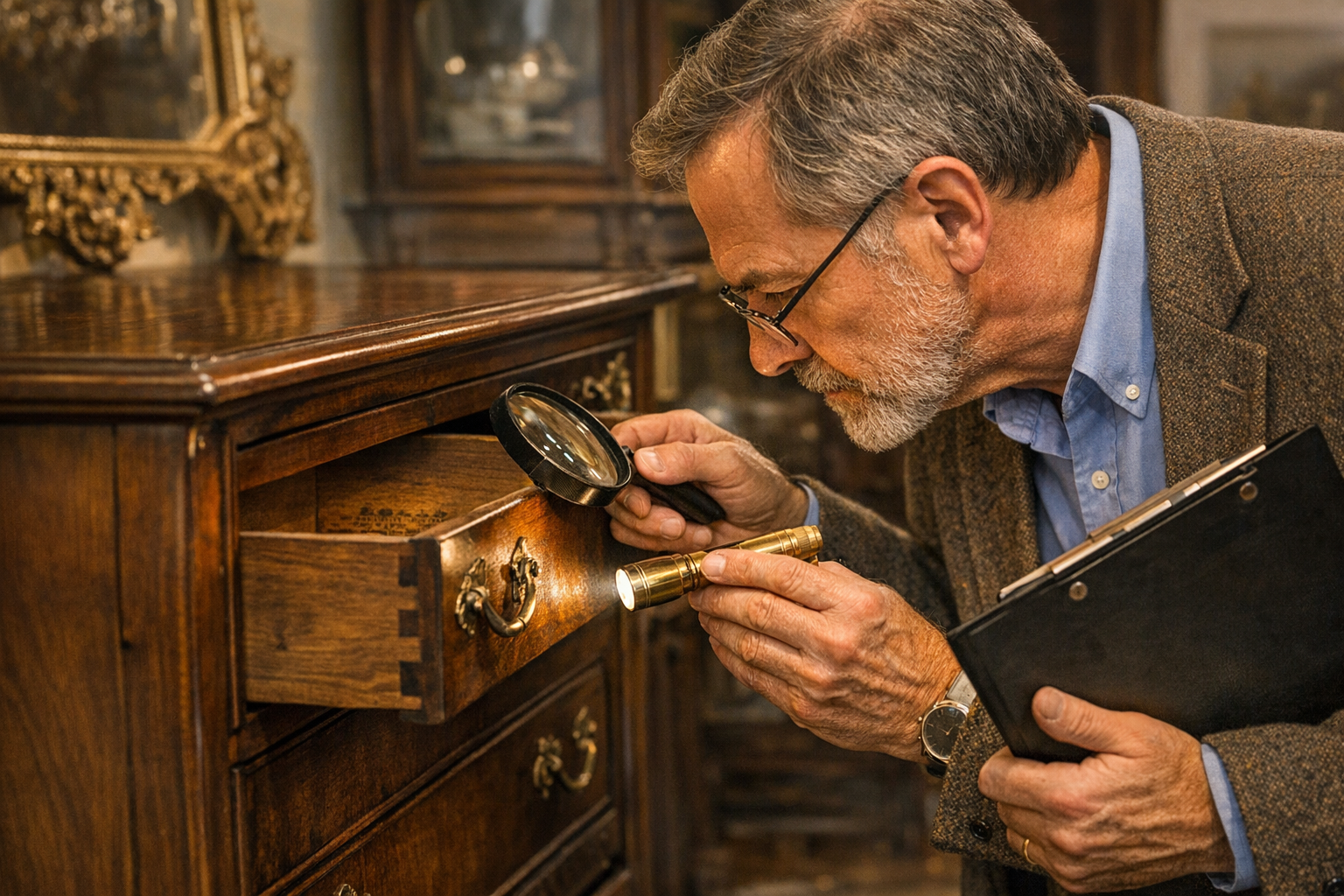
When Antique Furniture Needs a Qualified Appraisal for Donation Estate or Insurance: appraisal and value basics
When Antique Furniture Needs a Qualified Appraisal for Donation Estate or Insurance research should start with identification, condition, provenance, and item-specific market evidence. Use this guide to compare the signals that matter before paying for a formal appraisal or deciding whether to sell.
Quick answer: why ordinary valuation is not enough
For antique furniture, valuation depends on what you will do with it. A price range that works for resale is often not the one needed for a donation deduction, estate filing, or insurance replacement. You need a qualified appraisal that uses the right valuation standard, assumptions, and report format for your exact objective.
Use this decision rule: if your item is used to support tax, probate, or coverage decisions, treat it as a compliance event, not a shopping estimate.
- Donation usually requires evidentiary language tied to FMV and the charitable purpose.
- Estate planning requires valuation logic aligned to date of valuation and executor records.
- Insurance needs replacement or agreed values that support replacement planning and claims support.
Three intents, three valuation targets
1) Donation intent
For antique furniture donation, value is judged by market-level comparability and documentary completeness. The goal is to produce a report a nonprofit and tax preparer can accept as part of an IRS-ready donation chain.
Donation thresholds that raise the appraisal standard
| Situation | What usually applies | Common mistake |
|---|---|---|
| Individual small gift (low aggregate value) | Keep clear photos, receipts, and donor acknowledgment details. | Treating every low-value gift like a major qualified appraisal case. |
| Mid-value noncash gifts | Maintain written condition notes and a transparent comparable basis. | Using a generic “estimated value” without a defensible report. |
| High-value antiques / grouped items with large totals | Use a qualified written appraisal in a format expected by donation documentation workflow. | Mixing furniture with unrelated categories in one unsupported narrative. |
In this lane, the key phrase is not “what can this fetch?” but “is this report reliable enough for paperwork.” That is why photo quality, condition language, maker or style evidence, and appraisal assumptions matter more than a rough estimate.
2) Estate and probate intent
Estate use is about evidentiary consistency, not optimism. Executors and appointees often face disputes because inherited furniture arrives with incomplete origin, condition, and provenance documentation.
- Valuation date discipline: the date basis should match your filing context and be explicitly stated.
- Cross-item consistency: similar chairs, side tables, sideboards, and cabinets should be grouped only when style, provenance, and condition support comparability.
- Condition transparency: splits, weak joints, veneer losses, and refinishing all reduce defensibility when left undocumented.
- Photo inventory: each room-photo pass should include scale references, front and close details, marks/labels, and underside details.
3) Insurance intent
Insurance value is often replacement-focused and can diverge from FMV logic for donation or estate use. Even where a furniture piece is not currently sold, insurers care about replacement cost and rebuilding assumptions at the time of policy claim.
- Not always the same number: a “market value” number can be too low for replacement planning if the item is rare or hard to replace.
- Use explicit report wording: make sure your appraisal report clarifies valuation basis and any policy-specific assumptions.
- Update cycles: for insured antiques, periodic updates matter as market and condition profiles change.
What makes an appraisal “qualified” for these contexts
Qualified does not simply mean “an expert wrote it.” For your purpose, it means the report is structured to support the outcome you need.
- Defined scope: the report explains exactly what was appraised, exclusions, and intended use.
- Method notes: the value method and comparable strategy are stated in a way a reviewer can audit.
- Attribution review reasoning: style cues, construction, and provenance signals are explained, especially where multiple versions exist.
- Condition impact: defects, wear, prior interventions, or restorations are described as part of valuation impact.
- Signed attestation: the prepared professional identifies qualifications, date, location, and assumptions.
If the report does not make those standards visible, it is usually not useful for donation deductions, probate disclosure, or insurance endorsement updates.
How to prepare antique furniture for the right appraisal outcome
Preparation is where most valuation leakage starts. The same piece can vary by a category-dependent amount–a category-dependent amount in report quality if you send weak materials.
Before you contact an appraiser
- Record exact dimensions of the furniture, frame depth, height, and seat height where relevant.
- Photograph front, side, close joinery, marks, labels, and underside details in daylight.
- Document wear: scratches, dents, water marks, refinishing, structural issues, and replacements.
- Gather provenance clues: invoices, old photos, dealer cards, donor notes, and repair logs.
- State your intent immediately: donation, estate filing, or insurance valuation.
This preparation creates cleaner reports in three ways: less estimator drift, faster review, and fewer “request more evidence” cycles.
Common mistakes in antique furniture valuation for donation, estate, or insurance
Most avoidable problems come from process mismatch:
- Confusing an appraisal for a listing opinion and using it for tax filing.
- Submitting incomplete condition notes with a valuation built only from flattering photos.
- Applying a donation-grade or insurance-grade range to the estate inventory without restating the context.
- Skipping appraisal intent in intake and trying to reinterpret the same report after it is issued.
- Ignoring provenance clues that lower credibility, such as unverified replacement pieces or inconsistent marks.
In each case, the fix is not a higher number, but a cleaner instruction set for the appraiser and clearer evidence for downstream users.
Free instant estimate
Not sure if your item is worth appraising? Let us take a look.
Upload a photo, tell us what you know, and get a free first read. If a full appraisal makes sense, we will say so.
Free. No card needed. Takes about two minutes.
Decision checklist before you proceed
Use this quick checklist when comparing appraiser options:
- Do they confirm your exact intent at the start (donation, estate, insurance)?
- Do they specify valuation basis and assumptions in a reviewable format?
- Do they request condition photos in sufficient depth for your specific piece?
- Do they provide a clear scope statement with what is excluded?
- Do they explain if follow-up photos or in-home inspection are needed?
If a quote avoids these basics, treat it as a pricing quote rather than a qualification-ready workflow.
When documentation quality changes outcomes
In high-value antique furniture, outcome is often less about “how old is it” and more about how well your evidence supports the appraisal logic. The highest-impact documents are simple: clear photographs, provenance markers, and explicit condition notes. If one document is missing, many review teams will still proceed, but risk points increase significantly.
For donation pathways
Donation workflows need cleaner handoff packs, because the paper trail is reviewed later by multiple people. Keep a central folder with photos, item notes, and appraisal links to avoid inconsistent entries.
For estate workflows
Estate workflows usually need stable naming, repeated piece identifiers, and consistent units across your inventory list. Misnamed pieces (for example “sideboard” vs “buffet”) are surprisingly expensive when an executor has to reconcile them under time pressure.
For insurance workflows
Insurance documents must separate what is recoverable from what is replaceable. The wording in your appraisal should match your home or collection schedule language to prevent disputes during renewal and claim windows.
People also ask
- When do antique furniture donations need a qualified appraisal?
- How is donation furniture value different from resale value?
- Can one antique furniture appraisal serve both estate and insurance?
- What photos do I need before a qualified furniture appraisal?
- Does estate furniture valuation need a date-of-death basis?
- How often should insured furniture be re-appraised?
- What happens if a donation appraisal is missing required details?
- Do antique sideboards need specialist-specific valuation methods?
These are covered in the sections above. If your case is atypical, speak to an appraiser directly before filing.