A Solid Wood Mahogany Coach in French Rococo Style Louis Xvi From Circa Late 19th Century: appraisal and value basics
A Solid Wood Mahogany Coach in French Rococo Style Louis Xvi From Circa Late 19th Century research should start with identification, condition, provenance, and recent comparable sales. Use this guide to compare the signals that matter before paying for a formal appraisal or deciding whether to sell.
A Solid Wood Mahogany Coach In French Rococo Style Louis Xvi From Circa Late 19th Century
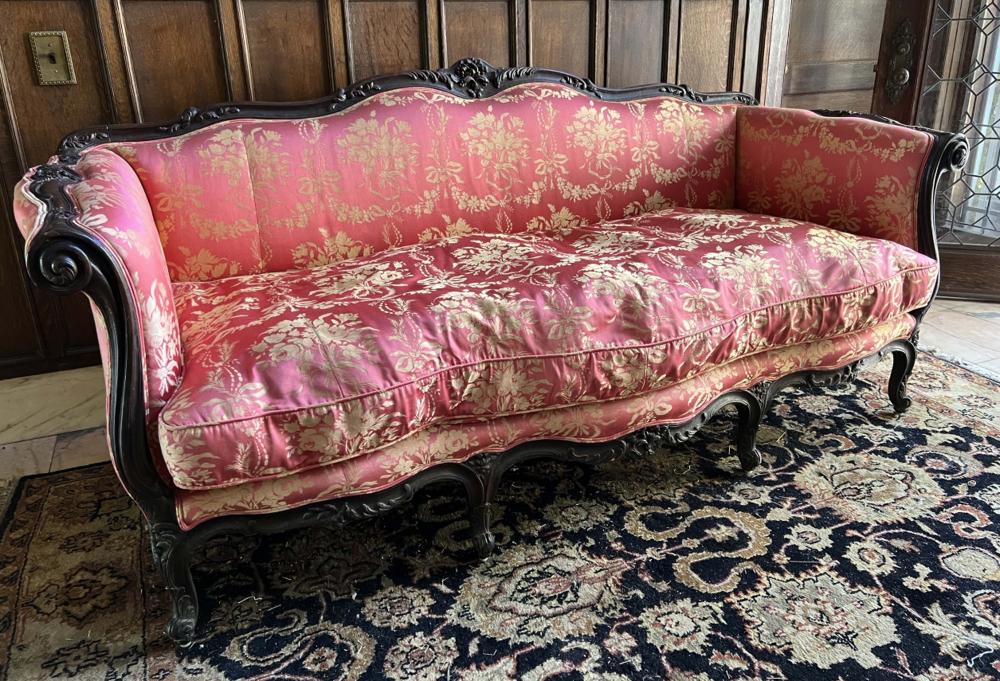
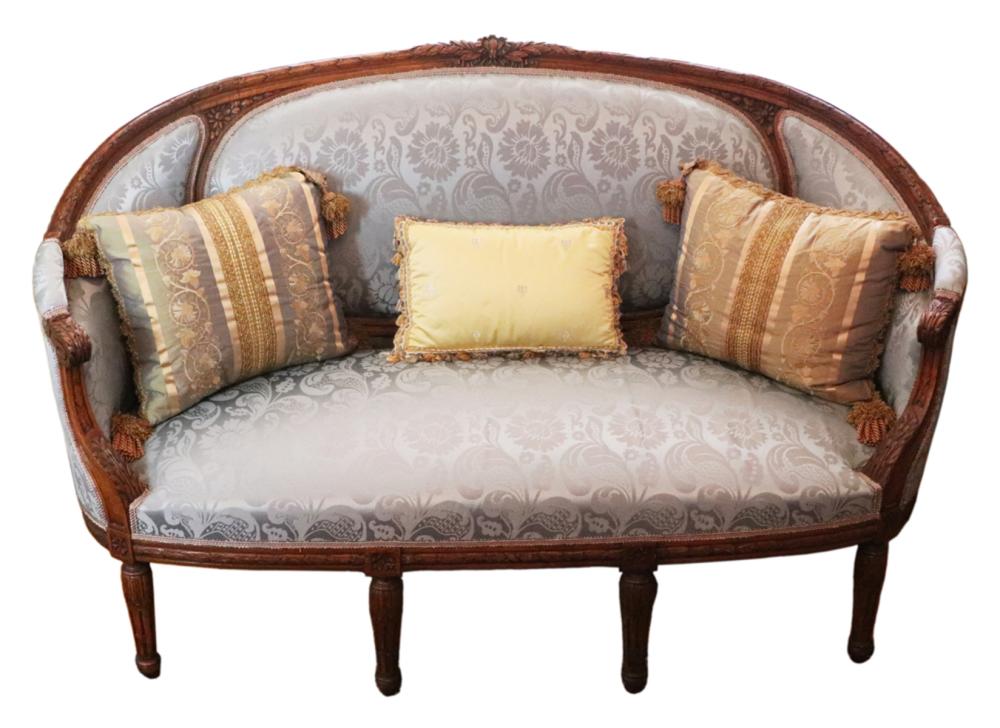
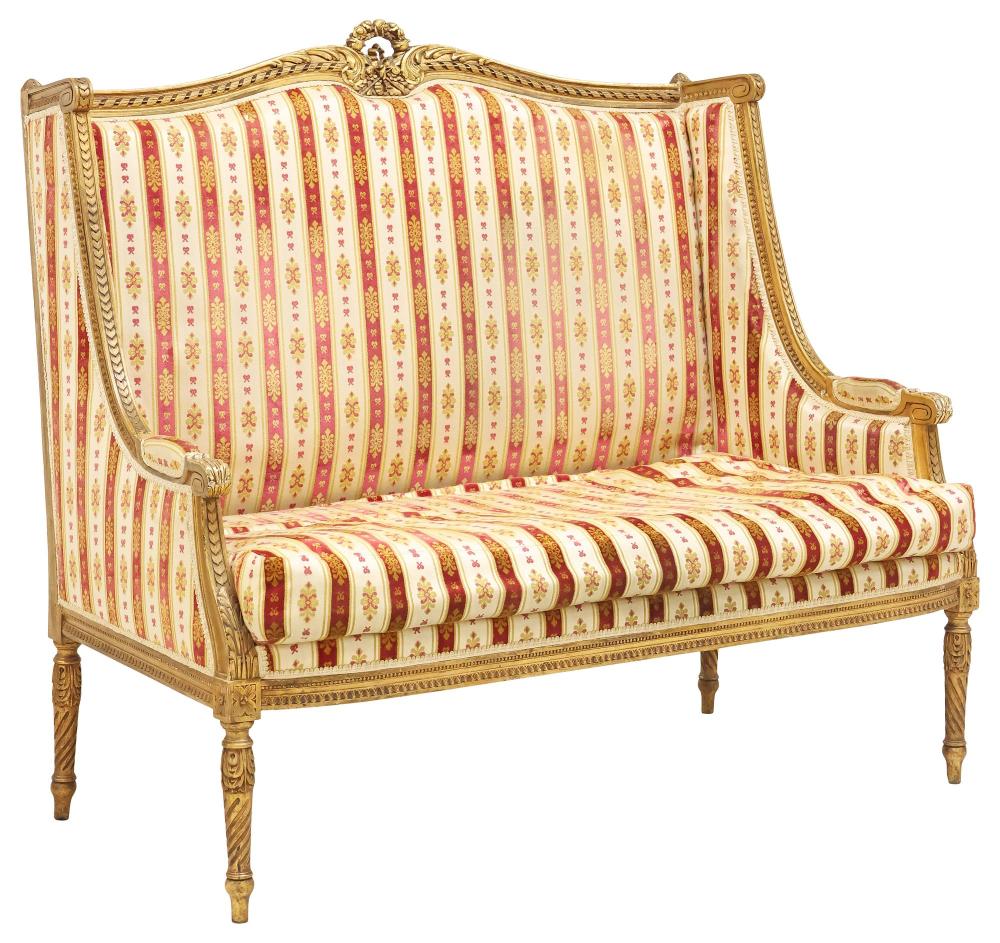
Rococo swirls, neoclassical ribbons, and deep mahogany tones: a late-19th-century French “Louis” piece can be both alluring and confusing to appraise. The title above, which combines “Rococo,” “Louis XVI,” “coach,” and “mahogany,” is typical of what appraisers encounter in the market—ambitious labels that blend distinct stylistic and material claims. This guide clarifies those terms, shows you how to distinguish Rococo Revival from Louis XVI Revival, explains how to verify wood and construction, and outlines the factors that drive value for either a canapé (sofa/couch) or, if indeed a vehicle was meant, an actual coach.
Why the Title Is Confusing—and How Appraisers Resolve It
- Rococo vs. Louis XVI: Historically, Rococo (Louis XV, circa 1730–1760) favors asymmetry, C- and S-scrolls, shells, and rocaille carving. Louis XVI (circa 1774–1792) turns to straight lines, classical symmetry, fluting, ribbon garlands, and oval medallions. They are distinct vocabularies.
- Late-19th-century Revivals: During the Second Empire and Third Republic (roughly 1850–1900), Parisian makers revived both styles—often within the same interiors. It’s common to see listings muddle “Rococo” and “Louis XVI.” Your job is to read the carving, profiles, and ornament to decide which revival applies, or whether the piece is an eclectic blend.
- Couch or Coach?: In French furniture, a “canapé” is a sofa. English listings sometimes mis-type “couch” as “coach.” True horse-drawn coaches are a separate collecting category with distinct construction and market. Clarify the object type before appraising.
- “Solid Mahogany”: Upholstered French frames were frequently beech or walnut under gilt or paint; formal case pieces used mahogany (acajou). Some late-19th-century canapés were indeed mahogany-framed, but many “mahogany” claims prove to be stained beech. Verify the timber before accepting the label.
Conclusion: Expect a late-19th-century French revival piece—either Rococo Revival (Louis XV style) or Louis XVI Revival. Confirm whether the object is a canapé/couch or an actual coach, and test the wood rather than relying on descriptions.
Materials and Construction: Mahogany, Frames, and Upholstery
Mahogany identification
- Grain and pores: Mahogany is diffuse-porous with open, visible pores and interlocked grain creating ribboning on quarter-sawn surfaces. Beech shows flecking (“ray”) on radial faces and smaller, more uniform pores. Walnut has a different, often darker, figure and smell when cut.
- Color: Aged mahogany oxidizes to warm reddish-brown; beech takes stain evenly but can appear slightly pinkish under abrasion. Be wary of very uniform color; it can indicate stain over a paler wood.
- Weight and hardness: Mahogany is dense but workable. Beech is hard and slightly heavier-feeling per volume; carved beech frames can be very crisp but are commonly painted or gilded.
- Old finishes: French-polished mahogany (shellac) shows depth and chatoyance. Later polyurethane or overly glossy varnish suggests refinish.
Frame and joinery
- Canapé frames: Look for mortise-and-tenon joints at the arms and seat rails; doweled joints became common later in the 19th century. Circular saw marks on hidden surfaces signal machine production (post-1860), consistent with the period.
- Screws and nails: Machine-made screws with single slots and uniform threads are period-appropriate. Wire nails become common in the late 19th century. Phillips-head screws appear later (20th century) and can indicate repair.
- Springs and webbing: Hand-tied coil springs atop jute webbing are typical of 1860–1900 French upholstery. Expect horsehair stuffing layered with tow and cotton batting; foam replaces this in later reupholstery.
Upholstery and surface
- Original textiles rarely survive. 19th-century silk damask, brocatelle, or wool serge may remain as fragments, often sun-faded.
- If the frame is gilded rather than polished mahogany, expect beech or softwood beneath gesso; gilded mahogany is uncommon.
- Tacking: Close-set upholstery tacks on the underside rails, sometimes concealed by gimp or braid at the front. Replacement staples betray later work.
A note on actual coaches (carriages)
- Chassis and wood species: Carriages typically use ash and oak for frames; elm at hubs; mahogany for panels and interiors on luxury coaches. Joinery is heavy and bolted; iron and brass fittings abound.
- Springs and running gear: Late-19th-century European coaches rely on semi-elliptic steel springs, not thoroughbraces. Look for coachbuilder plates on the boot or body.
If your “coach” is a sofa, the above furniture diagnostics apply; if it’s a vehicle, the timber mix, ironwork, wheels, and coachbuilder’s plate become primary.
Style Diagnostics: Rococo vs. Louis XVI Revival
Rococo Revival (Louis XV style cues)
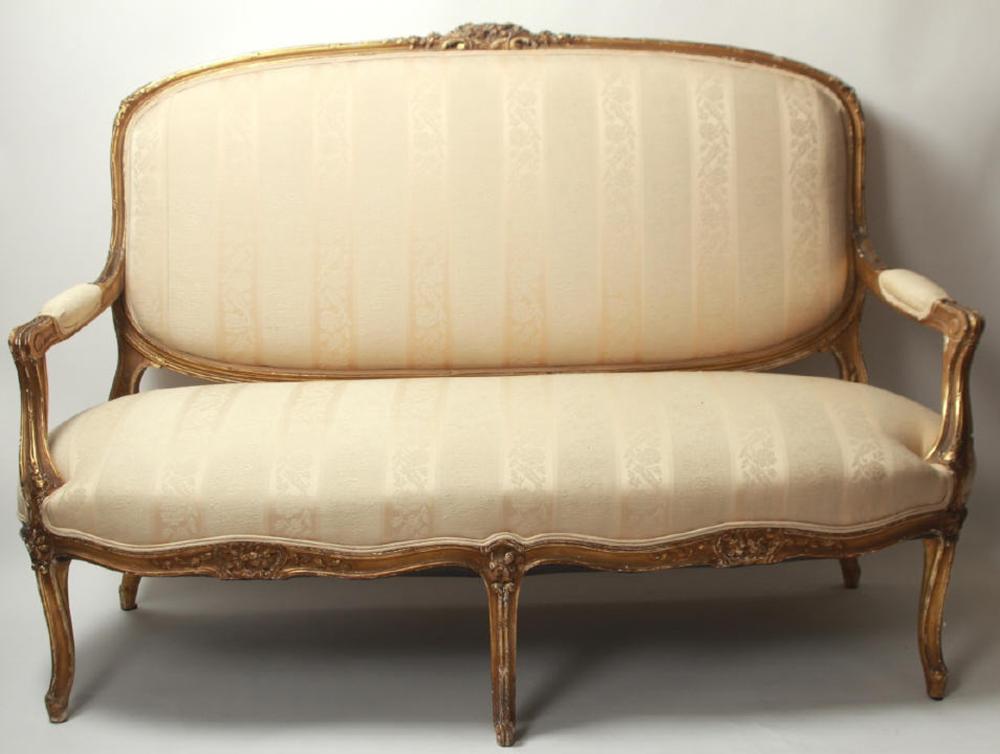
- Profile: Serpentine crest rails, cabriole legs with knees swelling outward, asymmetrical balances, and sinuous arms.
- Motifs: Shells, rocaille, acanthus leaves that seem windswept, C- and S-scrolls, flower sprays, and pierced carving in crests and aprons.
- Ornament rhythm: Movement and lightness; frames may be more heavily carved on crests and knees, reducing down the rails.
Louis XVI Revival (Neoclassical cues)
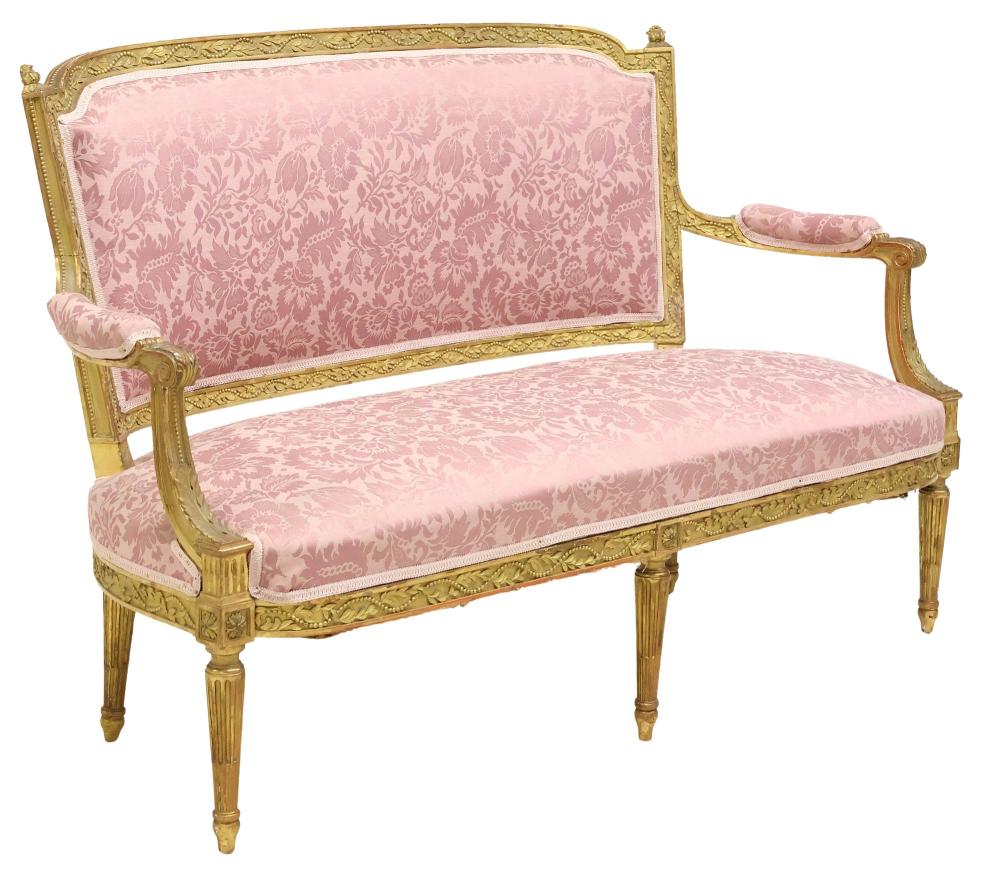
- Profile: Straighter lines; rectilinear seat rails; tapered fluted legs (en gaine or en carquois); oval or rectangular medallion backs on chairs; arm supports often baluster-shaped.
- Motifs: Ribbons, laurel and oak leaf garlands, husk swags, pearls (perles), Greek key, lyres, and acanthus in a restrained, symmetrical composition.
- Ornament rhythm: Symmetry and order; carving flatter and more linear than Rococo’s deep undercut relief.
Hybrid cues and mislabels
- Many late-19th-century salon suites mix motifs—e.g., a straight Louis XVI-style seat rail with freer Rococo crests. Assign the dominant vocabulary when describing.
- A mahogany canapé with fluted legs and ribbon-tied garlands is Louis XVI Revival; one with shell-and-rocaille crest and cabriole legs is Rococo Revival.
Dating, Provenance, and Marks
Dating indicators
- Tooling: Circular saw kerfs on hidden boards and machine-planed surfaces fit 1860–1900. Purely hand-planed surfaces suggest earlier work or top-tier hand finishing.
- Hardware: Uniform machine screws pre-1900; cut nails give way to wire nails by the late 19th century. Casters, if present, often porcelain or brass cup casters on canapés.
- Upholstery: Hand-tied coil springs with jute webbing arose mid-19th century; hay/horsehair stuffing is right for 1860–1900. Foam or zigzag springs indicate later rework.
Provenance and marks
- Ébéniste stamps: High-end French furniture sometimes bears stamped names or initials on seat rails or drawers, though upholstered frames are less often stamped than case pieces.
- Retail labels: Stenciled or paper labels from Paris retailers (grand magasins and decorators) can appear on the underside. Look for remnants of paper glued to rails.
- Inventory marks: Auction chalk marks, penciled stock numbers, or shipping stencil codes speak to trade history, not origin.
- Carriages: Coachbuilder plates (e.g., oval brass plaques) are typically riveted near the door or dashboard; chassis numbers may be stamped into iron.
Provenance documentation
- Bills of sale, decorator invoices, or household inventories can meaningfully underpin value. Period photographs showing the piece in situ are particularly persuasive.
Condition, Restoration, and Value
Common condition issues (canapés)
- Structural: Loose joints in arms and legs; breaks at carved crests; fractures at knee transitions on cabriole legs.
- Surface: Over-polishing (loss of crisp carving detail), water rings, bleaching, and uneven oxidization.
- Upholstery: Sagging springs, webbing failure, moth-eaten horsehair, brittle gimp; non-breathable modern foam that stresses frames.
- Insect damage: Powderpost beetle in mahogany is less common than in beech, but worming can appear in any hardwood.
Restoration approaches
- Structural: Re-glue with reversible animal glue or high-grade PVA where appropriate; avoid over-clamping that distorts alignment.
- Carving repair: Use well-matched old mahogany for patches; keep interventions visually discreet and documented.
- Finish: Clean and conserve shellac where possible; avoid stripping. For gilded frames, retouch losses with toned water gilding rather than full re-gild unless absolutely necessary.
- Upholstery: Museum-minded reupholstery retains original stuffing layers where feasible; document any replacement webbing or springs.
Value considerations
- Style and quality: Sharp, undercut carving; balanced proportions; and high-grade mahogany boost value. Louis XVI Revival tends to command more in minimalist interiors; Rococo Revival appeals for its virtuosity.
- Original surface: Intact, well-maintained finishes and original gilding are highly prized.
- Maker and provenance: Identified Parisian workshops or documented provenance can elevate values significantly.
- Scale and usability: Salon-scale canapés are more marketable than oversized examples. Comfortable seat height and depth matter to buyers.
- Carriages: For actual coaches, completeness (lanterns, upholstery, original paint), coachbuilder reputation, and running condition dominate value.
Price reality check (broad, non-binding)
- French late-19th-century Louis XVI Revival or Rococo Revival mahogany canapés: commonly at auction in the low-to-mid four figures; exceptional examples with fine carving, original surface, and provenance can reach into the mid-to-high five figures.
- Ceremonial or presentation carriages of the late 19th century: a wide range—from the low five figures for honest, unrestored examples to six figures for best-in-class, fully documented coaches. Transport and storage costs are substantial and affect net proceeds.
Practical Appraisal Checklist
- Confirm the object: couch (canapé) or coach (carriage)? Photograph full profiles and undersides.
- Identify wood: inspect end grain for pores and medullary rays; scrape a hidden spot to assess true color; compare weight and figure.
- Read the style: list motifs you see—shells/rocaille and cabriole legs (Rococo) versus fluting, ribbons, and straight rails (Louis XVI).
- Date by construction: look for machine saw marks, hand-tied coil springs, wire vs. cut nails, and screw types.
- Check condition: move the piece gently—note racking, loose joints, lost carving, insect frass, upholstery sag.
- Surface assessment: is the finish shellac? has it been stripped or over-polished? are gilded areas original or over-gilded?
- Search for marks: maker’s stamps, retailer labels, or coachbuilder plates; document with macro photos.
- Provenance: gather any paperwork, labels, or in-situ photos; record ownership chain where possible.
- Note restorations: list any replaced elements (legs, crest, rails, springs), refinish, or reupholstery with dates if known.
- Estimate costs: factor conservation/restoration, transport, and upholstery into any value opinion.
FAQ: Quick Answers
Q: Is it possible for a piece to be both Rococo and Louis XVI style?
A: In the 19th century, yes—eclectic revival was common. Assign the dominant vocabulary based on profile and motifs, but acknowledge mixed elements when present.
Q: How can I tell mahogany from stained beech on a canapé frame?
A: Check the end grain for larger, open pores (mahogany) versus finer pores and ray flecks (beech). Mahogany often shows ribbon figure under shellac; beech takes stain very evenly and may look more pink beneath a fresh scrape.
Q: Should I reupholster before selling?
A: Only if the frame is sound and the upholstery is structurally failed. Neutral, high-quality natural fabrics can help, but over-restoration or foam-only jobs can depress value. Keep and document any original stuffing.
Q: Are machine-made screws a red flag for authenticity?
A: No. They’re appropriate for late-19th-century work. Phillips-head screws or staples, however, indicate later interventions.
Q: What if it really is a horse-drawn coach?
A: Shift criteria: prioritize completeness, structural integrity of the undercarriage and wheels, originality of paint and trim, and presence of a coachbuilder’s plate. Consult carriage specialists for valuation and transport logistics.