6 Factors That Determine Antique Chifferobe Value: appraisal and value basics
6 Factors That Determine Antique Chifferobe Value research should start with identification, condition, provenance, and recent comparable sales. Use this guide to compare the signals that matter before paying for a formal appraisal or deciding whether to sell.
6 Factors That Determine Antique Chifferobe Value
Antique chifferobes—hybrid wardrobes that combine a hanging compartment with drawers—show up in American homes from the early 1900s through mid-century. Because they straddle utility and style, their values vary widely. Some 1920s oak examples might sell modestly, while a labeled Art Deco piece with figured veneers can command a strong price. If you’re evaluating a chifferobe for sale, insurance, or inheritance, the six factors below consistently drive value.
1) Style, Era, and Design Quality
The first quick read on value is the overall look and the period it suggests. Chifferobes appear most often from roughly 1910 to the 1950s, and their stylistic cues anchor desirability.
- Arts & Crafts/Mission (1910s–1920s): Straight lines, inset panels, exposed joinery, little ornament. Quarter-sawn oak with bold ray fleck is common. Clean, honest construction holds steady value.
- Early 1920s–1930s Colonial Revival: Turned feet, paneled doors, bonnet or pediment tops. Often in mahogany or walnut. Popular but variable in quality; value depends on construction and finish.
- Art Deco/Streamline (late 1920s–1940s): Waterfall fronts, rounded corners, book-matched veneers (walnut, maple, rosewood-style), geometric inlay, Bakelite or chrome pulls, stepped plinth bases. This category can bring premium prices when veneers are intact and design is cohesive.
- Rustic/Cottage/Cedar-lined (1920s–1940s): Simple, sometimes knotty woods with cedar interiors to deter moths. Practical and regionally popular; top values go to well-made pieces with attractive grain and original hardware.
Design details that move the needle:
- Symmetry and proportion: Graceful, balanced profiles signal better cabinetmaking.
- Decorative veneers and marquetry: Book-matched or highly figured veneers can lift value significantly, so long as they are original and not bubbling or patched.
- Beveled mirror doors: A crisp, thick bevel and a well-framed mirror often indicate higher quality than flush, thin plate.
Tip: If a piece feels stylistically muddled—say, Deco pulls on a Colonial Revival carcass—assume later modifications and discount accordingly unless documentation proves original cross-over design.
2) Maker, Labels, and Provenance
Anonymous furniture can be wonderful, but documented makers and origins often add value.
- Labels and stencils: Check the back of the case, the underside of drawers, behind drawers on the carcass rails, the inside of the wardrobe compartment, and the back of mirrors for paper labels, stencil marks, or impressed brands. Also inspect lock plates and key escutcheons for maker’s stamps.
- Retailer vs. manufacturer: Department-store and catalog houses commonly sold chifferobes. A retailer label is helpful, but a manufacturer’s brand or a noted regional cabinet shop carries more weight.
- Catalog and suite matches: A chifferobe that can be matched to a period catalog illustration or that is part of a documented bedroom suite (bed, dresser, vanity) generally rises in value—especially if multiple pieces survive together.
- Provenance: Ownership history tied to a notable household, documented purchase date, or inclusion in an estate inventory helps underpin price and can ease buyer concerns about alterations.
No-label pieces should be evaluated on build quality and style. However, a clear, intact label or stamped number that ties to a manufacturer’s pattern can elevate value substantially because it lowers attribution risk.
3) Materials and Construction
Buyers and appraisers read quality through the wood species, joinery, and interior choices.
- Wood species: Mahogany (often Cuban or Honduran in earlier pieces), walnut (including burl accents), and quarter-sawn white oak are desirable. Secondary woods inside drawers and backs—poplar, pine—are normal and help date construction.
- Veneer quality and thickness: Early veneers are typically thicker; they accept refinishing better and telegraph fewer substrate defects. Feathered, crotch, or book-matched veneer panels add visual value; bubbles, patches, or wide color mismatches detract.
- Joinery: Hand-cut dovetails suggest earlier or higher-end construction; machine-cut dovetails are common from the 1890s onward. Tight, well-centered dovetails and clean drawer slides indicate quality. Look for dust panels between drawers, screwed-on backboards, and chamfered drawer bottoms—good signs.
- Hardware: Period-appropriate brass or bronze pulls, bail handles with cast backplates, wooden knobs on Arts & Crafts examples, and Bakelite or chrome on Deco pieces are desirable. Replaced hardware lowers value unless matched correctly and documented.
- Interiors: Cedar-lined compartments, pull-out tie racks, hat shelves, and original hanging rods signal a well-appointed chifferobe. Presence of the original key and functioning locks is a plus.
- Mirror glass: Earlier plate may show slight waviness and edge silvering loss. Beveled mirrors are a value add. Heavy modern replacements can be fine structurally but reduce originality.
Construction red flags that suppress value:
- Particleboard or MDF components (generally post-1950s repairs)
- Staples rather than screws/nails in structure
- Thin, peeling veneers or mismatched replacement panels
- Overly glossy spray finishes obscuring grain
4) Condition, Originality, and Restoration Quality
Condition tends to be the single biggest swing factor in value, and originality matters.
- Finish: A stable, gently aged finish is ideal. Well-executed conservation (cleaning, waxing, in-painting small losses) is acceptable. Full refinishing can either help or hurt: it can rescue cloudy, alligatoring finishes, but overly dark stains, polyurethane sheens, or sand-through on veneer lower value.
- Structural integrity: Doors should sit square, close flush, and lock properly. Drawers should run smoothly with minimal wobble. Loose carcass joints, kicked-in backboards, and warped doors are costly to fix.
- Veneer and edges: Small chips on corners are typical; large veneer patches, lifted sheets, or wide filler lines reduce price.
- Hardware and parts: Original pulls, rods, tie racks, shelves, caster wheels, and keys all add value. Missing or non-period replacements detract.
- Odor and interior: Clean cedar aroma is positive; mildew, heavy smoke, or mothball odors are negatives that are difficult to remove and reduce desirability.
- Evidence of pests: Old filled worm holes can be acceptable if inactive; fresh frass or soft wood should trigger caution and a value discount.
Quality restorations should be reversible and documented with photos and notes. If you must refinish, matching original color tone and sheen and preserving patina on hardware will protect more of the piece’s value.
5) Size, Features, and Everyday Usability
Even among collectors, furniture that fits modern spaces commands better prices.
- Footprint and height: Pieces around 60–68 inches tall with a moderate footprint often sell faster than very tall, heavy examples that won’t fit through stairwells.
- Internal layout: Flexible storage—adequate hanging space, deep drawers, adjustable shelves—broadens the buyer pool. Narrow, awkward compartments can slow sales.
- Mirrors and lighting: An exterior mirrored door can add utility in small bedrooms. Original interior lights are rare but desirable when safe and functional.
- Mobility and weight: Original brass casters are a plus for moving and design charm; missing or seized casters make the piece cumbersome and can scuff floors.
- Safety and stability: Secure tip-resistant backs and level feet matter to modern households. Wobbly cases and loose feet deter buyers.
Functional upgrades like felt-lined drawers or added closet rods should be discrete and reversible. Permanent alterations—cutouts for media equipment, painted surfaces over veneer, or drilled holes—typically depress value.
6) Rarity, Market Demand, and Comparable Sales
Even a superb chifferobe will underperform if the market is soft where you sell. Conversely, a solid but not exceptional example can ride a hot local trend.
- Rarity within a style: Waterfall Deco is common; Deco with complex marquetry or exotic veneers is scarce. Mission examples with original finish and hardware are less common than later Colonial Revival forms. Scarcity paired with quality brings better prices.
- Geographic taste: Urban markets often reward Deco and sleek forms; rural or cottage markets may prefer oak or pine with cedar interiors. Matching a piece to the right venue is strategic.
- Seasonality and venue: Spring moving season and pre-holiday months can help. Well-photographed, local pickup sales can outperform consignment in some regions; specialty auctions help top-tier pieces.
- Comparable sales analysis: Build a comp set of recent sales with close matches in size, style, wood, condition, and maker. Adjust comps for:
- Condition deltas (veneer losses, refinishing, missing hardware)
- Provenance or labels
- Transport costs or buyer’s premium
- Regional pricing differences
- Suite value: If your chifferobe is part of a matching bedroom suite, overall value per piece can increase, especially when sold together.
Ballpark pricing guidance varies by locale, but as a general framework: common 1920s–1930s oak or walnut chifferobes in sound original condition often trade in the low hundreds; labeled or high-design Deco examples and fine Arts & Crafts forms can reach into the low thousands; rare, documented pieces in top condition can exceed that. Always anchor your estimate in recent, truly comparable sales.
Quick Checklist for a Fast, Reasoned Value Estimate
- Identify the style and era from form, veneers, and hardware.
- Photograph labels, stamps, and any marked hardware or locks.
- Confirm construction: wood species, dovetails, drawer bottoms, backboards.
- Test function: doors straight, locks working, drawers smooth, casters intact.
- Inspect condition: finish quality, veneer issues, mirror bevel and silvering, odors.
- Verify originality: pulls, rod, shelves, tie racks, keys; note any replacements.
- Measure dimensions and note interior layout for modern usability.
- Gather 5–10 comparable sales and adjust for condition, location, and maker.
- Decide the right venue: local pickup, specialty auction, or private sale.
- Document everything; buyers pay for confidence.
Recent chifferobe and wardrobe auction comps
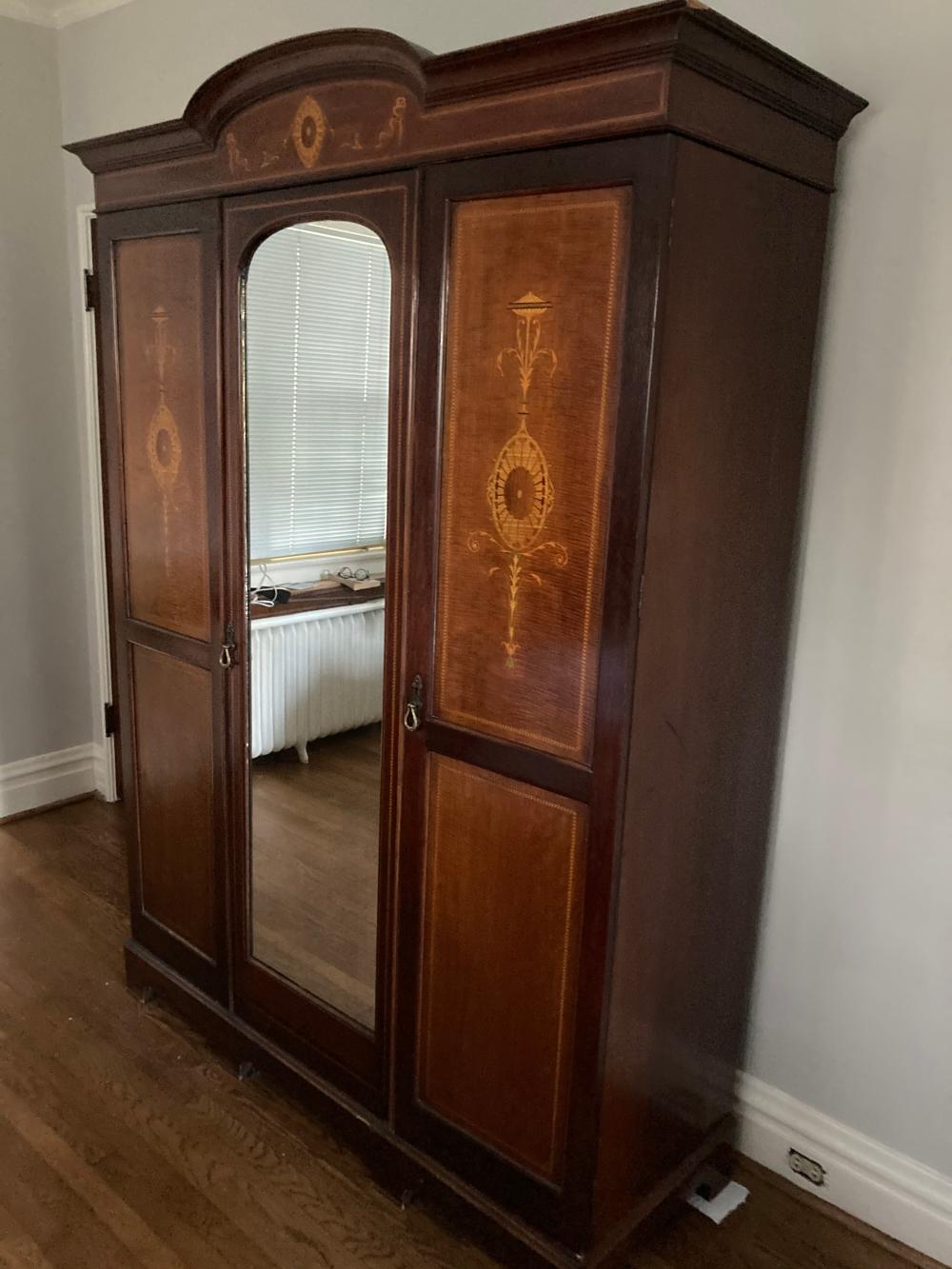
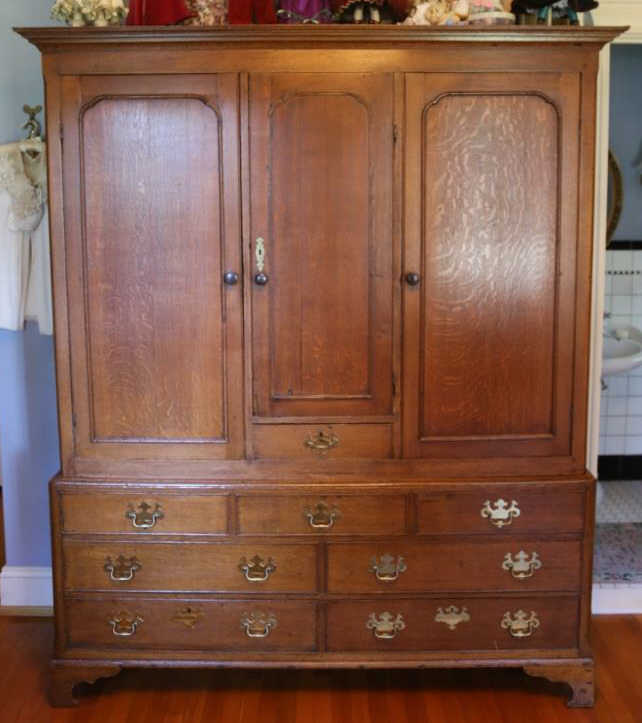
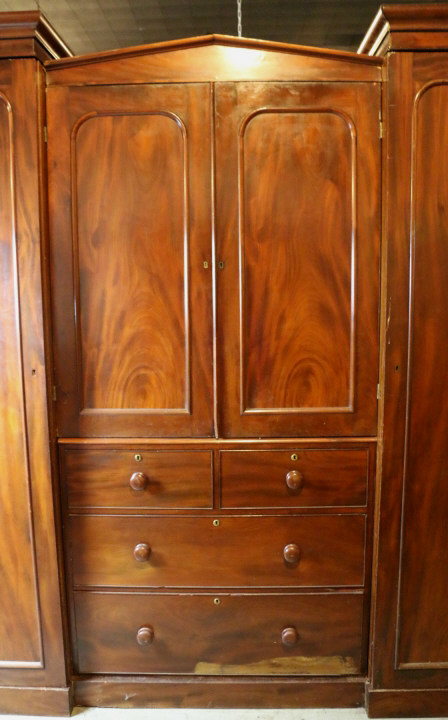
Chifferobe comps should be matched by form, style, mirror condition, veneer loss, drawer function, hardware originality, and whether shipping is practical. Large furniture can sell lower at local auctions when pickup is required, so condition and venue both matter.
Shown USD range: USD 253-USD 400. Median of these 3 USD examples: USD 400.
| Image | Description | Auction house | Date | Lot | Reported price realized |
|---|---|---|---|---|---|
|
Antique wardrobe chifferobe armoire with triple mirrored doors | St. Louis Estate Buyers | 2020-10-25 | 137 | USD 253 |
|
English antique oak chifferobe | Chandler's International Auction | 2016-11-05 | 203 | USD 400 |
|
English antique mahogany chifferobe | Chandler's International Auction | 2016-10-08 | 257 | USD 400 |
Disclosure: prices are shown as reported by auction houses and are provided for appraisal context. Learn more in our editorial policy.
Check whether your chifferobe is worth appraising
Free first read · Private upload · No checkout required to start
FAQ
Q: What’s the difference between a chifferobe and an armoire? A: An armoire is a tall wardrobe cabinet, typically with hanging space behind doors. A chifferobe combines a wardrobe compartment on one side with a bank of drawers on the other, making it a hybrid storage piece.
Q: Does refinishing always lower the value? A: Not always. Gentle cleaning and conservation are preferred, but a skilled, period-appropriate refinish can raise value on pieces with severely damaged finishes. Overly shiny modern coatings, sand-through on veneer, and color shifts from the original tone usually hurt value.
Q: How can I tell if my hardware is original? A: Remove a pull to check for old finish outlines and hole wear. Original screws often have slot heads and show age-consistent oxidation. Mismatched hole spacing, bright Phillips screws, or ghost outlines around the plates indicate replacements.
Q: Is cedar lining a sign of quality? A: Cedar-lined compartments were a practical moth deterrent and appear on both mid-range and better pieces. Cedar alone doesn’t guarantee high value, but it adds desirability, especially when the lining is intact, aromatic, and paired with sound construction.
Q: Should I replace a cloudy or cracked mirror? A: If the mirror is severely deteriorated or dangerous, a properly sized, beveled replacement can improve usability. Save the original if possible and document the change. For minor silvering loss or light waviness, many collectors prefer to keep the original glass.
Evaluating a chifferobe is an exercise in reading style, workmanship, and condition against current demand. When you ground your estimate in these six factors and support it with clear photos, measurements, and comparable sales, you can price or insure with confidence—and know when a piece deserves the extra effort of professional conservation or a higher-end selling venue.