
What cameo brooch actually sell for
A common example is a different sale from a high-end named piece.
Typical sales. 14K Gold Georgian Hardstone Cameo Brooch sold for $130.
Doves at Bird Bath Victorian Cameo Brooch Pin in rose gold plated mount. sold for $150.
Art Deco Gold and Cameo Brooch sold for $172.
Gold cameo brooch sold for $200.
CAMEOS - (5) Pcs of Victorian Jewelry, including (3) cameo brooches, (1) cased came… sold for $250.
18k Gold Cameo Brooch Pendant, Austria, Circa 1900. sold for $550.
High-value outlier. A Quaglia gold and shell cameo brooch sold for $1,495.
Photograph maker marks, model, condition, and completeness before treating any one sale as yours.
What similar items actually sold for
To help ground this guide in real market activity, here are recent example auction comps from Appraisily’s internal database. These matched sales are market context only, not an object estimate or identification, and they do not guarantee a price for your specific antique cameo brooch.
Shown USD range: USD 25-USD 950. Median of these 10 USD examples: USD 105.
| Comparable | What sold | Auction house | Date | Lot | Source-reported amount |
|---|---|---|---|---|---|
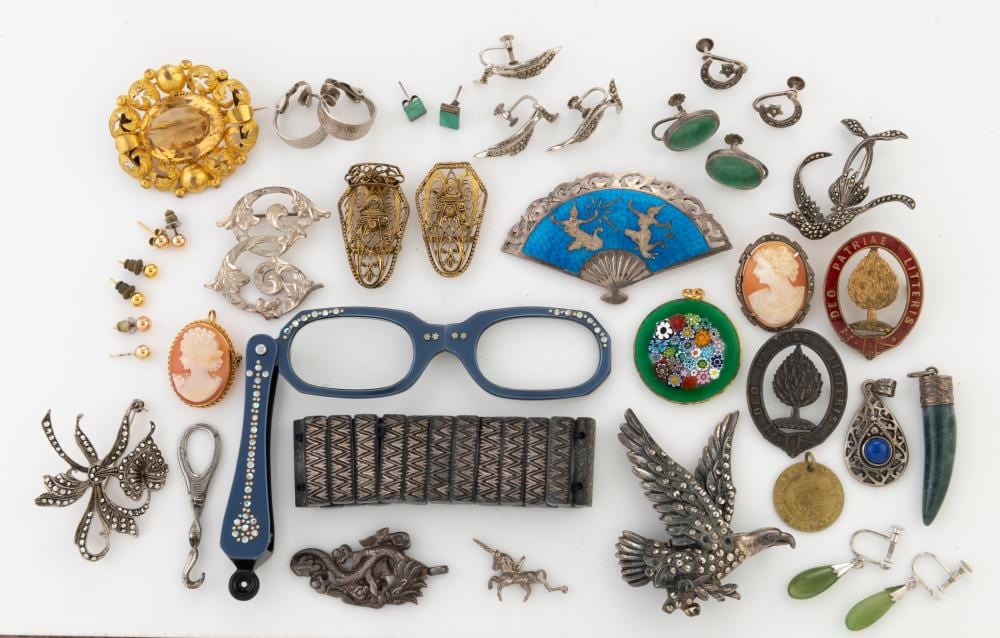 |
Vintage jewellery including silver and marcasite, cameo brooches, Siamese silver and blue enamel fan brooch, antique gaming token, lorgnettes, greenstone earrings, Murano glass pendant, bracelet, etc, (qty)Source blocked; provenance matched | Leski Auctions Pty Ltd | 2024-11-16 | 202 | AUD 200 (buyer’s-premium treatment unknown) |
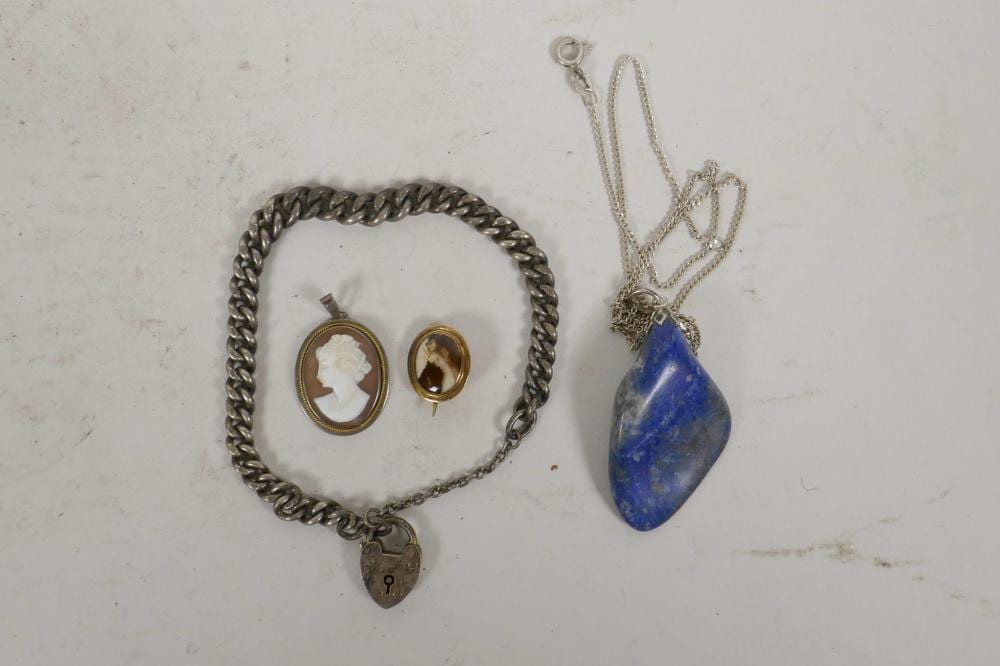 |
A heavy gauge sterling silver heart lock bracelet, 7¾", 19g, together with a lapiz lazuli pendant necklace on a sterling silver chain, a cameo silver pendant and a small Victorian gold plated enamel brooch, A/FSource blocked; provenance matched | Crow's Auction Gallery Ltd | 2020-07-29 | 684 | GBP 28 (buyer’s-premium treatment unknown) |
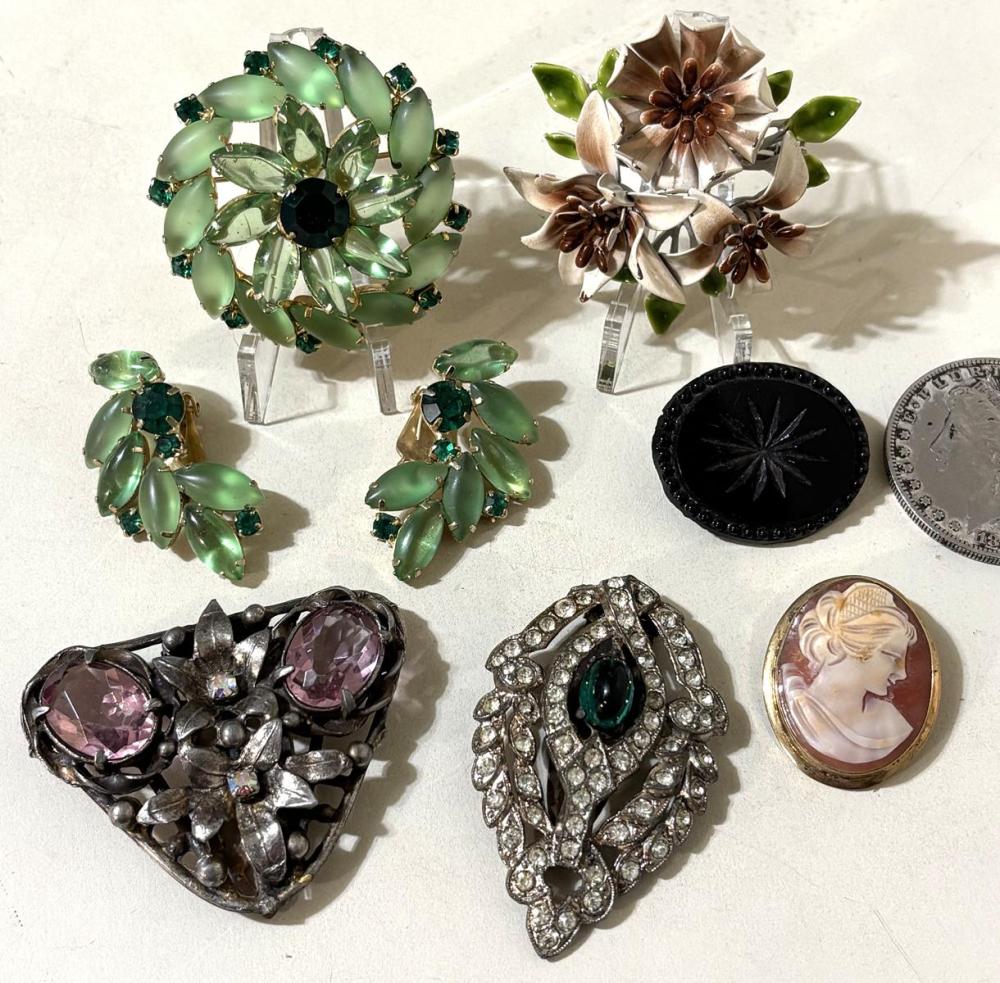 |
Antique & Vintage Lot of Jewelry (Victorian Mouring Brooch, Cameo, Costume, Enamel, Gold Filled, Dress Clips, Etc.)Source blocked; provenance matched | One Source Auctions | 2026-03-09 | 54 | USD 85 (buyer’s-premium treatment unknown) |
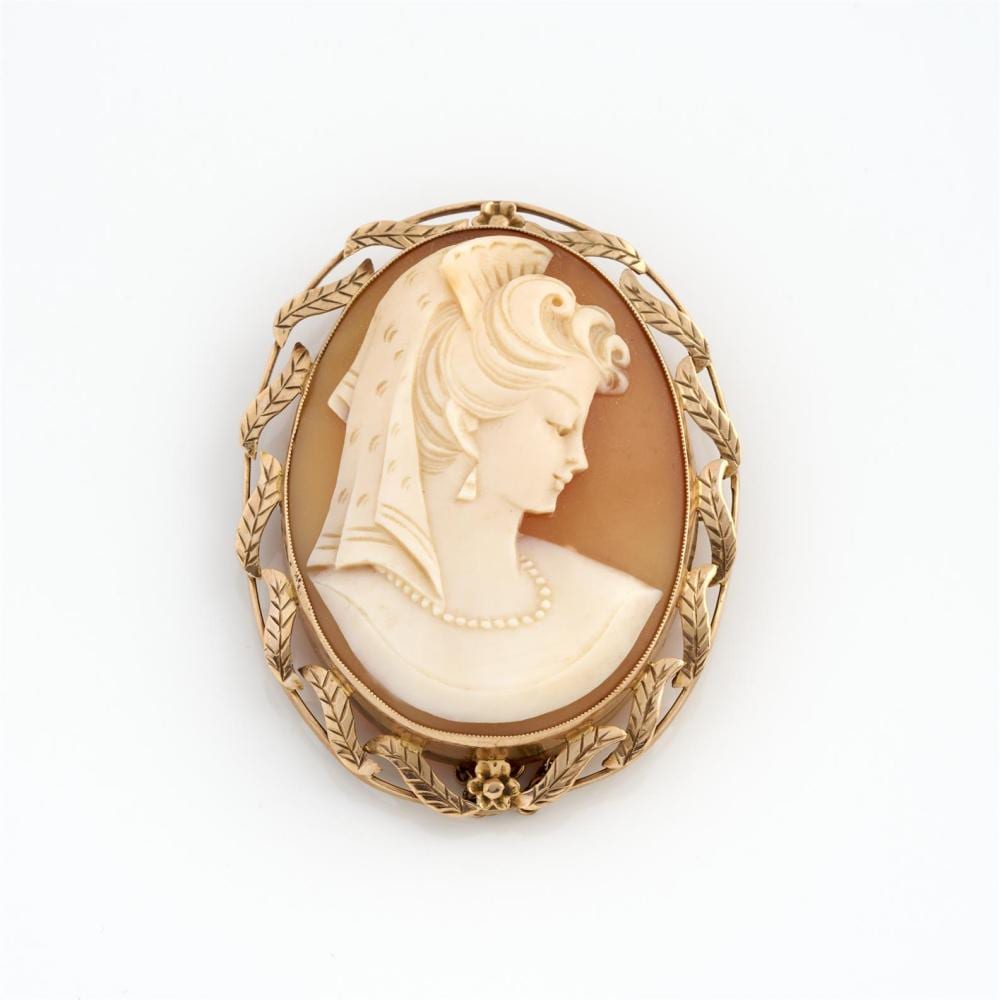 |
A SHELL CAMEO BROOCH/PENDANT IN 9CT GOLD, 48 X 38MMSource blocked; provenance matched | Leonard Joel | 2024-11-07 | 3190 | AUD 360 (buyer’s-premium treatment unknown) |
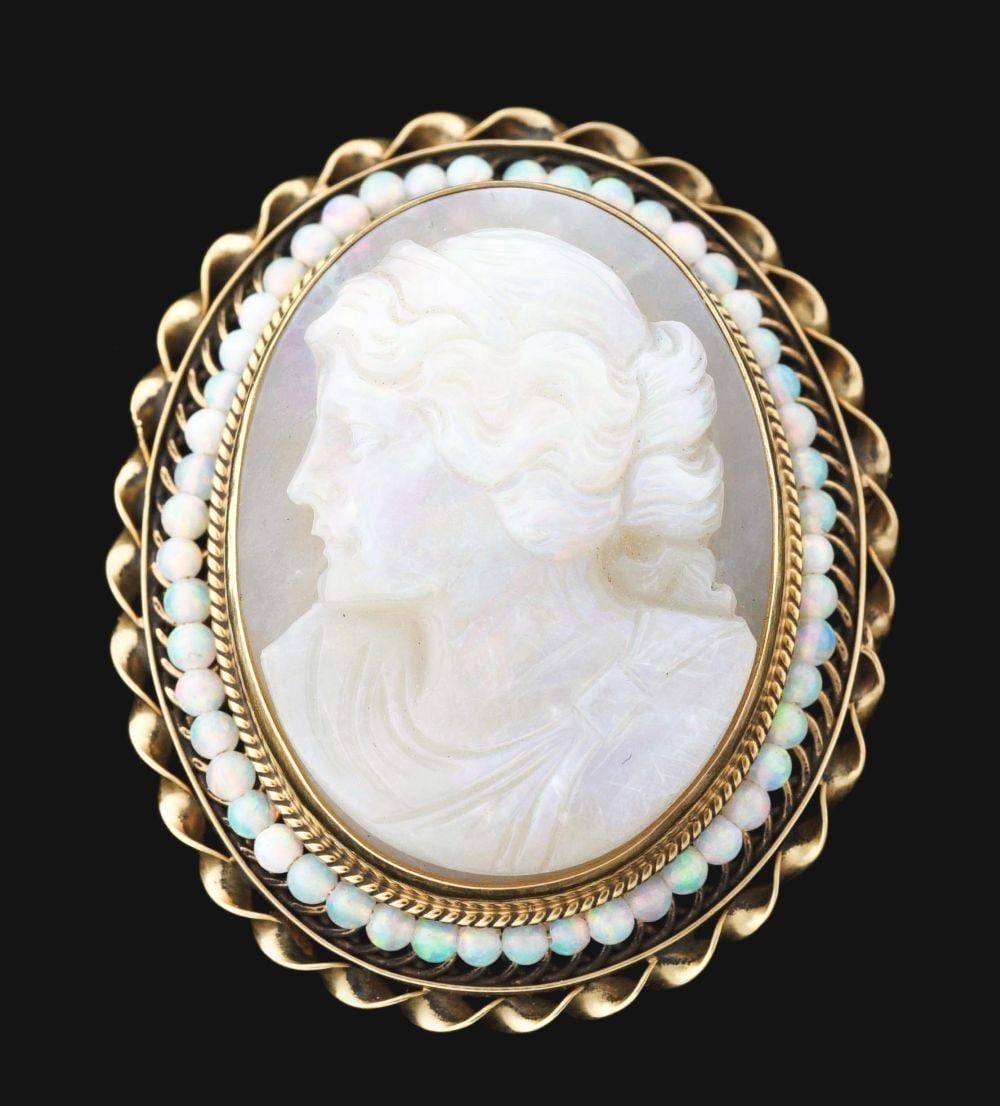 |
ANTIQUE 14K GOLD CARVED OPAL CAMEO BROOCH/PENDANT.Source blocked; provenance matched | Morphy Auctions | 2020-12-10 | 3065 | USD 850 (buyer’s-premium treatment unknown) |
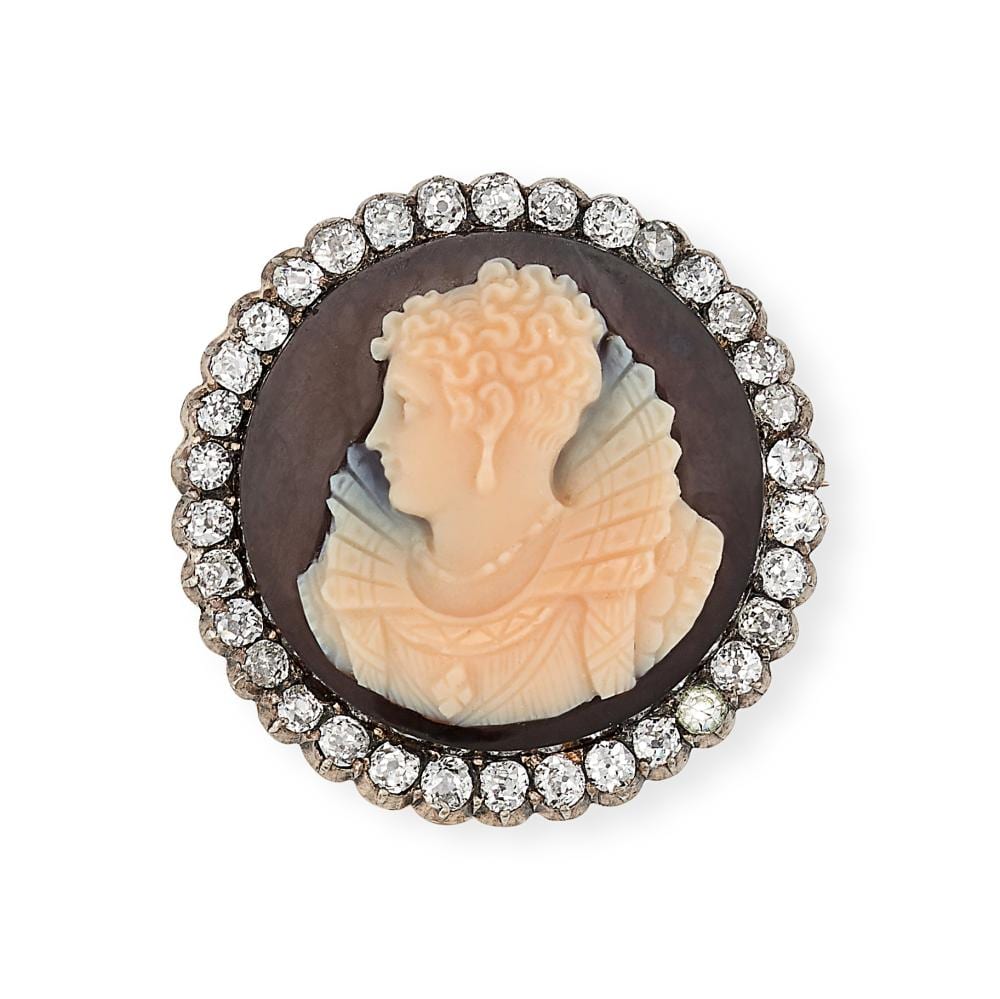 |
AN AUSTRIAN ANTIQUE DIAMOND AND AGATE CAMEO BROOCH, 19TH CENTURY in yellow gold and silver, set withSource blocked; provenance matched | Elmwood's | 2022-12-06 | 192 | GBP 650 (buyer’s-premium treatment unknown) |
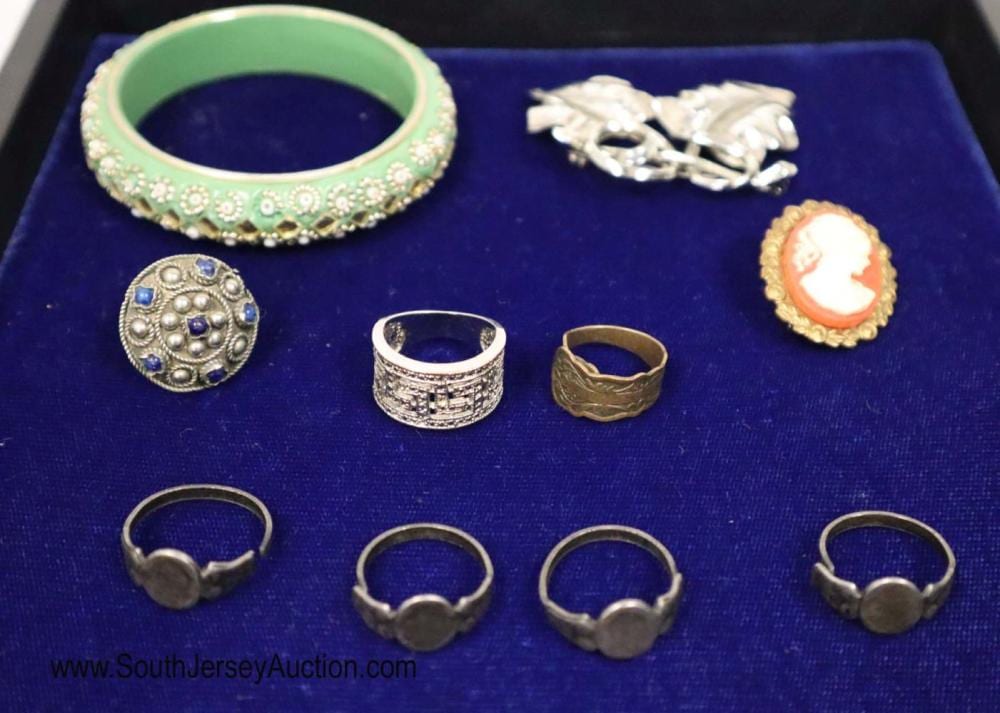 |
Group lot of vintage jewelry including 7 rings, brooch of leaves, cameo brooch, green Indian bracelet with gold tone and pearl style accentsSource blocked; provenance matched | South Jersey Auction by Babington Auction Inc. | 2020-07-26 | 519 | USD 25 (buyer’s-premium treatment unknown) |
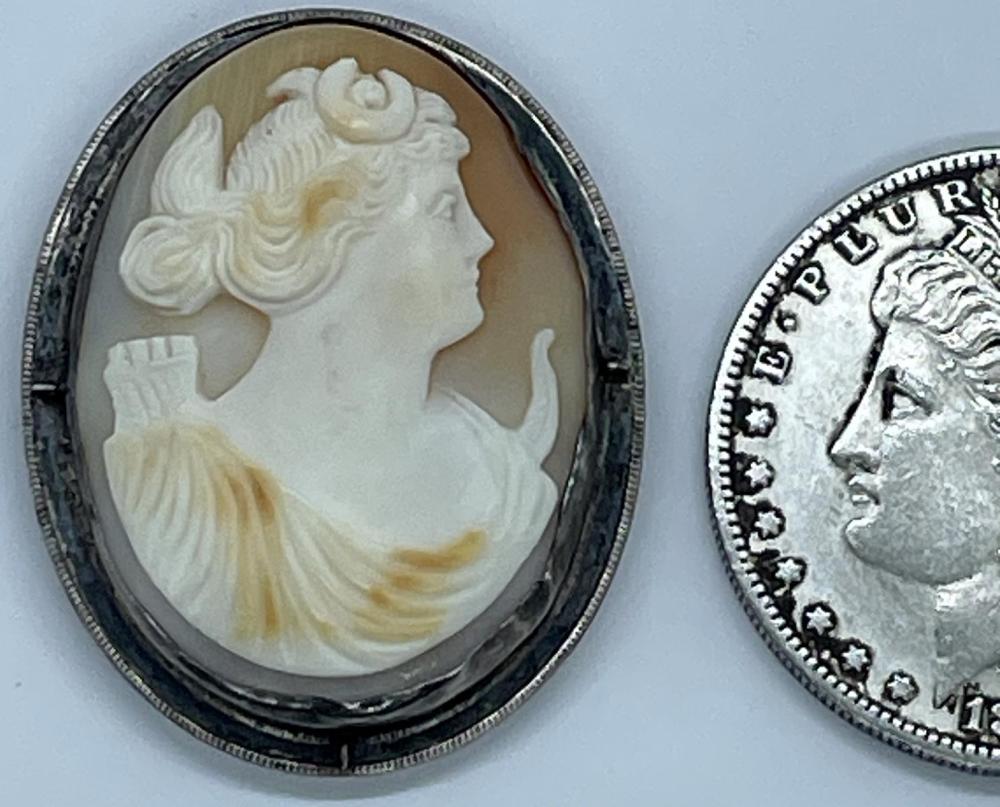 |
Antique Sterling Silver Cameo BroochSource blocked; provenance matched | One Source Auctions | 2024-06-24 | 102 | USD 30 (buyer’s-premium treatment unknown) |
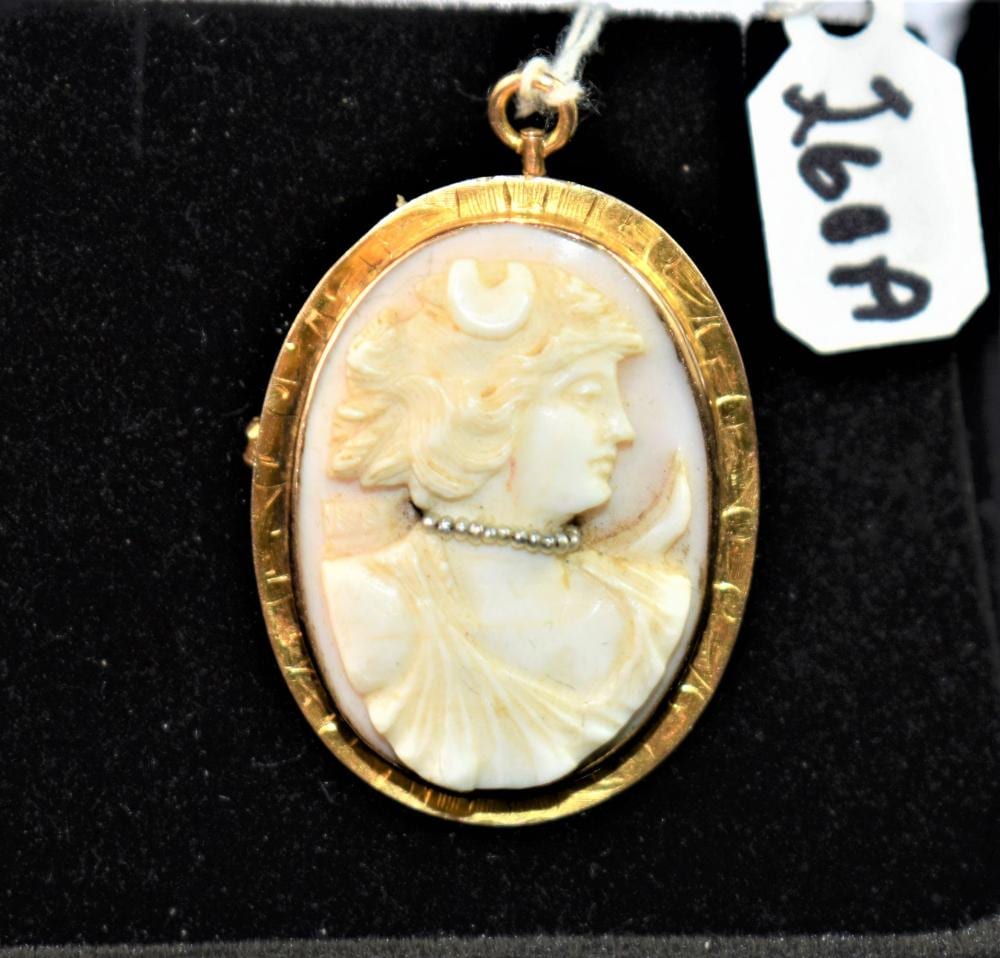 |
LADIES ANTIQUE CAMEO 10K BROOCH/PENDANTSource blocked; provenance matched | James Peterson Co. LLC | 2019-07-28 | 260A | USD 100 (buyer’s-premium treatment unknown) |
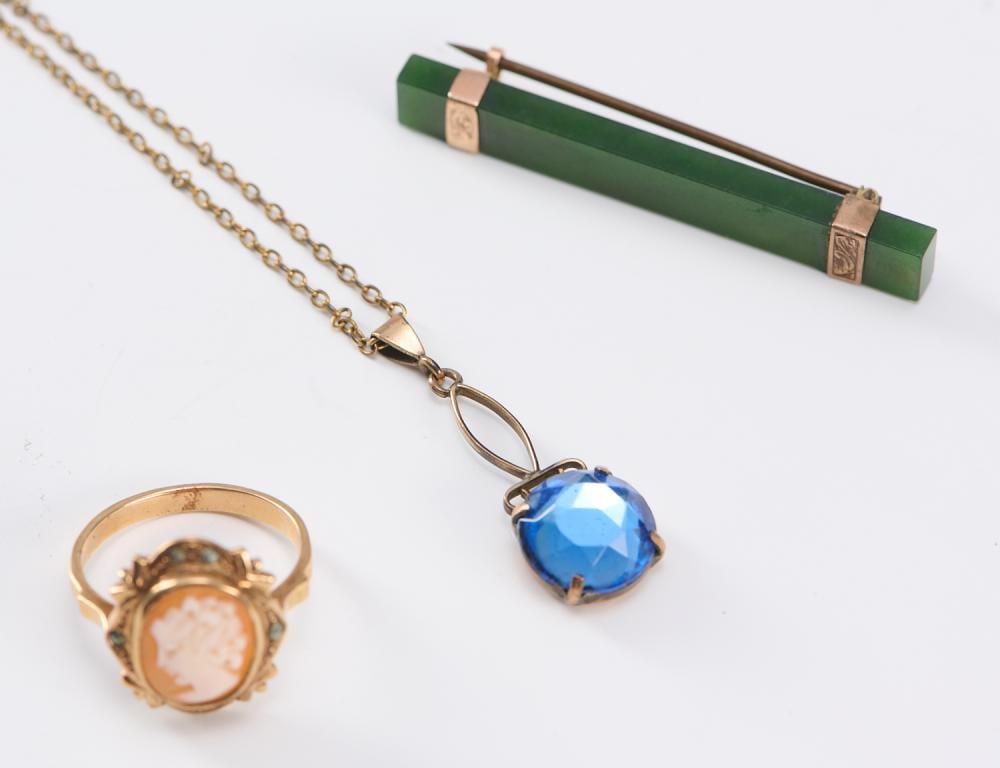 |
A COLLECTION OF VINTAGE AND ANTIQUE JEWELLERY INCLUDING A NEPHRITE BROOCH (50MM X 7MM), A CAMEO RING IN 14CT GOLD (SIZE Q, 4.1GMS) A...Source blocked; provenance matched | Leonard Joel | 2021-12-09 | 2260 | AUD 120 (buyer’s-premium treatment unknown) |
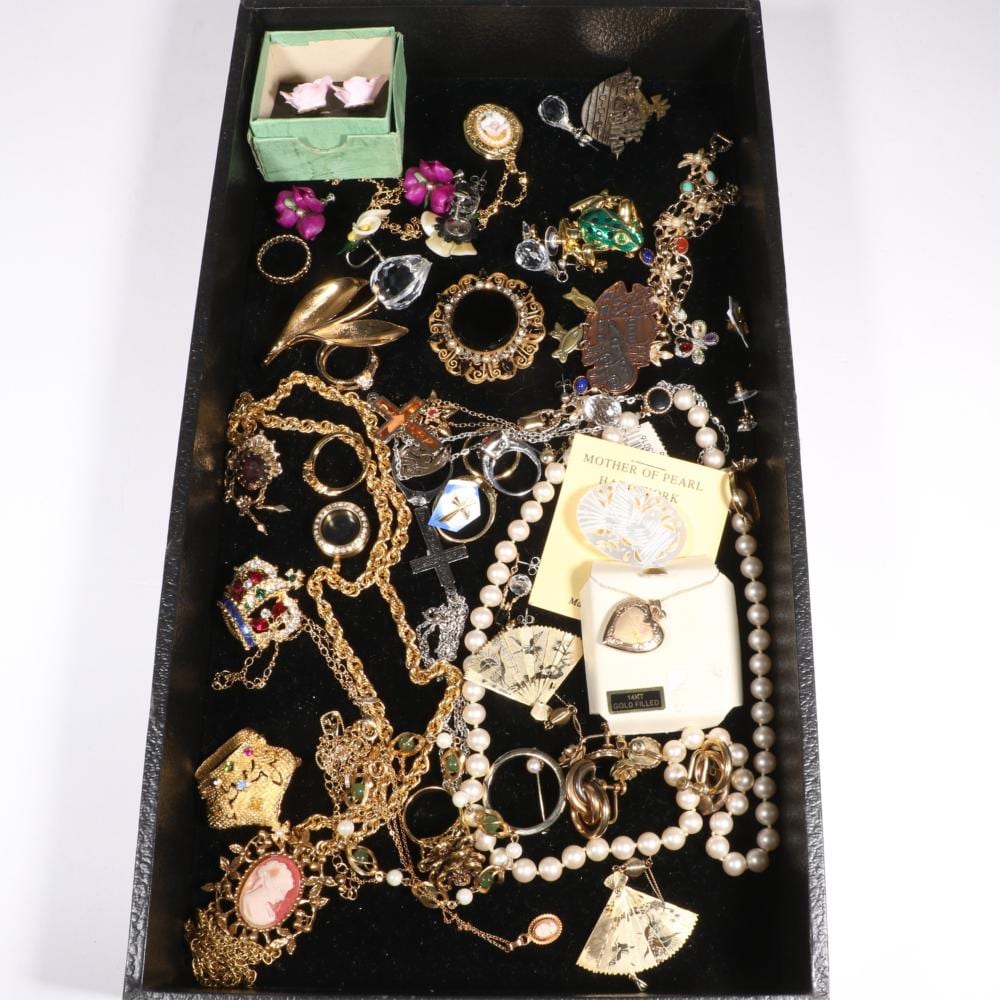 |
Vintage and contemporary jewelry group with Original by Robert brooch, Swarovski brooch, gold filled jewelry, MOP, rhinestones, rings, lockets, and more. 24"L x 3 1/4"Drop (cameo necklace)Source blocked; provenance matched | Ripley Auctions | 2024-11-11 | 420 | USD 50 (buyer’s-premium treatment unknown) |
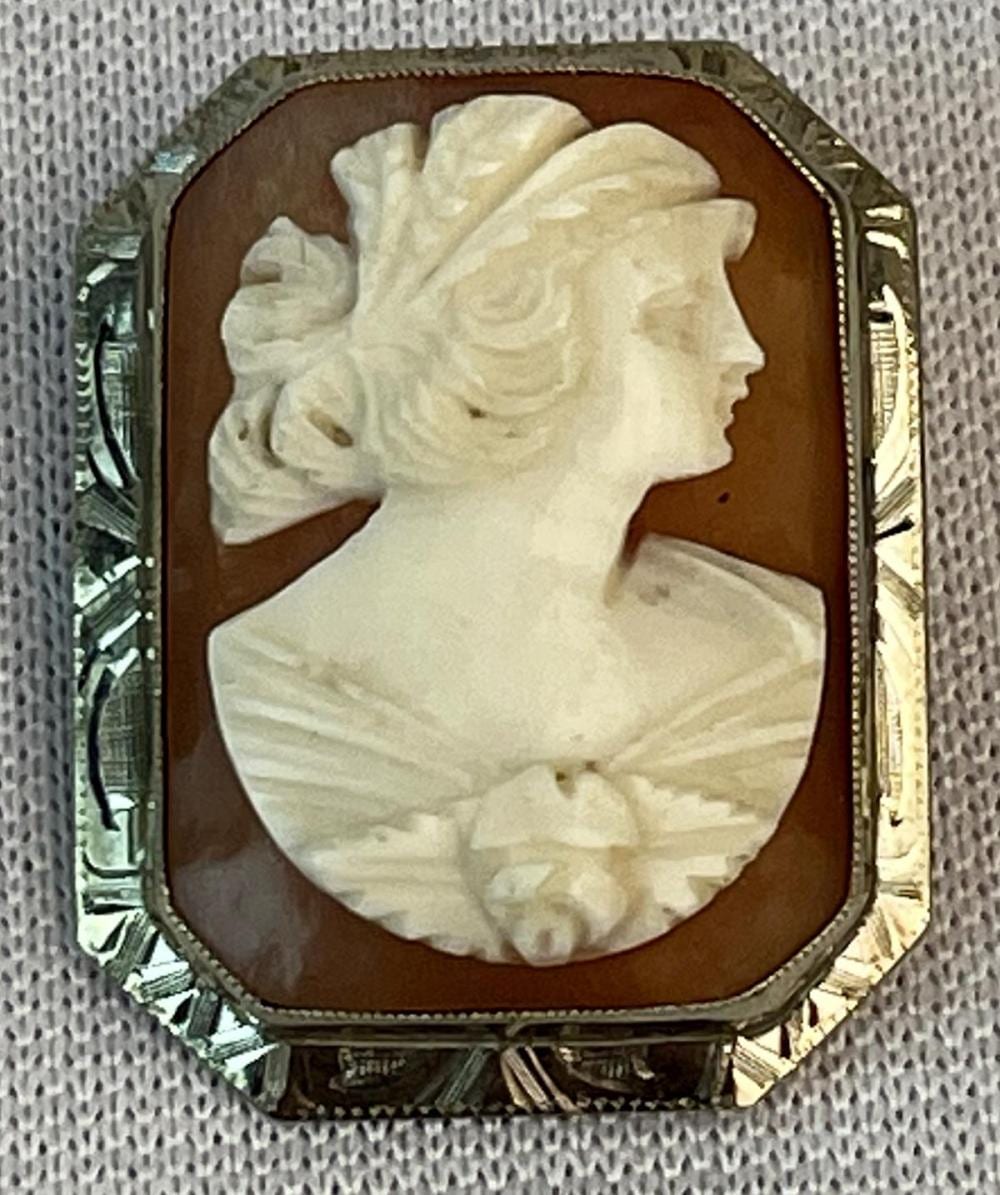 |
Antique Art Deco 14K White Gold Cameo BroochSource blocked; provenance matched | One Source Auctions | 2023-09-11 | 89 | USD 110 (buyer’s-premium treatment unknown) |
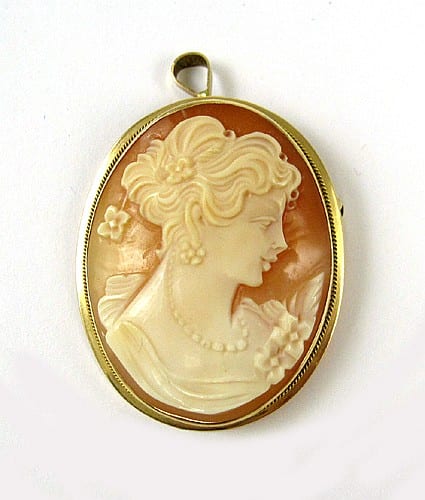 |
ITALIAN CAMEO PENDANT/BROOCH, with an oval portraiSource blocked; provenance matched | O'Gallerie | 2015-01-19 | 253 | USD 110 (buyer’s-premium treatment unknown) |
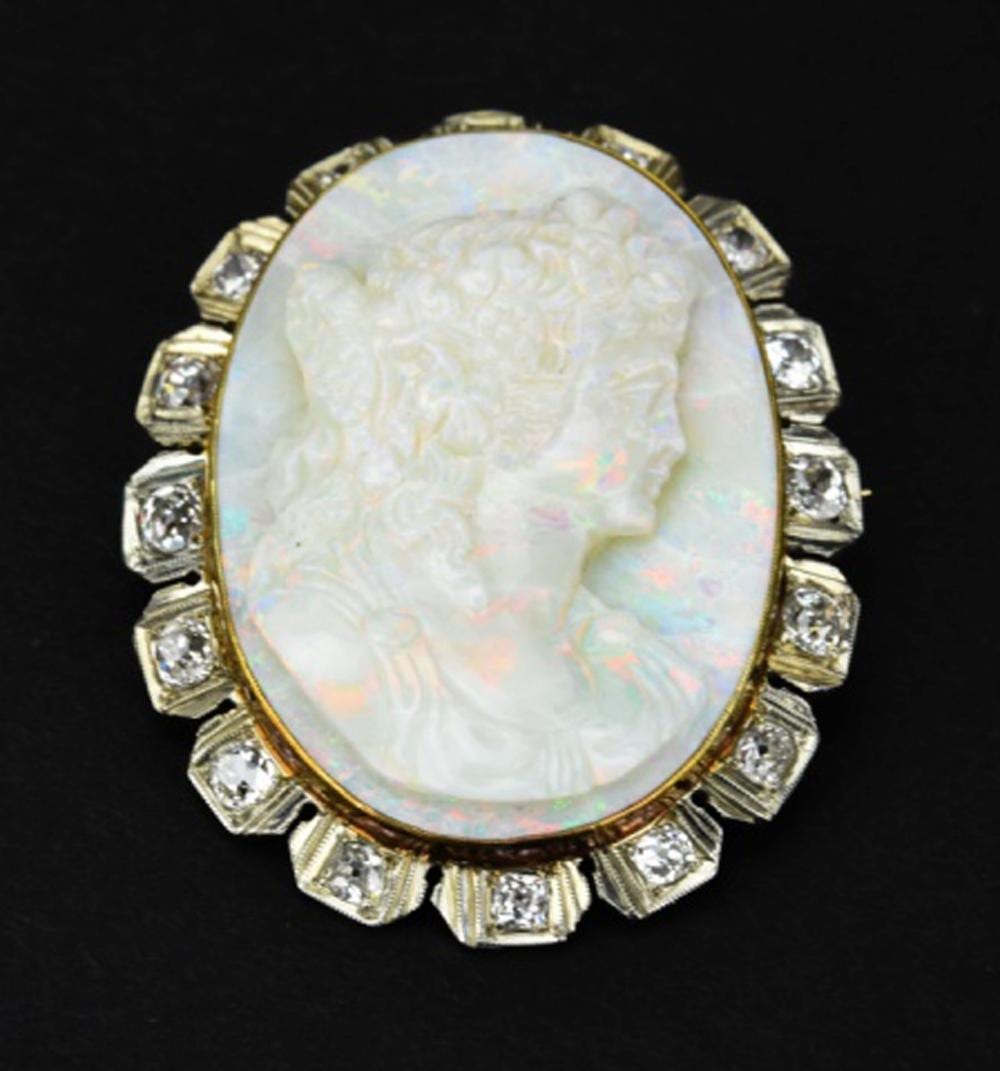 |
Antique Yellow Gold Diamond & Opal Cameo BroochSource blocked; provenance matched | Greenwich Auction | 2021-09-30 | 59 | USD 950 (buyer’s-premium treatment unknown) |
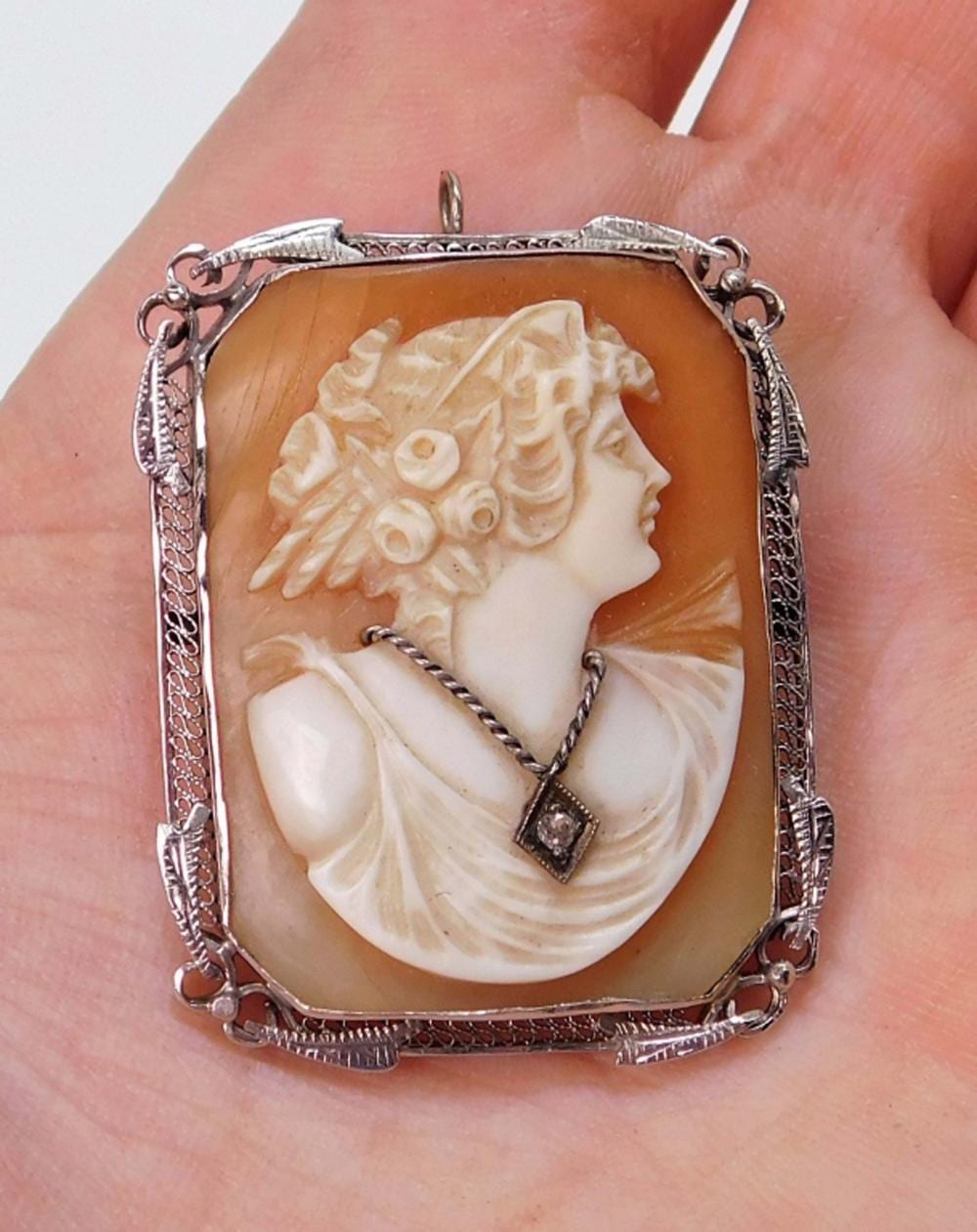 |
Art Deco White Gold Diamond Cameo BroochSource blocked; provenance matched | Bruneau & Co. Auctioneers | 2020-08-27 | 288 | USD 125 (buyer’s-premium treatment unknown) |
How these auction records were verified
Each row retains its exact source URL, lot identity, retrieval time, access result, and immutable record hash. Live source access was blocked; the exact record matched Appraisily's immutable pipeline provenance. Inspect the public comparable provenance record.
Disclosure: prices are shown as reported by auction houses and are provided for appraisal context. Learn more in our editorial policy.
Are you curious about that elegant antique cameo brooch you inherited or discovered at an estate sale? Understanding the value of these timeless pieces requires knowledge about their history, materials, craftsmanship, and current market demand. Cameo brooches have been cherished for centuries, with some rare pieces fetching thousands of dollars at auction.
In this comprehensive guide, we’ll walk you through everything you need to know to accurately assess and value your antique cameo brooch.
Table of Contents
- What Are Cameo Brooches?
- Historical Context and Evolution
- Determining Authenticity
- Factors Affecting Value
- Material Types and Value
- Identifying Period and Age
- Condition Assessment
- Current Market Values
- Where to Sell Antique Cameos
- FAQ
What Are Cameo Brooches?
The art of cameo carving dates back to ancient times, though the cameo brooches most commonly found today typically date from the 18th to early 20th centuries. These pieces were particularly popular during the Victorian era (1837-1901) when they became fashionable accessories worn by women of status.
Traditional cameo designs often feature:
- Female profiles (most common)
- Male profiles (rarer and often more valuable)
- Mythological scenes
- Religious imagery
- Flora and fauna motifs
Historical Context and Evolution of Cameos
Cameo Brooch Historical Timeline
- Ancient Times
Early Cameo Art
Ancient Greeks and Romans carved cameos from stones like agate and onyx, typically depicting gods and rulers. These were worn as jewelry and used as seals.
- Renaissance
Royal Patronage
Cameo art was revived during the Renaissance, with European nobility commissioning intricate pieces as symbols of wealth and culture.
- 18th Century
Grand Tour Souvenirs
Wealthy Europeans traveling on the "Grand Tour" purchased shell cameos as souvenirs, particularly from Italian artisans.
- Victorian Era
Peak Popularity
Queen Victoria's love of cameos sparked widespread popularity. Shell cameos became accessible to the middle class, while royalty wore more expensive hardstone varieties.
- Early 20th Century
Art Nouveau Influence
Cameo designs embraced Art Nouveau and later Art Deco aesthetics, with more flowing and geometric designs respectively.
- Mid-20th Century
Decline & Mass Production
Machine-made cameos became common, diminishing both quality and value of newer pieces.
The historical period of your cameo significantly impacts its value. Generally, older pieces (particularly those from the Georgian, Victorian, and Edwardian eras) command higher prices, especially if they show distinctive period characteristics in both design and mounting techniques.
Determining Authenticity
Authenticity Indicators
Check these features to help determine if your cameo is authentic:
- Carving details are crisp and show fine workmanship
- Design has dimensional depth rather than appearing flat
- Reverse side shows natural unevenness (for shell cameos)
- Frame has appropriate aging and patina
- Clasp mechanism matches the purported period
- Material feels natural, not plastic or resin
- Weight is appropriate for the material
According to experts at the Seaside Art Gallery, authentic cameos display durable paint and enamel that has stood the test of time better than modern reproductions. The quality of carving is also crucial—antique pieces typically showcase more intricate details and dimensional depth.
A key test for shell cameos is to carefully examine the back side. Genuine shell cameos will show natural variations in thickness and often have a slightly concave shape. Plastic replicas typically have uniform thickness and perfectly flat backs.
Factors Affecting Cameo Brooch Value
Material: Shell cameos are most common, while hardstone (agate, onyx, sardonyx) cameos generally command higher prices. Rare materials like coral or ivory (though now restricted) can increase value significantly.
Age and Period: Generally, older cameos are more valuable. Georgian (1714-1837) and early Victorian (1837-1860) pieces typically fetch higher prices than late Victorian or 20th-century examples.
Artistic Quality: The skill of the carving is crucial—pieces with exceptional detail, dimensional depth, and artistic merit command premium prices.
Subject Matter: While female profiles are most common, rarer subjects like male portraits, African American subjects, mythological scenes, or unusual designs are more valuable.
Frame Material: Gold frames (especially high-karat gold) add significantly to value compared to gold-filled, silver, or base metal settings.
Condition: Damage, repairs, or excessive wear dramatically reduce value. Look for chips, cracks, or repairs to both the cameo and its mounting.
Size: Larger cameos, particularly those over 2 inches, can be more valuable if the quality of carving remains high.
Provenance: Documented history, especially if the piece was owned by someone notable or has an interesting backstory, can increase value.
As noted by experts from J.F. Jewelers, cameos depicting men are rare and therefore often worth more than those showing women. Even more valuable are cameos depicting African American individuals, which can be extremely collectible.
Material Types and Their Impact on Value
Cameo Materials and Value Ranges
Average market values based on material type (assuming good condition)
Shell Cameos: The most common type, particularly from the Victorian era. They’re typically carved from helmet shells (pink/white) or sardonyx shells (brown/white). Shell cameos were popular due to their relative affordability and the ease of carving compared to harder materials.
Hardstone Cameos: These premium cameos are carved from layered stones like agate, onyx, or sardonyx. They require greater skill to create and are generally more durable than shell, resulting in higher values.
Coral and Ivory: These rare materials produce distinctive and highly collectible cameos. However, be aware that there are strict regulations regarding the sale of ivory, even antique pieces. Coral cameos typically command high prices due to their scarcity.
Wedgwood: These ceramic cameos have a distinctive blue background with white reliefs. While not as valuable as fine hardstone examples, quality Wedgwood cameos from the 18th and 19th centuries are highly collectible.
Glass and Paste: These more affordable materials were used to create costume jewelry versions of cameos. While authentic antique glass cameos have value, they’re generally worth less than those made from natural materials.

Identifying Period and Age
According to Market Square Jewelers, one reliable method for dating portrait cameos is to look at the shape of the nose. Early 19th-century cameos typically feature straight, Roman noses, while Victorian examples show slightly upturned noses. As we enter the 1920s and beyond, the nose becomes increasingly sloped and curved.
Other period indicators include:
Georgian Era (1714-1837):
- High-relief carving
- Classical mythology themes
- Elaborate hairstyles on portraits
- Often set in rose gold or pinchbeck
- Riveted pin mechanisms
Victorian Era (1837-1901):
- Female profiles became dominant
- More sentimental themes
- Often surrounded by seed pearls or intricate metalwork
- C-clasps or tube hinges on pins
- Black mourning cameos after 1861
Edwardian/Art Nouveau (1901-1915):
- More fluid, naturalistic designs
- Lighter, more delicate settings
- Platinum began to appear in settings
- Safety-pin style clasps became common
Art Deco (1920s-1930s):
- More geometric designs
- Cleaner lines
- Women with bobbed hair in profiles
- Often set in white gold or platinum
Mid-20th Century (1940s-1960s):
- More mass-produced appearance
- Less detailed carving
- Modern pin backs with safety catches
- Often set in lower-karat gold or gold-filled metal
The style and construction of the brooch setting also provide valuable dating clues. Early pin mechanisms were simple C-clasps, while later ones incorporated safety catches. The metal content is another indicator—high-karat gold (15-22k) suggests an earlier piece, while 10-14k gold became more common in the late 19th and early 20th centuries.
Condition Assessment
Cameo Condition Checklist
Evaluate your cameo's condition with these criteria:
- Cameo carving is intact with no chips or cracks
- No missing pieces from the relief design
- Original frame is intact and undamaged
- Clasp mechanism works properly
- No repairs or amateur restoration visible
- No discoloration or material degradation
- Setting is secure with no loose parts
- Original components (like seed pearls) are intact
Common condition issues that affect value include:
Chips and Cracks: Shell cameos are particularly susceptible to damage. Examine the edges and high points of the relief carefully.
Repairs: Look for evidence of gluing, filling, or other attempts to disguise damage. Professional restoration can preserve value better than amateur repairs.
Worn Details: Over time, the fine details of a cameo can wear down, particularly on high points like noses or foreheads. Sharper details indicate less wear and higher value.
Setting Damage: Check for missing stones, bent frames, or repairs to the metal setting. Original settings preserve value better than replaced ones.
Fading: Some materials, particularly coral and certain types of shell, can fade over time with exposure to light.
A cameo in pristine or “mint” condition can be worth several times more than a similar piece with damage or significant wear. According to experts, the difference between “excellent” and merely “good” condition can represent a 40% or greater difference in value.

Current Market Values
Antique Cameo Brooch Value Ranges
Current market value ranges based on notable examples (2024)
</tbody> </table>
It’s important to note that retail prices in specialized antique jewelry stores or high-end dealers may be significantly higher than auction prices or online marketplaces. Dealer prices often range from 2-3 times the wholesale or auction values.
Where to Sell Antique Cameos
Specialized Antique Jewelry Dealers: These offer expertise and potentially higher prices for exceptional pieces, though they typically pay wholesale prices (50-70% of retail value).
Auction Houses: Houses like Christie’s, Sotheby’s, or Bonhams are ideal for rare, high-value pieces but typically charge 15-25% seller’s commission. Regional auction houses may be more appropriate for mid-range cameos.
Online Marketplaces: Platforms like eBay, Etsy, or Ruby Lane provide direct access to collectors but require effort to create listings and manage sales.
Consignment Shops: These can be a good middle ground, with shops handling the sale in exchange for a percentage of the selling price.
Online Specialty Sites: Websites like 1stDibs specialize in antiques and can connect sellers with serious collectors.
Before selling, consider getting a professional appraisal, especially for pieces you believe may be particularly valuable. An expert opinion can prevent underselling a significant piece and provide documentation that increases buyer confidence.
Common Questions About Antique Cameo Brooch Values
How do I know if my cameo brooch is valuable?
Are cameo brooches worth any money?
Are antique cameos worth anything?
How can I tell how old my cameo is?
- Examine facial features - early 19th century cameos typically have straight "Roman" noses, Victorians preferred slightly upturned noses, while 1920s+ cameos feature more curved noses
- Check the backing mechanism - C-clasps suggest pre-1900, while safety catches are typically post-1900
- Inspect the metal setting - earlier pieces used higher karat gold (15-22k), while later pieces used 10-14k gold or gold-filled metal
- Assess the carving style - earlier pieces typically show more classical influences, while Art Nouveau or Art Deco styles indicate early 20th century origin
- Look at the subject’s hairstyle and clothing, which often reflect the fashion of the period when the cameo was made
What are the most valuable types of cameo brooches?
- Hardstone cameos (agate, onyx) with exceptional carving
- Rare materials like fine coral or antique ivory (subject to sale restrictions)
- Pieces with unusual subject matter (men, African American individuals, historical scenes)
- Signed cameos by renowned carvers
- Early period pieces (Georgian, early Victorian)
- Cameos with high-karat gold settings, particularly those with additional gemstones
- Historical pieces with documented provenance or royal connections
- Perfectly preserved examples with no damage or repairs
How can I tell if my cameo is real or a reproduction?
- Examine the back - authentic shell cameos have natural variations and often a concave shape; plastic reproductions are uniformly flat
- Look for carving detail - genuine cameos show fine detail and depth; reproductions often have shallow, less defined carving
- Check the material - plastic reproductions feel lighter and warmer than shell or stone
- Test with a hot pin (cautiously, in an inconspicuous spot) - plastic will melt slightly while natural materials won’t
- Inspect the setting - authentic antique settings show appropriate age-related wear; reproductions often have artificially aged settings
- Examine under magnification - genuine cameos show hand-carved tool marks; modern reproductions may show molding seams
External Resources for Cameo Research and Valuation
Blue Ribbon Rarities Cameo Collection
Browse a curated collection of estate, vintage, and antique cameos with pricing for market comparison.
How to Value and Date Your Vintage Cameo
Comprehensive guide with 8 steps to determine if your cameo is vintage and assess its value.
The History of Cameo Jewelry
Detailed historical overview of cameo jewelry development through different artistic periods.
Is Your Cameo Real? Authenticity Guide
Expert advice on determining whether your cameo is authentic or a reproduction.
1stDibs Cameo Brooch Collection
High-end marketplace featuring museum-quality antique cameo brooches with current pricing.
Eredi Jovon Antique Cameos
Specialist dealer in Venice offering a range of antique and vintage cameos with detailed descriptions.
Conclusion
Antique cameo brooches represent a fascinating intersection of art, history, and craftsmanship. Their value extends beyond monetary considerations to encompass cultural significance and artistic merit. Whether you’re looking to sell a piece from your collection or simply want to understand the history and value of a family heirloom, taking the time to properly identify and evaluate your cameo is well worth the effort.
Remember that the most accurate valuations come from professional appraisers who specialize in antique jewelry. For particularly rare or valuable pieces, consider consulting with an expert who can provide documentation of the piece’s authenticity, age, and market value.
Choose your next step
Use the path that matches the decision you need to make about the item.
Not sure it is worth appraising?
Start with a lower-friction screen to understand the likely category, evidence, and next step.
Upload photos for a free first lookWant proof before paying?
See how a signed report documents photos, comparable evidence, condition notes, and value conclusions.
View signed report sampleNeed a signed report?
Use this for insurance, estate, donation, resale, or documented value decisions.
Need documentation now? Start signed appraisalNeed local or specialist help?
Compare directory options when the work needs in-person review or a specialist near you.
Find local specialistsSee what the report looks like
Sample reports show how photos, comparable evidence, condition notes, and a value conclusion are documented.
Get a Professional Appraisal
Unsure about your item’s value? Our certified experts provide fast, written appraisals you can trust.
- Expert report with photos and comps
- Fast turnaround
- Fixed, upfront pricing
No obligation. Secure upload.
Free first look
Not sure whether this cameo brooch needs an appraisal?
Photograph the whole item, maker or identifying marks, dimensions, materials, condition, repairs, and any provenance or documentation. The photo-based Screener can help identify the likely category and visible evidence gaps before you pay for documentation.
Upload photos for a free first lookFree. No card needed. The photo upload usually takes about two minutes.
The free first read is a separate photo-based Screener, not this educational article. Results usually appear within a few minutes; complex items can take longer. From photographs of your cameo brooch, it returns a preliminary category or identity read, visible evidence gaps, rough comparable market signals, and whether a human appraisal looks worthwhile; it is not a signed value conclusion. Material or construction can remain uncertain without direct examination, dimensions, provenance, or complete condition details. A written appraisal is useful when your cameo brooch needs documented specialist support for insurance, tax, an estate, authentication, litigation, or a consequential sale, but you may not need one.
Continue your valuation journey
Choose the next best step after reading this guide
Our directories connect thousands of readers with the right appraiser every month. Pick the experience that fits your item.
Antique specialists
Browse the Antique Appraiser Directory
Search 300+ vetted experts by location, specialty, and response time. Perfect for heirlooms, Americana, and estate items.
Modern & fine art
Browse the Art Appraisers Directory
Compare fine art, contemporary, and design appraisers by city and specialty in our public directory.
Machine-readable summaries
Use these machine-friendly references for AI and crawler discovery of Appraisily content.
Quick next move
Get a free first look at your cameo brooch
Upload photos. No card needed.
Upload photos for a free first look View signed report sample