Understanding Antique Appraisers: Your Guide to Professional Valuation Services
Wondering what that family heirloom might be worth? Curious if the vintage piece you found at a garage sale could be valuable? When it comes to determining the true value of antiques and collectibles, professional antique appraisers are your most reliable resource. These specialists combine years of expertise, specialized knowledge, and formal training to provide accurate valuations of everything from furniture and fine art to jewelry and memorabilia.
In this comprehensive guide, we’ll explore everything you need to know about antique appraisers – how to find qualified professionals, what services they offer, how much appraisals typically cost, and the importance of working with accredited experts. Whether you’re looking to insure valuable items, settle an estate, or simply satisfy your curiosity about a family treasure, understanding the appraisal process is essential.
What Does an Antique Appraiser Do?
The Role of Professional Antique Appraisers
Professional antique appraisers are specialists who evaluate, document, and determine the fair market value of antiques, collectibles, and vintage items. Their expertise typically encompasses various categories, including:
- Furniture and decorative arts
- Fine art and paintings
- Jewelry and timepieces
- Coins and currency
- Books and manuscripts
- Ceramics and glassware
- Textiles and clothing
- Military items and memorabilia
The appraisal process is both an art and a science, requiring:
- Research skills: Investigating provenance, maker marks, historical context
- Specialized knowledge: Understanding period-specific construction techniques and materials
- Market awareness: Staying current on auction results and collecting trends
- Documentation expertise: Creating detailed, legally sound appraisal reports
Appraisers not only identify what an item is but provide crucial documentation that stands up to scrutiny from insurance companies, the IRS, courts, and other authorities. This makes their role essential for:
- Insurance coverage and claims
- Estate planning and division
- Charitable donations
- Tax purposes
- Sale preparation
- Legal proceedings and dispute resolution
Types of Appraisal Services
Antique appraisers offer several types of valuation services, each serving a specific purpose:
- Insurance Appraisals: Determine replacement value for insurance coverage
- Fair Market Value Appraisals: Used for estates, donations, and tax purposes
- Liquidation Value Appraisals: Establish quick-sale values for estate liquidation
- Attribution review Services: Verify genuineness of an item
- Verbal Consultations: Informal assessments without written documentation
It’s important to specify which type of appraisal you need when contacting a professional, as methodology and pricing may vary accordingly.
Finding and Selecting a Qualified Antique Appraiser
How to Find Reputable Antique Appraisers
Finding a qualified antique appraiser requires some research to ensure you’re working with a credentialed professional who specializes in your item’s category. Here are reliable sources for locating reputable appraisers:
Professional Organizations:
Appraisily signed appraisal: a signed appraisal costs $59 per item; an appraiser reviews your photos against comparable sales and signs a PDF report with the documented value.
Museums and Historical Societies: Local institutions frequently maintain lists of trusted appraisers.
Personal Recommendations: Ask friends, family, or collectors who have used appraisal services.
Credentials to Look For
When selecting an antique appraiser, verification of credentials is crucial. Look for professionals with:
Appraiser Credential Checklist
Verify these qualifications when selecting an appraiser
- Membership in professional appraisal organizations
- Specific accreditation in relevant specialties
- Adherence to USPAP (Uniform Standards of Professional Appraisal Practice)
- Formal education in appraisal methodology
- Years of experience in your item's category
- Professional liability insurance
- Positive reviews and references
Avoid appraisers who:
- Want to purchase your items (conflict of interest)
- Cannot provide credentials upon request
- Offer valuations without thoroughly examining items
- Give appraisals based on percentages of value
- Lack specialty knowledge in your item’s category
The Appraisal Process: What to Expect
Steps in a Professional Antique Appraisal
A professional antique appraisal typically follows these steps:
The Antique Appraisal Process
- Step 1
Initial Consultation
Discussion of your item(s), purpose of appraisal, and fee structure. The appraiser will explain what type of appraisal best suits your needs.
- Step 2
Item Examination
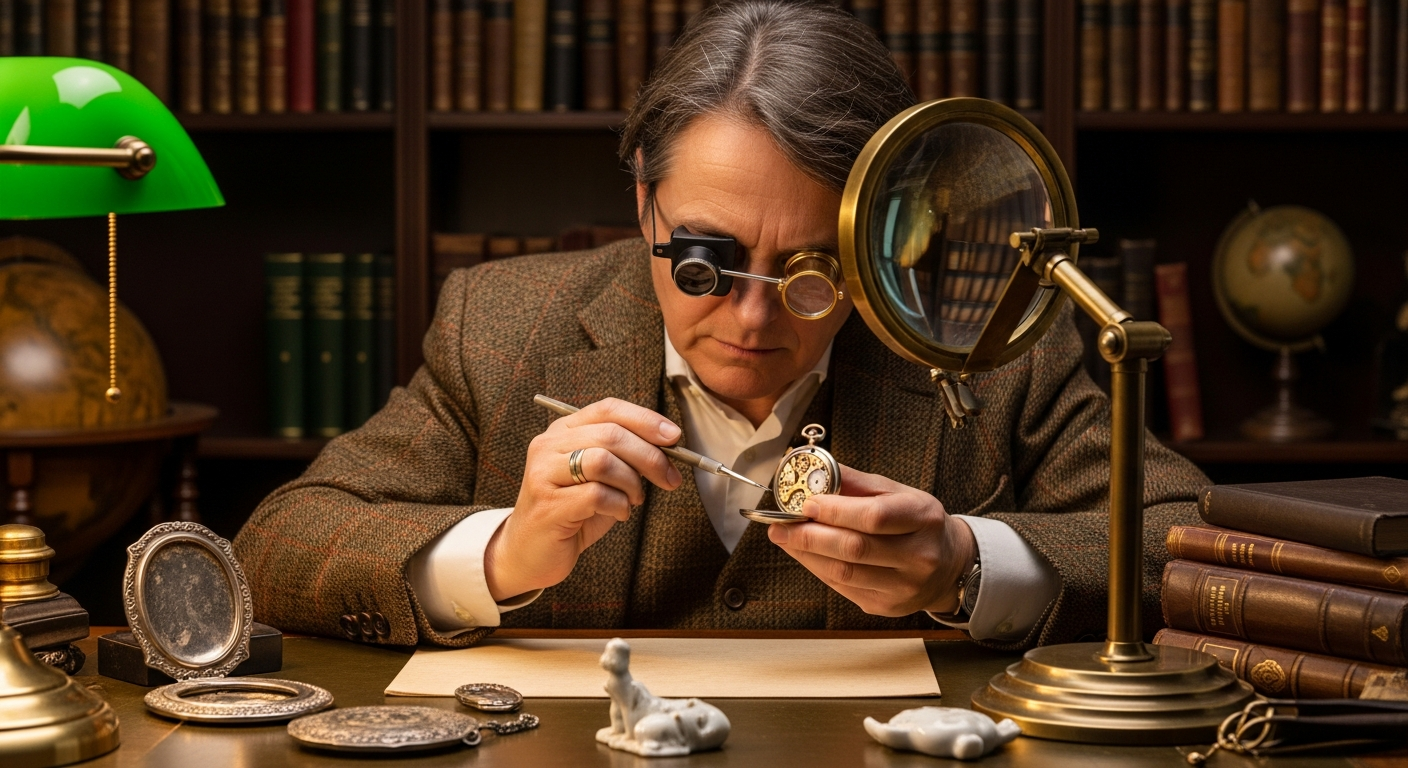
Thorough physical inspection including measurements, photos, condition assessment, and examination of maker's marks, signatures, or other identifying features.
- Step 3
Research and Analysis
Investigation of provenance, verification of originality, research on market evidence, and consultation of reference materials.
- Step 4
Value Determination
Calculation of appropriate value based on condition, rarity, market demand, and market evidence data.
- Step 5
Report Preparation
Creation of detailed appraisal document with item descriptions, photographs, valuation methodology, and final determined value.
To get the most from your appraisal:
- Gather information: Compile any documentation, provenance, or history you have about the item
- Take preliminary photos: Clear images can help during initial consultations
- Prepare questions: List any specific concerns or questions about your items
- Don’t clean or repair: Let the appraiser see items in their current condition
Appraisal Costs and Value
Understanding Appraisal Fees and Services
The cost of professional antique appraisals varies based on several factors:
Antique Appraisal Fee Structure
Common fee arrangements and pricing models
According to Consumer Reports and industry sources, formal written appraisals are priced per item, with additional items adding incremental costs. Many appraisers charge by the hour instead, and rates vary with location, credentials, and specialization. Ask for the full fee schedule before you commit.
While this might seem costly, consider:
- The appraiser’s years of education and experience
- Research time required for accurate valuations
- Professional liability insurance costs
- Preparation of legally sound documentation
- Potential financial impact of incorrect valuations
When to Get an Appraisal
While curiosity about an item’s value is natural, formal appraisals are typically warranted in specific situations:
- Insurance purposes: Documenting value for coverage or claims
- Estate settlement: Dividing assets or probate requirements
- Tax situations: Charitable donations or estate taxes
- Divorce proceedings: Equitable division of assets
- Major sales: Establishing fair asking prices
- Collection management: Tracking investment performance
For simple curiosity or preliminary assessments, consider alternatives to formal appraisals:
- Auction house valuation days
- Antique shows with expert dealers
- Online appraisal services
- Antique dealer consultations
Becoming an Antique Appraiser
Career Path: How to Become an Antique Appraiser
If you’re interested in pursuing a career as an antique appraiser, the path typically involves several important steps:
Education: While no specific degree is universally required, many successful appraisers have backgrounds in:
- Art history
- Decorative arts
- Museum studies
- History
- Business or economics
Specialized Training: Complete formal appraisal education through:
- American Society of Appraisers courses
- International Society of Appraisers program
- Asheford Institute of Antiques certification
- Appraisers Association of America training
Practical Experience: Gain hands-on knowledge through:
- Internships with established appraisers
- Work at auction houses or antique galleries
- Museum collections management
- Antique dealing
USPAP Compliance: Complete the required Uniform Standards of Professional Appraisal Practice course
Professional Accreditation: Earn credentials through appraisal organizations by:
- Completing required coursework
- Submitting sample appraisals for peer review
- Passing comprehensive exams
- Meeting experience requirements
Income Potential
According to recent salary data, antique appraiser income varies significantly:
- The national average salary varies widely by region and experience
- Top-paying cities like San Francisco offer noticeably higher average salaries
- Self-employed appraisers with established reputations may earn significantly more
- Specialists in high-value categories (fine art, jewelry) typically command higher fees
Income depends heavily on:
- Geographic location
- Years of experience
- Specialization area
- Professional reputation
- Business model (self-employed vs. employed by firms)
- Marketing and networking efforts
Many appraisers combine appraisal work with related activities such as consulting, teaching, writing, or dealing to create a sustainable business model.
Modern Appraisal Methods and Technology
Technology in Antique Appraisals
While expertise and connoisseurship remain fundamental, today’s antique appraisers increasingly utilize technology to enhance their work:
Online Research Tools:
- Auction database subscriptions
- Digital archives and catalogues raisonnés
- Global marketplace monitoring
Digital Documentation:
- High-resolution photography
- Specialized imaging (UV, infrared, X-ray)
- 3D scanning for detailed documentation
Attribution review Technologies:
- Spectroscopy for material analysis
- Carbon dating
- Digital provenance tracking
Virtual Appraisals:
- Video consultations
- Digital appraisal report delivery
- Cloud-based appraisal management
Mobile Apps:
- While apps like “Antique Identifier” offer basic information, they cannot replace professional appraisers’ expertise
These technologies complement rather than replace the appraiser’s expertise, allowing for more accurate valuations and efficient service delivery.
Common Questions About Antique Appraisers
How much does it cost to get antiques appraised?
How do I find out what my antiques are worth?
-
Consult a professional appraiser: For accurate, documented valuations, work with a credentialed appraiser who specializes in your item’s category.
-
Appraisily free photo check: upload one photo to see what the item is and, when it can, a rough value band.
-
Research market evidence: Check recent auction results for similar items through online databases.
-
Consult reference guides: Use price guides and catalogues specific to your item category.
-
Local experts: Antique dealers in your area may provide informal assessments, though these are not substitutes for formal appraisals.
How much do antique appraisers make?
- The national average varies widely by region and experience
- Top-paying cities offer significantly higher compensation:
- San Francisco, CA
- Santa Clara, CA
- Sunnyvale, CA
- Livermore, CA
Is there an app to identify valuable antiques?
- They cannot provide documented appraisals or legally valid documentation
- Their accuracy varies widely and depends on the quality of their databases
- They often miss nuances in condition, originality, and provenance
- They cannot replace the trained eye and expertise of a professional appraiser
While these apps can be useful for preliminary research or casual interest, they should not be relied upon for:
- Insurance valuations
- Estate settlements
- Tax documentation
- High-value purchase decisions
How do you become a certified antique appraiser?
-
Education: Obtain relevant education in art history, decorative arts, or related fields
-
Specialized training: Complete formal appraisal courses through organizations like:
- American Society of Appraisers
- International Society of Appraisers
- Appraisers Association of America
- Asheford Institute of Antiques
-
USPAP compliance: Complete the required Uniform Standards of Professional Appraisal Practice course
-
Practical experience: Gain hands-on knowledge through internships, auction houses, or mentorships
-
Certification process: Apply for membership and certification with a professional organization, which typically requires:
- Completing their education requirements
- Submitting sample appraisals for review
- Passing examinations
- Providing professional references
- Demonstrating several years of experience
-
Continuing education: Maintain certification through ongoing education and recertification
Conclusion: The Value of Professional Appraisals
Antique appraisers play a crucial role in the art and antiques market, providing expert analysis and documentation that helps owners understand the true value and significance of their possessions. While technology has introduced new tools and resources, there remains no substitute for the trained eye, specialized knowledge, and professional judgment of a qualified appraiser.
Whether you’re seeking an accurate valuation for insurance, making decisions about inheritance, preparing for a sale, or considering a career in the field, understanding the appraisal process and working with credentialed professionals ensures you receive accurate, reliable information about your treasured items.
When selecting an appraiser, prioritize credentials, specialization, and experience over convenience or cost. A professional appraisal is an investment that provides peace of mind and can prevent costly mistakes in insurance coverage, tax filings, or sales decisions.
External Resources for Antique Appraisals
By understanding the appraisal process and working with qualified professionals, you’ll ensure that your antiques and collectibles receive the expert attention they deserve, providing you with accurate information for whatever purpose you require.
Free photo check
Not sure if your item is worth appraising? Let us take a look.
Upload a photo, tell us what you know, and get a free photo check. If a full appraisal makes sense, we will say so.
Free. No card needed. Takes about two minutes.
Get antiques appraised
Upload item photos, maker marks, measurements, condition details, ownership notes, and the report purpose.
- Signed report with photos and market context
- Delivered within 24 hours of receiving your photos
- Fixed, upfront pricing
No obligation. Secure upload.
Find a local antique or art appraiser
Ready for pricing guidance?
Start a secure online appraisal
Upload images and details. Delivered within 24 hours of receiving your photos.
Check my item from a photo — free View signed report sample