Keith Haring original drawing: appraisal and authentication-risk basics
Start by treating any claimed Keith Haring drawing as an evidence problem. Compare medium, support, line quality, motif grammar, signature form, date, provenance, gallery or exhibition history, condition, and same-attribution-tier sales before discussing value or stronger authenticity language.
Keith Haring drawing appraisal notes
Keith Haring’s drawings look effortless: a single, dancing line that snaps into symbols of energy, joy, and social critique. For appraisal-minded collectors, however, an “original drawing by Keith Haring” is a technical category with clear boundaries. Understanding mediums, signatures, provenance, condition, and market tiers will help you distinguish a unique drawing from a mass-produced print, assess risk, and price with confidence.
What Collectors Mean by “An Original Drawing”
Keith Haring’s market includes several object types that look similar at a glance but sit in different value tiers. Precision in terms matters.
- Unique drawing: A one-of-one composition executed by Haring’s hand, typically in felt-tip marker, Sumi ink, or chalk. Usually on paper, occasionally on card, posters, vinyl, or found supports. May be a standalone composition or a dedicated sketch made for a person or event.
- Drawing on ephemera: Haring drew generously on books, postcards, Pop Shop bags, T-shirts, and invitations. These are unique drawings and collectible, but their scale, support quality, and context affect value relative to larger sheets.
- Multiples: Screenprints, lithographs, and offset posters—often signed and sometimes dated—but not unique. A hand-drawn addition (a doodle or dedication) can make a multiple more appealing; only the added drawing is unique.
- Subway drawings: Executed in white chalk on black-painted advertising panels in New York subways (early 1980s). Authentic examples with clear, lawful provenance are extremely rare; many were destroyed or were removed without permission. Claims around “recovered subway drawings” warrant extra scrutiny.
For appraisals, an “original drawing” means a unique hand-drawn work. Be explicit in reports about support, medium, size, date, inscriptions, and whether the drawing is on ephemera or on fine art paper.
Materials, Motifs, and Signatures to Expect
Knowing Haring’s typical materials and line habits can help you spot authenticity cues and red flags.
- Supports: Smooth or slightly textured papers, from sketchbook leaves to higher-quality sheets; poster board; card; occasional vinyl or tarpaulins; urban surfaces early on. Paper sizes vary widely. Many drawings from the 1980s are on standard drawing paper; Pop Shop-era pieces may appear on store ephemera.
- Mediums: Black felt-tip marker is most common. You’ll also see brush and Sumi ink, and less commonly acrylic linework on non-paper supports. Chalk is specific to subway drawings. Markers from the period often show dye bleed and edge feathering into the fibers.
- Line quality: Haring’s line is confident, continuous, and rhythmically weighted. He favored contour lines and repeating hatches or radiating marks rather than modeling or shading. Hesitant, scratchy buildup or frequent restarts in short segments are suspect.
- Motifs: Radiant Baby; Barking Dog; dancing figures; hearts; figures with halos; crawling babies; UFOs; pyramids; TVs; bat-like or winged figures; crosses; break dancers; snakes; computers and robots in later 1980s. Motif combinations correlate loosely with periods, so mismatched imagery and dates can be a warning sign.
- Signatures and dates: Expect variations including “Keith Haring,” “K. Haring,” and the common “© Keith Haring [year]” or “© K. Haring [year]” in block printing. Dates from 1980 to 1989 are typical; any purported work dated after 1990 is untenable. Dedications (“For [Name]”) are frequent and can be positive provenance indicators if the recipient can be documented.
Remember that Haring drew fast and with conviction. A smooth, unbroken contour and consistent iconography matter more than trying to match a single “ideal” signature, which varies across years and contexts.
Authentication, Provenance, and Red Flags
Authenticity today rests on a matrix of evidence; no single element is sufficient on its own.
- Provenance first: Gather primary documents—gallery invoices (e.g., from Tony Shafrazi Gallery or early venues such as Fun Gallery), exhibition checklists, dated photographs with the work, letters or notes from Haring, and records from known recipients. Pop Shop purchase receipts can be relevant for ephemera with drawings. Chain of ownership that begins close to the artist is persuasive.
- Publication and exhibition: Works reproduced in period magazines, catalogues, or institutional exhibitions carry added credibility. A label or stamp is not proof by itself but should be consistent with documented history.
- Material analysis: Paper from the 1980s typically shows age-appropriate oxidation and occasional edge toning. Fluorescence under UV can suggest certain modern optical brighteners or inks inconsistent with period materials, though results must be interpreted professionally. Marker dyes should have bled naturally into the paper fibers; perfect, sharp edges on supposedly old marker lines can be suspicious.
- Stylistic review: Compare line flow, glyph proportions, spacing, and the logic of figure movement with securely documented works from the same year. Look for coherent “grammar” across motifs and their relationships within the composition.
- Artist’s estate policies: The Keith Haring Foundation does not authenticate or issue new certificates of authenticity. Treat third-party “COAs” with caution unless they originate from reputable galleries directly involved with the work during Haring’s lifetime.
- Subway drawings: Extreme caution. Substantial risk of unlawful removal, forged chalk drawings, or composites made from old ad panels. Ethical and legal concerns can make such objects untradeable, uninsurable, or difficult to appraise.
- Common red flags:
- Dates after 1990, or implausible date/motif pairings.
- Artificial aging: evenly applied tea/coffee staining, heat-toned edges, or uniform “foxing” dots.
- Signatures placed awkwardly after a mat line or overlapping damage as if added later.
- Inconsistent pen behavior—e.g., black “marker” that sits on the surface without feathering on mid-80s copier paper.
- Overly elaborate scenes packed with many “greatest hits” motifs, intended to maximize sales appeal rather than reflect Haring’s pared-down logic.
When risk is nontrivial, obtain a written opinion from an independent specialist familiar with 1980s New York graffiti and Pop-linked works on paper, and a paper conservator’s material assessment.
Condition, Conservation, and Display
Markers and chalk are inherently fragile. Condition is a major value lever.
- Light sensitivity: Dye-based markers fade. Frame with UV-filtering glazing, use 100% cotton or alpha-cellulose museum boards, and keep display light levels low. Rotate displays; avoid direct sunlight entirely.
- Mounting: Hinge with Japanese tissue and wheat starch paste. Do not dry-mount or use pressure-sensitive tapes. Existing tape stains, mat burn, and hinge tears are common in period pieces and affect value.
- Bleed-through and offset: Marker lines often bleed to the verso; this is normal but complicates float mounting. Interleaving sheets in storage can offset marker; use archival folders and keep works singly sleeved.
- Surface cleaning: Chalk drawings should not be surface-cleaned without a conservator. For marker drawings, avoid solvents; even erasers can abrade fibers and lighten lines.
- Environmental control: Stable 18–22°C (64–72°F), 45–55% RH, minimal fluctuations. Avoid basements and attics. Use sealed frames with buffered backing in polluted urban environments.
- Treatment philosophy: Stabilize, don’t “improve.” Retouching lines or “refreshing” faded marker destroys integrity. Conservation reports should document any interventions and materials used.
A detailed condition report should note paper type, color and tone, stains, creases, tears, handling dents, media loss or fading, mat burn, previous restorations, and whether the sheet is full or trimmed.
Market Snapshot and Appraisal Approach
Prices fluctuate, but some durable patterns guide valuation.
- Subject and potency: Iconic motifs—Radiant Baby, Barking Dog, dancing figures, strong hearts—carry premiums, especially when they dominate a composition with good scale and clarity.
- Size and presence: Larger, balanced drawings on full sheets command more than small sketches, notations, or marginal doodles. A cohesive composition beats a quick inscription.
- Date: Early 1980–1982 drawings can be especially sought-after. Late 1980s works with social and technological motifs also perform well. Posthumous attributions are meaningless; correct dating matters.
- Support hierarchy: Unique drawings on good paper > substantial drawings on posters or card > drawings on books, invitations, or merchandise. All can be collectible; the differential is about durability, scale, and exhibition potential.
- Provenance and literature: Works with gallery labels, exhibition history, or publication in period sources command stronger prices and are easier to insure.
- Collaborations: Pieces involving LA II (Angel Ortiz) show a distinct layered graphic density. Their market is robust but niche; ensure both attributions are sound and that the collaboration context is documented.
Indicative ranges (always subject to change, condition, and provenance):
- Small ink/marker drawings on paper with clear signature and date: commonly mid-five figures, rising to low-six figures for strong imagery and excellent provenance.
- Medium to large, fully composed works on paper: mid- to high-six figures; particularly important sheets can go higher.
- Drawings on ephemera (books, posters, shopping bags): low- to mid-five figures for simple dedications; complex or iconic sketches can extend into high-five or more.
- Subway chalk drawings: due to legality, provenance, and conservation issues, pricing is highly variable and often contested; many reputable sellers avoid them.
Appraisal method:
- Identify and classify the object precisely (medium, support, size, date, inscriptions).
- Document provenance and literature/exhibition history; resolve gaps.
- Commission a condition report by a qualified paper conservator.
- Build a comp set of auction results and private sales for similar medium/scale/subject/date. Discard outliers tied to problematic provenance or poor condition.
- Apply upward/downward adjustments for subject potency, condition, and documentation quality.
- Note legal/ethical constraints explicitly (especially for subway-related material).
- Present a fair market value conclusion and, if needed, a separate insurance replacement value.
Practical Checklist for Buyers and Owners
- Verify the date is 1990 or earlier; flag anything inconsistent with Haring’s lifetime.
- Capture high-resolution recto/verso images under natural, raking, and UV light.
- Build provenance: invoices, letters, photos with the work, gallery labels; contact original recipients if the work is a dedication.
- Compare line quality and motifs with documented works from the same year.
- Confirm that any “COA” originates from a credible, period-involved source; do not rely on generic dealer certificates.
- Obtain an independent paper conservation condition report before purchase or insurance.
- Avoid heavily “aged” papers or drawings with suspiciously theatrical staining.
- Frame to museum standards with UV-filtering glazing; avoid light exposure.
- For subway-claimed works, consult legal counsel and a specialist; proceed only with unimpeachable documentation.
- Keep meticulous records of all correspondence, reports, and images for future appraisal and resale.
What similar items actually sold for
To help ground this guide in real market activity, here are recent example auction comps from Appraisily’s internal database. These matched sales are market context only, not an object estimate or identification, and they do not guarantee a price for your specific keith haring.
Shown USD range: USD 50-USD 3,200. Median of these 9 USD examples: USD 500.
| Comparable | What sold | Auction house | Date | Lot | Source-reported amount |
|---|---|---|---|---|---|
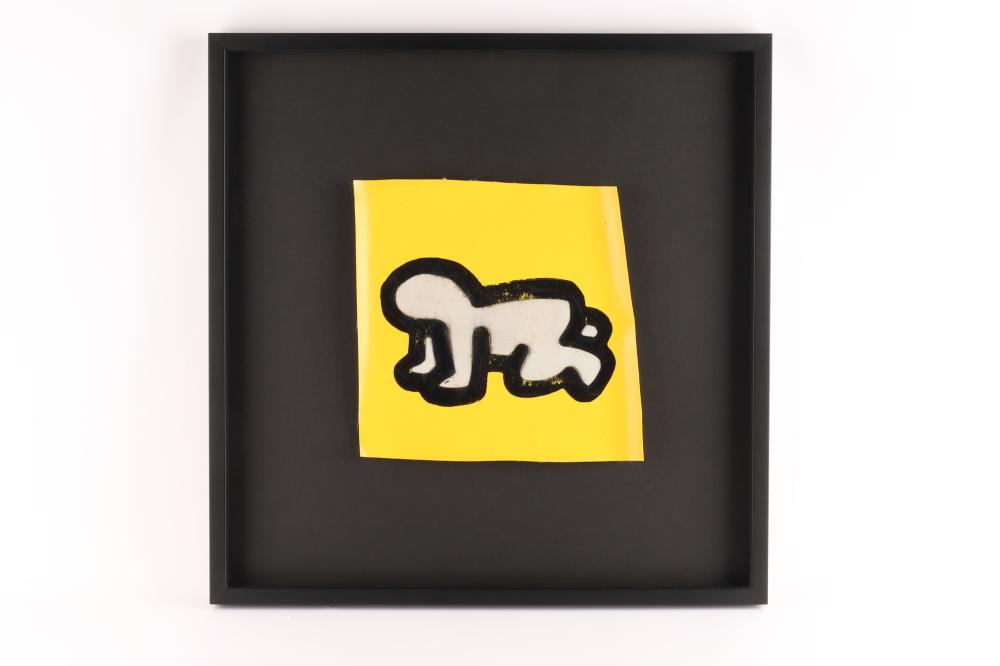 |
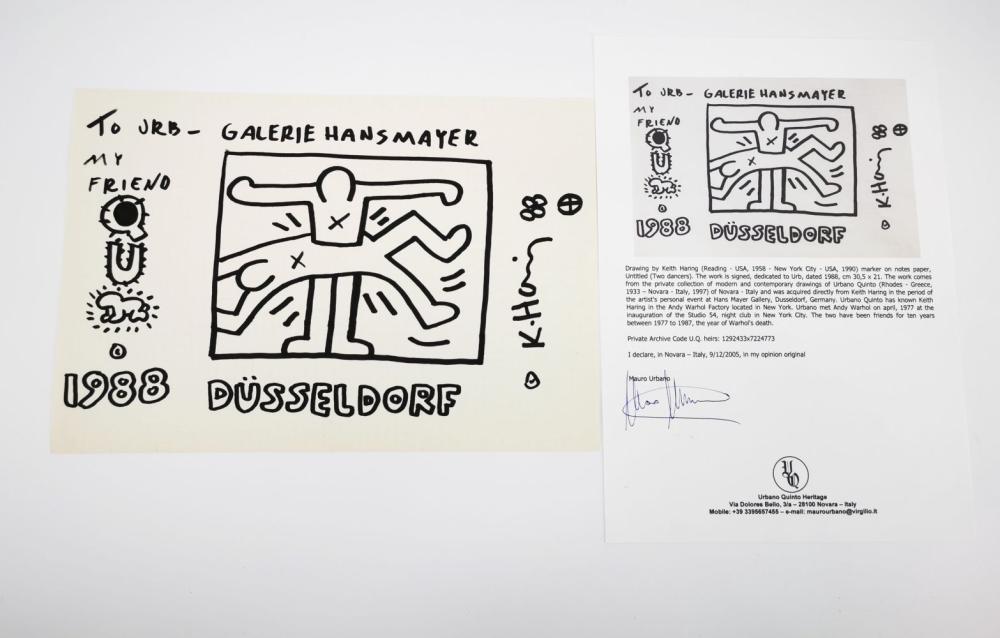
Keith Haring (1958-1990) Radiant Baby Original Drawing Pop Shop Screen Print Awning Fragment, NYSource blocked; provenance matched | Kavanagh Auctions | 2026-02-21 | 12A | CAD 5,100 (buyer’s-premium treatment unknown) |
 |
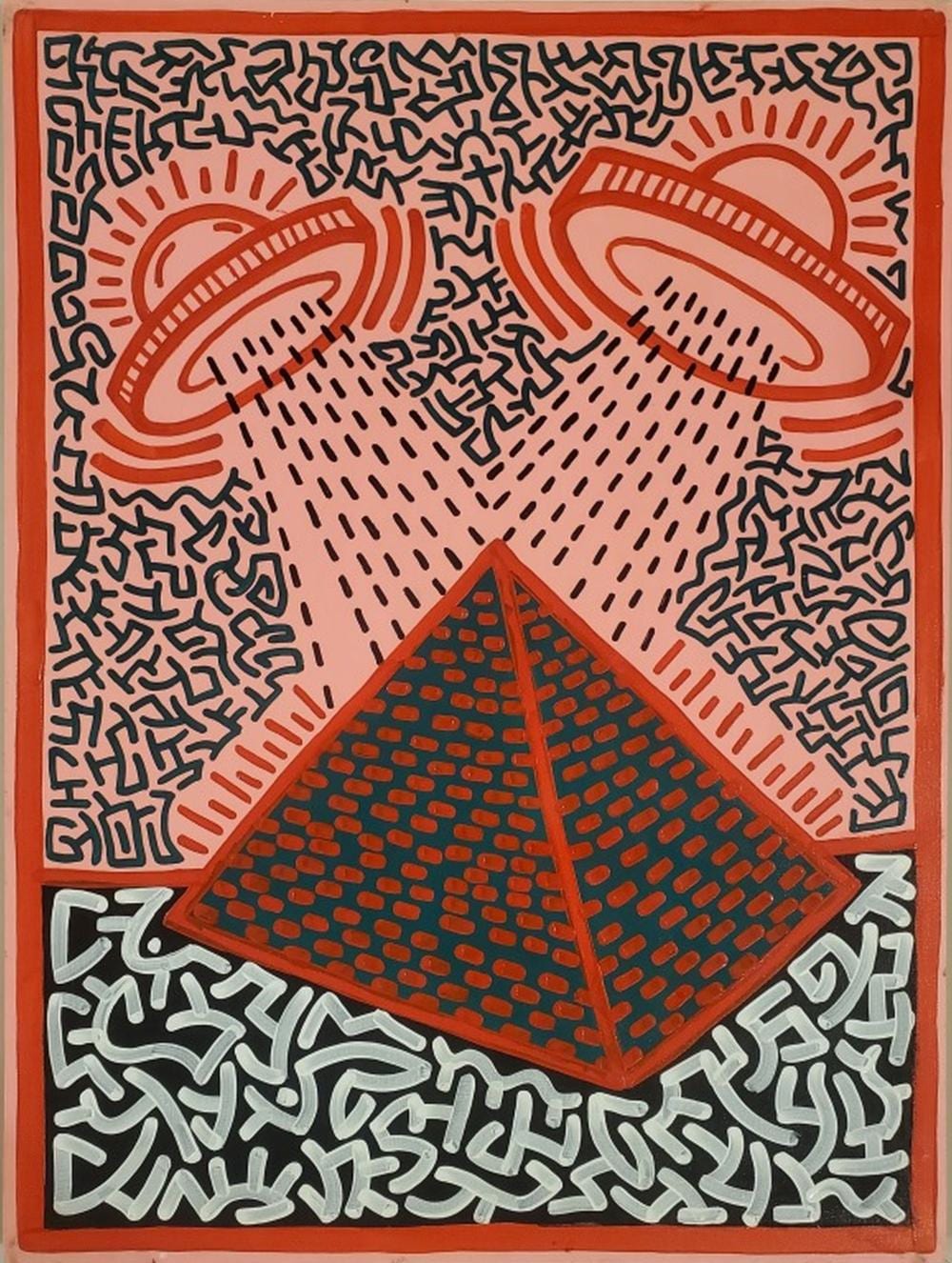
KEITH HARING DRAWINGSource blocked; provenance matched | Auktionshaus Rheine | 2023-12-05 | 162 | EUR 3,400 (buyer’s-premium treatment unknown) |
 |
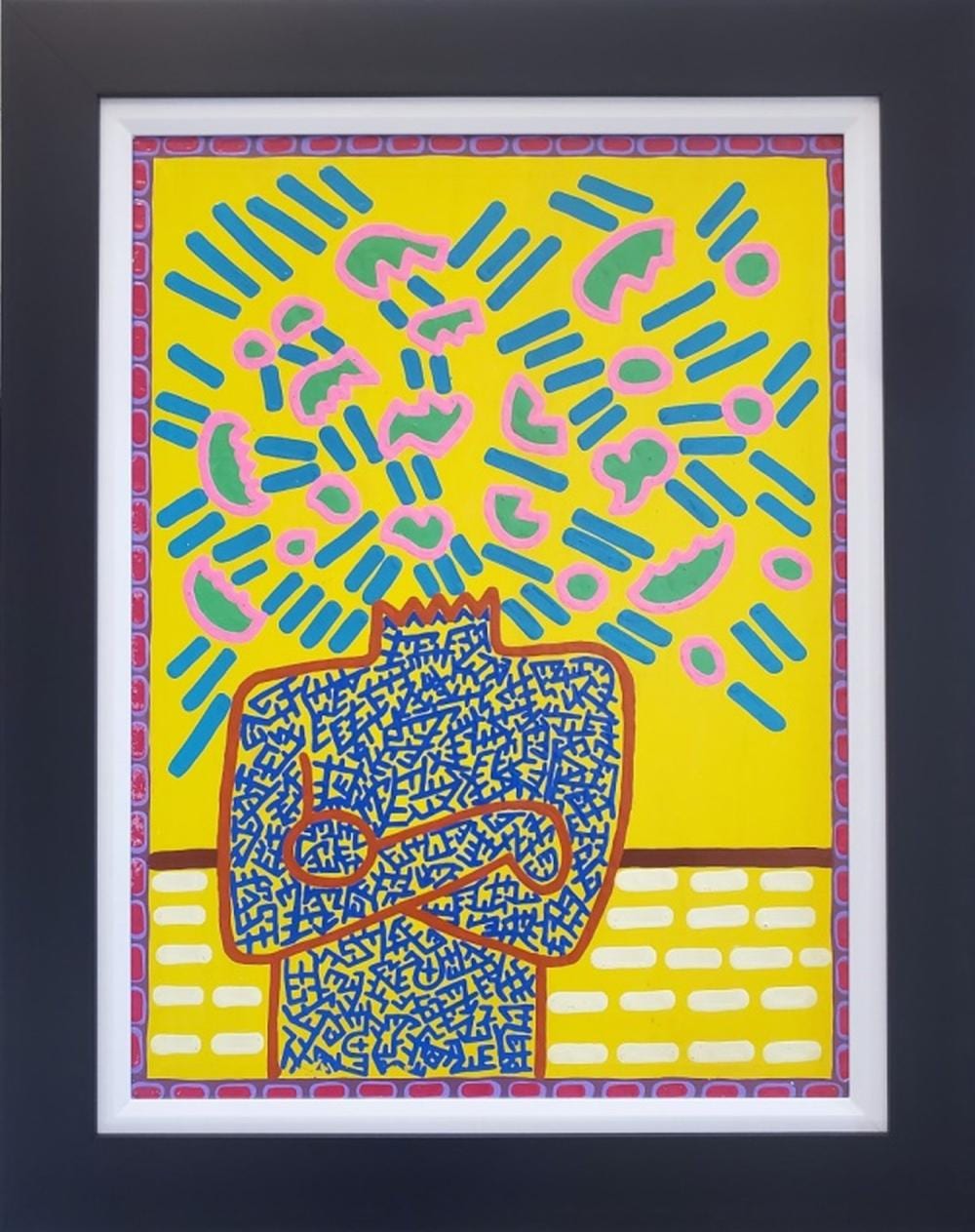
Original in Manner of Keith Haring Canvas 31 x 23" | Four Seasons Auction Gallery | 2022-06-26 | 158 | USD 500 (buyer’s-premium treatment unknown) |
 |
Original in the Manner of Keith Haring Canvas 31 x 23"Source blocked; provenance matched | Four Seasons Auction Gallery | 2022-01-23 | 203 | USD 550 (buyer’s-premium treatment unknown) |
![KEITH HARING 1958-1990 [AFTER] FROM THE SERIES "APOCALYPSE" PRINT ON LENNOX MUSEUM BOARD, STAMPED VERSO, 97X97CMS, UNFRAMED. sold by WA Art Auctions, lot 84 — auction record photograph](https://assets.appraisily.com/comps/auction-lots/200887007/thumb/06c3fe172a9a4dcf739fe189498c1162cc635df89cb049cc1348c6a36f72aeb2.jpg) |
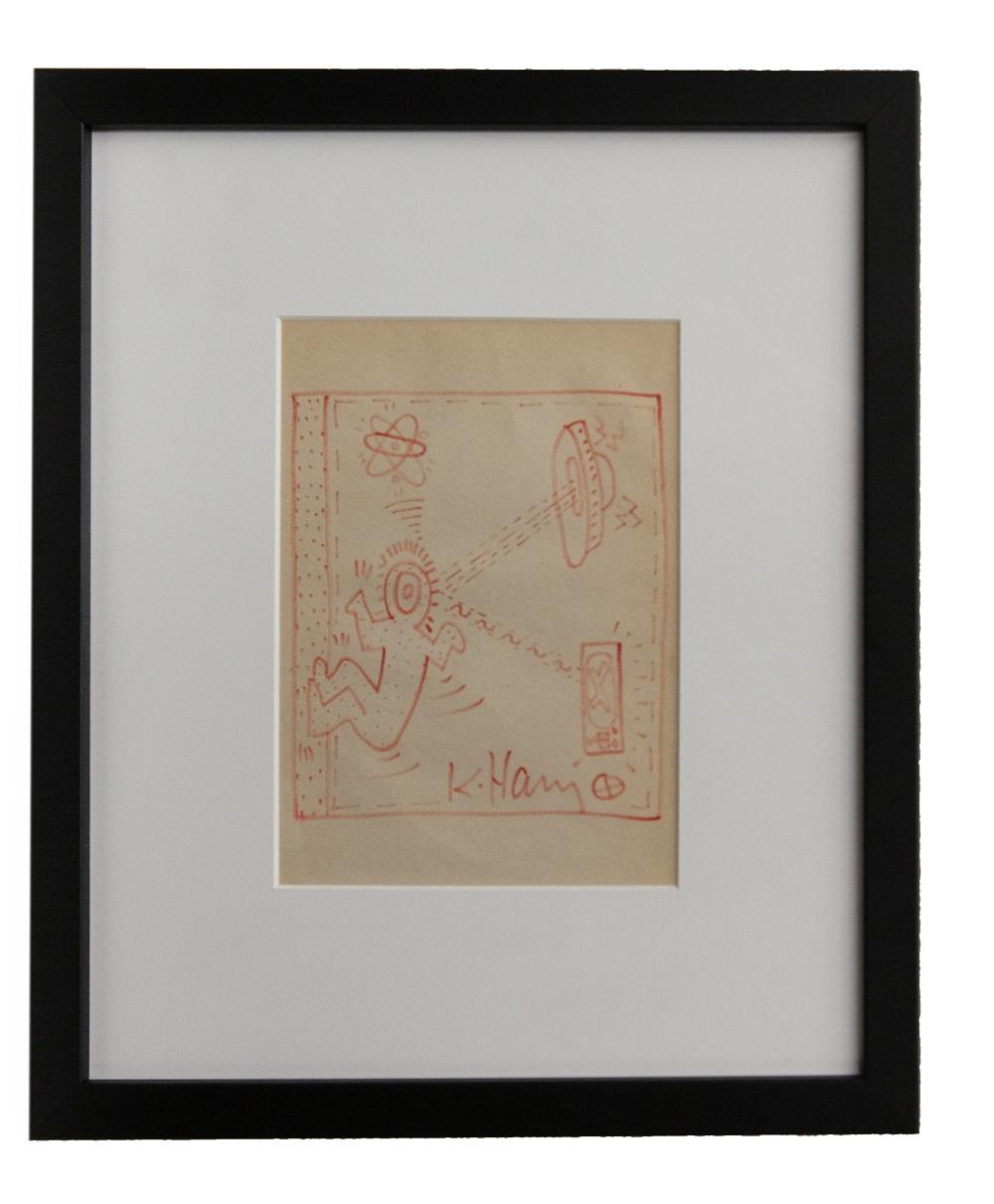
KEITH HARING 1958-1990 [AFTER] FROM THE SERIES "APOCALYPSE" PRINT ON LENNOX MUSEUM BOARD, STAMPED VERSO, 97X97CMS, UNFRAMED.Source blocked; provenance matched | WA Art Auctions | 2025-11-30 | 84 | AUD 150 (buyer’s-premium treatment unknown) |
 |
Keith Haring Original DrawingSource blocked; provenance matched | Dallas Auction Gallery | 2023-11-18 | 13 | USD 2,100 (buyer’s-premium treatment unknown) |
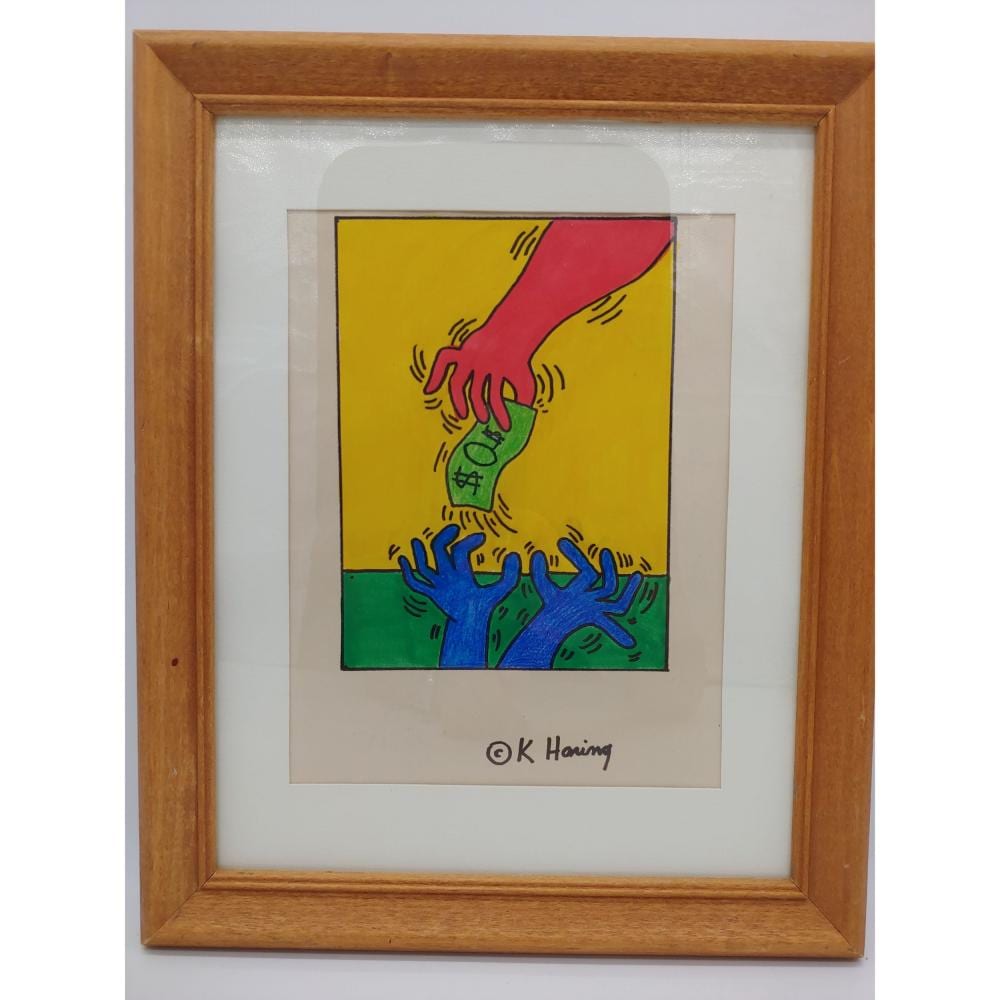 |
KEITH HARING (AFTER) DRAWINGSource blocked; provenance matched | RB Fine Arts | 2021-09-25 | 285 | USD 200 (buyer’s-premium treatment unknown) |
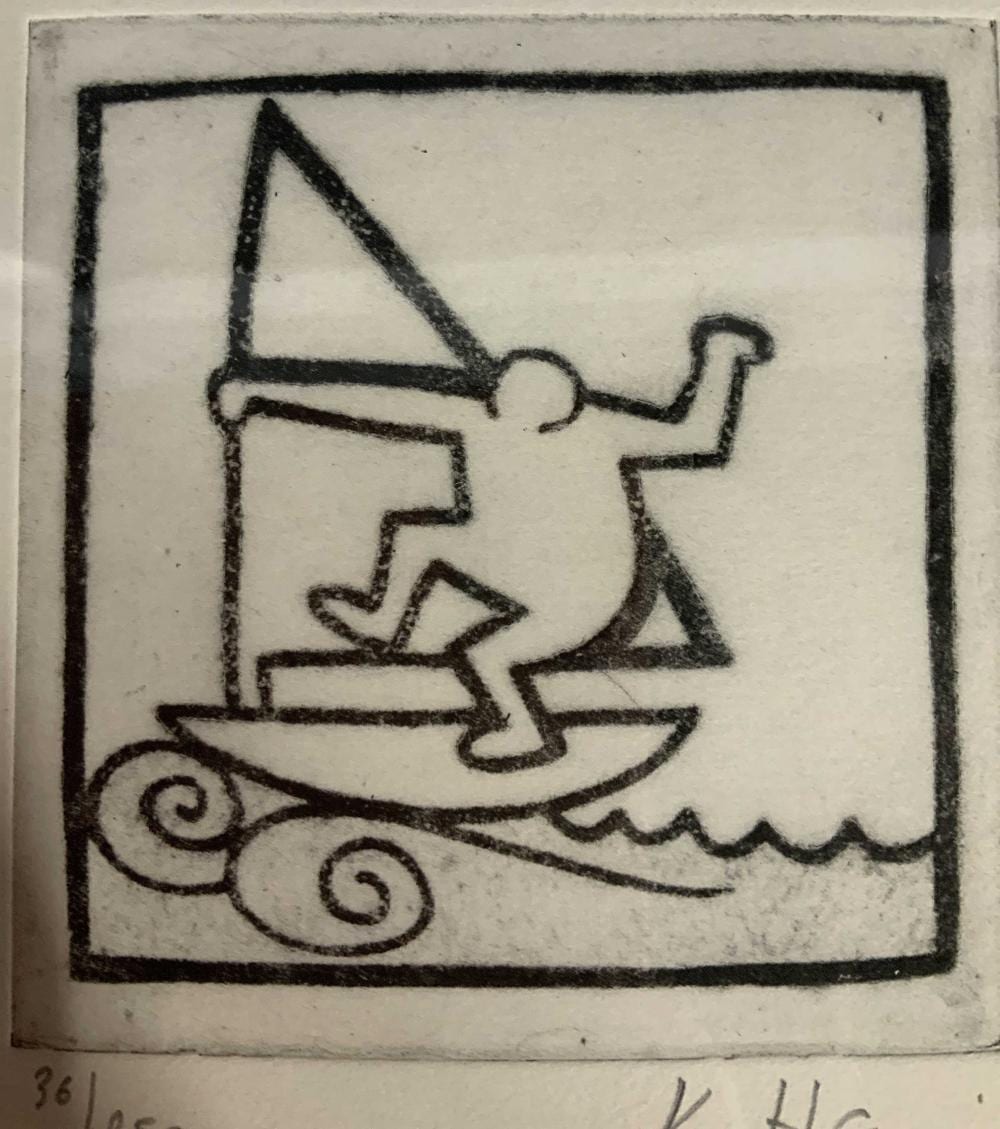 |
KEITH HARING Signed Ltd Edition LithographSource blocked; provenance matched | The Benefit Shop Foundation Inc. | 2020-08-26 | 521 | USD 275 (buyer’s-premium treatment unknown) |
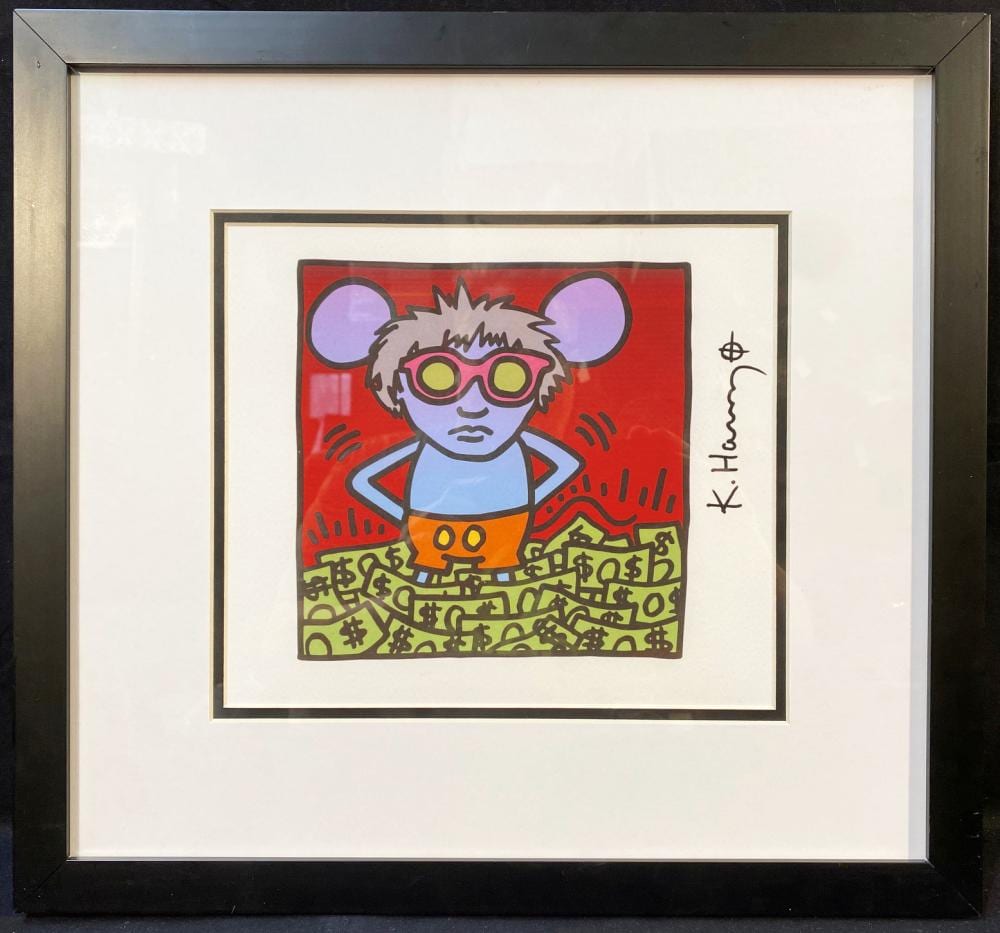 |
KEITH HARING (1958-1990) HAND SIGNED LITHOGRAPH TITLED ANDY MOUSE – 17IN x 18INSource blocked; provenance matched | The Rug Life Auctions | 2023-03-21 | 80 | USD 500 (buyer’s-premium treatment unknown) |
 |
GULLY (né en 1977) THE TOPS ADMIRE GRANT WOOD, HOOPER, BASQUIAT, KEITH HARING AND BANKSY 1, 2019 Technique mixte sur toile, trip...Source blocked; provenance matched | Tajan | 2021-04-28 | 28 | EUR 60,000 (buyer’s-premium treatment unknown) |
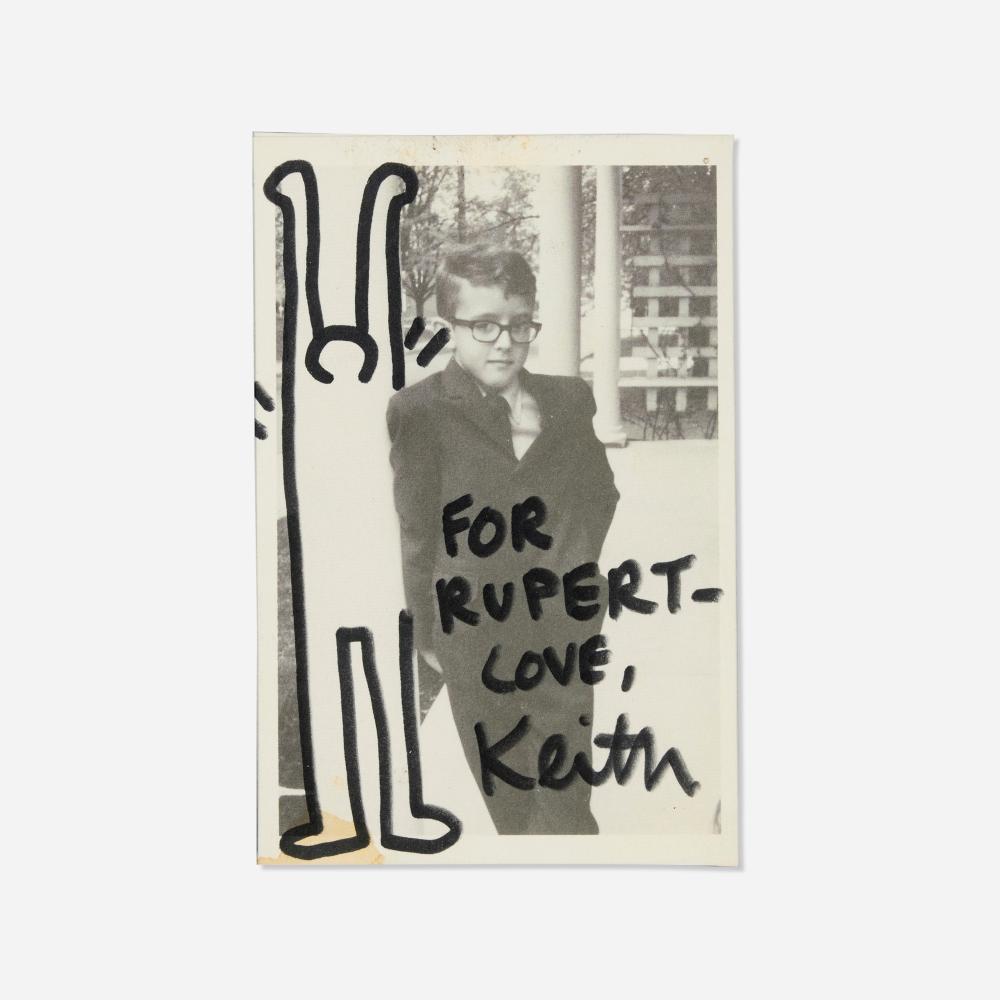 |
Keith Haring, Photo with original drawingSource blocked; provenance matched | Rago Arts and Auction Center | 2024-10-22 | 114 | USD 3,200 (buyer’s-premium treatment unknown) |
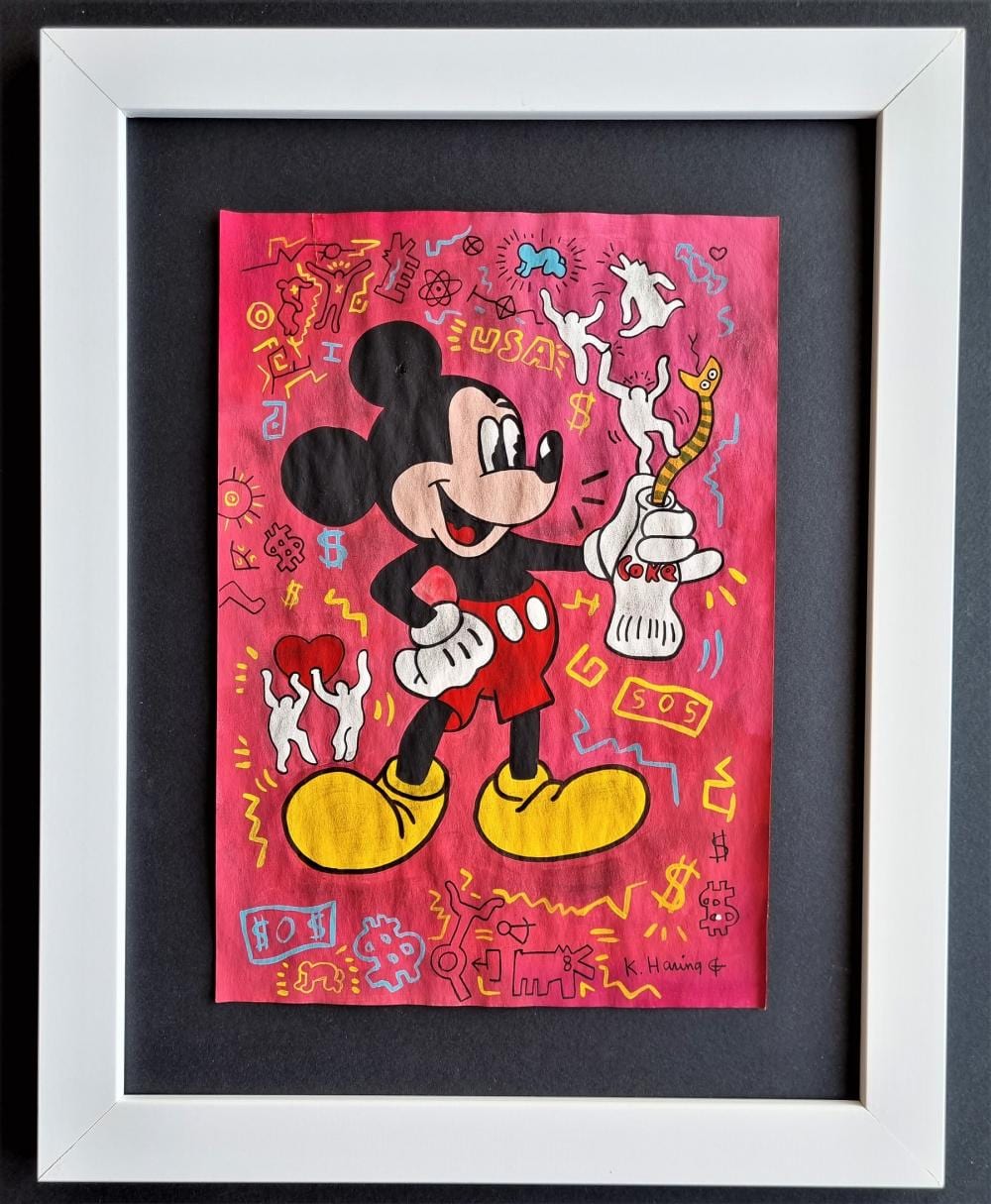 |
KEITH HARING, SIGNED DRAWINGSource blocked; provenance matched | Novartia | 2022-12-11 | 247 | EUR 300 (buyer’s-premium treatment unknown) |
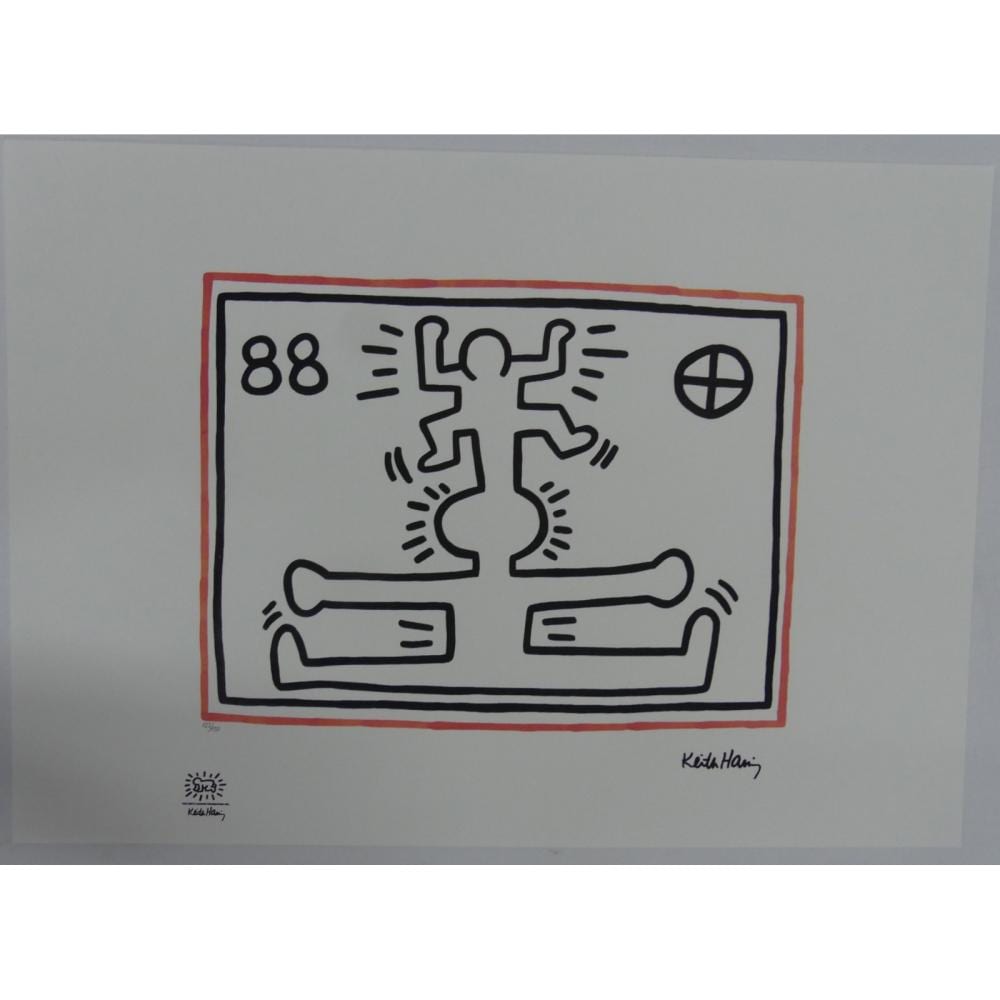 |
KEITH HARING 'JUMPING FIGURES' LITHOGRAPHSource blocked; provenance matched | Antiques & Modern Auction Gallery | 2025-12-07 | 943 | USD 50 (buyer’s-premium treatment unknown) |
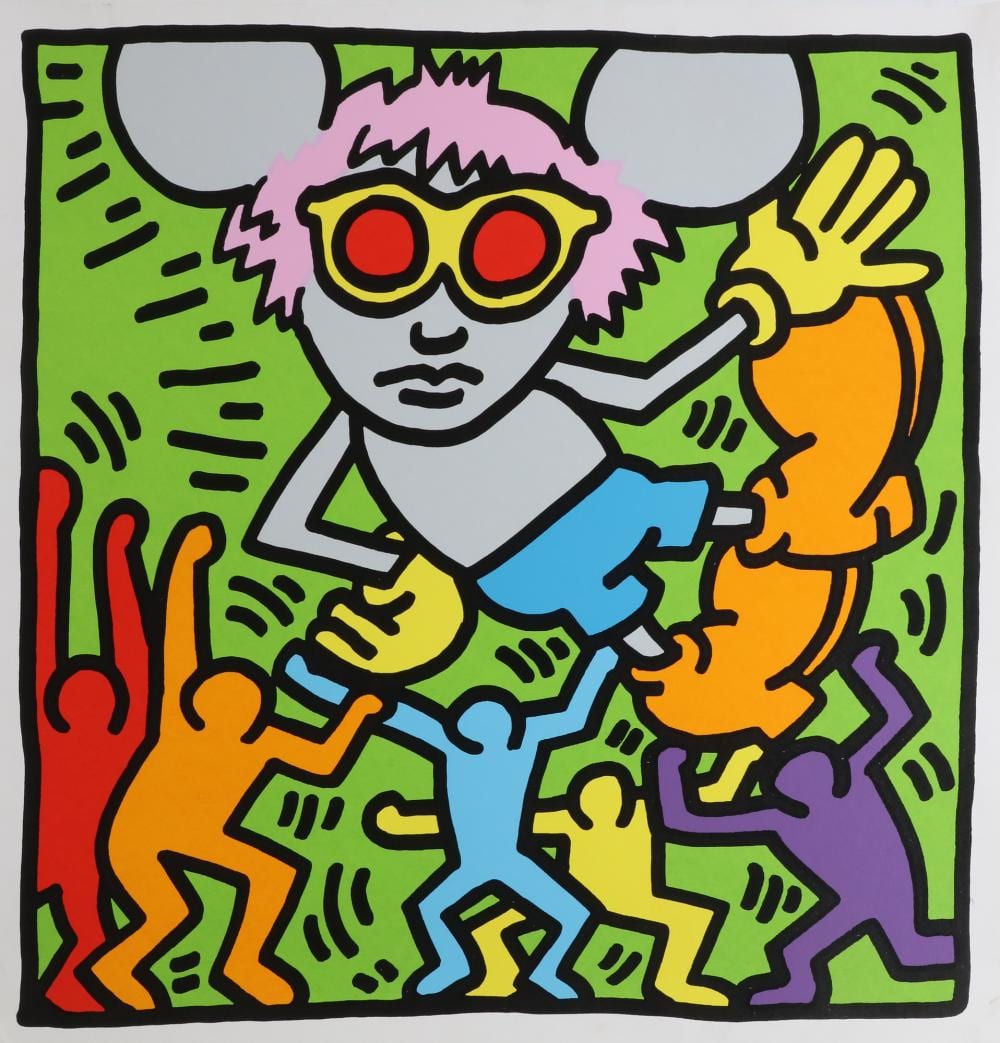 |
After Keith Haring (American, 1958-1987), Andy Mouse, plate II, screen print of wove paper, 38 x 38 in (96 1/2 x 96 1/2 cm)Source blocked; provenance matched | Andrew Jones Auctions | 2025-11-19 | 52 | USD 100 (buyer’s-premium treatment unknown) |
![KEITH HARING 1958-1990 [AFTER] "FINGERS CROSSED" SCREENPRINT, EDITIONED 2/100, SIGNATURE LOWER RIGHT, PUBLISHERS BLINDSTAMP, SIGHT 30X23CMS, FRAMED. sold by WA Art Auctions, lot 36 — auction record photograph](https://assets.appraisily.com/comps/auction-lots/200886959/thumb/b47b2f20320d6835e14422586ac96808dd4ba5f5bbc6008e0d052c1dc86eaa14.jpg) |
KEITH HARING 1958-1990 [AFTER] "FINGERS CROSSED" SCREENPRINT, EDITIONED 2/100, SIGNATURE LOWER RIGHT, PUBLISHERS BLINDSTAMP, SIGHT 30X23CMS, FRAMED.Source blocked; provenance matched | WA Art Auctions | 2025-11-30 | 36 | AUD 250 (buyer’s-premium treatment unknown) |
How these auction records were verified
Each row retains its exact source URL, lot identity, retrieval time, access result, and immutable record hash. Live source access was blocked; the exact record matched Appraisily's immutable pipeline provenance. Inspect the public comparable provenance record.
Disclosure: prices are shown as reported by auction houses and are provided for appraisal context. Learn more in our editorial policy.
Free instant estimate
Not sure if your item is worth appraising? Let us take a look.
Upload a photo, tell us what you know, and get a free first read. If a full appraisal makes sense, we will say so.
Free. No card needed. Takes about two minutes.
FAQ
Q: Does the Keith Haring Foundation authenticate drawings or issue certificates? A: No. The Foundation does not authenticate or issue new COAs. Authentication relies on expert opinion, provenance, and material/stylistic analysis.
Q: Are dedications in books or on posters considered “original drawings”? A: Yes, if Haring hand-drew them. They are unique works, but value depends on the quality of the drawing, support, date, and provenance.
Q: How risky are “subway drawings” on black poster panels? A: High risk. Many were illicitly removed or fabricated. Legal, ethical, conservation, and authenticity issues often make them difficult to trade or insure.
Q: What if the signature looks different from other examples? A: Haring’s signature varies. Evaluate the entire work—line quality, motifs, date, medium, and provenance. A strong total picture can outweigh minor signature variance; the reverse is also true.
Q: How should I insure a Haring drawing? A: Obtain a current appraisal by a qualified specialist, including a detailed condition report and comps. Insure for replacement value and update regularly to track market movement.