A Very Large Crystal Ceiling Chadelier Lamp From Circa Early 20th Century: appraisal and value basics
A Very Large Crystal Ceiling Chadelier Lamp From Circa Early 20th Century research should start with identification, condition, provenance, and recent comparable sales. Use this guide to compare the signals that matter before paying for a formal appraisal or deciding whether to sell.
A Very Large Crystal Ceiling Chadelier Lamp From Circa Early 20th Century
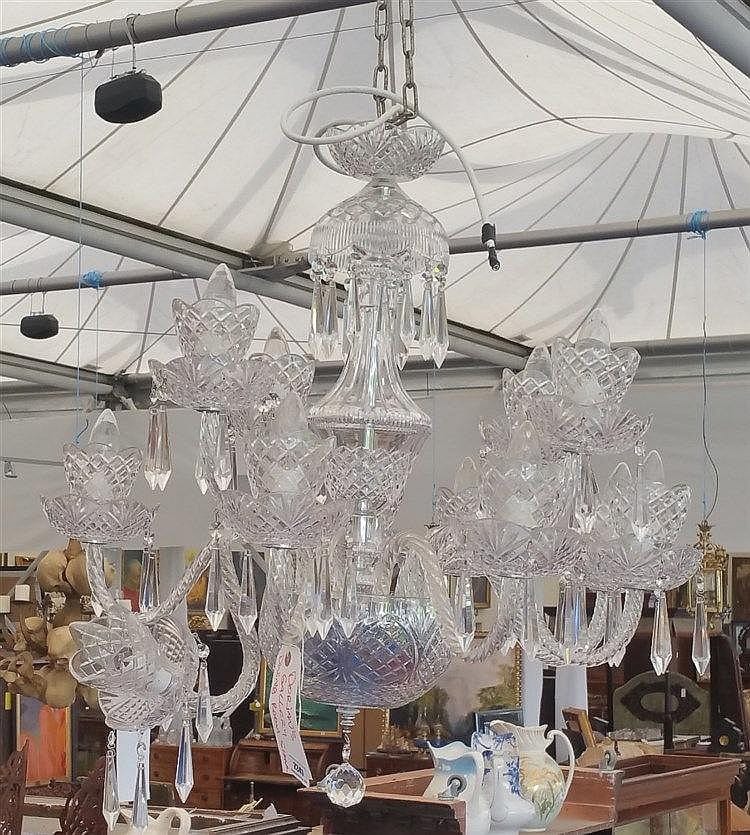
A very large crystal ceiling chandelier from the early 20th century sits at the intersection of Belle Époque opulence and modern electrification. Built for grand entry halls, ballrooms, and formal salons, these fixtures were designed to catch both light and eye, combining expertly cut crystal with bronze or brass armatures. For collectors and appraisers, they offer a rewarding blend of material science, decorative arts history, and practical problem-solving.
This guide focuses on how to recognize, date, evaluate, and care for an early 20th-century crystal ceiling chandelier—especially flush or semi-flush “ceiling” types—so you can approach appraisal and acquisition with confidence.
What Collectors Mean by a “Very Large” Crystal Ceiling Fixture
“Very large” is more than marketing language; it’s a usable descriptor with practical implications for authenticity, installation, and value.
- Diameter and drop: A very large ceiling chandelier typically measures 70–120 cm (28–48 in) in diameter. Drop varies with format:
- Flush or near-flush “plafonnier” or basket: 30–70 cm drop (12–28 in).
- Semi-flush with stem or short chain: 60–120 cm drop (24–48 in).
- Weight: Expect 30–120 kg (65–265 lbs) depending on the density of the frame and lead crystal content. Heavier weights often signal higher lead content crystals and more robust armatures.
- Format types commonly seen c.1900–1930:
- Basket or “panier”: Concentric rings with draped octagon bead chains forming a bell, dome, or balloon shape, ending in a finial.
- Tent-and-bag (or tent-and-basket): Strings rising to a crown (tent) and cascading down into a bag/basket.
- Empire/Neoclassical corona: A circlet or crown with suspended drops and crystal chains, sometimes with palmettes and laurel motifs.
- Plafonnier bowls: Metal-framed bowls of cut crystal plaques or continuous bead curtains, often with a central rosette.
- Early Deco dishes: Geometric faceted crystals, sometimes with chrome or nickel accents.
“Ceiling lamp” implies a mount close to the ceiling rather than a long pendant chandelier. In large sizes, that choice was often made to distribute weight and manage sightlines in lower ceilings.
Dating an Early 20th-Century Crystal Ceiling Chandelier
Dating within 1900–1930 hinges on construction, style vocabulary, and electrification details.
- Electrification clues:
- Early fixtures (c.1900–1915) often have thick, straight stems or rods concealing wiring, or short chains; many used porcelain E27 (Europe) or E26 (US) lampholders.
- Cloth-braided wire or evidence of early fabric insulation may survive inside the frame, even if sockets were replaced later.
- Dual-fuel gas/electric hybrids are mostly late 19th century; a true early 20th-century ceiling basket is usually purpose-built for electricity. If you see gas keys or plugged gas ports on a ceiling basket, it may be earlier or a transitional adaptation.
- Stylistic markers:
- Belle Époque/Edwardian (c.1900–1914): Abundant pendalogues and icicle drops, foliate castings, laurel wreaths, and gilt bronze. Crystals are intricately cut; frames favor classical ornament.
- Art Nouveau influence: Sinuous crowns, organic mounts, flowing lines—but less common on strictly geometric ceiling baskets.
- Early Art Deco (c.1920–1930): Cleaner lines, repetitive geometric octagons, spears, hexagonal plaques, and polished nickel or chrome elements. Bronze may be patinated darker rather than bright gilded.
- Maker and regional tendencies:
- France: Fine gilt bronze frames with well-ordered octagon chains; Saint-Louis and Baccarat supplied crystals, though crystals themselves before the mid-1930s often lack etched factory marks.
- Britain: F. & C. Osler and Perry & Co. produced high-quality frames and glass; British fixtures may use heavier, high-lead prisms and substantial brass.
- Austria/Bohemia: Lobmeyr and North Bohemian glasshouses supplied brilliant hand-cut prisms; expect very fine octagon chains and precisely ground holes.
- Italy: Some earlier 20th-century examples exist, though the Venetian dominance is more mid-century and later.
Note on marks: Acid-etched factory marks on individual crystals from Baccarat and Saint-Louis generally begin around 1936. Early 20th-century crystals are more often unmarked or sticker-labeled originally. Frame stamps (workshop initials, inventory numbers) may be found on the inner ring or canopy.
Materials, Construction, and Telltale Details
Knowing what to look for in the metalwork and crystal distinguishes period pieces from later reproductions.
- Armature metals:
- Bronze or brass: Most common. Bronze frames feel dense and take a deep, warm patina; brass can be slightly lighter and more yellow. Gilt finishes in the early 20th century are typically lacquered or electroplated, not mercury gilded.
- Iron or steel substructure: Occasionally used internally for strength; check for discrete rust where finish has worn.
- Spelter (zinc alloy): Lighter, more brittle, and often seen in cheaper fixtures; seams and soft details can betray it.
- Crystal diagnostics:
- Lead content: High-lead crystal is denser and “sings” with a bell-like sustain when tapped gently; it also shows prismatic fire under point light.
- Cuts and forms: Octagon beads, rosettes, pendalogues, icicles, spear drops, and scalloped plaques. Edges should be crisp, and drilled holes are usually countersunk or beveled on period examples.
- Hand-cut vs pressed: Hand-cut facets are sharp with slight irregularities; pressed glass can show mold seams and softer detail.
- Assembly and pinning:
- Period chains commonly use brass wire staples or “S” hooks with a hand-twisted look. Bright, uniform steel split rings point to later replacements.
- Consistency: Mismatched drops, varied hole sizes, or inconsistent bead sizes suggest later augmentations.
- Frame construction:
- Heavy-gauge rings with regularly spaced apertures for bead strands.
- Cross-bracing bars with threaded rod and a central finial nut.
- Canopy and ceiling plate sized to cover junction box and spread load; original canopies match the finish and ornament vocabulary.
- Sockets and hardware:
- Early porcelain sockets (E26/E27) with nickel sleeves; bakelite appears later.
- Continental fixtures may have B22 bayonet lampholders originally.
- Look for fiber or ceramic insulators where wires pass through metal.
These clues—especially a coherent relationship among style, materials, and electrification—build a convincing early 20th-century attribution.
Condition, Conservation, and Rewiring
Condition is a major value driver and safety concern.
- Common condition issues:
- Losses: Missing crystals, especially central rosettes or a repeating band, interrupt pattern and value. Keep an eye out for replaced octagon chains that are too bright or the wrong size.
- Frame fatigue: Cracks in solder joints or splits at ring seams; stress at the points where cross-braces meet the ring.
- Finish abrasion: Over-polished or “bright-dipped” brass destroys original patina and can depress value. Lifting lacquer or patchy gilding is typical aging.
- Corrosion: Verdigris on brass and rust on hidden iron. Light verdigris is normal; aggressive corrosion requires intervention.
- Rewiring best practice:
- Professional rewiring to modern standards with heat-resistant wire and proper strain relief. Wiring must not bear weight.
- Retain original sockets if safe and serviceable; otherwise, replace with period-appropriate porcelain types and keep originals in a labeled bag for provenance.
- Avoid cutting original frame elements to route cables; use existing channels and grommets.
- Cleaning:
- Dry dust first. Then one-by-one crystal cleaning using distilled water with a small amount of isopropyl alcohol; never spray cleaner directly into the frame.
- Polish metal sparingly; preserve patina. Do not power-buff gilt surfaces. Use microcrystalline wax for protection if appropriate.
- Replacement crystals:
- Source like-for-like: Match size, lead content, cut profile, and hole spacing. Replace in symmetrical pairs or full runs to maintain rhythm.
- Keep a log of replaced elements with measurements and photos.
Thoughtful conservation retains originality while making the chandelier safe and functional, supporting both value and daily use.
Valuation Factors and Market Context
Pricing large early 20th-century crystal ceiling fixtures depends on a matrix of attributes.
- Size and presence: Diameter and scale translate directly into impact and price. Very large baskets with perfect proportions command premiums.
- Maker and provenance:
- Named glass (Baccarat, Saint-Louis, Lobmeyr) or documented workshops (Osler, Perry & Co.) lift value significantly. Expect meaningful premiums when documentation, invoices, or historic photographs exist.
- Completeness and originality:
- Original canopy, finial, consistent crystal suite, and intact finish are key. Sympathetic rewiring is neutral to slightly positive; intrusive modifications are negative.
- Style and demand:
- Transitional Belle Époque/Edwardian examples with exuberant drops remain perennial. Early Deco with restrained geometry and nickel accents currently sees strong demand in contemporary interiors.
- Condition:
- Professional restoration with documented methods supports value; obvious patchwork, missing runs, or aggressive polishing suppresses it.
- Market ranges (broad guidance, subject to maker attribution and region):
- Large French basket/plafonnier, c.1910–1925, unsigned: often mid-four to low five figures.
- Named-house crystals or documented workshop frames: solid five figures; exceptional scale or royal provenance can be higher.
- Heavily restored or composite fixtures: discounted, sometimes by 30–50%.
The most persuasive appraisals pair stylistic and material analysis with a paper trail: bills of sale, provenance letters, and photographic evidence.
Documentation, Installation, and Long-Term Care
The practical side of ownership matters as much as scholarship.
- Documentation:
- Record measurements (diameter, overall drop, canopy size), weight, crystal types and counts, wiring configuration, socket types, and any markings.
- Photograph each layer: canopy, frame, cross-bracing, crystal runs, and finial detail. Keep images and notes with dates of any interventions.
- Installation:
- Assess structure: Use rated anchors into joists or beams; a simple junction box is rarely sufficient for very large fixtures.
- Use a canopy-mounted safety cable independent of wiring. Confirm local electrical codes and load ratings.
- Balance the frame during rehang: Assemble crystals from the center downward and from opposite sides inward to prevent torsion.
- Environmental care:
- Avoid high humidity; prevent temperature extremes that can stress glass and finishes.
- Regular dusting with soft brushes; schedule deep cleaning annually or biennially depending on environment.
With the right records and handling, a large crystal ceiling chandelier remains both a safe light source and an appreciating asset.
Quick Appraisal Checklist
- Measure diameter, overall drop, and canopy size; estimate weight.
- Identify format: basket, tent-and-bag, Empire corona, plafonnier bowl, or Deco dish.
- Inspect armature metal: bronze or brass preferred; check for patina and structural integrity.
- Examine crystals: hand-cut edges, high-lead “ring,” beveled drill holes, consistent suite.
- Check pinning: brass staples/hooks typical; shiny steel split rings suggest later work.
- Look for maker or workshop marks on frame; do not expect crystal acid stamps before mid-1930s.
- Evaluate electrification: period-appropriate sockets and evidence of early wiring channels.
- Note losses or mismatches: missing rosettes, irregular chains, incorrect sizes.
- Assess finish: avoid pieces over-polished to raw brass; intact lacquer/gilding favored.
- Confirm safe installation potential: adequate ceiling support and canopy coverage.
- Document everything with photos and counts before any cleaning.
- If in doubt, consult a specialist for rewiring and conservation, and retain all removed parts.
What similar items actually sold for
Real auction sales of items like your crystal chandelier. Open a sale to see the original listing.
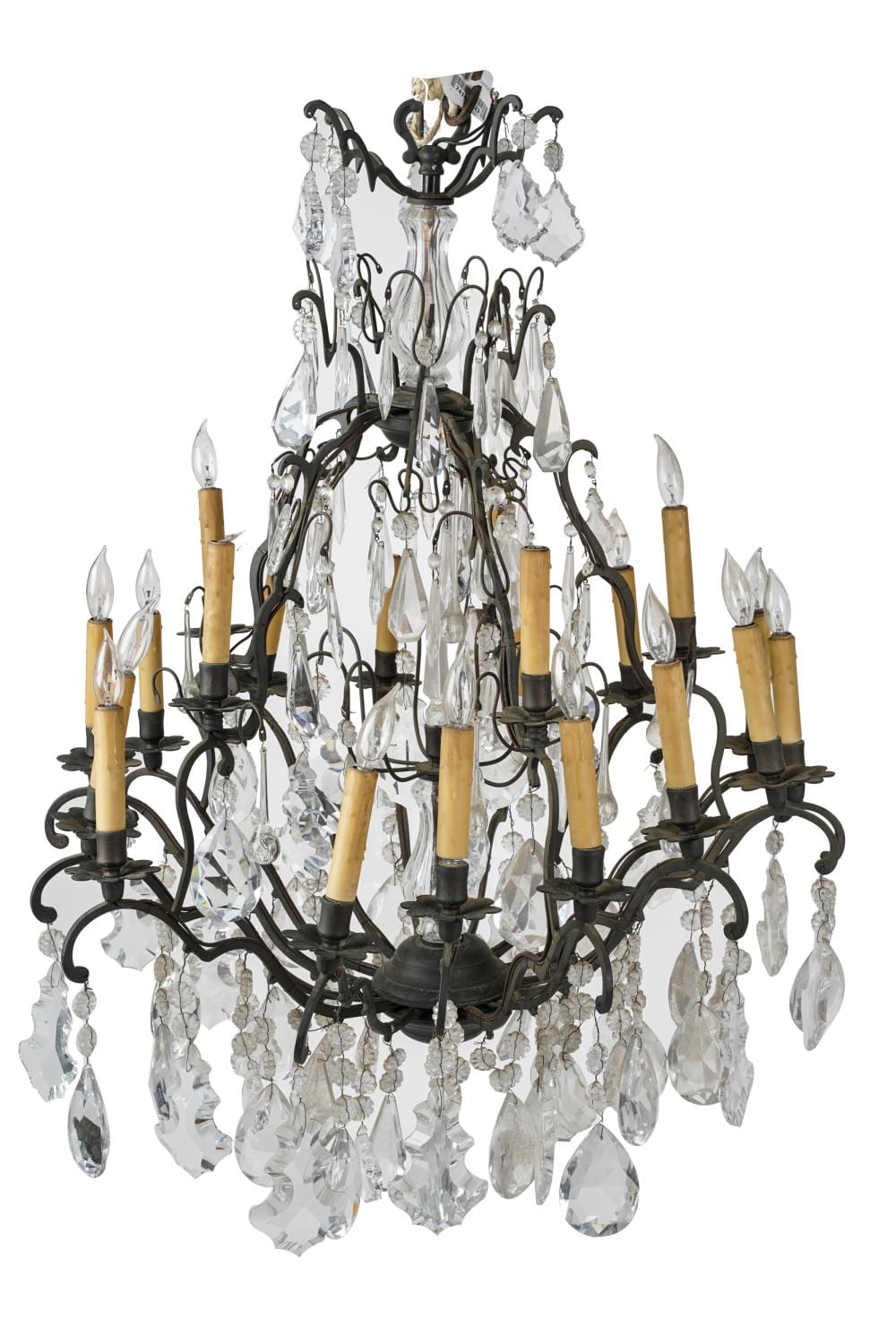
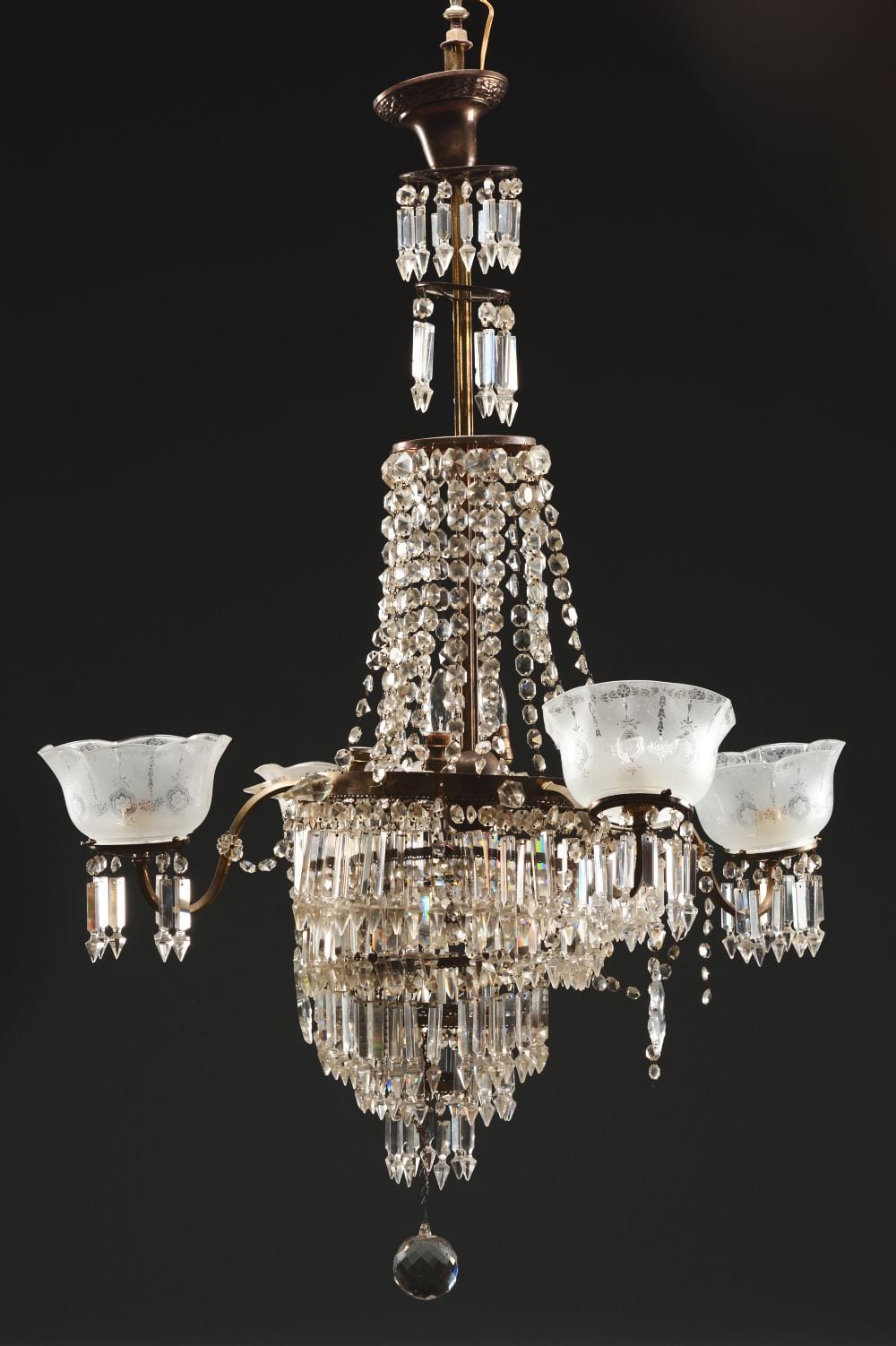
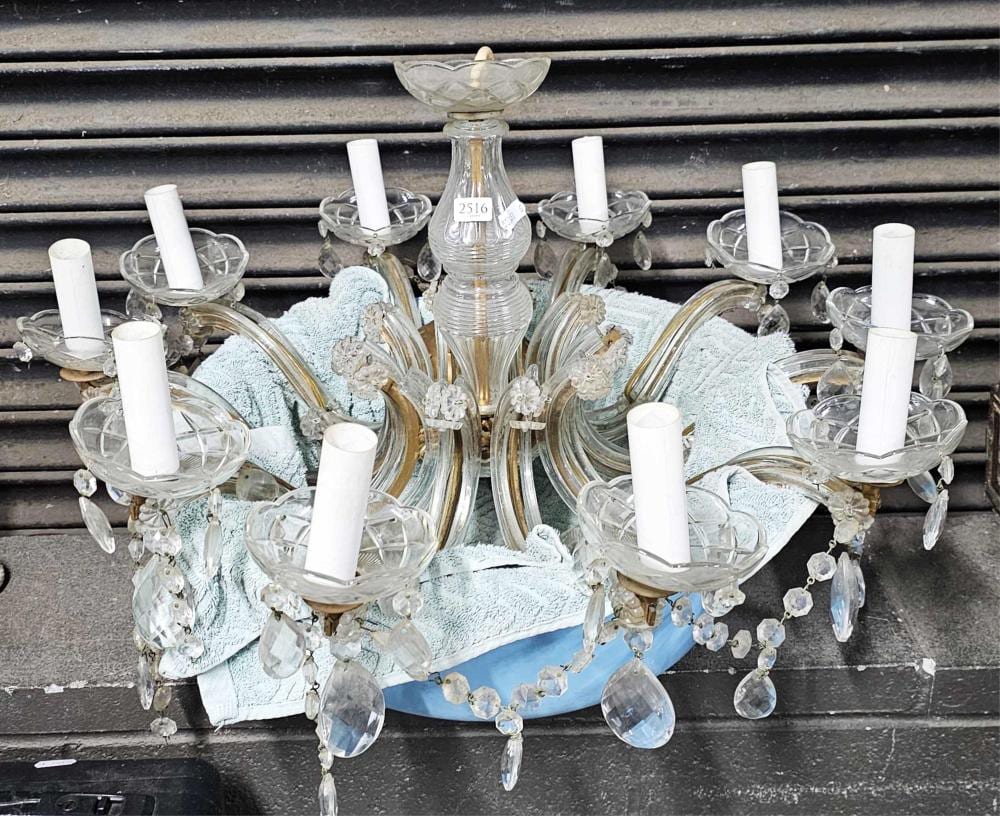
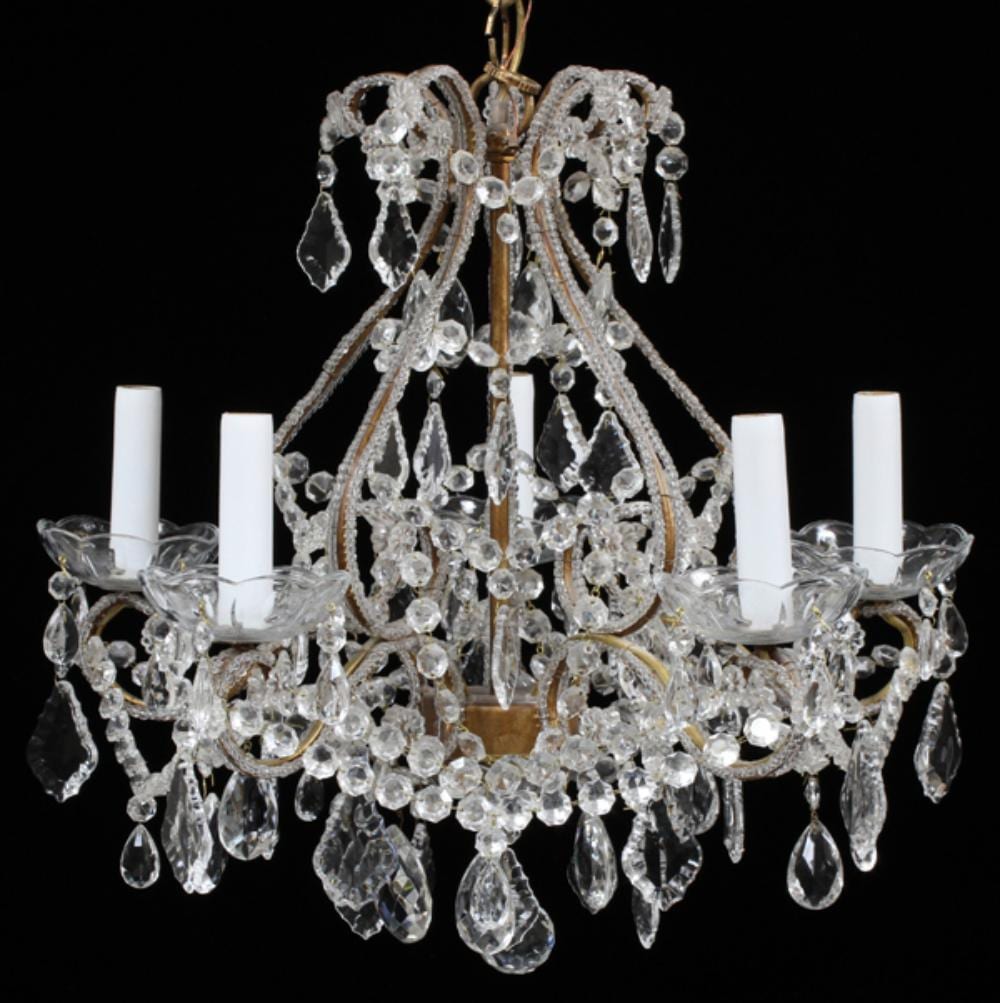
Shown USD range: USD 180-USD 5,000. Median of these 9 USD examples: USD 450.
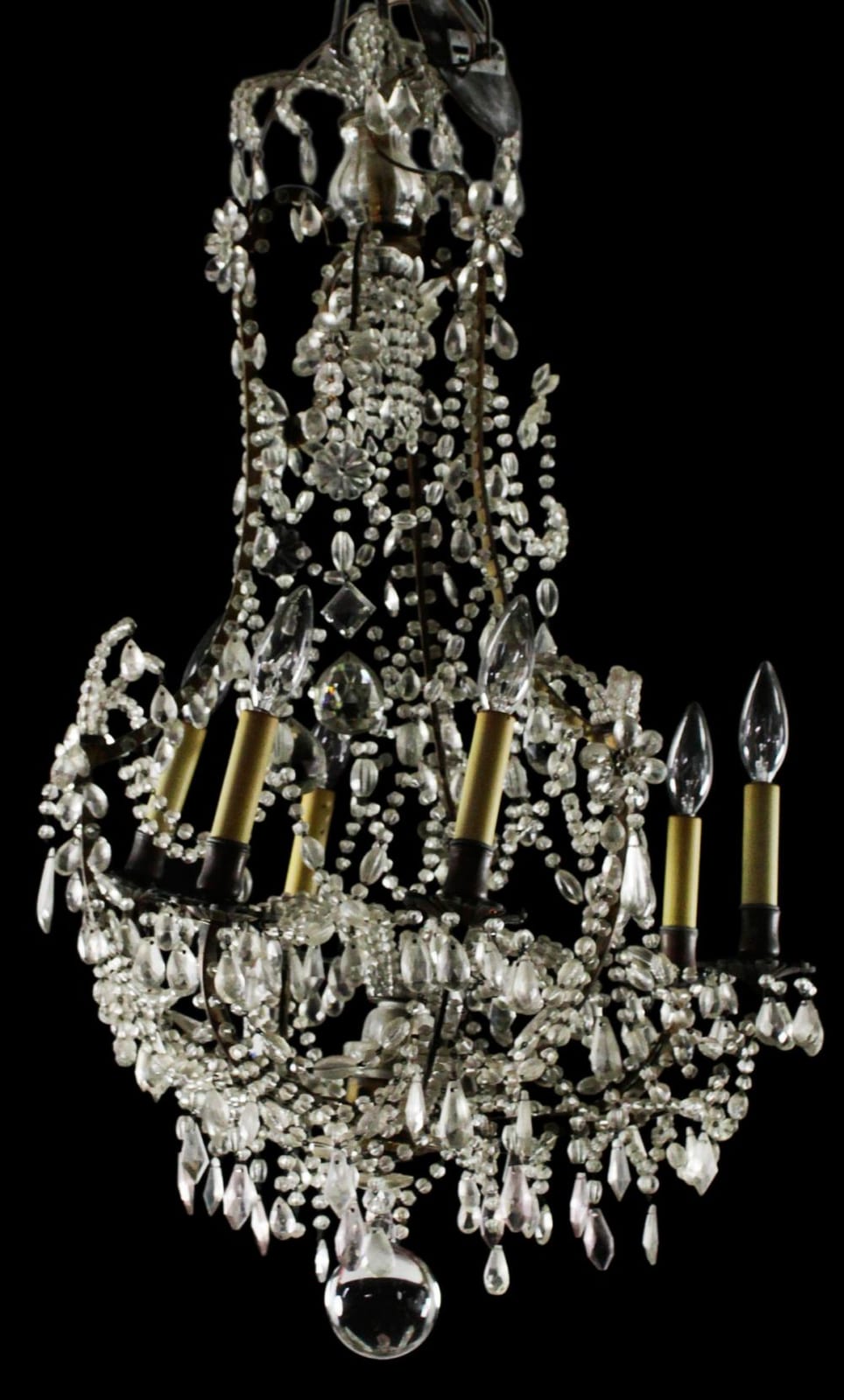
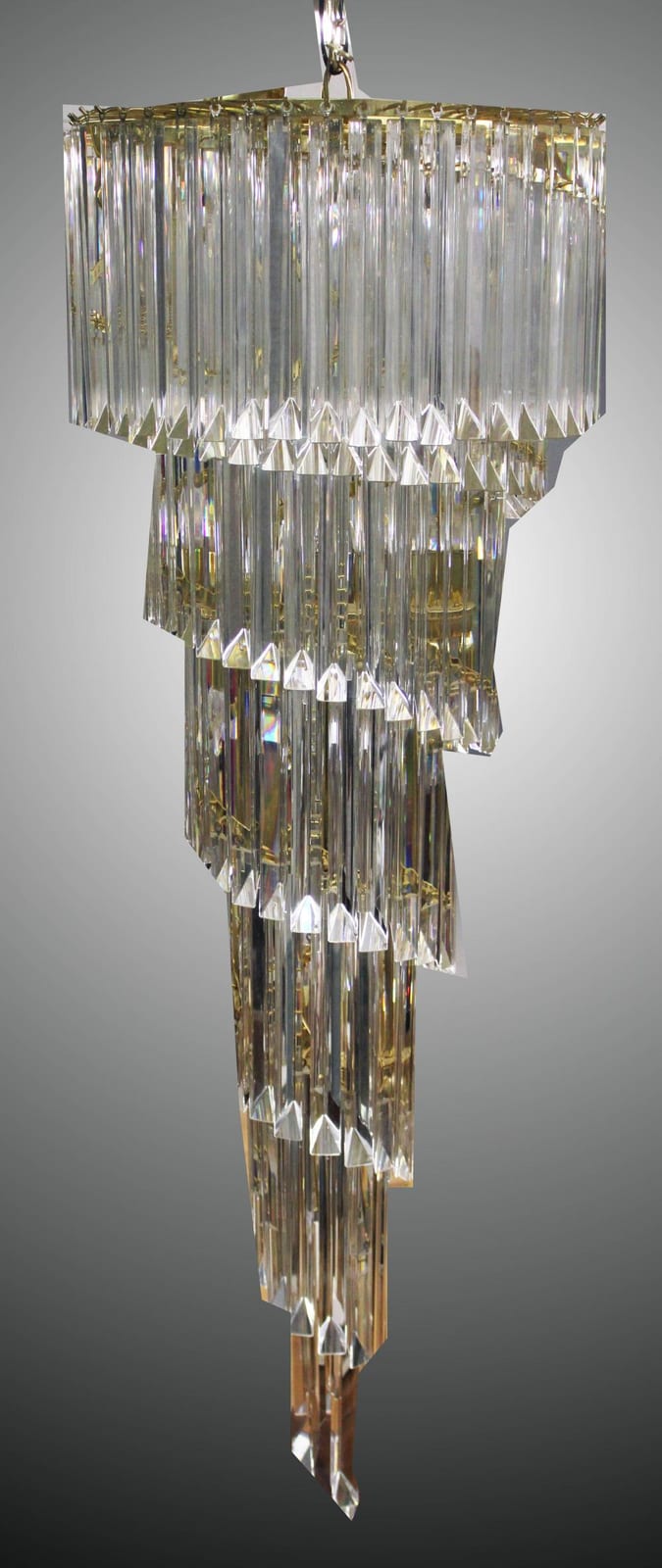
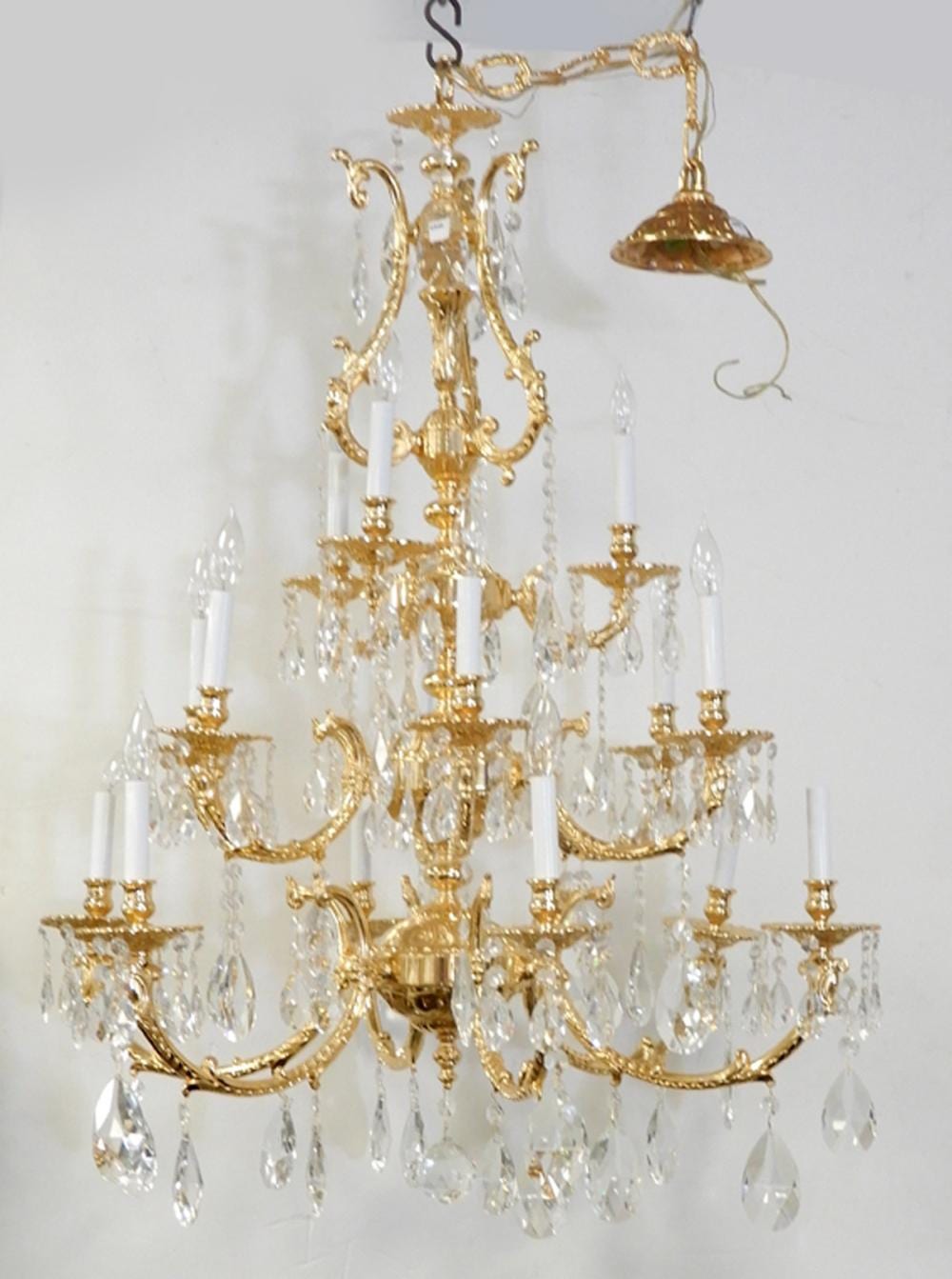
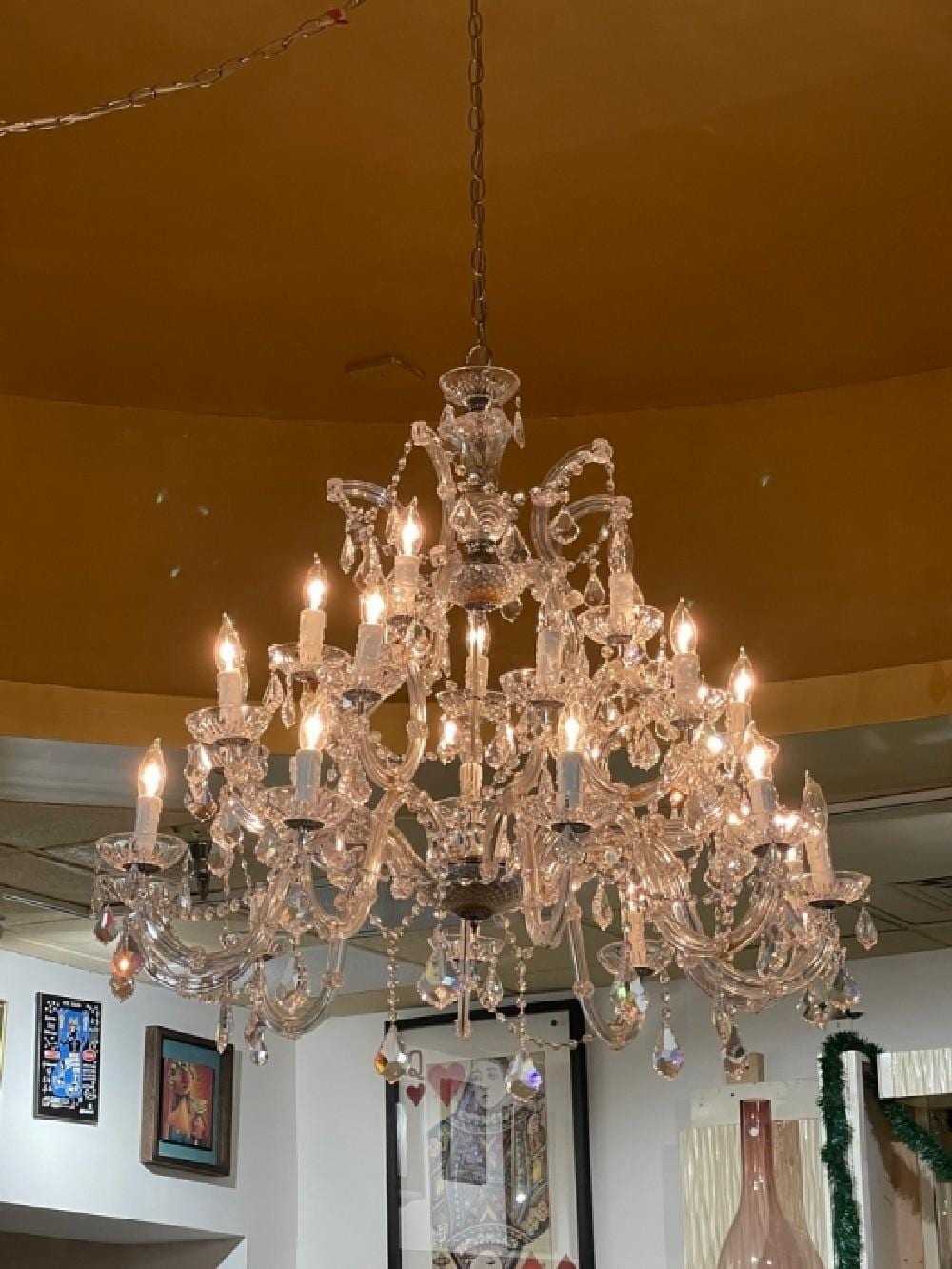
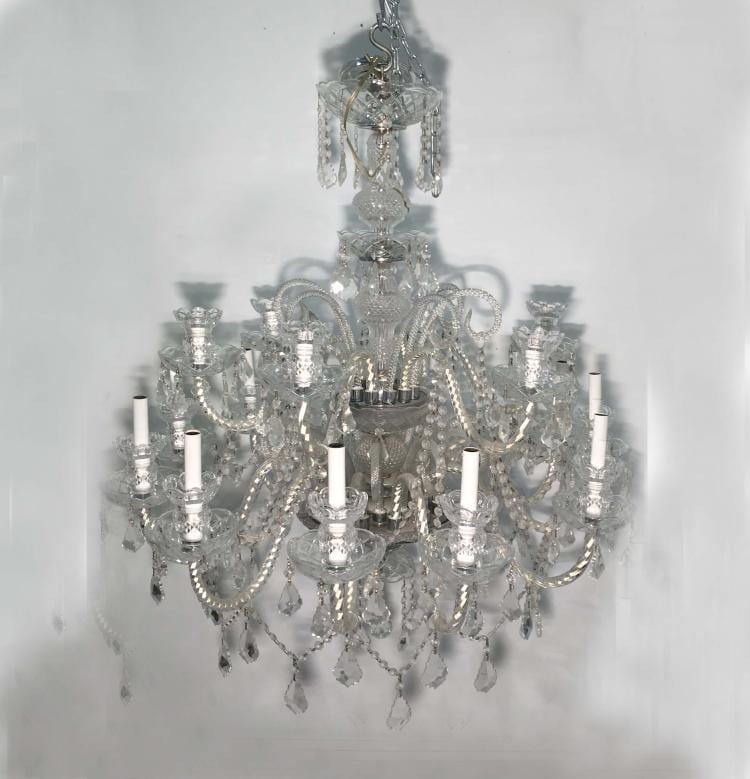
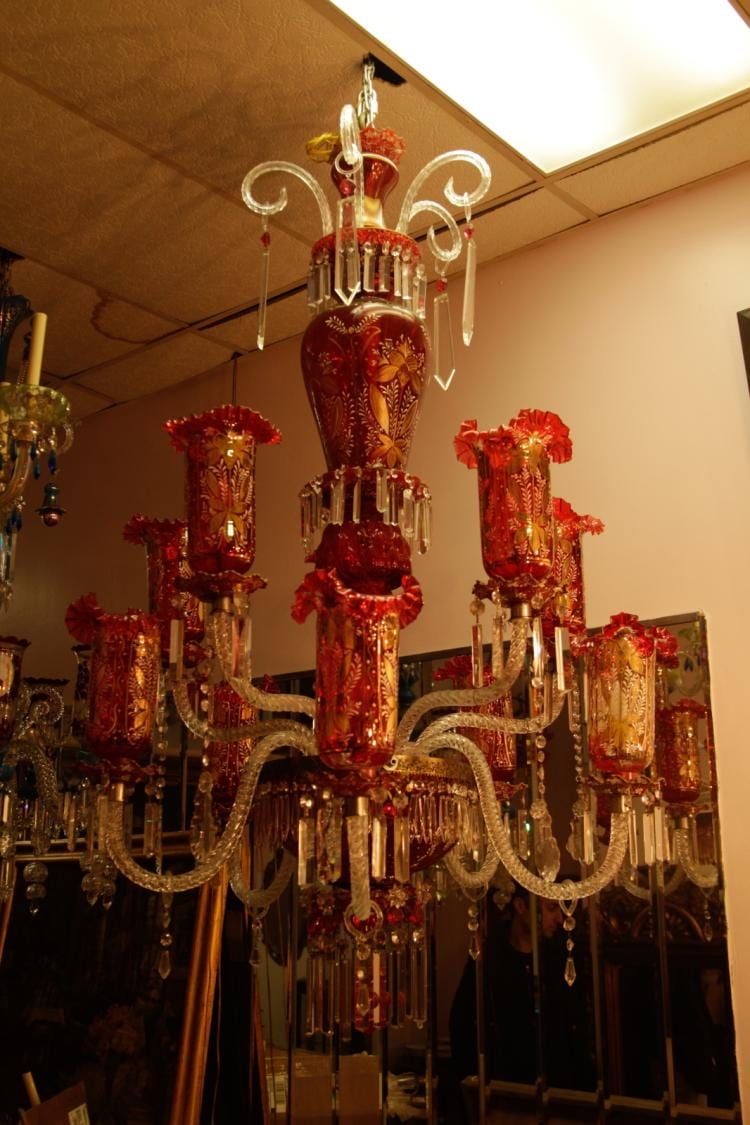
How these auction records were verified
These sales are market context, not an object estimate.
Each row is tied to its lot identity, retrieval time, access result, and immutable record hash. Live source access was blocked; the exact record matched Appraisily's immutable pipeline provenance. Inspect the public comparable provenance record.
Free photo check
Not sure if your lamp is worth appraising? Let us take a look.
Upload a photo, tell us what you know, and get a free photo check. If a full appraisal makes sense, we will say so.
Free. No card needed. Takes about two minutes.
FAQ
Q: How can I tell if the crystals are original to the chandelier? A: Look for consistency in cut, size, and lead content across all runs. Original sets show uniform hole beveling and similar wear to the pinning. Mismatched brilliance, differing hole diameters, or modern split rings point to later replacements.
Q: Is it safe to use an early 20th-century chandelier every day? A: Yes, after professional rewiring with modern heat-rated wire, sound sockets, and a proper strain-relief and safety cable. The armature must be structurally intact, and the ceiling anchor must be rated for the fixture’s full weight.
Q: How much do missing crystals affect value? A: It depends. A few easily matched octagons have a modest impact; missing focal elements (crown rosettes, finial drops, or an entire repeating band) can reduce value significantly. Sympathetic, like-for-like replacements with documentation mitigate loss.
Q: Should I polish the brass to a bright shine? A: No. Original patina, lacquer, or gilding is desirable. Bright-dipping or aggressive polishing can permanently harm historical finishes and depress value. Clean gently and consider microcrystalline wax for protection.
Q: What’s the best way to clean the crystals? A: Remove and clean individually with distilled water and a small amount of alcohol; dry with lint-free cloths. Never spray cleaner onto the assembled fixture, and avoid soaking pinned chains to protect metal and wiring.
A very large early 20th-century crystal ceiling chandelier rewards close observation: the exacting sparkle of hand-cut glass, the quiet authority of a well-made frame, and the story told by style and craft. With the right diagnostics and care, it remains both a luminous centerpiece and a sound collecting choice.