Mid-20th-Century Murano Hand-Blown Vase Appraisal: appraisal and value basics
Mid-20th-Century Murano Hand-Blown Vase Appraisal research should start with identification, condition, provenance, and recent comparable sales. Use this guide to compare the signals that matter before paying for a formal appraisal or deciding whether to sell.

A Circa Mid 20th Century Murano Glass Hand Blown Vase
Mid-20th-century Murano glass vases sit at the intersection of craft and modern design, and they remain a prime collecting field for connoisseurs and appraisers. This guide distills how to identify, attribute, assess condition, and estimate value for a circa 1940s–1960s hand-blown Murano vase—what to look for in the glass itself, which techniques and designers drive premiums, and how labels and finishing details tell the truth about origin.
Why Mid-Century Murano Matters
Murano’s postwar renaissance (late 1940s through the 1960s) transformed Venetian glass. Firms such as Venini, Barovier & Toso, Seguso Vetri d’Arte, Aureliano Toso, Cenedese, and Vistosi collaborated with designer-innovators including Carlo Scarpa, Fulvio Bianconi, Archimede Seguso, Flavio Poli, Ercole Barovier, and others. The period delivered:
- Distinctive modernist forms—pure volumes, sculptural silhouettes, and biomorphic profiles aligned with mid-century aesthetics.
- Technical bravura—layering, controlled bubble fields, surface carving, and complex canework executed to a high standard.
- Export momentum—labelled wares reached global department stores and galleries, seeding today’s robust secondary market.
For appraisers, the appeal is twofold: many mid-century pieces remain unlabeled and require skilled attribution, and auction demand is strong for documented examples and top designers.
How to Identify Authentic Murano Hand-Blown Work
Start with the glass, not the myth. A genuine mid-century Murano vase typically announces itself through several converging traits:
- Pontil and base finish: Expect a pronounced pontil scar ground and polished flat or slightly concave (incavo lucido). True hand-blown work does not show mold seams running up the body. The base should show honest shelf wear in a micro-arc pattern, not uniform machine scuffing.
- Weight and wall: Murano mid-century vases often feel substantial for their size, especially sommerso and battuto pieces. Wall thickness commonly ranges from 6–12 mm; sommerso geodes or scavo forms can be thicker.
- Rim treatment: Rims are usually cold-worked—ground flat and then lightly polished or fire-polished. Uneven rippling or poorly ground rims suggest later tourist wares or non-Murano copies.
- Clarity and color control: Color is controlled in distinct strata, canes, or fields. Transparent layers are notably clear, with minimal seed bubbles except where intentional (bullicante). Opaque whites (“lattimo”) and opaline layers show even diffusion.
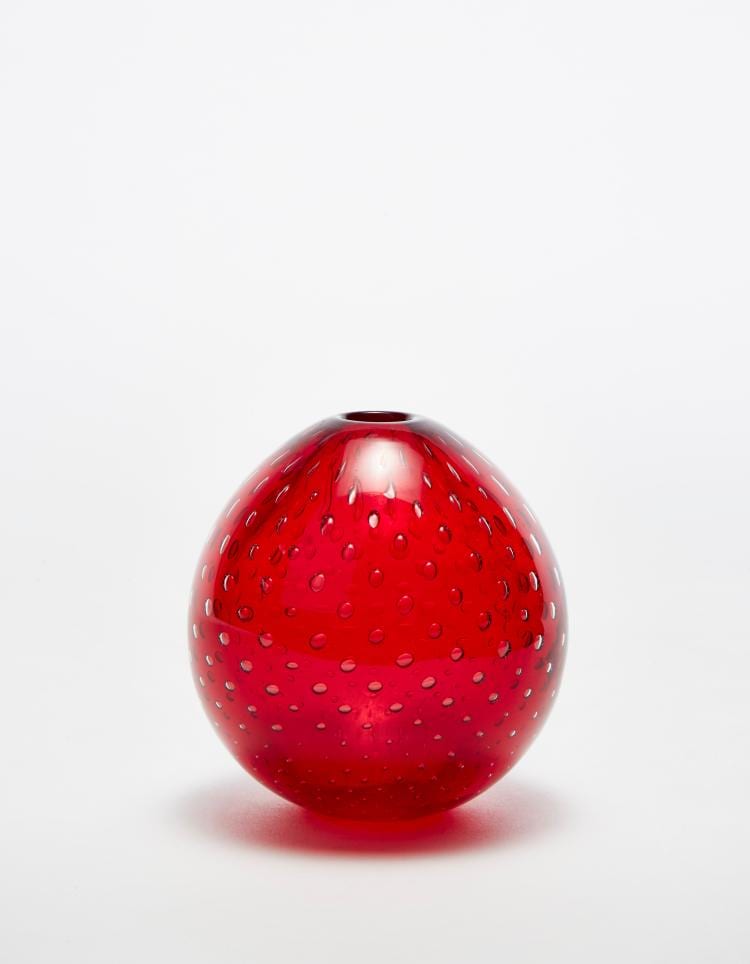
- Bubbles and inclusions: Controlled bubbles (bullicante) form ordered grids; aventurine (goldstone) sparkles evenly without clumps; metallic leaf inclusions are crisp, not smeared.
- Form: Profiles include thick-walled geodes, teardrops, decanters with elongated necks, “sail” silhouettes, bottle forms, and sculptural biomorphs. Mid-century canework vases are typically disciplined in pattern, not randomly busy.
Red flags: thin, lightweight glass; molded seams; poorly executed bubble fields; painted “gilt” rather than embedded metal leaf; generic “Murano-style” stickers; excessively bright acid neon colors atypical for the period.
Techniques You’re Likely to See (and What They Mean)
Understanding technique is the fastest route to narrowing maker and date. Here are the most common mid-century vocabularies and their valuation implications:
- Sommerso (submerged): Two or more layers of differently colored glass encasing a core, often with clear crystal (cristallo) around the exterior. Flavio Poli at Seguso Vetri d’Arte and designers at Cenedese executed refined sommerso with saturated hues (amethyst, emerald, cobalt). Sharp, even layering with clean optical lines raises value.
- Bullicante: Regular grids of trapped air bubbles created with a spiked tool before casing. Look for even spacing and geometric alignment. Barovier & Toso mastered this, and it appears in both clear and colored examples.
- Battuto: Chiselled surface texturing achieved by grinding shallow facets—Carlo Scarpa pioneered versions at Venini. When executed over thick sommerso masses, it creates a tactile, stone-like effect. Clean, rhythmic tool marks with professional polish indicate top-tier work and higher value.
- Murrine and tessere: Cross-sections of patterned canes fused into a mosaic field. Pezzati (patchwork) and fasce (banded) by Fulvio Bianconi for Venini are benchmarks—difficult to fake convincingly at quality level, and often commanding strong auction results.
- Filigrana, zanfirico, and latticino: Twisted or straight canes with internal threads, often in white (lattimo) or colored spirals suspended within a clear matrix. Even cane spacing, precision in twist, and clean joins are key.
- Pulegoso and scavo: Pulegoso uses pervasive small bubbles that create a frothy opacity (popular earlier but revived mid-century). Scavo simulates archaeological weathering via acid/sand treatments; true scavo has a dry, mineral surface without stickiness or pigment rub-off.
- Corroso and acid-etched finishes: Deliberate surface corrosion to soften gloss, seen in some Barovier & Toso and Venini pieces; uniformity and tactile finesse matter.
Understanding palette also helps. Venini tended toward refined, modernist color harmonies; Seguso Vetri d’Arte favored jewel-toned sommerso; Barovier & Toso balanced classic gold aventurine and bullicante with modern shapes; Cenedese explored dramatic, thick color lenses. Vistosi and Aureliano Toso produced excellent canework and clean, architectural forms.
Makers, Designers, Labels, and Marks
Mid-century Murano marking practices vary and can be frustratingly inconsistent. Many correct pieces are unmarked; many labels were lost.
- Paper labels: Period-correct labels include “Venini Murano Made in Italy,” “Seguso Vetri d’Arte,” “Barovier & Toso Murano,” “Aureliano Toso,” “Cenedese,” and “Vistosi.” Generic gilded “Made in Italy Murano” ovals also appear on retailer-stocked pieces. Fonts, foil colors, and shapes evolved; compare to known period examples where possible. A legitimate old label often shows oxidized adhesive halos or faint imprinting in the glass surface where pressure sat for decades.
- Acid-stamped marks: Seen selectively, more common on Venini and occasionally other top houses. They read along the lines of “Venini Murano Italia” in block letters. Sharp edges and slight frosting are correct; blurry or overly bold stamps can be suspect.
- Incised signatures: Some later 1960s Venini and studio-signed pieces may carry hand-engraved signatures. Archimede Seguso sometimes signed, especially post-1960. The absence of a signature does not disqualify a mid-century piece.
- Attribution by form and technique: Certain silhouettes are strongly associated with designers—e.g., Scarpa’s sommerso geodes and battuto vessels for Venini; Bianconi’s pezzati and fasce; Flavio Poli’s heavy sommerso with tapered shoulders for Seguso; Ercole Barovier’s bullicante and corroso forms. If a silhouette aligns tightly with catalogued models, attribution confidence rises.
Be mindful of later “Murano-style” labeling on imports and shop-bench copies sold to tourists from the 1970s onward. These often mimic famous techniques without the mass, finesse, or finishing quality.
Condition, Restoration, and How They Affect Value
Condition is a major valuation lever. Survey with raking light and magnification:
- Chips and bruises: Rim, shoulder, and base edges are vulnerable. Minute rim nicks can be professionally polished, but that slightly alters profile and can reduce value 10–30% depending on extent.
- Scratches and bloom: Fine surface abrasions accrue from dusting and handling. “Bloom” or “sick glass” appears as cloudy internal etching from prolonged exposure to water or cleaning agents. Bloom is hard to reverse; gentle soaks in distilled water with a small amount of white vinegar can reduce mineral film but won’t fix etched interiors.
- Internal fractures and stress: Look for crescent “stone” fractures or trapped tension lines near handles or sharp transitions. Thermal shock cracks can be faint; use strong side lighting. Cracks are a major value hit.
- Devitrification: A subtle crystallized haze on surfaces over time, typically from improper annealing or exposure to high heat; it’s usually irreversible and reduces value.
- Restoration detection: UV light may reveal modern adhesives on repaired breaks and fills. Ground-down rims or bases manifest as altered proportions and loss of original bevels. Compare to documented profiles when possible.
Original, honest wear at the base is reassuring; deep, concentric machine scratches or artificially roughened bases are warning signs.
Care notes for owners: Avoid dishwashers and harsh household cleaners; dust with a soft, dry microfiber; hand-wash in lukewarm water with a drop of mild detergent; never soak scavo or corroso finishes for long periods.
Market Values and Appraisal Strategy
Values fluctuate by maker, designer, scale, color, and condition. As a directional framework:
- Quality sommerso vases attributed to Seguso Vetri d’Arte (often Flavio Poli designs) or Cenedese: roughly low hundreds to around $1,200 for standard sizes and colorways; exceptional large examples, rare color combinations, or sculptural forms can reach $1,500–3,500+.
- Barovier & Toso bullicante, corroso, or complex techniques: commonly $800–3,000 for good pieces; larger or rarer models $4,000–10,000+.
- Venini, designer-attributed: Fulvio Bianconi’s pezzati/fasce and Carlo Scarpa’s battuto or sommerso geodes command premiums; mid examples can realize the mid to high four figures, with rare or documented models extending to five figures and beyond. Distinctive, catalogued models and impeccable condition are key.
- Vistosi, Aureliano Toso, Fratelli Toso: quality canework and modernist forms generally sit in the mid hundreds to low thousands, with standout designs higher.
- Unattributed but high-quality Murano mid-century vases: usually a few hundred to low four figures, depending on presence of label, technique, size, and appeal.
Pricing moves upward when you have: a period label or acid stamp; catalogued model references; strong, saturated colors; large scale (30–40 cm+); and superior condition. It moves downward with: condition issues; muddy colors; indistinct technique; or ambiguous origin.
Appraisal best practices:
- Confirm technique precisely—mislabeling “murrine” as generic mosaic or confusing bullicante with random seeding can misprice a piece.
- Measure everything—height, maximum diameter, wall thickness, weight. Many catalogues specify these, allowing better matches.
- Build comparables from multiple sales channels—regional auctions, specialist houses, and dealer sales. Provenance to reputable galleries or exhibitions materially supports value.
- Note chronology and labels—certain labels and signature styles correlate with specific decades, which can refine the “circa” date within the mid-century window.
Quick Appraisal Checklist
- Verify hand-blown indicators: no mold seams; polished pontil; proper rim finishing.
- Identify technique: sommerso, bullicante, battuto, murrine/filigrana, scavo/corrosion, aventurine.
- Assess color and layering: clarity, saturation, and sharp boundaries.
- Examine base wear: natural, not artificially abraded.
- Hunt for labels/marks: period paper labels, acid stamps, incised signatures; photograph them.
- Measure and weigh: record dimensions and wall thickness; note heft relative to size.
- Inspect condition: chips, scratches, bloom, stress lines; check under UV for repairs.
- Attribute cautiously: match form and technique to known designer vocabularies and catalogues.
- Document provenance: receipts, gallery tags, old photos; include storage/display history.
- Estimate value via comparables: prioritize maker-attributed, technique-matched, and size-matched examples.
What similar items actually sold for
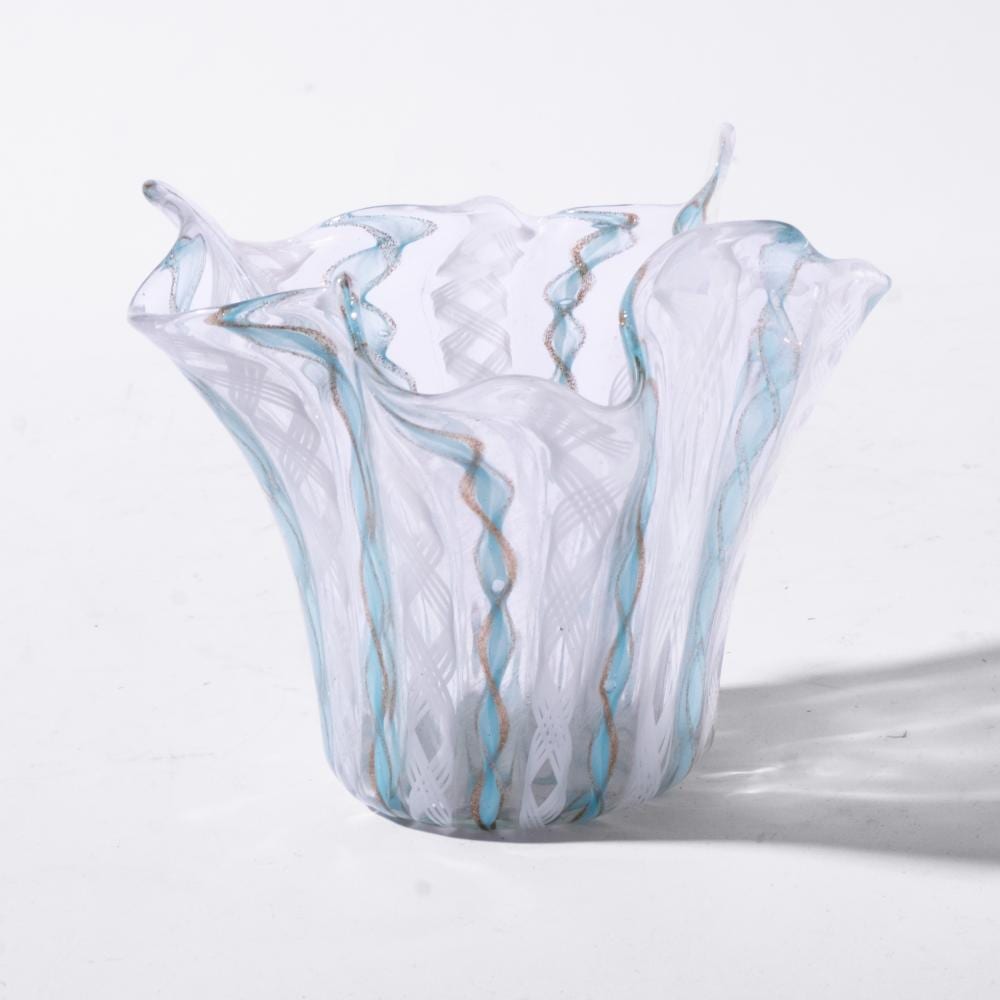
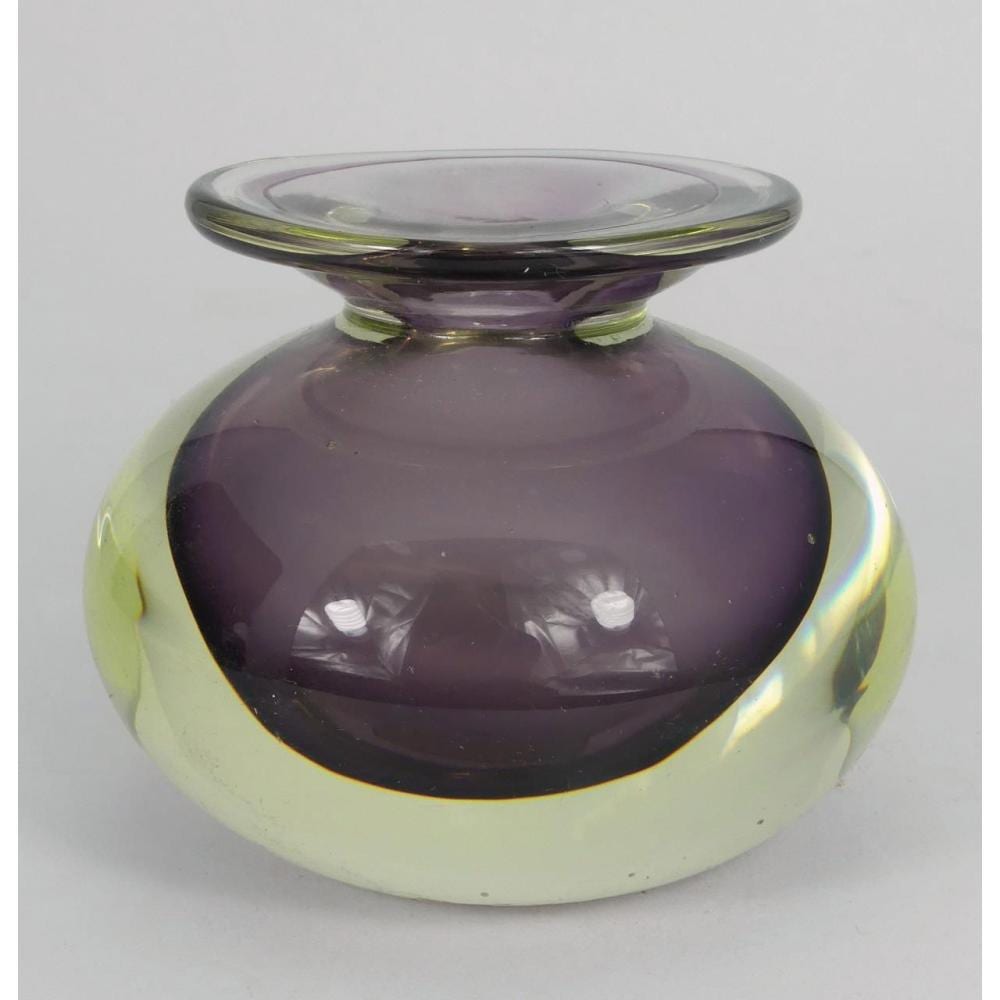
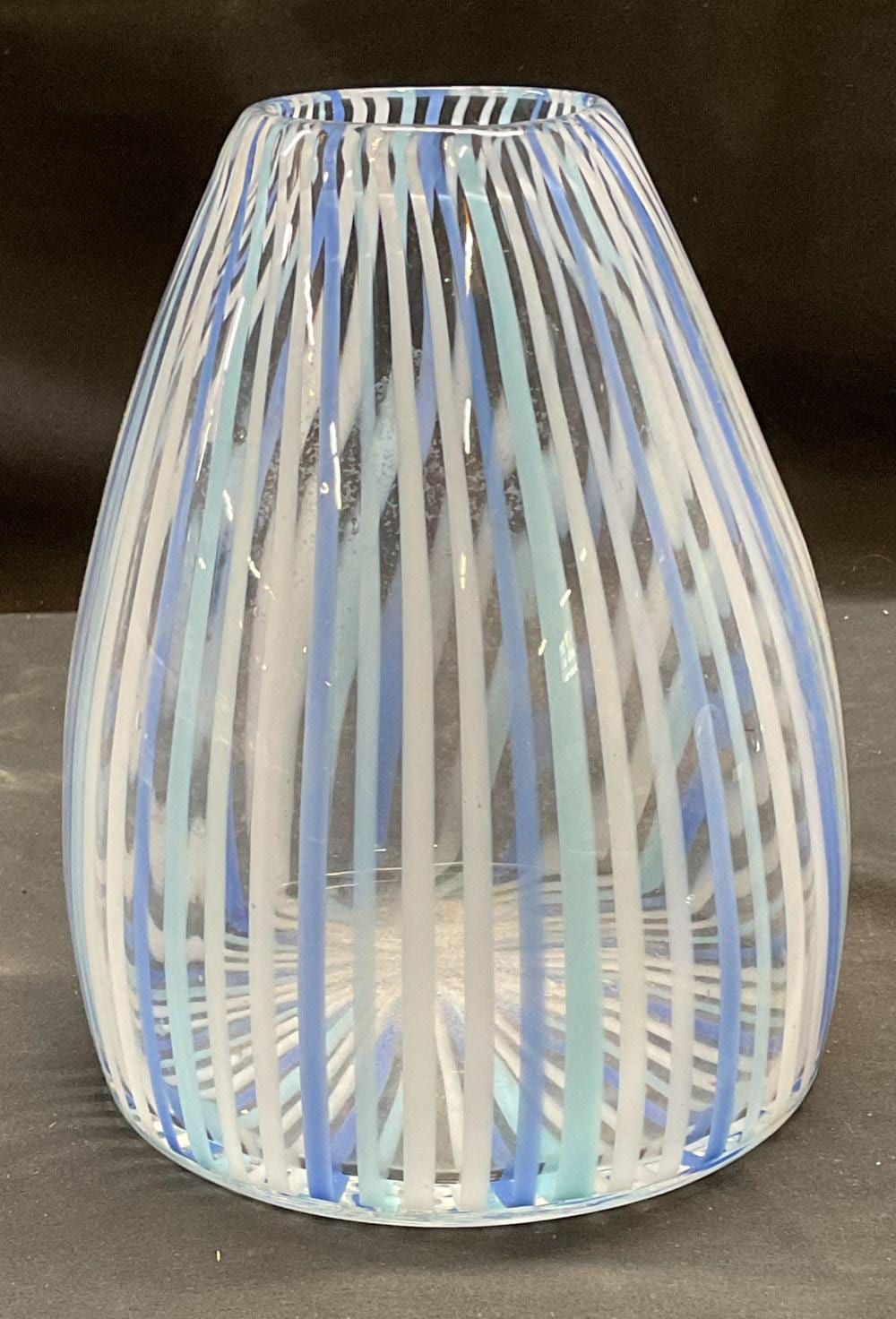
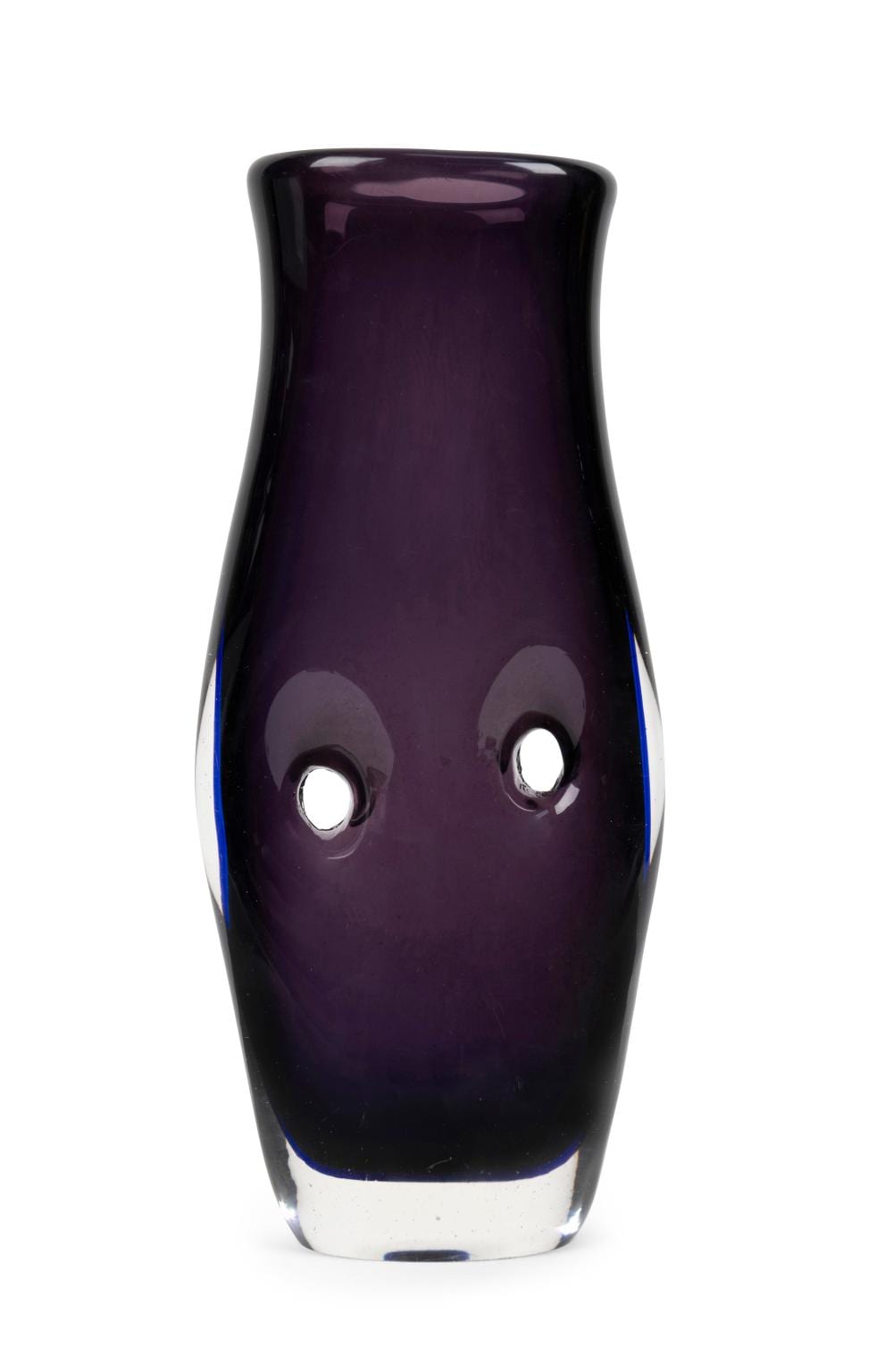
Real auction sales of items like your murano glass vase. Open a sale to see the original listing.
Shown USD range: USD 20-USD 2,500. Median of these 6 USD examples: USD 112.50.
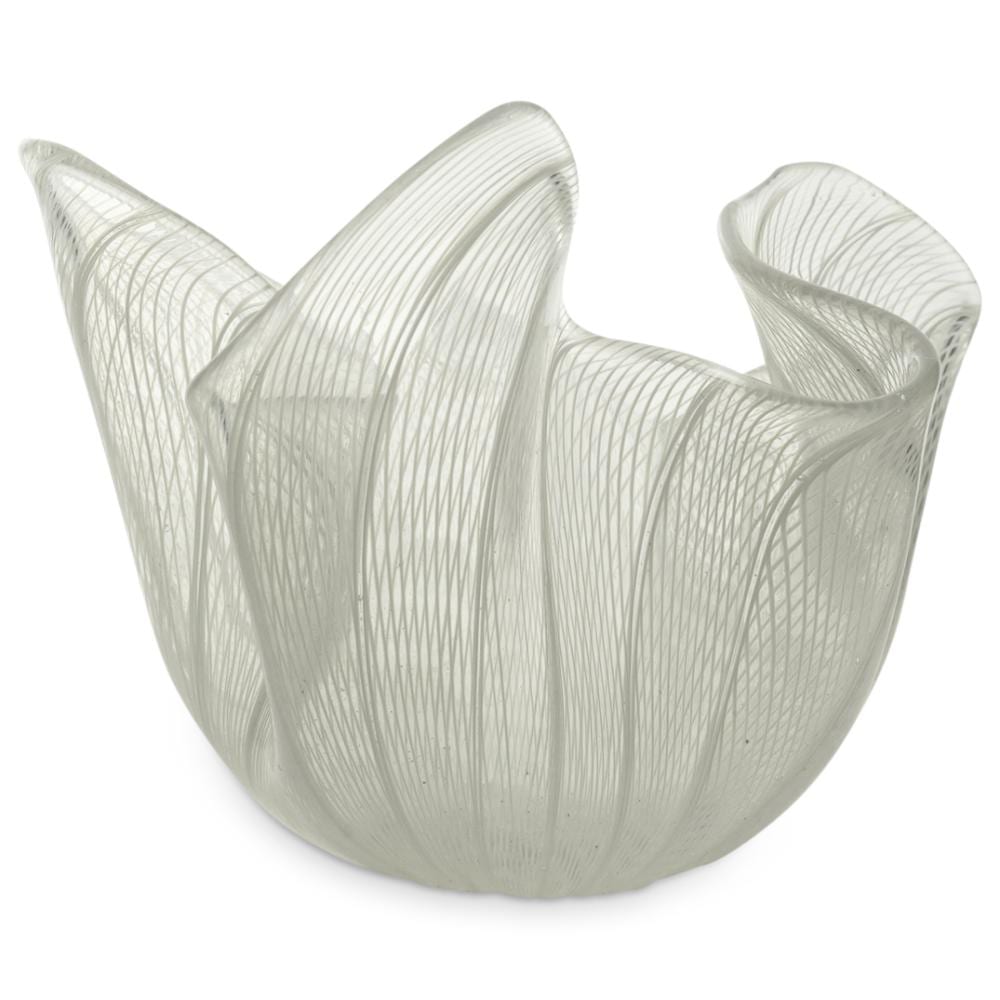
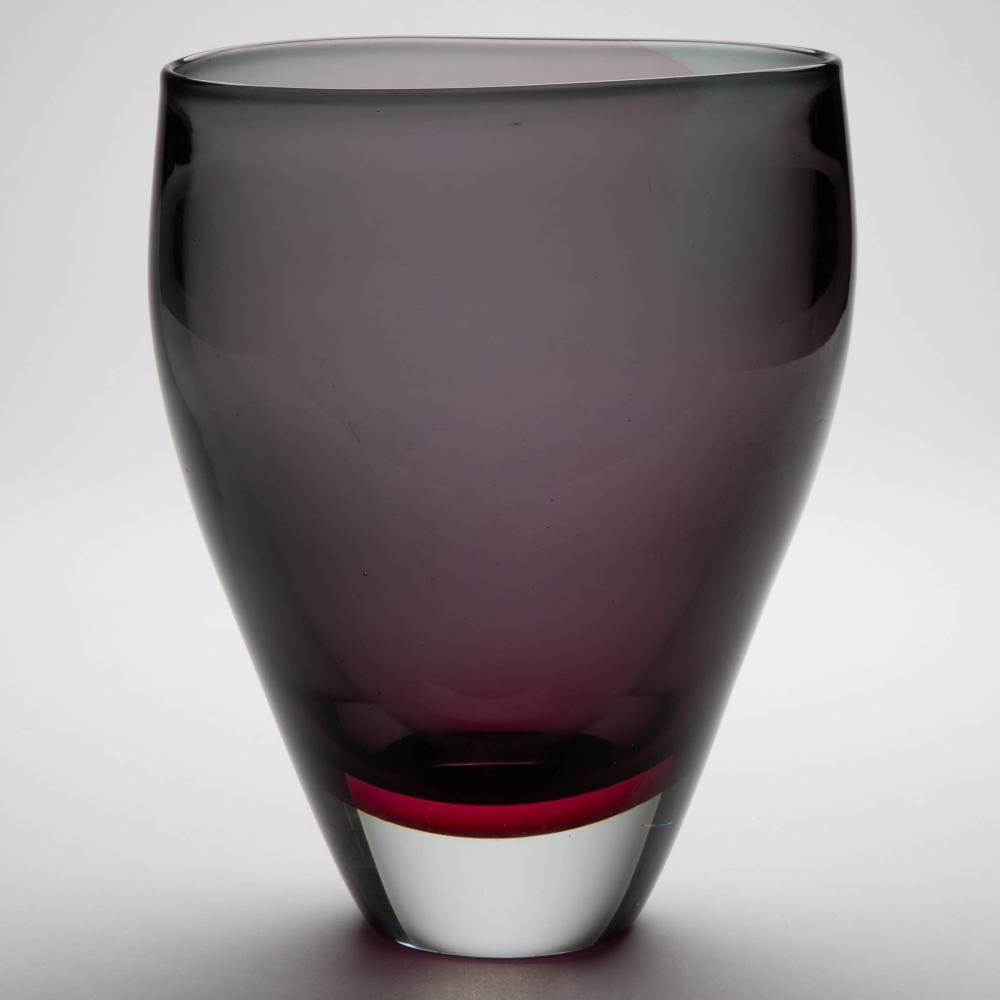
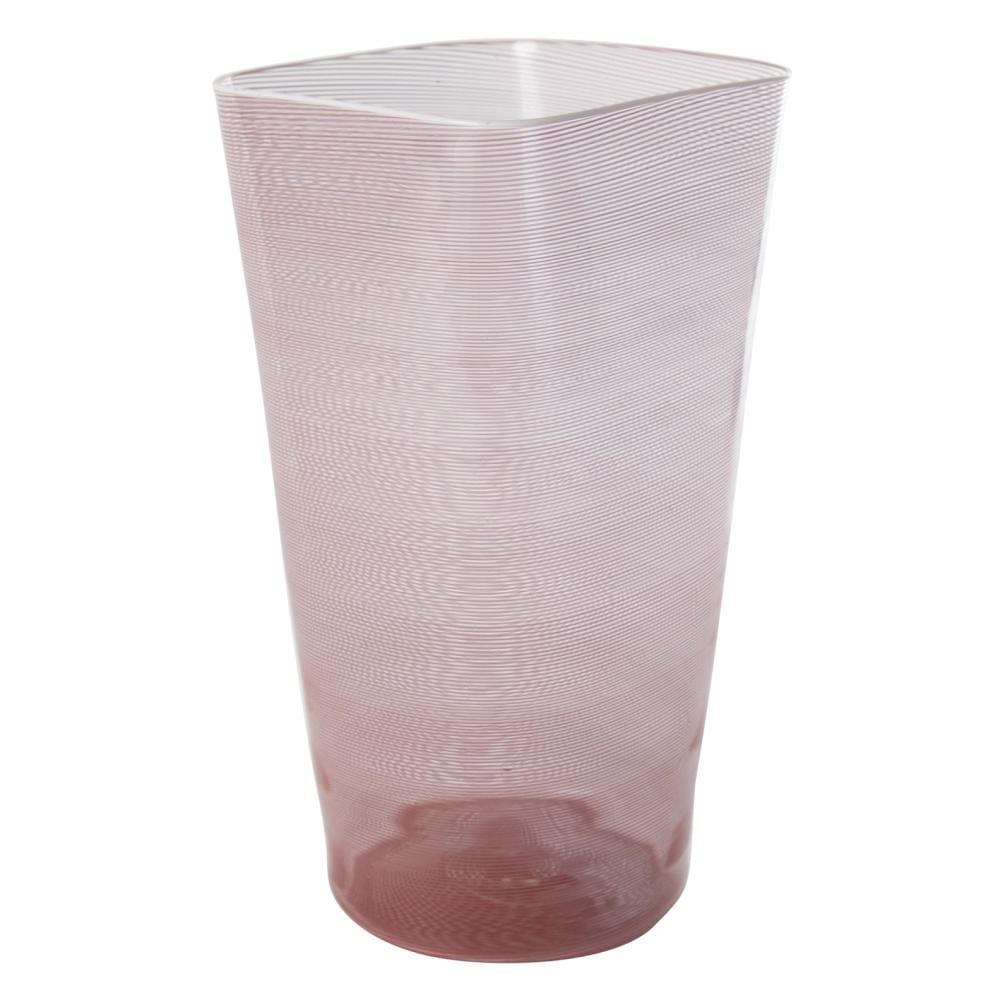
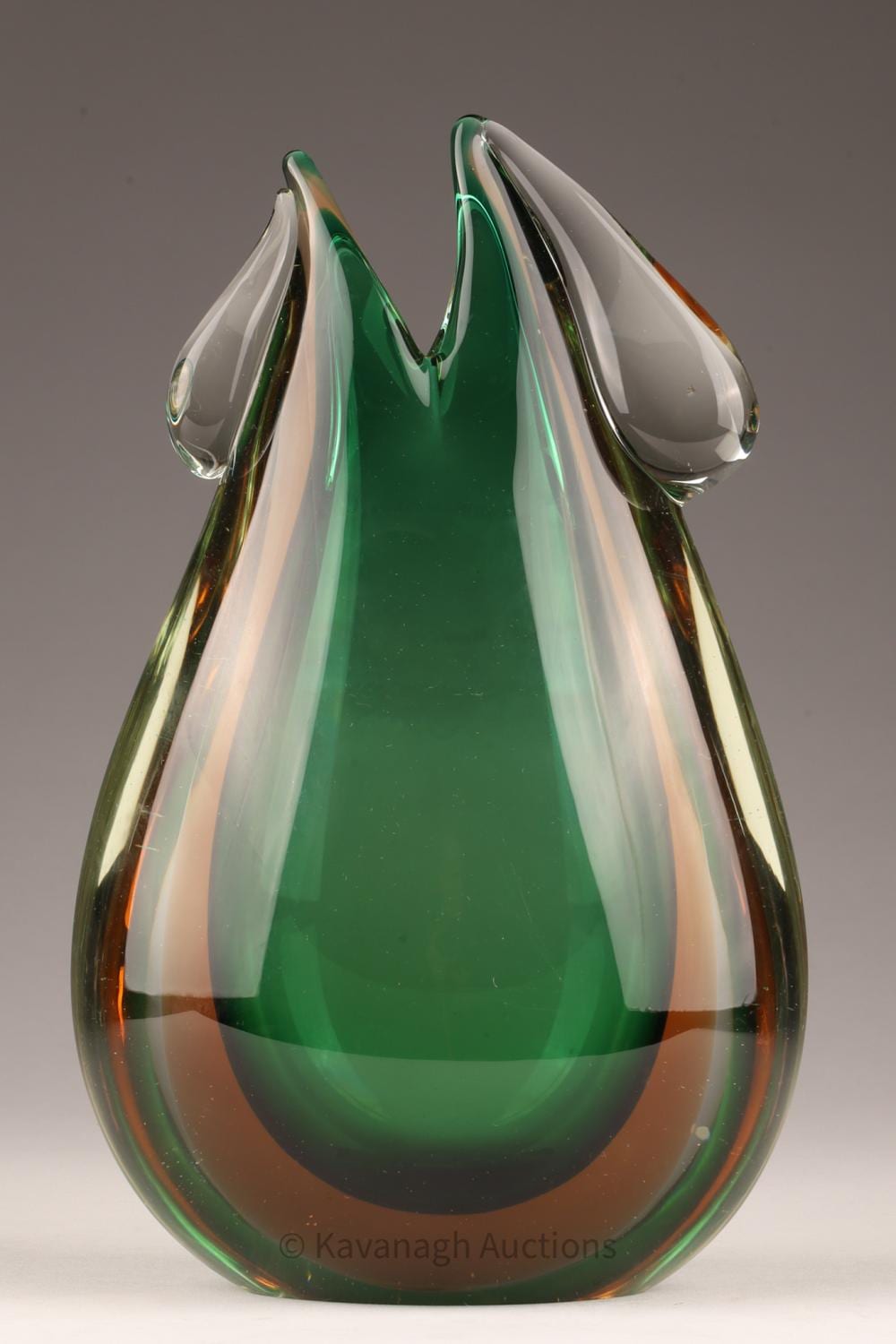
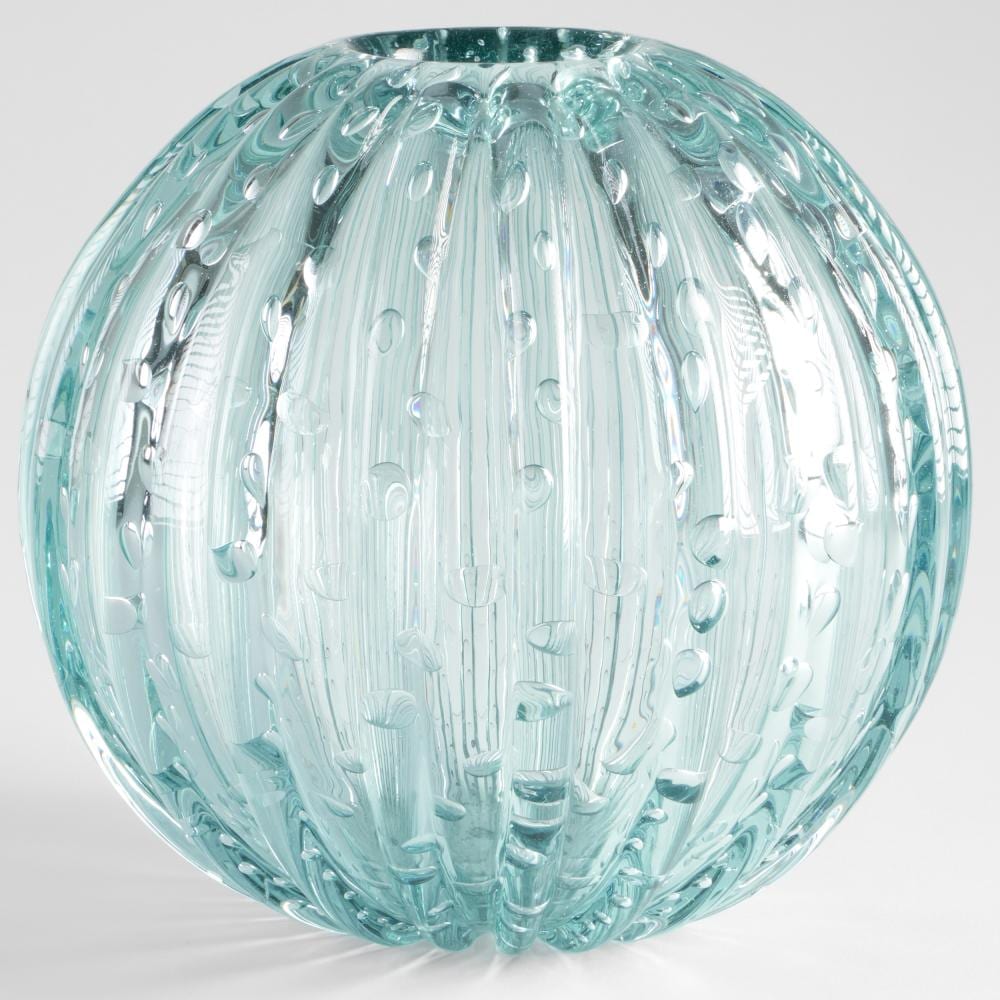

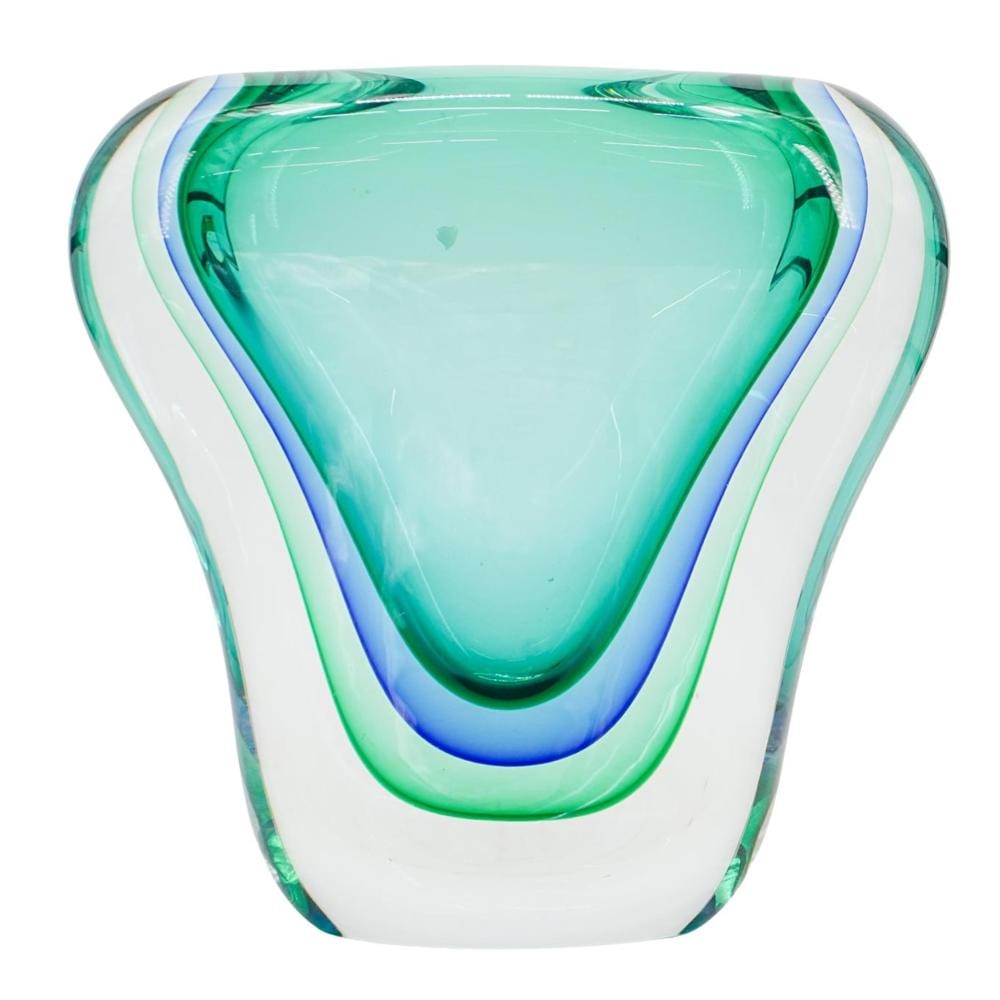
How these auction records were verified
These sales are market context, not an object estimate.
Each row is tied to its lot identity, retrieval time, access result, and immutable record hash. Live source access was blocked; the exact record matched Appraisily's immutable pipeline provenance. Inspect the public comparable provenance record.
Free photo check
Not sure if your vase is worth appraising? Let us take a look.
Upload a photo, tell us what you know, and get a free photo check. If a full appraisal makes sense, we will say so.
Free. No card needed. Takes about two minutes.
FAQ
Q: How can I tell sommerso from simple two-tone glass? A: In true sommerso, colors appear as distinct, encapsulated layers with a clear outer casing; boundaries are sharp and often magnify inner colors. Two-tone glass may have color bleed, thin walls, or no clear outer layer. Look at the rim and foot—layering should read cleanly in cross-section.
Q: Do all authentic Murano vases have labels or signatures? A: No. Many mid-century pieces left the furnace unlabeled, and paper labels often fell away. Absence of a mark is common and not disqualifying. Weigh the full set of evidence: technique, finishing, form, and quality.
Q: Are controlled bubbles (bullicante) ever irregular? A: Minor variations occur since the grid is hand-executed, but the pattern should aim for regular spacing and alignment. Random, scattered seed bubbles are different and typically unintentional or decorative in a different way.
Q: What cleaning method is safest for a cloudy interior? A: Try a short, gentle soak in lukewarm distilled water with a small amount of white vinegar, then rinse and air-dry. Avoid abrasives, long soaks for scavo/corrosion finishes, and drastic temperature changes. If cloudiness is etched “sick glass,” it may not fully clear.
Q: Why do some bases look ground heavily flat while others are slightly concave? A: Base finishing varies by furnace and form. Many mid-century Murano vases have a polished, slightly concave pontil area; others, especially heavier sommerso pieces, were ground flatter to improve stability. What matters is skilled, even grinding and compatible wear, not a specific one-size-fits-all profile.
With a disciplined eye on technique, finish, and form—paired with maker knowledge and careful condition grading—you can confidently authenticate and appraise a circa mid-20th-century Murano hand-blown vase and place it accurately in today’s market.