Vintage Italian Murano Glass Vase: appraisal and value basics
Vintage Italian Murano Glass Vase research should start with identification, condition, provenance, and item-specific market evidence. Use this guide to compare the signals that matter before paying for a formal appraisal or deciding whether to sell.
Vintage Italian Murano glass vase checklist
Murano glass is synonymous with virtuoso Venetian craftsmanship. For appraisers and collectors, a vintage Italian Murano glass vase can be both a connoisseur’s puzzle and a rewarding find. This guide focuses on how to document originality, date, and value these vases using observable features—technique, workmanship, marks, condition, and market comparables—so you can form defensible opinions.
What Makes a Vase Truly Murano
“Murano” refers to glass made on the island of Murano in the Venetian Lagoon by local furnaces and studios. While centuries of tradition underpin the craft, the 20th century produced the most actively traded vintage vases—works by Venini, Seguso Vetri d’Arte, Barovier & Toso, Aureliano Toso, AVEM, Cenedese, Salviati, Vistosi, Archimede Seguso, Barbini, and others.
Key “Murano tells” you can verify in hand:
- Hand-formed construction. Expect no mold seams on higher-grade pieces. Many vintage vases were free-blown, then finished by hand with tools and coldwork; even mold-blown pieces received handwork.
- Pontil evidence. Murano vases typically show a pontil scar on the base that is ground and polished, or neatly finished. A crisply polished concavity or a small, well-finished mark is common. Rough, sharp pontils exist but are less typical on refined mid-century work.
- Weight and balance. Thick, cased soda-lime glass yields notable heft for size. Balance tends to be deliberate; top-heavy forms are still stable due to base thickness.
- Clean, saturated color. Murano color chemistry produces luminous hues and clarity; casing in clear cristallo enhances depth.
- Tool marks and finishing. Look for subtle tool lines near the rim, applied elements (handles, fins), and even abrasion patterns from coldworking (e.g., battuto).
- Base wear consistent with age. Fine concentric scuffs from use are common; freshly ground bases with no wear can indicate restoration or recent manufacture.
Beware of generic imports sold as “Murano style.” Common red flags include mold seams left unworked, over-light weight for scale, coarse or uneven polishing, uniformly sprayed iridescence, and generic foil stickers reading “Murano Glass” with no maker.
Techniques and Forms to Recognize
Murano vocabulary is technique-heavy. Knowing the main approaches both confirms originality and narrows maker/date.
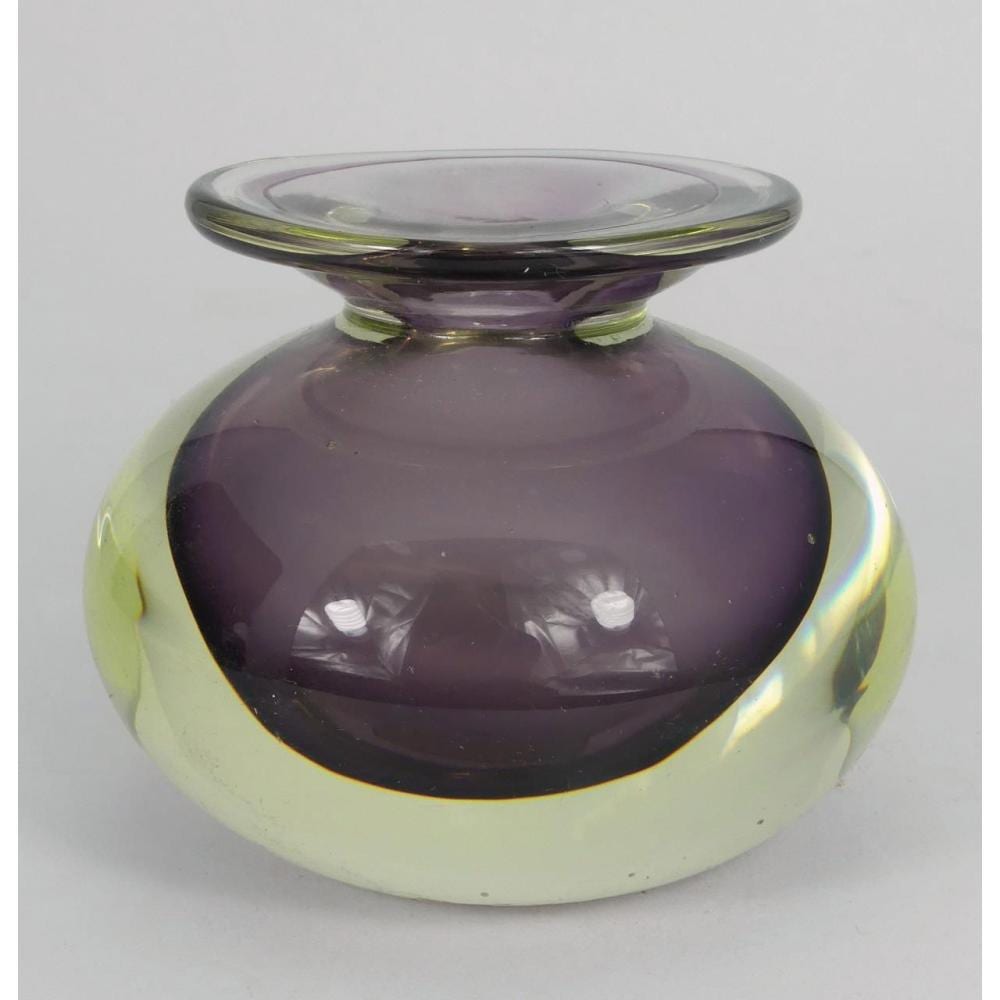
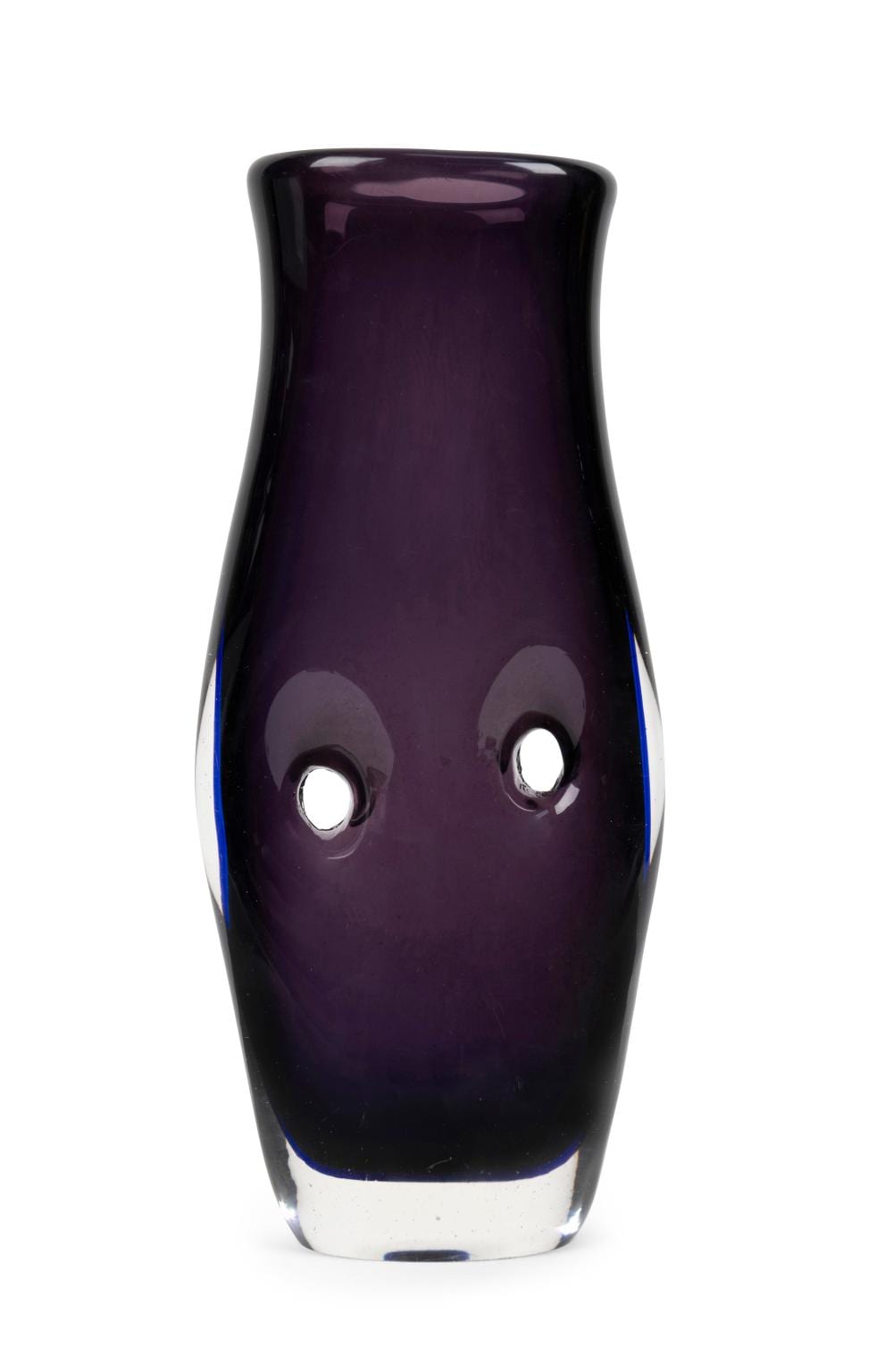
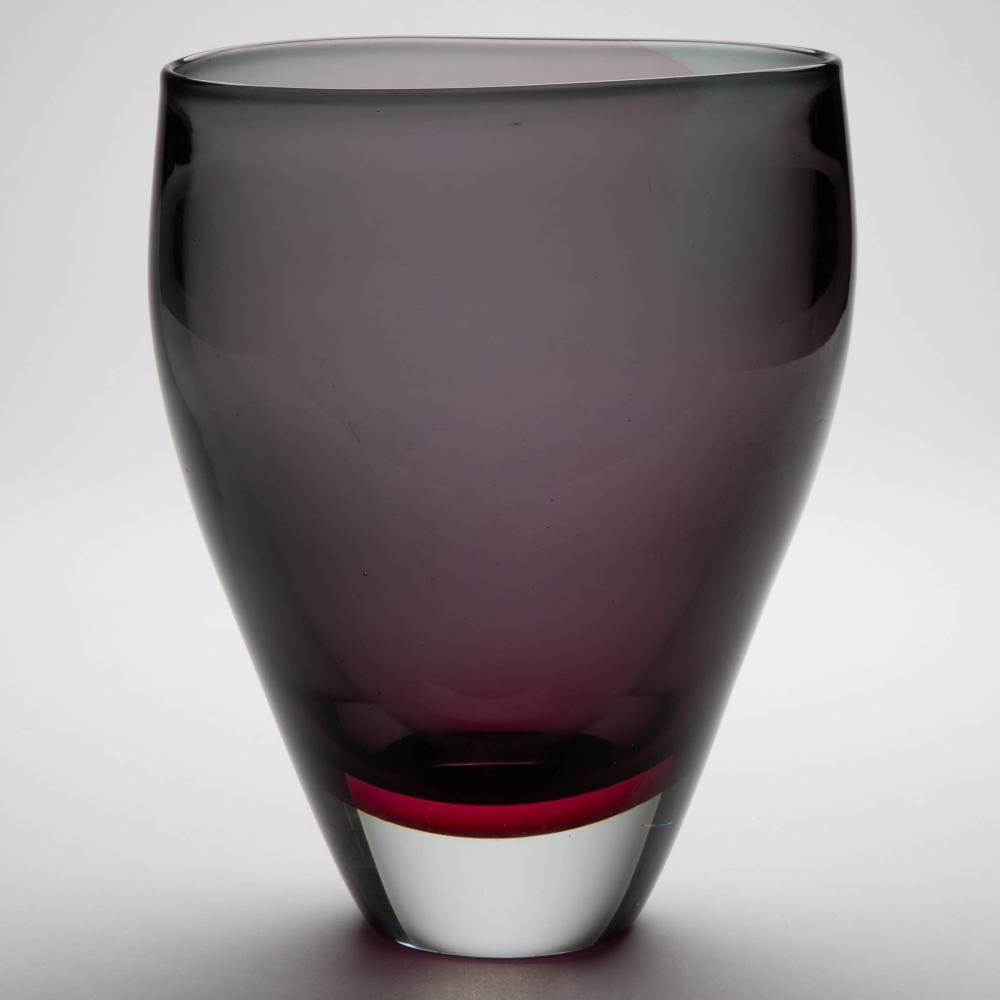
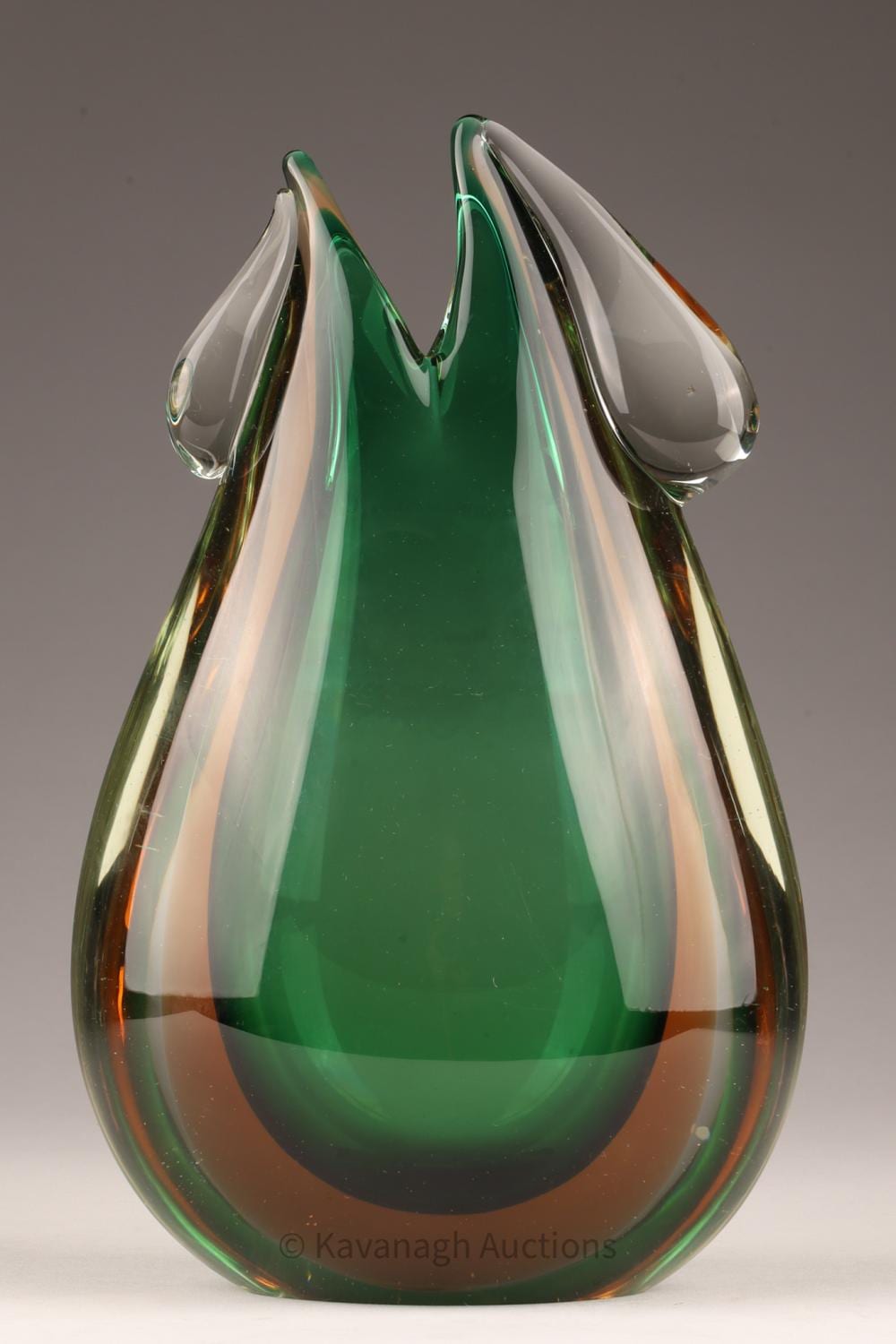
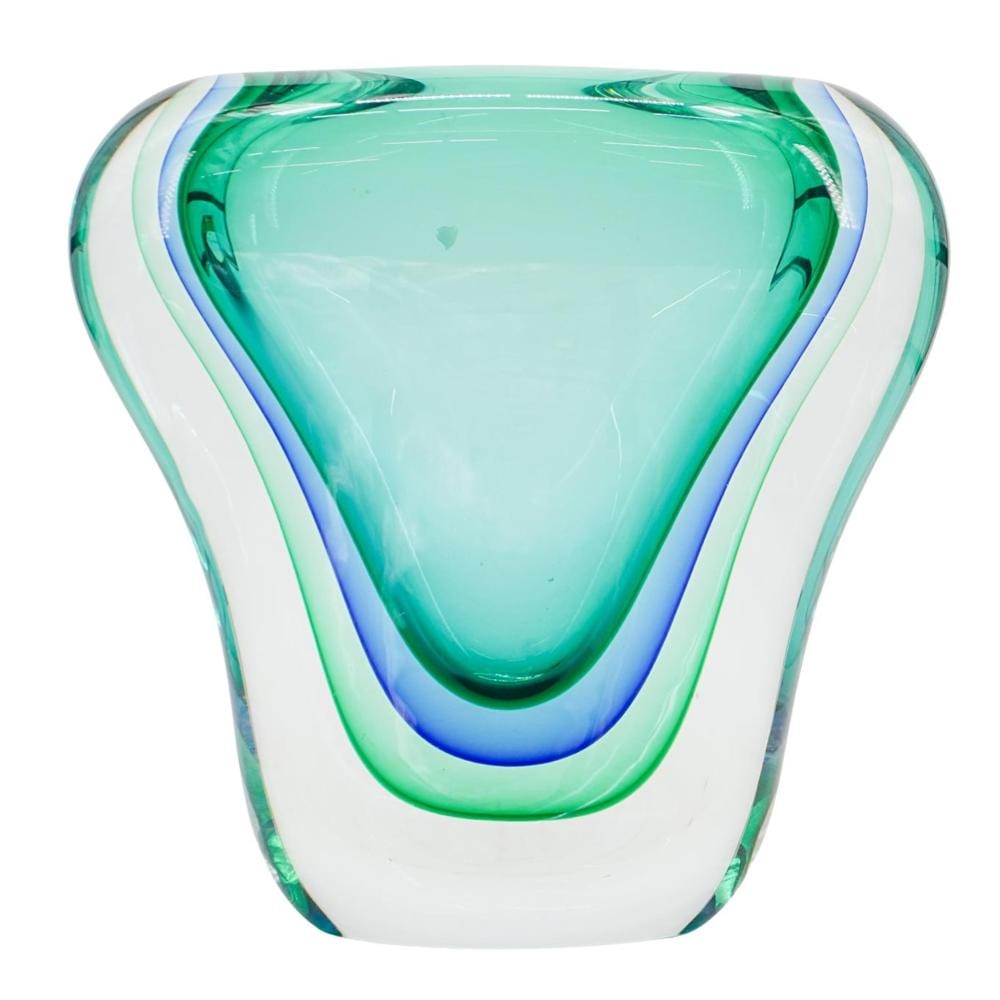
- Sommerso. Distinct layers of colored glass encased in clear, often with dramatic color-on-color fades. A 1950s–60s signature style, notably at Seguso and Cenedese. Look for crisp separation lines and clear, bubble-free casing.
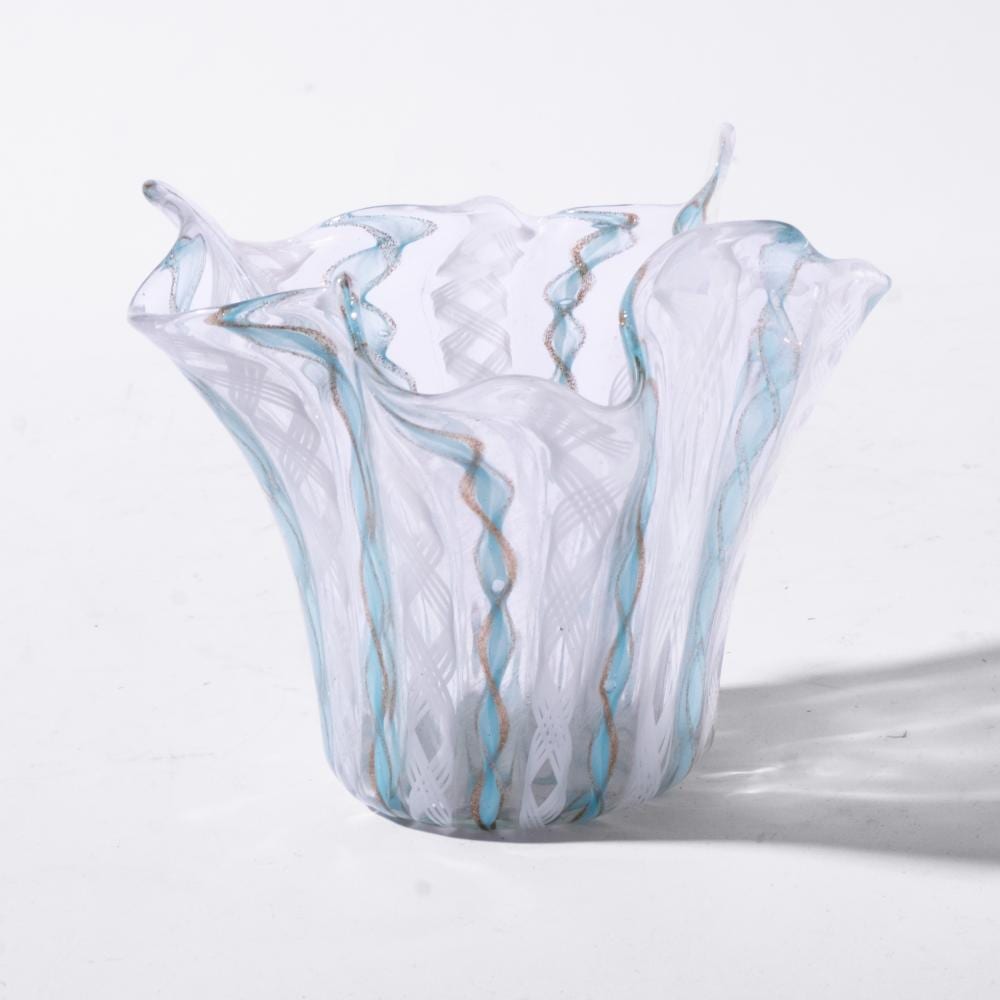
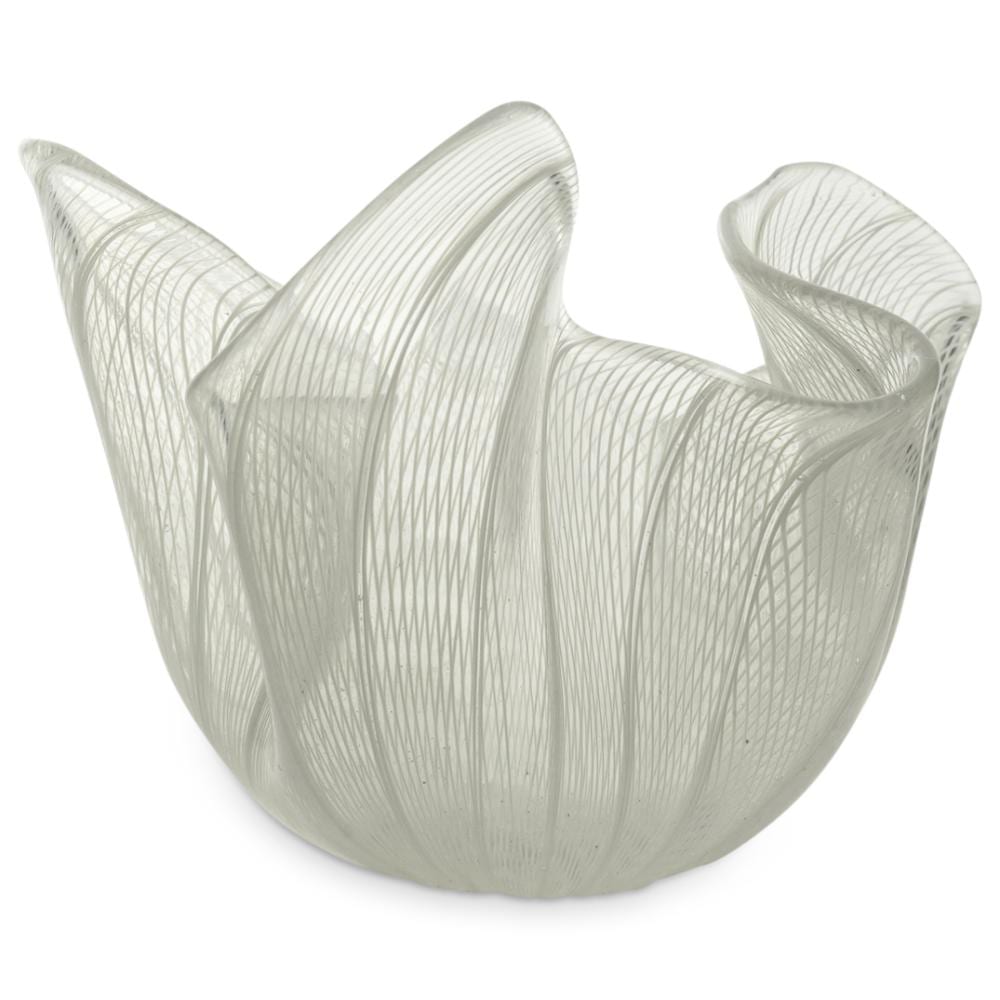
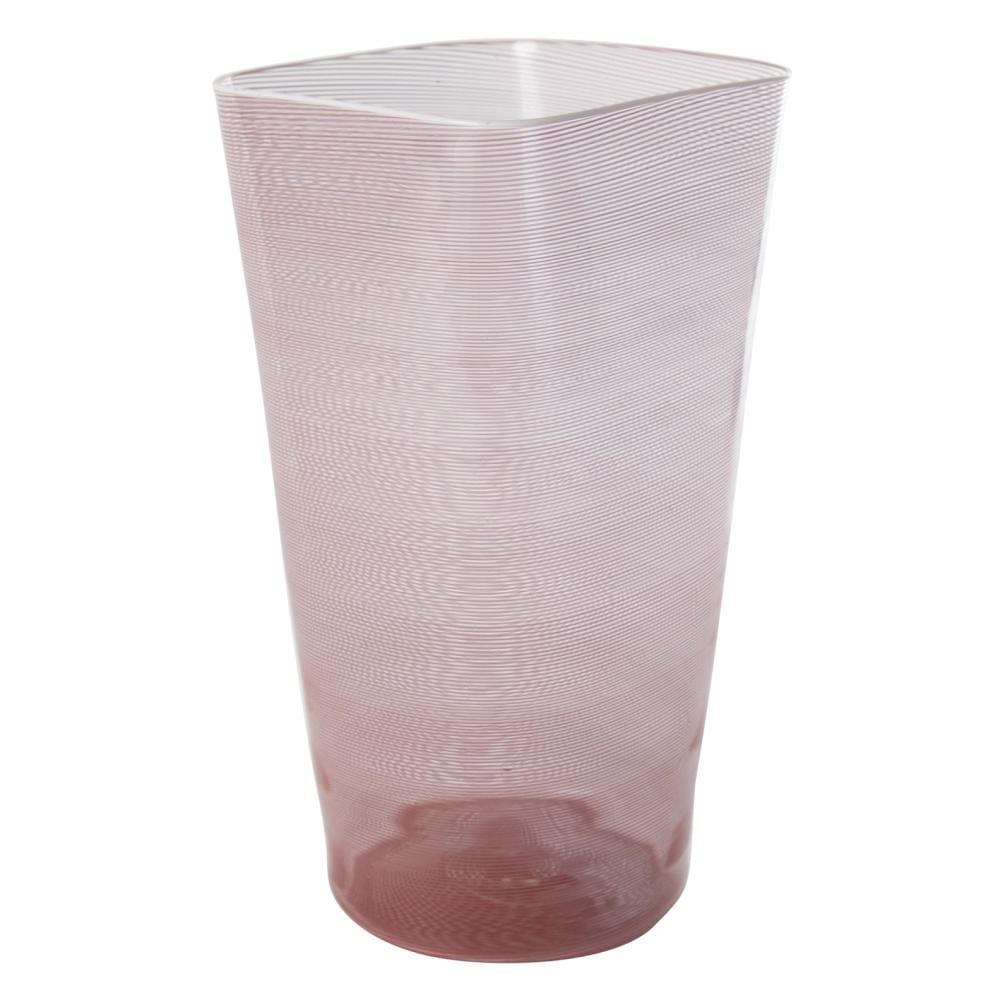
- Filigrana (latticino and zanfirico). Parallel or twisted canes—often white (lattimo) or multicolored—blown into vessels. Filigrana strands should be evenly spaced, terminating convincingly at the rim and base without obvious gaps.
- Murrine / Millefiori. Slices of patterned canes fused into a mosaic and blown. Check for well-annealed joins (no open seams), even wall thickness despite complex patterning, and tight alignment.
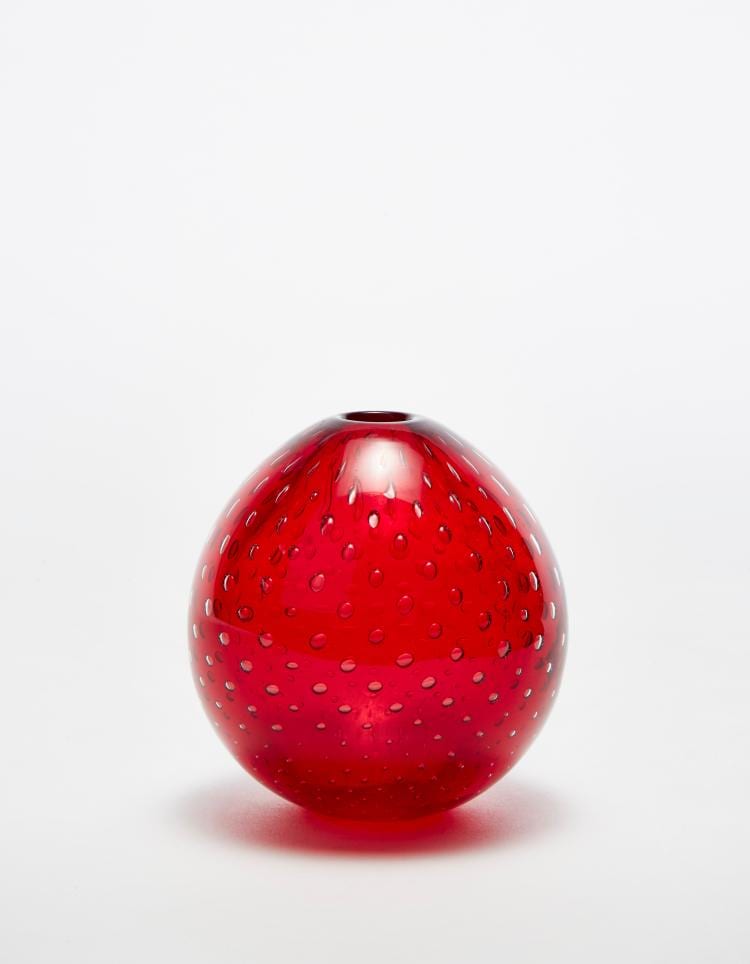
- Bullicante. Controlled bubble arrays in a grid pattern formed with a tipped tool. Expect regular spacing and depth; bubbles should not look random or “skinned over” afterthoughts.
- Pulegoso. Abundant, irregular bubbles from chemical reaction, yielding a frothy look. Vintage pulegoso usually shows softly diffused light, with bubbles distributed throughout the body.
- Incalmo. Two or more separately blown sections joined hot into a single smooth-walled piece; the color junction should be razor-straight and flawlessly fused.
- Battuto. Cold-worked, “hammered” surface facets. The facets should be deliberately spaced and of consistent depth; matte-luster in the worked zones is common.
- Scavo and corroso finishes. Chemically or mechanically treated matte surfaces evoking archaeological finds. Good scavo looks integral, not painted or sprayed.
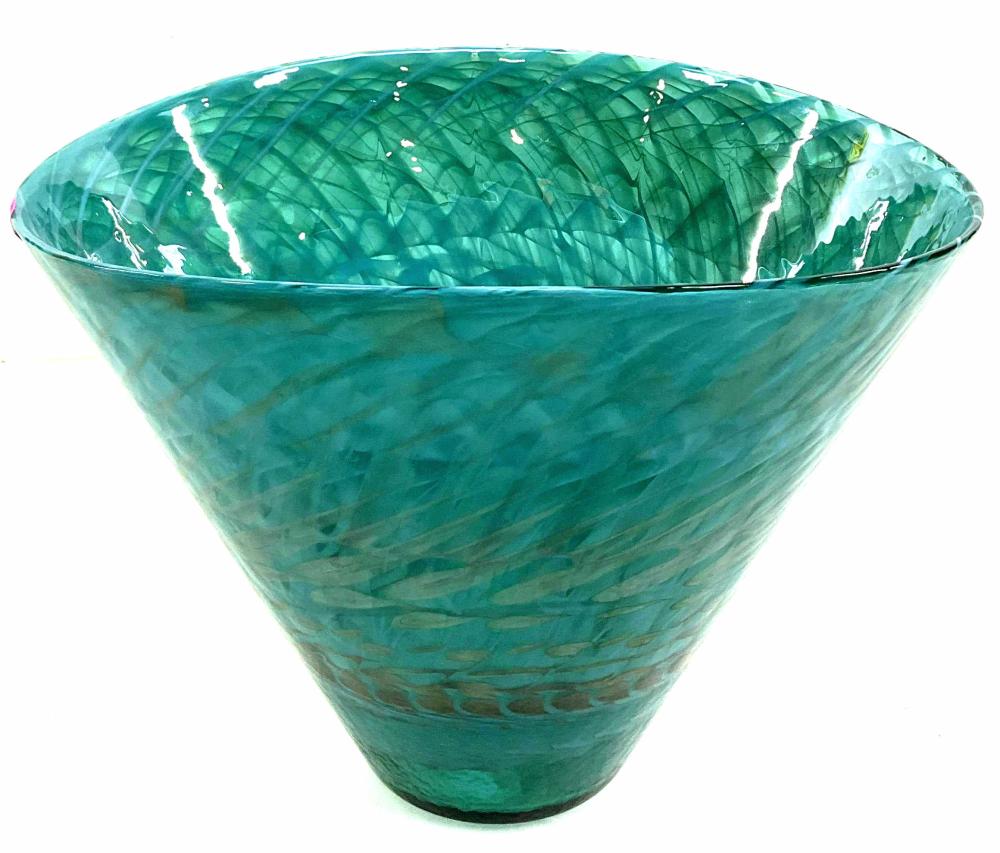
- Avventurina. Copper crystallites suspended in glass produce brown-gold “sparkles.” Quality avventurina is even and brilliant, not patchy or dull.
Common forms include biomorphic freeform vases, cased and faceted block forms, ribbed or optic-mold vases, applied-handle “anfora” shapes, and monumental display pieces made for exhibitions or upscale interiors.
Tip: Identify the technique first. Technique narrows maker lists and date ranges, which are often stronger valuation drivers than size alone.
Makers, Signatures, and Labels
Attribution carries weight in value. While many documented vases are unsigned, some furnaces and designers left reliable marks.
- Venini. Acid-stamped “VENINI ITALIA,” “VENINI MURANO,” or date signatures like “Venini 195x”; later pieces may have “Venini” with year codes. Some are diamond-point engraved, sometimes with designer names.
- Seguso Vetri d’Arte. Acid stamps reading “Seguso Vetri d’Arte” or “SVA.” Pieces associated with Flavio Poli and other designers may be unsigned but attributable by form and palette.
- Barovier & Toso. Paper/foil labels and occasional acid marks; techniques often include heavy avventurina, murrine, and sophisticated filigrana.
- Archimede Seguso. Frequently engraved script “Archimede Seguso”; also paper labels. Forms are often sculptural with refined sommerso and applied elements.
- Cenedese. Acid stamp “Cenedese Murano” is seen; styles range from sommerso to scavo and incalmo in the later 20th century.
- Aureliano Toso / AVEM / Salviati / Vistosi / Barbini. Expect labels, occasional acid marks, or engraved signatures; attribution often relies on form, palette, and documented models.
Labels:
- Mid-century paper/foil labels from individual furnaces varied and are frequently missing.
- Since the mid-1990s, the “Vetro Artistico Murano” consorzio label has been used by member furnaces. Genuine consorzio labels have specific printing and, in modern versions, a serial/holographic element tied to a furnace.
Caution:
- A generic “Murano Glass” sticker is not proof. Many non-Murano imports use lookalike labels.
- Faked acid marks exist. Cross-check with documented typefaces, placement, and period-correct usage.
Appraisal Strategy and Market Values
Valuation hinges on maker/designer, technique complexity, scale, colorway, and condition, with documentary proof (original label, catalog match, invoice) adding premiums.
- Anonymous but quality mid-century sommerso vases (c. 8–12 in): from the low hundreds upward, depending on form, color, and thickness.
- Attributed/named furnace examples: often well above anonymous pieces; exceptional colors or forms higher.
- Documented high-design works (e.g., Venini models, Flavio Poli masterpieces, Fulvio Bianconi, Carlo Scarpa-era designs, Dino Martens at Aureliano Toso): commonly several thousand; important models can achieve five figures or more.
- Large exhibition or scarce techniques (complex incalmo, pezzato/mosaic masterworks, monumental battuto): strong four- to five-figure results at specialty auctions.
- Late-20th-century tourist-market pieces and contemporary studio vases by lesser-known makers: typically modest unless signed by a collectible artist.
Use market evidence from reputable auction houses and established dealers, adjusting for:
- Size (height and girth), color desirability (rare palettes command premiums), and specific series/model matches.
- Condition deductions (see below).
- Regional demand; Italian and Northern European markets can be hotter for specific makers.
Dating Murano Vases: Visual Cues by Era
Dating blends stylistic reading with construction clues:
- 1920s–30s. Revival of filigrana and sophisticated cane work; classical forms with modernist restraint. Early bullicante experiments appear late-1930s. Labels are scarce; base finishing typically careful.
- 1940s. Wartime constraints but continued innovation. Subtle palettes, elegant forms, and refined execution; bullicante and controlled techniques mature.
- 1950s. Golden age of color and form. Sommerso blossoms, biomorphic silhouettes, “pezzato”/patchwork and mosaic experiments, and strong designer-led identities. Many pieces unsigned; acid marks and quality labels appear.
- 1960s. Heavier cased glass, bold sommerso color blocks, optical ribbing, and sculptural statements. Incalmo bands appear in striking color combinations; battuto expands.
- 1970s. Scale increases; saturated palettes, dramatic fades, and playful postmodern silhouettes. More engraved signatures show up.
- 1980s–90s. Revivals and reinterpretations: scavo/corroso finishes, studio-signed works, and the rise of the consorzio label. Tourist-market production also ramps up.
Other dating cues:
- Rims: Early mid-century rims often neatly fire-polished; later rims may show more aggressive grinding then polish.
- Bases: Wide, uniformly polished bases with honest, fine wear lines can suggest decades of age; sharp, mirror-perfect bases without wear can mean restoration or new production.
- Paper labels: Period-correct fonts, shapes, and adhesives matter; documented vintage labels often show expected oxidation or patina.
Condition, Restoration, and Risk Factors
Condition is pivotal to value. Typical issues:
- Rim chips and flea bites. Even tiny bites along sharp edges materially affect price; polished rims reduce height and can alter profile.
- Base grinding. Over-ground bases flatten the intended stance; watch for “new” bases on old bodies.
- Internal fractures and stress lines. Look for crescent “bruises,” seed cracks, or long stress fissures—especially where thick color layers meet clear casing.
- Sickness/clouding. Water deposits can etch; devitrification appears as matte bloom. Hard water scale inside narrow-neck vases is common.
- Inclusions and cords. Small stones or stringy imperfections occur in hand glass; evaluate whether distracting or typical for the maker.
- Over-cleaning and abrasive polish. Buffing that blurs tooling or softens facet edges diminishes desirability.
Deduct proportionally: minor scuffs may be negligible; rim chips or significant polishing can reduce value substantially, depending on rarity. Full-height loss (e.g., cut-down vase) is heavily penalized unless well-documented as a period variant.
Practical Checklist for Quick Evaluation
- Confirm handwork: no mold seams; look for pontil finishing and tool marks.
- Identify technique(s): sommerso, filigrana, murrine, bullicante, pulegoso, incalmo, battuto, scavo, avventurina.
- Assess color and clarity: saturated but clean; crisp layer boundaries in sommerso; even cane or bubble patterns.
- Examine the base: polished pontil or finished base with age-appropriate wear; beware freshly ground, unworn bases.
- Search for marks: acid stamps, engraved signatures, period labels, or consorzio “Vetro Artistico Murano” sticker (mid-1990s onward).
- Measure and weigh: record height, body diameter, wall thickness, and weight; heavy wall/casing is a quality signal.
- Check condition meticulously: rim, base, body, internal stress, clouding; use raking light and magnification.
- Photograph: overall, base, rim, signature/label, close-ups of technique.
- Attribute: match form, palette, and technique to known furnaces/designers via documented models and period literature.
- Compare sales: find recent, like-for-like market evidence (maker, model, size, condition); adjust for region and market tier.
- Decide care: if dirty, clean with warm water and mild soap only; avoid dishwashers and thermal shock.
FAQ
Q: Does a Murano vase have to show a pontil mark to be documented? A: Many do, often ground and polished, but not all. Some bases are fully ground flat or finished in ways that obscure the pontil. Evaluate the overall workmanship and base finishing quality, not the presence of a raw scar alone.
Q: Are all documented Murano vases free-blown and seam-free? A: Not strictly. Mold-blown elements and optic molds are used, but quality Murano pieces receive hand-finishing that removes or softens seams. Prominent, unworked seams are a red flag on pieces claiming mid-century studio quality.
Q: What’s the difference between Murano and Empoli glass? A: Murano is from the Murano island furnaces and is known for high-complexity techniques and designer-led production. Empoli (Tuscany) produced large volumes of decorative glass, often in olive/emerald tones and simpler forms, typically at lower price points. Both are collectible, but Murano generally commands higher values.
Q: Does a “Vetro Artistico Murano” label confirm age? A: It indicates a certified Murano origin from a member furnace, not vintage status. These labels have been used since the mid-1990s. For vintage claims, rely on technique, workmanship, period labels/marks, and stylistic dating.
Q: How should I remove limescale haze inside a vase? A: Start with warm water and mild dish soap, soaking as needed. Use a soft bottle brush and avoid abrasives. Persistent deposits may respond to a white vinegar soak, but rinse thoroughly and avoid prolonged exposure. For valuable pieces, consult a professional conservator rather than using harsh chemicals.
By reading the glass—technique, finishing, and form—then layering in marks, condition, and market comparables, you can confidently document, date, and appraise a vintage Italian Murano glass vase.