Unveiling the Worth the Comprehensive Guide to the Value of Antique Copper Kettles: appraisal and value basics
Unveiling the Worth the Comprehensive Guide to the Value of Antique Copper Kettles research should start with identification, condition, provenance, and item-specific market evidence. Use this guide to compare the signals that matter before paying for a formal appraisal or deciding whether to sell.
Antique copper kettle value checklist
Antique copper kettles occupy a sweet spot in the antiques market: functional sculpture steeped in domestic history. Yet values vary dramatically—two seemingly similar kettles might differ by a factor of ten once you account for age, construction, provenance, and condition. This guide distills how specialists look at copper kettles so you can appraise with confidence, avoid reproductions, and care for your pieces responsibly.
What Makes An Antique Copper Kettle Valuable?
Multiple factors combine to create value. Weigh each one—not just age—in your appraisal.
- Age and period: Hand-raised or dovetailed 18th- to early 19th-century examples (Georgian through early Victorian) tend to be scarcer and command stronger prices. Arts and Crafts (c. 1880–1910) hammered work, particularly signed or workshop-attributed pieces, is highly collectible.
- Construction and craftsmanship:
- Dovetailed or brazed seams (pre-1900) signal handwork and early manufacture.
- Heavy gauge copper feels “dense” in the hand; thinner, flexible walls are later or decorative-grade.
- Hand planishing (hammer marks) should be even and purposeful; machine-spun pieces have more uniform, circular tool marks.
- Quality rivets (copper or brass, hand-peened) and forged hardware add value.
- Maker or workshop: Stamps from known makers or centers of production (e.g., English firms like Benham & Froud, certain Arts and Crafts guilds, or French workshops from Villedieu) can meaningfully lift price. Many American 18th–19th century kettles are unsigned; documented provenance fills this gap.
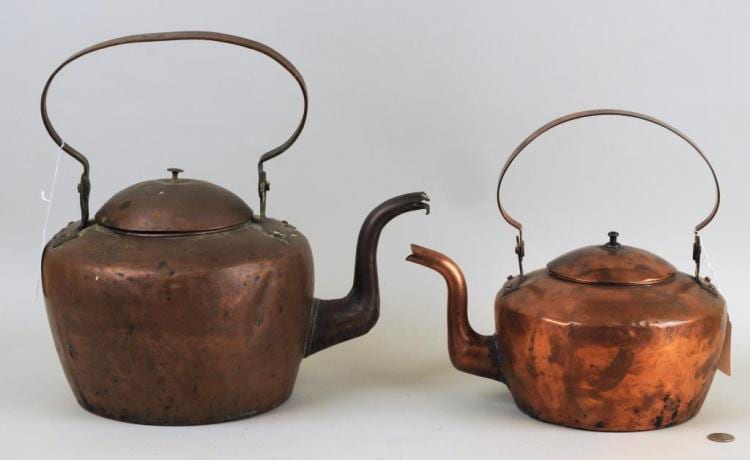
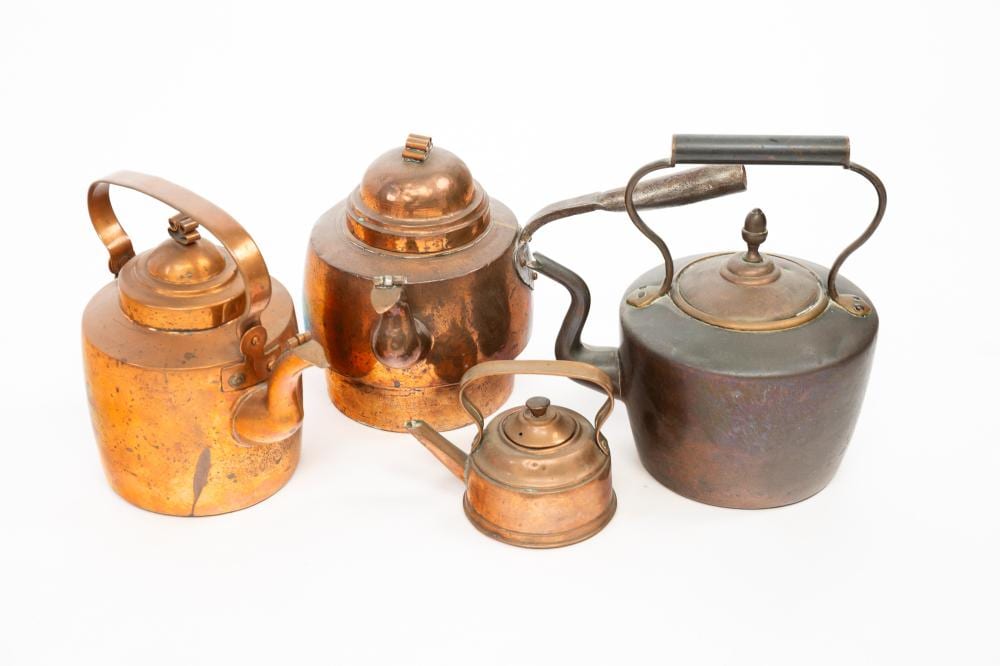
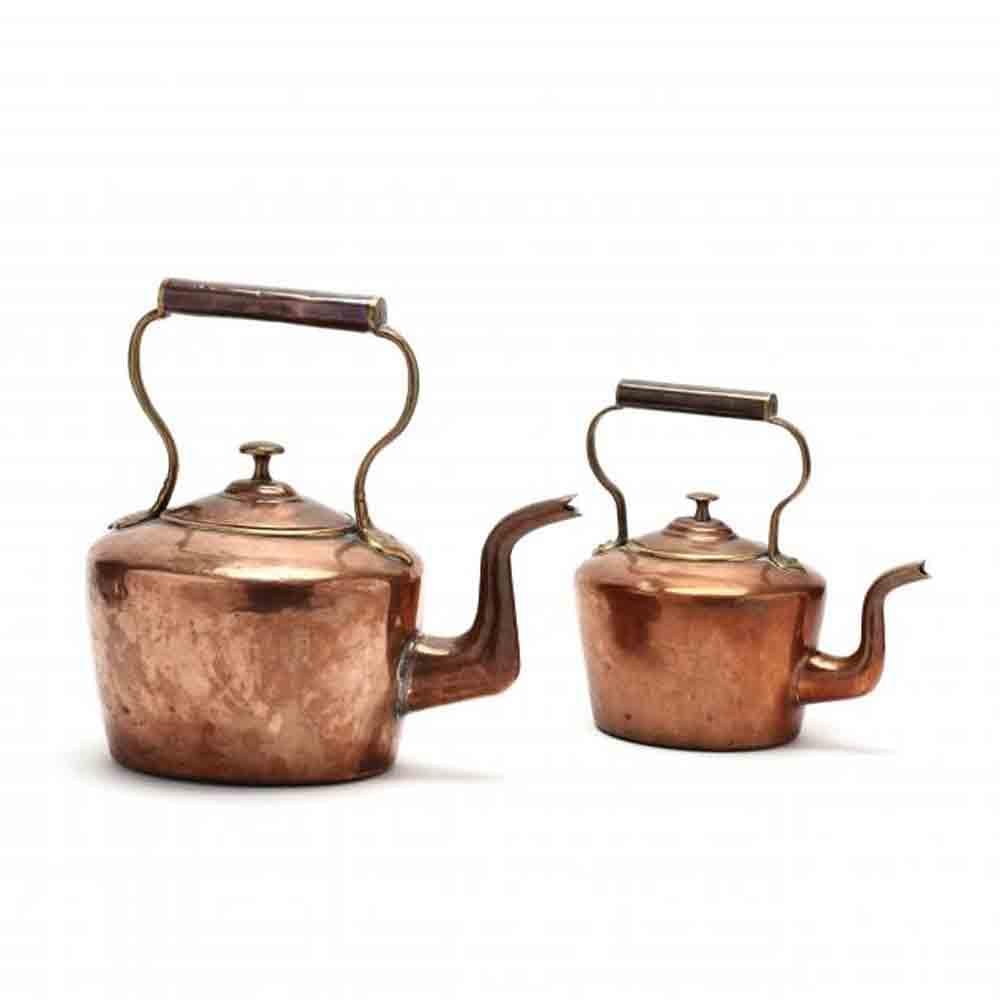
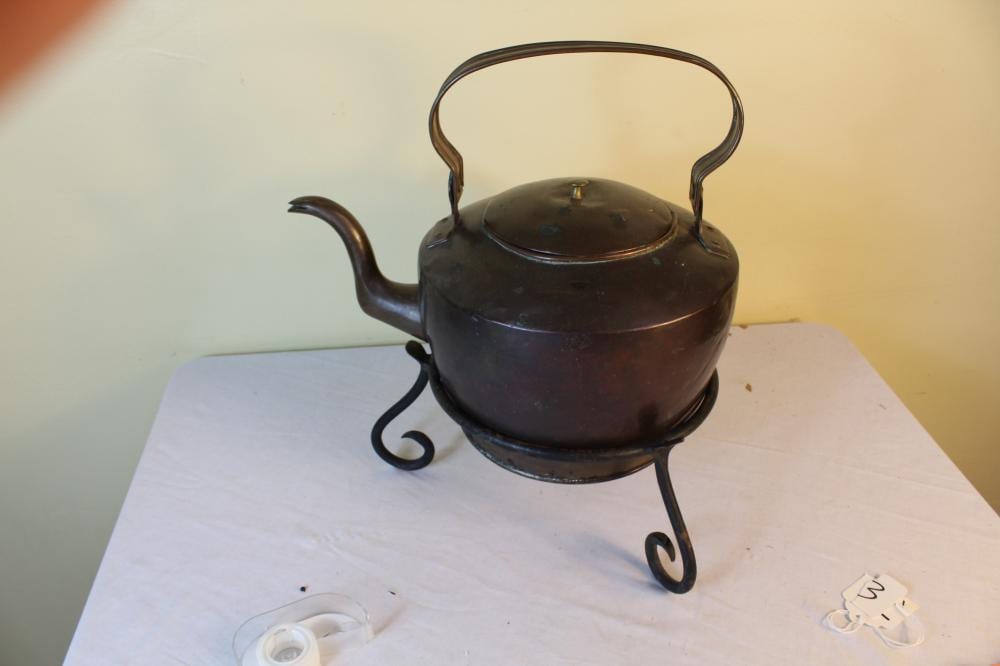
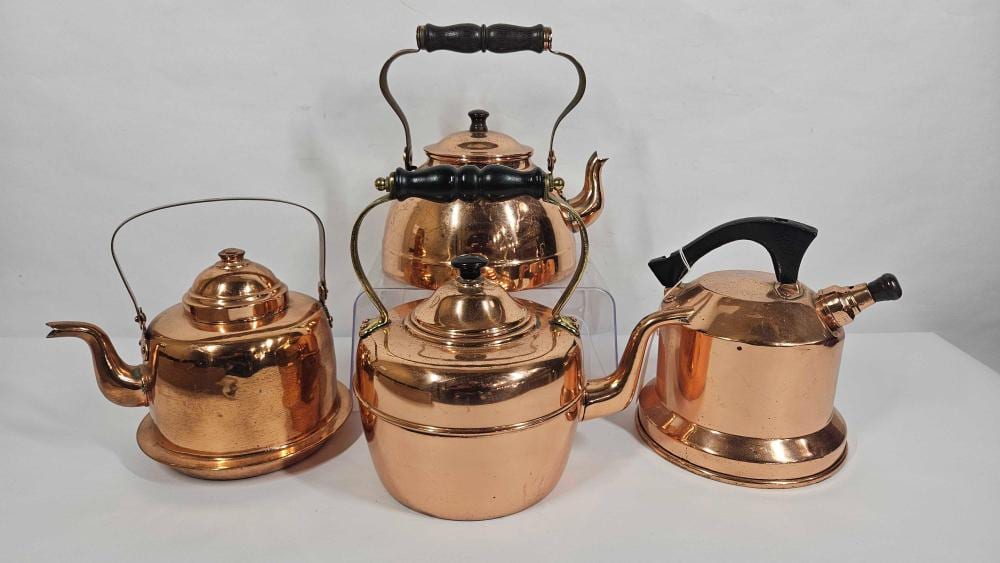
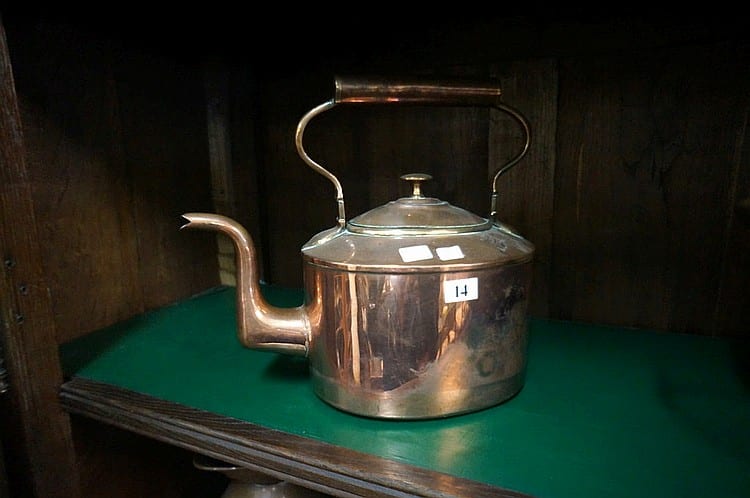
- Form and design: Desirable forms include elegant gooseneck spouts, sculptural wooden side handles, well-fitted lids with turned or fruitwood finials, and balanced proportions. Unusual or regional forms (e.g., Scandinavian profiles) can attract premiums.
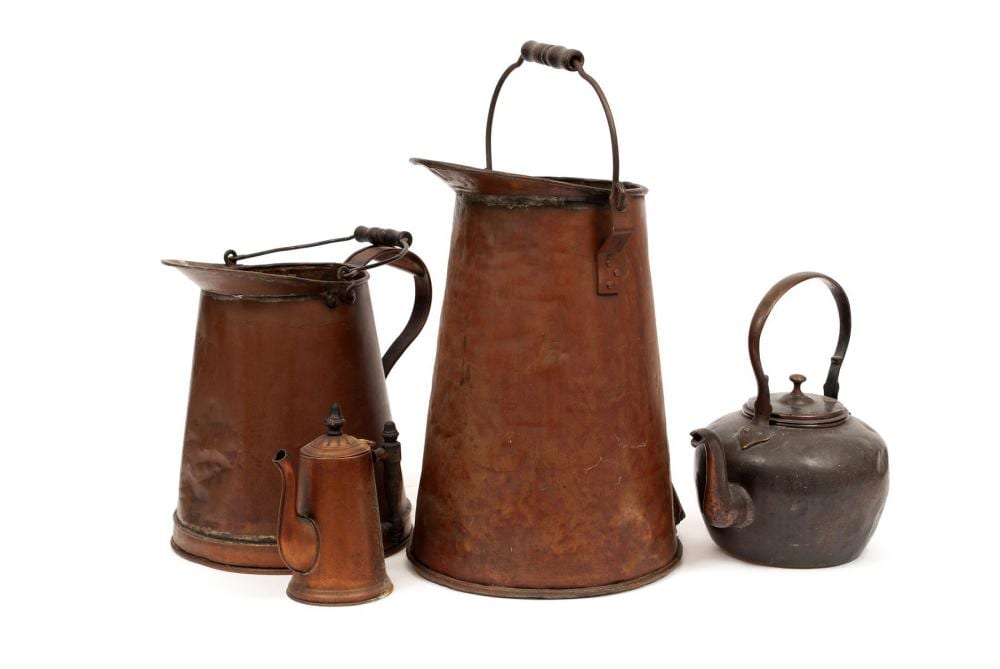
- Size and capacity: Large, well-balanced kettles (e.g., 2–3 quarts) fit decor and functional niches; very large hearth kettles can be impressive but harder to place. Miniatures and salesman’s samples are collectible in their own right.
- Condition: Sound metal, intact tinning (when present), original hardware, and honest patina are prized. Heavy dents, splits, crude solder repairs, or replaced parts reduce value.
- Patina and surface: Even, naturally developed color (from warm brown to deep russet) is attractive. Stripped or aggressively polished surfaces can lower collector interest, though some buyers prefer a brighter look for display. Verdigris confined to crevices is acceptable; active corrosion must be addressed.
- Provenance: A documented household history, estate origin, or link to a notable region or maker justifies a stronger estimate.
Dating And Identifying: Clues In Construction And Details
Precise dating is often a matter of probabilities based on how the kettle was made.
- Seams and body construction:
- Dovetailing: Interlocking zigzag seams brazed with a high-temperature solder, often visible as a faint, saw-tooth line along the base or body. Common in 18th–early 19th century production.
- Lap/rolled seams: Later 19th–20th century kettles may show smoother, rolled rims and less visible seams from improved industrial techniques.
- Hammer and tool marks:
- Hand planishing is slightly irregular in spacing and angle; you’ll see a lively, faceted surface catching the light.
- Engine turning or spinning leaves circular striations, typical of mid- to late-20th century decorative kettles.
- Rivets and hardware:
- Early rivets are solid and hand-peened (domed, not hollow), often copper or brass. Modern pop rivets or Phillips screws indicate later assembly.
- Handle brackets and spout bases should be forged or carefully formed, not crudely stamped.
- Spouts and lids:
- Slender goosenecks with graceful curves suggest careful smithing. Short, wide spouts are common on utilitarian later pieces.
- Lids should fit accurately; mismatched lids (overlap, different color) are common replacements and reduce value.
- Interior lining:
- Many kettles were tinned inside to moderate reaction with water; tin appears soft gray-white. A bright, uniform silver tone often indicates later re-tinning (not a flaw, but note it in appraisal).
- Exposed pink copper or patchy tin points to wear; evaluate for safe use.
- Base wear and stance:
- Honest circular wear on the base rim, with micro-scratches and softened edges, suggests age. Perfectly sharp edges or mirror-like, uniform shine may signal recent production or heavy polishing.
- Marks and stamps:
- Look on the base, lid underside, or handle brackets for maker’s marks, capacity marks, retailer stamps, or guild symbols (e.g., the orb-and-cross associated with Benham & Froud). Many early American pieces are unmarked; assess construction.
- Coatings:
- Thin, glossy lacquer (common mid-20th century onward) can preserve shine but may mask age. Flaking lacquer is typical of decorative imports.
Note: Do not confuse kettles with teapots (usually smaller, for steeping) or samovars (Russian hot-water urns with taps). Values and collecting criteria differ.
Market Values Today: Realistic Price Tiers
Prices vary by region and venue. For unrestored pieces, these tiers run from the lowest-priced to the highest:
- Decorative/late 20th-century imports (thin gauge, shiny, minimal wear): the lowest tier, mostly decor value
- Common Victorian/Edwardian kitchen kettles (rolled seams, brass handle mounts, no mark): the bulk of the market
- Quality 19th-century dovetailed kettles with good weight, pleasing form, intact lids: a clear step up
- Arts and Crafts hammered kettles, attractive design, possible workshop attribution (e.g., Newlyn-style, guild products): priced on design and attribution
- Documented maker-marked English or French kettles with superior craftsmanship; scarce regional forms: near the top of the market
- Early American 18th-century, hand-raised/dovetailed, with strong provenance or exceptional form: the top tier
Adjust for condition:
- Original, undisturbed surfaces and complete parts can push toward the top of a band.
- Significant dents, heavy polishing, or replaced lids/hardware can drop a piece one or two tiers.
Condition Grading And Its Impact On Price
Use a transparent grading approach when appraising or selling:
- Excellent: Strong patina, minimal shallow dings, crisp details, lid and hardware original and tight, interior tin present and stable. Expect full market value.
- Very Good: Light, scattered dents; minor, well-executed historical solder; sympathetic cleaning; lid fit slightly loose but original. Estimate a little below an excellent example.
- Good: Noticeable dents, softening of crisp edges, tin worn or absent, early but visible repairs, possible replaced finial. Estimate well below an excellent example.
- Fair: Structural issues (split seams, poorly executed solder, replaced handle brackets), mismatched lid, active verdigris. Estimate at a fraction of an excellent example.
- Poor/Restoration candidate: Cracks, major losses, modern hardware, distortions affecting stance. Typically decorator value unless maker/provenance warrants restoration.
Common detractors and typical price effects:
- Replaced lid: a significant reduction
- Heavy machine polishing/stripped patina: a significant reduction
- Crude lead solder on visible seams: a significant reduction
- Stabilized, discreet professional repair: a small reduction
- Re-tinning (competently done): neutral to slight positive for usability
Originality And Reproductions: How To Tell
Reproductions are widespread, especially from the late 20th century onward. Spot them by consistency of clues:
- Metal thickness: Thin walls that flex when gently pressed are typical of decorative pieces. Antique kitchen-grade kettles feel solid and ring with a lower, duller tone when tapped.
- Rivets and fasteners: Pop rivets, Phillips screws, or uniform factory rivets point to recent manufacture. Antique rivets are solid, hand-peened, and may show slight irregularity.
- Surface and tool marks: Perfectly even, circular machine marks or a uniformly dimpled “hammered” texture can be decorative rather than functional.
- Coating and shine: High-gloss lacquer and mirror finishes are common on modern decor kettles. Antique surfaces show nuanced color and micro-wear.
- Stamps: Generic “Made in …” export stamps without a maker, or fantasy marks, do not confirm age. Compare the style of the mark to known period typography if possible.
- Interior: Bright copper interiors with no trace of tin paired with an otherwise “old” exterior can indicate a made-to-look-old piece.
- Odor and residues: Fresh lacquer smell or sticky residues suggest recent finishing.
When in doubt, weigh evidence across construction, wear patterns, and context. A single “old-looking” feature can be faked; the whole story should cohere.
Care, Conservation, And Ethical Cleaning
Preserve value by favoring minimal, reversible interventions.
- Routine cleaning: Dust with a soft brush or microfiber. Wash with warm water and a tiny amount of pH-neutral soap; dry immediately.
- Patina: Do not strip patina for the sake of brightness. Collectors often pay more for original surface than for newly polished shine.
- Verdigris (green copper salts): Treat active verdigris promptly. Swab small areas with a cotton bud dampened with a weak solution of white vinegar or lemon juice diluted in water, then neutralize with a damp cloth and dry thoroughly. Avoid soaking.
- Tinning: If you intend to use the kettle, assess tin—thin, patchy tin can leach copper taste. Professional re-tinning with food-safe tin is appropriate on sound bodies; document the work for buyers.
- Solder: Avoid DIY soldering. Early brazed seams are part of originality; crude modern repairs lower value. A conservator or skilled coppersmith should handle structural issues.
- Polishes: If polishing for display, use a mild, non-abrasive copper polish sparingly, avoiding maker’s marks and seams; finish with microcrystalline wax to slow tarnish. Never use steel wool or harsh abrasives.
- Wood and ebonized handles: Clean lightly with a barely damp cloth; feed dry wood with a small amount of appropriate wax, not oil.
- Storage: Low humidity, stable temperature, and padded supports that do not stress handle brackets. Keep away from caustic kitchen environments (bleach fumes).
- Use: Never boil water in a kettle with exposed copper interior or active verdigris. Do not heat if interior seams show suspect lead solder.
Buying, Selling, And Documentation
Whether you’re hunting in the field or preparing to sell, documentation makes value defensible.
- Measure and weigh: Height to finial, body diameter, spout length, and overall weight. Heavy gauge helps justify price.
- Photograph thoroughly: Profiles, base, interior, lid undersides, seams, rivets, and any marks. Shoot in raking light to reveal planishing.
- Describe construction: Note dovetails, rolled rim, type of rivets, lining status, and any repairs (with location).
- Note provenance: Estate names, bills of sale, past auction tags, restoration invoices. Even modest provenance supports higher estimates.
- Pack and ship: Remove lid and wrap separately; pad handle brackets to prevent torque. Use double boxing for heavy kettles.
Quick Appraisal Checklist
- Is the body dovetailed or hand-raised (visible zigzag seams) rather than machine-spun?
- Does the kettle feel heavy for its size, with solid gauge copper?
- Are rivets hand-peened (no pop rivets or Phillips screws)?
- Do hammer marks look hand-applied and slightly irregular?
- Is there honest base wear and nuanced patina (not mirror-lacquered)?
- Does the lid fit correctly and appear original?
- Are there maker’s or retailer’s marks (base, lid underside, brackets)?
- What is the interior lining status (intact tin, worn tin, bare copper)?
- Any dents, splits, or solder repairs? Are repairs discreet and competent?
- Are handle, finial, and brackets original and secure?
- Does form and proportion indicate a desirable style (e.g., gooseneck spout)?
- Do provenance or workshop attributions support the estimate?
FAQ
Q: Will polishing increase or decrease the value of my antique copper kettle? A: Heavy polishing that strips patina usually decreases value. A light, sympathetic clean to remove grime—while preserving surface character—can make a piece more marketable but rarely raises the price.
Q: Is it safe to boil water in an antique copper kettle? A: Only if the interior tin lining is intact and seams appear sound. Do not use kettles with exposed copper interiors, active verdigris, or questionable solder. When in doubt, enjoy it as a display piece or have it professionally assessed and re-tinned.
Q: How much does professional re-tinning affect value? A: Competent, documented re-tinning is neutral to slightly positive for usability. It does not transform a low-grade or damaged kettle into a high-value example, but it can support a stronger price within a given tier.
Q: How can I tell if the lid is original to the kettle? A: Check fit (snug without rocking), matching patina and hammer marks, color consistency, and the way the hinge or finial hardware matches other fittings. Mismatches in color, finish, or tool marks suggest a replacement.
Q: What’s the difference between a kettle and a copper teapot, and does it matter for value? A: Kettles are designed for heating water, typically larger with robust construction and tinned interiors; teapots are for steeping and may be smaller, thinner, and sometimes silver-plated. Collectors value each differently—misidentifying can skew pricing, so identify function correctly.
Informed by construction details, condition, and provenance, the value of antique copper kettles becomes much more transparent. Apply the checklist, document your findings, and you’ll estimate with accuracy—and collect with confidence.