What brass bells actually sell for
Most plain brass bells sell for under $100; a ship's name, a maker's stamp or a known origin can push the price up.
Animal bells. A brass sheep bell with its original iron clapper, on an old leather strap, sold for $19.
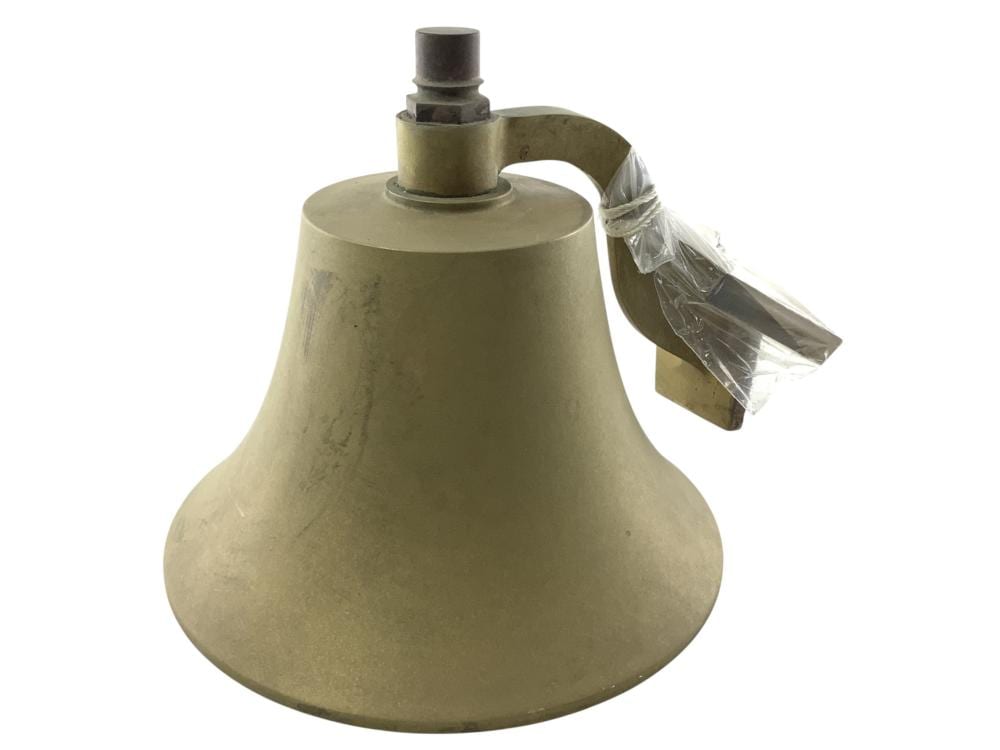
Typical sales. A vintage brass school bell with a taped handle, measuring 8 1/2 by 8 1/4 inches, sold for $30.
A vintage brass nautical wall bell with its hardware, in used condition and about 8 by 11 by 9.5 inches, sold for $30.
A brass school or mine bell from Hughsville, Montana, 7.75 inches tall and 7 inches across the rim, sold for $50.
Shop bells. A brass spiral shopkeeper's bell with a coiled brass spring arm and hanging hook, 12 inches high and in good condition with some rust and wear, sold for $100.
Temple bells. A Chinese Qing dynasty brass temple bell from about the 19th century, made for the antique market in the form of Eastern Zhou bronze bells and 13.3 inches high, sold for $375.
High-value outlier. A large English John Roby brass bell from the tanker ship Scottish Eagle, mid-20th century, impressed with the ship's name and hung on a custom stained wood stand, sold for $650.
Photograph maker marks, model, condition, and completeness before treating any one sale as yours.
What similar items actually sold for
Real auction sales of items like your brass bell. Open a sale to see the original listing.
Shown USD range: USD 10-USD 760. Median of these 41 USD examples: USD 150.


How these auction records were verified
These sales are market context, not an object estimate.
Each row retains its exact source URL, lot identity, retrieval time, access result, and immutable record hash. Live source access was blocked; the exact record matched Appraisily's immutable pipeline provenance. Inspect the public comparable provenance record.
What decides a brass bell’s value
Most antique brass bells sell for modest sums; what lifts one is a ship’s name, a maker’s stamp or a known origin. Of the recorded auction sales on this page, the 41 in US dollars ran from $10 to $760, with a median of $150. Recognized foundries such as Meneely, McShane, Whitechapel, Taylor and Gillett & Johnston usually bring more, especially with legible marks and original fittings. Condition comes next: cracks at the soundbow or lip, dents, repairs and over-polishing cut the price, while an original clapper and yoke add to it. Two bells from the same maker can sell very differently because of condition and tone.
Start by naming the type of bell
Antique bell collectors and appraisers know that “brass bell” is often a shorthand for a wider world of metals, makers, and meanings. Whether you own a ship’s bell, a school bell, a temple bell, or a set of sleigh bells, accurately determining your antique brass bells value requires a structured look at identity, material, condition, sound, provenance, and market demand.
Bell types, brass or bronze, and the parts of a bell
Before you price a bell, you need to know what it is and what it’s made of.
Common types:
- Ship’s bells: Often engraved with vessel name and year; heavy for size; designed for loud, penetrating strike notes.
- School or farm bells: Larger mouth diameters, often with yoke and wheel; meant for distance carrying tones.
- Hand/desk bells: Smaller, sometimes with wooden handles; variety of alloys and decorative motifs.
- Temple/ritual bells: Can range from small to monumental; inscriptions and religious iconography; varied regional styles.
- Sleigh bells: Individual “crotal” bells or leather straps with multiple bells; numbered sizes and sometimes maker marks.
Alloys and why they matter:
- Brass: Copper-zinc alloy; typically bright yellow when polished; common for smaller bells and many ship bells.
- Bell metal (bronze): Copper-tin alloy (often roughly four parts copper to one part tin); produces rich, sustained tone; common in larger church or high-quality bells.
- Iron/steel: Occasionally found (especially very utilitarian bells); inferior tonal quality; usually lower collectible value unless historically significant.
Quick alloy clues (non-destructive):
- Color under patina: Brass trends yellow-gold; bell-metal bronze trends red-gold.
- Weight and ring: Bell metal often feels slightly heavier and rings with longer sustain. Brass can be a touch lighter with a brighter, sometimes shorter decay.
- Magnet test: Not helpful—both brass and bronze are non-ferrous and won’t attract a magnet.
- Advanced: Portable XRF can identify alloy composition; useful for high-value pieces.
Anatomy basics that inform value:
- Crown and canons: Crown is the top; canons are cast loops for hanging—common on older European bells. Later bells often have a drilled crown or bolted boss.
- Shoulder, waist, soundbow (thickest area near the lip), and lip: Wear, thickness, and cracks in these zones affect tone and value.
- Clapper: Original clappers add value; replacements should be sympathetic in material and weight.
How to identify a brass bell’s maker and age
The strongest value drivers after condition are maker and age, supported by solid evidence.
Foundry marks and makers to know:
- British/European: Whitechapel, John Taylor & Co., Gillett & Johnston, Vickers (naval suppliers), Dutch and French regional foundries.
- American: Meneely (Troy/West Troy), McShane (Baltimore), C.S. Bell Co. (Hillsboro, Ohio), Buckeye Bell Foundry.
- Asian: Regional temple foundries, often with script inscriptions and date systems specific to culture/era.
Dating cues and construction:
- Canons vs drilled crown: Cast canons often indicate older European manufacture; drilled/bolted crowns are typically later.
- Threads and hardware: Machine-threaded hardware and standardized bolt sizes point to late 19th–20th-century production and later.
- Fonts and engraving: Hand-cut lettering shows variable depth and width; CNC or cast-in faux engravings look uniform and shallow.
- Casting seams and finishing: Sharp, unsoftened parting lines suggest newer reproductions; older bells usually show hand-finishing and softened edges from wear.
Engravings and inscriptions:
- Ship’s bells: Vessel name, year, and naval motifs (e.g., fouled anchor). Mismatched fonts, misspellings, or “too perfect” spacing can signal later additions.
- School bells: Maker plates or cast-in names; some with town/school engraving.
- Temple bells: Inscriptions can date and locate; consult regional calendars and scripts.
Spotting reproductions:
- Artificial patina: Even, green-painted or chemically induced surfaces that rub off onto cloth.
- Contradictory wear: “Old” exterior with brand-new interior or vice versa; crisp edges combined with heavy “age” elsewhere.
- Sound: Thick, dead ring or buzz may indicate low-quality modern casting.
Provenance:
- Value increases with credible documentation: ship logs, yard records, deaccession paperwork, family letters, or period photos. Chain of custody reduces doubt and supports premiums.
Cracks, repairs and sound: how condition changes value
Two bells with the same maker can have very different values based on condition and tone.
Physical condition:
- Cracks: Especially around the soundbow and lip; hairline or full fissures can reduce value sharply, and sometimes render a bell decorative only.
- Repairs: Brazed seams, welded areas, or stitched metal repairs affect both tone and value; expert repairs can stabilize but usually don’t restore full value.
- Deformations: Out-of-round mouths and dents alter pitch and reduce desirability.
- Mounting hardware: Original yokes, brackets, and clappers add value; mismatched or missing components detract.
Surface condition:
- Patina: Stable, natural patina is desirable; it tells a story and helps document age. Over-polishing can erase tool marks and inscriptions, cutting value.
- Corrosion: Pitting and dezincification (in brass) can weaken structure; green corrosion products (verdigris) should be stabilized.
Sound and pitch:
- Strike test: Suspend the bell freely, strike gently at the soundbow with a soft mallet, and listen for clarity, sustain, and absence of rattle/buzz.
- Pitch measurement: A tuner app can approximate the strike note (e.g., E4). For sets, matched or harmonious intervals raise value.
- Clapper fit: Too heavy or too long a clapper can distort tone and cause damage; original or well-fitted clappers preserve sound.
Rule-of-thumb scoring rubric (for comparative use):
- Maker/markings (0–5): 0 = unmarked generic; 5 = documented top-tier foundry with provenance.
- Age originality (0–5): 0 = modern repro; 5 = well-documented period piece.
- Condition (0–5): 0 = cracked/poor; 5 = excellent, no repairs.
- Sound (0–5): 0 = dead/buzzing; 5 = clear, long sustain, pleasing pitch.
- Completeness (0–5): 0 = components missing; 5 = original clapper, yoke/bracket, hardware.
- Scores 18–25: premium segment; 12–17: collectible; 6–11: decorative/entry-level; 0–5: low-value repro or damaged.
Which brass bells sell for more: size, type and maker
Fair market value is what a willing buyer will pay on the open market. Your bell’s price depends on category, size, maker, rarity, and the buyer pool (collectors, decorators, maritime enthusiasts, institutions).
Size and usage:
- Small hand/desk bells (3–6 inches): common examples are the most affordable; named makers, ornate Victorian pieces, rare patterns and exceptional bronze examples sell for more.
- Sleigh bells: individual bells are priced by size, numbering and maker; complete antique straps with matched bells sell for more, especially large, well-documented sets.
- School/farm bells (10–18+ inches): large, excellent examples with original yokes sell at the top of the range.
- Ship’s bells (6–12+ inches): generic maritime-style bells are common; documented naval or named-vessel bells sell for much more, and bells from famous or historically significant ships can command several thousand or more.
- Temple/ritual bells: tourist-grade bells are inexpensive; fine, well-inscribed, musically strong examples sell for more, with rare or early pieces higher.
Maker premiums:
- Recognized foundries (Meneely, McShane, Whitechapel, Taylor, Gillett & Johnston) typically command higher prices, especially with legible marks and original fittings.
Condition and completeness adjustments:
- Cracks: Deduct heavily relative to an equivalent intact example.
- Missing clapper/yoke: Deduct more the harder the part is to replace.
- Over-polishing: Deduct for loss of patina and detail.
Market channels and pricing context:
- Auction results show what sells today but vary by audience and location.
- Dealer retail prices include sourcing, attribution review, and guarantees—often higher than auction sold prices.
- Private sales depend on your presentation, documentation, and reach.
Always compare like with like: same type, size, maker, condition, and ideally, verified sound quality.
Photos, measurements and records to gather
Good documentation can lift your bell into a higher tier by reducing risk for buyers and appraisers. If you’re not sure what your bell is, you can upload photos of the marks, the underside and the clapper for a free check.
Measurements and data to capture:
- Mouth diameter, overall height, wall thickness at soundbow (if safely measurable), and weight.
- Pitch (approximate strike note via tuner app).
- Alloy indication: color under patina, any prior tests, observed weight for size.
Photography:
- 45-degree front view, straight-on profile, and underside showing clapper and interior.
- Close-ups of marks, inscriptions, fonts, and hardware.
- Detail of wear points, cracks, or repairs; transparency builds trust.
Provenance file:
- Any bills of sale, deaccession papers, family letters, or ship/school records.
- Written narrative with timeline, noting any restoration.
Handling and safety:
- Never ring a suspected cracked bell; suspension stress can worsen damage.
- Support heavy bells from below when moving; use proper slings and avoid putting weight on canons.
Conservation basics:
- Clean gently with mild soap and water; avoid harsh abrasives.
- Preserve patina; if polishing is unavoidable, minimize and follow with microcrystalline wax.
- Avoid aggressive chemical dips; they strip character and may reduce value.
10-step brass bell checklist
- Identify type: ship, school/farm, hand/desk, temple, sleigh/crotal.
- Look for marks: foundry names, dates, logos, numbered bells; photograph all.
- Assess alloy indications: color under patina, weight, sustain; note if XRF tested.
- Check condition: cracks at soundbow/lip, dents, repairs, completeness of clapper/yoke.
- Test sound: suspend safely, soft strike, listen for clarity and sustain; note pitch with a tuner app.
- Measure: mouth diameter, height, weight; record in your notes.
- Evaluate originality: engraving quality, font style, consistency of wear and patina.
- Gather provenance: documents, stories with dates, prior ownership history.
- Compare market evidence: find truly comparable examples by type, size, maker, and condition; distinguish asking from sold prices.
- Decide venue: auction for rarity, private sale or dealer for convenience; price accordingly.
FAQ
Q: Should I polish my antique brass bell before selling? A: Usually no. Original, stable patina supports originality and is preferred by collectors. Light cleaning with mild soap and water is fine; aggressive polishing can remove tool marks and soften inscriptions, reducing value. If you must improve appearance, keep it minimal and conserve with a microcrystalline wax.
Q: How can I tell if my “brass” bell is actually bell-metal bronze? A: Look at color under patina (brass tends yellow; bronze red-gold), listen for longer sustain, and consider weight for size. For high-value cases, non-destructive XRF testing can confirm alloy. Regardless of alloy, condition, maker, and sound often drive value more than the precise metal label.
Q: Do cracks always ruin value? A: Cracks are serious. Many collectors discount cracked bells heavily versus intact equivalents. Rare, historically important bells can retain value despite a crack, but they are often treated as display pieces only. Avoid ringing a cracked bell to prevent further damage.
Q: What’s the difference between insurance value and fair market value? A: Fair market value is the price between willing buyer and seller in an open market. Insurance value is typically retail replacement cost—the amount needed to purchase a similar bell from a dealer today. Insurance values are often higher than auction or private-sale prices.
Q: Are engravings of ship names often faked? A: Yes. Shallow, uniform, or mechanically perfect lettering can indicate later additions. Genuine hand engraving shows irregularities and integrates with aged surfaces. Cross-check the ship name and year with known service dates, and seek corroborating provenance when possible.