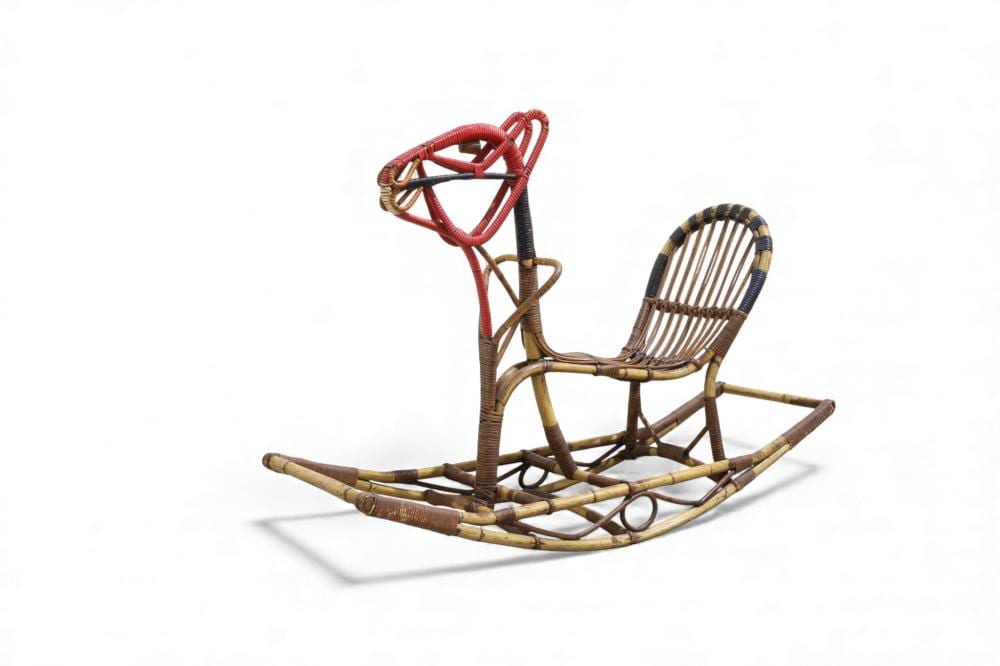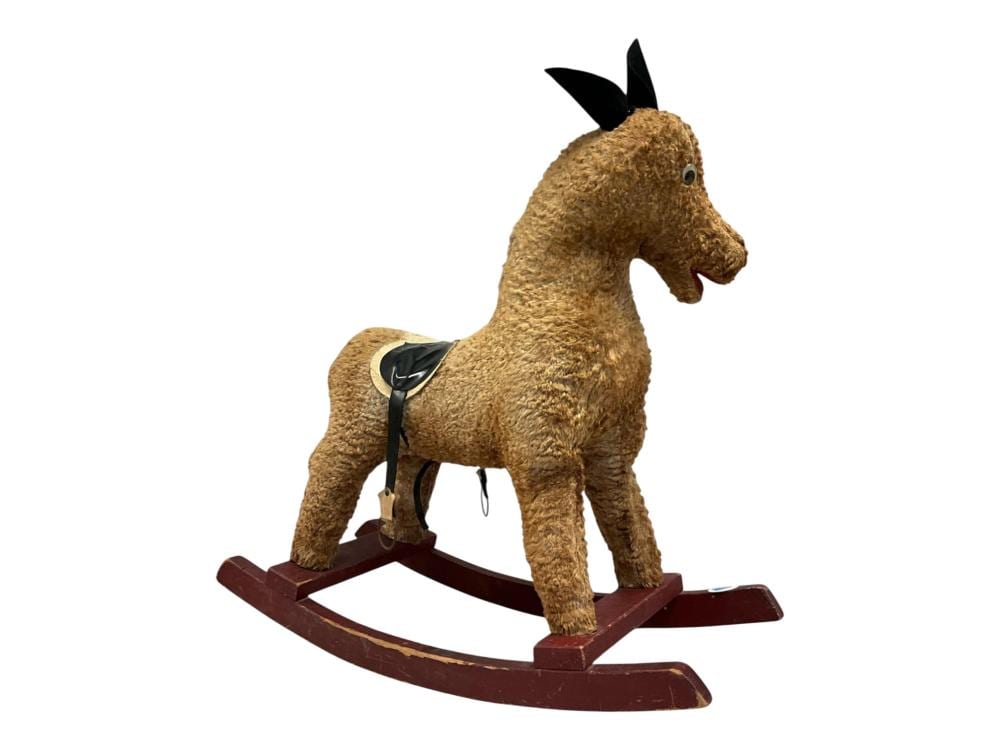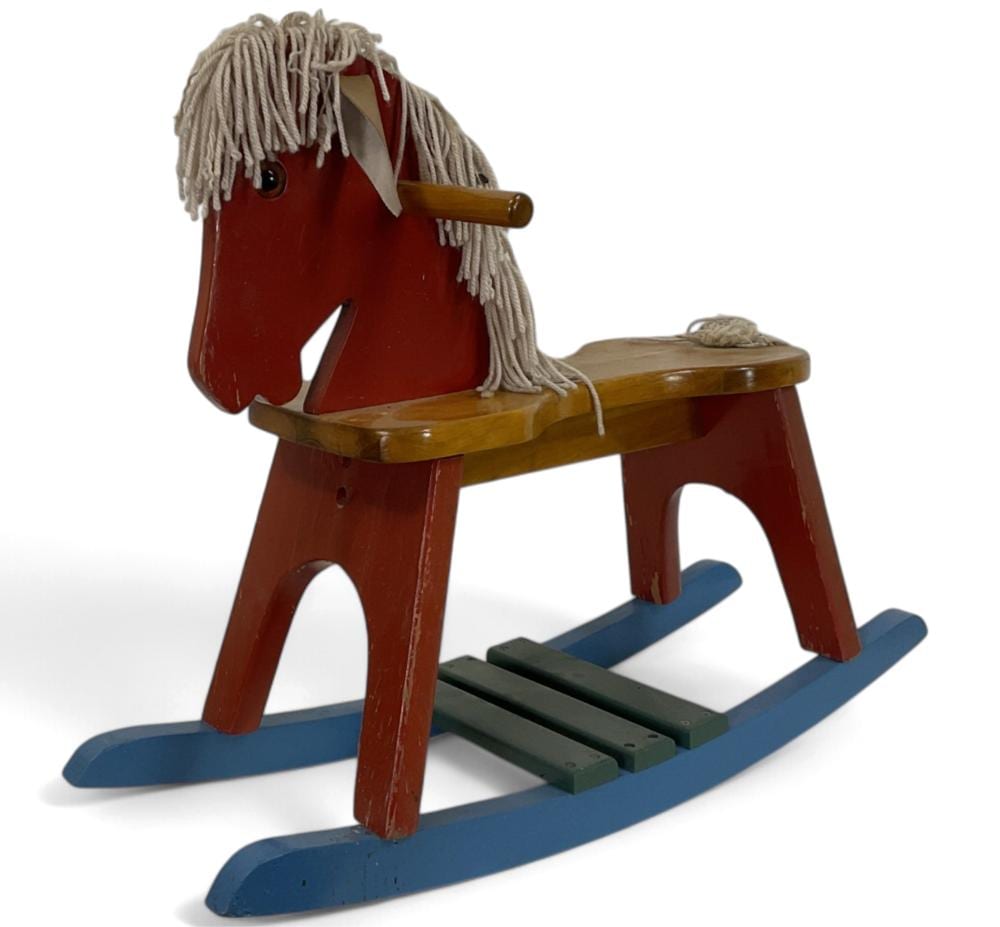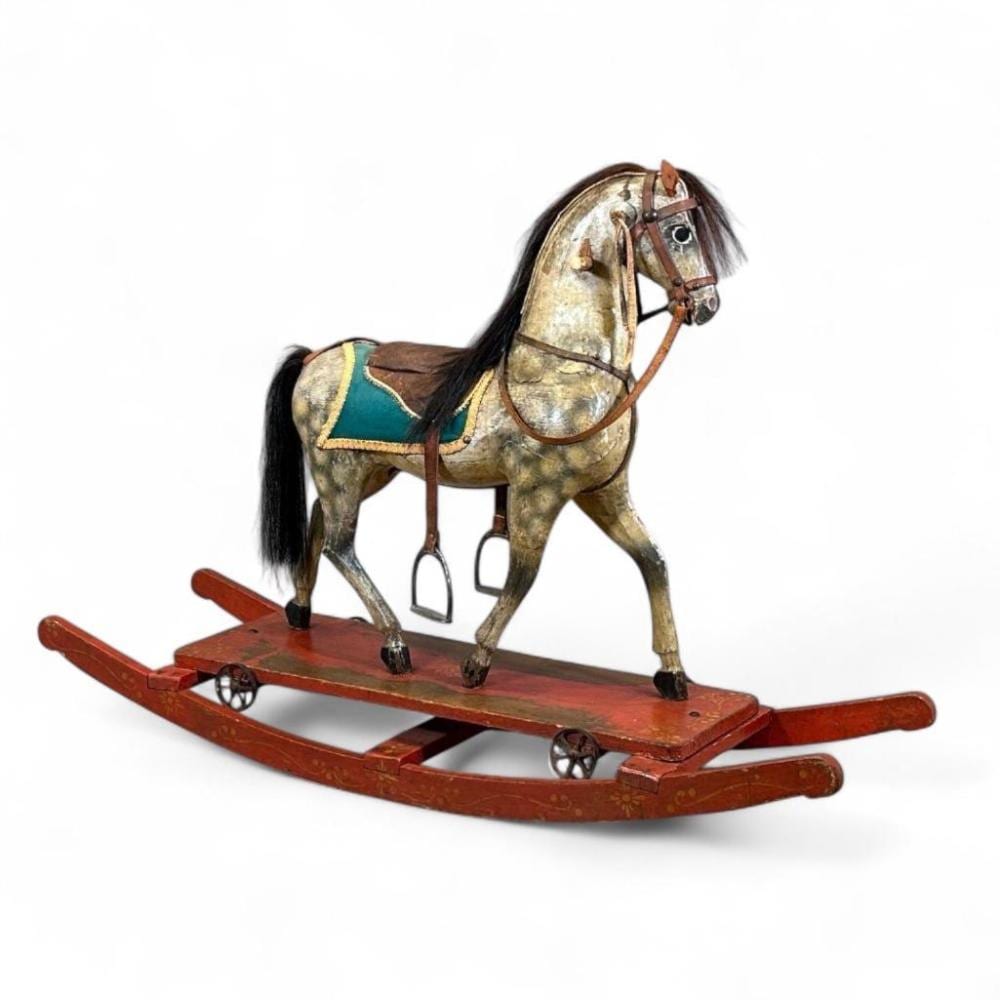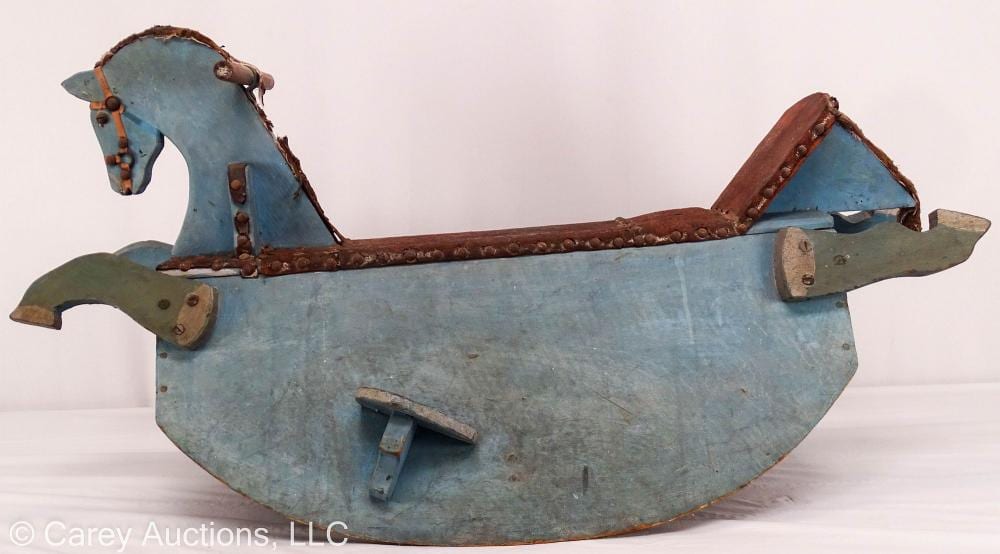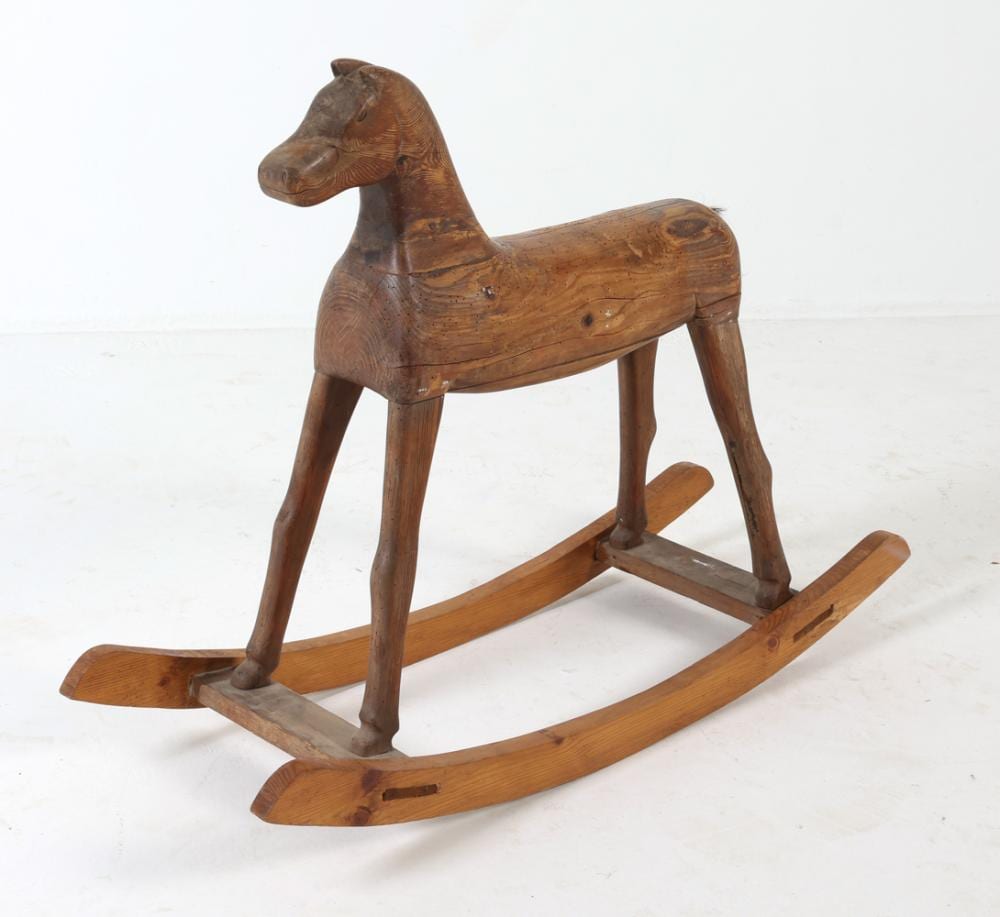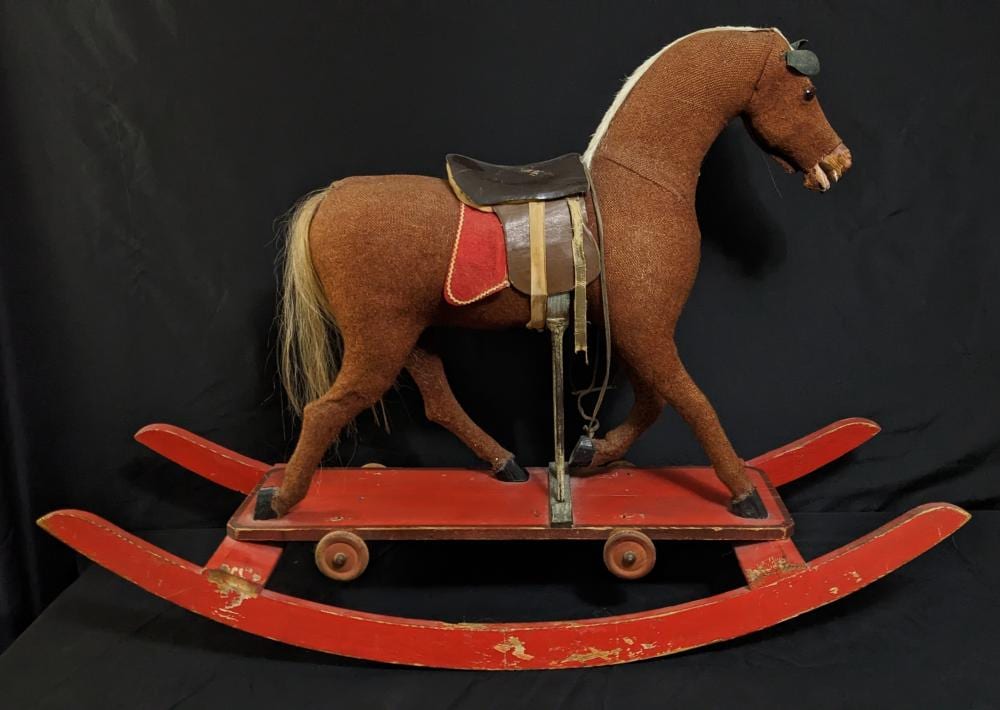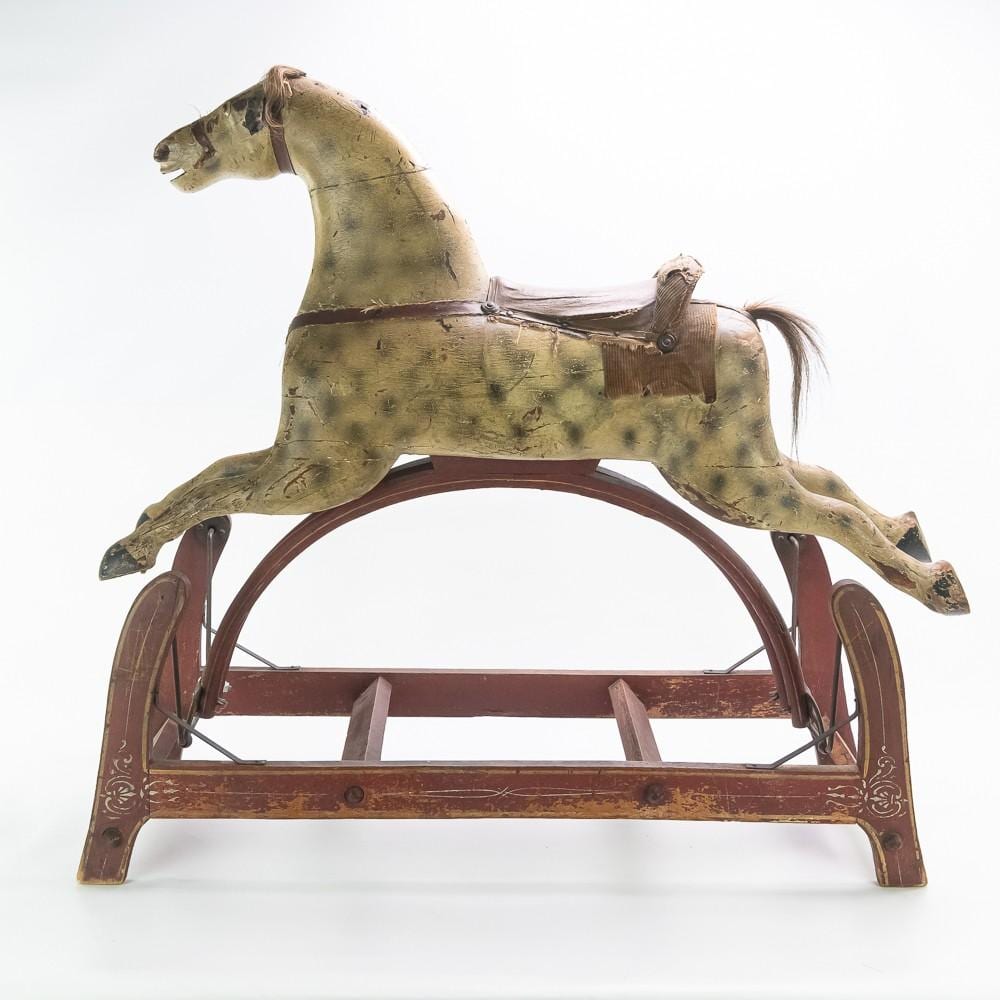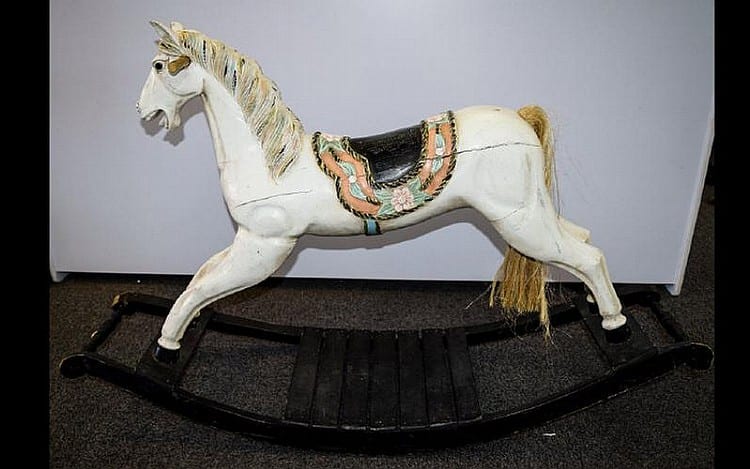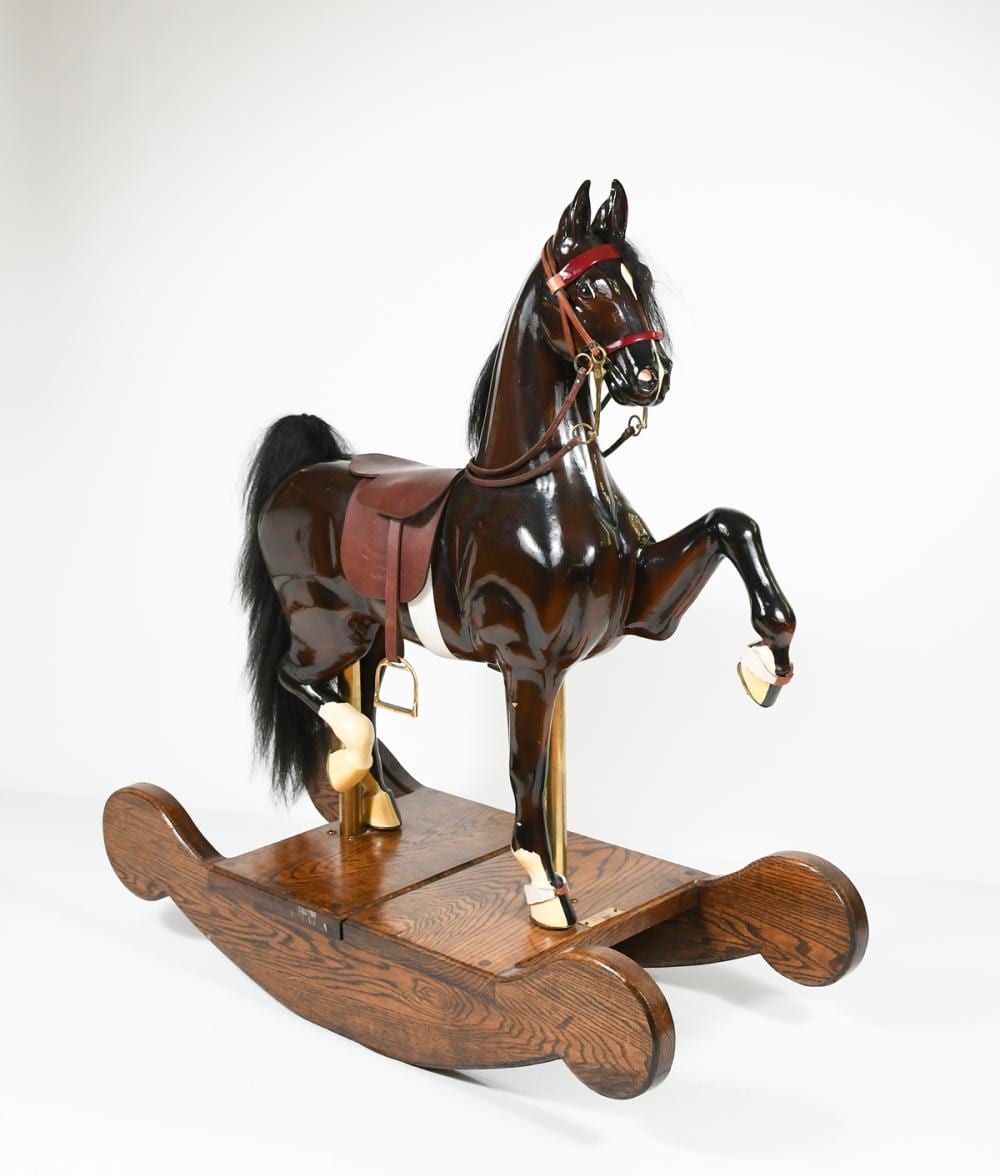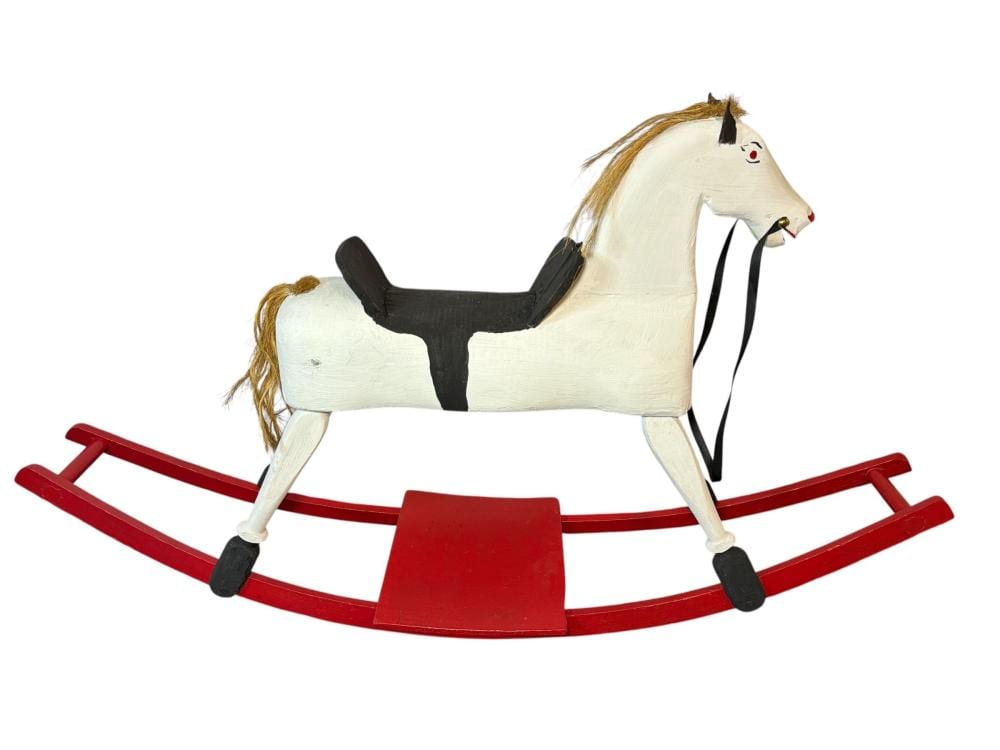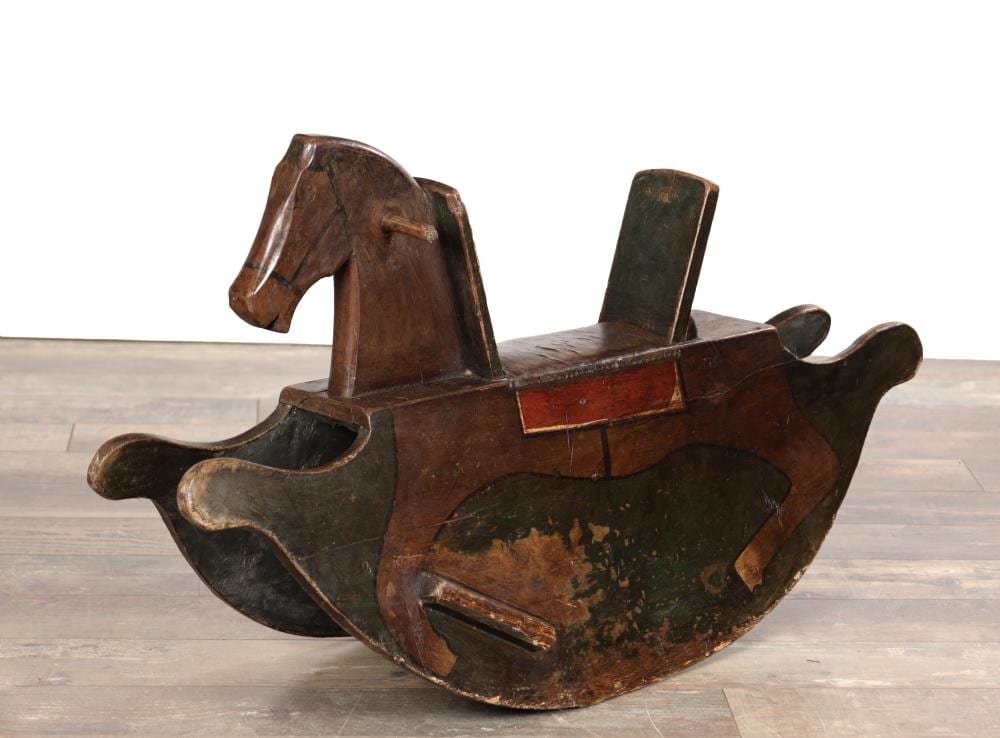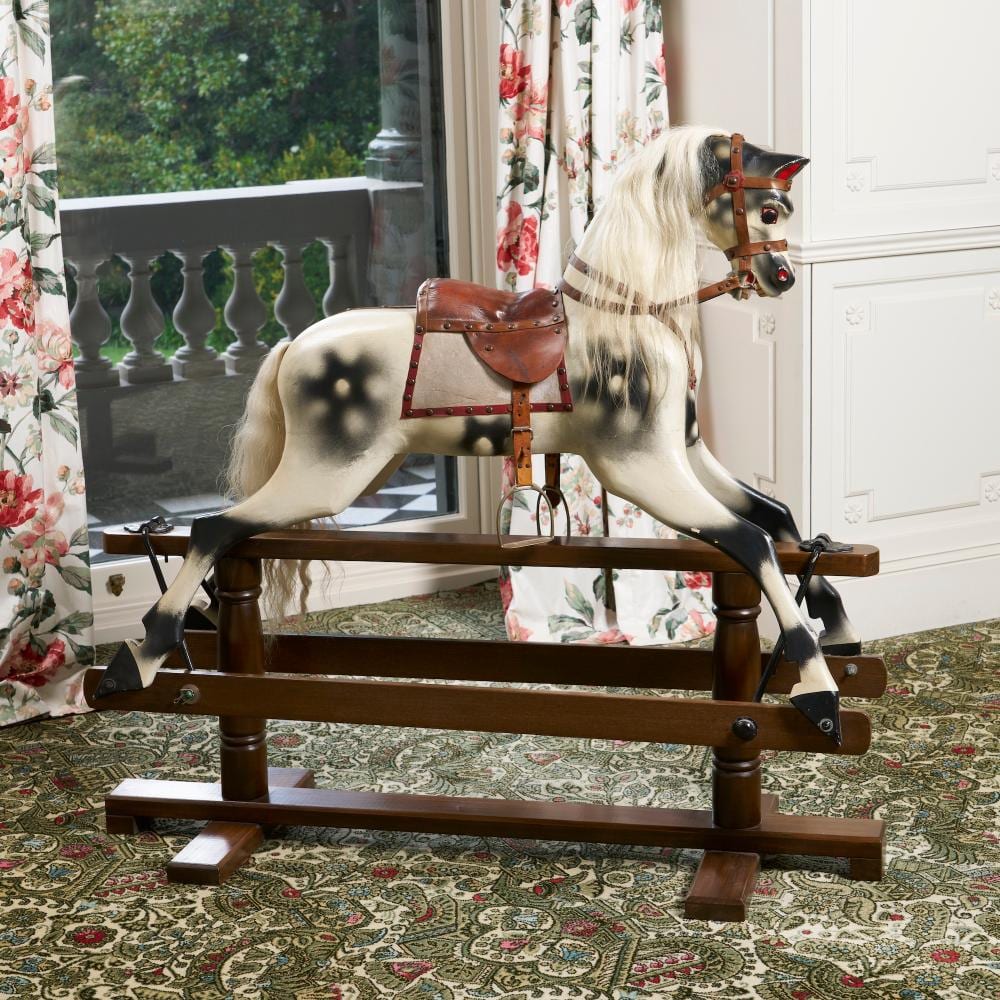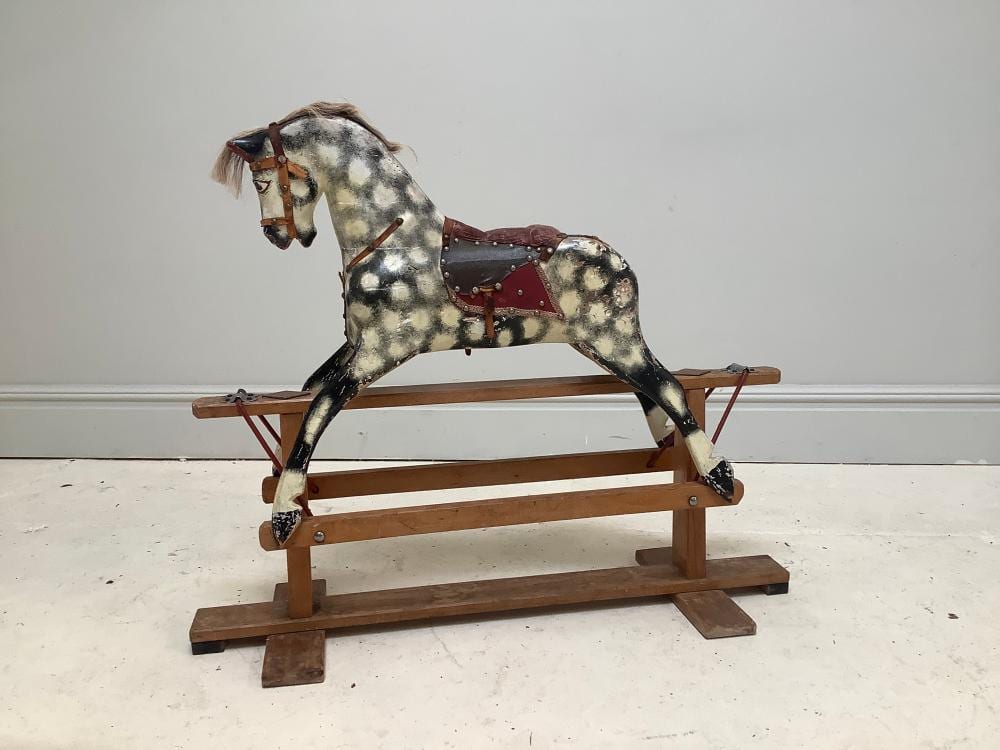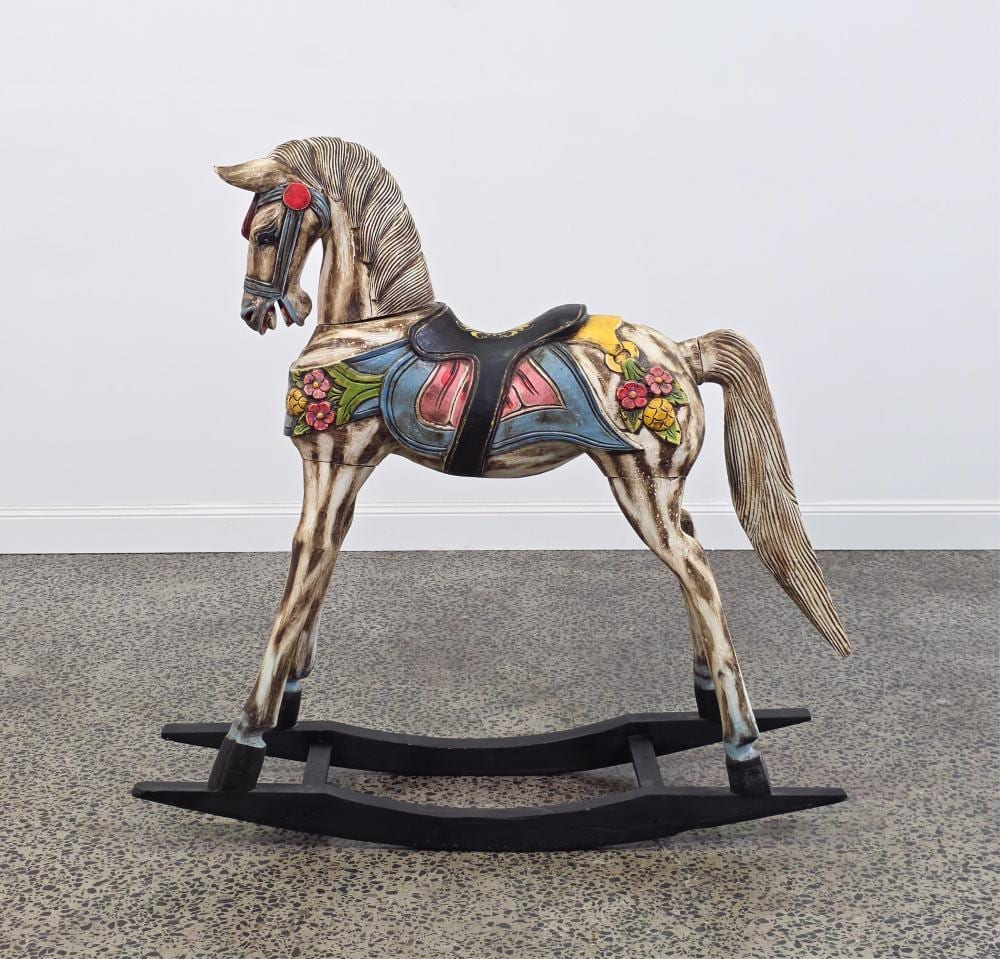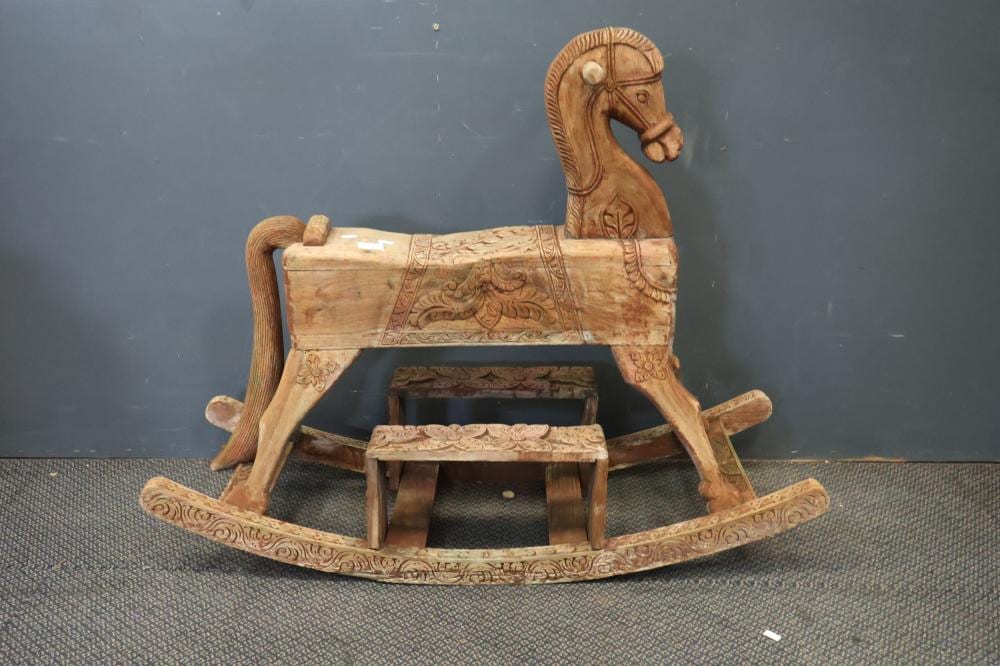
Unlocking the Worth of Your Heirloom the Ultimate Guide to Antique Rocking Horse Value: appraisal and value basics
Unlocking the Worth of Your Heirloom the Ultimate Guide to Antique Rocking Horse Value research should start with identification, condition, provenance, and item-specific market evidence. Use this guide to compare the signals that matter before paying for a formal appraisal or deciding whether to sell.
Antique rocking horse appraisal checklist
Antique rocking horses sit at the crossroads of folk art, toy history, and interior design. They can be modest decorative purchases—or serious six-figure museum pieces in rare cases. Most fall somewhere between those poles, and the difference usually comes down to five controllable variables: maker, age, condition/originality, size, and provenance. This guide explains how professionals evaluate each factor, how to spot key makers, and how to document your horse for a reliable appraisal and sale.
How Professionals Assess Antique Rocking Horse Value
Appraisers typically start with a structured rubric. Think of value as the outcome of five major levers, with several nuanced modifiers.
Maker and rarity
- Named British makers such as F. H. Ayres, G & J Lines, and early Lines Bros (Tri-ang) often carry premiums. Collinson (Blackpool) has a strong mid-century following. Continental and American examples can be valuable, but the UK market is particularly deep.
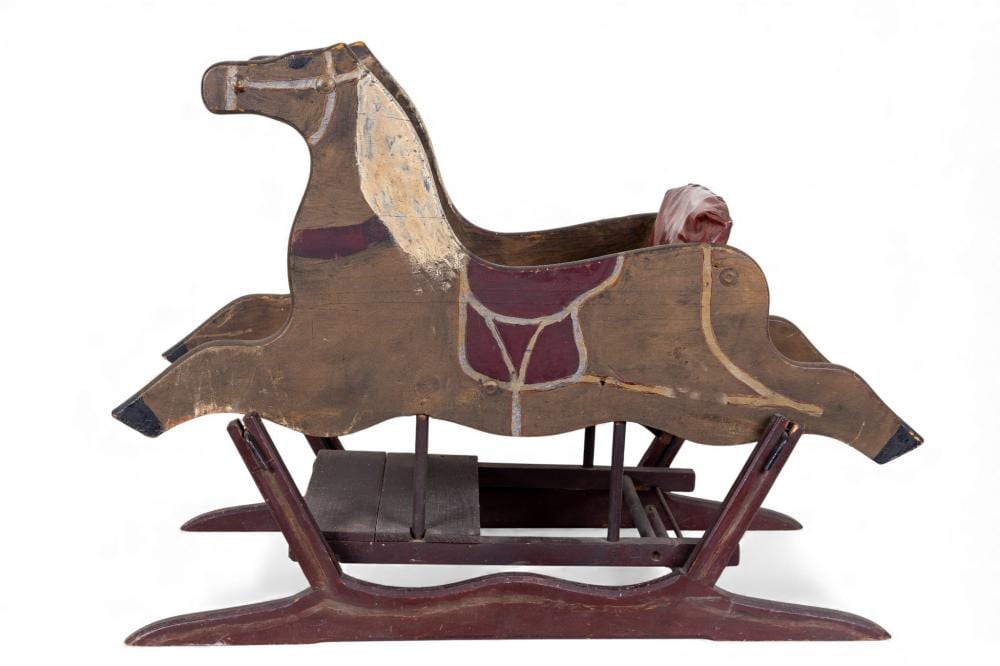
- Unusual forms—very early bow-rockers, large “dapple grey” with lavish carving, or rare mechanical variants—perform strongly.
Age and type
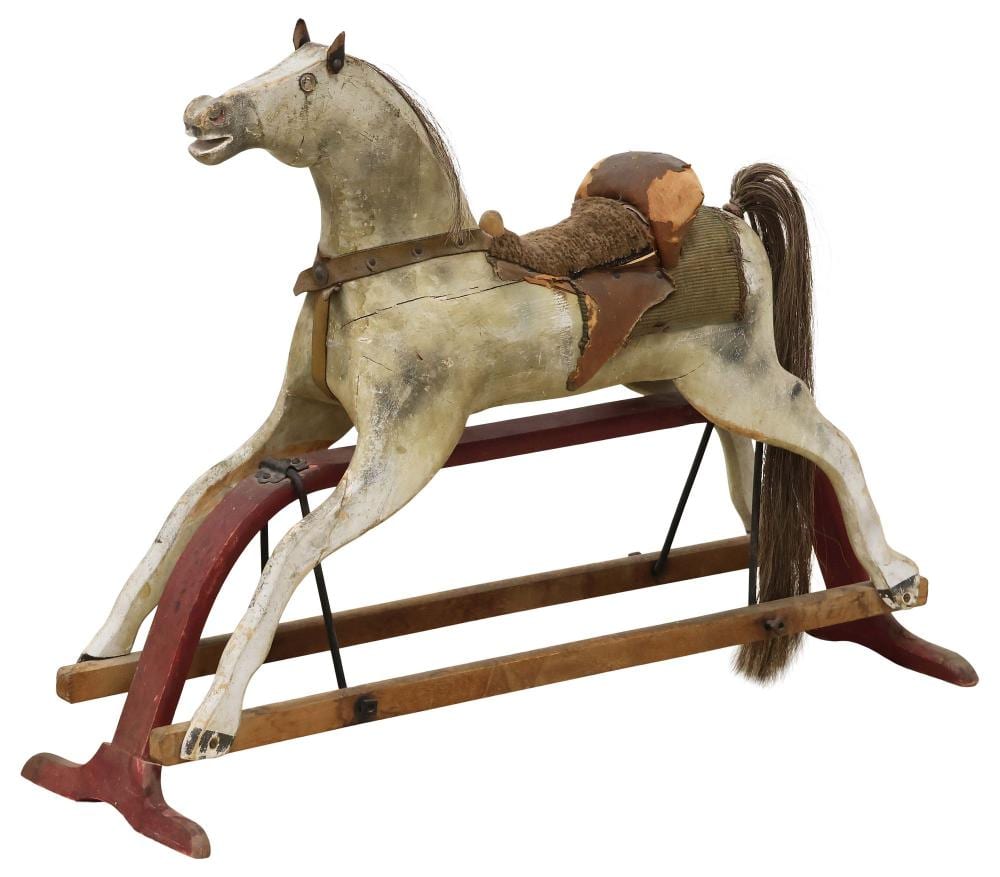
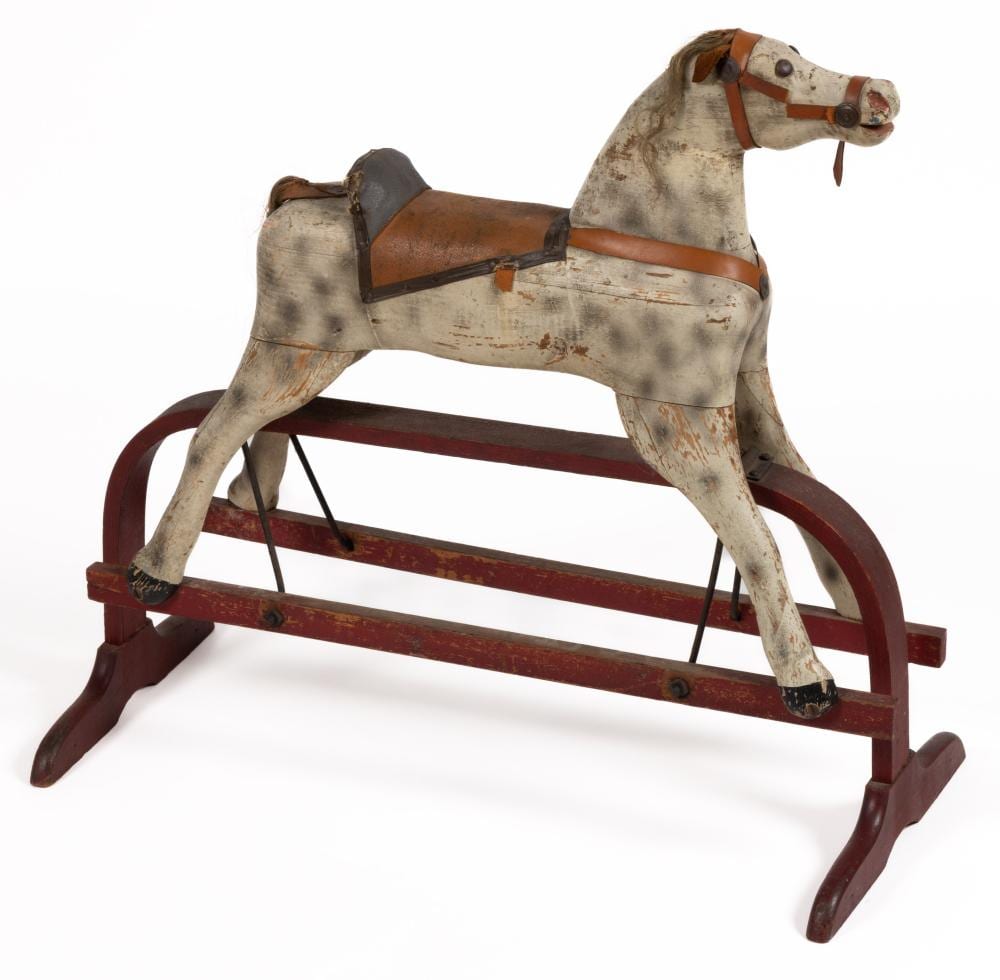
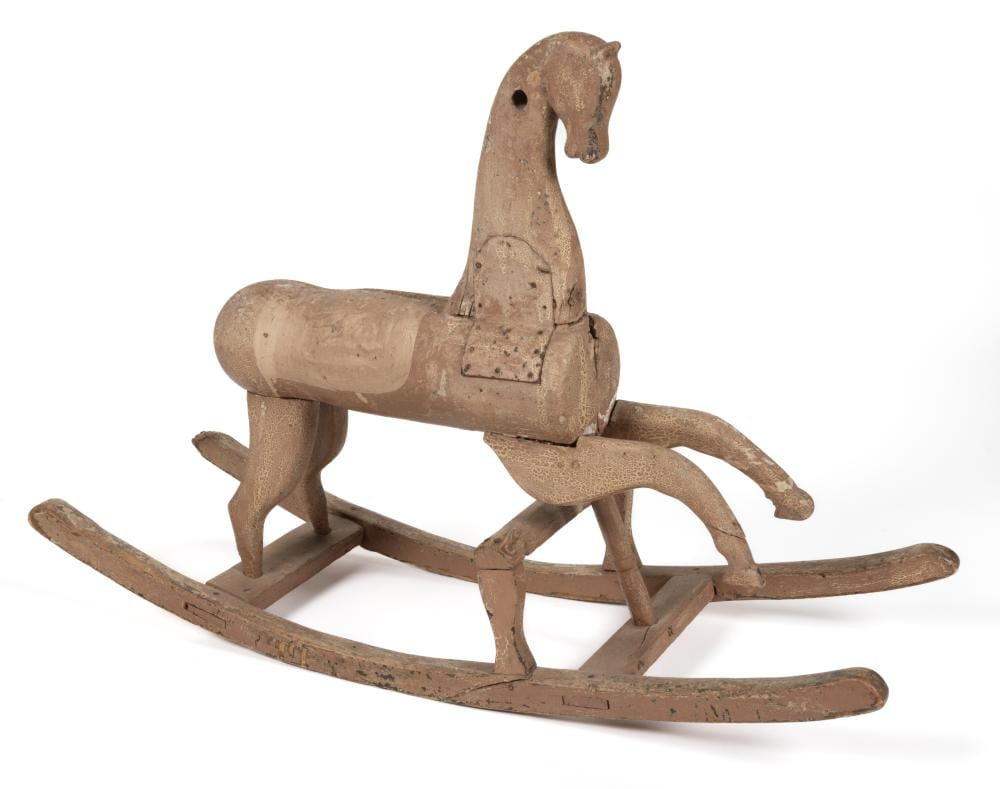
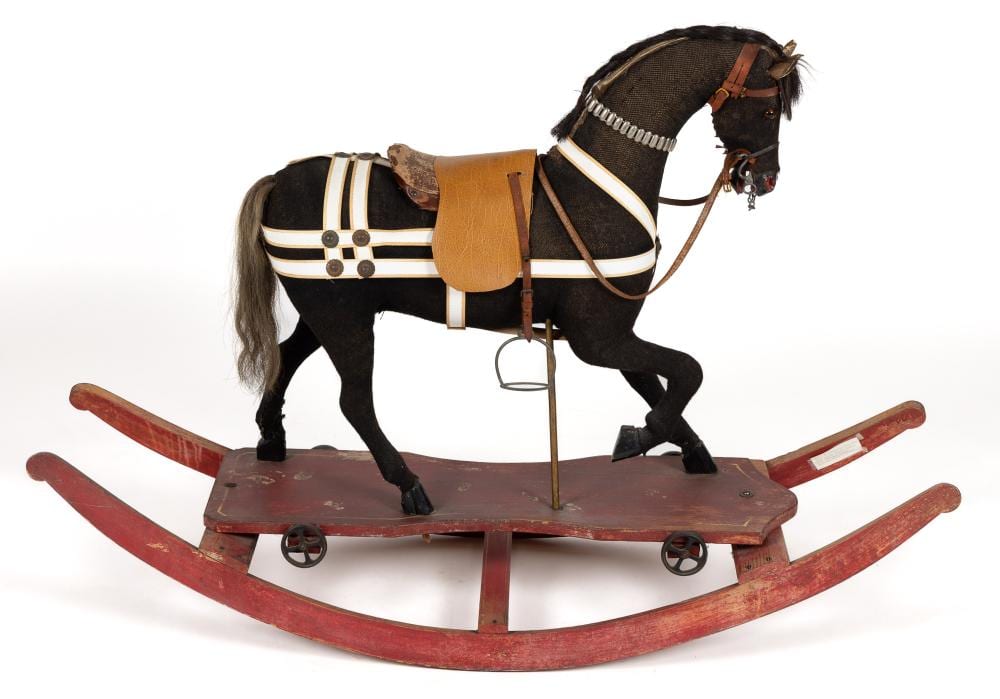
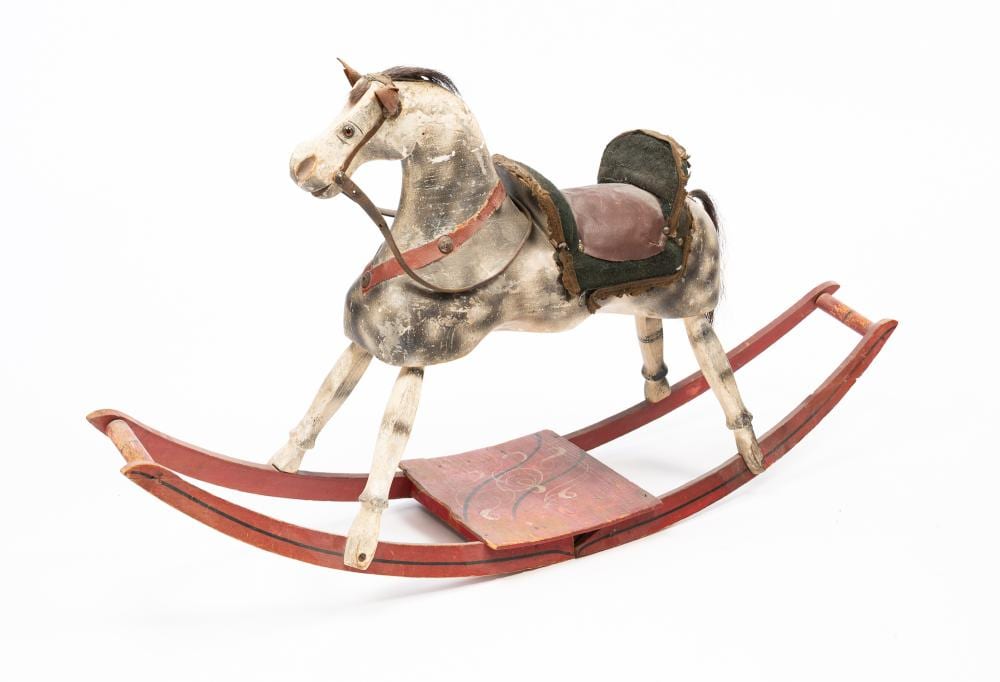
- Mid-19th-century bow rockers are generally earlier than safety-stand horses (the “safety” or “Marqua” stand becomes common from the late 19th century onward).
- Late 19th to early 20th century is the sweet spot for many collectors, with craftsmanship and condition determining the rest.
Condition and originality
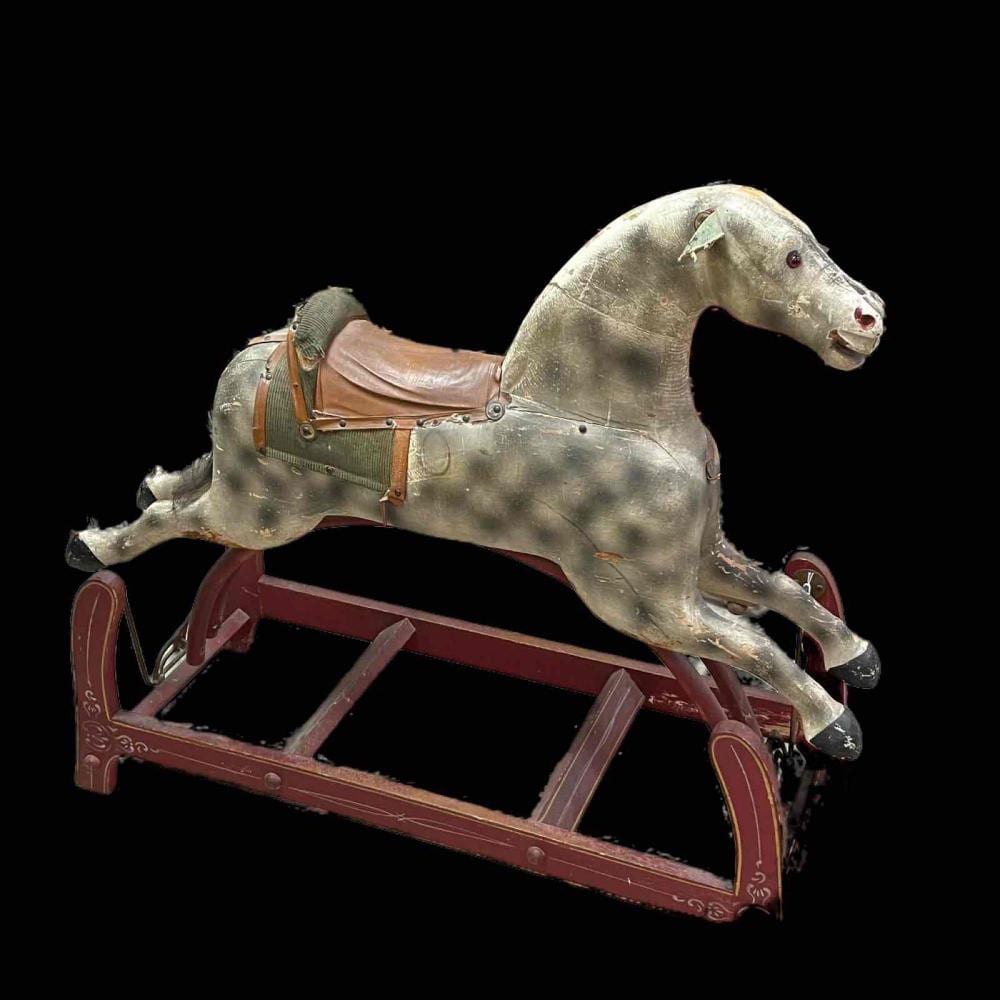
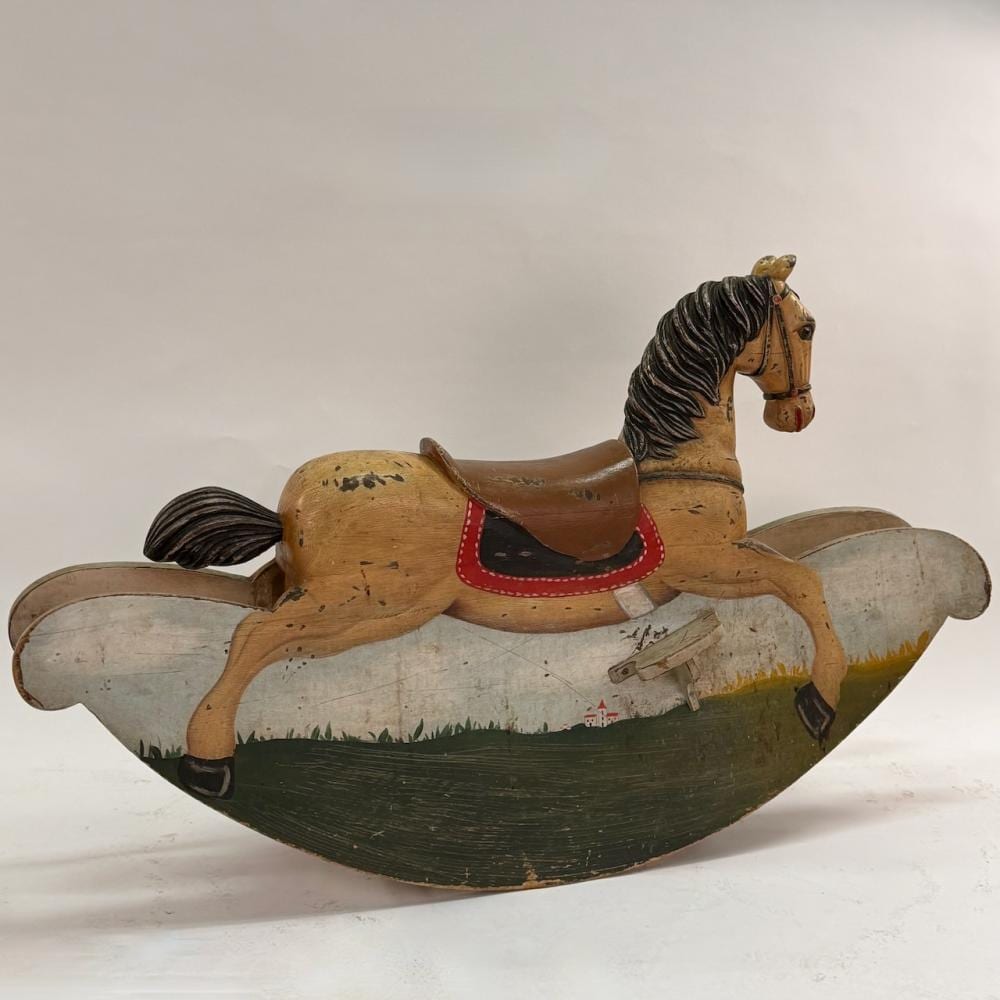
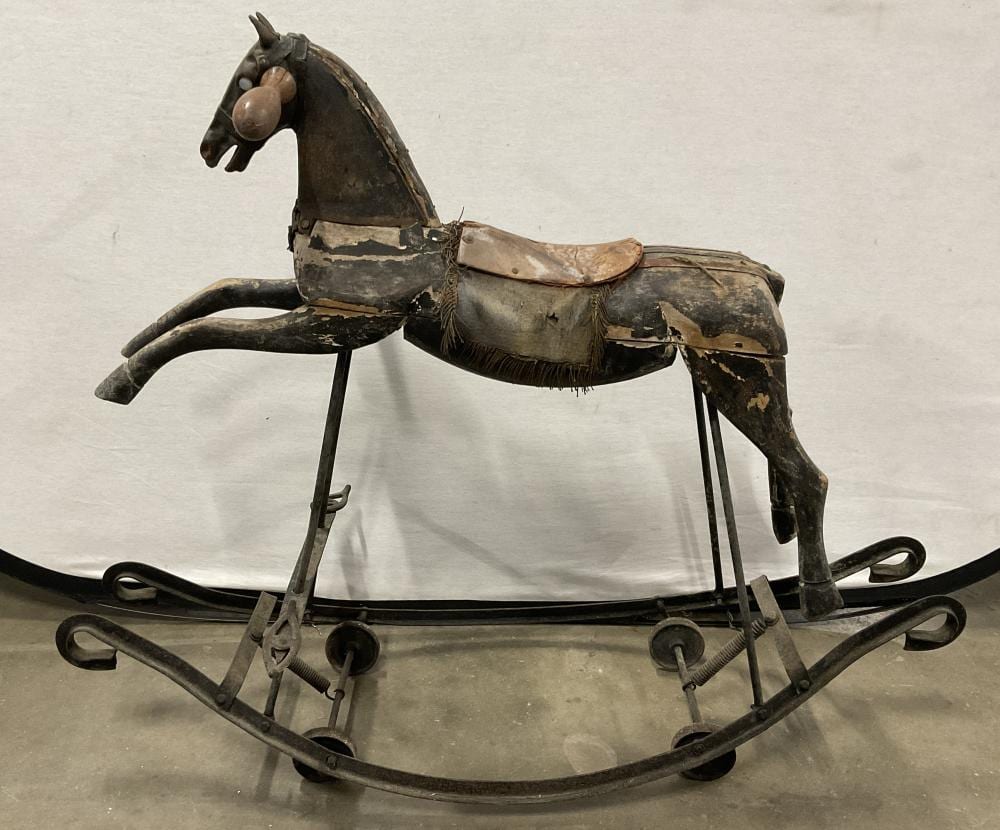
- Original paint, gesso, glass eyes, horsehair mane and tail, and period tack elevate value. Over-restoration or modern repainting usually depresses it sharply.
- Honest wear, stable craquelure, and well-documented conservation are usually acceptable; structural cracks, worm damage, and replaced stands are penalized unless sensitively addressed.
Size and presence
- Larger horses, especially extra-large nursery sizes, command stronger prices. Market measurements are often reported “height to ear” (HtE). Bigger displays better and was costlier to produce.
Provenance and documentation
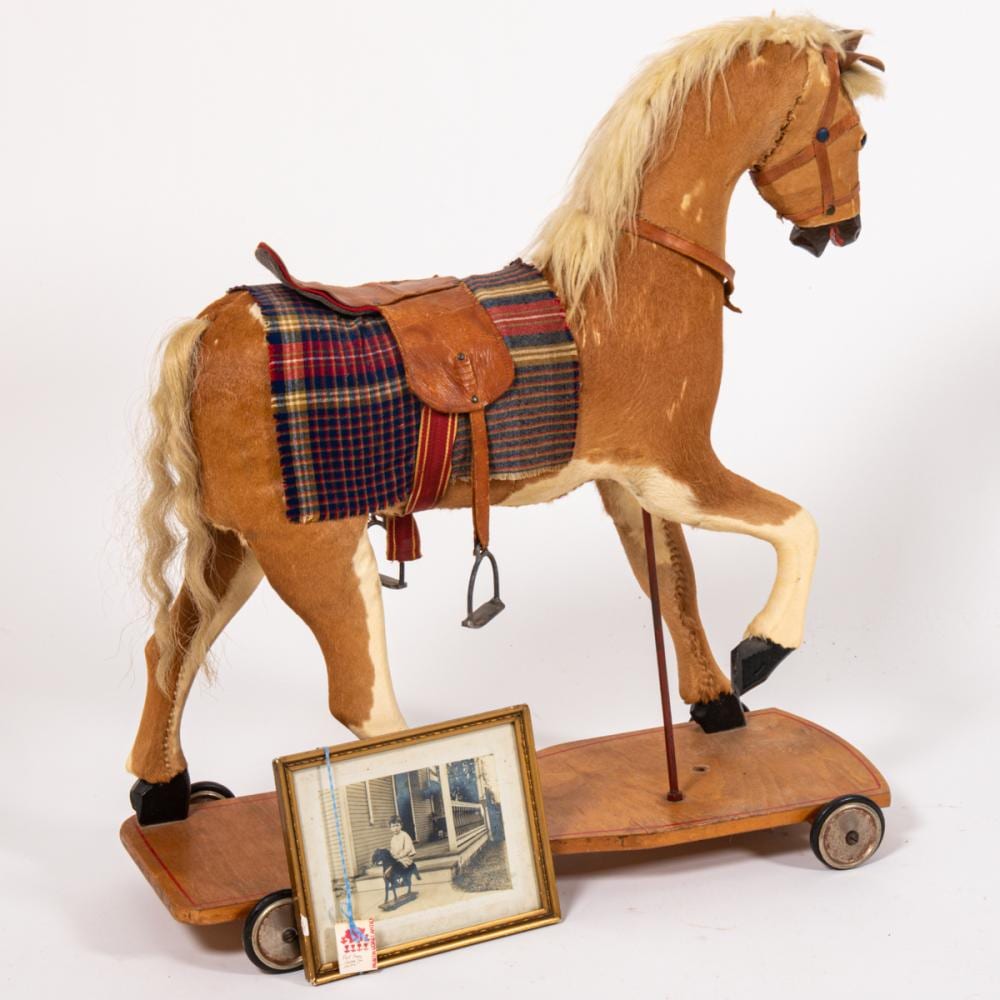
- Maker labels, dealer receipts, old nursery photos, estate inventories, and exhibition records add credibility and value. A clear chain of ownership provides confidence.
Modifier effects:
- Aesthetics: Sympathetic dapple, expressive carving, and elegant stance add appeal.
- Region: UK buyers pay premiums for British makers; shipping affects cross-border trade.
- Period taste: Demand ebbs and flows with interior trends; original paint is consistently prized.
Dating And Identifying: Makers, Materials, And Tells
A confident identification comes from triangulating stand type, construction, materials, measurements, and maker-specific details like label styles and dapple patterns.
Stand types and dating cues
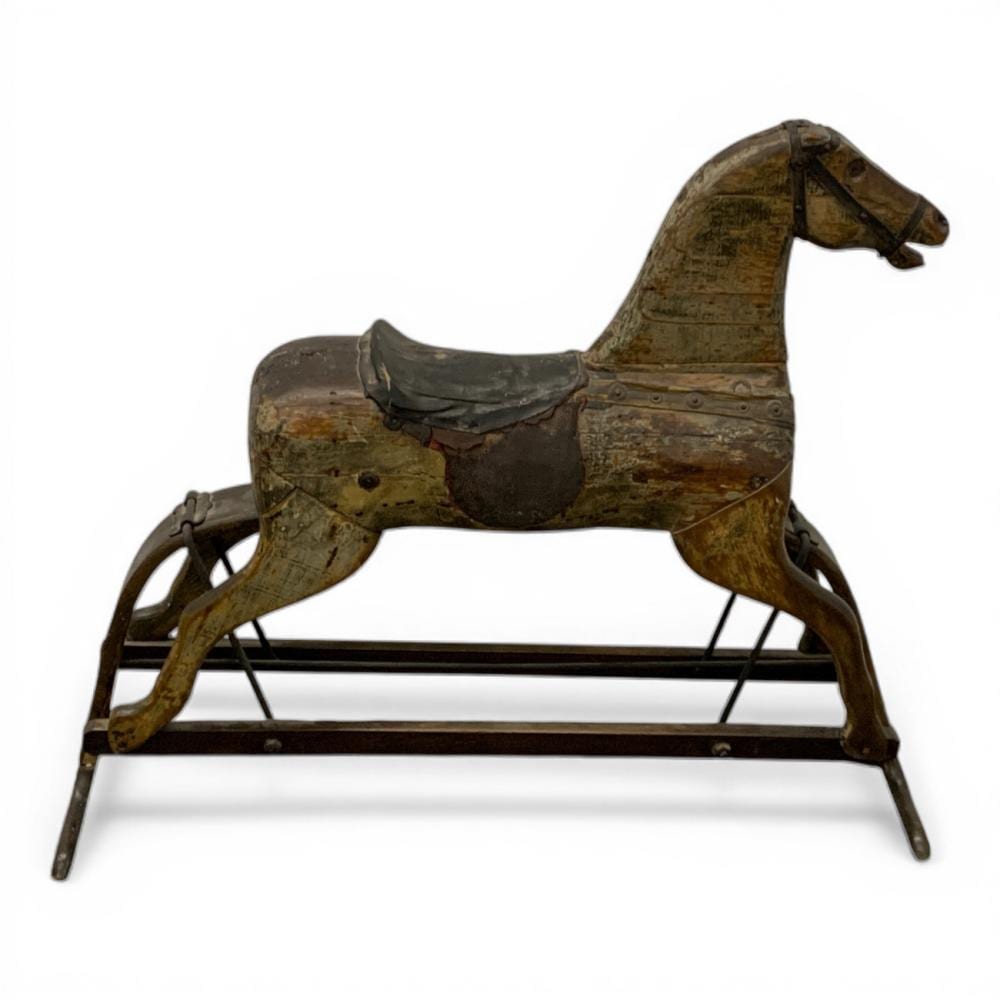
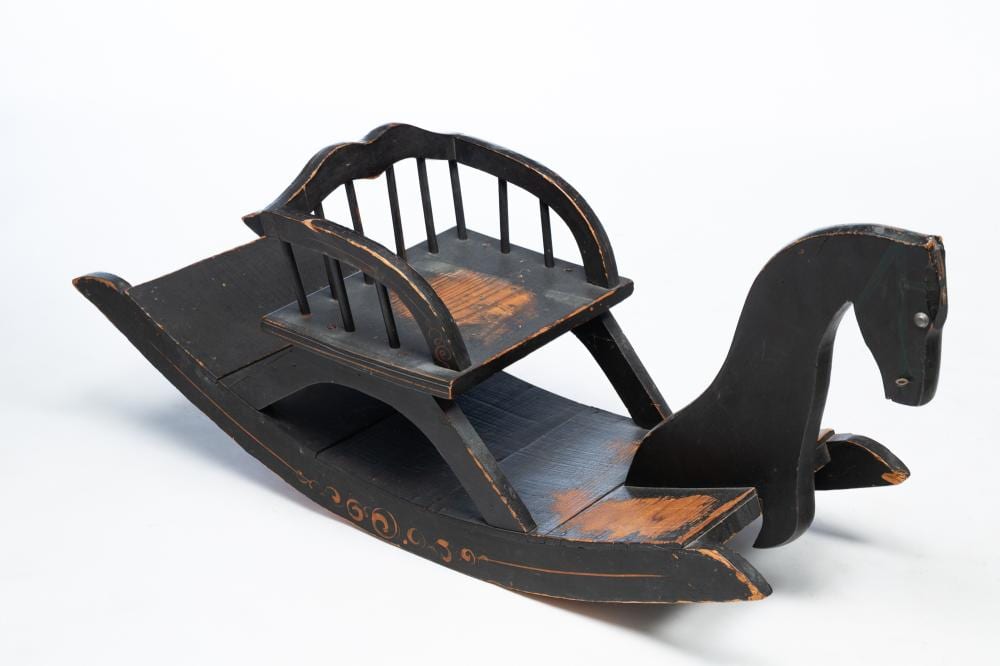
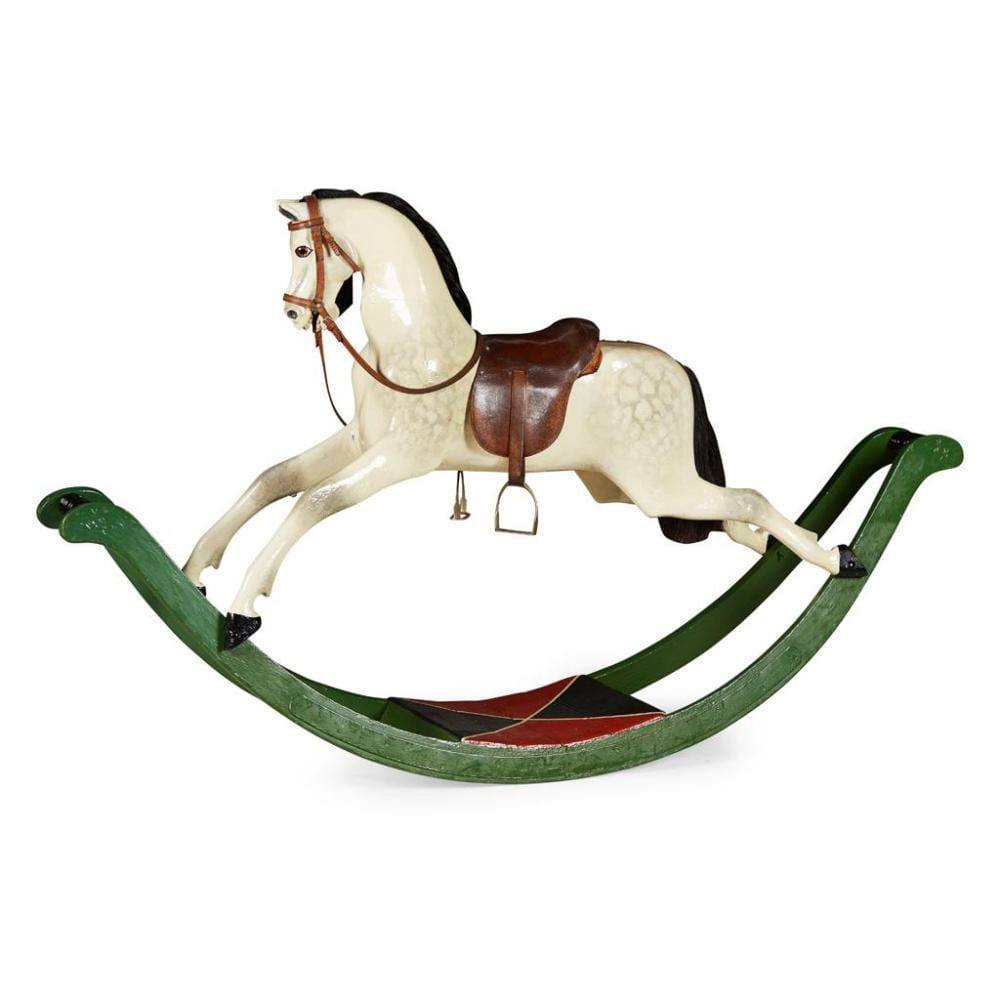
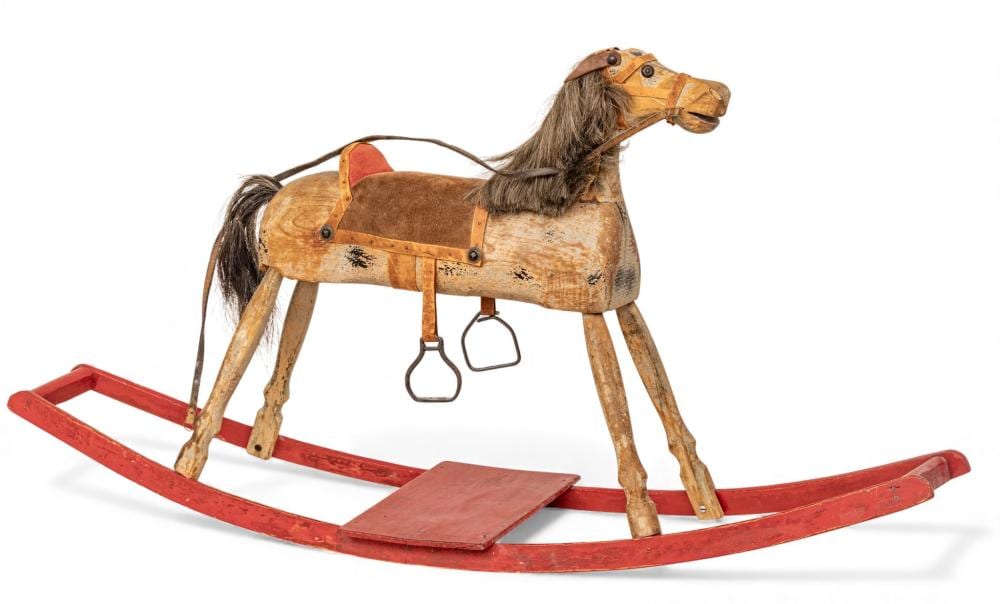
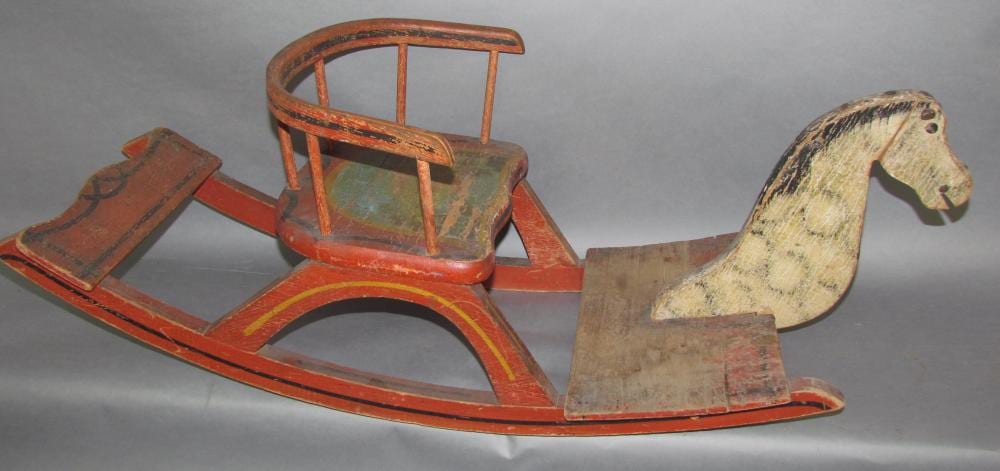
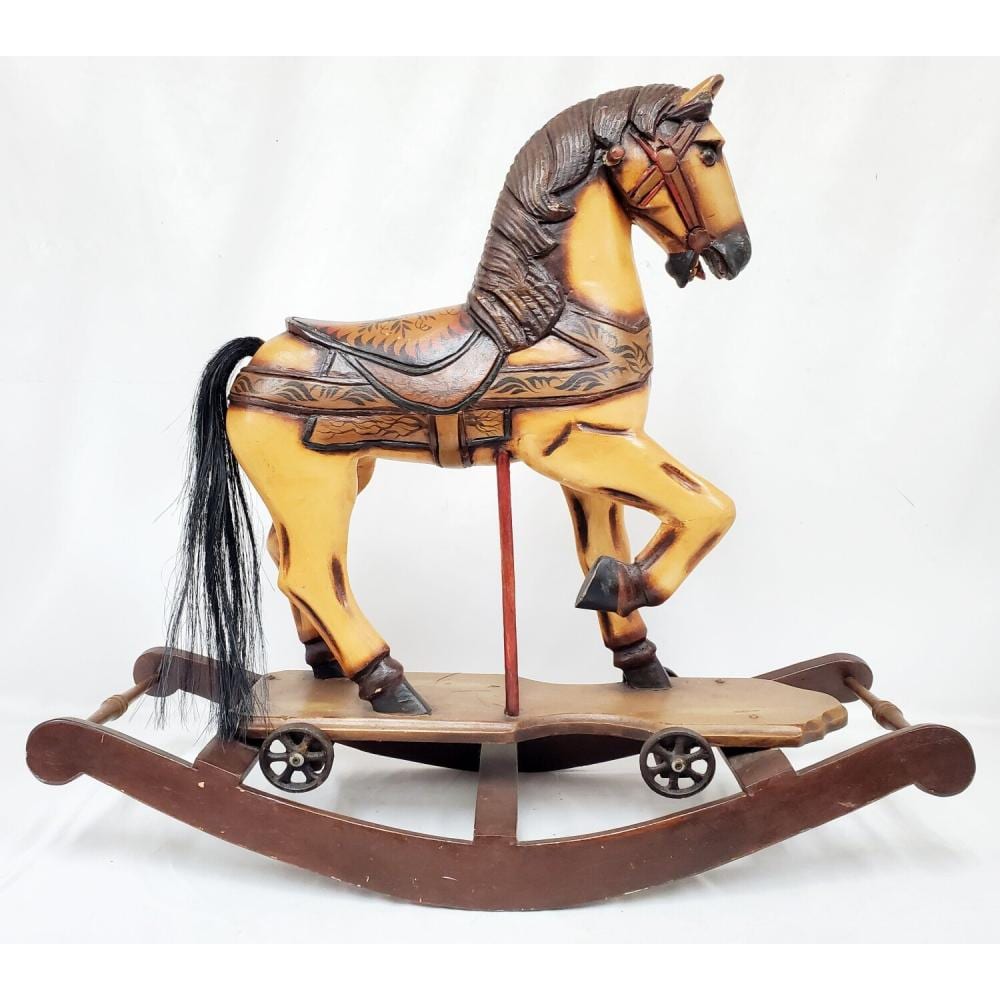
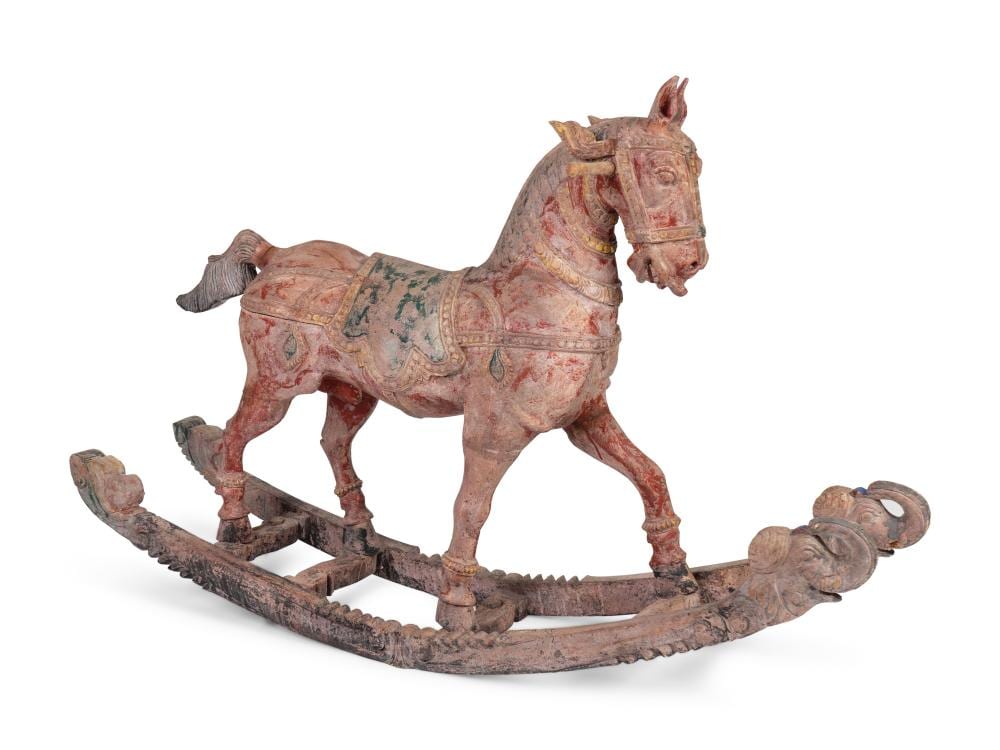
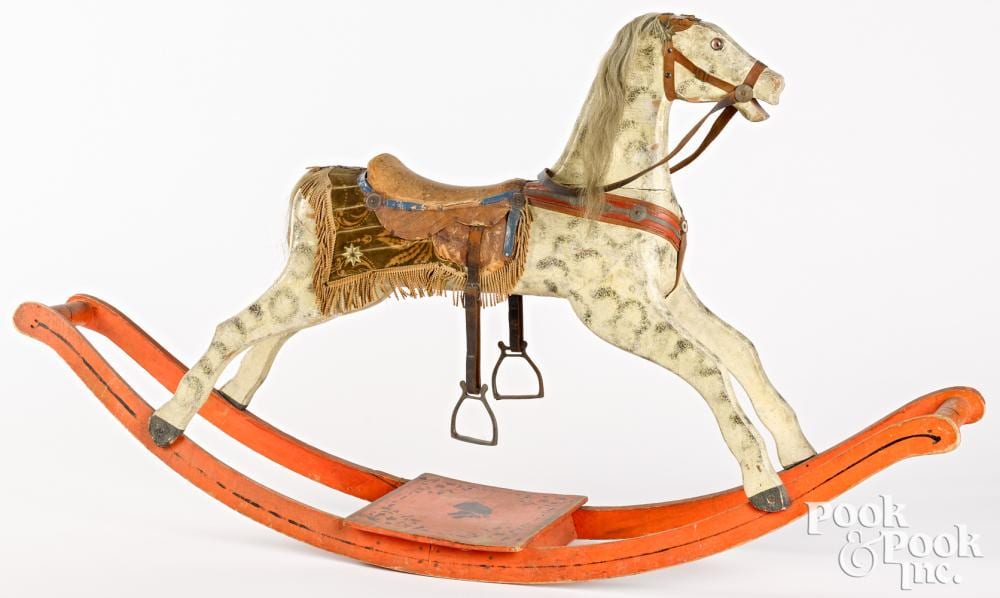
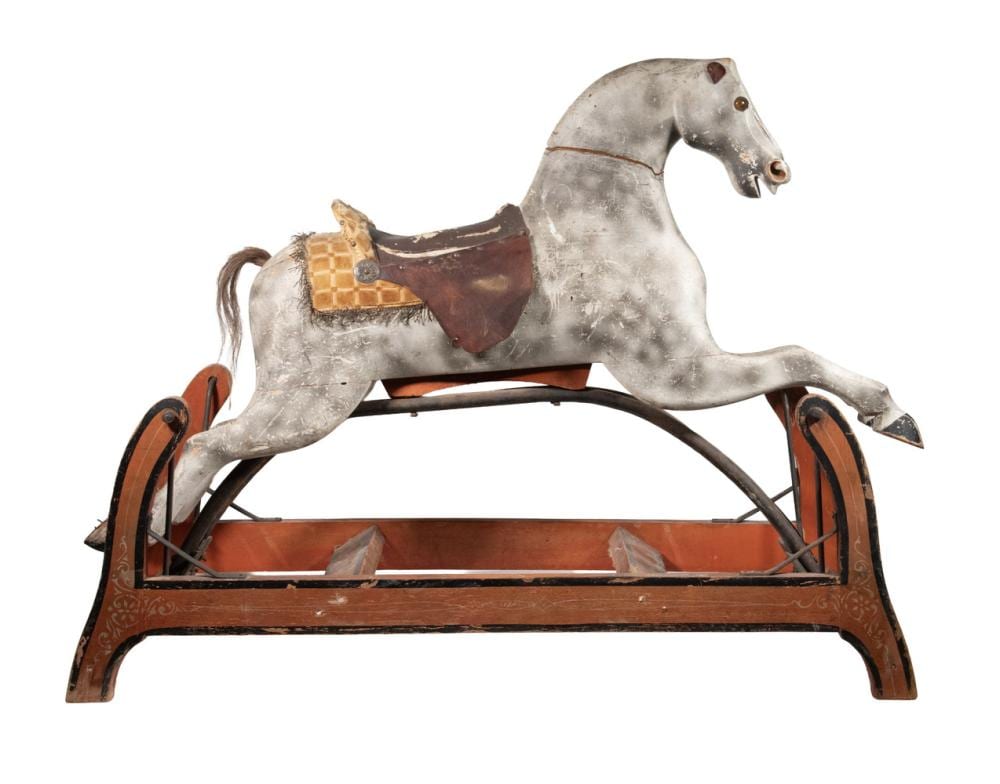
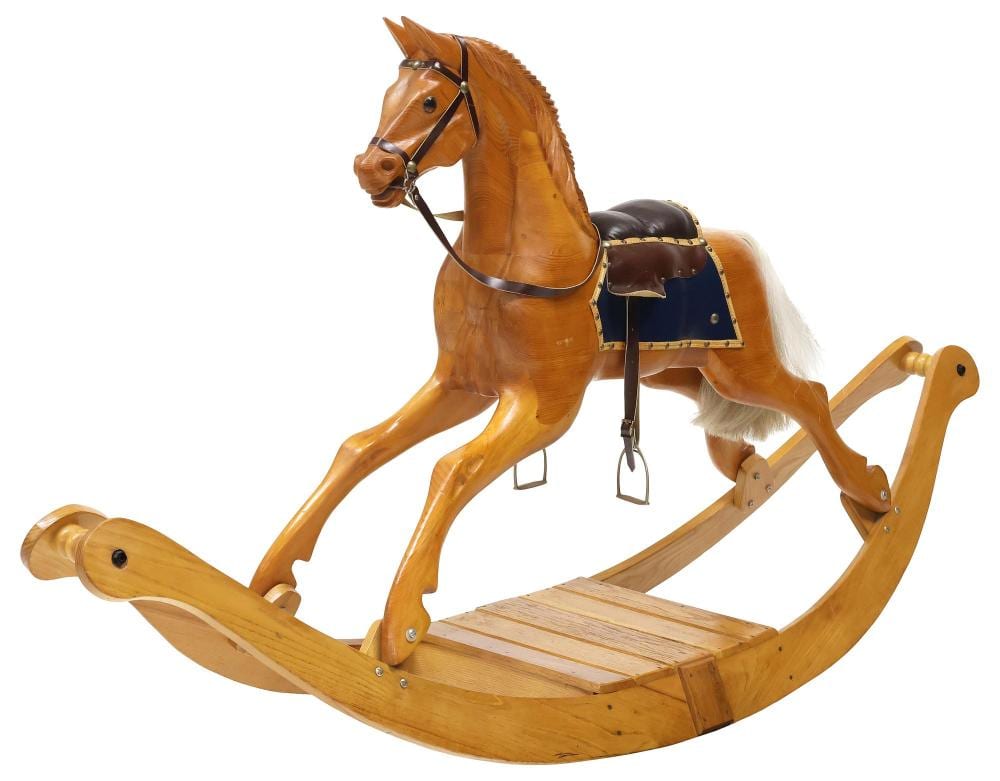
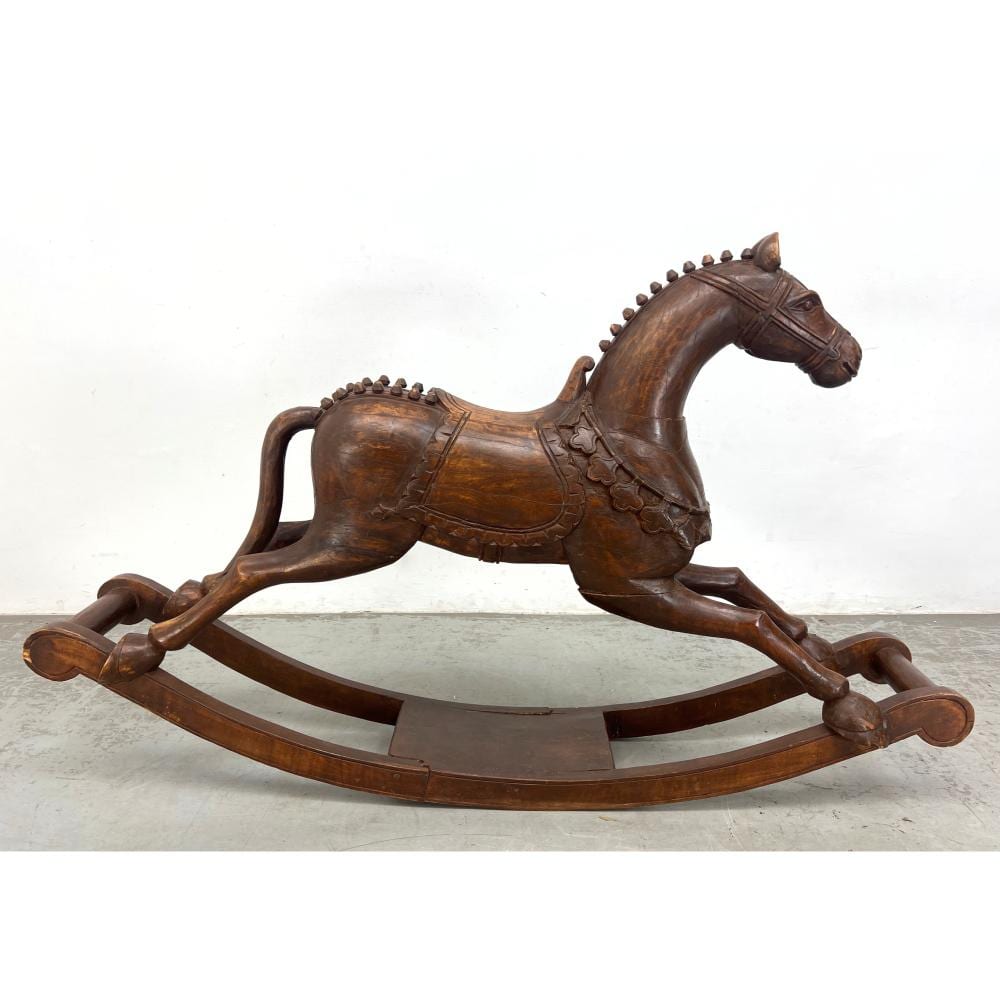
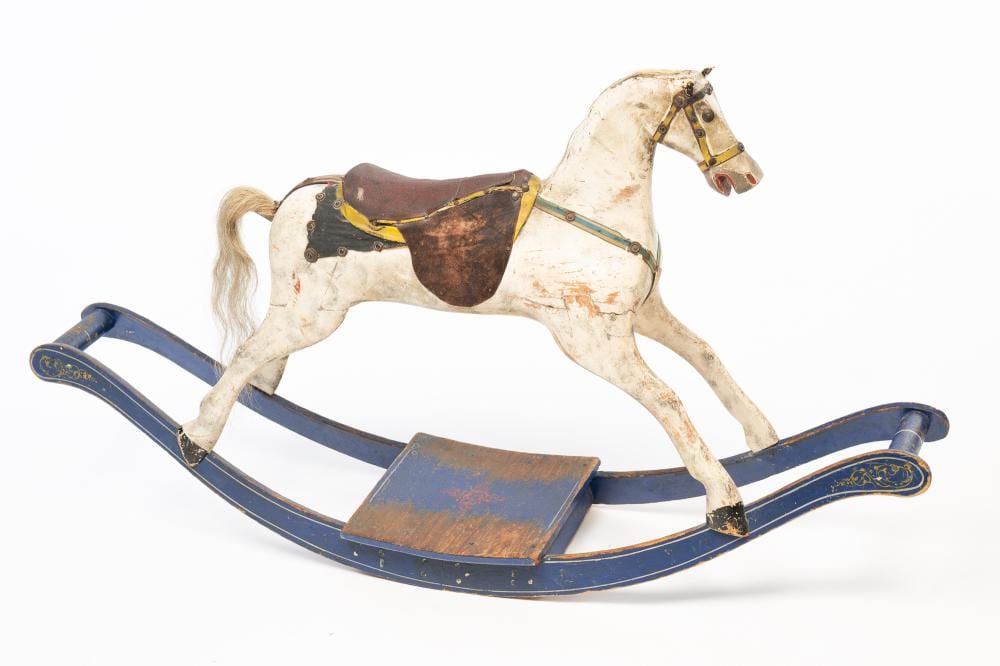
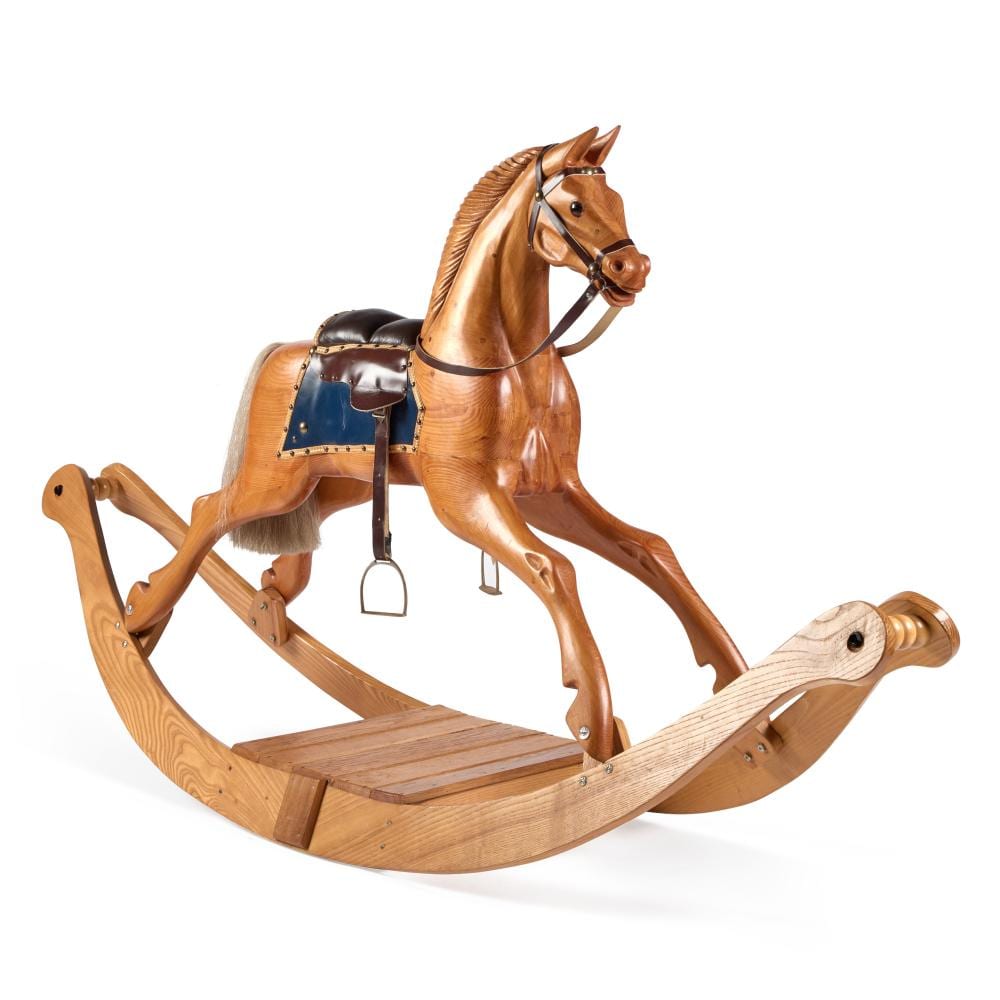
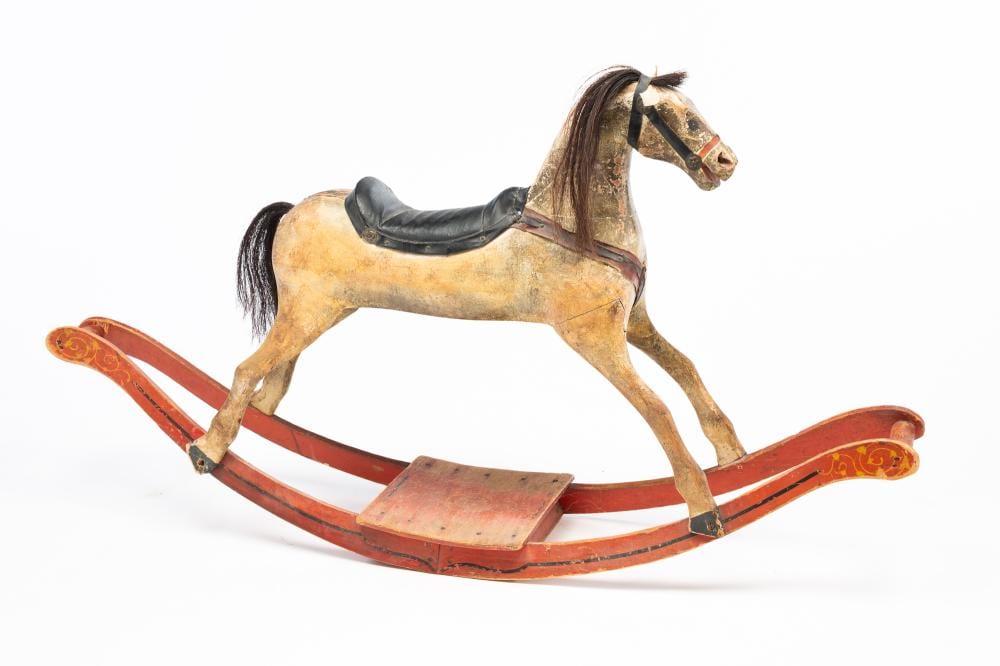
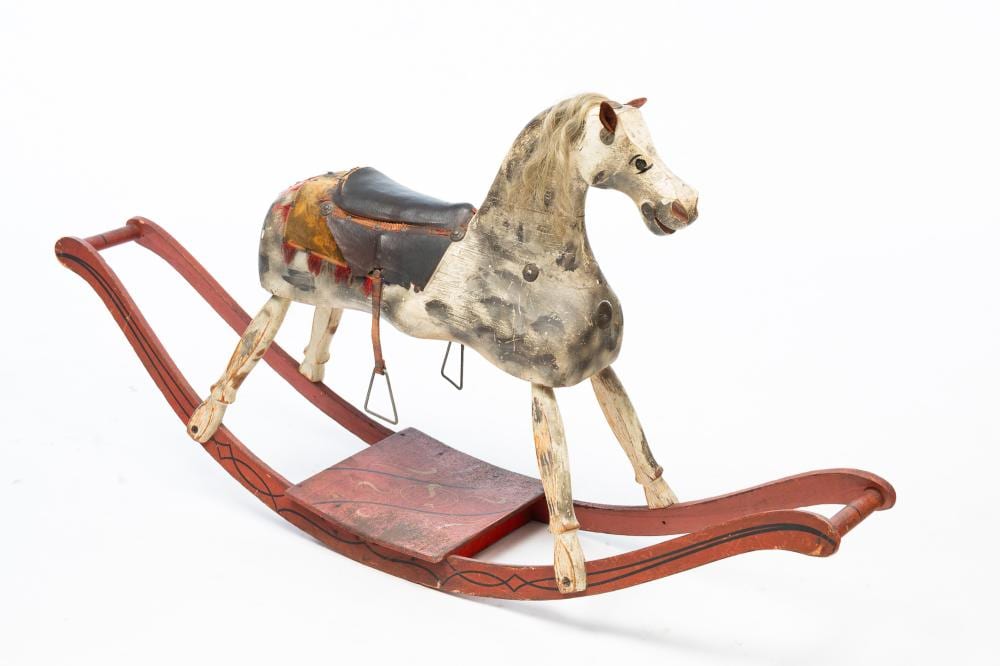
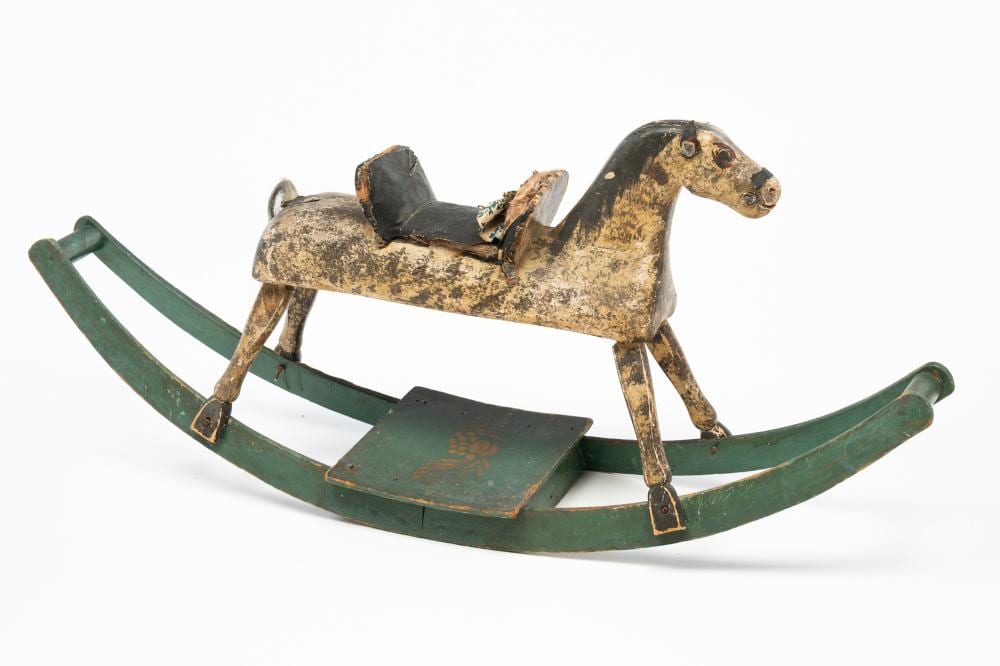
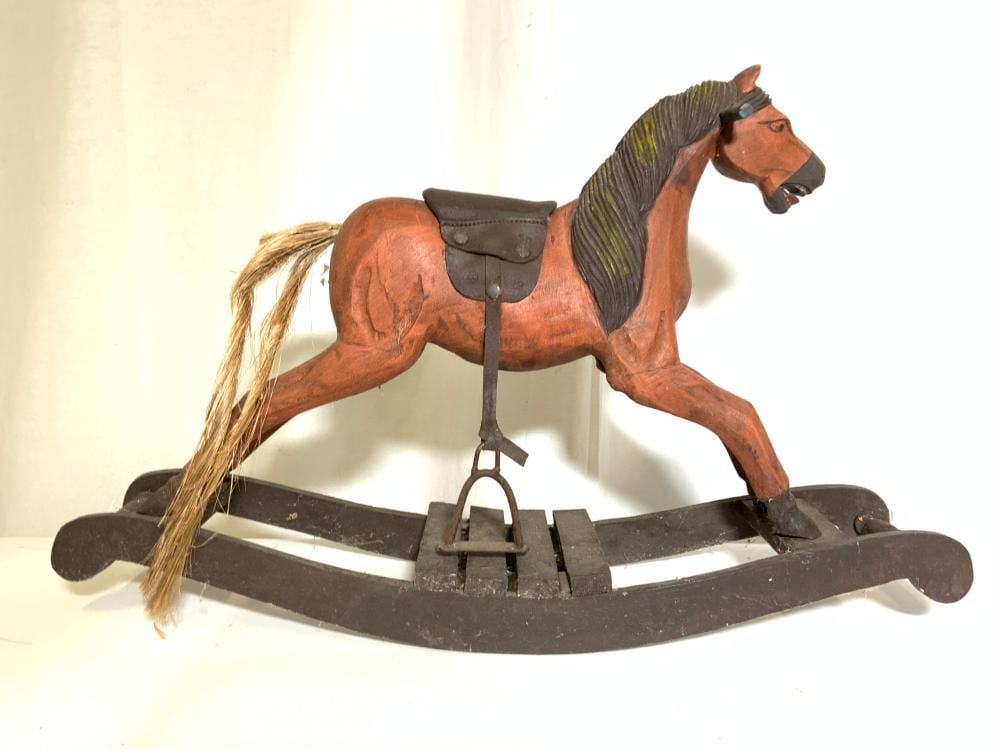
- Bow rocker (curved runners):
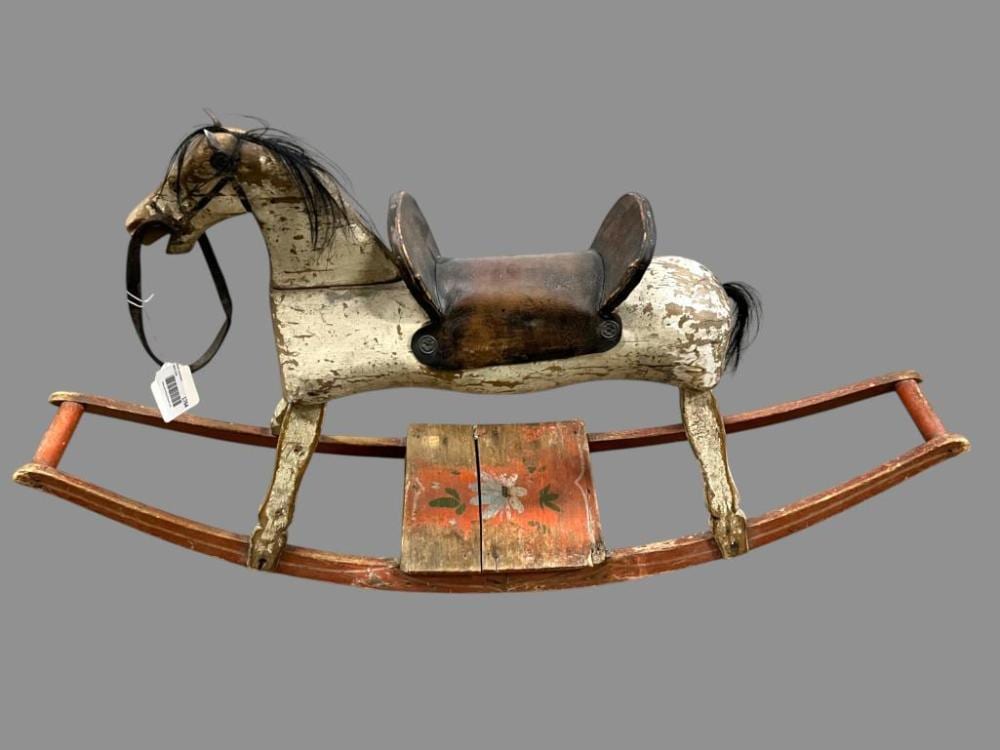
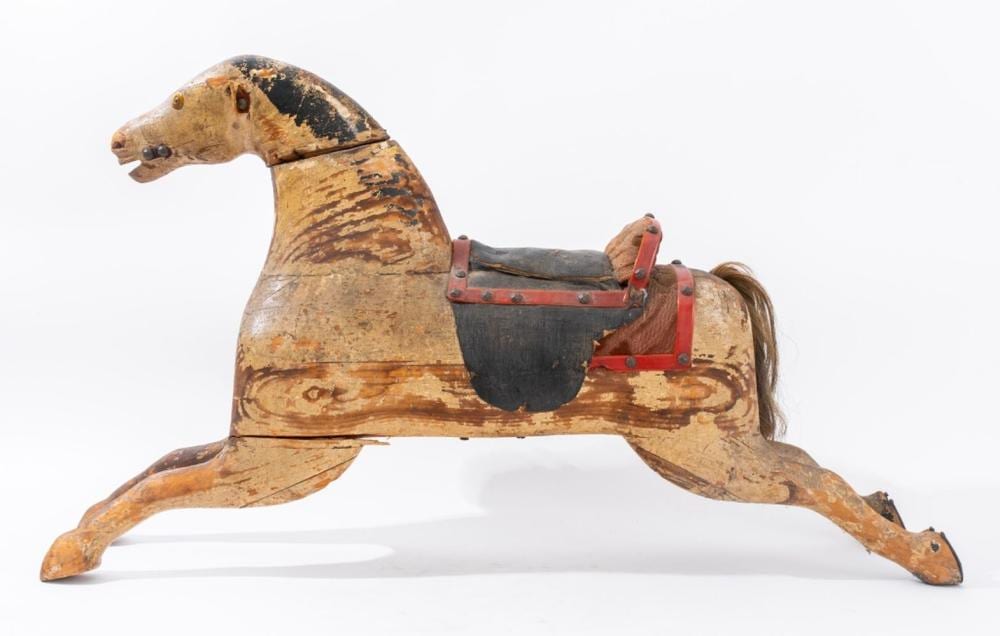
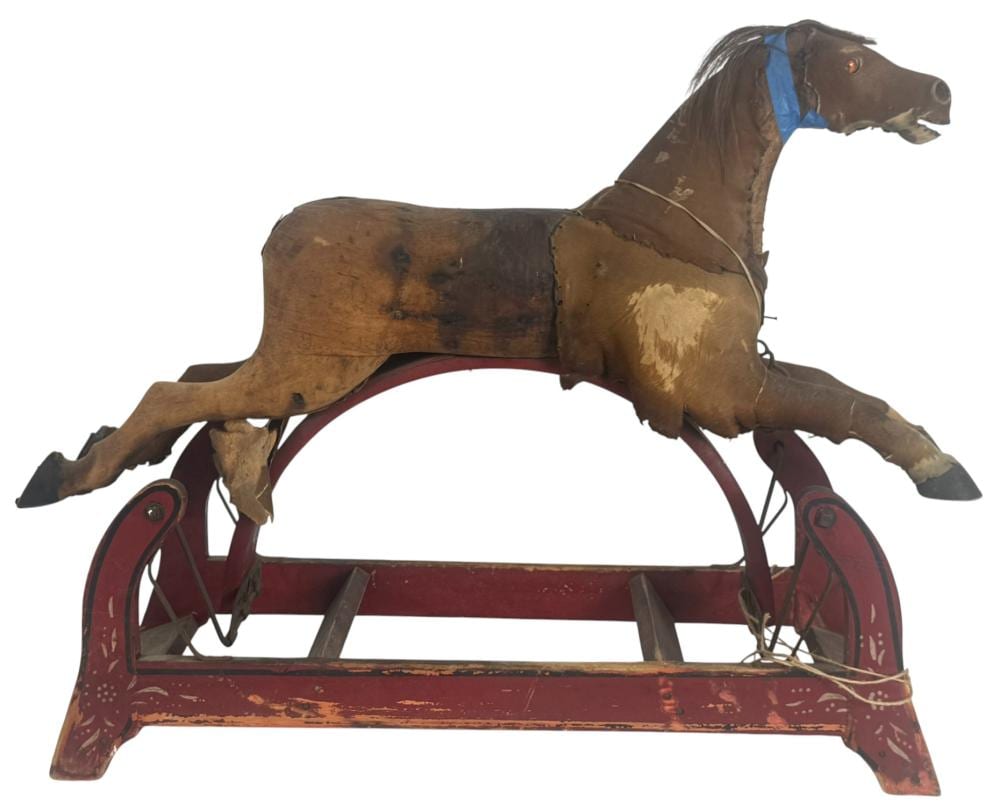
- Common in mid-19th century. Earlier examples often have hand-cut joints and hand-forged iron straps. Many were later “converted” onto safety stands—conversions can complicate dating.
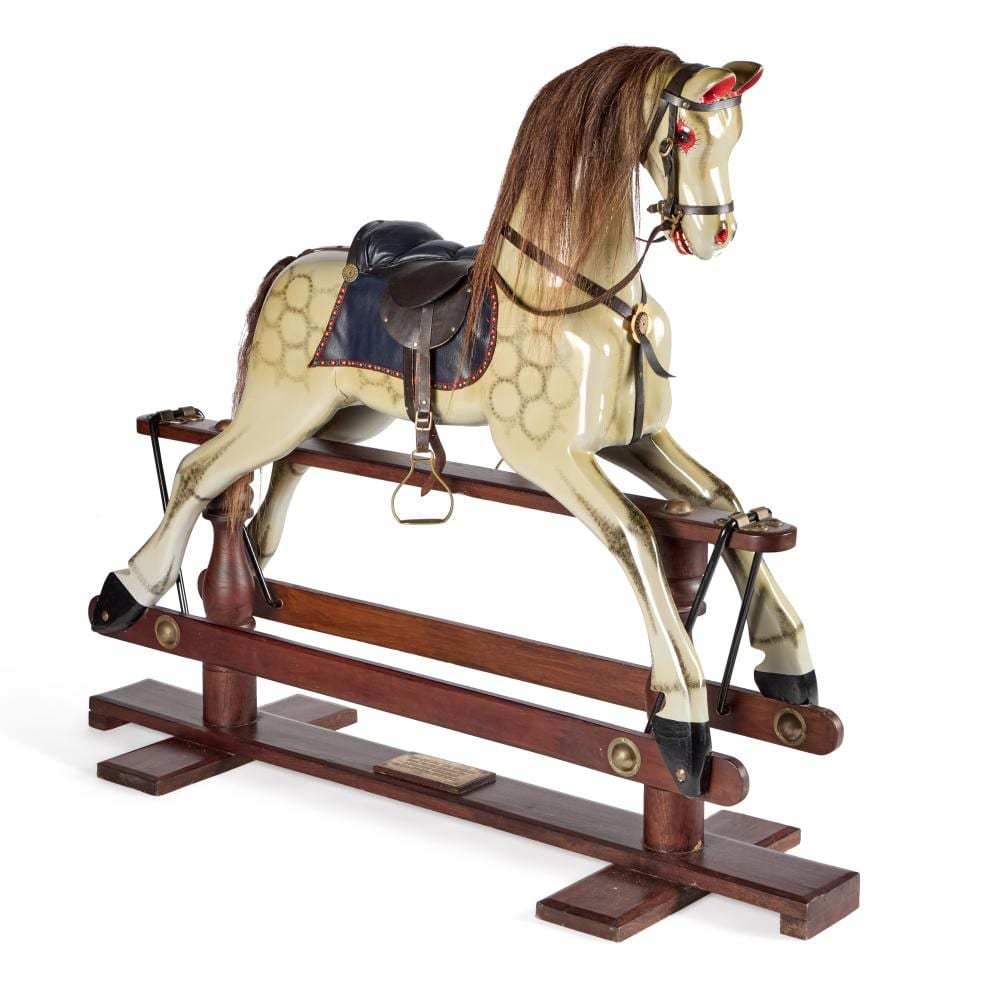
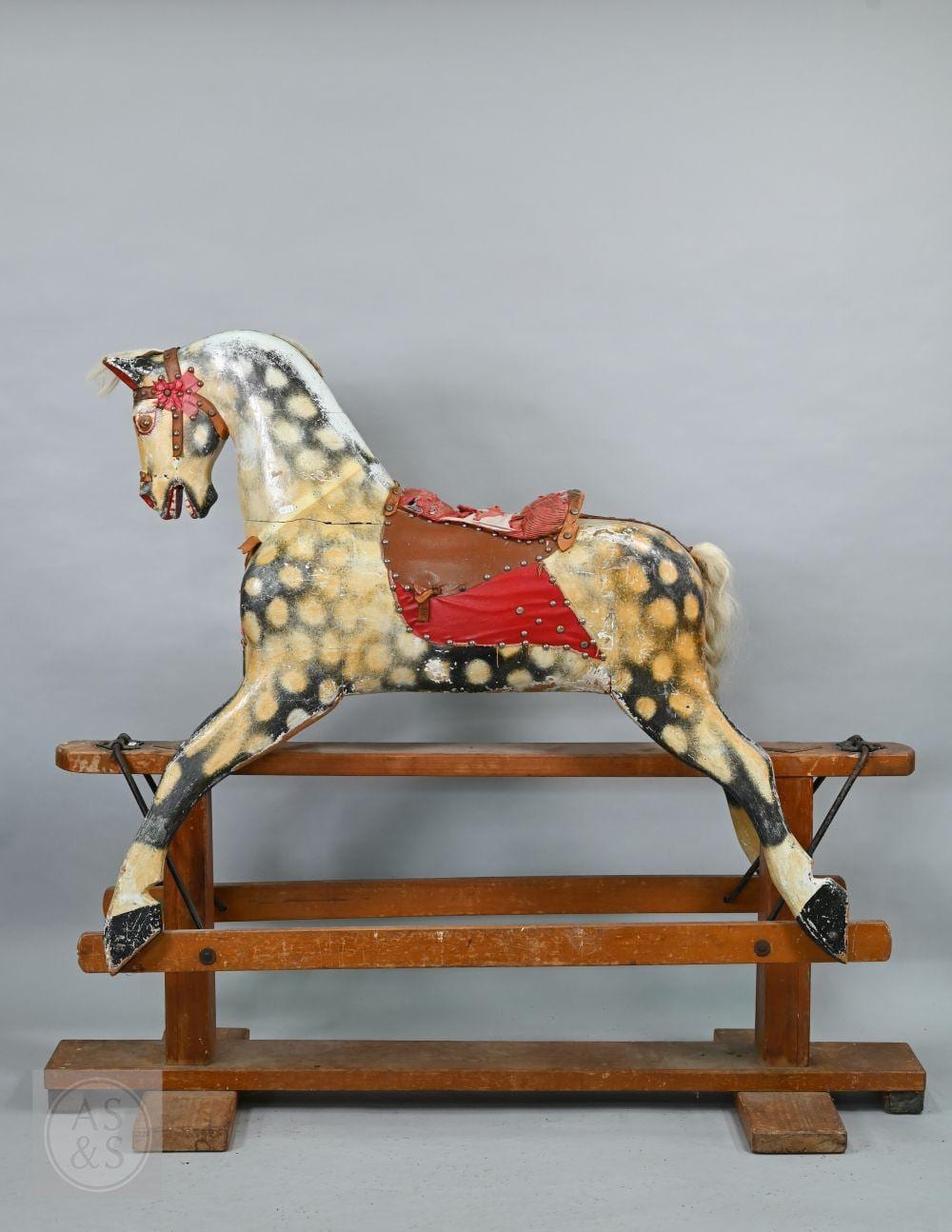
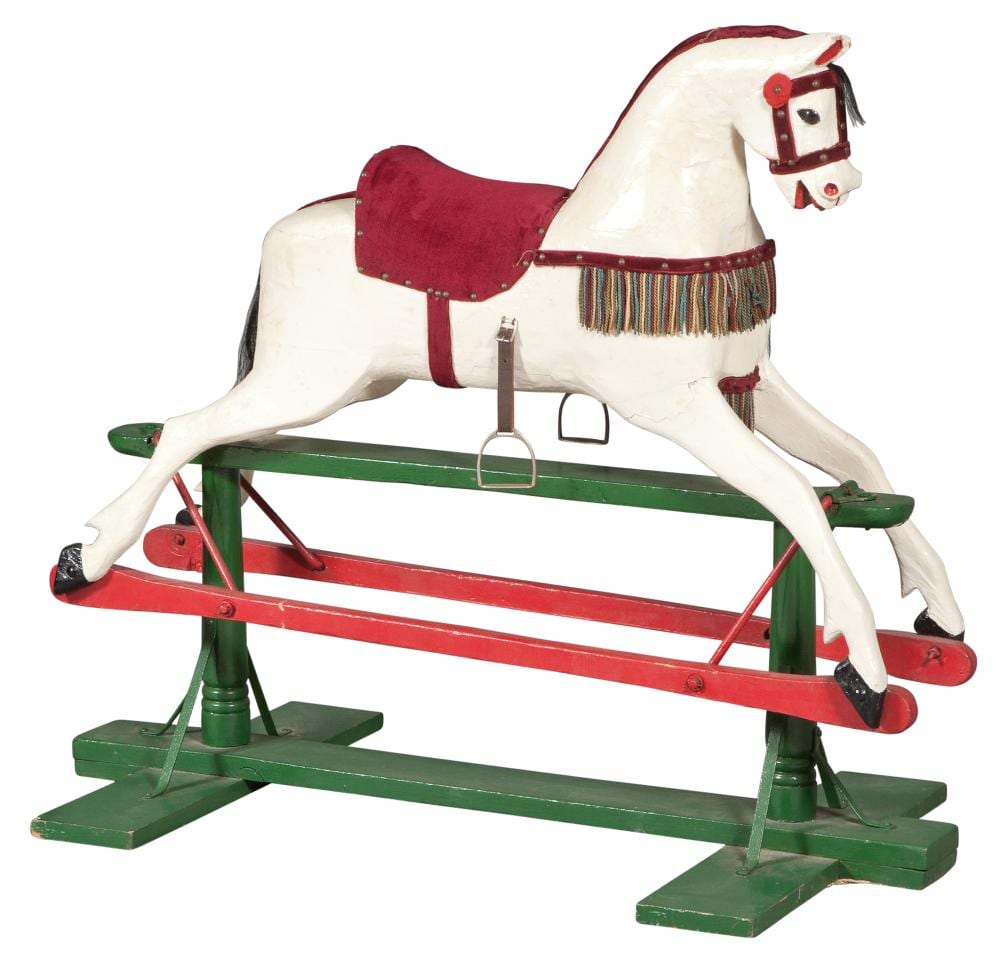
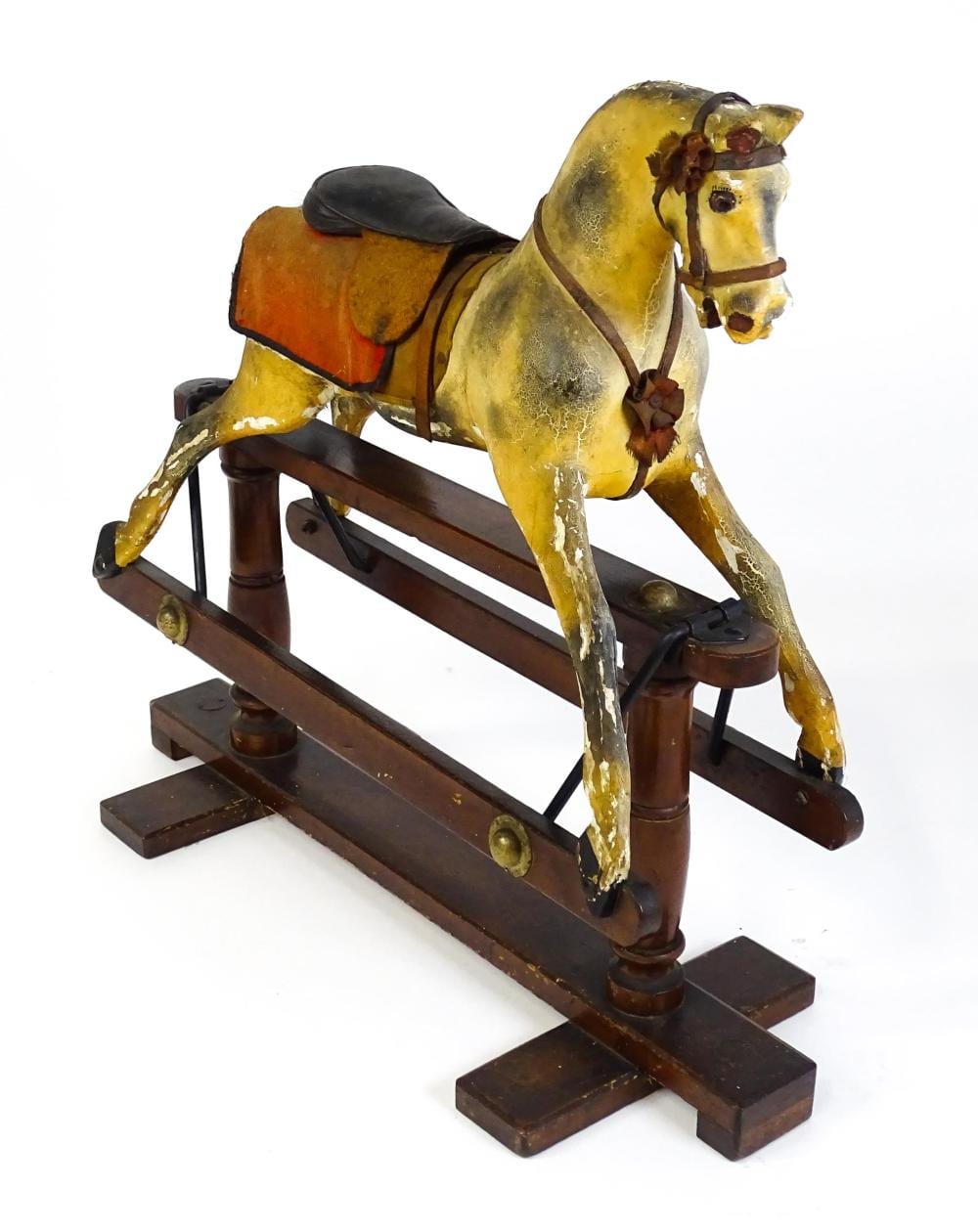
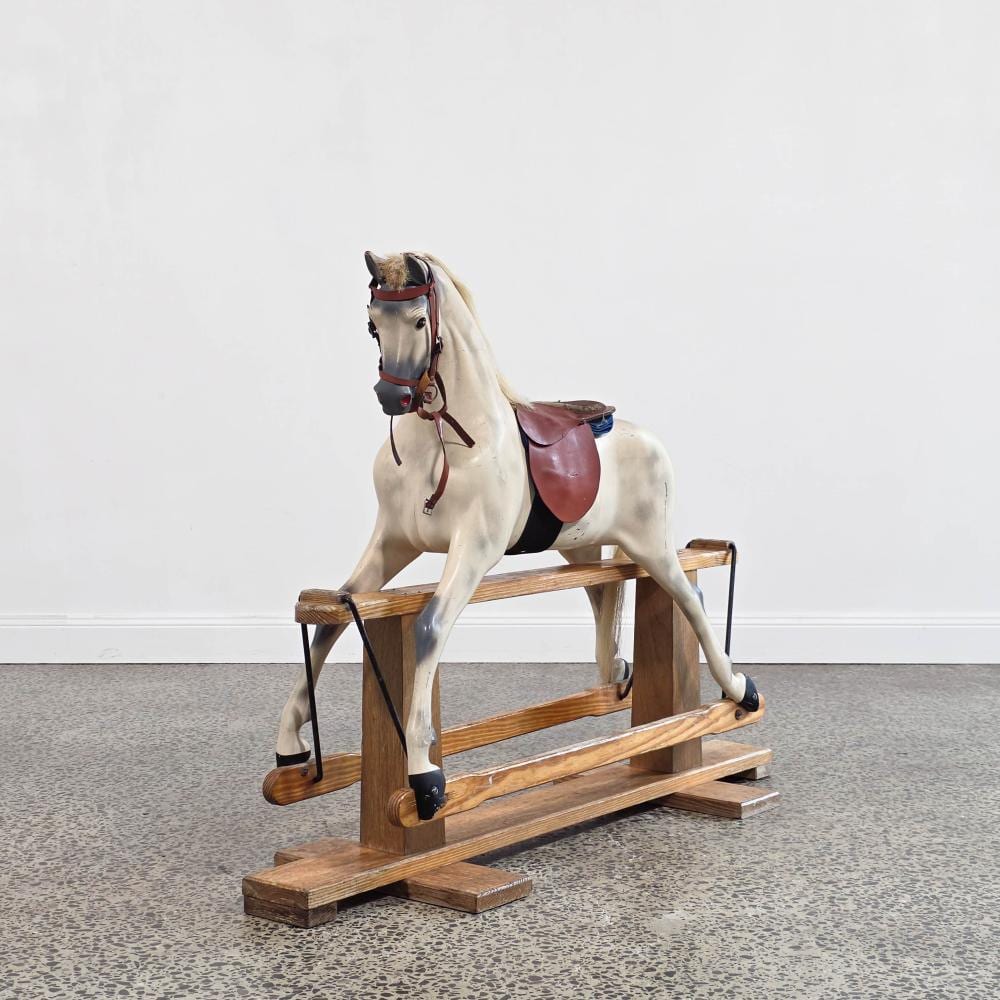
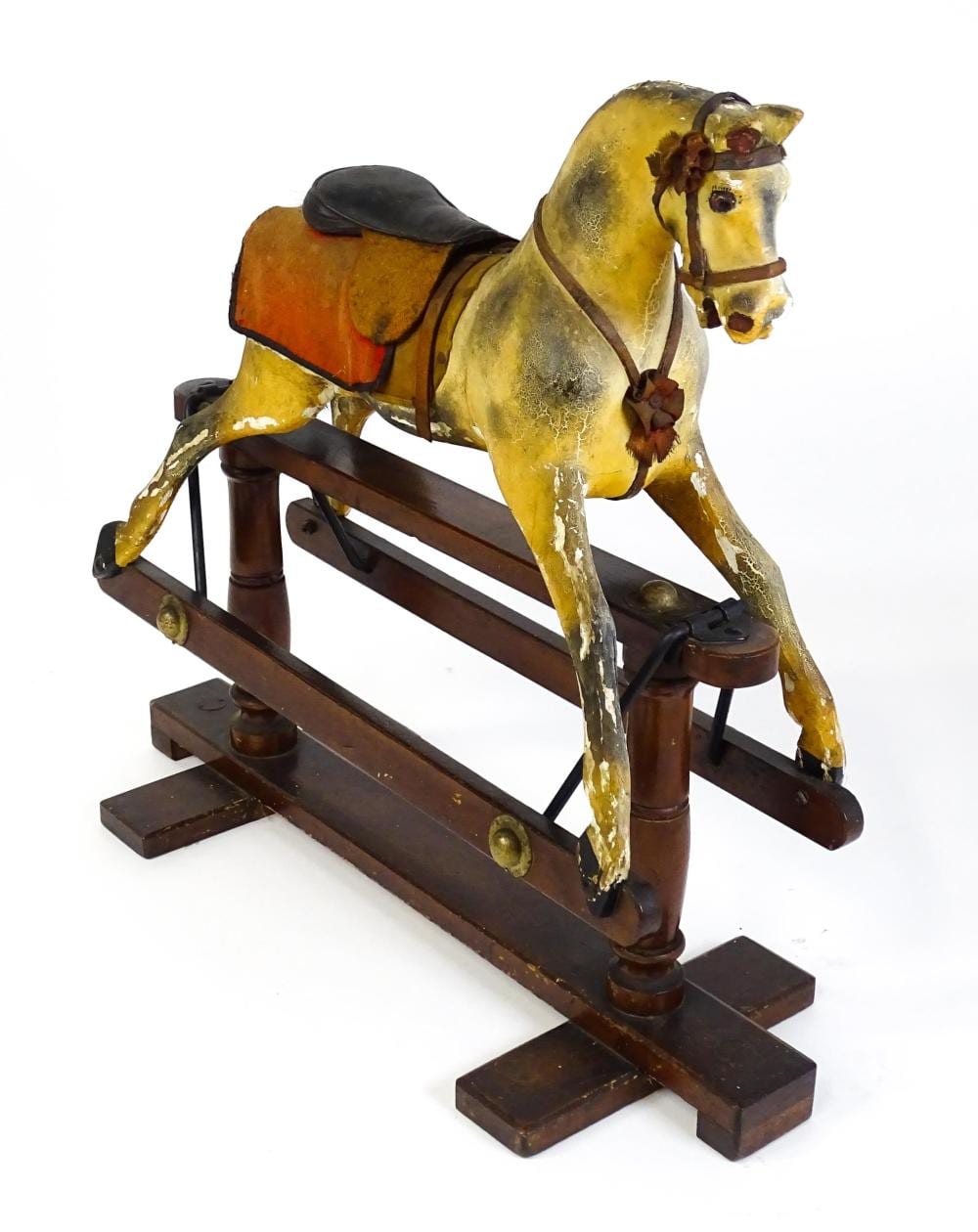
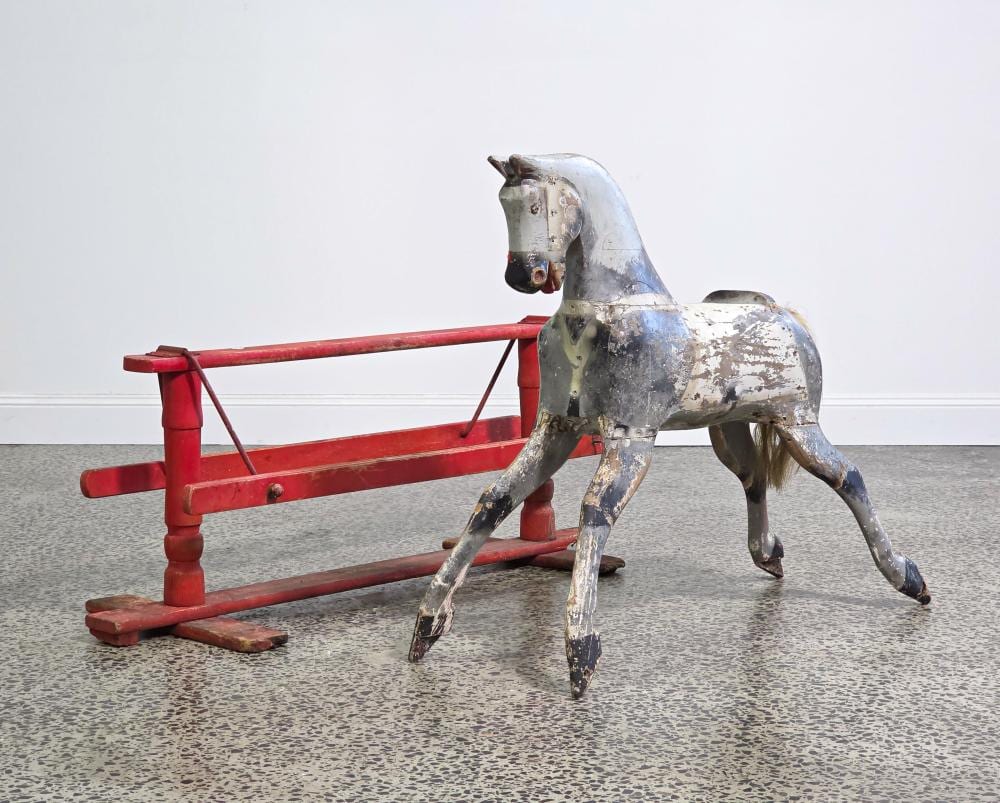
- Safety stand:
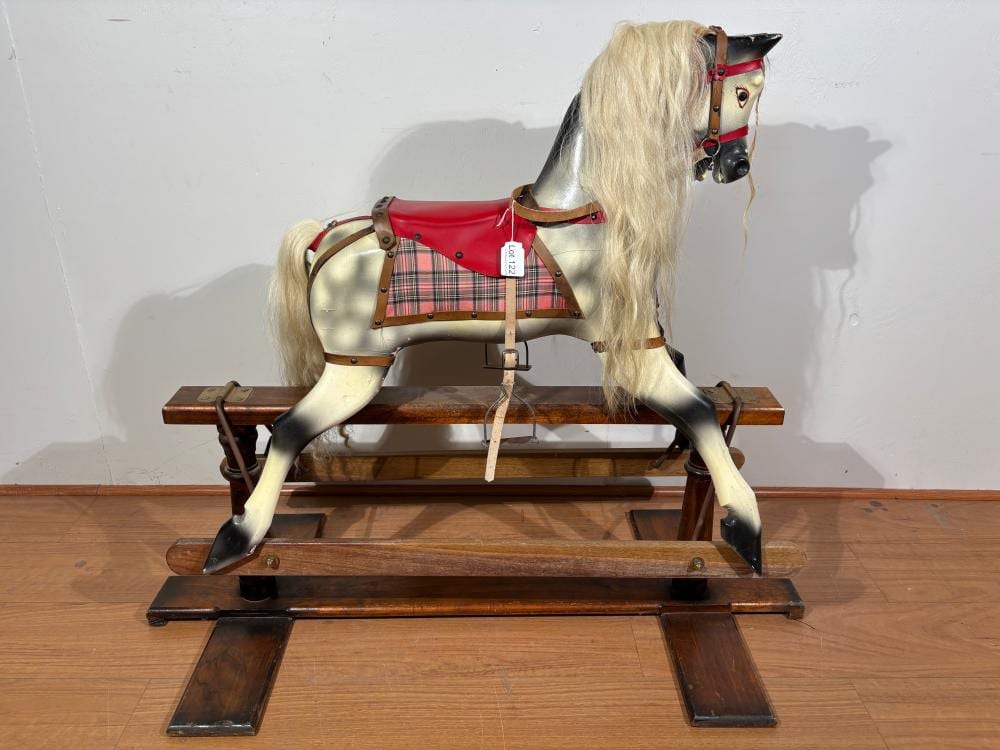
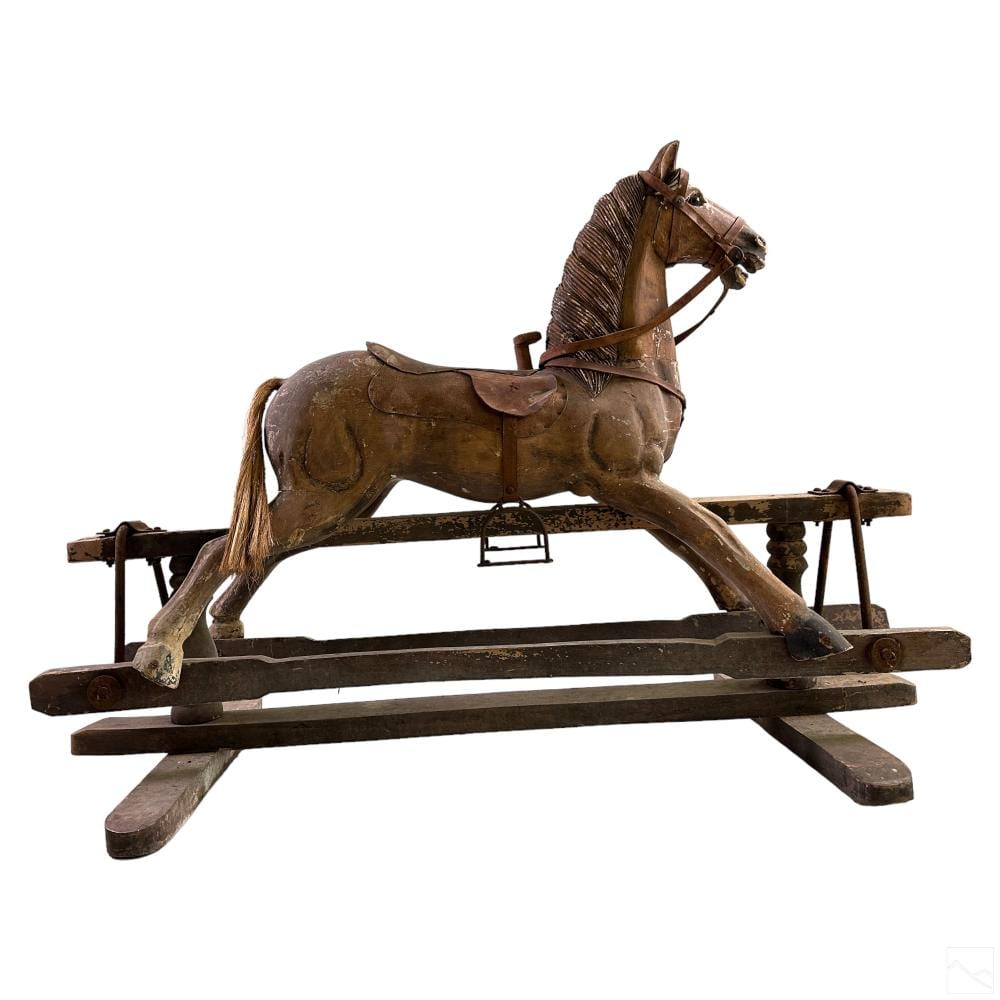
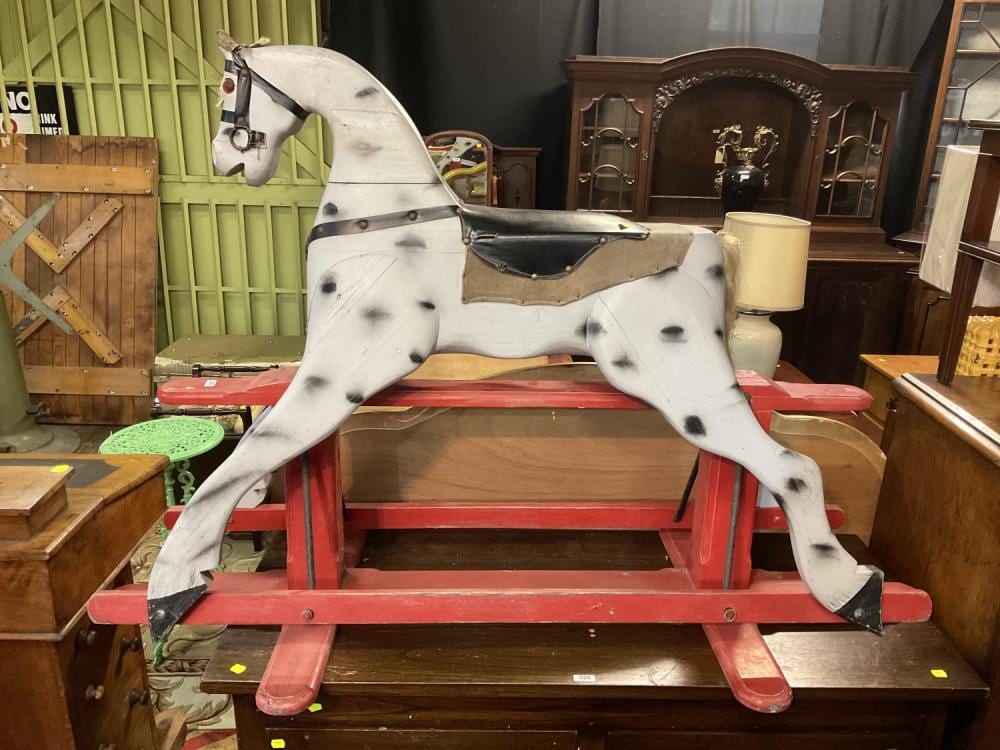
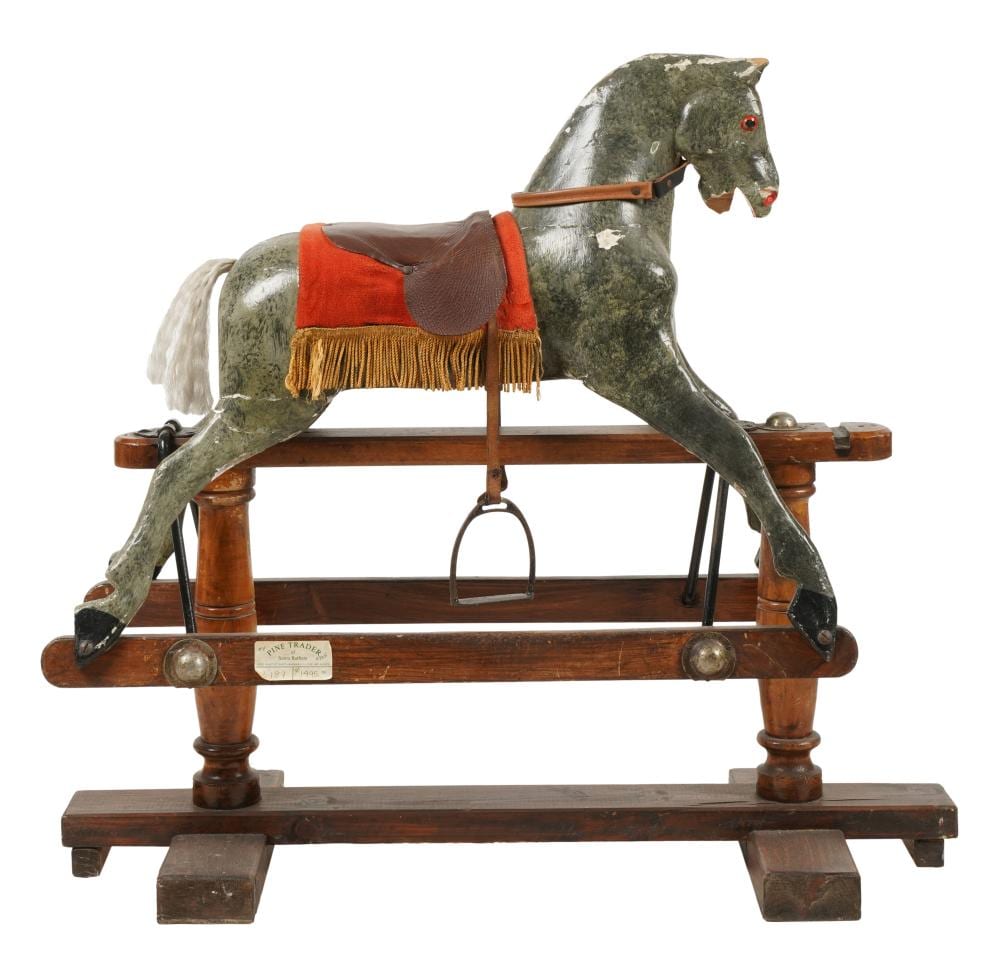
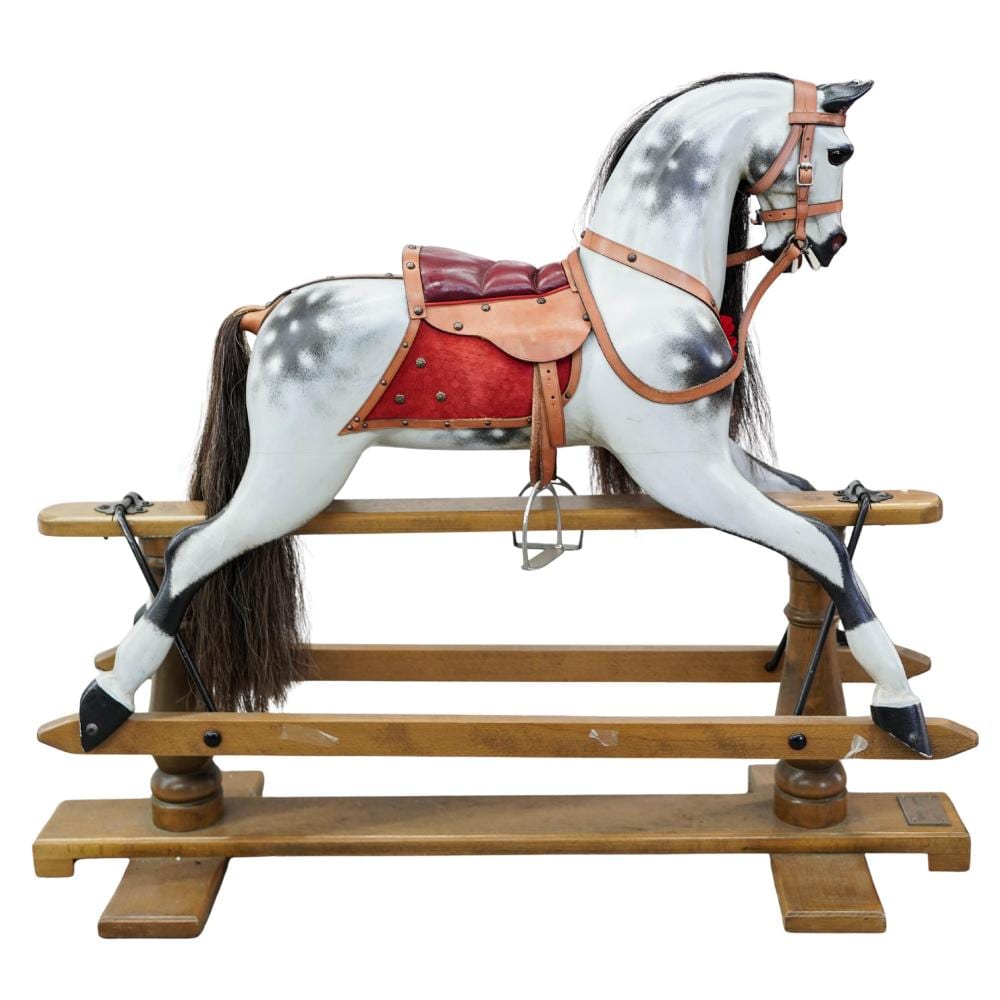
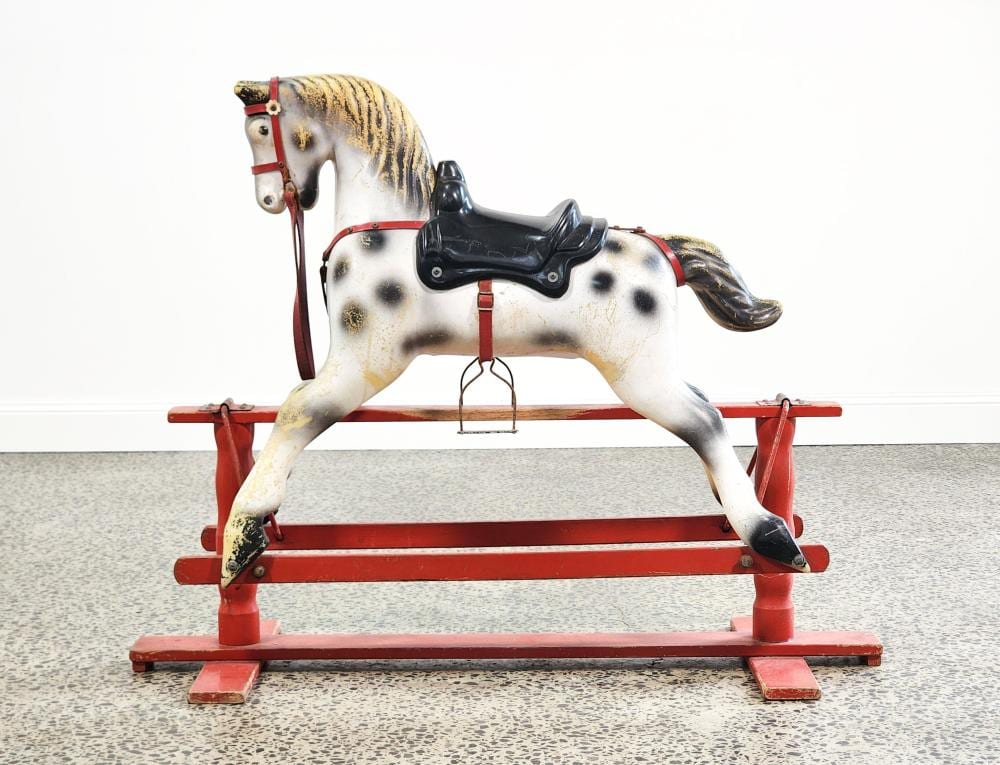
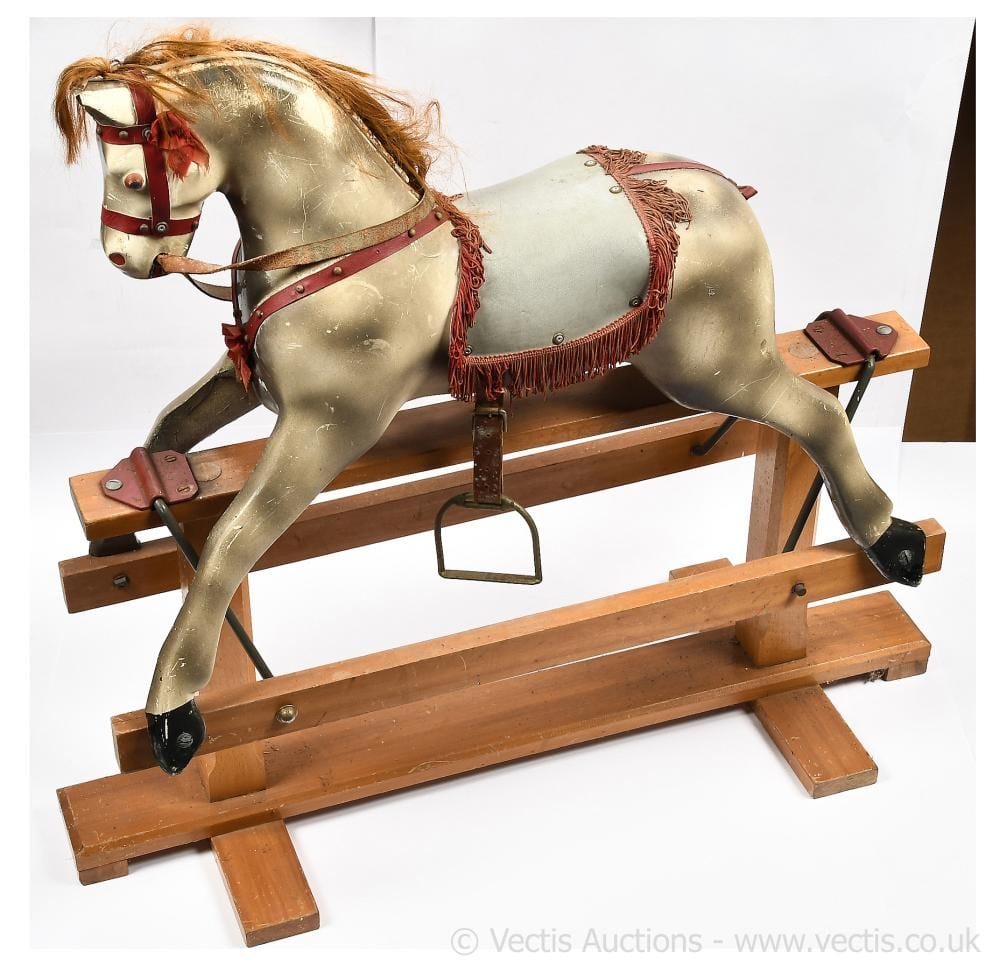
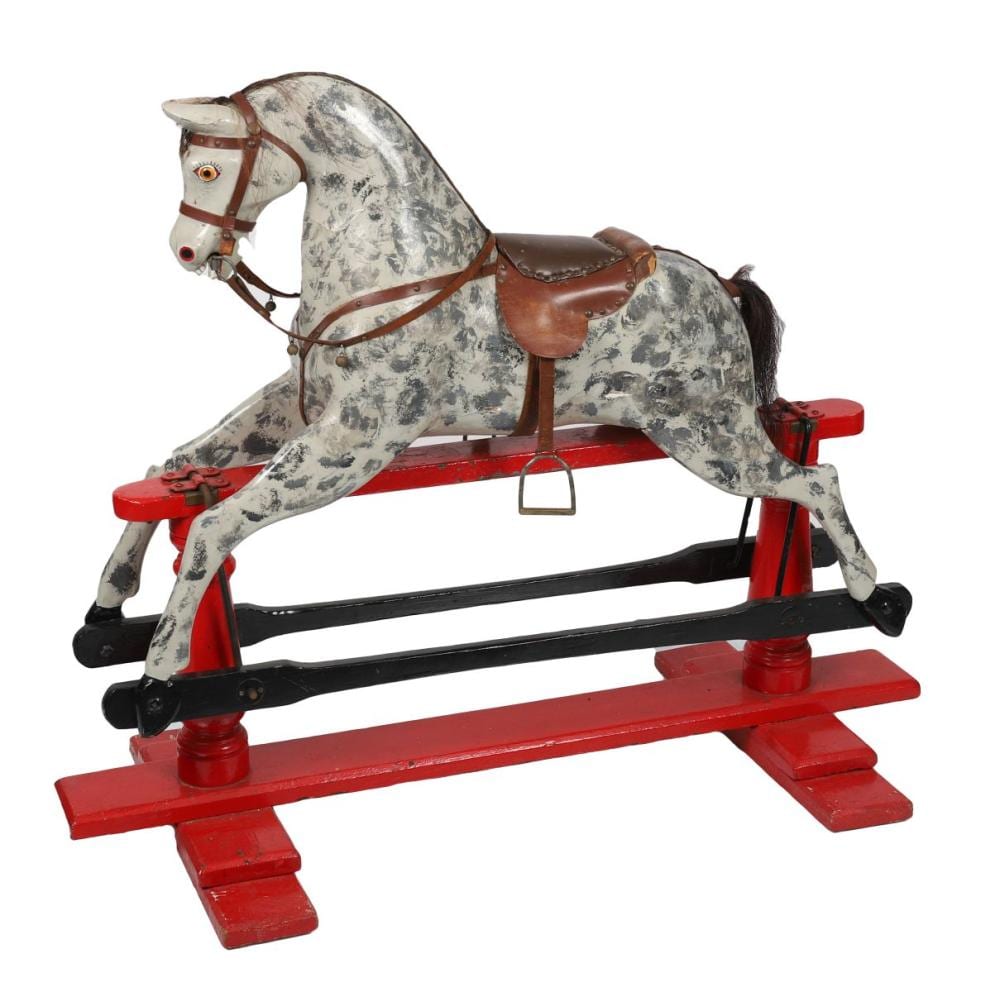
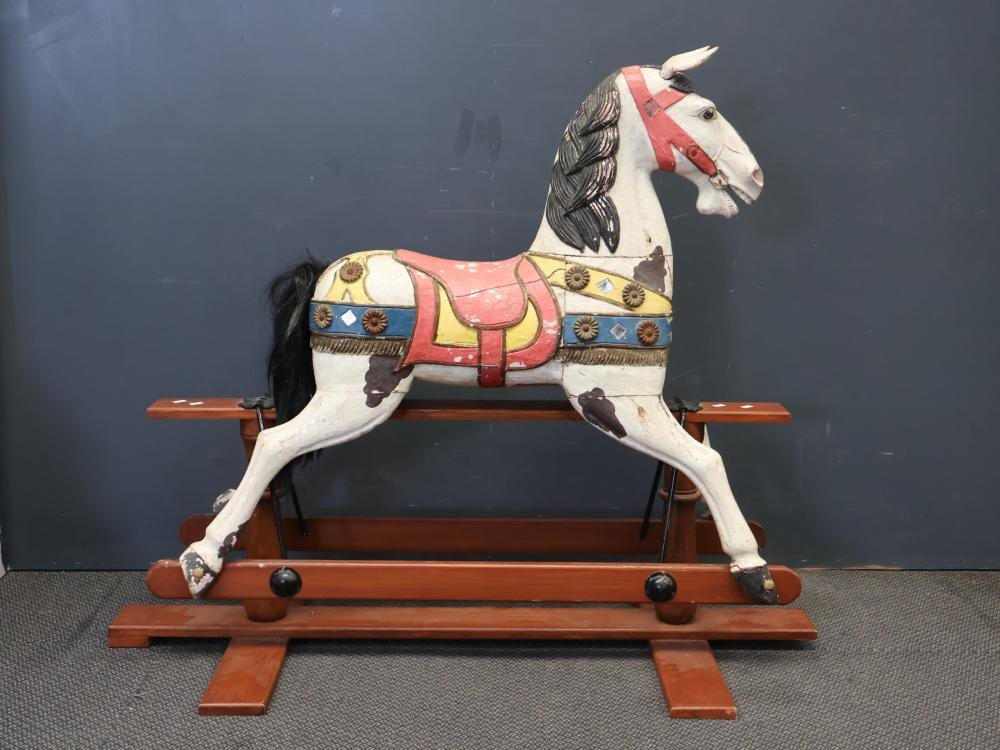
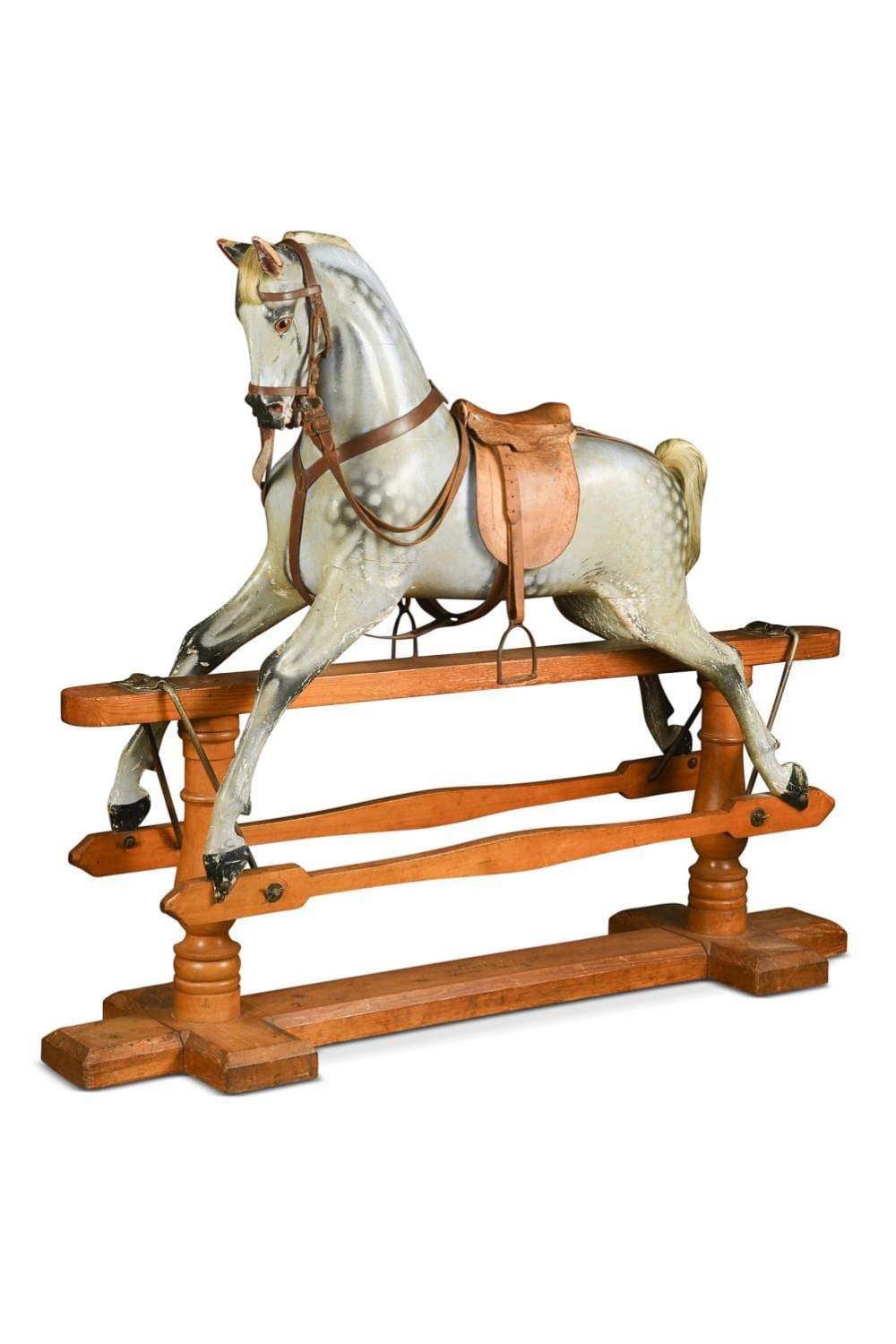
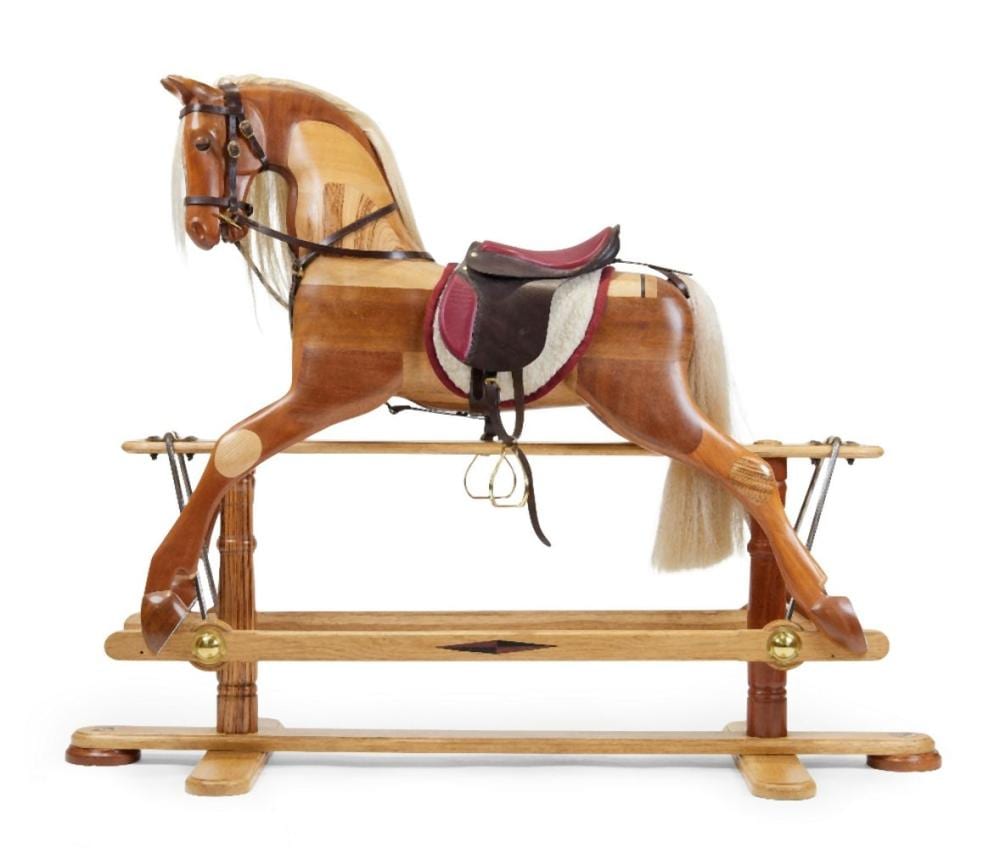
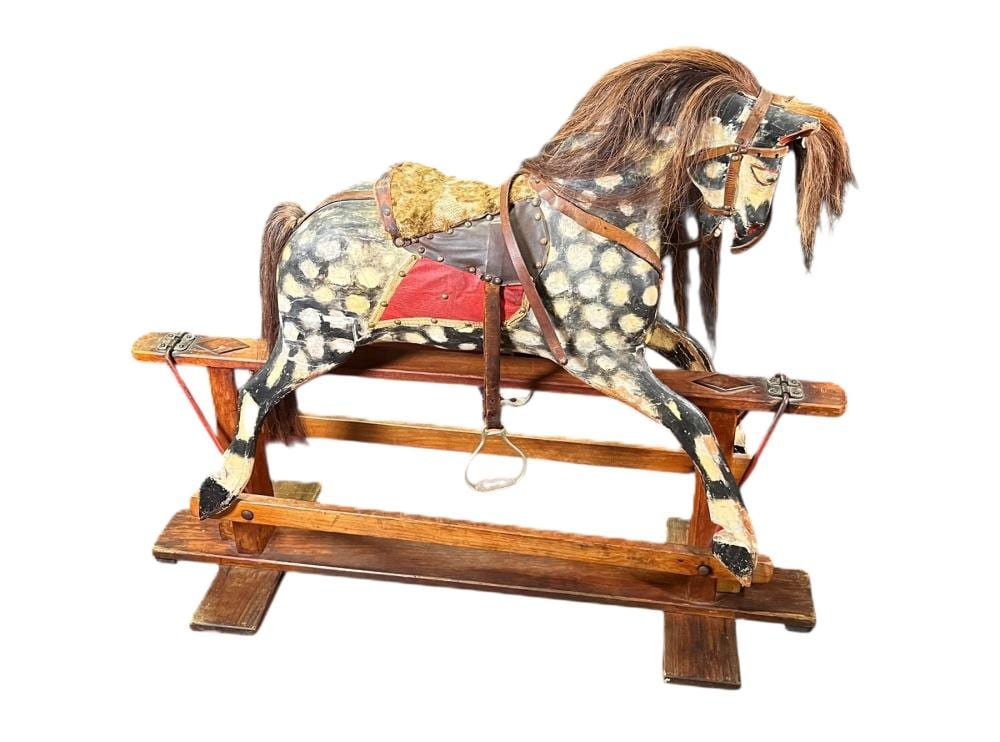
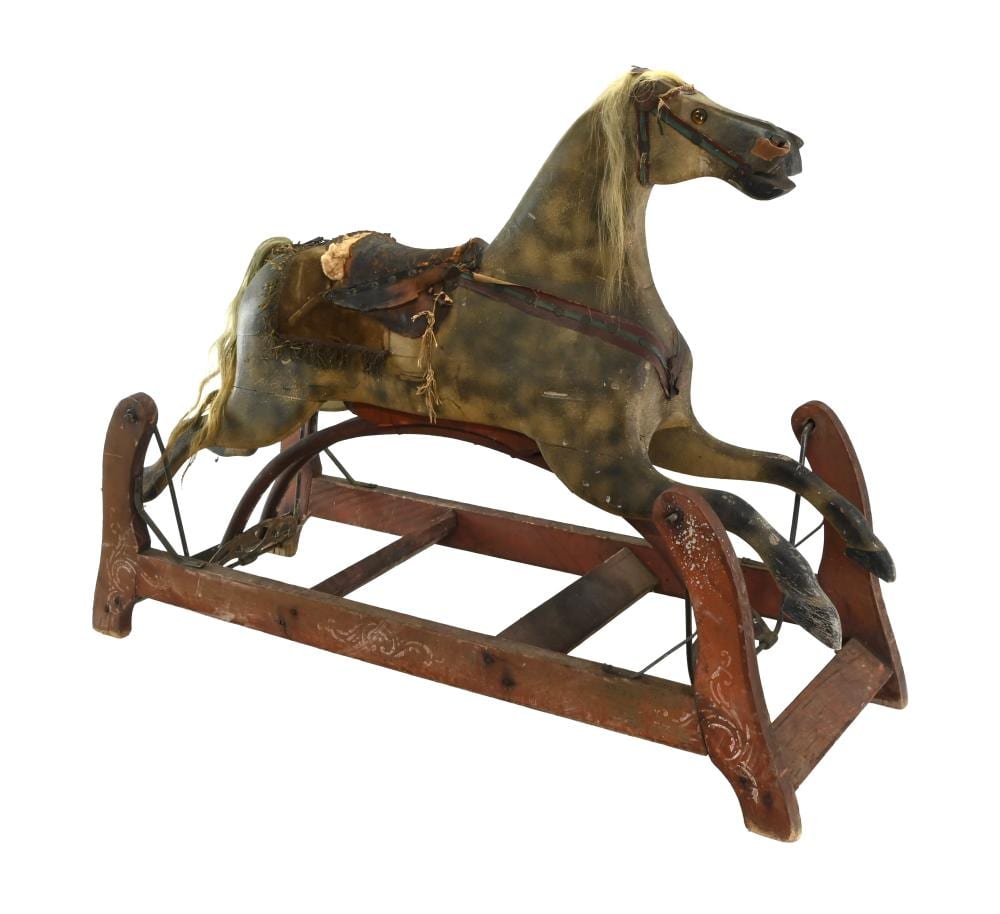
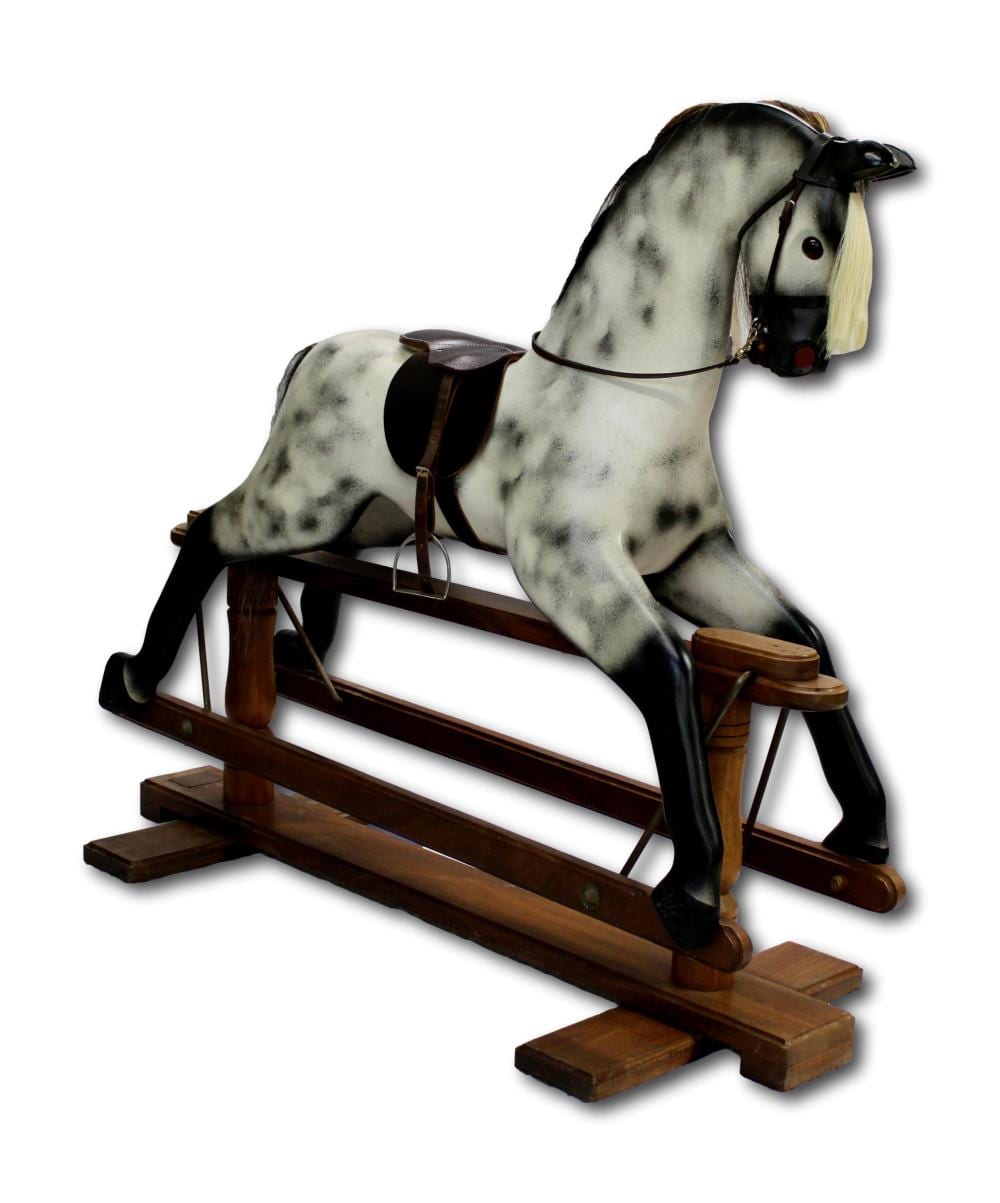
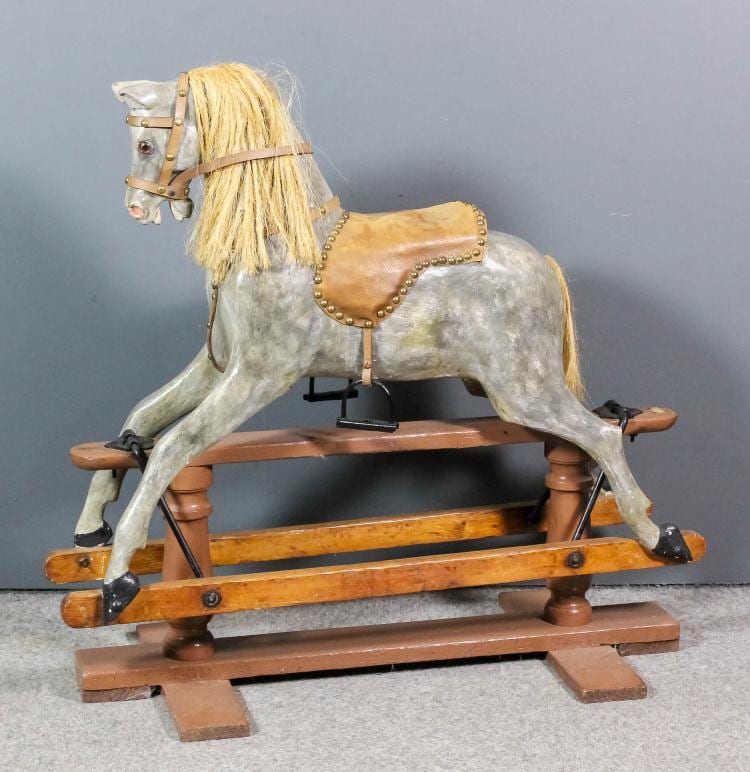
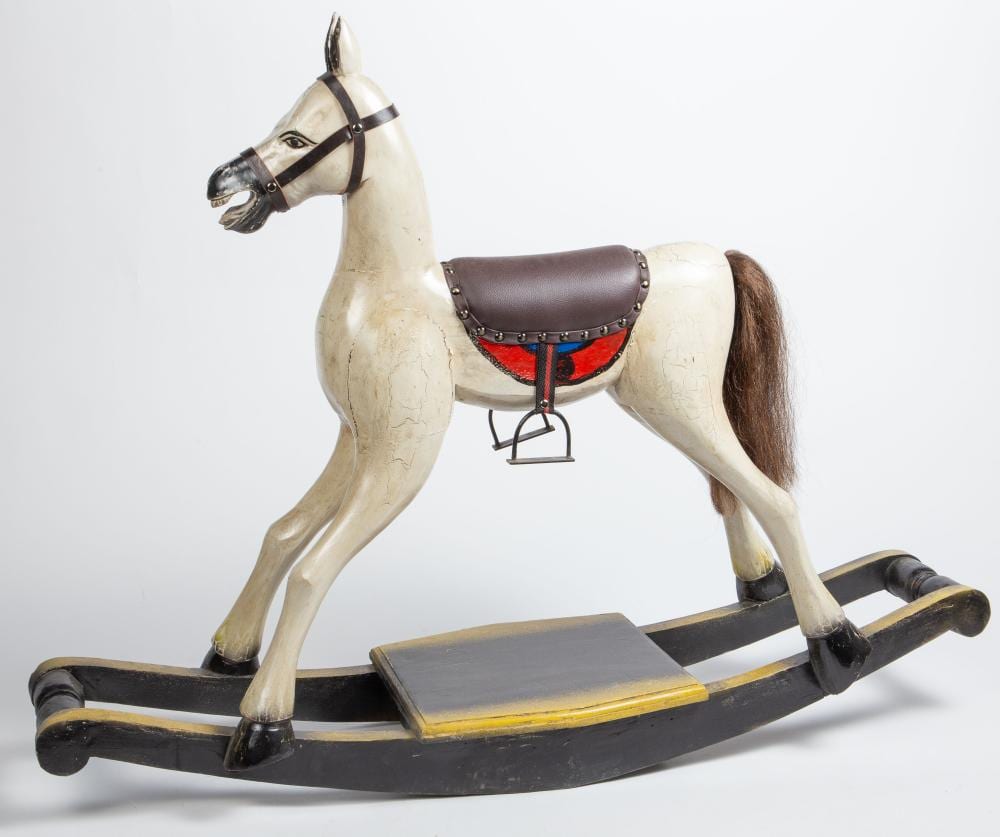
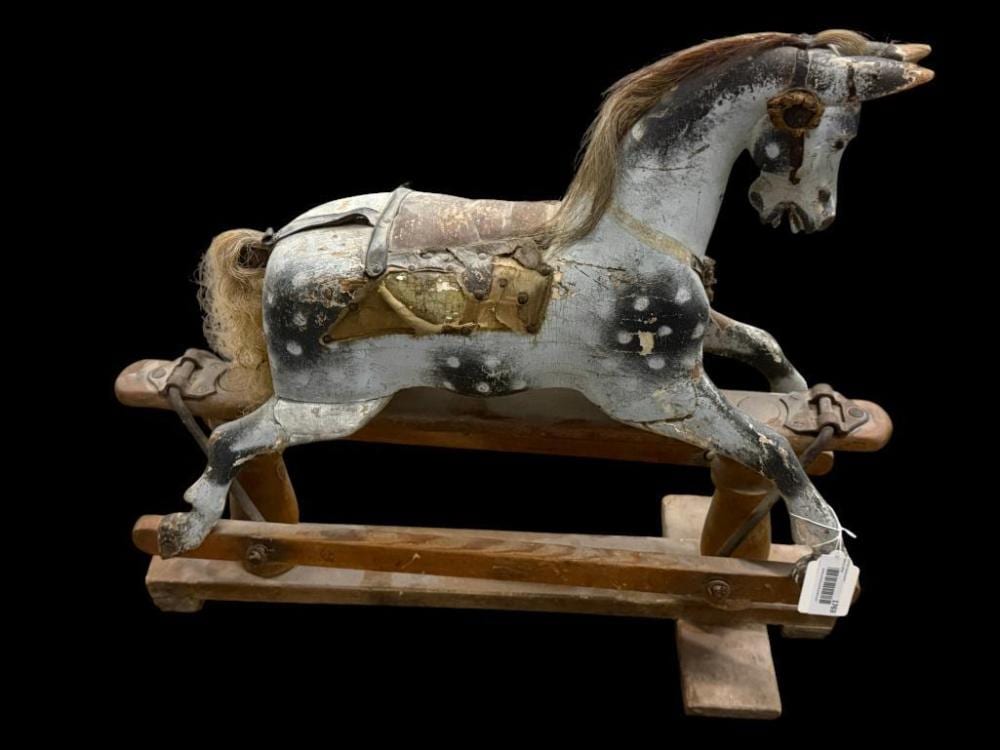
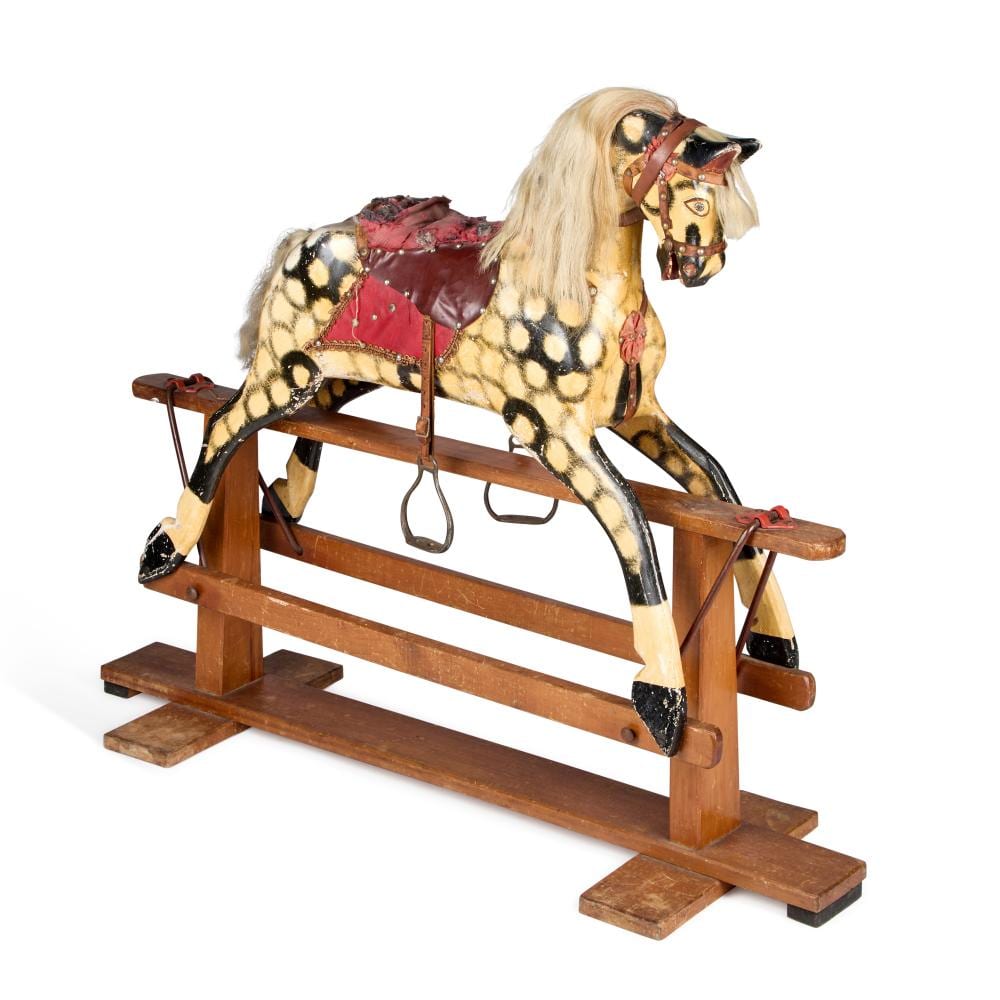
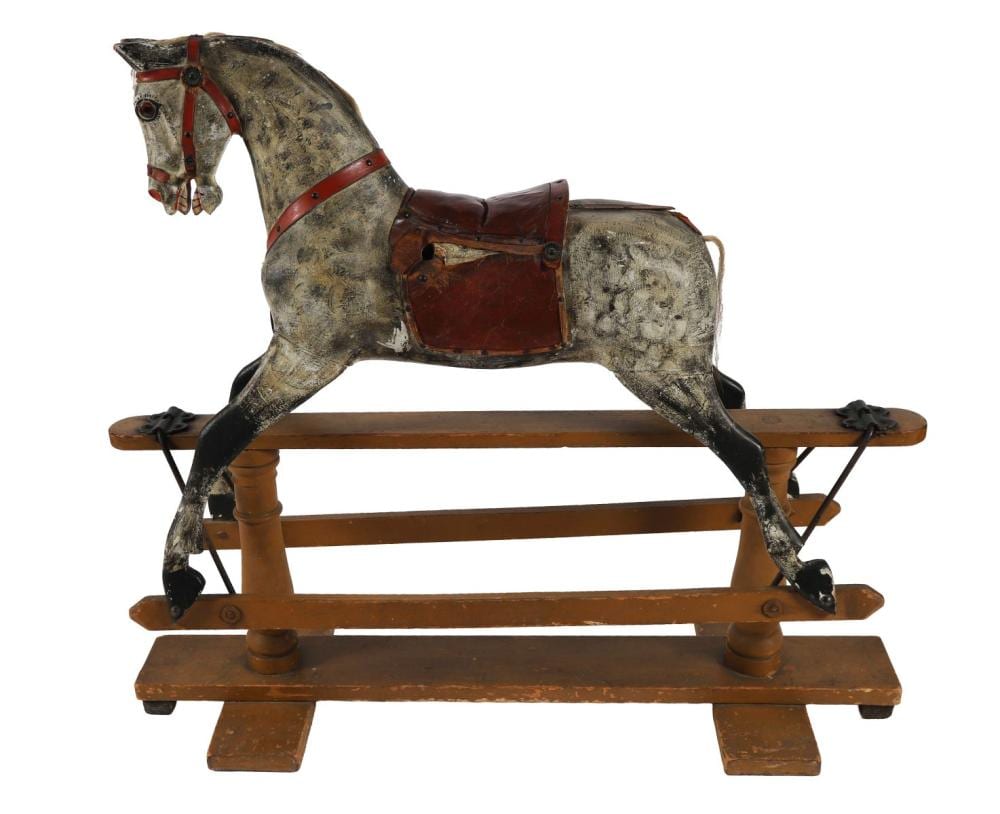
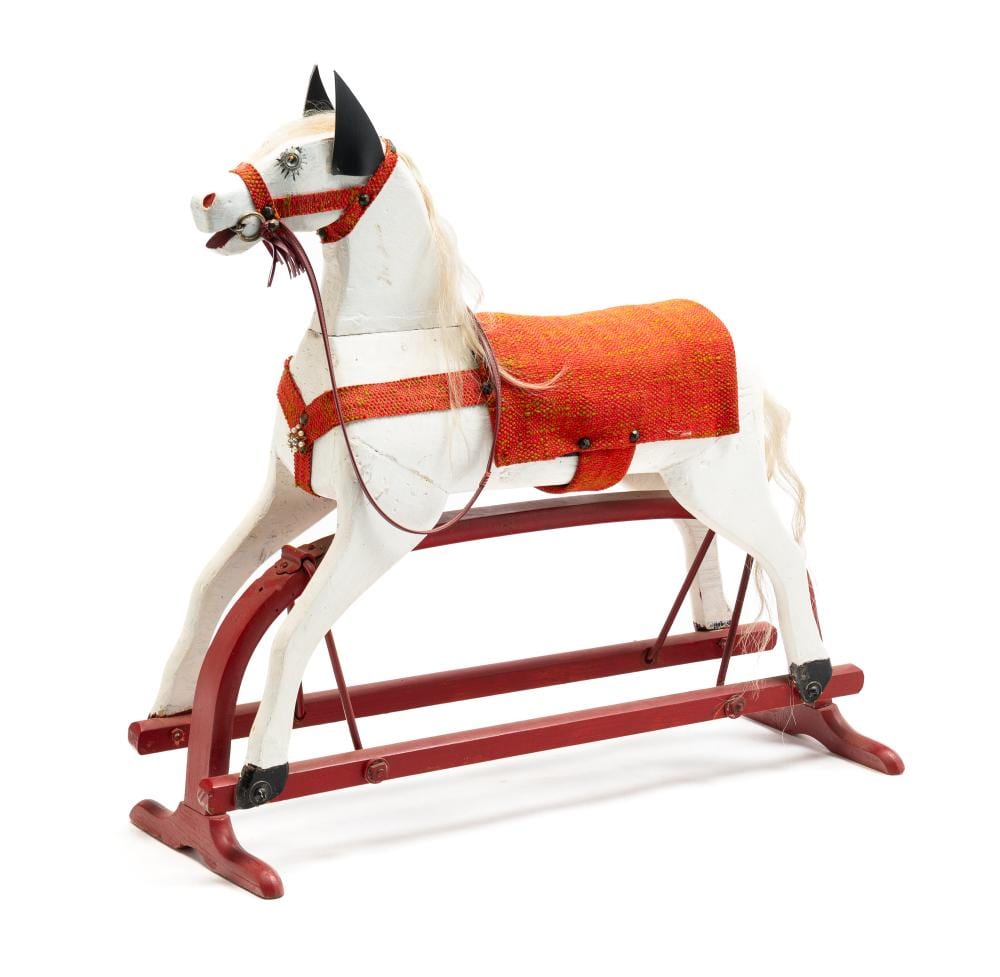
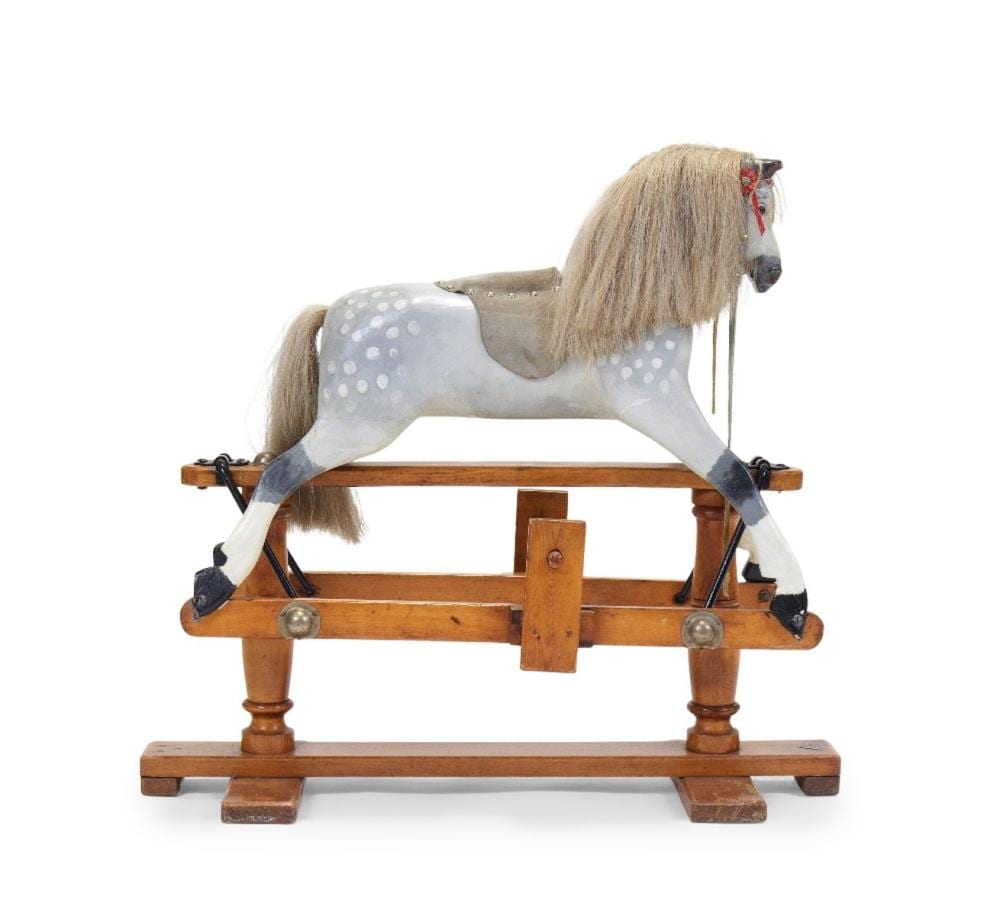
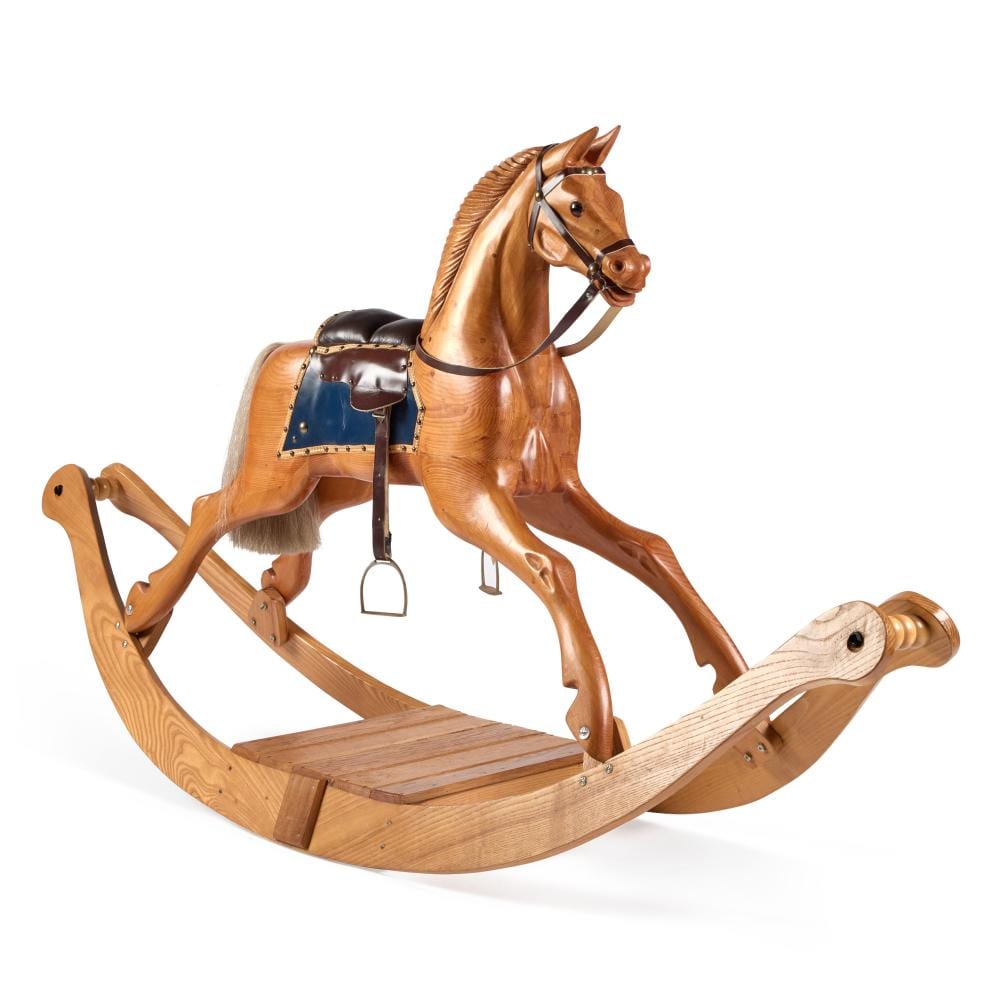
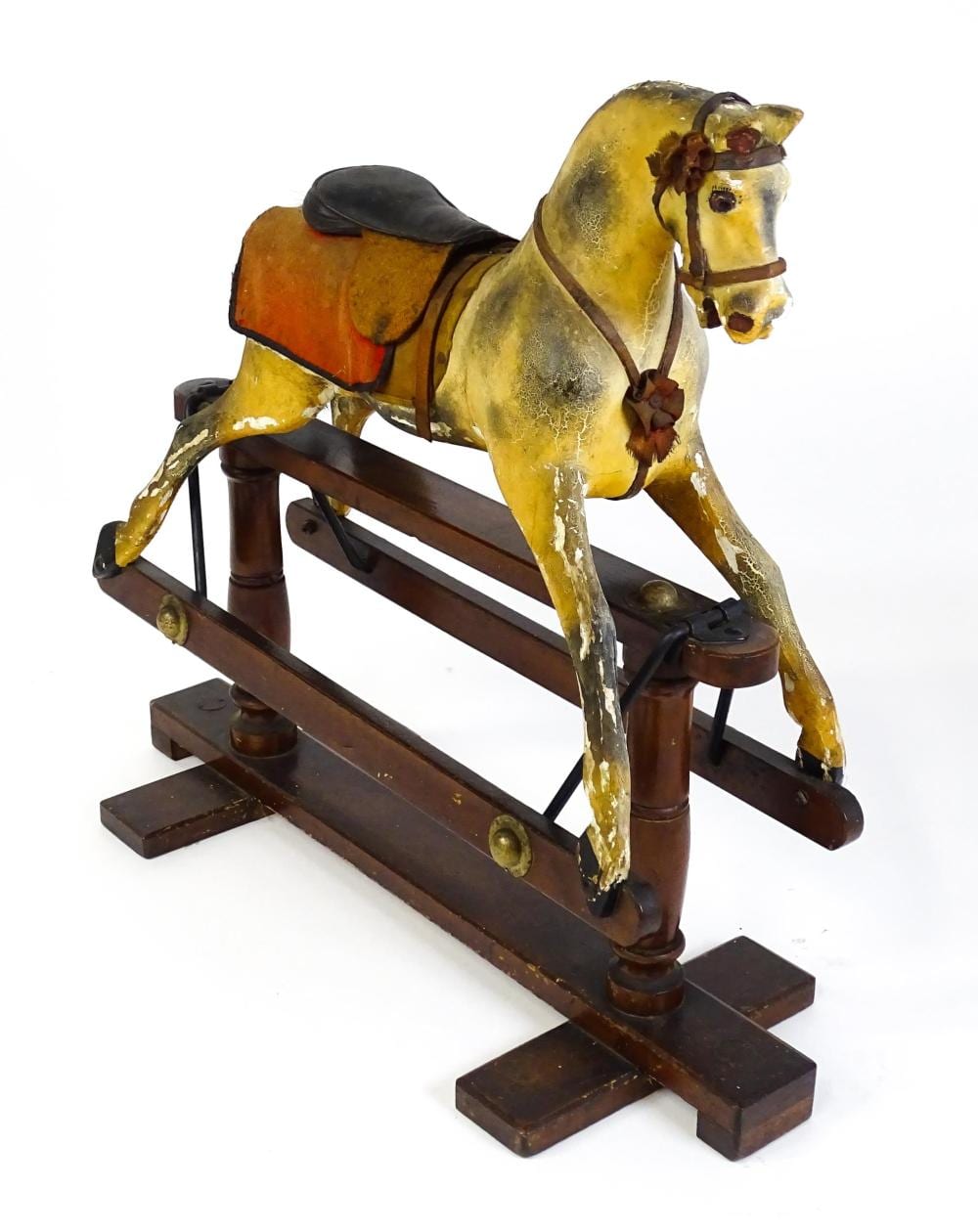
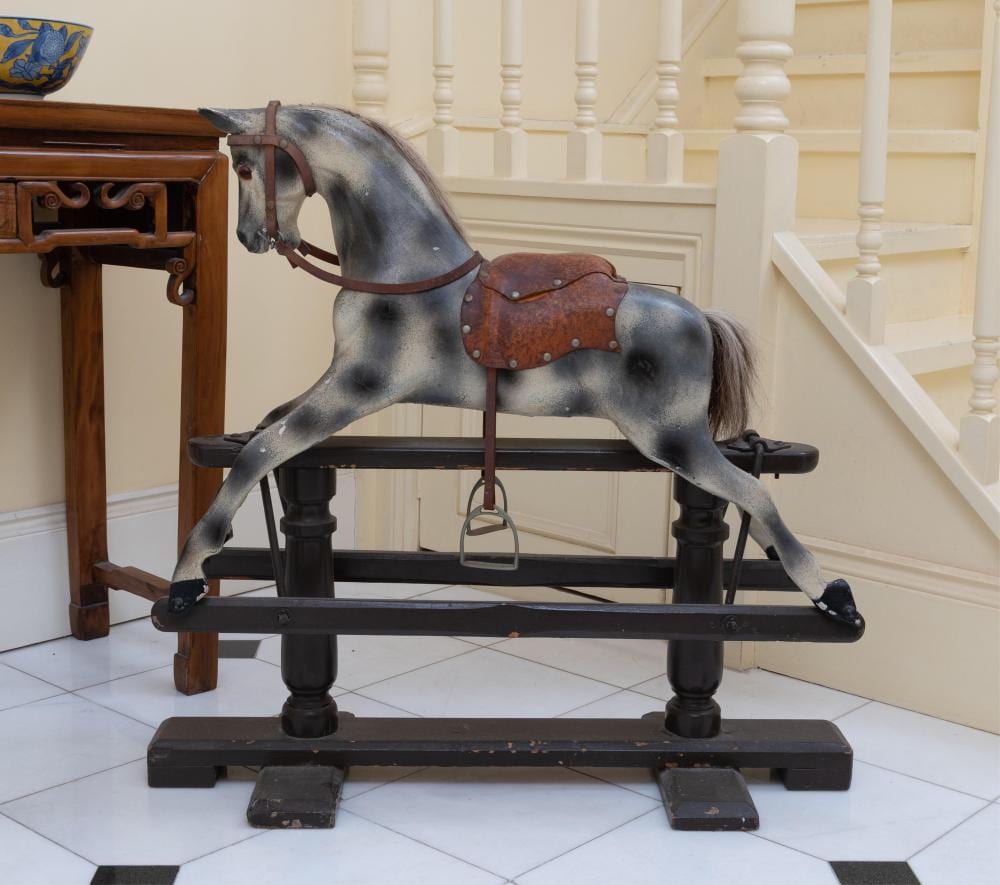
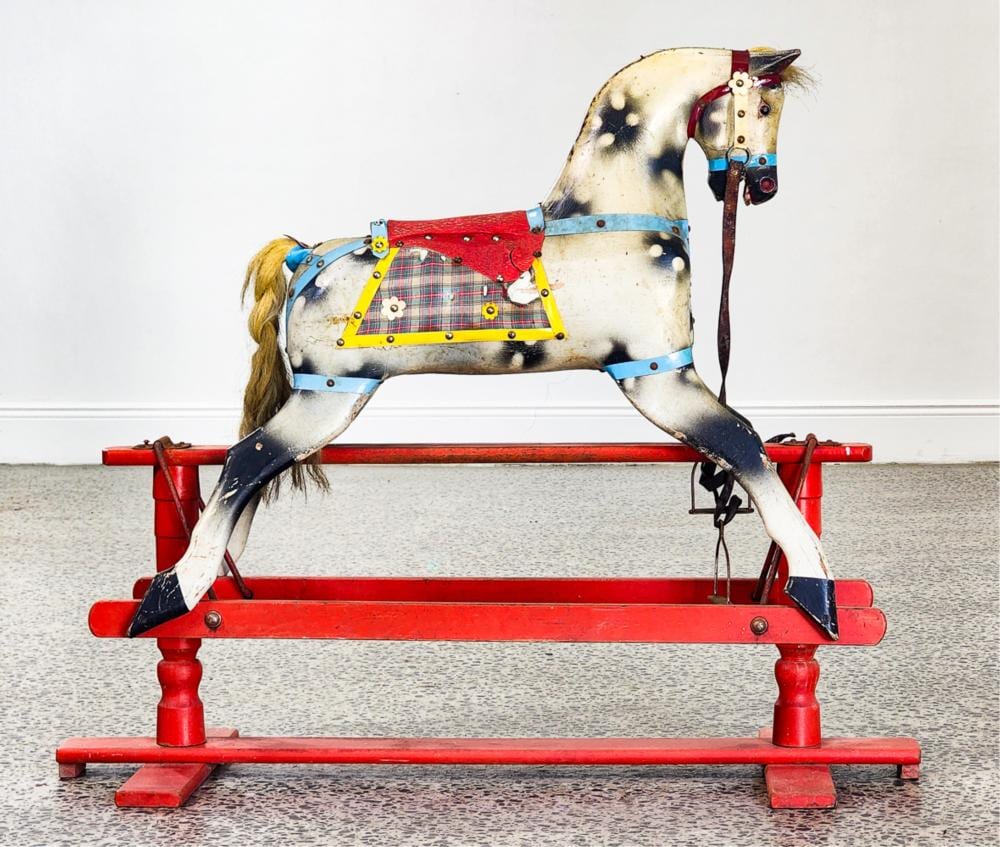
- Two parallel rails with turned uprights and swing irons. Became widespread from the late 19th century. Safety stands reduce travel (safer for nurseries) and tend to survive better structurally.
Construction and materials
- Body: Typically softwood (pine, poplar), carved and coated in gesso, then painted. Expect asymmetry and tool marks on true Victorian examples.
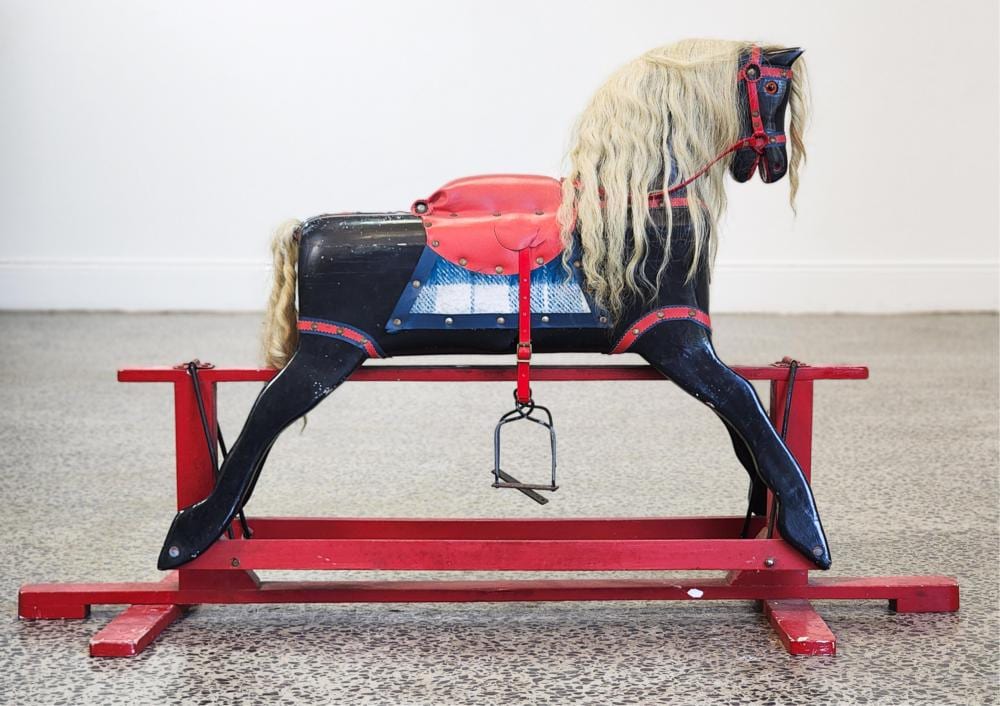
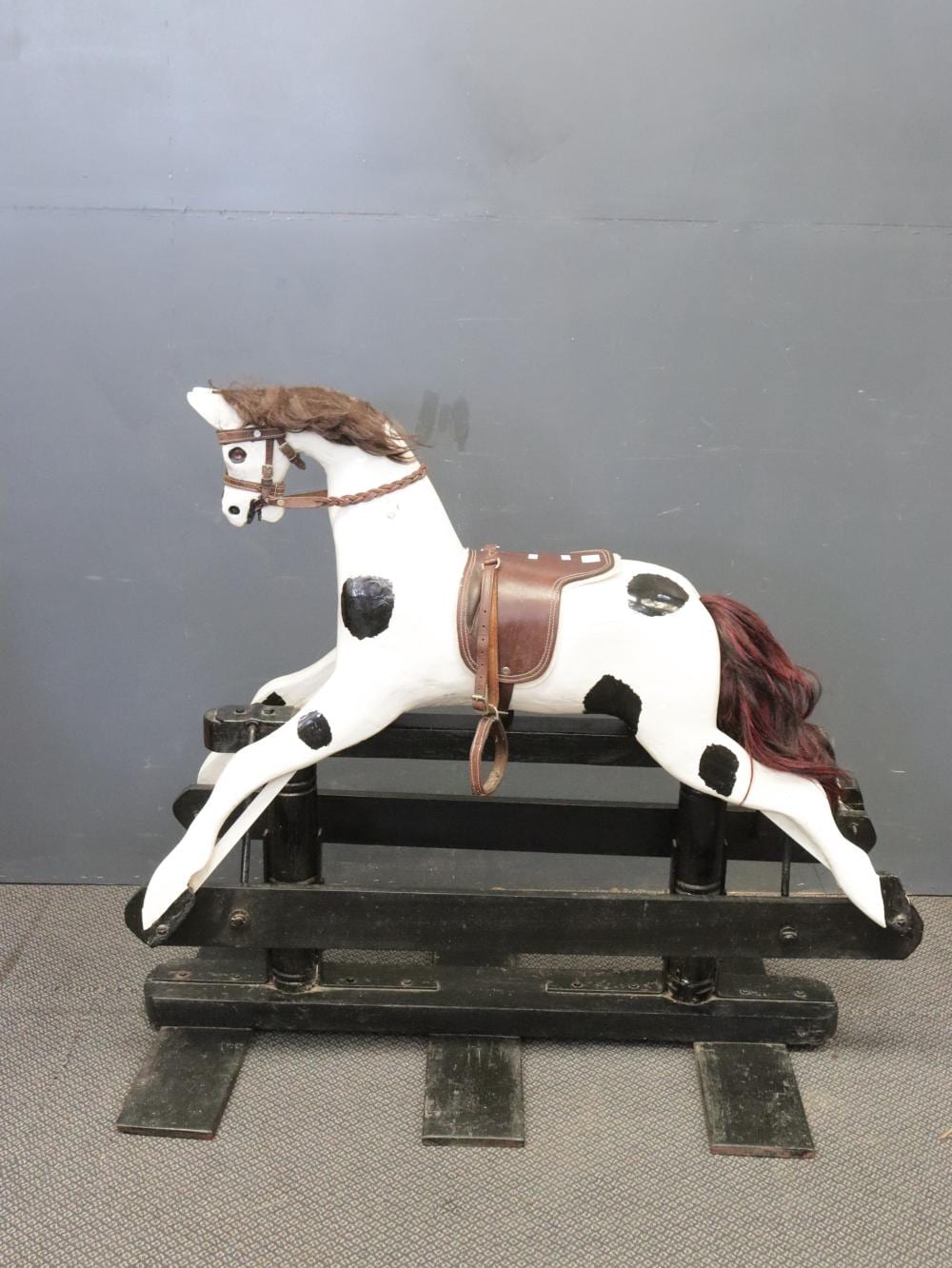
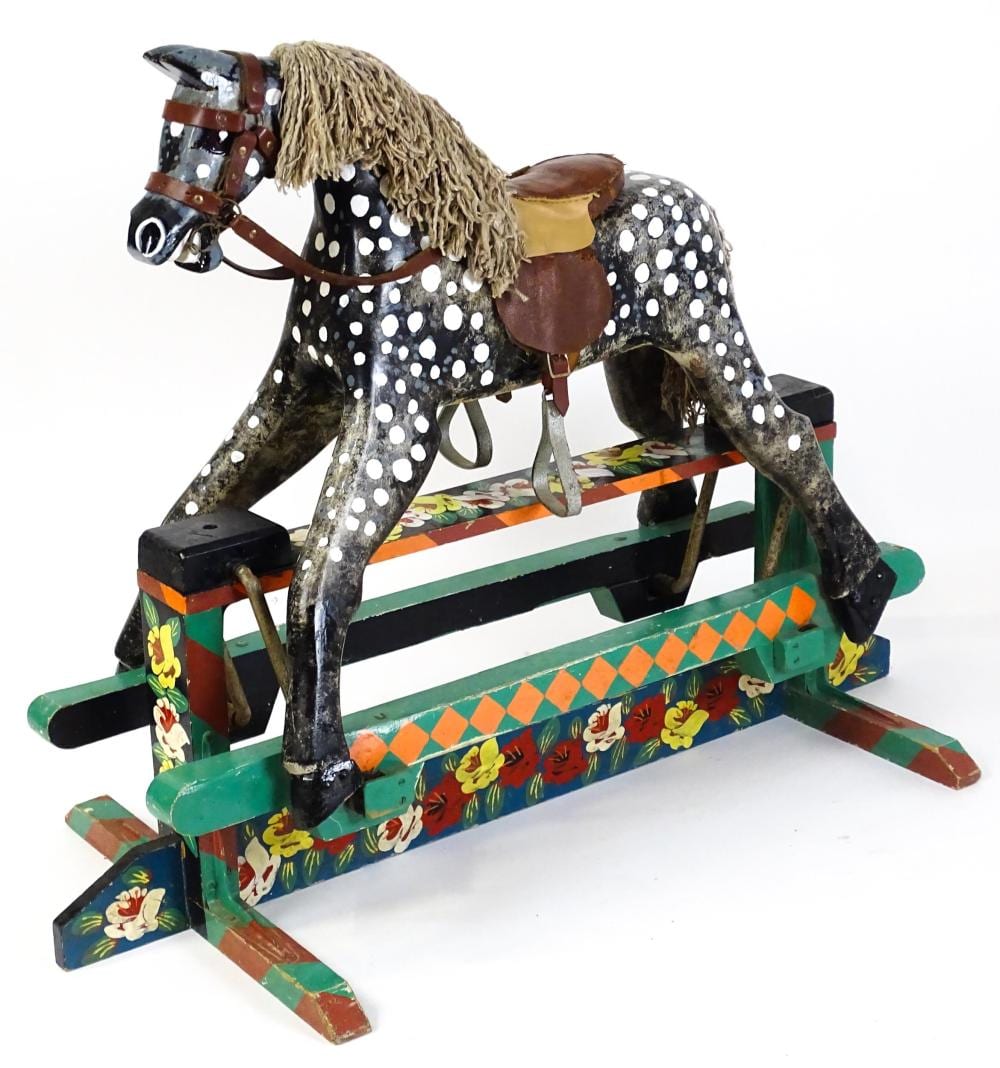
- Surface: Dapple grey is a classic; also chestnut, black, piebald, creamy palomino. Dapple patterns vary by maker.
- Tack: Leather saddle and bridle; stirrups in iron or later pressed metal.
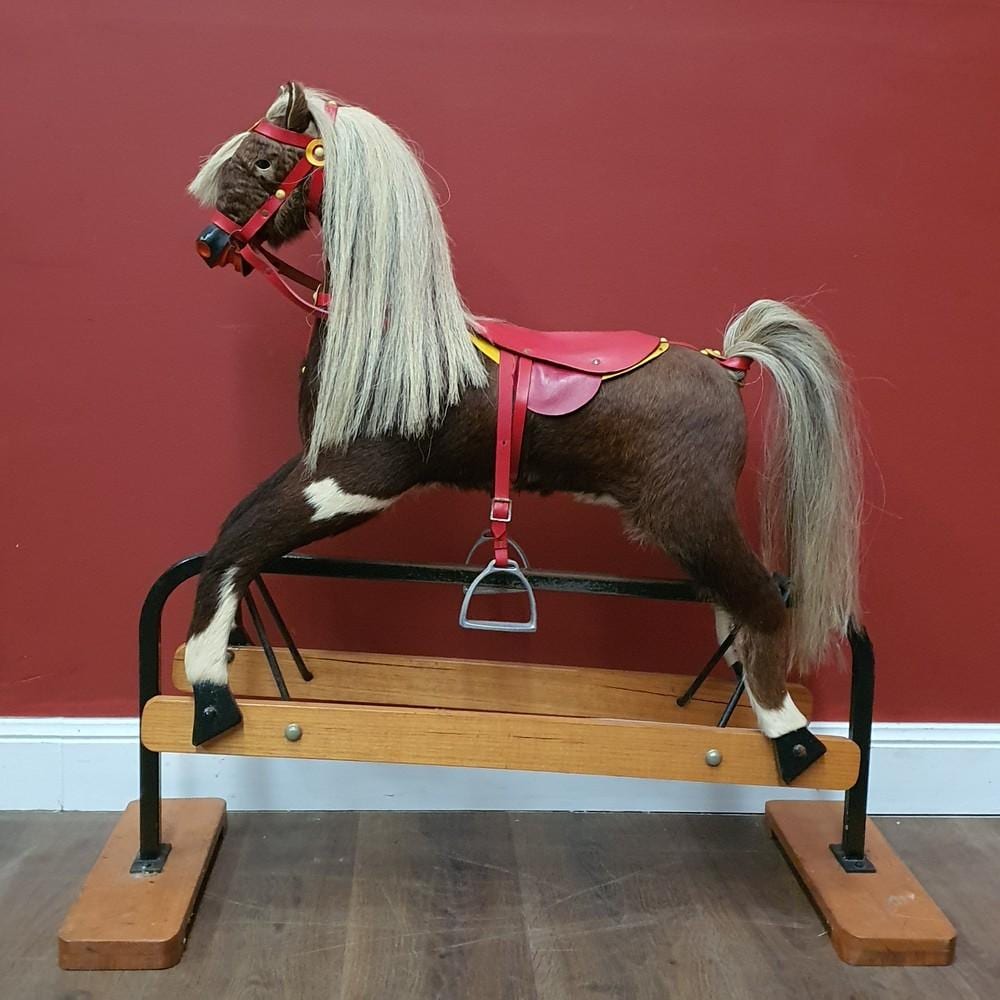
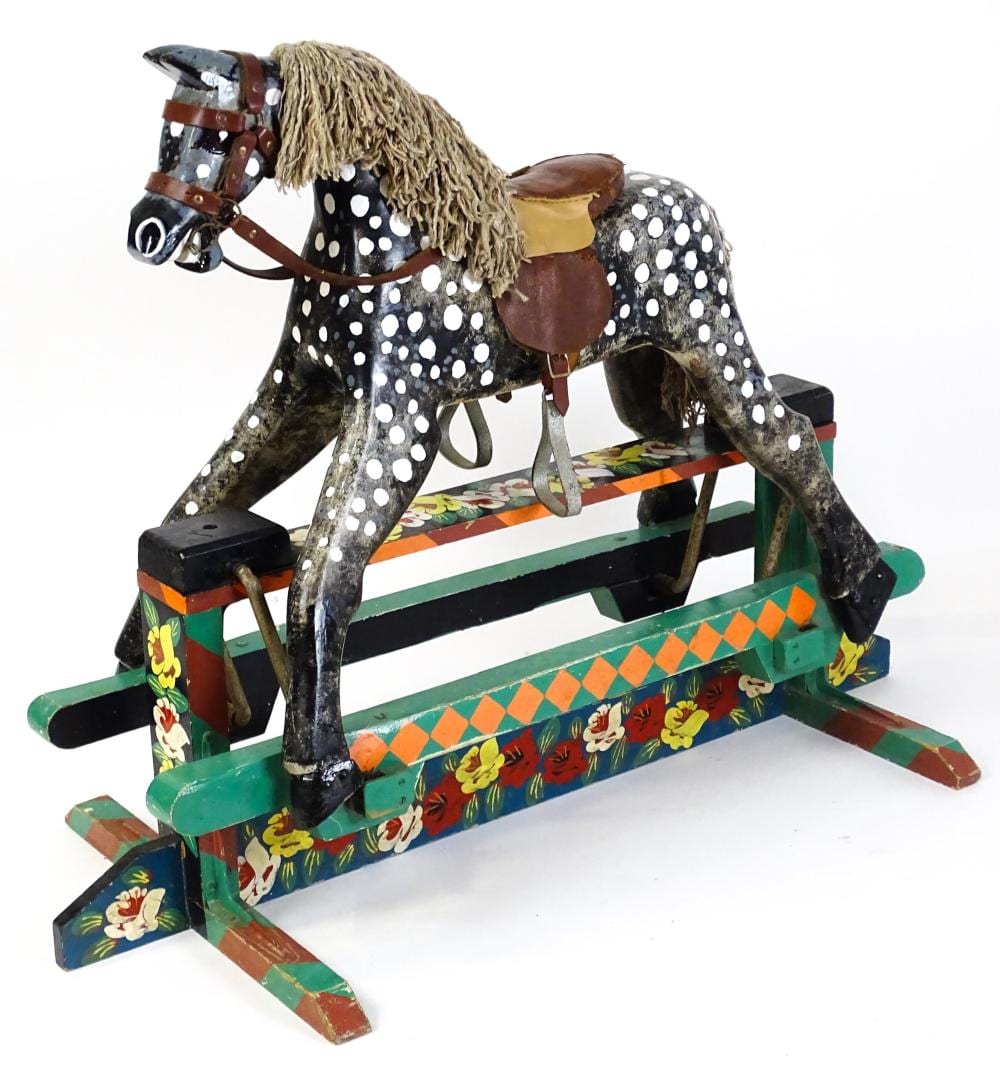
- Hair: Horsehair manes and tails; some later makers used mohair or even felt (notably certain Collinson).
- Eyes: Early high-end horses often have inset glass eyes; painted eyes appear on later and cheaper examples.
Maker tells (selected highlights—variations exist within each maker’s output)
- F. H. Ayres (London):
- Renowned for refined carving: well-modeled heads, flared nostrils, crisp jawlines.
- Distinctive dapple work with soft, graduated spots; elegant stance and hoof detail.
- Stands often with turned columns and well-finished ironwork. Look for stenciled shield labels or remnants of paper labels.
- G & J Lines / Lines Bros (Tri-ang):
- G & J Lines (late 19th–early 20th c.) may show “Sporting Toys” labels, quality carving, and good gesso work.
- Lines Bros Tri-ang (post-1920) often carries decals or metal plates. Quality is variable; many have painted eyes, pressed metal stirrups, and sturdier, more standardized stands.
- Collinson (Blackpool):
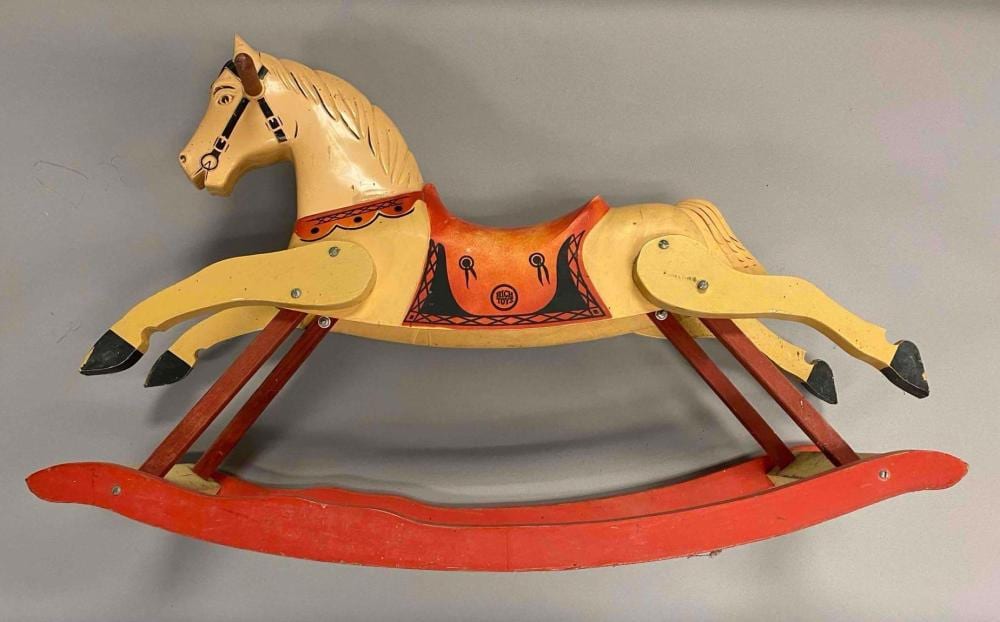
- Popular mid-20th-century maker. Frequently seen with “apple dapple” finishes and paper labels. Some have felt manes; carving is less refined than top Victorian examples, but decorative appeal is high.
- Continental makers:
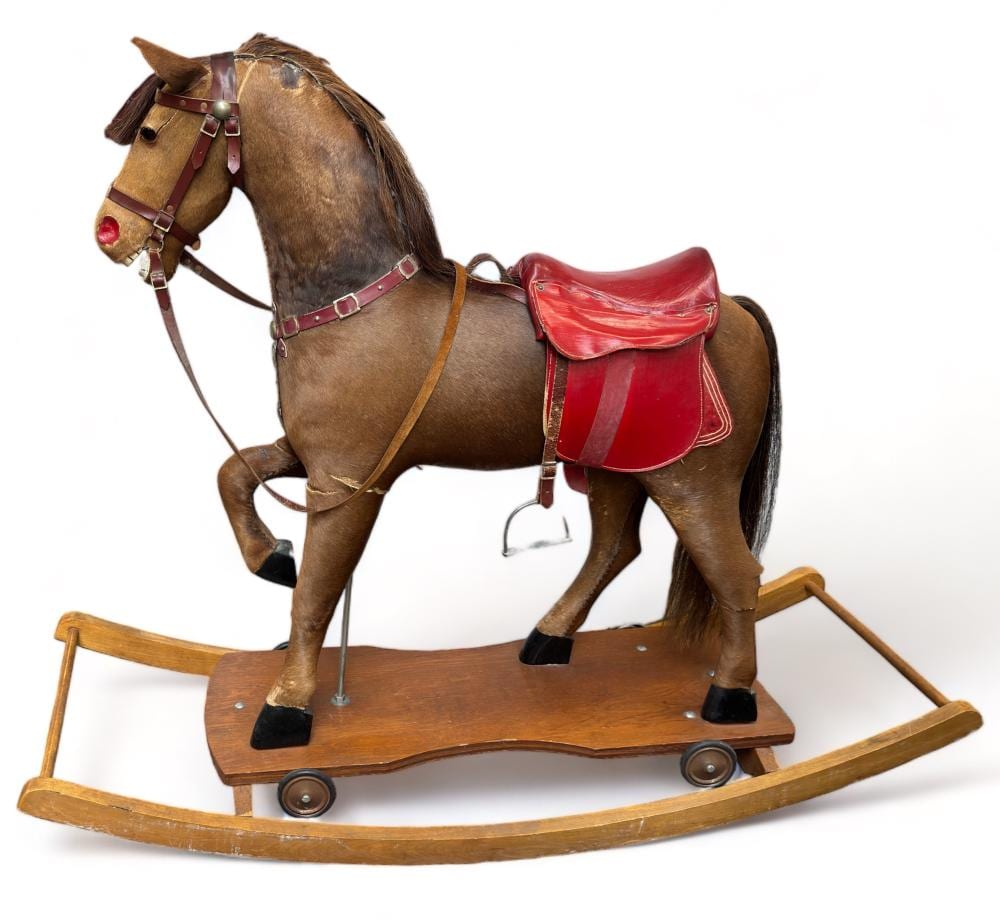
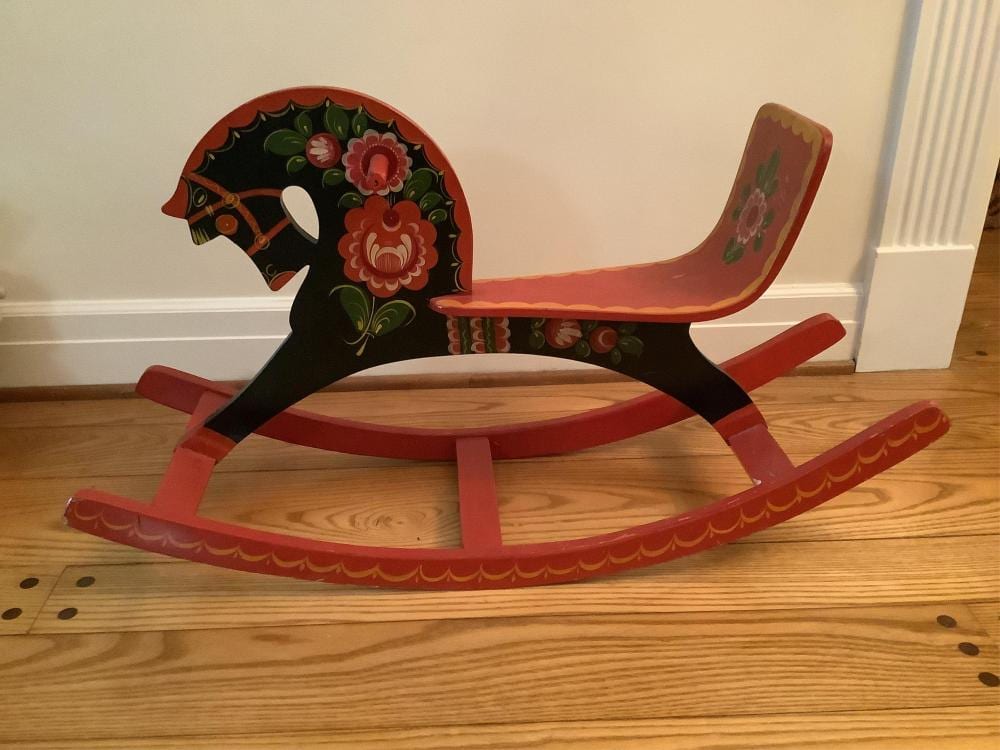
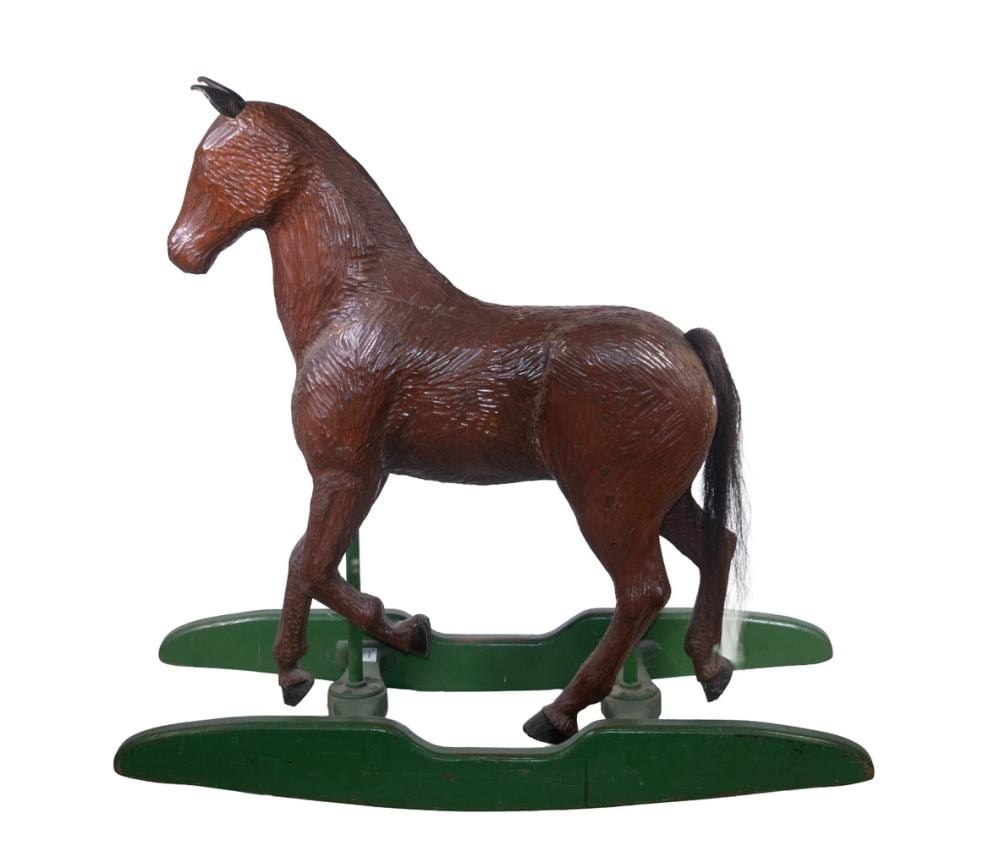
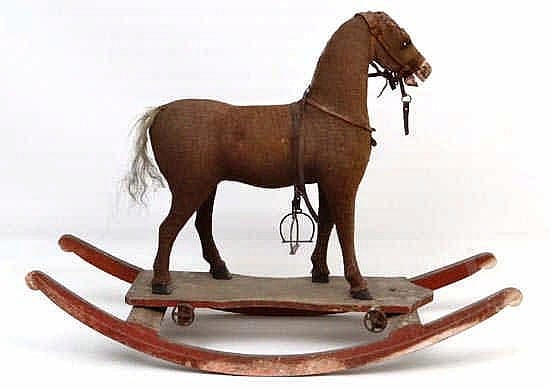
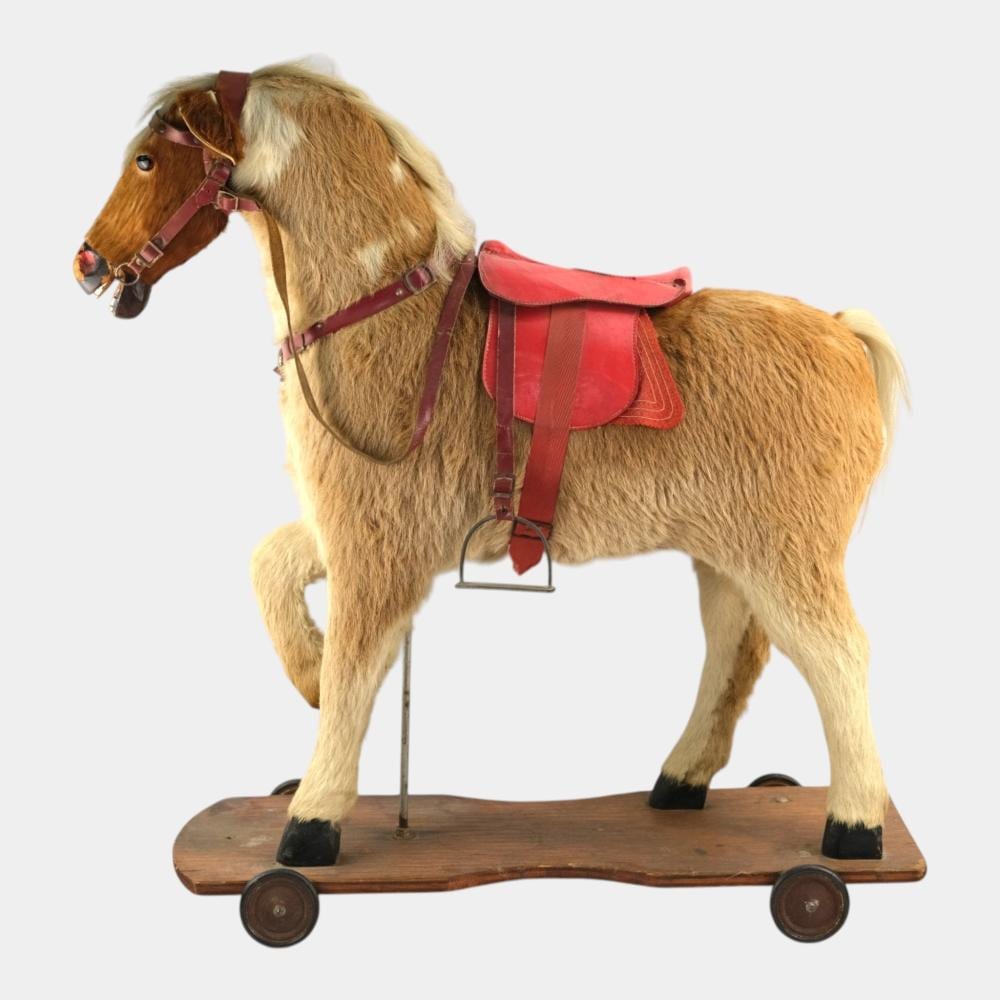
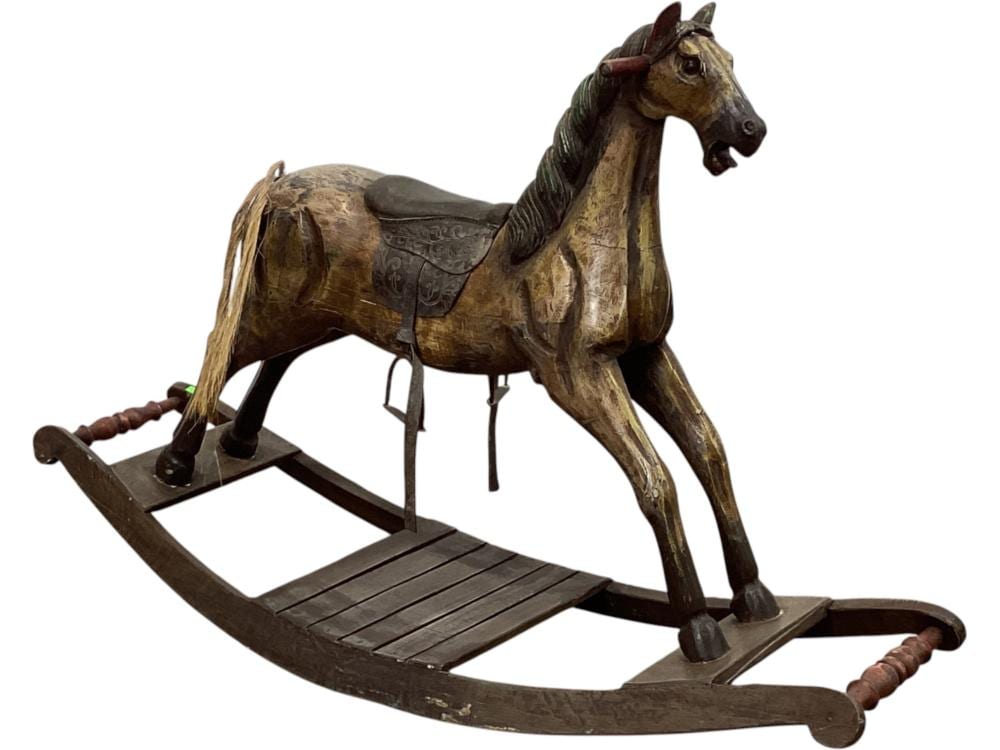
- German and Austrian horses sometimes have leather-covered bodies over wood, bright polychromy, or distinctive naive carving.
- American makers:
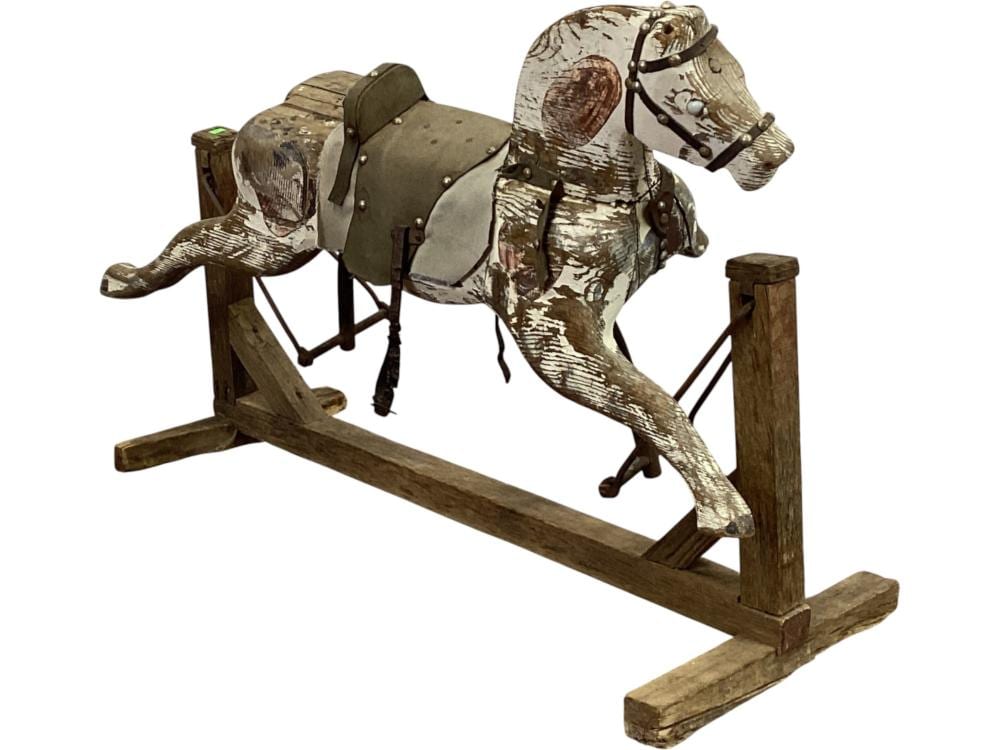
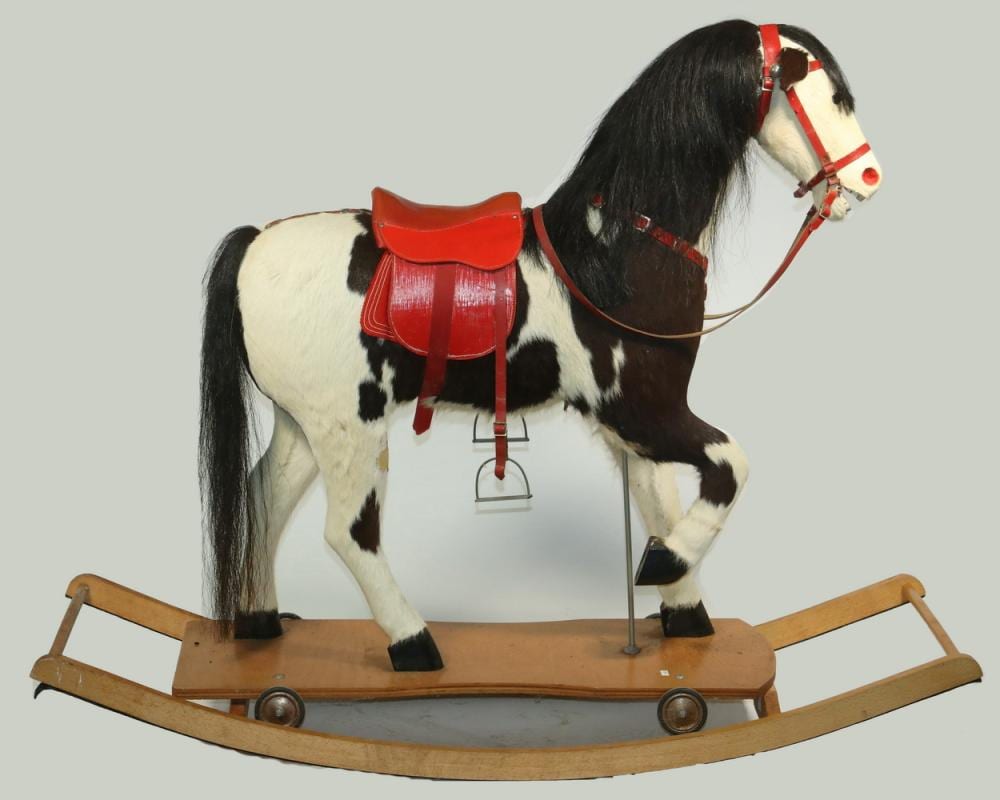
- Safety stands appear early in the U.S.; look for more rustic carving in some folk examples and regional labels. Mechanical/spring horses of the 20th century are collectible but typically valued below earlier carved-gesso examples.
Hardware and fasteners
- Hand-forged nails, square-cut nails, and slotted screws suggest earlier work.
- Phillips screws indicate 20th century (not necessarily bad, but not 19th).
- Uniform machine marks, homogenous modern bolts, and identical tool signatures across parts can signal later manufacture or restoration.
Labels and stamps
- Paper labels are frequently lost; any surviving label—however fragmentary—is valuable. Photograph it in macro and protect it during cleaning.
- Dealer or retailer labels (Army & Navy Stores, Harrods, etc.) can also assist dating and context.
Measurements
- Report at least:
- Height to ear (HtE).
- Body length (nose to rump) and stand length.
- Seat height (useful if a decorator intends display on a bench).
- Size conventions vary, but as a rule of thumb:
- Small: up to ~30 in HtE
- Medium: ~31–35 in
- Large: ~36–42 in
- Extra-large: ~43 in and above
Condition, Conservation, And Restoration: What Helps Or Hurts
Originality drives value. Here’s how the trade typically views common scenarios:
- Original paint and gesso with honest wear:
- Highly desired. Expect strong premiums. Stabilize flaking with reversible conservation rather than overpainting.
- Overpaint/repaint:
- Usually reduces value. A complete modern repaint on a once-good maker can cut value sharply compared with well-preserved original paint.
- Repairs and structural issues:
- Tight, professional, documented repairs to splits and joints are acceptable, especially on large horses. Amateur glue drips, filler smears, and misaligned joints deter buyers.
- Replaced parts:
- Manes/tails are commonly replaced and can be fine if appropriate materials and period look are used.
- Replacement tack is acceptable and often preferred for display if done in a sympathetic style.
- Replacement stands are value-negative unless the old one was beyond saving; keep and document original fragments if possible.
- Woodworm and pests:
- Historic wormholes are common; active infestation must be treated before sale. Evidence of professional treatment with inert fillers is acceptable.
- Cleaning:
- Dry dusting with a soft brush and conservation vacuum is safest. Avoid oils, furniture polish, or aggressive solvents—these can stain gesso and destroy original surfaces.
Tip: Document every intervention. Invoices, before/after photos, and materials lists reassure future buyers and insurers.
Market Benchmarks: Realistic Price Ranges And Sales Channels
Values fluctuate with fashion, condition, and currency, but this is how the main groups compare in today’s market; UK and EU markets show similar patterns.
- Top-tier named Victorian, excellent original paint, large to extra-large:
- F. H. Ayres and the best G & J Lines: the top of the market. Exceptional, exhibition-grade examples bring the highest prices of all.
- Quality late 19th–early 20th c. safety-stand horses, good original surfaces:
- Many unnamed but well-carved examples: below the named makers, with price depending on size and paint.
- Mid-20th c. Collinson and Lines Bros Tri-ang:
- Usually more affordable than Victorian horses; better examples and larger sizes sell for noticeably more.
- Continental leather-covered or brightly polychromed folk examples:
- Prices vary widely, depending on artistry and scale.
- Heavily repainted/restored or structurally compromised horses:
- Usually the lowest values, set by size, display appeal, and maker attribution.
- Exceptional rarities (early bow rockers with superb provenance, unusual mechanical variants):
- Case-by-case; high five-figure prices occur but are not the norm.
Sales channels and their implications
- Specialist auctions:
- Pros: Transparent comparables, global reach, expertise.
- Cons: Seller’s commission, buyer’s premium (ask for the full fee schedule), and variable timing.
- Reputable dealers:
- Pros: Curated audiences, restoration guidance, potential for higher retail prices.
- Cons: Dealer margins over net cost reflect overhead and guarantees.
- Private sales/online marketplaces:
- Pros: Speed and control.
- Cons: Greater risk, limited buyer confidence, potential for lower net after shipping and returns.
Seasonality and location
- Demand can spike near holidays (decor use), and UK markets are deepest for British makers. Shipping a large safety-stand horse cross-border is costly—factor crating and insurance into net proceeds.
Documenting Your Horse For An Appraisal
Good documentation elevates both appraisal accuracy and ultimate sale price.
- Photograph systematically:
- Whole horse from all four sides; 45-degree angles to show stance; close-ups of head, eyes, nostrils, ears; legs and hooves; underbelly and joints; stand uprights and ironwork; labels or stamps in macro; any damage.
- Measure consistently:
- HtE, body length, stand length, stand width, seat height.
- Create a condition report:
- Note original vs replaced elements; paint stability (flaking, overpaint); cracks; worm evidence (active vs historic); hardware types; repairs and dates.
- Gather provenance:
- Receipts, family letters, photographs, prior appraisals, exhibition/loan records.
- Identify probable maker and period:
- Compare tells (dapple pattern, stand design, eye type, label fragments) to reputable reference characteristics. Note uncertainties.
- Decide on conservation:
- If paint is unstable, consult a conservator for reversible consolidation before handling or shipping. Avoid any irreversible changes before appraisal.
Quick notes on valuation types
- Fair Market Value (FMV): Likely price between willing buyer and seller in an open market—used for sales and some tax contexts.
- Insurance/Replacement Value: Cost to replace with a similar example at retail—often noticeably higher than FMV to reflect dealer sourcing and restoration.
Quick Appraisal Checklist
- Record measurements: HtE, body length, stand dimensions, seat height.
- Take 15–25 clear photos including macro shots of labels and problem areas.
- Note stand type (bow vs safety), eye type (glass vs painted), hair material, and tack.
- Inspect for original paint/gesso vs repaint; look for overpaint lines and modern fillers.
- Check hardware: slotted vs Phillips screws; forged vs modern brackets.
- Document repairs, treatments, and any provenance.
- Draft a maker/period hypothesis with 2–3 supporting features.
- Seek a written appraisal if insuring or selling through a premium channel.
Selling, Insuring, And Caring For Long-Term Value
Preparing to sell
- Decide channel based on your horse’s tier. Top-tier originals benefit from specialist auctions or blue-chip dealers. Decorative, restored pieces can do well on curated online venues.
- Present professional photos and a concise dossier: measurements, condition, maker attribution, and provenance highlights.
- Be realistic about restoration: If original paint is present—even fragile—avoid repainting before sale. Buyers will pay for originality.
Insurance
- If the horse is a household centerpiece, insure it separately. Provide your insurer with a current appraisal, photos, and proof of value. Update every 3–5 years or after major market shifts.
Care and display
- Environment: Stable, moderate relative humidity and temperature; avoid direct sun to protect paint.
- Handling: Lift from the stand rails, not the neck or legs. Keep the swing irons and bolts snug.
- Cleaning: Soft brush and microfiber cloth; no oils or silicone polishes. For leather tack, use minimal, conservation-grade dressing only if needed.
- Child use: Antique horses are display objects; do not treat them as toys. If riding is intended, consider a modern reproduction and preserve the antique.
Common pitfalls to avoid
- Stripping and refinishing: Erases history and slashes value.
- Aggressive “aging” to fake patina: Easily detected; destroys credibility.
- Discarding “junk” parts: Keep original tacks, bits of leather, even loose label fragments—provenance is invaluable.
FAQ
Q: How can I tell if the paint is original or a later repaint? A: Look for layered, micro-cracked gesso; soft transitions in dapple spots; wear consistent with handling points (saddle area, mane ridge). Repaints often show uniform sheen, paint on top of hardware, modern brush strokes, and fresh filler beneath color. UV inspection and a conservator’s eye help confirm.
Q: Which makers bring the highest prices? A: F. H. Ayres and the best G & J Lines examples dominate many premium results, especially large dapple greys with exceptional original paint. Rarity, scale, and condition still outweigh the name on mediocre or heavily restored pieces.
Q: My horse is on a safety stand—does that mean it’s not antique? A: Not at all. Safety stands became common from the late 19th century, and many fine Victorian horses were made on them. However, very early horses are more often on bow rockers; conversions can blur the line.
Q: Is replacing the mane and tail acceptable? A: Yes, if done sympathetically with horsehair or appropriate materials. It’s better to replace missing hair than to repaint original surfaces. Always disclose replacements.
Q: How should I measure for size classification? A: Measure height to the tip of the ear (HtE), body length nose to rump, and overall stand length/width. Note seat height for display planning. Include all dimensions with your photos and condition report.
By approaching your heirloom with a conservator’s caution and an appraiser’s structure—maker tells, construction, condition, and documentation—you’ll unlock its true market position. Whether your rocking horse becomes a treasured family keeper or a star at auction, the steps above will help you protect its history and realize its worth.