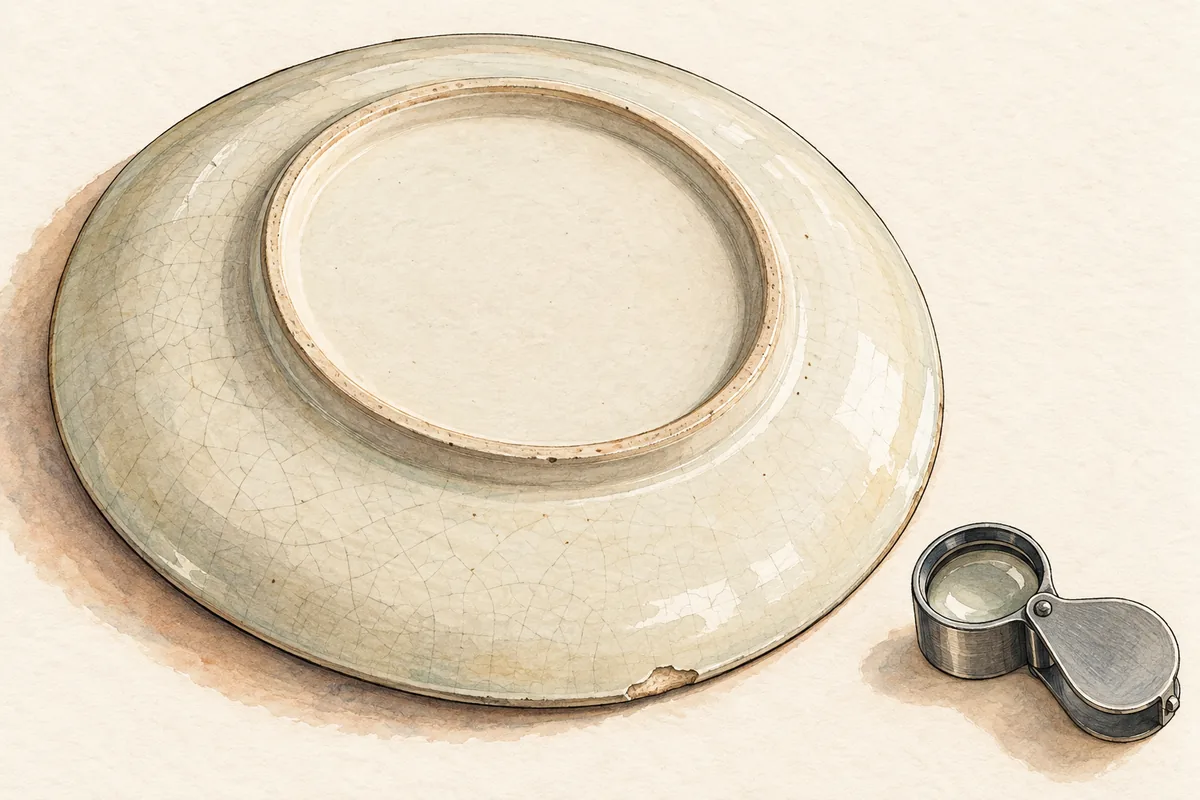
Unlocking the Worth of Your Franciscan Earthenware a Comprehensive Guide to Valuing Vintage Pottery: appraisal and value basics
Unlocking the Worth of Your Franciscan Earthenware a Comprehensive Guide to Valuing Vintage Pottery research should start with identification, condition, provenance, and item-specific market evidence. Use this guide to compare the signals that matter before paying for a formal appraisal or deciding whether to sell.
Franciscan earthenware appraisal checklist
Franciscan Earthenware is a staple of American tableware collecting—beloved for its hand-painted florals, atomic-era graphics, and approachable prices. Whether you’re sorting a family service or hunting for a Starburst coffee server at a flea market, a clear, methodical approach will help you identify, date, and value pieces with confidence.
This guide distills what matters most: backstamps, patterns, shapes, condition, scarcity, and current market demand. You’ll also find ballpark price ranges, a practical checklist, and answers to common questions.
What Collectors Mean By “Franciscan Earthenware”
- Maker and timeline: The Franciscan brand began under Gladding, McBean & Co. (California) in 1934. Corporate changes followed—International Pipe & Ceramics (Interpace) in the 1960s and a sale to Wedgwood in 1979. By the mid‑1980s, most production of key patterns moved from California to England (Johnson Brothers). In the 2000s, production for some patterns transitioned again (notably to China) before eventual discontinuations.
- Why it matters: Place of manufacture affects desirability. Early “Made in California” earthenware generally carries the highest premiums; English-made examples are collectible but typically less valuable than their California counterparts; later imported versions bring the lowest prices.
- Materials and lines: This guide focuses on earthenware (as opposed to stoneware or fine china). Notable earthenware patterns include Desert Rose, Apple, Ivy, Wildflower, October, and the mid‑century modern Starburst on the Eclipse shape.
Identify Pattern, Shape, And Era
Correct identification underpins valuation. Start with the pattern, confirm the shape, then date by backstamp and production traits.
Pattern highlights:
- Desert Rose (introduced 1941): Raised hand-painted pink blossoms with green leaves; one of the most collected dinnerware patterns in the U.S.
- Apple (1940): Raised red apples with leaves; similar relief technique to Desert Rose.
- Ivy (1948): Trailing ivy leaves; often flatter than Desert Rose/Apple, with less pronounced relief.
- Starburst (c. 1954–1960s): Turquoise, black, and gray atomic starbursts on the triangular, rounded Eclipse shape—an MCM icon.
- Others: Wildflower, October (autumn leaves), and earlier solid-color lines (Coronado, El Patio) that can have selective following depending on color and form.
Shape matters:
- Common dinnerware: Dinner plates (~10–10.5"), luncheon (9"), salad (7.5–8"), bread & butter (6–6.5"), cereal bowls (5.5–6"), soup bowls (8–9").
- Serving and special forms that often bring premiums: Chop plates/round platters (12–13"), large oval platters (13–16"), covered casseroles, coffee servers, ball pitchers, celery dishes, handled soups, divided vegetable dishes, butter domes, egg cups, and cruets.
Backstamps and dating (approximate guide):
- 1930s–late 1950s: “Franciscan Ware” with Mission Bell or circular mark; often “Made in California U.S.A.” added starting c. 1949.
- Late 1950s–1960s: “Franciscan Earthenware” backstamps; some show model numbers or decorator marks.
- 1960s–1979: Interpace-era references may appear.
- 1984 onward (for many patterns): “Made in England” under Wedgwood/Johnson Brothers.
- 2000s: “Made in China” for later productions of Desert Rose and Apple. Note: Overlaps exist; consult multiple clues—font, layout, and presence of hand-painted variation—to corroborate a date range.
U.S. vs. England vs. later imports:
- U.S. (California): Heavier body, deeper relief on hand-painted patterns, more variation in brushwork. Earlier glazes can craze.
- England: Slightly crisper or lighter bodies, consistent decoration; Desert Rose/Apple typically have brighter pinks/reds and finer linework, with decals supplementing hand painting.
- Later imports: Uniform decals, modern dishwasher/microwave safe marks; lowest collector value for most forms.
How to Determine the Age of Franciscan Apple
Franciscan Apple was introduced in 1940, a year before Desert Rose, so no Apple piece is older than that. Apple and Desert Rose came from the same maker and share the same families of backstamps, so the backstamp guide above applies to both. Dating an Apple piece means narrowing a long production run. Work through these checks in order:
- Read where it was made. "Made in California" or "Made in U.S.A." places the piece in the American run, which ended when the California plant closed in 1984. "Made in England" means 1984 or later, and "Made in China" later still.
- Read the owner named in the mark. A mark naming Wedgwood cannot be earlier than 1979, when Wedgwood bought the Franciscan line. An Interpace reference sits between the 1960s and 1979.
- Copy the mark exactly. Write down every word, its layout and any numbers or initials, and photograph it straight on. Small wording changes are what separate one period from the next.
- Date each piece on its own. Families often added to an Apple set for decades, so one cupboard can hold 1940s California plates, English replacements and newer pieces. Sort by backstamp before you describe the set.
- Treat unmarked pieces as undated. Compare the shape and the depth of the raised apples with marked pieces of the same form, and describe the result as a likely range rather than a firm date.
When you compare with the sold results on this page, match the place of manufacture as well as the form; a California Apple platter and an English one are different comparisons. For other American dinnerware and art pottery makers, our pottery and porcelain value guides cover marks and dating.
Condition And Completeness Drive Value
Condition grading is the most immediate value factor—often more than age.
Grading snapshot:
- Mint/Near Mint: No utensil marks; no chips, cracks, hairlines, crazing, or stains; strong glaze; decoration intact.
- Excellent: Minimal utensil marks; no chips or cracks; very light, even crazing acceptable on older pieces.
- Very Good: Minor rim flea bites or light utensil wear; small areas of craze lines; minimal staining.
- Good/Fair: Chips, hairline cracks, staining, heavy utensil wear, or significant crazing.
How condition affects price:
- Early, scarce forms with small, stable flaws may still sell well (e.g., a rare early Desert Rose ball pitcher with minor, clean crazing).
- Common dinner plates with chips or gray utensil wear drop to “use” value—often a fraction of the price of clean examples.
- Staining within crazing lines is especially penalized and costly to remediate.
Completeness considerations:
- Matched services (same era, backstamp, and color tone) command premiums over mixed-era sets.
- Lidded items are significantly devalued if missing lids.
- Original boxes, pattern brochures, or point-of-sale materials from California production can add collector interest.
Scarcity, Demand, And Typical Price Ranges
Market values fluctuate by region and season. For clean, undamaged pieces, this is how the patterns and forms compare:
Desert Rose (U.S.-made):
- Dinner plates are common; earlier “Made in California” backstamps sell toward the top.
- Coffee servers, covered casseroles and large oval platters (15–16") sell for well above plates.
Desert Rose (England-made and later imports): usually below U.S.-made pieces of the same form and condition; most serving pieces stay modest unless unusually large or boxed.
Apple and Ivy (U.S.-made): price like Desert Rose by form; covered servers and unusual forms sell above plates.
Starburst (Eclipse shape, U.S.): a mid-century favorite; coffee servers, oblong platters and salt and pepper sets draw the strongest interest.
Early solid-color lines (Coronado, El Patio): common plates and bowls are modest; rare colors and forms (ring handles, covered pieces) sell well above them.
Sets versus part-outs:
- A complete service for 8 (48–60+ pieces) in excellent condition sells as one lot, usually for less than the pieces would bring separately.
- Piecemeal selling often nets more overall but requires more time and packing.
What brings a premium:
- Early U.S. production, unusual shapes (ball pitchers, celery trays, footed compotes), complete lidded pieces, and MCM favorites like Starburst coffee servers.
- Color-consistent, near-mint examples are standouts.
What softens value:
- Common forms with wear, English or later imported production for patterns that are abundant, and items with replaced lids.
Check recent sold listings for the same pattern, form and backstamp before pricing; scarce colors, decorator variations, or documented provenance can push a piece higher.
A Step-By-Step Valuation Method
- Confirm pattern and shape.
- Compare decoration, relief, and silhouette to known examples. Measure diameter/length to distinguish luncheon vs. dinner and small vs. large platters.
- Read the backstamp and other marks.
- Photograph the mark. Note wording (“Made in California,” “Interpace,” “Made in England”), font, and any decorator initials or mold numbers.
- Assess condition under bright, raking light.
- Check rims with a fingernail for flea bites.
- Tilt to reveal utensil marks and glaze wear.
- Look for crazing (fine crackle in the glaze), hairlines (structural), and staining.
- Establish production era and place.
- Synthesize pattern launch dates with the backstamp and decoration method. Hand-painted variation and deeper relief suggest earlier U.S. pieces in certain patterns.
- Rank scarcity.
- Determine if the form is common or special. Lidded forms, coffee servers, large platters, and promotional pieces are typically scarcer.
- Price against sold comparables.
- Use recent sold prices rather than asking prices. Adjust for condition, location, and shipping costs—which materially affect realized prices for heavy pottery.
- Decide selling strategy.
- High-value single items do well at specialty auctions or with established dealers. Common plates and bowls move better in lots locally to minimize shipping risk and cost.
Care, Storage, And Selling Strategies
- Cleaning:
- Start gently: warm water, mild dish soap, and a soft sponge.
- Lift gray utensil marks with a non-abrasive, ceramic-safe cleaner; test a tiny area first.
- Avoid bleach, harsh abrasives, and long soaks on crazed items—these can draw in stains or weaken glaze bonds.
- Handling and storage:
- Use felt or thin foam between stacked plates to prevent scuffing.
- Store lids upright; never stack heavy pieces on top of a lid.
- Avoid extreme temperature swings; vintage earthenware is prone to shock cracks.
- Packing to sell:
- Double-box with generous cushioning. Wrap handles and finials separately. Insure at replacement value and specify “ceramics/pottery” to the carrier.
- Pricing presentation:
- Photograph in natural, even light. Include front, back, mark, and any flaws with close-ups. Measurements and backstamp wording save buyer questions—and build trust.
Quick Appraisal Checklist
- Identify the pattern: Desert Rose, Apple, Ivy, Starburst, etc.
- Measure the form to confirm size category (dinner vs. luncheon, small vs. large platter).
- Photograph and record the exact backstamp wording.
- Grade condition: chips, cracks, hairlines, crazing, staining, utensil wear.
- Note completeness: lids present? matched glaze/era within sets?
- Determine place of manufacture (California, England, later imports).
- Check scarcity: is the form common or an uncommon server?
- Compare to recent sold prices for the same form, era, and condition.
- Choose selling venue: part-out vs. set, local vs. ship, dealer vs. auction.
Frequently Asked Questions
Q: How can I tell if my Desert Rose is California-made or English-made? A: Read the backstamp first: “Made in California U.S.A.” or early Franciscan Ware/Mission Bell marks indicate U.S. production. English pieces state “Made in England.” U.S. examples usually have deeper relief and more variation in hand painting; English ones tend to look crisper and more uniform.
Q: Does crazing ruin the value? A: Light, even crazing on early U.S. pieces is common and acceptable to many collectors, especially on scarce forms. Stained crazing or hairline cracks, however, significantly reduces value. Clean, unstained glaze is always worth more.
Q: Are complete sets worth more than individual items? A: A matched service in excellent condition earns a convenience premium, but parting out can net more—especially if you have in-demand forms (coffee server, large platters) or if some dinnerware shows wear while a few serving pieces are pristine.
Q: Can I put Franciscan Earthenware in the dishwasher or microwave? A: It’s not recommended for vintage U.S. and English pieces. Heat and detergents can worsen crazing, fade decoration, and loosen handles. Hand-wash gently and avoid thermal shock.
Q: What are the rarest Franciscan Earthenware items to watch for? A: Early U.S. promotional or unusual forms (ball pitchers, certain covered servers, larger platters, odd specialty dishes) and mid-century Starburst servers tend to command premiums. Condition and originality remain decisive.
Q: When was the Franciscan Apple pattern first made? A: Gladding, McBean introduced Franciscan Apple in 1940 in California, a year before Desert Rose. American production continued until the California plant closed in 1984, after which the pattern was made in England and later in China. Any Apple piece therefore dates from 1940 or later, and the backstamp wording narrows it further.
Q: Can one Franciscan Apple set contain pieces from different decades? A: Yes, and it is common. Owners often replaced broken pieces or added serving pieces over many years, buying whatever was in stores at the time. Turn every piece over and group them by backstamp wording. A set with matching California marks is described differently from a mixed set that includes English or later imported replacements, so list the marks when you sell or compare.
—
With a firm grasp of pattern, backstamp, condition, and form, you can place your Franciscan Earthenware within a realistic value range—and make smart decisions about care, display, and sale. In a market that rewards accurate identification and clean examples, a bit of method goes a long way.


