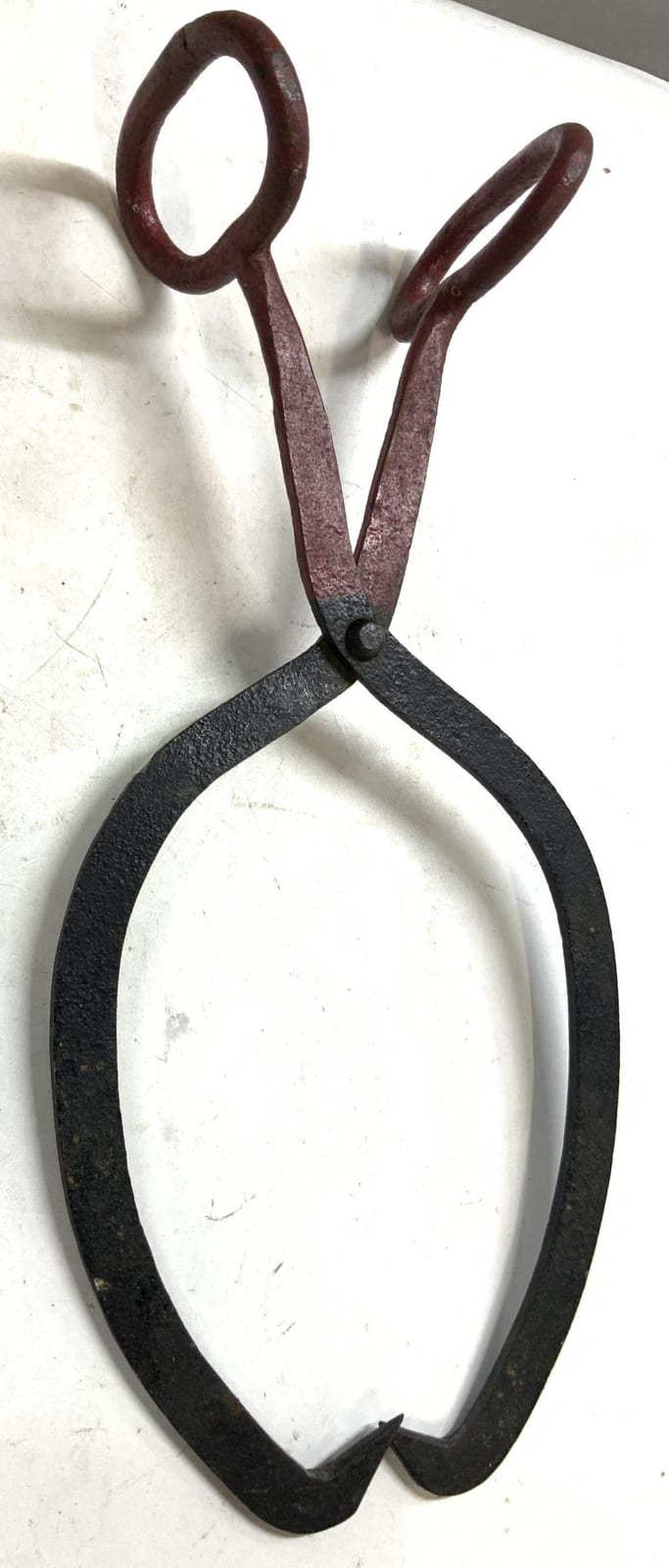
How much are antique ice tongs worth?
Most antique ice tongs sell for small sums. Of the recorded auction sales in the table below, the 30 in US dollars range from $5 to $600, with a median of $15. Cast and wrought iron block tongs, the kind icemen used to lift heavy blocks, sit at the low end. Silver is where the money is: a Tiffany sterling ice tong in the Richelieu chrysanthemum pattern is the top of the table, and a Romanesque sterling cube tong is also well above the median. After material, value follows maker and property marks, such as hotel, railroad or ice company stamps, then early hand-forged work and unusual forms, then condition: bends, cracks, repairs, worn plating and active rust lower the price.
Iron, plated and sterling ice tongs
Antique ice tongs sit at the crossroads of industry, domestic life, and design. From iron tools that hoisted winter-harvested blocks to elegant sterling tongs that adorned hotel bars, these pieces tell a story of how people cooled drinks and preserved food before modern refrigeration. Their value today varies widely, driven by type, materials, marks, condition, and provenance.
Types of ice tongs: block, cube and patented
Before electric refrigerators, ice was cut from lakes and rivers, stored in icehouses, and delivered to homes, businesses, and railroads. Tongs developed for three main tasks:
- Ice block tongs (utilitarian): Forged or cast iron tools with sharp points used by icemen to lift and maneuver heavy blocks. Sizes range from compact household carriers to large delivery and icehouse tongs. Typically 10–24 inches across at rest, with curved pincer arms terminating in points.
- Ice cube/bar tongs (table and barware): Smaller, handheld tongs designed for individual cubes—common in Victorian and early 20th-century bar sets and tea services. Materials include nickel plate, silver plate, brass, and sterling silver. End treatments vary: “claw” feet, serrated pads, pierced motifs, or shell patterns.
- Specialty and patented forms: Spring-loaded cube tongs, combination pick-and-tong tools, scissor-action tongs with mechanical grips, and hotel/railroad property-marked examples. Some bar tongs were sold as parts of matched sets with shakers, strainers, and buckets.
What they aren’t:
- Sugar tongs are generally smaller (often under 5.5 inches) and lighter, with spooned or flat pads rather than aggressive teeth. Many are mistaken for ice tongs; size and grip design are the best clues.
- Logging tongs are massive with very long points and heavy rings or chains. Some sellers mislabel logging gear as “ice tongs,” but overall proportions and point length give them away.
Chronology in brief:
- Mid-19th century to early 20th century: Iron ice block tongs predominate; blacksmith-made examples show hand-forged character.
- Circa 1870–1910: Silver-plated table and bar tongs flourish, often with ornate Victorian decoration. Quadruple plate marks are common.
- Circa 1880–1930: Nickel-plated steel cube tongs popular with hotels and restaurants. Patented spring models appear.
- 20th century: Chrome plating evolves; post-1930s designs often simpler, reflecting Art Deco and later aesthetics. Sterling examples continue for luxury sets and presentation pieces.
What makes ice tongs worth more
Value depends on a mix of tangible and contextual factors. Evaluate each piece against these drivers:
Type and use
- Highest: Decorative or luxury bar/cube tongs in sterling or with figural motifs; property-marked hotel/railroad block tongs; patented or unusual mechanisms.
- Mid: Early, large, display-worthy iron block tongs with strong sculptural presence.
- Lower: Later mass-produced utilitarian iron tongs without marks or special features.
Material and finish
- Sterling silver (marked “STERLING” or hallmarked) commands the strongest prices, especially by top makers.
- Early thick silver plate (often “Quadruple Plate”) and crisp nickel plate attract barware collectors.
- Plain iron is common; original japanned black paint or early hand-forged surfaces add appeal.
Maker and marks
- Desirable: Known silversmiths and barware manufacturers (e.g., Tiffany & Co., Gorham, Reed & Barton, Meriden, Rogers Bros.), hotel/railroad ownership marks, patent dates/numbers, retailer stamps.
- Blacksmith initials and regional marks (e.g., New England ice trade) can elevate value.
Age and form
- Pre-1900, hand-forged, or documented early models are more sought after. Distinctive forms—claw feet, figural animals, shell and Kings patterns—add value.
Condition and completeness
- For cube tongs: crisp edges on claws/serrations, no bends, cracks, or repairs, tight hinge/spring action, plating intact, matched pair halves.
- For block tongs: points sharp and symmetric, original hardware present, no structural cracks, honest wear with stable surface.
Provenance and context
- Hotel, railroad, or ice company stamps; documented use in a notable venue; period photographs or billheads linking the item to a place or person can materially affect price.
Display and décor potential
- Oversized, sculptural iron tongs or particularly handsome sterling examples bring premiums for interior decorators and barware stylists.
How to identify and date old ice tongs
Start with what you can see and feel; construction reveals age and quality. If you can’t read the marks or tell sterling from plate, you can upload photos of the marks, the ends and the hinge for a free check.
Materials and finishes:
- Iron/steel: Hand-forged arms with hammer marks and irregularities suggest earlier manufacture. Later examples show consistent machine symmetry. Some are japanned (black varnish) for rust protection.
- Nickel plate: Smooth silvery finish common on 1880–1930 barware; look for bright plating but expect minor brassing at contact points.
- Silver plate: Often stamped “EPNS,” “EP,” “A1,” “Quadruple Plate,” or maker names with pattern numbers. Heavier quadruple plate often dates to the late 19th century.
- Sterling silver: Marked “STERLING,” “925,” or with national hallmarks. English sterling may bear a lion passant and town/date marks. U.S. makers typically stamp “STERLING” plus their hallmark.
Construction clues:
- Rivets and fasteners: Domed hand-peened rivets and square nuts are indicators of 19th-century manufacture. Phillips screws appear broadly mid-20th century onward.
- Casting seams: Visible part lines indicate cast elements (common on decorative feet of cube tongs). Clean, well-finished seams are better quality.
- Hinge and springs: Leaf or coil springs on patented cube tongs can help date into the 1890–1930 window. Very crisp spring action suggests lower use.
- Surface: Look for forge welds on early iron; a too-smooth, uniformly pitted surface may indicate later decorative reproductions.
Measurements and form:
- Cube/bar tongs: Typically 6–8.5 inches. Teeth or serrations for grip; figural “claw” feet are classic Victorian.
- Sugar tongs: Often 4–6 inches; lighter with flatter or spooned terminals designed for sugar lumps.
- Block tongs: At-rest span 10–24 inches; substantial arms with sharp points roughly 1–2 inches long. Household tongs are smaller; delivery/icehouse tongs are larger and heavier.
- Logging vs. ice: Logging tongs have massive iron rings or chain attachments and long, aggressive hooks designed for wood. Ice tongs are lighter in section and proportion, with shorter points.
Marks to look for:
- Silversmiths and manufacturers: Tiffany & Co., Gorham, Reed & Barton, Meriden, Rogers Bros., International Silver, and other regional firms. Pattern names or numbers can help.
- Patent info: “PATENTED” or “PAT” with dates/numbers. Dates indicate the patent, not necessarily the manufacturing date; production may follow for years.
- Property marks: “PROPERTY OF … HOTEL,” railroad initials, ice company brands. These tie items to specific institutions—highly collectible.
- Retailer names: Jewelers, department stores, and hospitality suppliers also stamped their wares.
Condition grading notes:
- Sterling/silver plate: Check for splits at the hinge, stretched arms, worn-through plating (yellow brass showing), deep scratches, monograms or removals.
- Iron: Distinguish stable, dark patina from active red rust. Avoid pieces with structural cracks, replaced bolts, or welded repairs unless rare.
How the main types compare on price
Values vary by region, season, and sale venue, but this is how the main types compare in retail and well-described online auction results:
- Common utilitarian iron ice block tongs (unmarked, later, sound): the most common and least expensive
- Early or sculptural blacksmith-made block tongs (display-grade): above plain utilitarian tongs
- Railroad/hotel-stamped block tongs: a premium over unmarked tongs
- Nickel-plated bar/cube tongs (plain to moderately decorative): generally modest
- Victorian silver-plated ice tongs with ornate feet or patterns: above plain plated tongs; pieces from a matched set sell for more
- Patented or mechanical cube tongs (spring/combination tools): valued for the mechanism and its condition
- Sterling silver ice tongs (quality makers, clean condition): well above plated tongs; top-tier makers or figural motifs sell for more still
- Oversized folk-art or early 19th-century iron examples with provenance: among the strongest iron examples
Adjustments:
- Condition: significant plating loss, deep pitting, bent arms, or repairs lower value noticeably; exceptional, near-new condition adds a premium.
- Provenance/marks: desirable property marks, retailer boxes, or documented history add a premium.
- Pairing: for cube tongs, mismatched or stretched arms may halve value; for block tongs, replaced hardware lowers value somewhat.
Cleaning and displaying old ice tongs
Preserve value by favoring conservation over restoration.
Iron and steel:
- Remove active rust gently with 0000 steel wool and light oil, or use a pH-neutral chelating rust remover per instructions.
- Rinse or wipe down, fully dry, then seal with microcrystalline wax or a neutral paste wax. Avoid grinding wheels and aggressive sanding that erase tool marks and patina.
- If original japanned paint survives, stabilize rather than repaint.
Nickel plate and silver plate:
- Hand-wash with mild soap and warm water; dry immediately.
- Use non-abrasive metal polish sparingly. Overpolishing thins plating and dulls detail.
- Avoid ammonia or bleach. If brassing is evident, further polishing will worsen appearance and value.
Sterling silver:
- Clean with a high-quality, non-abrasive silver polish; avoid dipping solutions on pieces with springs or mixed metals.
- Rinse thoroughly and dry; store with anti-tarnish paper or cloth.
Mechanics:
- Add a trace of light machine oil at hinges, then wipe completely to prevent dust attraction. Avoid heavy oils and long-term WD-40 residues.
Storage and display:
- Keep in a dry environment away from kitchen humidity.
- Wrap silver in acid-free, sulfur-free tissue; avoid PVC plastics.
- For wall display of heavy block tongs, use lag screws into studs or rated hardware. For shelf display, a small bead of museum wax under light tongs prevents sliding.
7-step ice tong checklist
- Identify type: block, cube/bar, or specialty; rule out sugar or logging tongs.
- Measure length and examine ends: points vs. claws/serrations; check proportional heft.
- Inspect construction: rivets, screws, casting seams, spring/hinge quality.
- Read marks: maker, material (STERLING/EPNS), patent date/number, property stamps.
- Assess condition: plating wear, bends, cracks, repairs, active rust.
- Note provenance: hotel/railroad names, boxes, receipts, regional history.
- Set a range: start with the category range above, then adjust for condition, marks, and rarity.
FAQ
Q: How do I tell ice tongs from sugar tongs? A: Size and grip. Ice cube tongs are usually 6–8.5 inches with serrated pads or claw feet. Sugar tongs are smaller (often 4–6 inches) with flatter or spooned terminals and lighter construction.
Q: Should I remove all rust from iron block tongs? A: No. Remove only active red rust; preserve dark, stable patina. Overcleaning erases age and can lower value. After stabilizing, seal with a light wax.
Q: Do patent dates tell me when my tongs were made? A: Patent dates refer to the protection of the design, not the exact manufacturing date. Production could span years after the patent. Use construction details and finishes to refine the timeframe.
Q: Are hotel- or railroad-marked tongs worth more? A: Often, yes. Clear institutional property marks are highly collectible and can add meaningfully to value, especially from notable hotels, railroads, or ocean liners.
Q: My silver tongs are monogrammed—help or harm? A: It depends. Monograms are period-correct and often neutral for value; removal can leave telltale thinning. Famous names or institutional crests can add desirability.


