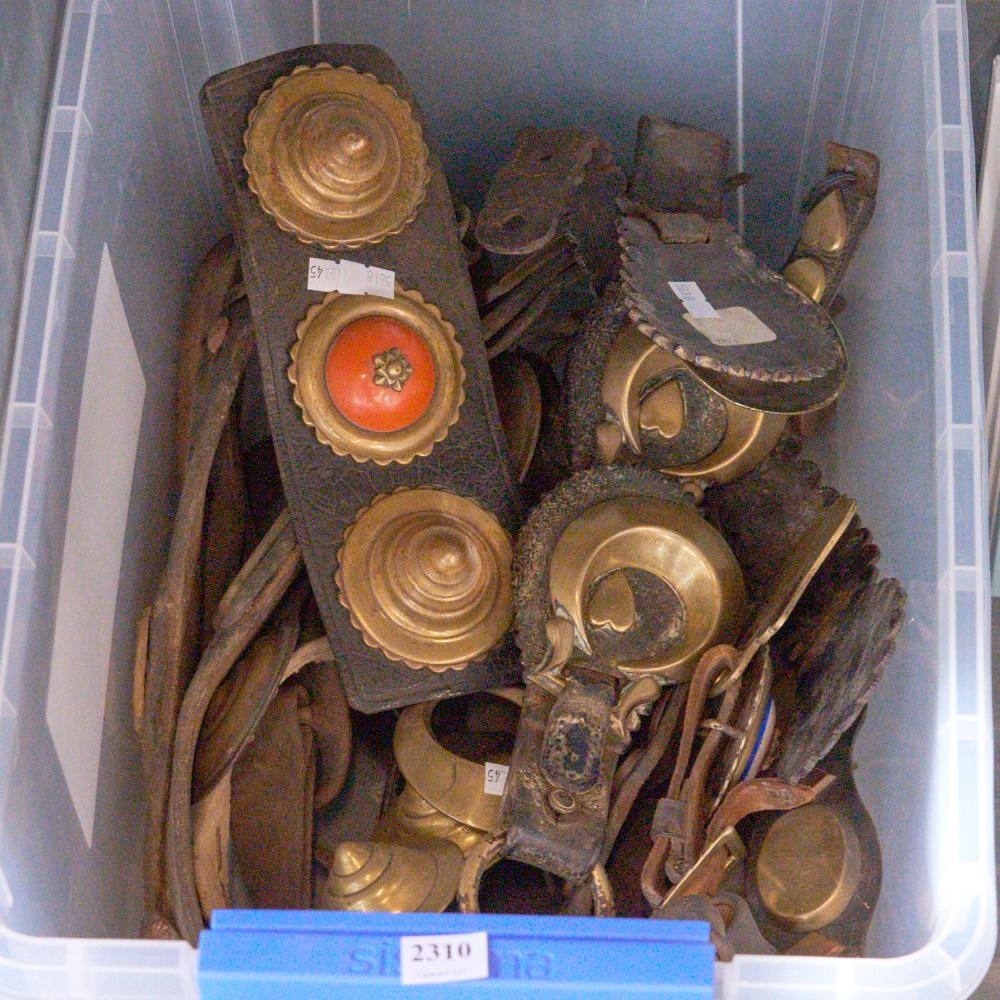
Unlocking the Worth of Yesteryear a Collectors Guide to Antique Horse Harness Values: appraisal and value basics
Unlocking the Worth of Yesteryear a Collectors Guide to Antique Horse Harness Values research should start with identification, condition, provenance, and item-specific market evidence. Use this guide to compare the signals that matter before paying for a formal appraisal or deciding whether to sell.
Antique horse harness appraisal checklist
Antique horse harness is where function meets fine craftsmanship: stitched leather, engraved metal, and elegant engineering designed to put horsepower to work. For collectors and appraisers, it offers a wide spectrum of value—from modest farm-worn pieces to important coach-house sets with blue-blood provenance. This guide explains how to identify components, weigh value drivers, spot reproductions, and care for old leather and metal so you can estimate market value with confidence.
Anatomy of a Harness: Know What You’re Valuing
Before you assign a number, know precisely what you have. Harness isn’t a single item—it’s a system. Identification accuracy directly affects valuation.
Core components and terms:
- Bridle with blinkers (blinders): Headgear; look for rosettes, maker-stamped buckles, and correct bit pairing.
- Bits (driving types): Liverpool, Buxton, Postilion, and curb variants. Marked bits often add value.
- Reins (lines): Often double; check for original stitching and matched lengths.
- Saddle (pad): Sits on the horse’s back; quality examples have formed padding and decorative terrets.
- Collar or breastcollar: Draft harness uses a full collar; light/coach harness often uses a breastcollar.
- Hames: Metal arms that sit on a collar; decorative ball-top hames can be collectible by themselves.
- Traces: Straps transmitting pull to the vehicle.
- Breeching: Provides braking; missing breeching is common and affects completeness.
- Crupper: Under the tail; often perishes first.
- Martingale: A chest strap that may carry horse brasses.
- Rosettes: Decorative discs on the bridle; celluloid, glass, or pressed metal varieties exist.
- Decorations: Conchos, silver mounts, bosses, and horse brasses (especially in British harness).
Harness types and collecting niches:
- Coach and carriage harness: Fine, often black leather, nickel or silver-plated mounts; prestige-focused.
- Light buggy/road harness: Lighter build, simpler metalwork.
- Draft/work harness: Heavier leather and iron/brass hardware; values depend on condition and completeness.
- Parade/Western show harness: Elaborate silver-mounted pieces; flashy and collectible.
- Military and artillery harness: Specific patterns; desirable when unit-marked and complete.
Materials:
- Leather: Vegetable-tanned strap leather, often lacquered or blackened for coach harness.
- Metals: Brass, nickel, German silver (nickel silver), and sometimes sterling silver. Plating versus solid affects value.
- Stitching and thread: Linen thread is typical in older examples.
Sets vs. singles:
- A matched, attributable set is worth more than the sum of its parts. Most survivors are partial or assembled sets. Look for consistent maker marks, matching buckle patterns, and even patina across components.
Key Value Drivers: What Appraisers Weigh
- Age and period:
- Early to mid-19th century coach harness with quality metalwork and intact leather commands strong interest.
- Late Victorian to early 20th century is most common; value varies with maker and features.
- Maker and attribution:
- Harness shops and coachmakers often stamped buckles, rosettes, terrets, or breastplates. Prestige names elevate value. For instance, Swaine & Adeney (London) and Hermès (Paris, early harness roots) are sought after. Regional master makers and known coach houses matter too.
- Materials and finish:
- Sterling silver mounts (often hallmarked) and finely chased hardware outrank plain iron.
- Deep, original surface on leather—rather than over-dyed or heavily oiled—adds value.
- Completeness and matching:
- Matched pairs and team sets (four-in-hand, etc.) with uniform fittings draw premiums.
- Missing breeching, traces, or replaced billets reduce value materially.
- Condition and originality:
- Sound leather without red rot, intact stitching, and working buckles count. Extra holes, replaced straps, re-dyeing, and modern stitching decrease value.
- Hardware with crisp engraving and original plating outranks polished or heavily cleaned pieces.
- Provenance:
- Documentation to a specific estate, coach-builder, regiment, or notable exhibition boosts value.
- Old carriage-house tags, inventory numbers, or labels are worth keeping with the set.
- Regional style and use:
- British coach harness with quality brasses differs from American light buggy harness in features and market demand. Western parade harness appeals to Americana collectors.
- Military/artillery harness with clear pattern designation and unit marks can be strong.
Market Benchmarks: Typical Price Ranges and What Commands Premiums
Prices fluctuate with fashion and supply, so check recent sold results for the same type of harness before pricing. Condition and provenance can swing results significantly. How the main groups compare:
- Complete, matched coach or carriage harness (high quality, maker-attributed, largely original): among the most valuable harness; sterling mounts, blue-chip provenance and exhibition-level sets sell well above typical sets.
- Western parade or show harness with silver mounts: strong collector demand; a documented maker and original tapaderos, breastplates, and matched bridle elements put a set at the top of the group.
- Draft/work harness (complete, serviceable, with decorative hames): usually more modest; ornate brass/ball-top hames and very good leather lift it.
- Individual components:
- Collars: condition sensitive; shrunken or cracked collars are hard to sell.
- Hames (decorative/brass-ball pairs): exceptional cast/engraved pairs sell well above plain ones.
- Bits (Liverpool, Buxton, marked examples): unusual/military marked bits sell higher.
- Bridle with quality rosettes: an identified maker and the original bit add to value.
- Rosette pairs (glass/celluloid, pictorial): priced on rarity and condition.
- Horse brasses: common late Victorian/20th century brasses are plentiful and inexpensive; scarcer pre-Victorian, named inns, guild or prize brasses sell for much more.
- Military/artillery harness (partial sets, unit-marked): larger, better-documented groupings sell for more than odd pieces.
What drives premiums:
- Uniformity across the set: matching buckles, stitching, and patina.
- Hallmarked silver or fine nickel mounts with hand-engraving.
- Proven links to a known coach, route, estate, regiment, or maker.
- Unusual features: rare bit patterns, glass picture rosettes, bespoke martingale centers, or early forms.
Penalties on price:
- Over-oiled or lacquered leather obscuring original surface.
- Modern repairs with machine stitching, incorrect thread, or synthetic replacements.
- Missing key pieces that are costly to replace (e.g., breeching, traces).
- Heavy polishing that removes plating or softens engraving.
Attribution review and Red Flags: Originals vs Reproductions
Because harness is decorative as well as functional, it’s been reproduced for display and parade use. Distinguish period work from later copies with the following checks:
Maker’s marks and materials:
- Examine buckles, terrets, bit cheeks, and rosettes for stamps. Look for correct fonts and placement. Spurious stamps often appear shallow, crooked, or in inconsistent locations.
- Sterling mounts may carry hallmarks; nickel silver (German silver) will not. Use a jeweler’s loupe to evaluate plating wear on edges.
- Brass hardware from the 19th century is typically well-finished, with crisp edges; modern castings show pebbly texture and mold lines.
Construction and wear:
- Hand-stitching shows slight irregularity; machine stitching on “antique” leather can indicate later repair or reproduction.
- Age-consistent wear appears on bending points: billet holes, rein rubs at terrets, and crupper loops. Even, artificial abrasion is suspect.
- Leather odor and feel: old vegetable-tanned leather smells neutral to slightly sweet; strong chemical or petroleum smells suggest modern materials or recent heavy oiling.
Fasteners and finishing:
- Period harness favors rivets, hand-set copper burrs, and stitched joints; Phillips screws and bright zinc-plated hardware are modern.
- On horse brasses, earlier pieces are typically cast or pressed with smoothed backs; sharp casting seams, burrs, and uniform machine-made screws point to later souvenirs.
Completeness and matching:
- A “matched set” with mixed buckle patterns, two different rein leathers, and uneven patina likely was assembled. That’s acceptable if disclosed, but value accordingly.
When in doubt:
- Compare multiple components for coherence: leather dye tone, thread gauge, buckle design, and wear patterns should tell a consistent story.
Care, Conservation, and Ethical Restoration
Preserving originality is key to both value and longevity. Over-restoration can erase historical evidence and depress price.
Handling and storage:
- Keep relative humidity moderate and temperature stable. Avoid attics and damp basements.
- Support leather to prevent creasing; store bridles and reins hung with gentle curves, not tight folds.
- Separate leather from bare metal during storage to avoid staining; use acid-free tissue barriers.
Cleaning and conditioning:
- Surface clean leather with a soft brush and slightly damp, lint-free cloth. Test any cleaner on an inconspicuous area.
- Use pH-balanced leather care sparingly. Avoid soaking oils; heavy applications of neatsfoot can darken leather and weaken stitching.
- Do not re-dye unless absolutely necessary; original finish and edge paint are value multipliers.
- For metal, remove loose dirt first. Lightly polish only if plating is robust and tarnish obscures detail, and never to a mirror finish that erases age. Microcrystalline wax can protect cleaned metal.
Stitching and repairs:
- Prioritize conservation over replacement: stabilize failing stitches with period-appropriate linen thread where feasible.
- Document any intervention with dates and materials used; keep removed parts in labeled bags.
Display:
- Distribute weight to prevent strain; mannequins or padded stands are ideal. Avoid direct sunlight.
Ethics:
- Keep historical labels, coach-house tags, and inventory numbers intact. They contribute to provenance and value.
Where and How to Buy or Sell
Harness markets are specialized. Successful transactions hinge on good documentation, clear photos, and accurate descriptions.
Sourcing:
- Estate clear-outs, carriage-house finds, and collections from driving enthusiasts offer the best chances for matched sets.
- Specialty auctions and dealers in carriage appointments understand the nuances of completeness and originality.
- Shows and club events for carriage driving and Western tack can yield parade and show harness.
Due diligence:
- Ask for detailed measurements (collar interior height, strap widths), close-up photos of buckles and stitching, and lists of missing parts.
- Verify marks across multiple components to confirm a set.
Selling:
- Assemble components correctly for photography; lay out sets logically (bridle, bit, reins, saddle/pad, collar or breastcollar, hames, traces, breeching, crupper).
- Mention maker stamps, hallmarks, provenance, and any conservation. Note flaws honestly.
- For shipping, avoid tight folding; use acid-free tissue and supportive boxing. Insure for replacement value.
Negotiation:
- Rarity and completeness justify firmer pricing. Factor the cost and difficulty of sourcing missing components when evaluating offers.
Quick Checklist: Valuing an Antique Horse Harness
- Identify type: coach/light/draft/parade/military.
- Inventory components: bridle, bit, reins, saddle, collar/breastcollar, hames, traces, breeching, crupper, martingale, rosettes.
- Confirm matching: consistent maker marks, buckle styles, leather tone, and patina.
- Assess materials: brass, nickel, sterling mounts; plating vs solid.
- Examine leather: cracks, red rot, stitching integrity; avoid over-oiled surfaces.
- Inspect hardware: engraving quality, plating wear, fasteners (rivets vs modern screws).
- Note provenance: tags, labels, estate or unit documentation.
- Spot red flags: uniform “antique” wear, mixed modern repairs, reproduction brasses.
- Estimate range using comparable types and condition.
- Plan conservation: minimal, reversible, and well-documented.
FAQ
Q: How can I tell if harness mounts are sterling silver or plated? A: Look for hallmarks on larger mounts (bosses, buckles, martingale centers). Sterling often bears standard marks; nickel silver will not. Edge wear that reveals a different base metal indicates plating. When in doubt, consult a jeweler for non-destructive testing.
Q: Is it better to restore a harness to usable condition or leave it as-found? A: For collectible value, conservation beats restoration. Stabilize leather and stitching and clean gently; avoid re-dyeing or replacing large sections unless safety or structural integrity demands it. Usability for modern driving is a different goal and can reduce historical value.
Q: Do mismatched components ruin value? A: Not necessarily, but they lower it compared to a matched, maker-attributed set. Be transparent, price accordingly, and focus on overall quality and coherence.
Q: Are horse brasses a good standalone collecting field? A: Yes. They’re accessible and display well. Common examples remain affordable, while rare early brasses, prize-awarded pieces, or named inn brasses can achieve strong prices. Condition, design crispness, and originality are key.
Q: What’s the biggest mistake new buyers make? A: Overlooking condition and originality—especially over-oiled leather, heavy polishing, and modern repairs. Buyers should also watch for “assembled” sets represented as original. Always inspect stitching, fasteners, and matching details across components.
With the right eye for components, condition, and coherence—and an appreciation for provenance—you can unlock the worth of yesteryear in antique horse harness, whether you’re appraising for market, building a focused collection, or preserving a family legacy.


