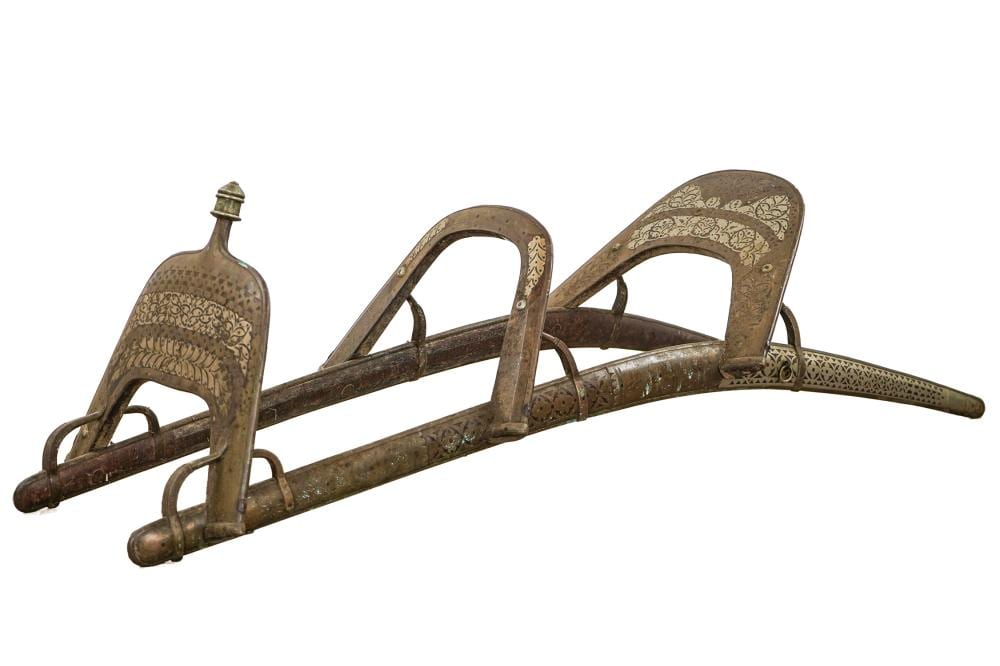
Unlocking the Worth of the Past the Comprehensive Guide to Determining Your Antique Camel Saddle Value: appraisal and value basics
Unlocking the Worth of the Past the Comprehensive Guide to Determining Your Antique Camel Saddle Value research should start with identification, condition, provenance, and item-specific market evidence. Use this guide to compare the signals that matter before paying for a formal appraisal or deciding whether to sell.
Antique camel saddle appraisal checklist
Antique camel saddles sit at the crossroads of ethnographic art, functional design, and social history. They can be evocative display pieces—and in the right examples—serious collectibles. Yet pricing is highly variable. Two saddles that look similar to a casual eye can differ tenfold in value, depending on origin, construction, age, condition, completeness, and market appetite.
This guide gives you the appraisal mindset: how to identify what you have, separate documented field-used tack from tourist copies, grade condition, estimate market value, and choose the best venue to sell or insure.
Identifying Your Camel Saddle: Regions, Types, and Telltale Traits
Step one is understanding the object. “Camel saddle” is a broad term that includes riding saddles, ceremonial sets, and packsaddles. Each region developed distinct forms and ornament.
Common types and regional cues:
- Bedouin/Arabian Peninsula
- Form: Functional wooden bows front and rear lashed to a frame; minimalist geometry.
- Materials: Palm or acacia wood, rawhide lacing, goat-hair girths, woven pads.
- Ornament: Sparse; sometimes braided leather, dyed wool tassels.
- North Africa (Morocco, Sahara, Tuareg)
- Form: Angular, refined wooden frames; Tuareg examples can be austere and elegant.
- Materials: Carved cedar/thuya, leather covers, iron or brass fittings, sometimes silvered embellishments on high-status tack.
- Ornament: Geometric carving, incised lines; Tuareg leather tassels and cross motifs.
- Egypt/Sudan/Nile regions
- Form: High pommels and cantles; often taller profile for riding posture.
- Materials: Painted wood, leather facings; coin-inset decoration seen on some early 20th-century sets.
- Ornament: Painted floral or geometric motifs, sometimes applied metal bosses.
- Persia/Iran and Central Asia
- Form: Firm wooden frame with bold arches.
- Materials: Hardwoods; on finer Qajar-period examples, lacquer-painted floral panels (scarcer).
- Ornament: Painted panels, inlay in bone/horn on higher-quality work.
- Afghanistan/Balochistan
- Form: Robust frames with pronounced arches.
- Materials: Dense hardwoods; leather facings and hand-forged iron rings.
- Ornament: Chip-carving, bone or horn inlay in lozenges or rosettes.
- Indian subcontinent (Rajasthan/Thar)
- Form: Riding saddles often paired with exuberant jhuls (saddle blankets).
- Materials: Wood and heavy leather; textiles with mirrorwork and metallic thread.
- Ornament: Embroidered jhuls, brass bosses, painted wood on ceremonial sets.
- Anatolia/Western Asia (including Turkish camel wrestling gear)
- Form: Heavy-duty frames with thick padding for sport, substantial straps.
- Materials: Thick leather, felt pads, iron hardware.
- Ornament: Primarily functional; less elaborate carving.
Tourist/decorative pieces, frequently mid-to-late 20th century, copy the silhouettes but often use softer woods, machine-made brass trim, and bright varnishes. These can be handsome but usually carry lower value.
Completeness matters:
- A “set” with original pads, girths, cruppers, breast straps, stirrups (when present), saddlebags, halter/bridle, and decorating textiles is far more desirable than a bare frame.
- Matching pairs (for display, not function) and ceremonial trappings increase appeal.
Tip: Do not confuse camel saddles with elephant howdahs. Howdahs are seated platforms with walls—wholly different forms and market dynamics.
Dating And Originality: Signals Of Age Versus Reproduction
Originality is less about “old wood” than about period construction practices and use-wear consistent with camel tack.
Evidence of age and field-use:
- Tooling and joinery
- Hand-carved surfaces with irregular tool marks.
- Mortise-and-tenon or pegged joints; hand-forged rivets.
- Absence of plywood, particleboard, or uniform router cuts.
- Hardware and fasteners
- Square nails, hand-forged rings; no Phillips screws (post-1930s) or modern staples.
- Surface oxidation consistent with age (smooth, darkened), not spray-painted “antique” finishes.
- Leather and textiles
- Vegetable-tanned leather with dry, oxidized surfaces; hand stitching with uneven pitch.
- Natural-dye wool pads showing abrash (subtle color variation) and sunfade.
- Wear patterns
- Compressed fibers and burnishing at stress points where straps rub.
- Dirt and sweat staining in contact zones, not just random “antiquing.”
- Patina and oxidation
- Oxidized wood under worn surfaces; wormholes with irregularity and frass staining (beware uniform, repeated “shotgun” holes indicating artificial aging).
Red flags for reproductions:
- Bright glossy varnish sealing dirt uniformly.
- Plywood layers visible at edges.
- Machine-stamped brass trim with repeating patterns; pot-metal fittings.
- Fresh leather artificially darkened; machine stitching perfectly even.
- Decorative motifs copied without structural logic (e.g., heavy metal plaques in places that would bruise an animal in use).
Provenance that helps:
- Old photographs in situ, bills of sale from early dealers, estate inventories, export permits, or a museum deaccession tag.
- Collection labels, chalk marks, or pencil inscriptions consistent with early 20th-century ethnographic collecting.
Condition And Conservation: Grading And Care
Antique saddles are mixed-media objects—wood, leather, textiles, and metal—all aging differently. Condition can move value dramatically.
Grade using these facets:
- Structure
- Excellent: Sound frame, tight joints, no active insect activity.
- Good: Minor movement, old stable repairs, no functional breaks.
- Fair: Losses to arches/bows, splits requiring consolidation.
- Poor: Collapsed structure, significant losses, active infestation.
- Leather
- Excellent/Good: Supple to firm, intact stitching, no powdering.
- Fair: Stiff, surface cracking, localized tears.
- Poor: Red rot (powdering), large losses, modern over-repairs.
- Textiles
- Excellent/Good: Stable weave, light fade, minor moth grazing.
- Fair: Threadbare areas, repaired tears.
- Poor: Large holes, dry rot, missing pads/blankets.
- Metal
- Desirable: Smooth, stable corrosion; original patina.
- Undesirable: Flaking rust, aggressive polishing to bright shine that erases age.
Conservation best practices:
- Cleaning: Dry methods first—soft brushes, low-suction HEPA vacuum with screen. Avoid soaking leather or wood.
- Leather care: If needed, very sparing application of a museum-grade, stable dressing. Avoid heavy oils (e.g., excessive neatsfoot) that darken and weaken fibers.
- Wood: Consolidate splits with reversible adhesives; avoid sanding original surfaces. Microcrystalline wax for dry protection on finished areas.
- Metal: Stabilize active rust mechanically (gentle) and apply microcrystalline wax. Do not strip to bare metal.
- Textiles: Support weak areas with net overlay; store flat or wrapped. Avoid adhesive repairs.
Storage and environment:
- Relative humidity moderate and steady, with no sudden swings; temperature stable; keep off direct sunlight.
- Elevate from floors; pest-monitor for beetles/moths.
- Handle with nitrile gloves; lift by the frame, not by brittle leather straps.
Ethical/legal considerations:
- Some countries restrict export of ethnographic heritage. Retain any historic export/import documentation.
- Wildlife components (e.g., ivory, tortoiseshell) are uncommon on camel saddles but, if present, may trigger trade restrictions. Seek guidance before selling.
Valuation Method: What Drives Price And How To Estimate
Value is an outcome of multiple weighted factors. Think in terms of a matrix rather than a single attribute.
Primary drivers:
- Originality and age
- Field-used 19th to early 20th century examples generally command more than late 20th-century decorative pieces.
- Region and cultural significance
- Certain forms (e.g., documented Tuareg, Bedouin with complete trappings, lacquered Persian pieces, early Sudanese painted work) can be more sought-after.
- Craftsmanship and materials
- Quality of carving, inlay (bone/horn), and original surface; hand-forged hardware; complexity of textile work.
- Completeness
- Original pads, girths, bridles, saddlebags, and decorative textiles increase value markedly.
- Condition and originality
- Honest wear with stable, minimal repairs is preferred over heavy restoration or replaced parts.
- Provenance
- Early collection history, museum or notable dealer records, published examples.
- Scale and display appeal
- Balanced proportions, sculptural silhouette, and surface tonality affect decorator and design-market demand.
- Market timing and venue
- Ethnographic art auctions and specialist dealers typically yield higher results than generalist venues.
Market evidence research:
- Examine auction catalogs and results for similar region, form, materials, size, and condition. Note that retail dealer asking prices are not the same as realized prices.
- Control for completeness; a bare frame comparison is not equivalent to a full set with tack and textiles.
- Adjust for condition—structural breaks or missing arches call for a substantial deduction.
Working price bands (broad guidance, not guarantees):
- Decorative/tourist examples (mid-late 20th c., machine-made fittings, partial sets): roughly low hundreds.
- Documented field-used saddles (late 19th–early 20th c.), sound, partial sets: mid hundreds to low thousands.
- High-quality, documented regional pieces (fine carving/inlay, complete trappings, strong provenance): low to mid thousands.
- Rare ceremonial or exceptional sets (painted Persian, lacquered panels, early documented Tuareg or Bedouin with full textile suite): mid thousands and above.
Valuation types:
- Fair market value (FMV): Price between willing buyer and seller in an open market; used for estate and donation.
- Retail replacement value (RRV): Higher figure to replace with a similar item from a dealer; used for insurance.
- Wholesale/trade value: Lower, reflecting dealer margin.
Photography and data for appraisals:
- Shoot 8–12 clear images: front and rear arches, side profiles, underside, joinery close-ups, leather and textile details, hardware, any labels/marks, and overall scale with a ruler in frame.
- Record measurements: overall length, bow/arch height, seat width, base width, pad thickness, weight.
- Document condition, repairs, and provenance in a single-page summary.
Where to sell:
- Specialist ethnographic or tribal art auctions for higher-end pieces.
- Regional auction houses for mid-range, decorator-friendly examples.
- Reputable dealers for curated placement (often slower but potentially stronger prices).
- Online marketplaces for entry-level items; vet buyers, and provide thorough photos and descriptions.
Insurance tip: Insure at retail replacement value; revisit every 3–5 years as markets for ethnographic material can shift.
Practical Checklist: Quick Assessment In 10 Minutes
- Identify form and region: Note arch shapes, frame geometry, ornament style.
- Check construction: Hand-cut joinery, no plywood or modern screws.
- Inspect wear: Consistent use-wear at stress points; natural patina.
- Assess leather/textiles: Hand stitching, natural dyes, stable condition.
- Verify hardware: Hand-forged rings, square nails; avoid uniform machine fittings.
- Look for completeness: Pads, girths, straps, saddlebags, jhuls—original and matching?
- Note condition issues: Active rust, red rot, structural splits, pests.
- Gather provenance: Labels, old photos, prior sale receipts.
- Measure and photograph: Multiple angles, details, a ruler for scale.
- Research market evidence: Match region, form, age, condition, and completeness.
FAQ
Q: How can I tell if my camel saddle is riding gear or a packsaddle? A: Riding saddles have pronounced wooden arches (pommels/cantles) to support the rider, often with pads and cinches shaped for comfort. Packsaddles emphasize broad load-bearing surfaces with multiple attachment points for cargo and typically lower, wider frames.
Q: Should I restore or leave it as-is before selling? A: Minimal, reversible conservation is best. Clean gently and stabilize active issues (e.g., flaking rust, loose joints). Avoid refinishing, heavy oils on leather, or replacing parts unless clearly disclosed—over-restoration can reduce value.
Q: Are stirrups normal on camel saddles? A: Stirrups are not universal. Some regions used foot loops or none at all. Presence or absence should be evaluated by regional type rather than as a blanket completeness criterion.
Q: What measurements do buyers care about most? A: Overall length, height of front and rear arches, seat width, base footprint, and weight. For display, depth and silhouette also matter; include close-ups of joinery and surface.
Q: Could my saddle be culturally restricted? A: It’s possible. Some countries regulate export of ethnographic heritage; documentation helps. If you suspect protected materials or sensitive origin, consult a qualified appraiser or legal specialist before selling.
By methodically identifying the type, verifying originality, grading condition, and anchoring your estimate in relevant comparables, you can form a defensible value for your camel saddle—and choose the right conservation and selling strategy to realize it.


