Antique Saddle Values Guide: Western, English and Military Saddles
Learn what affects antique saddle values, from maker marks and silver work to Western, English, military, and sidesaddle condition clues.
What an antique saddle is usually worth
Most later decorative Western saddles sell modestly. Named makers, original silver, a sound tree, and documented military or sidesaddle examples are the exceptions.
Free. No card needed. Photo upload takes about two minutes.

Auction comps in this guide are for appraisal context, not guaranteed prices. See our editorial policy.
Get a written antique saddle appraisal
Upload photos of your antique saddle and any marks, repairs, or provenance. Appraisily returns a written report with market context.
- Specialist review with relevant market checks
- Fast turnaround
- Fixed, upfront pricing
No obligation. Secure upload.
What similar items actually sold for
To help ground this guide in real market activity, here are recent example auction comps from Appraisily’s internal database. These matched sales are market context only, not an object estimate or identification, and they do not guarantee a price for your specific antique saddle.
Shown USD range: USD 45-USD 9,775. Median of these 9 USD examples: USD 90.
| Comparable | What sold | Auction house | Date | Lot | Source-reported amount |
|---|---|---|---|---|---|
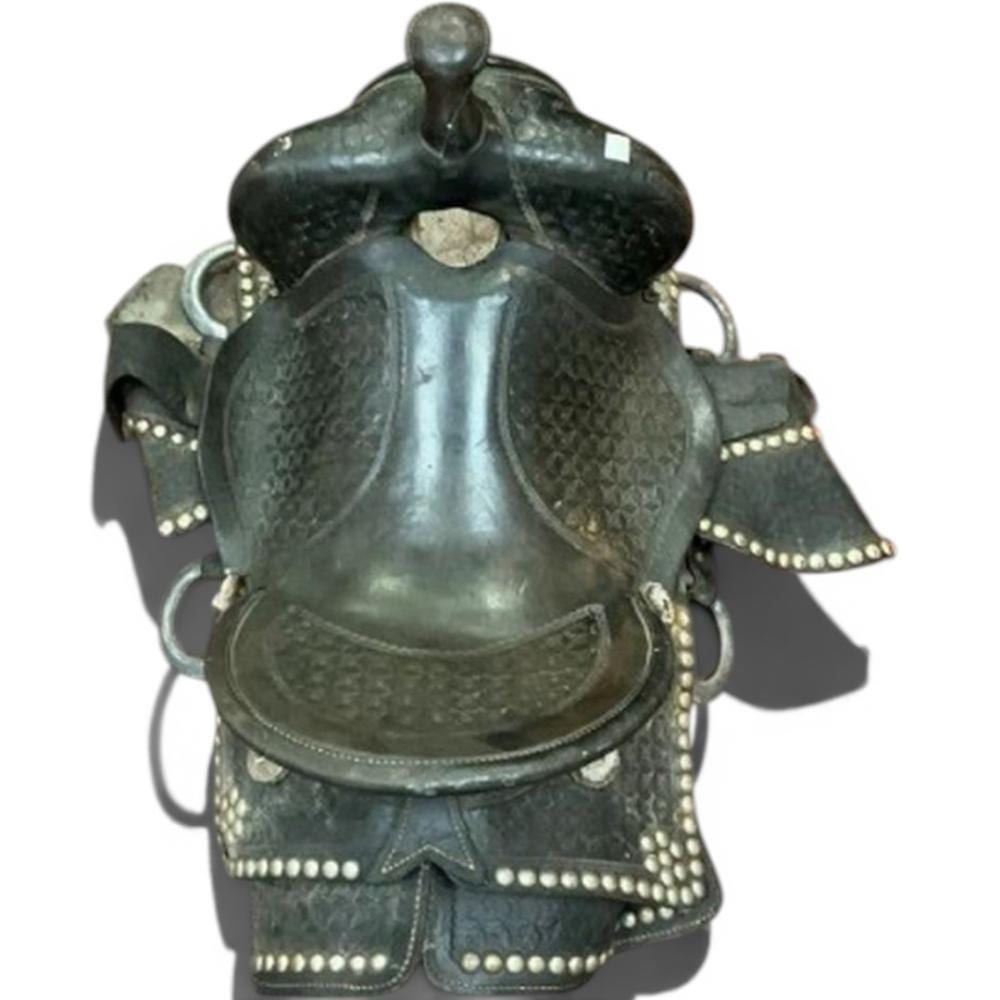 |
vintage or antique black Western parade saddle | R & R Auction INC | 2026-04-26 | 4411 | USD 45 (buyer’s-premium treatment unknown) |
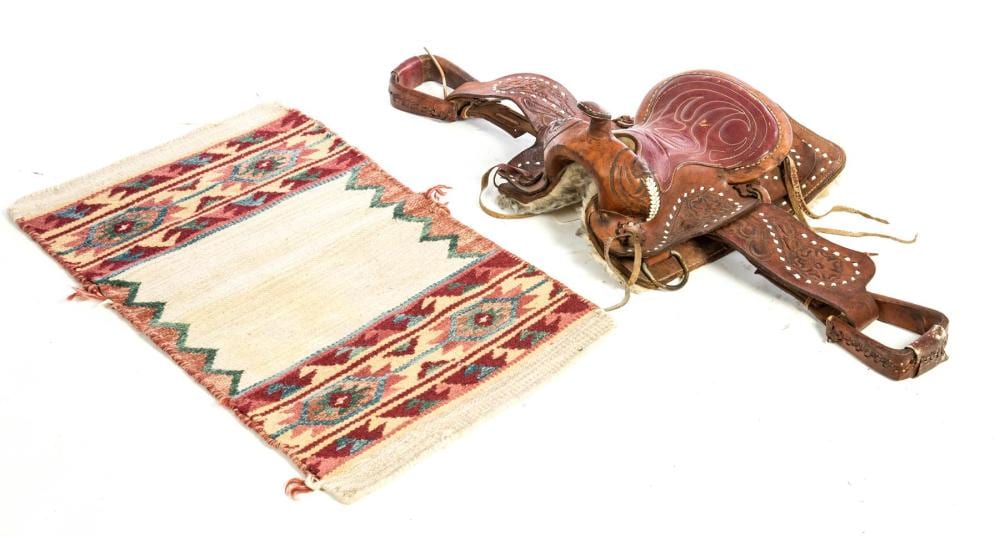 |
CHILD'S WESTERN SADDLE. | Garth's Auctioneers & Appraisers | 2019-12-13 | 447 | USD 62 (buyer’s-premium treatment unknown) |
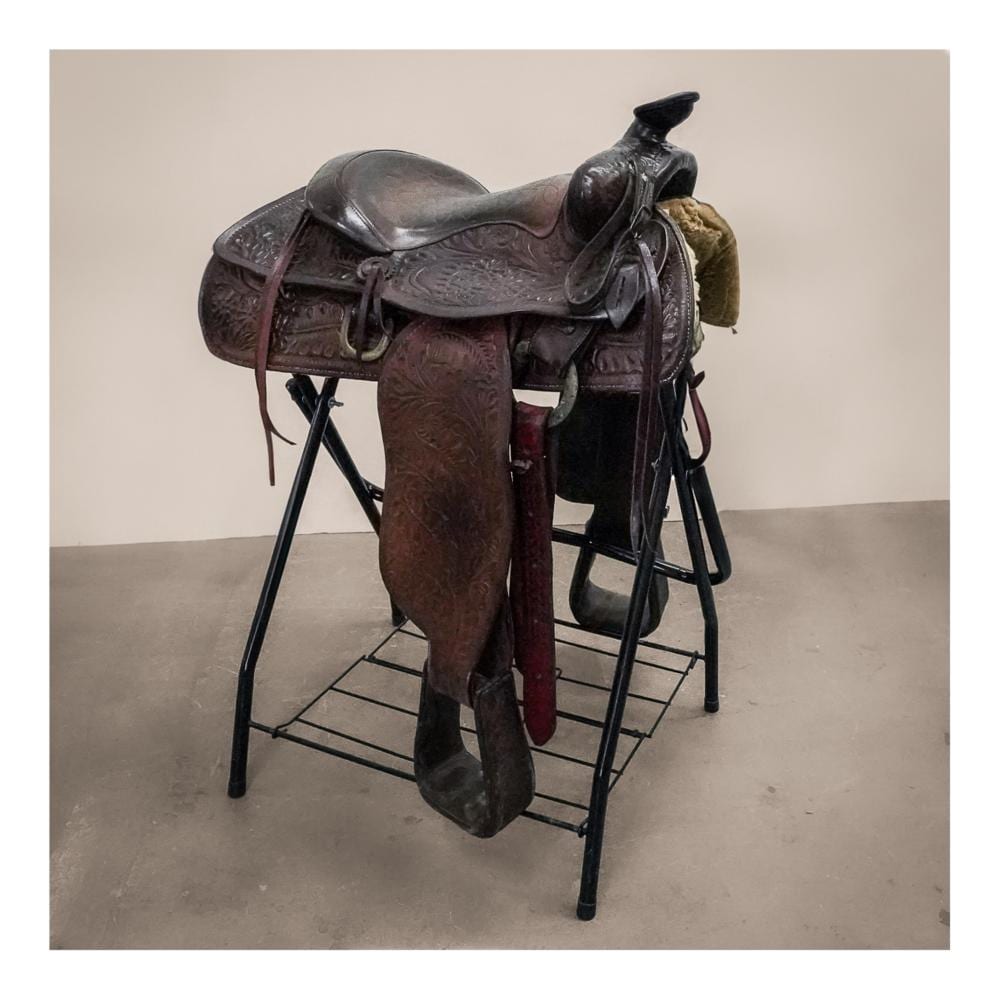 |
Vintage Leather Western Saddle | Akiba Galleries | 2026-01-06 | 78 | USD 50 (buyer’s-premium treatment unknown) |
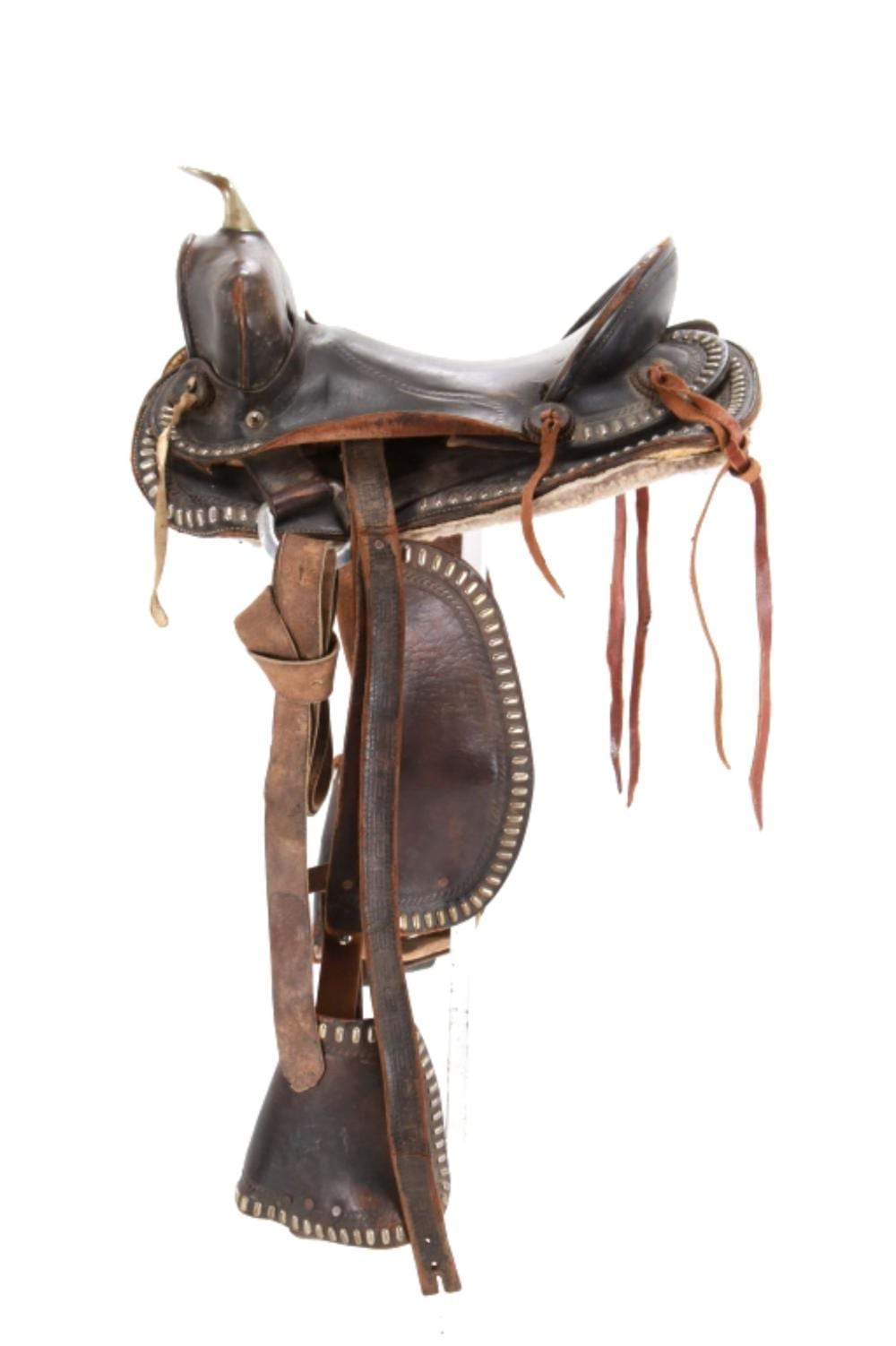 |
Bona Allen Child's Western Ranch Saddle | North American Auction Company | 2022-11-12 | 395 | USD 100 (buyer’s-premium treatment unknown) |
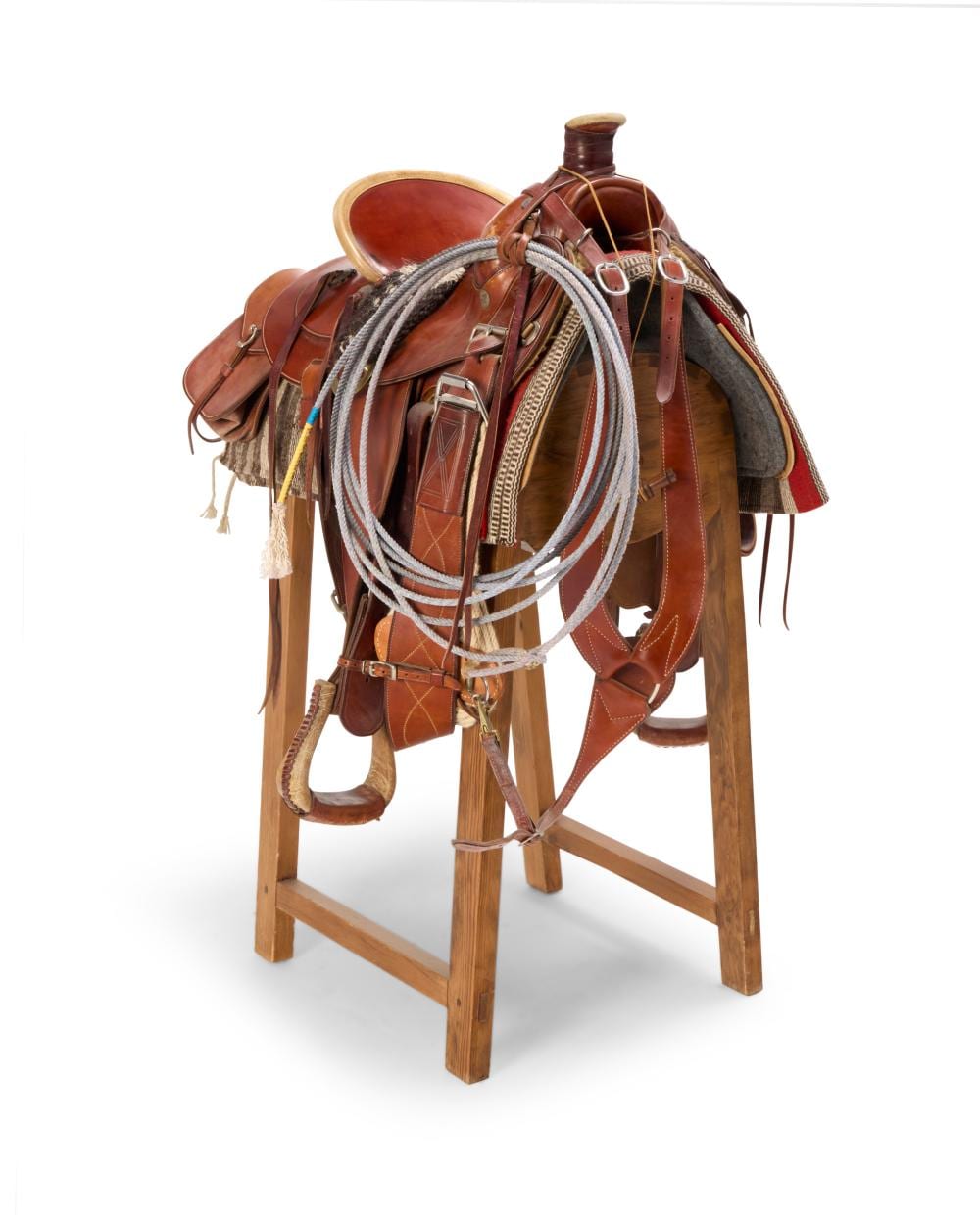 |
A Juan Lara Western saddle with accessories | John Moran Auctioneers | 2026-04-07 | 1081 | USD 1,143 (buyer’s-premium treatment unknown) |
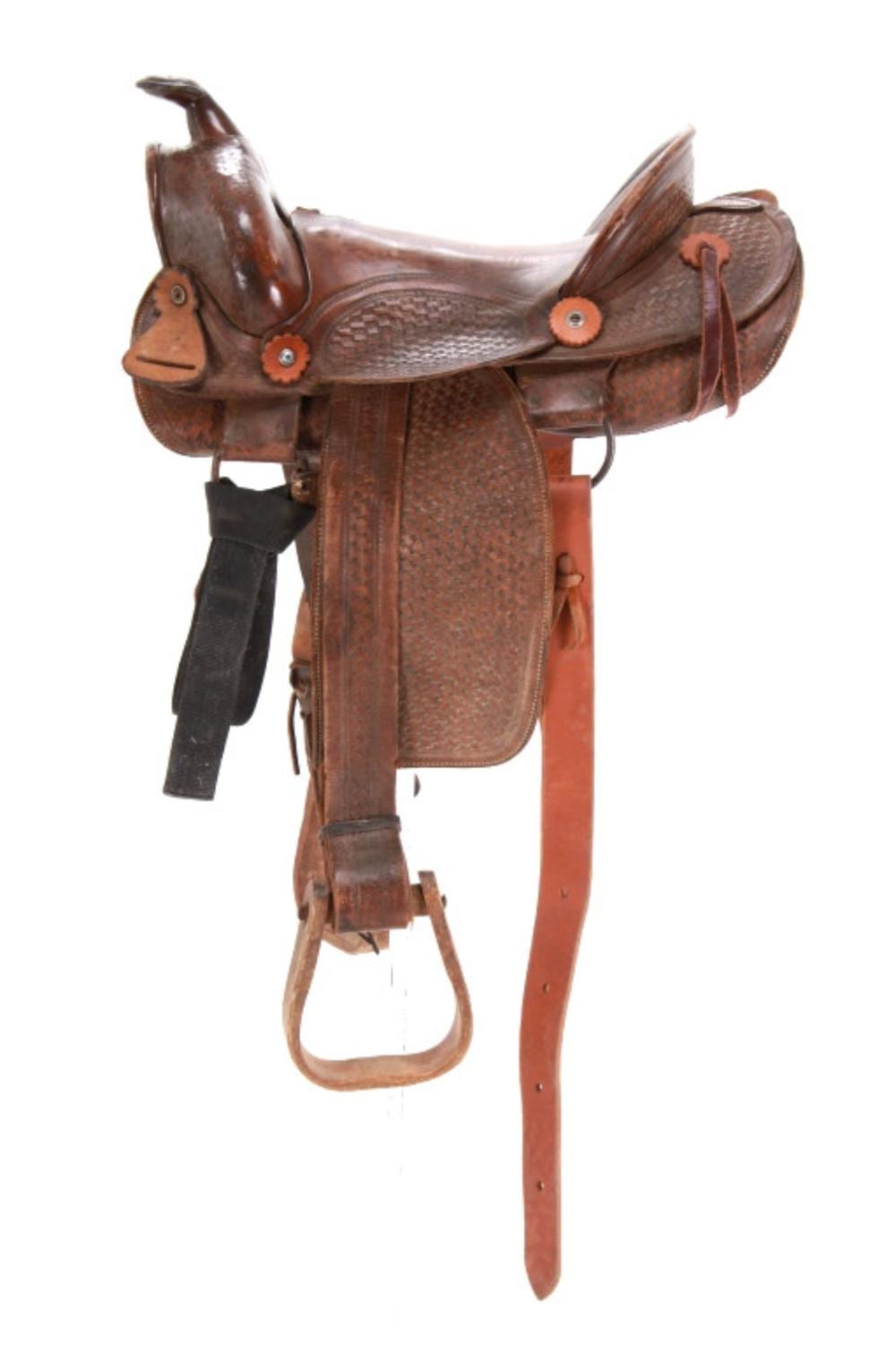 |
JC Higgins Western Ranch Saddle, C. Mid 1900s | North American Auction Company | 2022-11-12 | 647 | USD 90 (buyer’s-premium treatment unknown) |
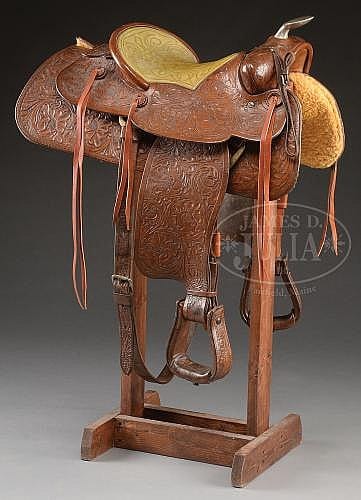 |
TOOLED WESTERN ROPING SADDLE MADE BY NUDIE'S RODEO TAILORS OF NORTH HOLLYWOOD, CALIFORNIA, ESPECIALLY FOR JOHN WAYNE. | James D. Julia | 2018-03-22 | 2134 | USD 9,775 (buyer’s-premium treatment unknown) |
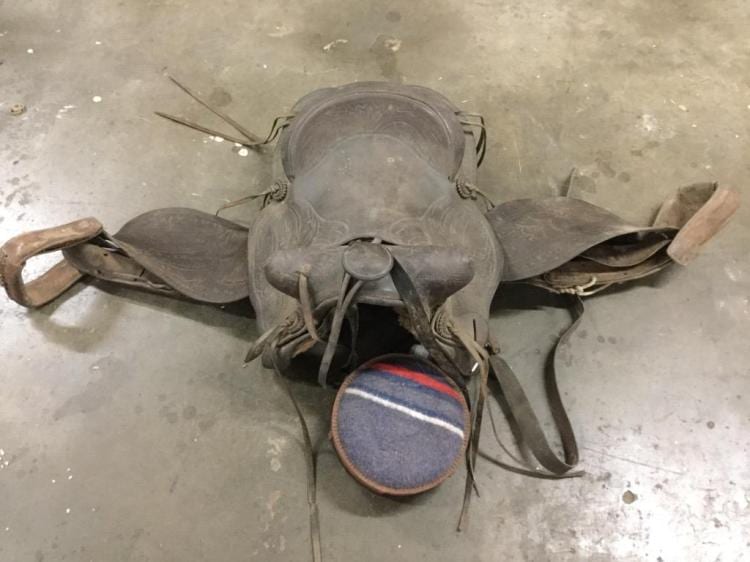 |
Antique saddle with canteen - fair cond | Crawford Family Auctions | 2017-05-20 | 230 | USD 55 (buyer’s-premium treatment unknown) |
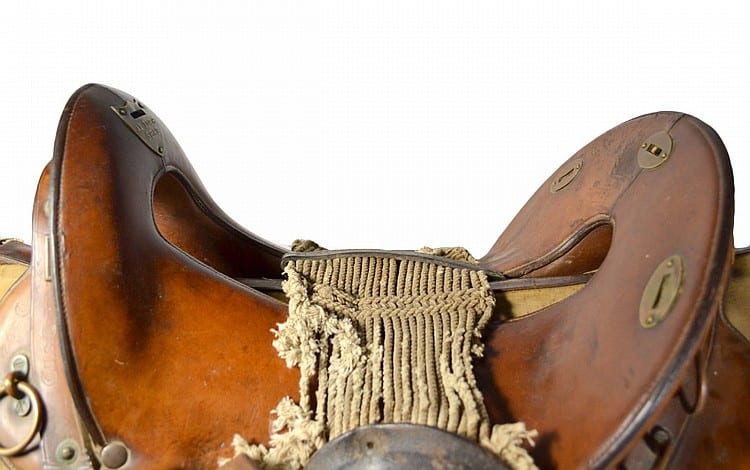 |
Saddle, Model 1904, First Pattern McClellan | Louis J. Dianni, LLC | 2013-08-11 | 938 | USD 275 (buyer’s-premium treatment unknown) |
How these auction records were verified
Each row retains its exact source URL, lot identity, retrieval time, access result, and immutable record hash. Inspect the public comparable provenance record.
Disclosure: prices are shown as reported by auction houses and are provided for appraisal context. Learn more in our editorial policy.
Free first look
Not sure whether this antique saddle needs an appraisal?
Photograph the whole object, maker and model marks, dimensions, attachments, wear, repairs, completeness, and working condition where safe. The photo-based Screener can help identify the likely category and visible evidence gaps before you pay for documentation.
Upload photos for a free first lookFree. No card needed. The photo upload usually takes about two minutes.
The free first read is a separate photo-based Screener, not this educational article. Results usually appear within a few minutes; complex items can take longer. From photographs of your antique saddle, it returns a preliminary category or identity read, visible evidence gaps, rough comparable market signals, and whether a human appraisal looks worthwhile; it is not a signed value conclusion. Material or construction can remain uncertain without direct examination, dimensions, provenance, or complete condition details. A written appraisal is useful when your antique saddle needs documented specialist support for insurance, tax, an estate, authentication, litigation, or a consequential sale, but you may not need one.
Antique Saddle Market at a Glance
In this guide, we’ll examine how factors such as saddle type, maker, condition, age, and historical significance combine to determine an antique saddle’s market value.
Types of Antique Saddles and Their Values
Western Saddles
Western saddles represent some of the most sought-after antiques in this category, particularly those made by renowned craftsmen from the late 19th and early 20th centuries. These saddles were designed for ranch work and long hours of riding across the American frontier.
English Saddles
Antique English saddles typically fall into categories including dressage, jumping, and hunting saddles. These tend to be valued lower than Western counterparts but still attract collectors, particularly examples from prestigious makers like Whippy, Owen, and Champion & Wilton.
Military Saddles
Military saddles, particularly U.S. Cavalry McClellan saddles and European military examples, hold significant historical value. These saddles often feature distinctive designs developed for military specifications.
Fort Tumbleweed notes the appeal of these classic saddles, describing a high-back 1800s western saddle featuring both smooth and hand-tooled leather with large flower patterns, typical of the craftsmanship that collectors seek.
Ladies’ Sidesaddles
Perhaps the most distinctive antique saddle category, sidesaddles were designed for women riding in skirts during the Victorian and Edwardian eras. Their unique design and historical significance make them particularly collectible.
Antique Saddle Price Ranges by Type
Current market values based on recent sales data
Key Factors That Determine Antique Saddle Value
Maker and Brand Reputation
The saddle maker is perhaps the single most important factor in determining value. Prestigious makers like Frazier, Visalia Stock Saddle Co., Hamley, Meanea, and Gallup command significant premiums.
When examining a saddle, look for maker’s marks typically stamped into the leather on the saddle’s underside, skirt, or fender. Western Horseman magazine notes that R.T. Frazier saddles are particularly sought-after for their quality craftsmanship and historical significance.
Age and Historical Significance
Generally, older saddles (pre-1950) command higher prices, particularly those from the late 1800s to early 1900s. Saddles with documented historical significance, such as those used by notable individuals or in significant events, can fetch extraordinary premiums.
A saddle’s age can often be determined by examining construction techniques, materials, and design elements characteristic of specific periods.
Condition
Condition dramatically impacts value, with excellent-condition saddles commanding prices 2-3 times higher than those in poor condition. Key condition factors include:
Antique Saddle Condition Assessment
Check applicable items to evaluate your saddle's condition
- Leather integrity (no cracks, tears, or significant wear)
- Original hardware and mountings present
- Stitching intact throughout
- No significant repairs or alterations
- Tree (internal frame) intact and not broken
- Original finish preserved (not over-cleaned or restored)
- Clear maker's marks or stamps
- Original accessories present (stirrups, cinches, etc.)
Decorative Elements and Materials
Saddles with silver mountings, hand-tooled leather, or other artistic embellishments command significant premiums. The quality and extent of decoration can dramatically increase value, particularly for Western parade saddles.
Cisco’s Gallery, which specializes in vintage Western collectibles, showcases saddles with ornate silver embellishments that can increase values by thousands of dollars compared to similar plain saddles.
Provenance and Documentation
Documented history, particularly connecting a saddle to a famous rider, historical event, or notable ranch, can multiply its value. Original sales receipts, photographs of the saddle in use, or certificates of authenticity all enhance value.
Rarity and Uniqueness
Unusual or rare saddle types, limited edition pieces, or those with unique features tend to command higher prices. Signature elements particular to certain makers also increase collector interest.
How to Identify Valuable Antique Saddles
Examining Maker’s Marks and Stamps
Most reputable saddle makers marked their work, typically with stamps showing their name, location, and sometimes a serial number. These marks are usually found:
- Under the skirt or fender
- On the cantle (back) of the saddle
- On the seat or saddle horn
- Stamped on stirrup leathers
When examining a potential antique saddle on platforms like eBay where antique saddles are frequently listed, look closely for these identifying marks.
Assessing Construction Techniques
Different eras featured distinct construction methods:
- Pre-1920s saddles often feature hand-stitching and nail construction
- Mid-century saddles (1930s-1950s) typically show more machine stitching
- Materials like rawhide, particular types of leather, and metal hardware styles can help date a saddle
Identifying Specific Saddle Types
Different saddle styles have distinctive characteristics:
- Early Western saddles often featured high cantles, narrow seats, and minimal padding
- Military McClellan saddles have distinctive split seats and pommel/cantle shapes
- English side saddles feature a distinctive off-center seat design with special pommels
Consulting With Experts
For valuable saddles, professional assessment is recommended:
- Auction houses with equestrian expertise
- Professional saddle appraisers
- Equestrian museums or historical societies
- Specialty saddle dealers
Many collectors share knowledge through online communities like the Vintage Saddles & Bridles Facebook group, which focuses specifically on vintage saddles and bridles, offering a valuable resource for identification.

Evolution of American Saddle Design
- 1830-1860
Early Western Development
The first true Western saddles emerged, influenced by Spanish vaquero designs but adapted for the American frontier. Basic construction with wooden trees, minimal padding, and simple leather covering.
- 1861-1865
Civil War Innovations
The mass production of McClellan military saddles revolutionized saddle manufacturing. These distinctive saddles with their split-seat design would influence cavalry saddles for decades.
- 1870-1900
Golden Age of Western Saddlery
Major saddleries established in Denver, San Francisco, and other Western cities. Elaborate hand tooling, better fitting trees, and custom designs flourished. Many of today's most valuable antiques date from this period.
- 1900-1930
Silver Parade Saddles
The era of silver-mounted parade saddles with elaborate decoration. Master craftsmen like Frazier and Visalia created spectacular show pieces that now command the highest prices at auction.
- 1930-1950
Rodeo & Working Ranch Saddles
Specialized designs for rodeo events developed. Working ranch saddles became more standardized but still hand-crafted. Machine stitching became more common.
Where and How to Sell Antique Saddles
Specialized Auction Houses
- Brian Lebel’s Old West Events
- Heritage Auctions (Western Americana sales)
- Cowan’s Auctions
- Local auction houses with equestrian specialty sales
These venues attract serious collectors willing to pay premium prices for quality pieces.
Online Marketplaces
Online platforms provide broader reach but require careful research and presentation:
- eBay (where many antique saddles can be found)
- Etsy (particularly good for decorative vintage saddles)
- Facebook Marketplace and specialized groups
- Specialized equestrian classifieds
When selling online, high-quality photos showing maker’s marks, condition issues, and all angles are essential for achieving maximum value.
Antique Dealers and Consignment Shops
Working with dealers specializing in Western or equestrian antiques can be less effort but may result in lower returns:
- Western decor and furniture shops
- Equestrian tack and supply stores that accept consignments
- Antique malls with booths specializing in Western Americana
Direct to Collectors
Connecting directly with collectors can maximize your return:
- Western collector shows and events
- Equestrian trade shows
- Advertising in equestrian publications
- Online collector forums and groups like the Vintage Saddles & Bridles Facebook group
Preparation Tips for Maximum Value
Before selling, consider these steps to maximize your saddle’s value:
Selling Preparation Tips
As noted in a Horse Blog article about selling second-hand saddles, tack shops can be excellent venues, as they “have a good customer base as well as knowledge of tack and saddles,” allowing them to provide accurate value assessments.

Collecting and Displaying Antique Saddles
Decorative Use and Display
Antique saddles can be incorporated into home decor in several ways:
- Mounted on reproduction saddle stands
- Displayed on half-walls or railings
- Integrated into Western-themed rooms
- Featured in equestrian facilities and tack rooms
Even saddles with some condition issues can be valuable as decorative pieces, as evidenced by eBay listings for Antique Ladies Western Side Saddles marketed specifically as “Farmhouse Cabin Decor.”
Building a Collection
For those interested in collecting antique saddles:
- Focus on a specific era, style, or maker
- Attend Western Americana auctions and shows
- Connect with other collectors through organizations and online forums
- Research through books, museums, and online resources
Preservation and Care
Proper care is essential for maintaining value:
- Store in climate-controlled environments
- Keep leather conditioned with appropriate products
- Avoid direct sunlight which can fade and crack leather
- Use proper saddle racks that support the tree without causing stress
Saddles as Investment Pieces
While not as liquid as some antiques, quality saddles have shown steady appreciation:
- Rare maker’s saddles have appreciated 5-10% annually
- Silver-mounted parade saddles have seen the strongest growth
- Military saddles with documented history continue to rise in value
Chairish, which lists vintage saddles in their collectibles marketplace, demonstrates how these pieces have become sought-after decorative elements commanding premium prices.
Notable Antique Saddle Makers and Their Values
Western Saddle Makers
R.T. Frazier (Pueblo, Colorado)
- Operating period: 1880s-1940s
- Known for: Exceptional craftsmanship, distinctive flower tooling
- Notable features: Often stamped “R.T. Frazier Pueblo Colo” with a maker’s number
According to Western Horseman’s analysis of R.T. Frazier saddles, these pieces represent some of the finest craftsmanship of the era and command premium prices.
Visalia Stock Saddle Company
- Operating period: 1870s-1950s
- Known for: California style, excellent leatherwork
- Notable features: Often marked with a “V” inside a shield
Hamley & Company (Pendleton, Oregon)
- Operating period: 1883-present (vintage 1883-1960s most valuable)
- Known for: Northwest style, exceptional durability
- Notable features: Stamped “Hamley & Co. Makers Pendleton, Oregon”
Military Saddle Makers
Jenifer (Civil War Era)
- Operating period: 1850s-1865
- Known for: High-quality Civil War cavalry saddles
- Notable features: Distinctive stitching pattern and hardware
McClellan Pattern Saddles
- Operating period: 1859-early 1900s
- Known for: Standard U.S. Cavalry design with split seat
- Notable features: Marked with manufacturing arsenal and date
English Saddle Makers
Whippy & Co. (London)
- Operating period: 1790s-1900s
- Known for: Fine English hunting saddles, royal appointments
- Notable features: Often marked “Whippy & Co. London” with royal warrant
Owen (London)
- Operating period: Early 1800s-1930s
- Known for: High-quality sidesaddles and hunting saddles
- Notable features: Traditional English construction, often with maker’s plate
Premium Maker Values by Condition
Price ranges for authenticated saddles by renowned makers
</tbody> </table>
Authentication and Avoiding Reproductions
Common Reproduction Warning Signs
When evaluating saddles, watch for these indicators of reproductions:
- Machine-perfect stitching on supposed pre-1920s saddles
- Modern synthetic materials or glues
- Artificially distressed leather
- Inconsistent aging patterns
- Maker’s marks that appear too new or too perfectly applied
- Hardware with modern manufacturing marks
Authentication Methods
Several techniques help confirm authenticity:
- Wood analysis of the tree (saddle frame)
- Leather dating techniques
- Analysis of tanning methods
- Examination of nail and hardware types
- Documentation research and provenance checking
Expert Authentication Resources
For valuable saddles, consider these authentication resources:
- Western history museums with saddle collections
- Professional appraisers specializing in Western antiques
- Auction houses with Western Americana departments
- Saddle maker historical archives and records
Documentation Standards
Proper documentation increases confidence and value:
- Chain of ownership records
- Period photographs showing the saddle
- Original receipts or saddle maker records
- Expert appraisal certificates
- Provenance connecting to notable users
Common Questions About Antique Saddle Values
How can I tell how old my saddle is?
- Maker’s marks and serial numbers - Many manufacturers stamped saddles with identifiable marks.
- Construction techniques - Hand stitching versus machine stitching, nail types, and tree construction methods changed over time.
- Design elements - Saddle styles evolved in recognizable patterns by decade.
- Materials - Leather tanning methods, hardware types, and tree materials provide dating clues.
What is the value of a typical antique saddle?
How do I sell my old saddle?
-
Online marketplaces - eBay, Etsy, and Facebook groups like "Vintage Saddles & Bridles For sale/trade" offer broad reach. Quality photos and accurate descriptions are essential.
-
Specialty dealers - Western antique dealers may purchase outright or sell on consignment, typically for 30-50% commission.
-
Tack shops - Many accept quality used saddles on consignment, though typically focus on usable rather than antique pieces.
-
Direct to collectors - Advertising in equestrian publications or at Western collector shows can find buyers.
How can you tell what kind of saddle you have?
Western saddles feature a horn, larger skirting, and typically more substantial construction. Subtypes include ranch working saddles, show saddles, parade saddles, and barrel racing saddles.
English saddles are smaller, hornless, and include varieties like dressage (deep seat, straight flap), jumping (forward flap), and all-purpose designs.
Military saddles often have distinctive features like the split seat of McClellan cavalry saddles or specialized attachments for equipment.
Sidesaddles have an asymmetrical design with special pommels for secure sideways riding.
Look for maker’s marks typically stamped on the saddle’s underside, skirt, or fender. These marks often indicate the maker, location, and sometimes a serial number that can help with precise identification.Are old saddles still usable for riding?
-
Structural integrity - The internal tree (frame) must be completely sound. Hairline cracks or breaks can make a saddle dangerous.
-
Leather condition - Dry, cracked leather may fail under stress.
-
Fit for modern horses - Older saddle designs often don’t match modern horse conformations or training methods.
-
Value impact - Using a valuable antique saddle will likely reduce its collector value.
What was the cost of a saddle in the past?
Specialty saddles with silver mounting always commanded premium prices, sometimes costing the equivalent of a year’s wages. Military saddles were mass-produced to government contracts and generally cost less than civilian saddles of comparable quality.
When adjusting for inflation, even basic saddles represented a significant investment, explaining the care taken in their maintenance and the development of repair techniques to extend their usable life.How do you restore an antique saddle?
For collectible saddles:
- Minimal intervention is best
- Clean gently with appropriate leather soap
- Apply quality leather conditioner sparingly
- Avoid modern polish or treatments that alter appearance
- Consult experts before attempting structural repairs
For riding restoration:
- Professional saddle makers can rebuild trees and replace damaged components
- Original parts should be preserved where possible
- Document the saddle thoroughly before restoration
- Understand that significant restoration reduces collector value
Conclusion: The Future of Antique Saddle Collecting
Whether you’re considering selling an inherited saddle, starting a collection, or simply interested in equestrian history, the world of antique saddles offers fascinating insights into craftsmanship, regional styles, and the evolution of horsemanship in America and beyond.
The most valuable saddles will continue to be those with documented provenance, excellent condition, and created by prestigious makers. As with many antiques, rarity and quality will always command premium prices.
For those interested in entering this market, connecting with knowledgeable dealers, collectors’ groups, and equestrian museums provides the best education. With proper research and authentication, antique saddles can be both a rewarding collection focus and a sound investment in equestrian history.
External Resources for Antique Saddle Research
S&H Civil War Antiques - Old Saddles Catalog
Specializes in authentic Civil War era military saddles and equipment with historical documentation and detailed descriptions.
Cisco's Gallery - Vintage Western Saddles
Extensive collection of premium vintage Western saddles with detailed descriptions and authentication information.
Western Horseman - What's It Worth?
Expert analysis of vintage saddle values with focus on premium makers like R.T. Frazier.
Fort Tumbleweed - Vintage Saddles Guide
Showcases authentic antique Western saddles with historical context and typical features of different periods.
The Saddle Bank - Selling Second-Hand Saddles
Practical advice for selling used and vintage saddles with tips on valuation and finding buyers.
Vintage Saddles & Bridles Facebook Group
Active community dedicated to the discussion, identification and trading of vintage saddles and bridles.
TexanSaddles.com - Saddle Cost Guide
Comprehensive guide to saddle pricing factors with historical context on saddle values.
Chairish - Vintage Saddles Marketplace
Curated marketplace featuring collectible vintage and antique saddles with focus on decorative and display pieces.
Choose your next step
Use the path that matches the decision you need to make about the item.
Not sure it is worth appraising?
Start with a lower-friction screen to understand the likely category, evidence, and next step.
Upload photos for a free first lookWant proof before paying?
See how a signed report documents photos, comparable evidence, condition notes, and value conclusions.
View signed report sampleNeed a signed report?
Use this for insurance, estate, donation, resale, or documented value decisions.
Need documentation now? Start signed appraisalNeed local or specialist help?
Compare directory options when the work needs in-person review or a specialist near you.
Find local specialistsSee what the report looks like
Sample reports show how photos, comparable evidence, condition notes, and a value conclusion are documented.
Get a written antique saddle appraisal
Upload photos of your antique saddle and any marks, repairs, or provenance. Appraisily returns a written report with market context.
- Specialist review with relevant market checks
- Fast turnaround
- Fixed, upfront pricing
No obligation. Secure upload.
Continue your valuation journey
Find the right local specialist
Compare antique and art appraisers by location and specialty in one directory.
Antique & art specialists
Browse the Antique & Art Appraisers Directory
Choose a local specialist when the assignment needs in-person inspection or a specific credential.