Unlocking the Worth How to Determine Your Antique School Desk Value: appraisal and value basics
Unlocking the Worth How to Determine Your Antique School Desk Value research should start with identification, condition, provenance, and item-specific market evidence. Use this guide to compare the signals that matter before paying for a formal appraisal or deciding whether to sell.
Antique school desk appraisal checklist
Antique school desks blend nostalgia with real market appeal. They transit between two worlds—historical furniture with utilitarian design and decorative objects sought by collectors, designers, homeschoolers, and hospitality spaces. To determine what yours is really worth, you need to identify the form and maker, date the piece accurately, assess condition and originality, analyze demand, and compare recent sales in the right venues. This guide walks you through each step, including practical ranges and selling strategies.
Know What You Have: Types, Eras, and Maker Marks
Most antique school desks in circulation date from the 1870s through the 1930s, with postwar examples (1940s–1950s) straddling “vintage” rather than strictly “antique.” Recognizing the form is your first valuation lever.
Common types:
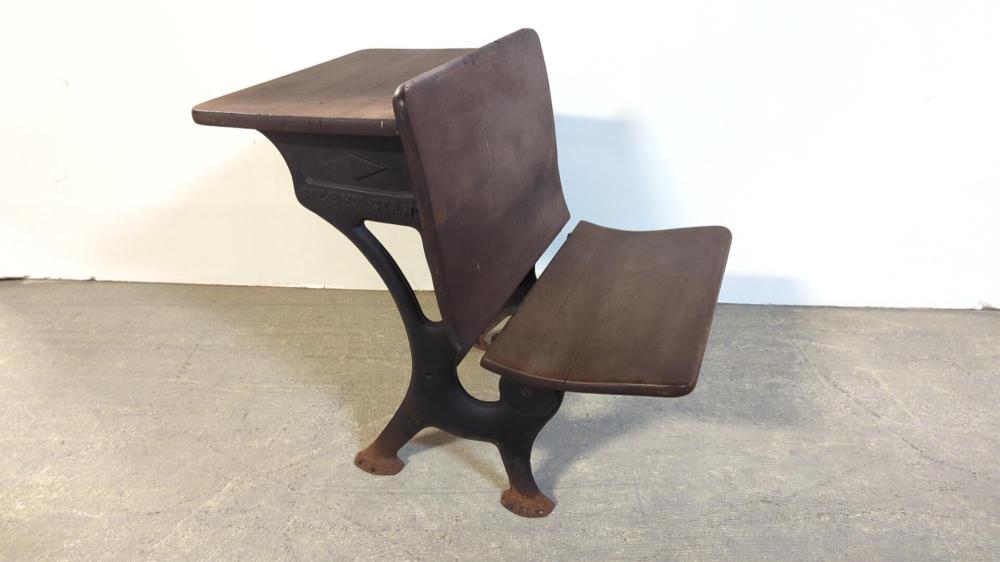
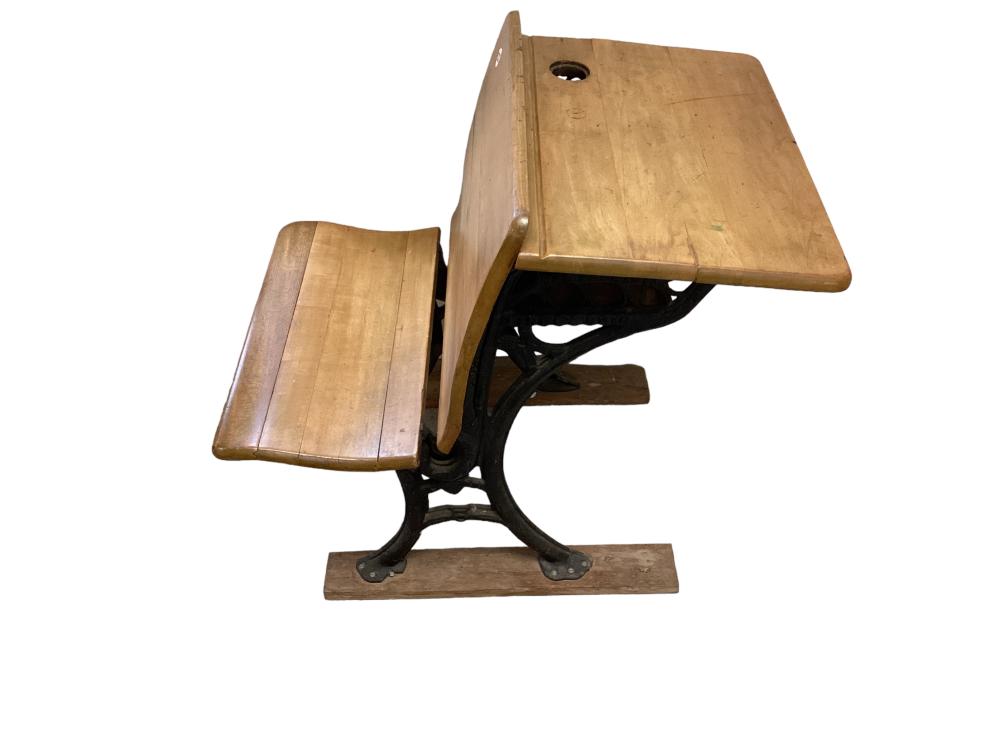
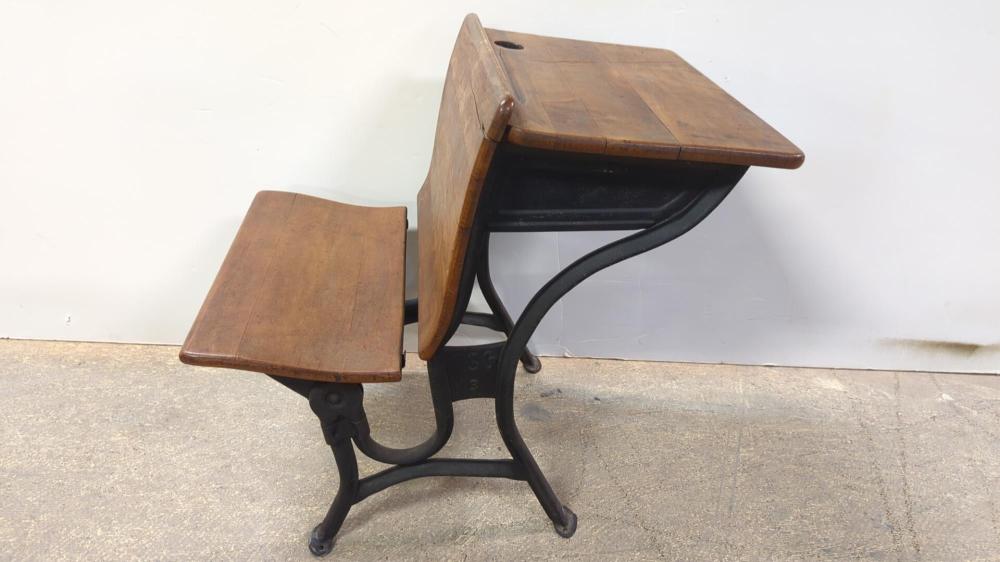
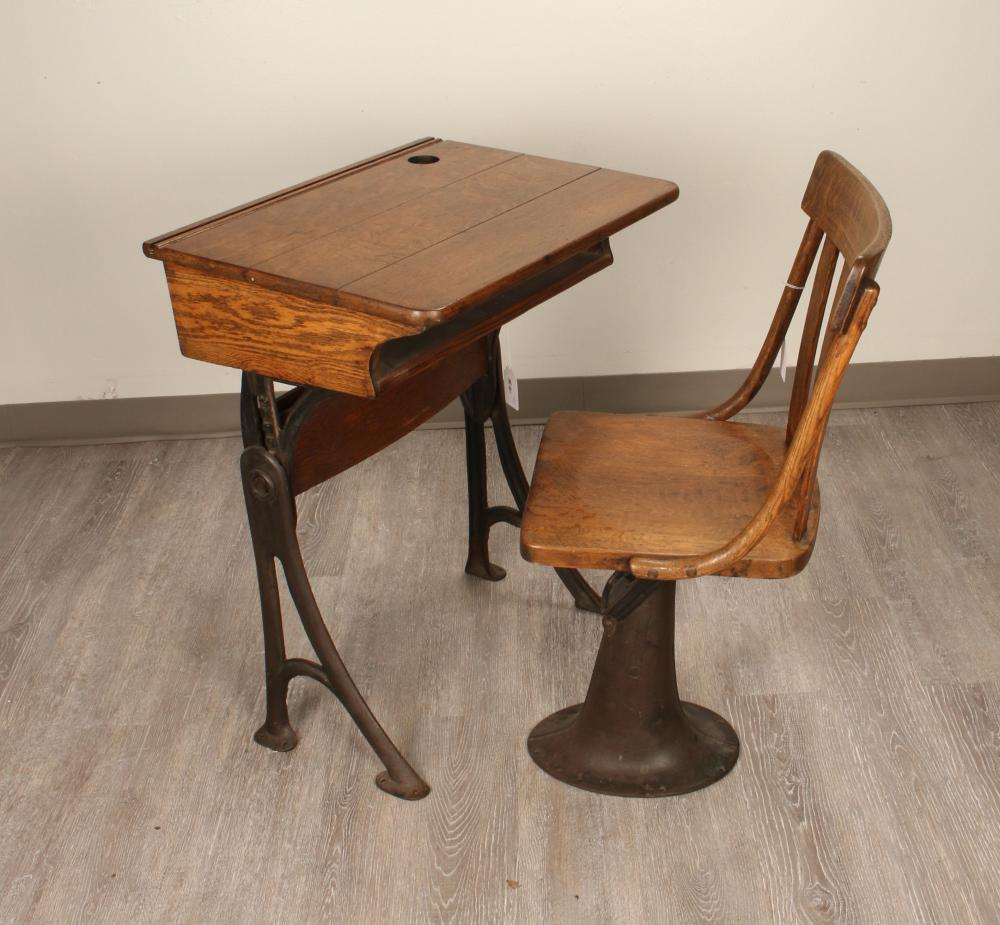
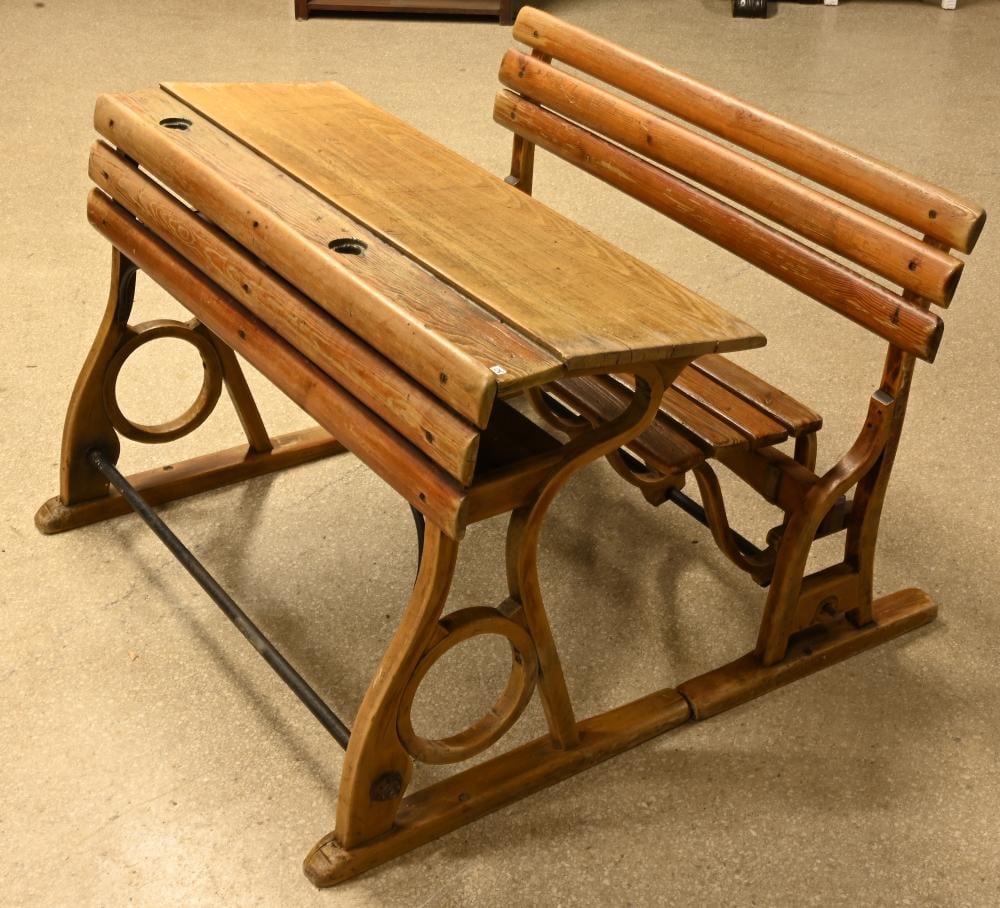
- Cast-iron base with wooden top and seat: Often linked desks in rows, with an iron pedestal supporting a slanted writing surface and the next seat behind. Bases can be plain or richly ornamental with scrolls, rosettes, and embossed logos.
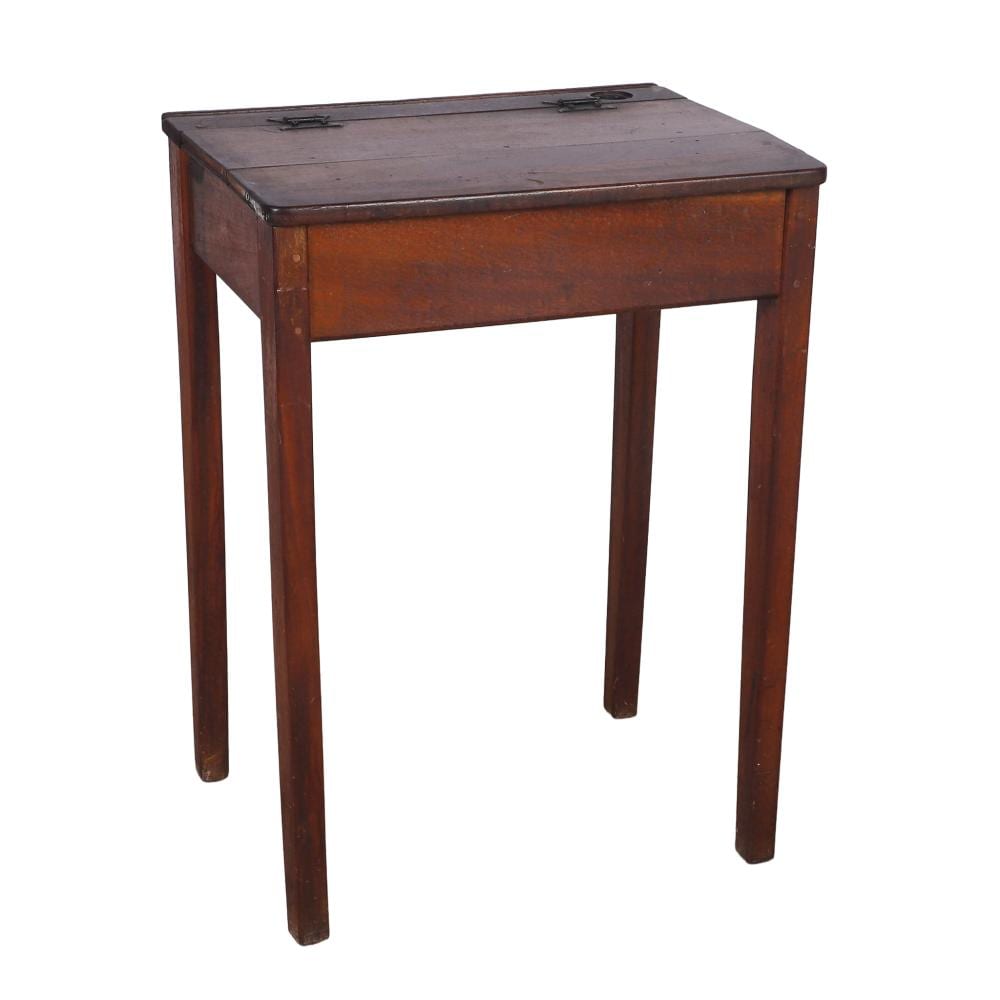
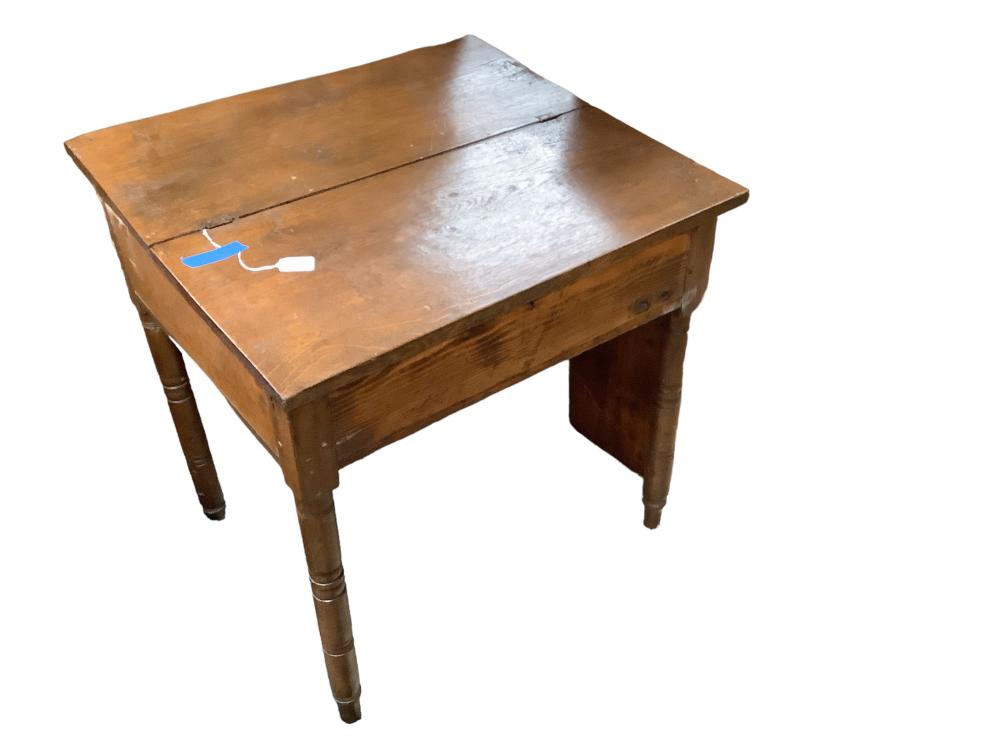
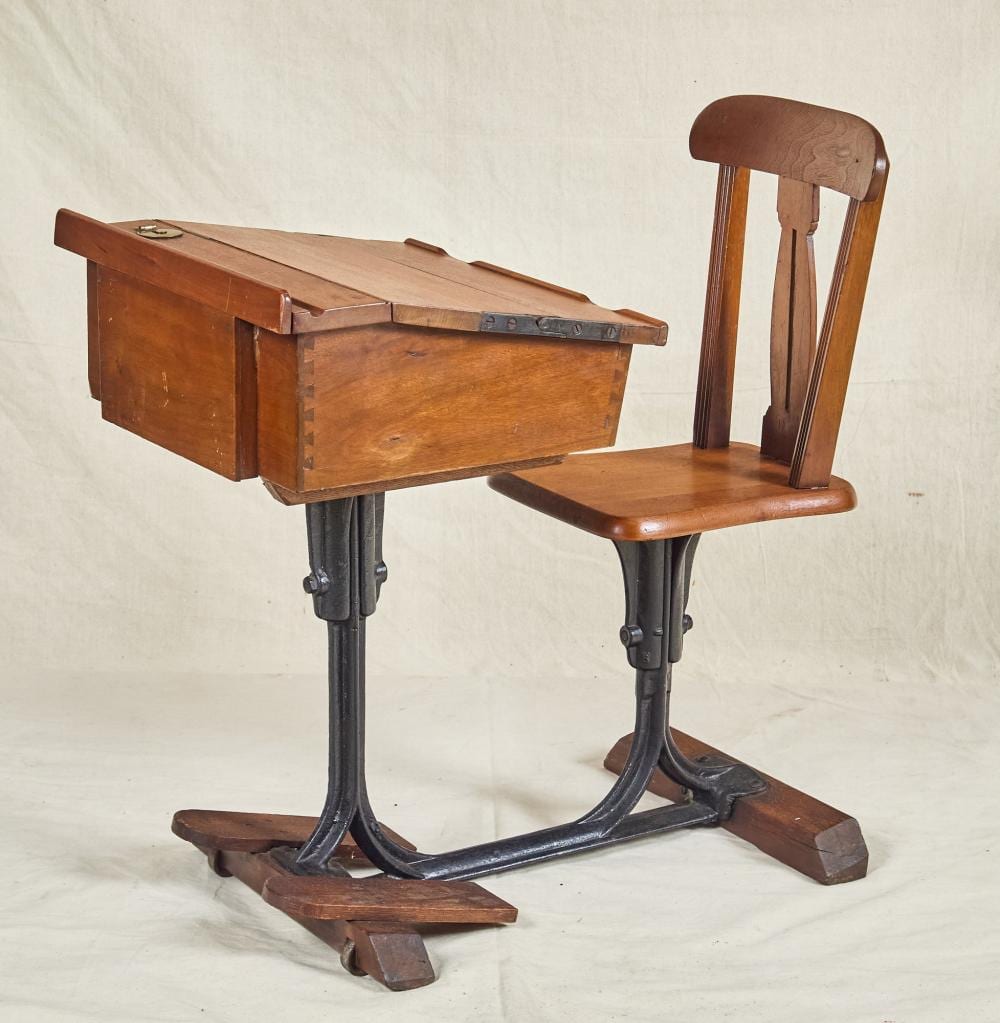
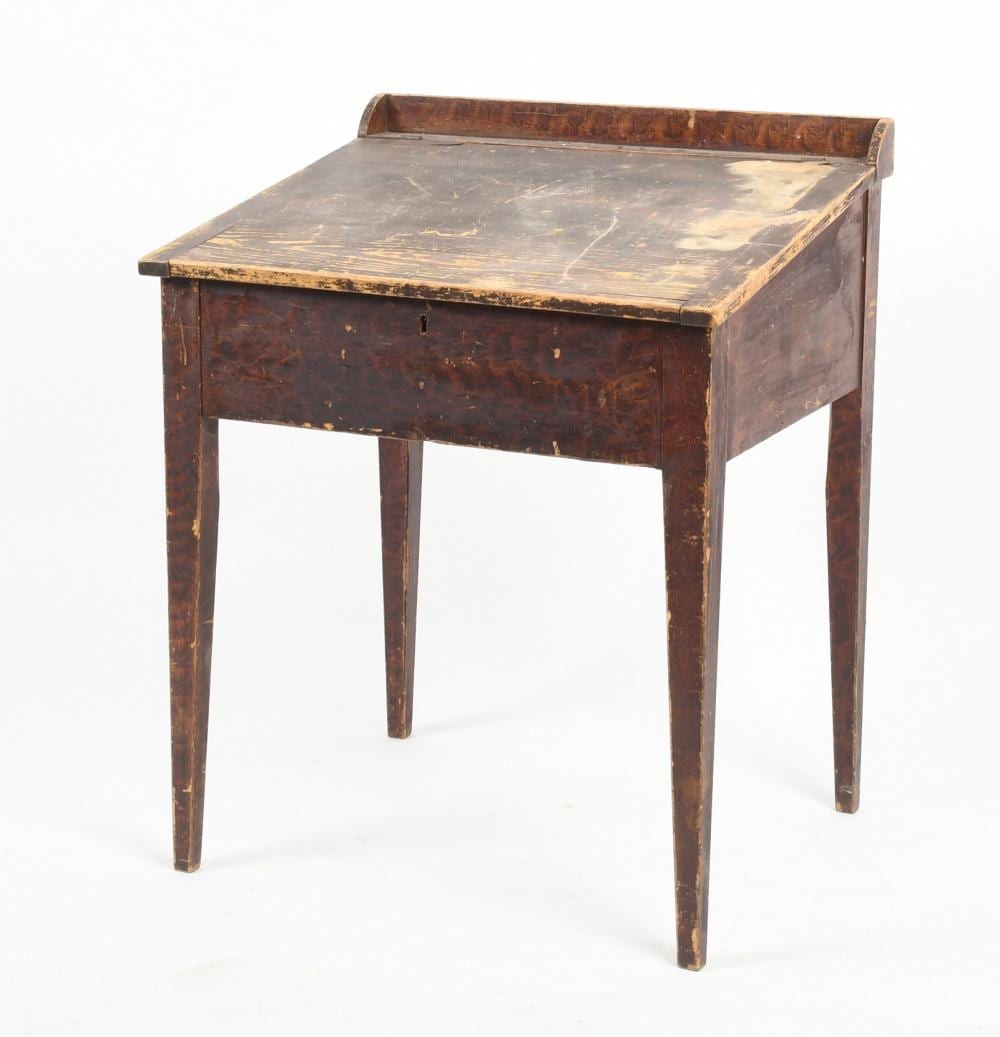
- Lift-top desks: A hinged, box-like top with interior storage. Found in both schoolroom and home use (often earlier, late 19th century).
- Flip-up seats: A seat attached to the iron base that flips for access and cleaning; popular in late-19th/early-20th century classrooms.
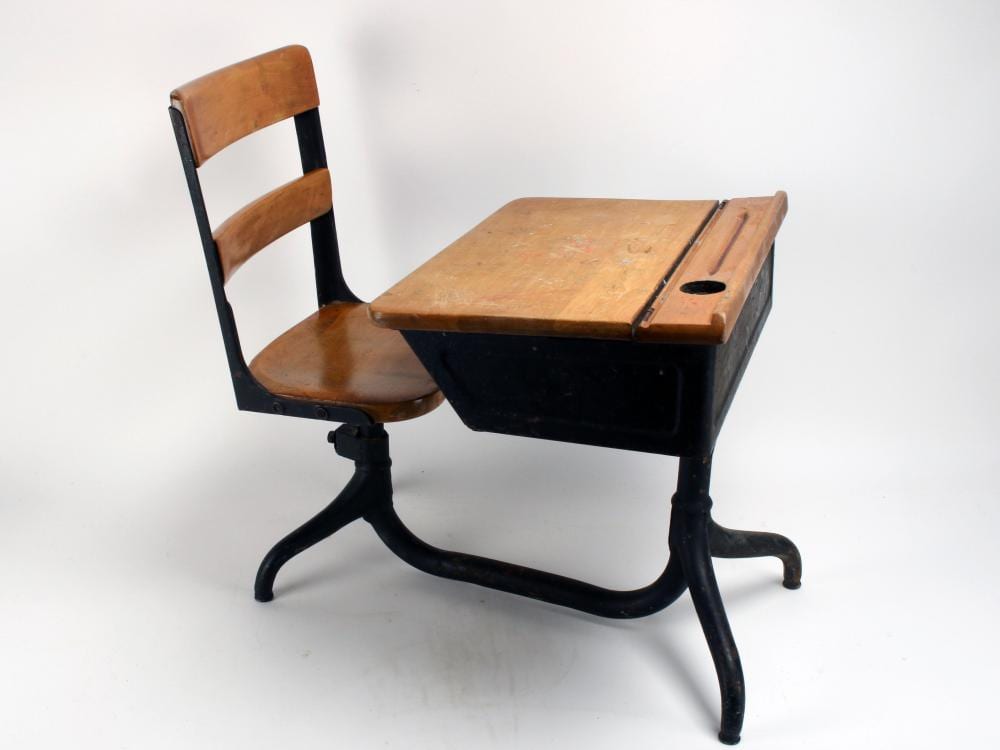
- Single pedestal desks: Standalone student desks with integral book shelf and inkwell, commonly 1890s–1920s.
- Teacher’s desks: More like compact writing tables or small kneehole desks, sometimes with cubbies; generally carry higher value when original and complete.
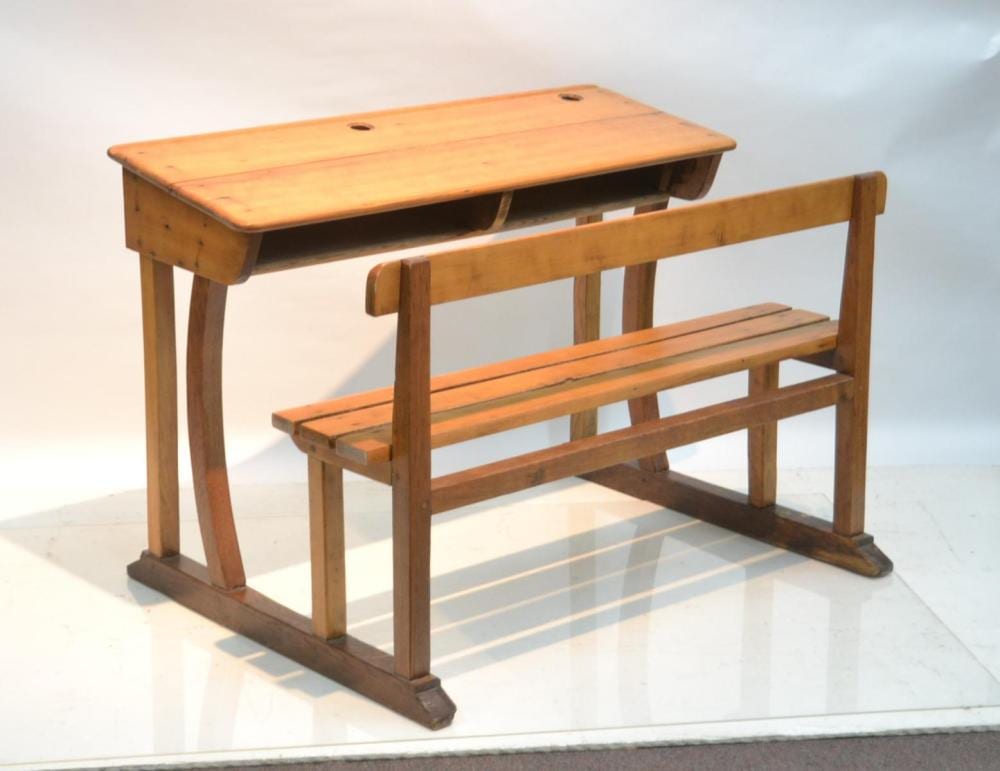
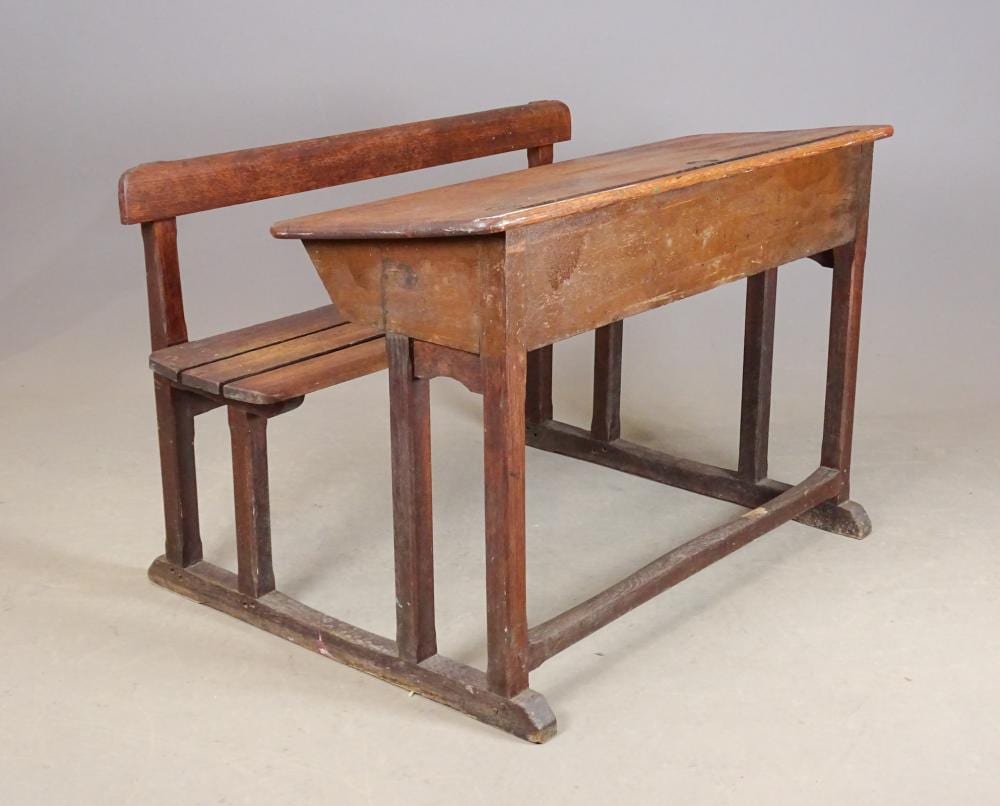
- Double desks: Two students sharing one writing surface; scarcer and more desirable when intact.
- Salesmen’s samples and miniature training models: Rare and highly collectible; used by manufacturers to demonstrate designs.
Makers to look for:
- A. H. Andrews Co. (Chicago): A major producer of richly cast iron-based desks in the late 19th century. Look for cast markings or plates and patent dates.
- American Seating Company (Grand Rapids): Formed from multiple mergers; prolific in the early 20th century.
- Heywood Brothers & Wakefield / Heywood-Wakefield: Known for both wicker and wood seating; some school furniture bears HW marks or labels.
- Globe, Kewaunee Manufacturing, Grand Rapids School Furniture Co., and Sidney School Furniture Co.: Regional and national makers that left cast-in or plate marks.
Where to find marks:
- Cast iron sides and pedestals (embossed names, numbers, logos).
- Underside of wooden tops or seats (stamped numbers, stencils).
- Patent plates and school district tags (often brass or tin).
- Handwritten inventory numbers, room assignments, or stenciled school names.
Form and maker matter because ornate cast-iron bases from premium makers, early lift-top forms, and scarce double units typically bring stronger interest than common mid-20th century steel-tube school desks.
Dating and Documenting: Construction, Hardware, and Evidence
A convincing age profile supports value. Combine construction clues, hardware types, and wear patterns to date and document.
Construction and hardware tells:
- Nails: Cut nails dominate mid-19th century; wire nails become standard after the 1890s. A lift-top with cut nails in the carcass suggests 1870s–1890s; entirely wire-nailed parts usually point to 1890s onward.
- Screws: Hand-cut or early machine screws with irregular slots are older; uniform machine screws standardize late 19th century. Phillips-head screws are mid-20th century; their presence on an “antique” desk may indicate later repair or a later desk.
- Saw marks: Straight, uneven circular saw marks suggest 19th-century milling; perfectly even planed surfaces with modern tool marks suggest later replacements.
- Joinery: Dovetailed storage boxes and mortise-and-tenon seat brackets are earlier and higher quality. Simplified butt joints with brackets and abundant screws tend to be later.
- Cast iron: Early castings often feature crisp relief patterns, thicker sections, and noticeable parting lines. Look for mold numbers and “PATD” with dates as firm evidence.
- Finish: Shellac and varnish were common pre-1930s. A thick modern polyurethane sheen on all wood surfaces can indicate refinishing.
Originality red flags:
- Freshly cast, thin iron sides with soft detail and no wear at foot contact points.
- Perfectly matched new screws throughout a desk claimed as untouched.
- Bright brass plates with laser-etched fonts rather than stamped or engraved lettering.
Provenance clues:
- School district stencils, room numbers, and property tags add confidence and often modest premiums.
- Period photos or invoices are rare but valuable in higher-end cases (double desks, ornate forms, or teacher’s desks).
Condition, Completeness, and Originality: How They Move the Needle
Condition is more than “looks nice.” Buyers value originality and structural soundness, and they discount heavily for missing components.
Key factors:
- Structural integrity: Check wobble at base-to-seat connections, cracked iron, loose or split planks, and racked frames. Cracked iron is a major value hit and expensive to remedy.
- Completeness: Original inkwells, book racks, pencil grooves, seat backs, and side hooks add value. Missing inkwells or lids reduce price; mismatched boards suggest past repairs.
- Surface and finish: Honest patina and light student “graffiti” can charm, while heavy paint-over, sanding to raw wood, or thick polyurethane can depress value noticeably compared to original finish in equivalent stability.
- Hardware originality: Original screws and brackets are a plus. Mixed hardware doesn’t kill value but indicates repair; disclose it.
- Rust and corrosion: Stable, light surface oxidation on iron is typical; deep flaking or pitting cuts value. Repainted iron can be acceptable if period-correct and neat, but collectors generally prefer original Japan black or aged paint.
- Functionality: Lift-top hinges that hold, seats that flip smoothly, and intact storage increase desirability.
A practical grading approach:
- Excellent: Structurally sound, original finish with minor touch-ups, complete hardware. Top of the market.
- Very Good: Sound with minor losses or tasteful repairs, light refinish or partial repaint acceptable.
- Good: Stable but with notable wear, obvious repairs, or partial incompleteness (e.g., missing inkwell).
- Fair: Usable but with significant issues (cracks, missing components, heavy refinish).
- Poor: For parts or restoration.
Originality can easily account for a large swing within the same model and maker.
Rarity and Demand: What Sells and to Whom
Value rides on who wants your desk and how many similar examples are competing.
Demand segments:
- Collectors and historians: Seek early, ornate, maker-marked, and documented pieces.
- Interior designers and decorators: Prefer visually strong, stable desks; patina and proportions matter more than complete originality.
- Parents/homeschoolers: Favor sturdy, single desks with functional storage and safe finishes.
- Hospitality and retail: Buy multiples to stage spaces; consistent sets or pairs carry a premium.
Features and forms that trend higher:
- Figural or highly ornamental cast-iron sides (late 19th century).
- Early double desks in matched pairs or intact rows.
- Lift-top desks with dovetailed boxes and original inkwells.
- Teacher’s desks with compartmented interiors and original hardware.
- Salesmen’s samples or miniature models.
Geography and timing:
- Urban markets with strong design scenes (or college towns) can yield higher prices for decorative examples.
- “Back-to-school” season and winter indoor-decor months can lift demand slightly.
- Local pickup expands the buyer pool if shipping is expensive; rural sellers may see softer local prices unless marketing regionally.
Price Ranges and Market evidence: Realistic Benchmarks
Prices fluctuate with venue, condition, and locality, but in many North American markets the main types compare like this:
- Common single cast-iron base student desks (1890s–1920s), serviceable, partly complete: the most common and least expensive group.
- Better single desks with ornate sides, original finish, and complete components: a clear step up from common singles.
- Double desks (linked pairs) or desirable matched pairs: usually above single desks; exceptional examples sell for considerably more.
- Early lift-top or slant-lid school desks with storage (19th century), largely original: priced on joinery, wood species, and provenance.
- Teacher’s desks (small scholastic tables/cabinets), original hardware, good finish: priced on size, maker and finish, and often well regarded by decorators.
- Salesmen’s samples/miniatures with maker provenance: scarce and among the most sought after.
- Postwar steel-tube school desks (1940s–1950s): modest unless designer-associated or unusually stylish.
Condition and originality can move a desk well up or down within its group. Compare recent sold examples of the same form and maker before pricing. For example, an ornate Andrews-marked single in excellent original condition can command 2–3× a common, repainted counterpart.
How to compare effectively:
- Look at sold prices, not asking prices. Use multiple venues: regional auction results, estate sales, dealer sales, and local classifieds. Note if the sale was “local pickup” or shipped.
- Adjust for condition variants. Deduct for missing lids, broken hinges, or refinishing; add for provenance and completeness.
- Factor shipping. Freight for a single desk is a real cost in the U.S.; this suppresses remote buyer bids and lifts value for local pickup markets.
- Consider time horizon. Seasonal demand and trend cycles (industrial decor vs farmhouse) can nudge prices up or down.
A simple pricing framework:
- Establish a baseline from two or three closest sold market evidence.
- Apply condition modifiers: deduct for heavy refinish and missing components; add for maker marks or provenance and for ornate casting or pairs.
- Round to a rational asking price with a modest negotiation buffer.
Restoration, Care, and Ethical Repairs
Collectors favor originality, but safety and stability matter. Focus on reversible, minimally invasive work.
Do:
- Clean wood with mild soap and water or mineral spirits to lift grime; test in an inconspicuous area.
- Consolidate loose joints with hide glue or reversible adhesives where feasible.
- Lubricate hinges and moving parts sparingly; replace missing screws with period-style slotted screws.
- Treat light rust on iron with penetrating oil and 0000 steel wool; wax afterward to inhibit future oxidation.
- Wax original finishes (paste wax) rather than resealing; it enriches patina without encasing it.
- Replace missing wood with species-appropriate, grain-matched, preferably reclaimed boards, and document the change.
Avoid:
- Stripping original shellac/varnish unless the surface is failing and unsafe; stripping can erase value.
- Heavy sanding that removes tool marks, stenciling, or carved details.
- Thick polyurethane or modern high-gloss finishes that telegraph “refinished.”
- Overpainting iron bases in bright modern colors if you aim for collector value; if refinishing, stick to period-correct black or dark bronze tones.
Document all interventions; good restoration notes build buyer trust and reduce returns.
How to Document and Market Your Desk
Strong documentation sells a desk faster and at a better price.
What to record:
- Full measurements: height, width, depth; seat height; writing surface size; distance between seat and desk back (ergonomics matter to buyers).
- Materials and finish: wood species if known (oak and maple are common), finish type, and evidence of original paint/varnish.
- Maker and marks: Clear photos of cast logos, patent dates, stamped numbers, and school tags.
- Condition specifics: Working hinges, any cracks, replaced fasteners, rust areas, repair notes.
- Features: Inkwell presence, book rack, pencil groove, storage capacity, flip-seat action, adjustable feet.
Photography tips:
- Shoot all four sides, close-ups of marks and hardware, underside and interior storage, and any flaws.
- Use neutral light and scale indicators (tape measure in frame helps).
- Stage simply to avoid visual clutter; add a chair or book only if it clarifies size.
Selling strategy:
- Local pickup listings can command higher prices because the buyer saves freight.
- For auctions, start below your target to encourage bidding; for fixed price, include best-offer and leave some room to negotiate.
- If you have multiples, consider offering matched pairs; sets are attractive to decorators and venues.
Quick Valuation Checklist
- Identify the type: single, double, lift-top, teacher’s, or miniature.
- Find maker marks, patent dates, and school tags; photograph them.
- Date the desk using hardware, joinery, and finish clues.
- Assess condition: structure, completeness, original finish, rust, and repairs.
- Note features that add value: inkwell, book rack, ornate castings, dovetails, provenance.
- Research sold market evidence; adjust for condition, geography, and shipping.
- Decide on restoration (minimal, reversible) and document any work.
- Set a price with a small negotiation buffer; plan your venue and logistics.
FAQ
Q: Is refinishing always a bad idea for value? A: Not always. A sympathetic clean-and-wax is best, but a careful, period-appropriate refinish can help if the surface is failing or unsafe. Expect a value reduction versus an equivalent original finish. If you refinish, document it and keep hardware and color period-correct.
Q: Are 1950s school desks considered antique and valuable? A: Most 1950s desks are “vintage,” not antique, and usually bring modest prices unless they have distinctive design, a known maker, or exceptional condition. Earlier iron-base or lift-top forms typically command higher prices.
Q: How can I tell if my desk is a reproduction? A: Look for crisp yet aged casting detail with documented wear at foot contact points, period hardware (slotted screws), and old finishes. Uniform modern screws, thin and soft castings, and perfect glossy paint with no wear often indicate later production or heavy restoration.
Q: Does provenance from a specific school add value? A: Yes, modestly. School stencils, district plates, or documented history can add some value, more if the institution is notable or if you have period photos or records.
Q: What’s the best way to ship a school desk? A: For single desks, blanket-wrapped freight or uShip-style carriers are typical; freight costs are significant even domestically, which affects what distant buyers will pay. Disclose measurements, weight, and shipping options upfront, and offer local pickup to broaden your market.
By following these steps—identify, date, assess, compare, and present—you can price your antique school desk with confidence, avoid under-selling, and preserve the character that makes these pieces irresistible.