Unlocking the Worth a Collectors Guide to Determining the Value of Antique Hurricane Lamps: appraisal and value basics
Unlocking the Worth a Collectors Guide to Determining the Value of Antique Hurricane Lamps research should start with identification, condition, provenance, and item-specific market evidence. Use this guide to compare the signals that matter before paying for a formal appraisal or deciding whether to sell.
Antique hurricane lamp appraisal checklist
Antique hurricane lamps are favorites among collectors because they mix sculptural beauty with practical history. But the same qualities that make them appealing—interchangeable parts, long production timelines, and a flood of later reproductions—can complicate valuation. This guide distills the essentials: what counts as a hurricane lamp, the parts and marks that matter most, key value drivers, realistic market ranges, how to spot “marriages” and reproductions, and a step-by-step appraisal workflow you can use at the table or auction preview.
What Is a Hurricane Lamp? Types You’ll Encounter
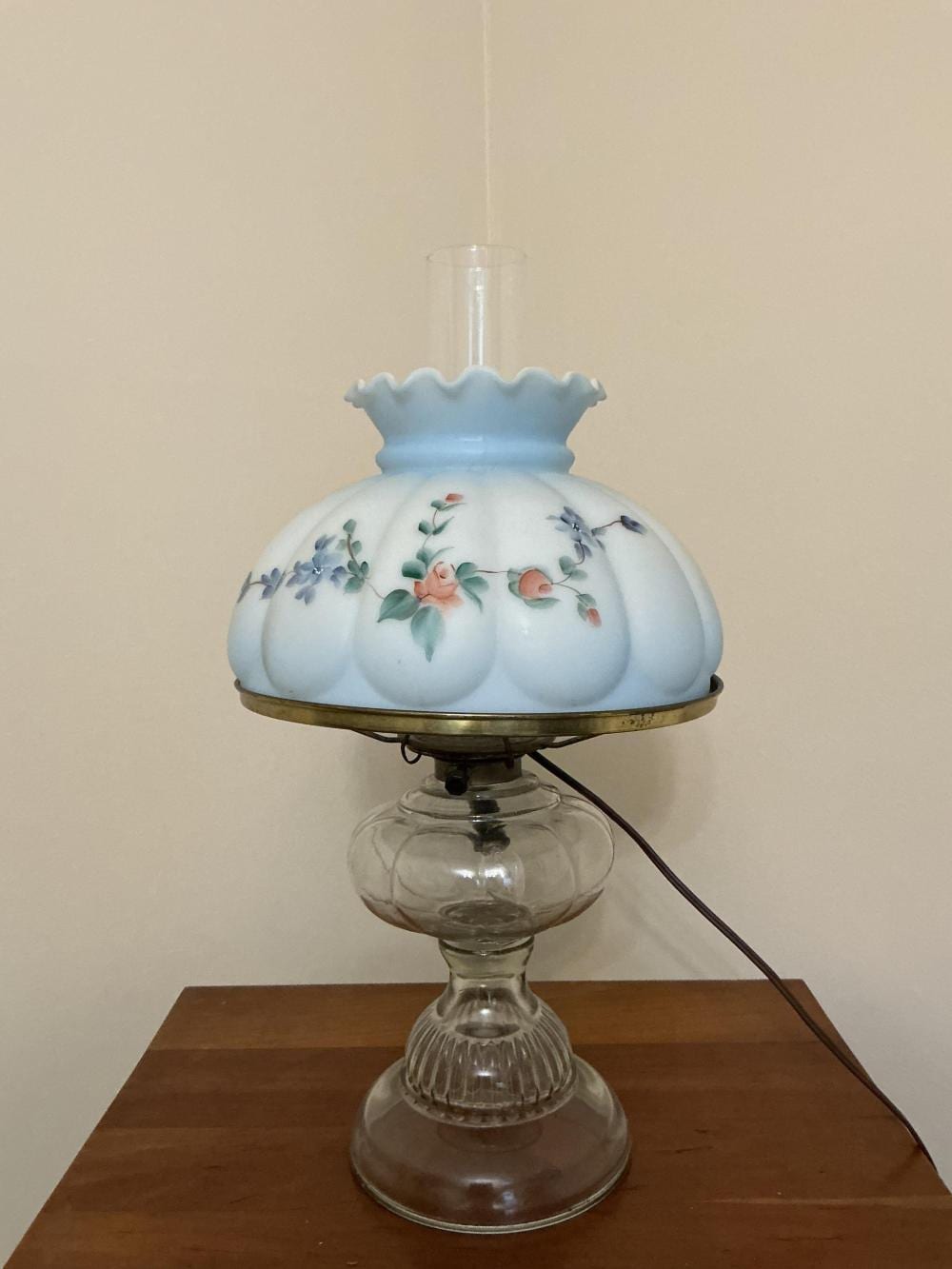
In collecting, “hurricane lamp” broadly refers to non-electric oil or kerosene lamps with a tall glass chimney designed to protect the flame from drafts. Within that umbrella are distinct forms, each with its own market:
- Hand lamps: Small, often pressed-glass fonts with a handle and a simple metal burner. Portable and common; generally lower value unless in an unusual color or pattern.
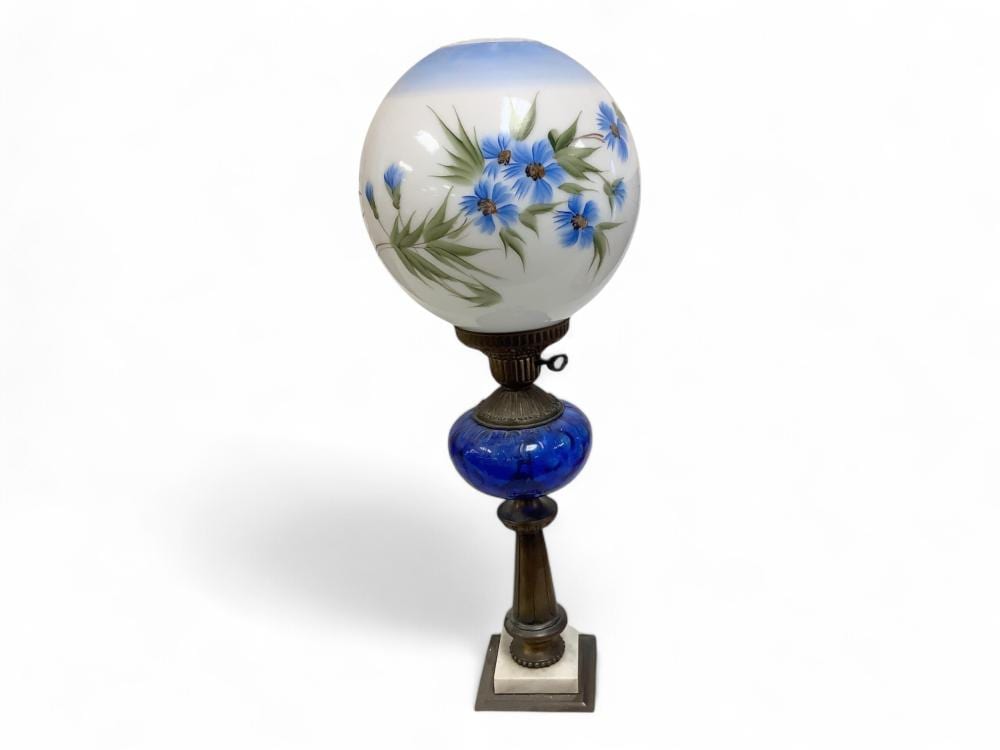
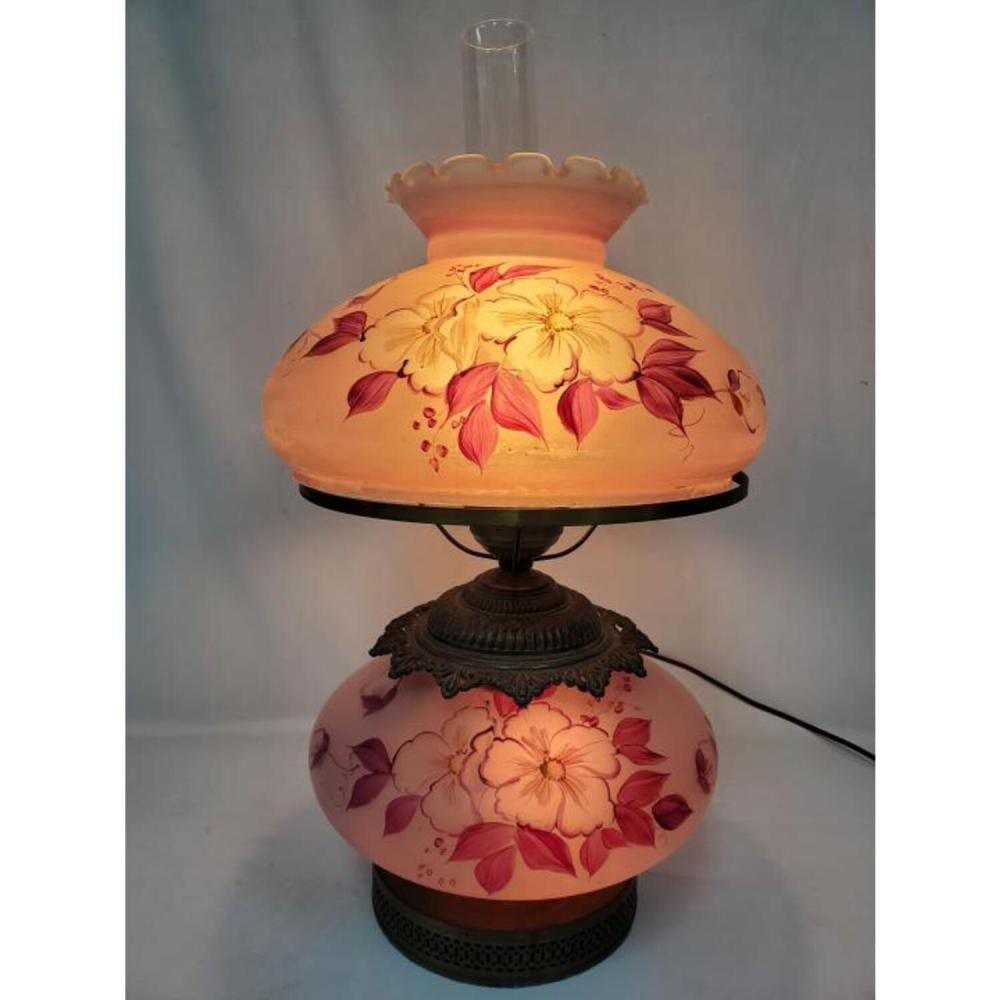
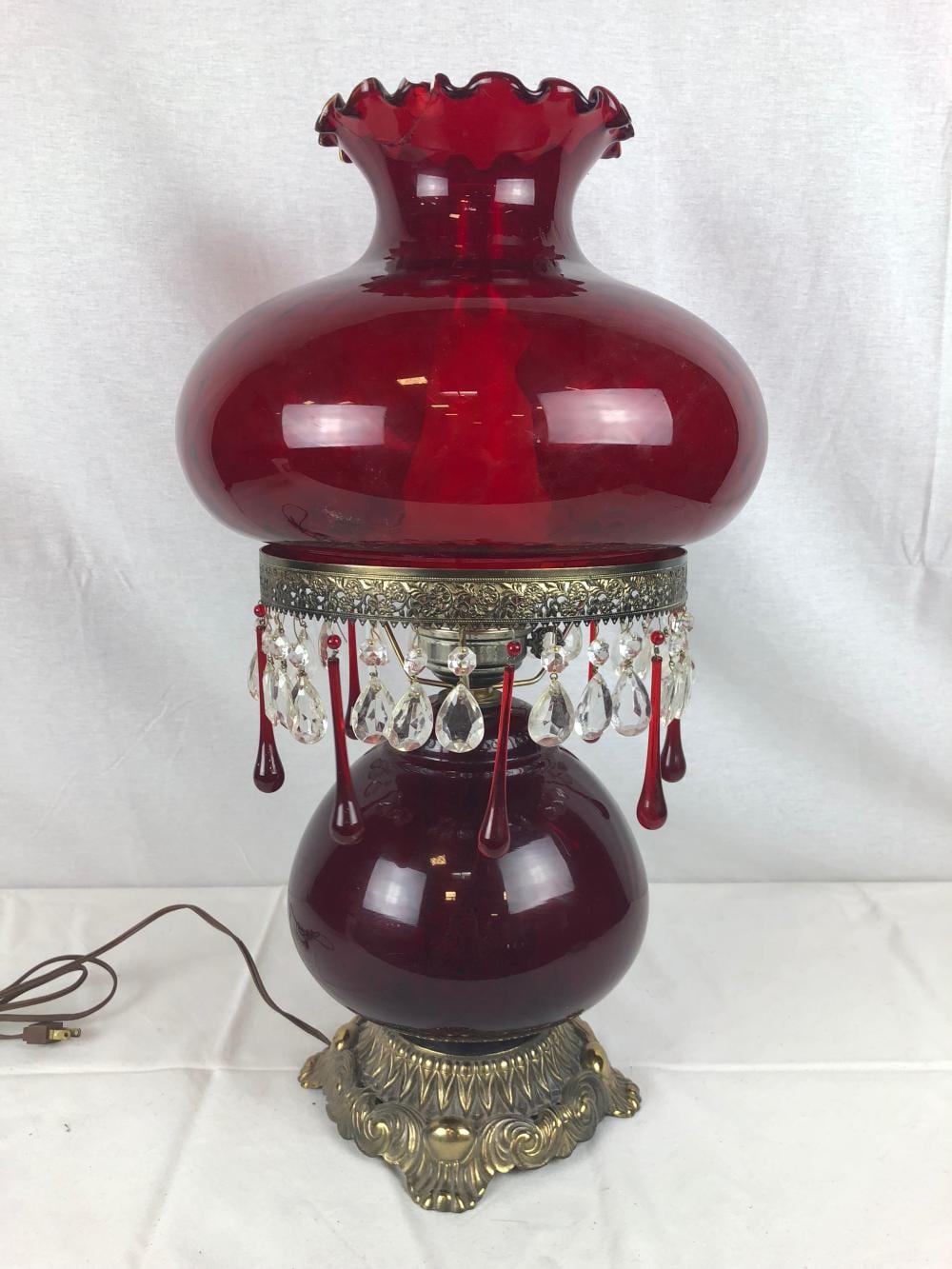
- Banquet and parlor lamps: Larger, decorative kerosene table lamps used in Victorian interiors. Often with cased or satin glass font and a ball or dome shade; sometimes prism-hung. Includes “Gone With The Wind” (GWTW) styles with painted upper and lower globes.
- Student lamps: Desk lamps with a central font feeding one or two burners under conical or dome shades (often green cased glass). Built for brighter, focused light.
- Hanging “library” lamps: Ceiling-suspended kerosene fixtures with a pulley, shade, and sometimes prisms. Usually central-draft burners for higher output.
- Wall/bracket lamps: Wall-mounted fonts with reflectors; practical, but can be ornate.
- Aladdin mantle lamps: Introduced in the early 20th century (1908 onward), they use a mantle to create incandescent light from kerosene—brighter than wick-only lamps and avidly collected.
Regional terms vary, and sellers often label any chimneyed oil lamp as a hurricane lamp. For valuation, you’ll do better identifying a more specific sub-type.
Anatomy That Matters: Parts, Marks, and Dating Clues
Knowing parts and terminology makes identification faster and improves accuracy.
- Font or reservoir: Holds fuel (whale oil earlier, then kerosene/paraffin from the 1850s forward). Materials include pressed glass, cased/satin glass, opaline or milk glass, brass, and occasionally marble or porcelain.
- Burner: The mechanism controlling the wick and airflow. Common sizes include No. 1 and No. 2 flat-wick burners; higher-output burners are central draft (circular wick, air tube) or duplex (two flat wicks). Duplex burners emerged in the 1860s (notably by Hinks in Britain). Central-draft burners gained popularity in the 1880s–1910s (Rochester, Miller, Rayo, Bradley & Hubbard).
- Chimney: Clear glass tube, often marked with size; replacements are commonplace and generally expected.
- Shade: Shapes vary—ball shades for GWTW lamps, tulip or dome for banquet/student lamps, and conical shades for student lamps. Original shades (especially painted, etched, or cut) are key value drivers.
- Base and mounts: Brass, iron, spelter (zinc alloy), bronze, or mixed media; can be plain, classical, or figural. A marble plinth may appear on banquet lamps.
Marks and labels:
- Burner collars and wick knobs may be stamped with makers (Bradley & Hubbard, Edward Miller, Rochester, Plume & Atwood, Rayo, Hinks, Duplex) and patent dates. Wick knobs often carry brand names or logos.
- Glass typically lacks maker marks, but shades sometimes carry acid-etched patterns or occasional marks. Figural metal bases can be found with cast-in numbers or foundry marks.
- Patent dates bracket earliest production but aren’t the exact manufacture date.
Dating clues:
- Pressed glass seams indicate late 19th/early 20th-century mass production; earlier blown fonts show pontil remnants or ground/polished pontils.
- Satin and cased glass shades and fonts were fashionable in the 1870s–1890s; reverse-painted and transfer-decorated globes trend later Victorian.
- Aladdin mantle lamps date from 1908 onward, with model numbers (Model 3, 6, 12, etc.) and characteristic gallery hardware.
Originality and completeness:
- The best survivors retain their correct period burner, shade support (gallery/holder), and shade matching the scale and style of the base. Later chimneys are fine, but swapped shades, modern burners, or added prisms can downgrade value.
What Drives Value: Rarity, Quality, and Originality
Different factors stack to make or break an antique hurricane lamp’s price:
- Maker and model: Recognized names (Bradley & Hubbard, Edward Miller, Rochester, Rayo, Hinks, Aladdin) can raise confidence and value. Certain burner types (central-draft, duplex) suggest higher-tier lamps.
- Quality of materials and decoration: Thick, well-made fonts; cased or satin glass; fine etching, cutting, or hand painting; crisp mold work; and substantial metal with sharp detailing are all positive indicators. Cranberry (gold ruby), amberina, and vaseline/uranium glass shades fetch premiums; unusual blues and amethyst can also be strong.
- Shade importance: Shade quality and originality is often the single biggest driver. A matched, hand-painted ball shade paired with a GWTW base multiplies value, while a later or generic replacement can halve it. Correct fit and proper ring size matter.
- Condition: Chips on shade rims, heat cracks, glass clouding (iridescent “sickness”), or stabilized cracks depress value. Small flea bites on fitter rims are common and more forgivable than body cracks. Bent galleries, dented fonts, missing prisms, and rewired/electric conversions all affect price.
- Originality of assembly: “Married” lamps (mismatched base, burner, and shade) are common and acceptable for decorative use but trade below all-original, period-correct examples. Replacing a chimney is assumed; replacing a shade is not.
- Scale and presence: Large banquet or hanging library lamps with prisms and elaborate metalwork outperform smaller hand lamps.
- Color and pattern rarity: Deep cranberry ball shades, engraved or cut glass, high-contrast cased satin glass, and complex floral painting (notably on both upper and lower GWTW globes) boost desirability.
- Provenance and documentation: Papers linking the lamp to a named maker, model catalog, or original household can help at the high end.
- Region and market timing: Prices vary by country and even by city. Country-decor peaks of the 1980s–1990s have softened; focused collectors remain strong for high-quality and rare colors.
Market Benchmarks: Typical Price Ranges Today
These comparisons are approximate and assume retail-ready condition unless noted. Local results can be above or below these guideposts.
- Common pressed-glass hand lamps: the most affordable. Unusual colors or patterns sell for more.
- Student lamps (single or double burner) with proper conical/dome shades: well above hand lamps. Better examples with signed burners and high-quality green cased or etched shades sell higher still.
- GWTW and banquet lamps:
- Decorative, mixed-component examples: the entry level.
- Well-matched pairs of painted upper/lower globes on quality bases: sell for considerably more.
- Exceptional decoration, rare colors, or documented makers: the top of the group.
- Hanging library lamps (complete, with prisms, correct shade, pulley): priced on completeness; elaborate or signed examples sell for much more.
- Aladdin mantle lamps:
- Common models with plain shades: modest.
- Scarcer models, colors, or original decorated shades: sell for more.
- Shades alone:
- Plain clear chimneys: inexpensive.
- Fine etched/dome student shades: worth considerably more.
- Cranberry/amberina ball or dome shades: the most valuable, depending on size, color intensity, and condition.
Electrified conversions generally sell below intact kerosene versions unless the conversion is reversible and the original burner is retained. At the top tier, rarity and condition can push well beyond these ranges; conversely, damage, marriages, or missing parts drop value sharply.
Spotting Reproductions and Marriages
Reproductions and part-swaps are common. Use these red flags to separate period lamps from later assemblies:
- Casting and finish quality: Soft, smudged details, casting seams that weren’t properly chased, or overly bright “lacquered” brass with no age are suspicious. Period metalwork shows crisp edges and natural oxidation or varnish wear in protected areas.
- Fasteners and threads: Phillips-head screws, metric-thread machine screws, or modern washers suggest later fabrication. Victorian hardware typically uses slotted screws and imperial threads.
- Paint and decoration: Fresh, glossy paint; repetitive decal-like florals; or overly even “antique” patina on glass can indicate modern decoration. True hand painting shows brushstroke variance and sits beneath a thin, aged varnish or shows appropriate wear.
- Glass clues: Modern glass often has bright, even coloration and pristine fitters. Antique cased satin glass shows subtle color gradations and a soft hand. Uranium glass glows under UV; that’s a positive test for certain period shades but is not definitive by itself. Beware artificially “sick” or deliberately abraded surfaces meant to mimic age.
- Burner mismatch: A high-grade central-draft or duplex burner sitting on a clearly low-grade pressed-glass font—or a tiny base supporting a massive ball shade—signals a marriage. Proportions should look correct. Fitter sizes need to match intended galleries.
- “Too perfect” sets: Identical pairs of complex lamps with identical paint patterns and immaculate brass are rare in the wild; verify finishes and paint under magnification.
When in doubt, separate the lamp into its components (base, burner, shade, chimney) and evaluate each on its own merits. A married but attractive lamp still has decorative value—just less collector value.
Appraisal Workflow: From First Look to Fair Value
A structured approach keeps you efficient and accurate whether you’re evaluating at home or on the show floor.
Practical Valuation Checklist
- Identify the type: hand, banquet/GWTW, student, hanging, wall, or Aladdin mantle.
- Check proportions: Does the shade fit the gallery and suit the base’s scale? Any wobble or misfit?
- Examine the burner: Note type (flat-wick, duplex, central draft, mantle). Record any maker or patent marks on wick knobs, collars, or galleries.
- Inspect the glass: Look for cased/satin construction, color intensity (e.g., deep cranberry), and decoration method (hand-painted vs. transfer). Check both rims for chips.
- Assess condition: Note cracks, stains/clouding, heat checks, rim flakes, dents, solder repairs, missing prisms, or rewiring.
- Test originality: Does the set make sense historically? Same era for base, burner, shade? Avoiding obvious marriages ups value.
- Confirm completeness: Chimney size correct, proper shade holder/gallery present, all suspension hardware on hanging lamps accounted for.
- Photograph and measure: Height, shade fitter diameter, font diameter, and overall proportions. Photographs aid comp comparisons and future resale.
- Assign quality tier: Common, collectible, or exceptional—based on maker, materials, decoration, and survival of original components.
- Compare market evidence: Look for similar lamp type, burner, shade style, size, and condition in recent sales. Adjust for regional demand.
- Set a range: Use a conservative spread, with retail-ready prices above as-found prices.
- Decide on action: Buy, pass, or negotiate based on margin for restoration and your confidence in originality.
Care and conservation tips
- Cleaning: Dust first. Use mild soap and lukewarm water for glass; avoid soaking painted or gilded areas. Never put antique glass in a dishwasher.
- Metalwork: Lightly clean with a damp cloth. Avoid aggressive polishing that removes original lacquer and patina; collectors value honest age.
- Repairs: Replace chimneys freely. Replace shades only with period-correct styles and sizes; keep any original parts for provenance. For electrified pieces, consider reversible conversions that retain the original burner and gallery.
- Safety: If burning kerosene, use only water-clear, high-grade fuel; never use gasoline. Check wick condition and draft. Keep lamps away from curtains and traffic.
FAQ
Q: How can I tell if my GWTW lamp’s shade is original to the base? A: Start with fit and proportion: the lower globe should match the upper globe’s decoration and diameter. Look for matching paint style and aging, similar glass thickness and color tone, and period-consistent galleries. Maker marks on burners can help date the base; mismatched timelines suggest a marriage.
Q: Does electrification ruin the value? A: It usually reduces value unless the conversion is reversible and original components (burner, gallery) are retained. High-end collectors favor unaltered examples. For decorative buyers, neat wiring may be acceptable, but expect a discount versus fully original lamps.
Q: Are small rim chips on shades a deal-breaker? A: Minor fitter-edge flakes are common and typically acceptable with a modest price impact. Cracks, large chips, or breaks in visible areas significantly reduce value, especially on rare shades.
Q: Which makers should I look for? A: In the U.S., Bradley & Hubbard, Edward Miller, Rochester, Rayo, and Aladdin carry strong interest; in the U.K., Hinks and Duplex burners are notable. Quality often shows even when marks are absent—prioritize construction, materials, and decoration.
Q: What colors bring the strongest prices? A: Deep cranberry (gold ruby), amberina, and vaseline/uranium glass shades are perennial favorites. Rich blues, amethyst, and finely etched or cut glass also perform well, especially when matched to high-grade bases.
With a grasp of types, anatomy, marks, and market tiers—and a consistent appraisal workflow—you can separate the simply pretty from the truly valuable. Antique hurricane lamps reward careful eyes: completeness, correct shade, and quality materials routinely outrank mere age.