What oil lamp actually sell for
A common example is a different sale from a high-end named piece.
Typical sales. VICTORIAN WELLS CO SINGLE TORCH OIL LAMP sold for $40.
Brass Shabbat Four-Wick Oil Lamp sold for $70.
Danish JUST ANDERSEN Bronze Aladdin Oil Lamp sold for $110.
Japanese Mixed Metal Electrified Oil Lamp sold for $125.
ISLAMIC DOUBLE WICKED BRONZE OIL LAMP sold for $325.
High-value outlier. Gilt Bronze & Cranberry Glass Oil Lamp sold for $850.
Photograph maker marks, model, condition, and completeness before treating any one sale as yours.
What similar items actually sold for
To help ground this guide in real market activity, here are recent example auction comps from Appraisily’s internal database. These matched sales are market context only, not an object estimate or identification, and they do not guarantee a price for your specific antique oil lamp.
Shown USD range: USD 10-USD 125. Median of these 9 USD examples: USD 70.
| Comparable | What sold | Auction house | Date | Lot | Source-reported amount |
|---|---|---|---|---|---|
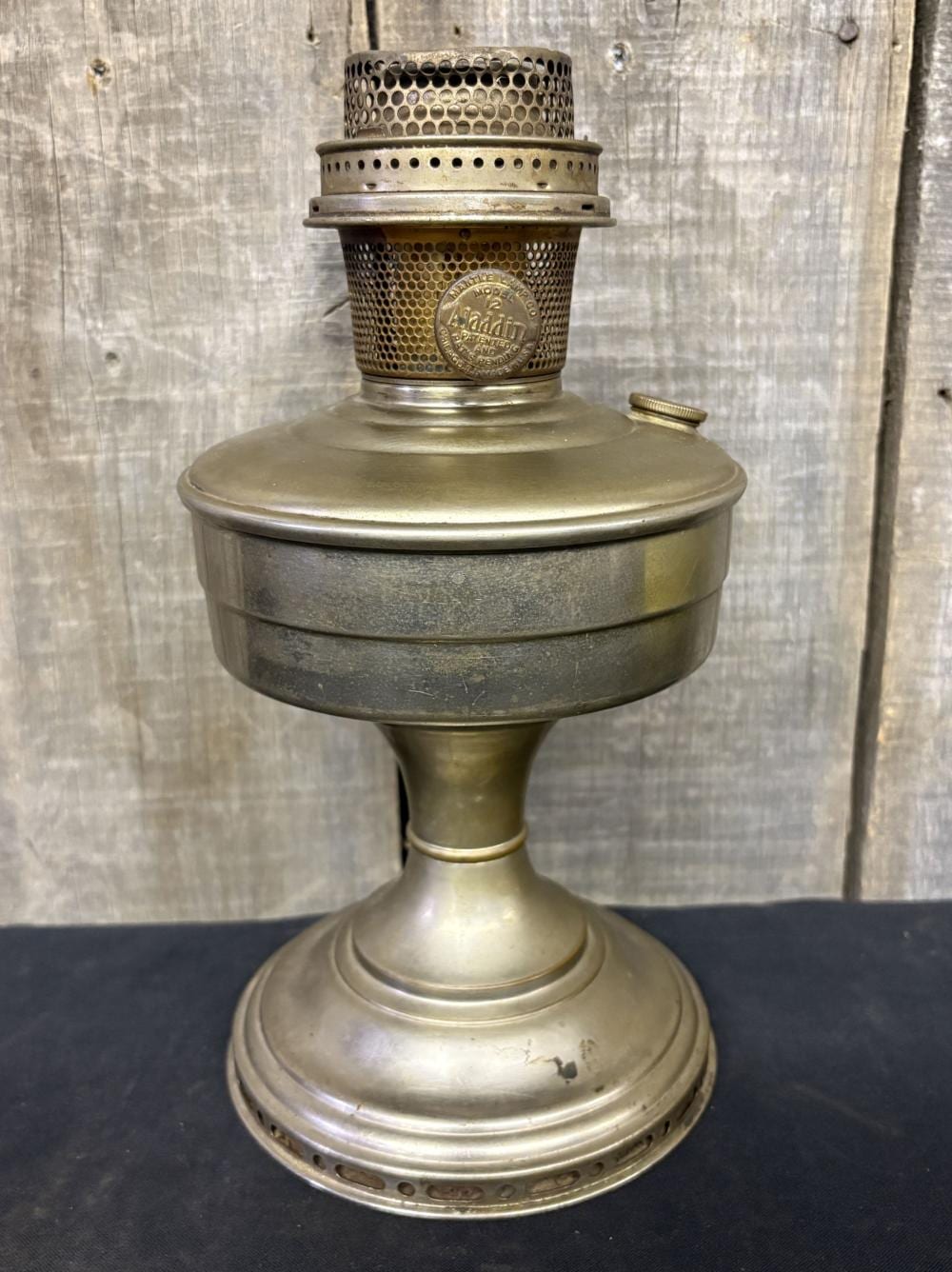 |
Early Aladdin Oil Lamp Model 12 6"X12" | Swisher Bros. Auction | 2025-07-20 | 135 | USD 20 (buyer’s-premium treatment unknown) |
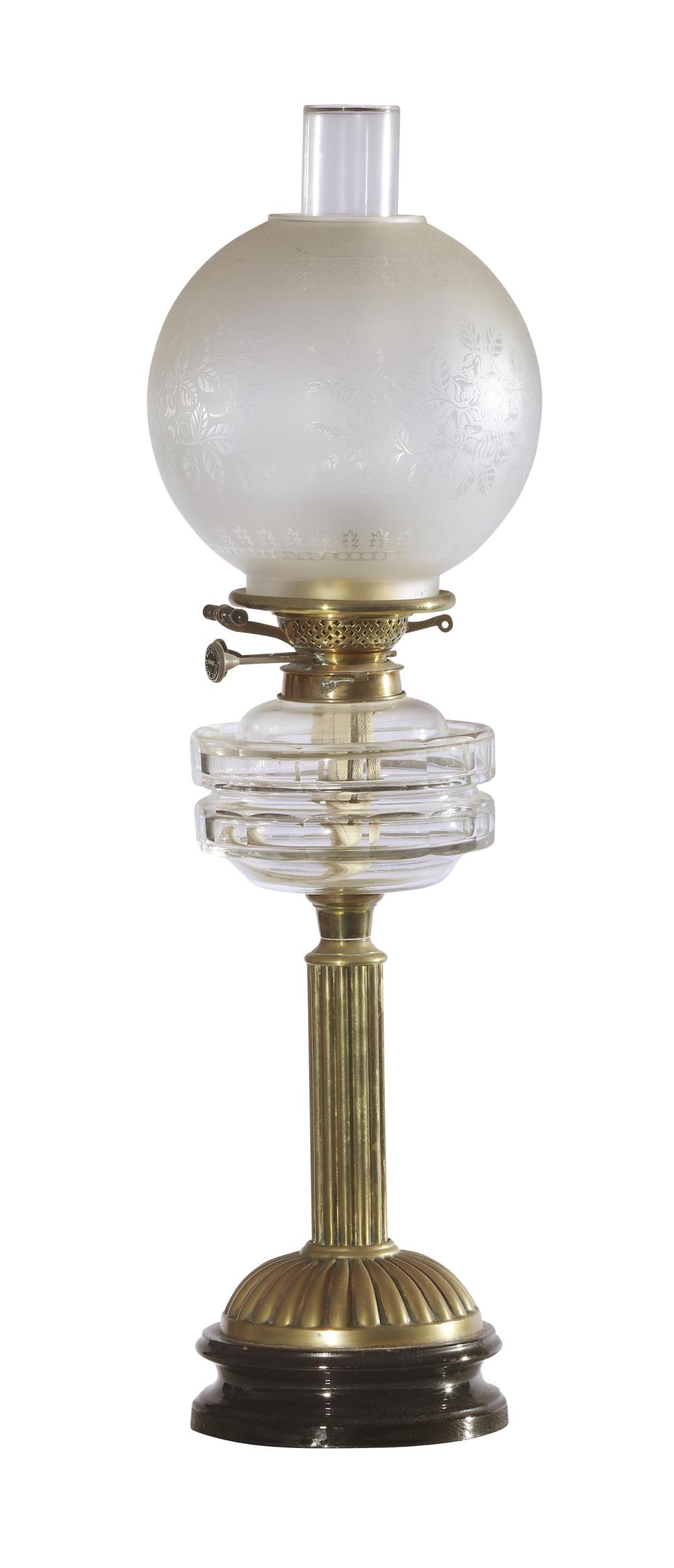 |
A VICTORIAN OIL LAMP | Leonard Joel | 2022-03-29 | 38 | AUD 200 (buyer’s-premium treatment unknown) |
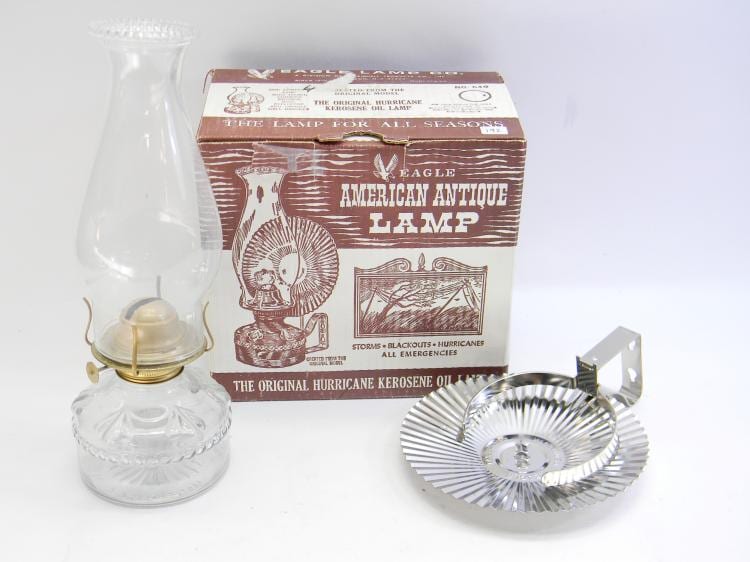 |
Eagle Brand Hurricane Kerosene Oil Lamp | Lindberg Auctions | 2015-04-10 | 192 | USD 10 (buyer’s-premium treatment unknown) |
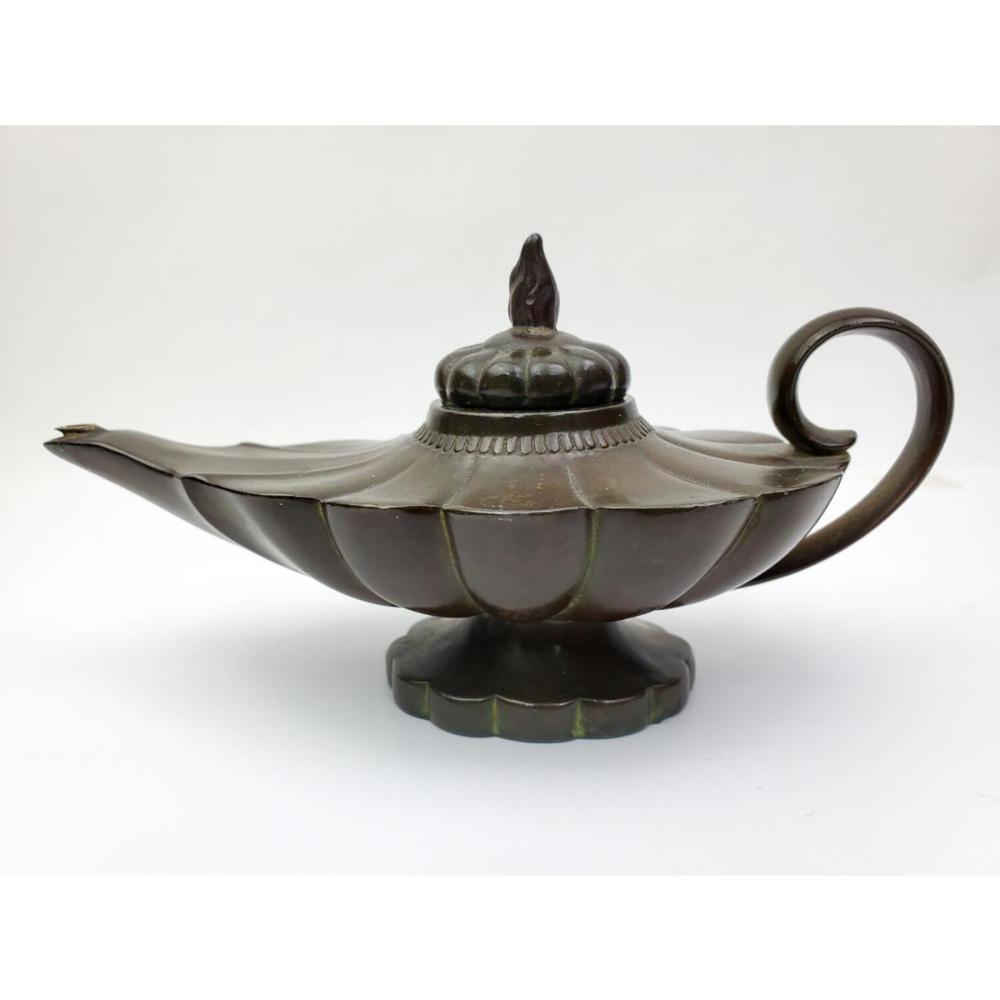 |
Antique Danish JUST ANDERSEN Bronze Aladdin Oil Lamp | Worthington Galleries | 2022-12-10 | 139 | USD 110 (buyer’s-premium treatment unknown) |
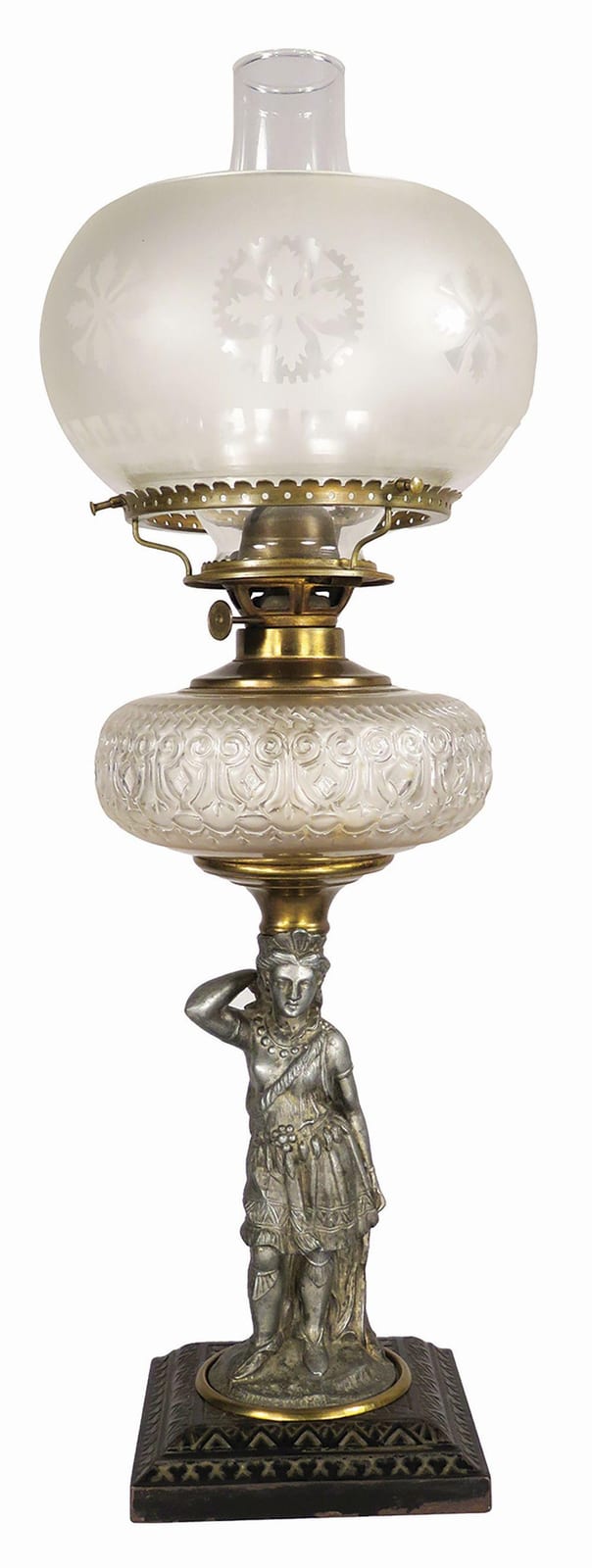 |
Fancy Antique Victorian Oil Lamp | Showtime Auction Services | 2020-09-18 | 575 | USD 125 (buyer’s-premium treatment unknown) |
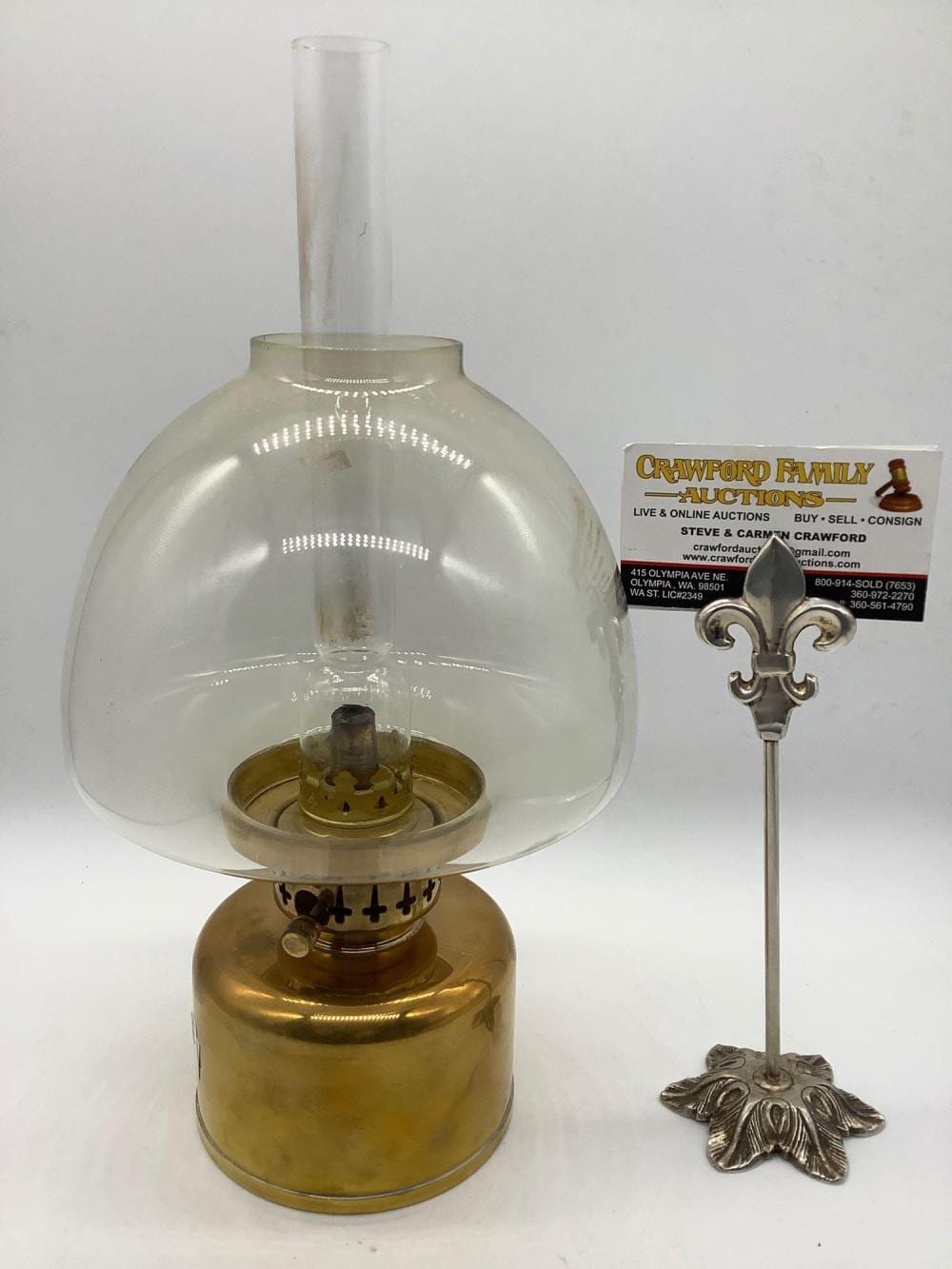 |
Vintage mid century Hans-Agne Jakobsson Markaryd Swedish kerosene oil lamp approx 13x7x7 inches. | Crawford Family Auctions | 2020-01-25 | 78 | USD 110 (buyer’s-premium treatment unknown) |
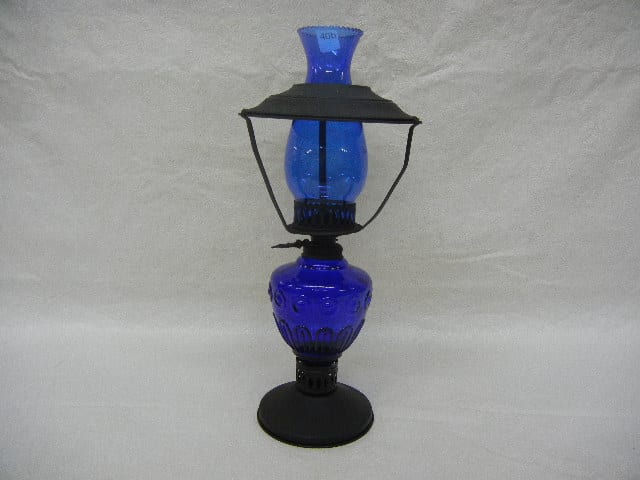 |
Vintage Cobalt Blue Oil Lamp Depressed Glass Kerosene Lamp | Richard L. Edwards Auctioneer | 2015-01-10 | 40B | USD 36 (buyer’s-premium treatment unknown) |
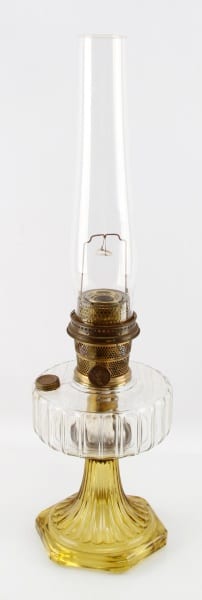 |
VINTAGE GLASS ALADDIN OIL LAMP NU-TYPE MODEL B | Affiliated Auctions & Realty LLC | 2016-11-19 | 7245 | USD 70 (buyer’s-premium treatment unknown) |
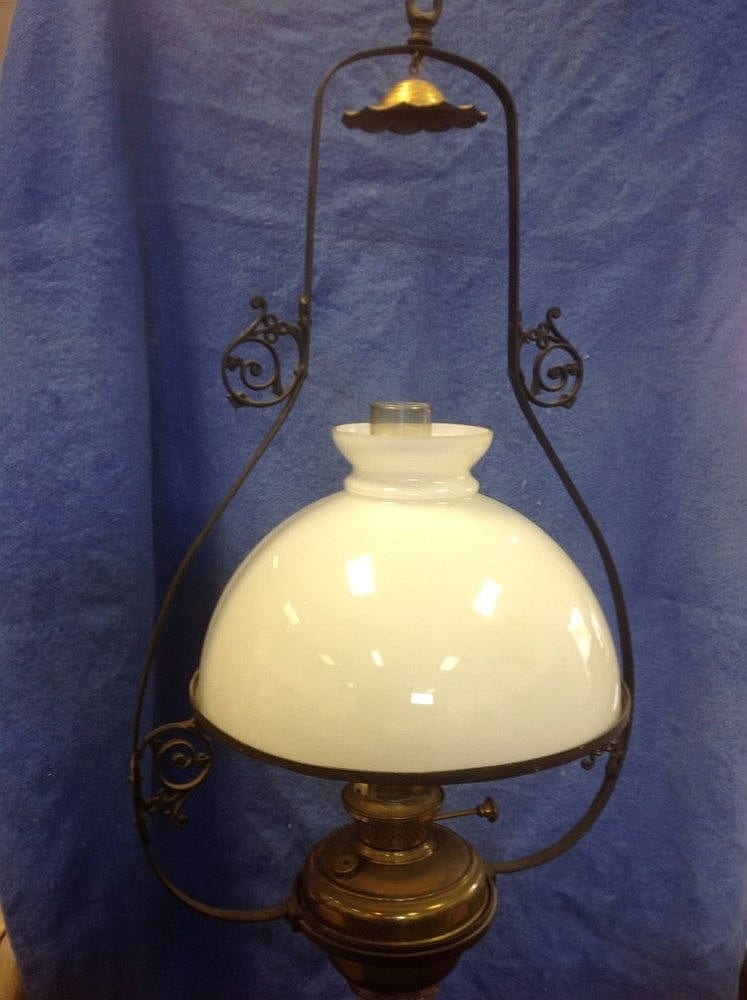 |
A Victorian oil lamp with milk glass shade above a | Railtons | 2015-07-18 | 335 | GBP 45 (buyer’s-premium treatment unknown) |
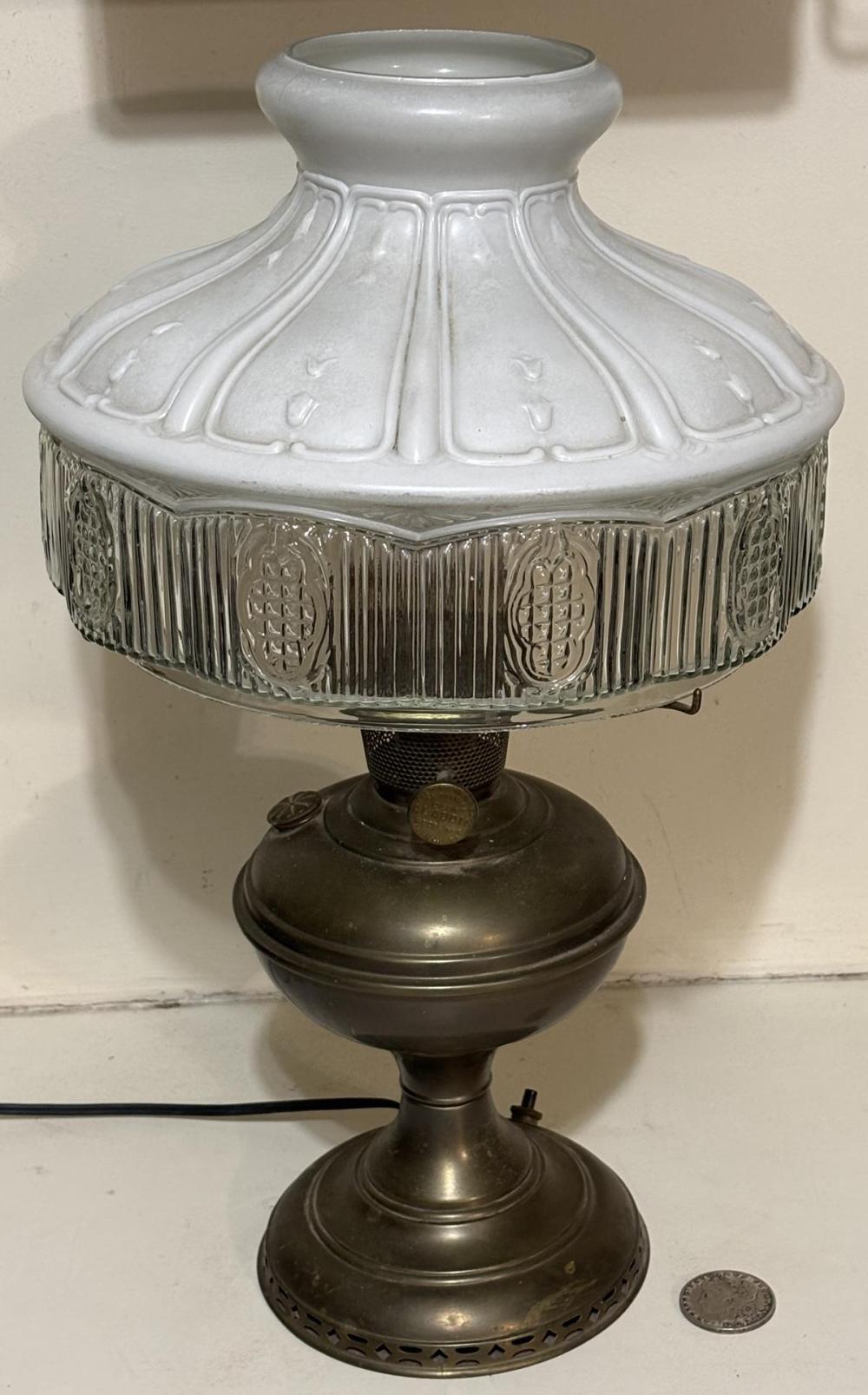 |
Antique 1915-1916 Aladdin Brass Model No.6 Electrified Kerosene Oil Table Lamp w/ Aladdin Style 501 Case Glass Shade WORKS | One Source Auctions | 2025-10-27 | 148 | USD 65 (buyer’s-premium treatment unknown) |
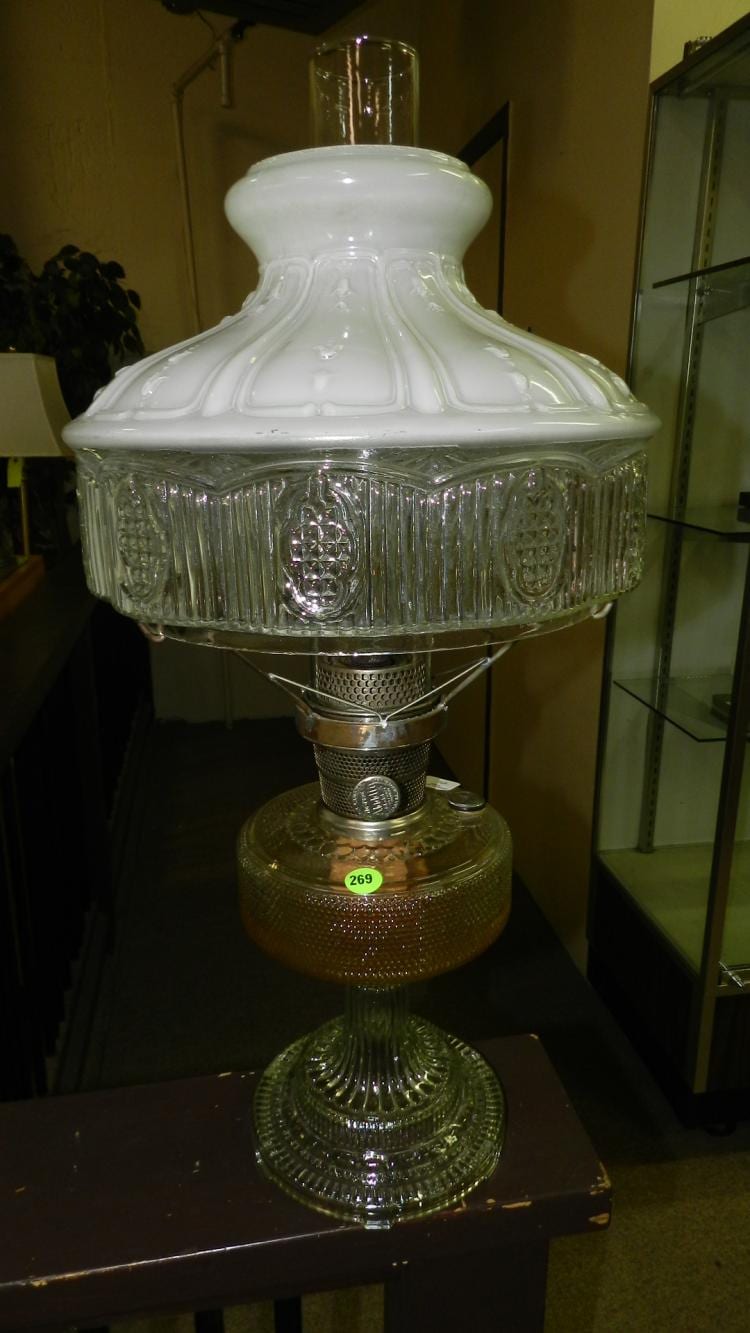 |
Original vintage Aladdin oil lamp with glass shade, model A | Hamiltons Antique & Estate Auctions Inc. | 2016-02-09 | 269 | USD 70 (buyer’s-premium treatment unknown) |
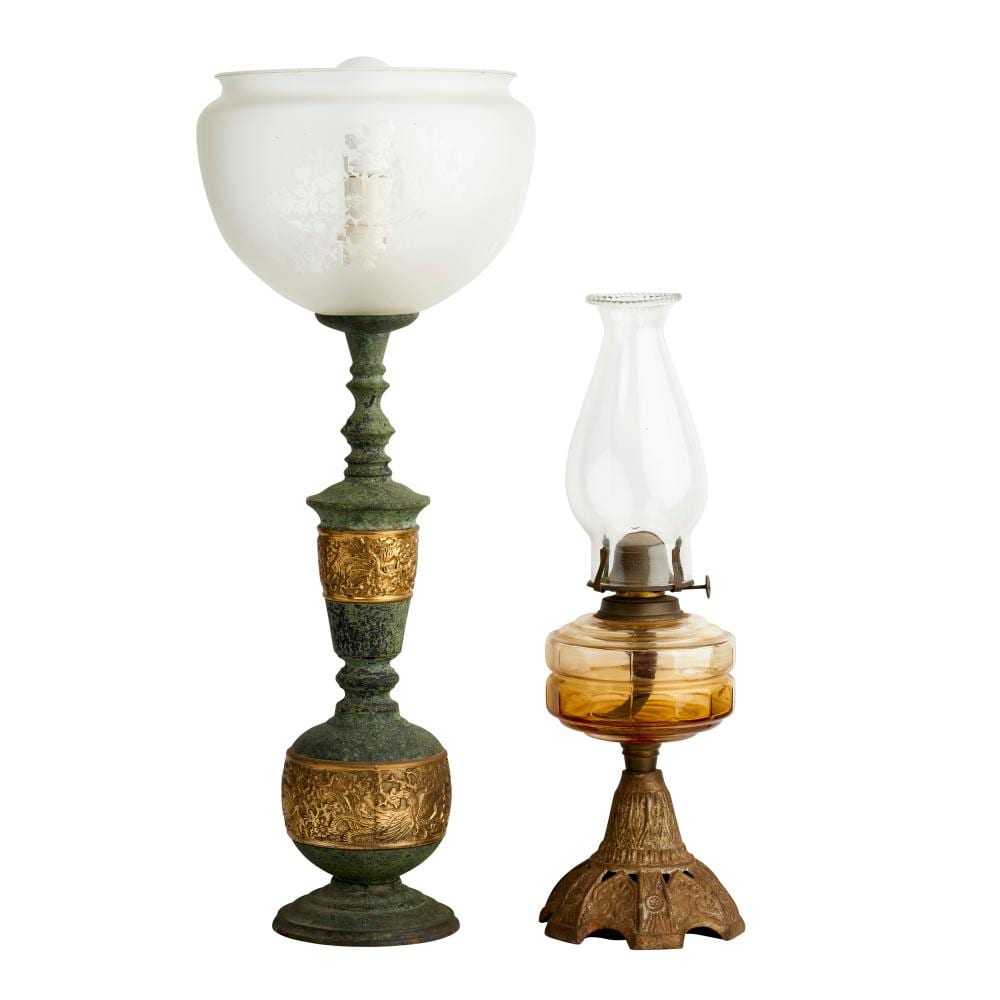 |
A LATE VICTORIAN OIL LAMP AND ANOTHER TABLE LAMP The oil lamp circa 1900 | Leonard Joel | 2025-05-19 | 231 | AUD 50 (buyer’s-premium treatment unknown) |
How these auction records were verified
Each row retains its exact source URL, lot identity, retrieval time, access result, and immutable record hash. Inspect the public comparable provenance record.
Disclosure: prices are shown as reported by auction houses and are provided for appraisal context. Learn more in our editorial policy.
Antique oil lamp identification and value guide: quick answer
Use an antique oil lamp identification and value guide to confirm the burner style, fuel system, font, chimney, maker marks, originality, and condition before estimating market value. The strongest lamps have period-correct parts that fit together, visible age clues, no damaging electrification, and comparable sales for similar complete examples.
Antique oil lamp identification checklist
Antique oil lamps are technical objects as well as decor. To identify one and judge value, start with the burner, font, chimney, shade, maker marks, originality, and condition, then compare those findings against recent sales for similar complete lamps. This guide walks you through the anatomy, fuel chronology, market factors, and checklist cues that separate an ordinary lamp from a desirable collector example.
Read the Lamp: Anatomy and How It Evolved
Start with structure. Most antique oil lamps share core components, and each part can reveal age and originality.
- Base and stem: Metal (brass, bronze, iron, spelter), glass (pressed or blown), porcelain, or stoneware. Early and high-grade pieces show crisp casting, clean joints, and fine finishing. Inferior castings with soft detail often signal late or reproduction manufacture.
- Font (reservoir): Holds the fuel. Whale oil and early colza/camphine fonts tend to be smaller. Kerosene fonts are larger and heavier. Glass fonts: blown with a pontil scar (earlier), pressed with mold lines (later). Opaque Bristol, satin, Burmese, or decorated porcelain fonts indicate quality.
- Collar: The threaded ring that accepts the burner. Thread standards (commonly No. 1 and No. 2) became widespread with kerosene lamps, aiding interchangeability. If the collar is soldered roughly or cross-threaded, it may be a replacement or later assembly.
- Burner: The engine of identification. Flat-wick burners (simple, with thumbwheel), twin-tube camphine burners (with separate air tubes), round or central-draft burners (with a perforated gallery), duplex burners (paired flat wicks), and mantle burners (Aladdin-type) each point to specific periods and makers.
- Chimney: Clear glass tube. Height and shape must suit the burner. Old chimneys show subtle variation and tool marks; modern replacements are uniform and often slightly heavier or thinner glass.
- Shade and gallery/holder: Student and parlor lamps use conical or dome shades held by a ring. Banquet or so-called “Gone-with-the-Wind” lamps have matching ball shades and often a glass base. Cutting, etching, coloring, and fit quality matter. The best lamps retain their original, properly fitting shade and holder.
Tip: Lamps are frequently “marriages” of parts from different eras. Coherence across base, font, burner, and shade is key. If just one element is inconsistent, value drops.
Date It by Fuel and Burner Technology
Lighting technology advanced in recognizable stages. Dating the burner style is often the fastest path to a credible age estimate.
- Whale oil and early vegetal oils (late 1700s–1840s): Simple wick tubes or Argand-style circular burners. Argand and sinumbra lamps use a round wick and a distinctive glass or metal ring shade. Expect high craftsmanship, bronze or brass with fine finishing.
- Camphine/naphtha (c. 1840s–1860s): Characteristic twin-tube (twin pillar) burners with conical or complex wick arrangements to manage the volatile fuel. These were bright but hazardous. If you see twin air tubes and a small, precise burner, think camphine era. Many were later converted to kerosene burners, so original camphine burners carry a premium.
- Kerosene/coal oil (from mid-1850s onward): Standardized flat-wick burners and threaded collars proliferated. Finger lamps, parlor lamps, and bracket lamps appear in pressed glass, iron, and brass. This is the most common category.
- Duplex and Kosmos-type burners (1860s–1890s): British duplex (twin flat wicks with a shared flame spreader) and European Kosmos/Matador round-wick burners improved brightness and control. Look for marked thumbwheels and refined galleries.
- Central-draft/“Rochester”-type (1880s–1910s): A tubular, perforated burner feeding a round wick. Brands like Rochester, Rayo, Miller, and Bradley & Hubbard used central draft for efficient, bright light. Student lamps—often on adjustable arms with domed shades—belong here.
- Incandescent mantle lamps (c. 1908 onward): Aladdin and similar systems use a flat or round wick to heat a mantle for gaslight-like brilliance. Presence of a mantle frame and specific burner models (e.g., Aladdin Model 6–12, A, B) dates a lamp to the 20th century.
Clue stack: If you have a heavy pressed glass font, a No. 2 flat-wick burner with a plain thumbwheel, and a simple clear chimney, you’re probably in post-1860 kerosene territory. A central-draft burner with an integral flame spreader and a 10-inch glass shade ring points to c. 1885–1915. A mantle frame means 1908+. Older Argand/sinumbra pieces will show engineered galleries, ring shades, and meticulous metalwork.
Materials, Makers, and Marks That Matter
Materials and marks refine your date and establish pedigree.
- Metals: Early and premium lamps use solid brass/bronze with crisp edges and chased decoration; iron bases are sturdy and often painted; spelter (zinc alloy) is lighter and softer, common in late 19th-century figural bases. Overpolished brass may indicate modern restoration—soft details or loss of gilt detract.
- Glass: Blown glass shows pontil scars (sometimes ground smooth), asymmetry, and seed bubbles. Pressed glass has mold seams that should be sharp on quality Victorian pieces. High-end shades may be acid-etched, wheel-cut, cased, or satinized. Reproductions often get the details “too perfect” or too heavy.
- Porcelain/earthenware: French, German, and English porcelain fonts and bases—sometimes with transfer prints or hand painting—signal higher value. Watch for matched decoration across the base and shade.
- Makers and marks: Check the thumbwheel, burner gallery, font collar, and underside of bases.
- American: Bradley & Hubbard, Edward Miller, Plume & Atwood (P&A), Rochester, Rayo, Consolidated, Phoenix. Thumbwheels often bear names or logos.
- British: Hinks & Son (noted for duplex), Messenger, Sherwoods. “Duplex,” “Hinks,” or “Pillar” marks are strong indicators.
- Continental: R. Ditmar, Wild & Wessel, Ehrich & Graetz, Matador, Kosmos-Brenner. Often metric-thread burners with stamped model names.
- Mantle lamps: Aladdin with numbered models on burner frames or knobs; U.S. and Canadian production differ slightly by era.
- Patents and dates: “Pat’d” stamps give a not-earlier-than date. Use as a floor, not a precise manufacture date, since parts persisted for years.
Absence of a mark doesn’t negate quality, but a clear maker mark, matched across parts, elevates value and confidence.
Assessing Value: What Collectors Pay For
Value is a function of originality, completeness, quality, rarity, and current taste. Consider:
- Completeness and originality:
- Best: Original burner, correct chimney profile, and factory shade that fits its proper holder. Matched “married sets” across base and shade are gold.
- Acceptable: Replaced chimney or wick. Chimneys are consumables, so thoughtful replacements don’t hurt much.
- Penalties: Missing or mismatched shades/holders, swapped burners incongruent with period, or bases drilled for electricity (often −30% to −70% value).
- Condition:
- Glass: Chips on shade rims are common; flakes reduce price. Star cracks in fonts are serious. Repaint loss on “Gone-with-the-Wind” lamps lowers desirability unless original art remains strong.
- Metal: Dents, cracks in threads, missing screws, and sloppy solder repairs reduce appeal. Patina is good; aggressive polishing that erases crispness is not.
- Rarity and craftsmanship:
- High: Argand/sinumbra, early camphine with original burners, fine bronze figural bases, quality duplex student lamps, signed shades, unusual colors (cranberry, vaseline/uranium with strong fluorescence), wheel-cut or reverse-painted art glass.
- Medium: Central-draft Rochester/Rayo student lamps, ornate Victorian parlor lamps with correct shades, porcelain fonts by reputable makers.
- Common: Pressed glass finger lamps, standard iron bracket lamps, late kerosene table lamps with plain burners.
Indicative market ranges vary by region and condition, but as a working guide:
Provenance, pairs, and fresh-to-market condition can push results beyond typical ranges.
Spotting Reproductions, Marriages, and Electrifed Conversions
Modern reproductions and “marriage” lamps are common. Red flags:
- Threads and fasteners: Modern metric threads or Phillips screws on ostensibly 19th-century parts. Overly bright zinc-plated hardware.
- Glass tells: Too-perfect symmetry, heavy weight, or greenish “bottle glass” hue on items claimed as 1850s. Mold seams that fade where they should be sharp, or decorative patterns that repeat with mechanical regularity.
- Surface wear: Inconsistent patina. A heavily worn base with a pristine, supposedly original shade is suspect. Genuine wear is even, with dirt in recesses and oxidation consistent across materials.
- Poor fit: Burners that don’t seat fully in collars, shades that wobble on holders, or chimneys that obviously mismatch the gallery height.
- “Made in …” marks: Obvious modern country-of-origin stamps (India, China, Hong Kong) on parts that claim to be Victorian. Some late 20th-century decorative lamps have antique-looking forms but lack proper burner engineering.
- Electrifed conversions: Drilled oil fonts with wiring through the stem. These reduce value substantially. Some conversions are reversible if the font wasn’t drilled; drilled fonts lose originality and utility.
When in doubt, assume mixed parts unless the components align in period, maker, and fit.
Care, Safety, and Ethical Restoration
Antique oil lamps remain functional, but treat them with respect.
- Fuel: Use only approved lamp oils. For kerosene lamps, high-quality, water-clear kerosene or modern low-odor lamp oil is typical. Never use gasoline or alcohol in kerosene burners. Camphine burners should not be operated unless you truly understand the fuel and risks.
- Wicks and chimneys: Fit the correct width/diameter. Trim flat wicks to a neat, even arc. Round wicks should be uniform. A mismatched chimney can cause sooting and overheating.
- Cleaning: Hand-wash glass with warm water and mild detergent. Avoid sudden temperature changes on painted or etched shades. Do not soak painted decorations. For metal, dust and wipe gently; avoid abrasive polishing that removes original lacquer or gilding.
- Repairs: Stabilize rather than reinvent. Professional glass grinding can ease minor rim chips; avoid repainting original art unless performed by a specialist and clearly disclosed.
- Storage and display: Keep shades out of direct sun to prevent fading. Support heavy shades with appropriate holders; never display rare shades on unstable bases.
Ethical note: Preserve patina and originality. Documentation of repairs and replacements helps future owners and maintains value.
Antique oil lamp identification and value checklist
- Identify the burner type first: flat-wick, twin-tube camphine, duplex, central-draft, or mantle.
- Check for maker marks on the thumbwheel, gallery, collar, and base; note any patent dates.
- Evaluate the font: blown vs pressed, appropriate capacity for the burner type, cracks or star fractures.
- Test fit: Does the burner seat correctly? Does the shade holder match the shade and chimney height?
- Assess material quality: crisp casting, fine finishing, appropriate weight for metal; glass with period-consistent details.
- Look for originality: matched shade and base, period-correct burner, no drill holes for wiring.
- Inspect condition: chips, repairs, missing parts, stripped threads, corrosion.
- Screen for reproductions: modern screws/threads, inconsistent wear, generic “antique style” parts, obvious new glass.
- Consider rarity and craftsmanship: decorated or cased glass, unusual colors, figural bases, documented makers.
- Estimate value with comps from similar, complete, period-correct examples; adjust for condition and completeness.
Frequently Asked Questions
Q: How can I quickly tell if my lamp is kerosene-era? A: Look for a standardized threaded collar accepting a flat-wick or central-draft burner, a larger fuel font, and a clear, fitted chimney. Most kerosene lamps date from the 1860s onward and feature interchangeable parts like No. 1/No. 2 burners.
Q: Does electrification always ruin value? A: Drilling the font or stem for wiring usually reduces value dramatically. If a lamp was electrified using a removable adapter without drilling and all original parts survive, the impact is smaller and sometimes reversible.
Q: Are replacement chimneys a problem? A: No. Chimneys were consumables and often replaced. Use a correct shape and size for the burner. Mismatched chimneys hinder performance and detract visually but don’t doom value if everything else is right.
Q: What’s the most valuable part—the lamp or the shade? A: Often the shade. Original, high-quality shades—wheel-cut, etched, cased, rare colors, or maker-signed—can exceed the value of the base. A base with the wrong shade is worth much less than a complete, coherent set.
Q: Can I safely burn an antique lamp? A: Many kerosene lamps can be used safely with proper fuel, correct wicks and chimneys, and cautious operation. Avoid using volatile fuels in lamps not designed for them. If in doubt, treat the lamp as a display piece.
Antique oil lamps reward close observation. Read the burner to place the era, confirm materials and marks, insist on coherent parts and good fit, and weigh condition against rarity and craftsmanship. When those elements align, you’ll not only identify your lamp with confidence—you’ll also unlock its true market value.