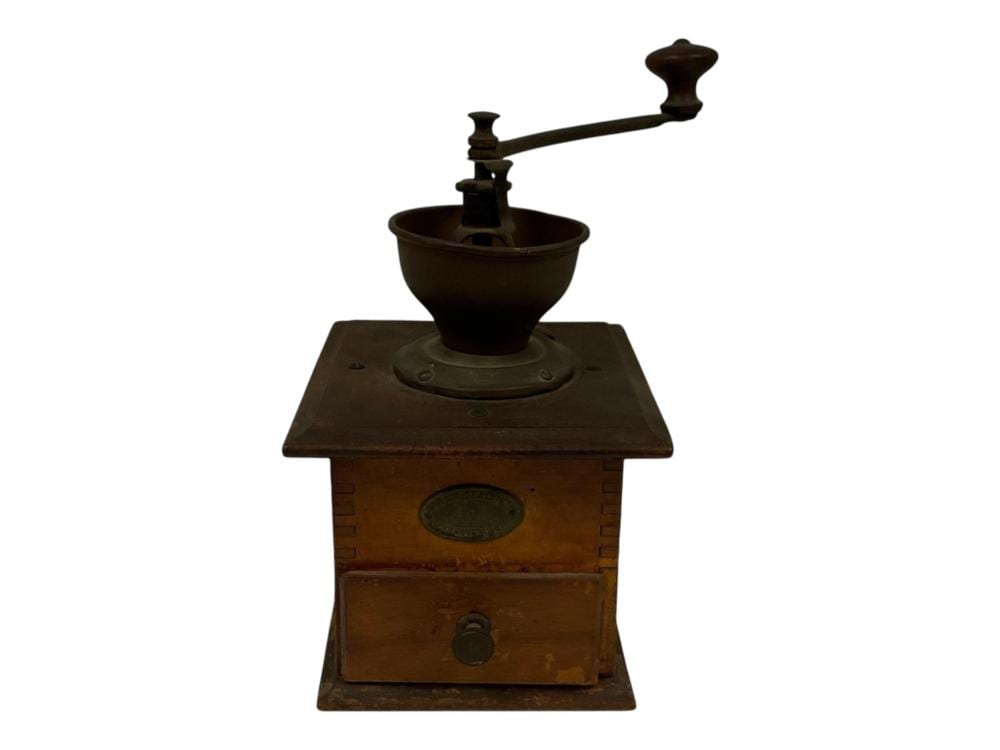
Unlocking the Worth a Collectors Guide to Antique Coffee Grinder Values: appraisal and value basics
Unlocking the Worth a Collectors Guide to Antique Coffee Grinder Values research should start with identification, condition, provenance, and item-specific market evidence. Use this guide to compare the signals that matter before paying for a formal appraisal or deciding whether to sell.
Antique coffee grinder appraisal checklist
Antique coffee grinders sit at the crossroads of kitchen history, industrial design, and folk art. Their values vary widely—from charming, inexpensive box mills found at estate sales to four-figure showpieces that anchor serious collections. Whether you inherited a family grinder or you’re hunting for a top-shelf cast iron wheel mill, understanding how to identify, document, and evaluate these pieces is the difference between a guess and a confident appraisal.
This guide breaks down types, key makers, condition cues, pricing benchmarks, and practical steps you can use to assess any grinder in hand.
Know Your Types and Terminology
Understanding form and construction quickly narrows age, origin, and value.
Box mills (tabletop): Typically wooden cube or rectangular bodies with a small pull-out drawer for grounds and a top crank. Common woods include beech, walnut, or oak; joinery may be dovetailed on earlier examples. Popular in Europe (Peugeot, Zassenhaus, Dienes/PeDe) and the U.S. (L.F.&C., Parker). Values range broadly based on maker, age, and décor.
Wall-mount grinders: Cast iron or steel mechanism mounted on a wood backboard, often with a glass hopper and a jar or drawer to catch grounds. American examples include Arcade “Crystal” and Landers, Frary & Clark “Universal”; British Spong models mount directly to the wall. Completeness (original glass and lids) strongly influences value.
Countertop cast iron mills (single- or double-wheel): Large showy grinders with one or two flywheels, often with original pinstriping and decals. Enterprise and Parker (U.S.) are the most recognized. These command the highest prices when original paint and decals remain.
Travel and specialty mills: Smaller “pocket” or foldable mills, military-issue mills, or salesman samples (miniature working examples carried by salesmen). Salesman samples are scarce and highly collectible.
Burrs and mechanisms: Most use conical or flat burrs. Original burr sharpness, alignment, and lack of wobble contribute both to function and value.
Makers and Markers That Matter
Brand strength, legible marks, and period features add legitimacy and value.
Peugeot (France): Among the earliest and most prolific (mid-19th century onward). Look for “Peugeot Frères” marks and the lion logo (styling changes help date pieces). Decorative models with porcelain or scenic panels, early dovetailed boxes, and ornate brass tops are desirable. Common box mills are the affordable end; rare forms sell higher.
Enterprise Mfg. Co. (Philadelphia, USA): Famous for single- and double-wheel cast iron mills. Original japanned black paint with red/gold pinstriping and decals stands out. Sizes vary (No. 1 through large shop mills); larger, well-preserved examples sell for the most.
Arcade Mfg. Co. (Freeport, Illinois, USA): Known for “Crystal” wall-mount grinders with glass hoppers/jars. Original embossed glass, correct lids, and intact mounts are key. Replaced jars are common and reduce value.
Landers, Frary & Clark (USA): “Universal” wall and box mills. Sturdy build, clear branding, and complete wall hardware matter. Values are moderate but rise with originality.
Spong & Co. (England): Cast iron wall-mount grinders, often with numbers (Spong No. 1–4). Clean, original paint and complete chutes add value. Popular with users and decorators.
Zassenhaus (Germany): High-quality 20th-century box mills, prized for precision. Earlier examples with wood boxes and steel burrs are collectible; condition and labeled marks push prices upward.
Dienes/PeDe (Germany): Peter Dienes produced many classic European box mills. Look for “PeDe” marks and quality beech construction. Attractive veneers and excellent function drive demand.
Others: Parker, Tre Spade (Italy), Mutzig-Framont (France), and Kenrick (UK). Local and hardware-store brands can still be collectible when earlier or unusually decorative.
Tips:
- Maker’s marks may appear on the crank, body plaque, drawer front, or underside of the lid.
- Patent dates and locations (e.g., Philadelphia; Freeport, Ill.) support originality.
- Fonts and logos evolved—compare styling to the likely production era when possible.
What Drives Value: The Appraiser’s Shortlist
Originality over restoration: Untouched paint, decals, and patina almost always out-value glossy repaints. Re-nickeling or aggressive refinishing usually lowers value unless the piece was near-derelict.
Completeness: Lids, hoppers, flywheel handles, glass jars, drawer pulls, and mounting boards—all original parts present and correct. “Married” examples (mismatched parts from different grinders) are worth less.
Condition and function: Smooth crank action, consistent grind, tight drawer fit, and minimal wobble in the shaft. Cracks in cast iron or split wood sides materially reduce value.
Rarity and size: Unusual designs, decorator motifs, earlier production, larger shop mills, and salesman samples command premiums.
Aesthetics: Crisp decals, pinstriping, japanning, fine veneers, and attractive proportions draw collectors. Bright, too-perfect, modern-looking finishes can be a red flag for over-restoration.
Provenance: Retail labels, original purchase receipts, or family history add interest and can support a higher ask.
Regional preference: U.S. collectors often pay premiums for Enterprise and Arcade; European buyers may favor Peugeot, Zassenhaus, and Dienes. Local demand affects price.
Price Benchmarks and Current Market Trends
Values fluctuate by region and venue, so compare recent sold examples of the same maker and model. This is how the main types compare in typical retail or well-exposed online settings:
Common European box mills (Peugeot, Dienes/PeDe, Zassenhaus):
- Clean, working, standard décor: the most common and least expensive
- Early dovetailed, ornate brass or porcelain top, decorative inlays: sell well above standard examples
American box mills (L.F.&C., Parker, hardware-store brands):
- Functional, presentable examples: generally modest
- Scarcer forms or excellent original finish: sell for more
Wall-mount grinders:
- Arcade “Crystal” with original embossed hopper and jar: among the most sought-after wall grinders
- With replacement jar/lid or mixed parts: well below all-original examples
- Spong (painted cast iron, complete): steady demand when complete
- L.F.&C. “Universal” wall mills (complete, good finish): priced on completeness and finish
Cast iron wheel mills:
- Single-wheel counter mills (original paint/decals): solid demand
- Double-wheel Enterprise/Parker, medium size, strong originality: above single-wheel mills
- Repainted examples or missing parts: often much less
Salesman samples and uncommon specialty mills:
- Genuine salesman samples: strong premiums, depending on maker and condition
- Military or travel mills: priced on rarity and completeness
Trends to watch:
- Originality premium: The market increasingly rewards untouched surfaces and original jar assemblies.
- Functional interest: Buyers who plan to grind coffee value sharp burrs and alignment, nudging up prices for fully operational pieces.
- Decorative demand: Larger wheel mills with intact striping remain statement pieces for design-forward buyers.
Note: Realized auction prices can be lower or higher depending on exposure, timing, and competition. Private sales and local markets may deviate from these patterns.
Detecting Restorations, Reproductions, and “Marriages”
Protect value by recognizing non-original elements.
Paint and decals:
- Original japanning shows age-appropriate wear at edges and high-contact points; pinstriping may be slightly faded, not uniformly bright.
- Reproduction decals are common, often too crisp or glossy; look for clear layering atop newer paint.
- Brush marks or modern spray patterns over casting flaws may indicate repainting.
Hardware and joins:
- Phillips-head screws (introduced late 1930s) on earlier mills suggest replacements.
- Mismatched screw slots/patina or shiny modern nuts against aged surfaces can indicate recent work.
- On wood boxes, dovetail joints and hand-cut nails point to earlier manufacture; machine-cut dovetails and uniform screws suggest later.
Glass and jars:
- Original Arcade/Crystal jars and hoppers show correct embossing, thread profiles, and color; generic canning jars are common replacements.
- Check lid fit and jar height relative to chute; misalignment can signal a marriage of parts.
Metal wear and casting:
- Overly soft casting details suggest modern reproductions; originals have crisp lettering and consistent weight.
- Look for stress cracks at mounting holes and wheel hubs; repaired breaks reduce value.
Burrs and crank:
- New-looking burrs in an otherwise old grinder may be replacements. Verify that the crank handle style matches known examples from the maker.
When in doubt, compare finish, wear patterns, and patina continuity across all components. Originality usually “tells the same story” across the whole piece.
Evaluating and Caring for Your Grinder
Appraise methodically:
- Identify maker and model family: Inspect crank, body, plaques, underside of lids, and jars for maker’s marks and patent info.
- Confirm completeness: Hopper or feed lid, grounds drawer or jar, crank knob, bushings, and mounting boards present? Any cracks or splits?
- Test function: Rotate the crank—feel for smoothness, steady resistance, and minimal wobble. Check grind adjustment (if present) and whether burrs meet and back off properly.
- Inspect surfaces: Note original paint, decals, pinstriping, japanning, or veneers. Record any touch-ups, overpaint, or corrosion.
- Assess burrs: Sharp edges and proper alignment yield a consistent grind. Excessive wear lowers function and value.
- Evaluate glass: Look for original embossing and proper lids. Chips, replacements, and clouding affect value.
Care and conservation:
- Cleaning: Dust with a soft brush and use a barely damp cloth on wood/metal. Avoid soaking wood or steel. For cast iron and japanning, use pH-neutral cleaners sparingly. Do not strip original paint or decals.
- Metal protection: Apply a microcrystalline wax on clean surfaces to seal and enhance; avoid silicone polishes.
- Wood care: A light application of museum-grade wax can revive dull wood without altering patina.
- Mechanism: A drop of light machine oil on the shaft bushings (not on burr faces) can smooth operation.
- Food safety: Historic paints may contain lead; burrs may have corrosion. If you intend to grind coffee for consumption, thoroughly evaluate and isolate food-contact surfaces or reserve the piece for display.
Buying, Selling, and Negotiating With Confidence
- Sourcing: Estate sales, local auctions, antique fairs, and specialized dealers offer opportunities to handle pieces in person. Online marketplaces broaden selection but increase risk of marriages and repaints—scrutinize photos and ask targeted questions.
- Photographs for selling: Provide front, side, rear, underside, internal mechanism, maker’s marks, close-ups of decals/paint, and assembled jar/hopper shots. Natural light shows true condition.
- Descriptions that sell: Include maker, approximate date range, measurements (height, wheel diameter), weight, confirmed originality, and functional notes.
- Packaging and shipping: Double-box, immobilize wheels and cranks, and wrap glass separately. Remove jars/lids and protect threads. Insure shipments for full value.
- Pricing strategy: Use the benchmarks above, adjust for originality and local demand, and consider recent sales of closely comparable pieces. A small premium is justifiable for complete, ready-to-display grinders.
Quick Appraisal Checklist
- Maker’s mark present and legible (crank, body, lid, jar)?
- Original paint/japanning, decals, and pinstriping intact (no obvious overpaint)?
- All parts present: hopper/lid, drawer/jar, crank knob, mounting board, hardware?
- No cracks in cast iron; wood free of splits and major repairs?
- Burrs sharp and aligned; crank turns smoothly without wobble?
- Glass hopper/jar original and correctly embossed; lids fit properly?
- Hardware era-appropriate (slotted vs Phillips) and patina consistent across parts?
- No reproduction decals or mismatched components (“marriages”)?
- Dimensions and proportions match known examples for the maker/model?
- Provenance or period labels retained?
FAQ
Q: Are antique coffee grinders safe to use for daily coffee? A: Many can function, but safety depends on condition and materials. Historic paints may contain lead, and corroded burrs can shed particles. If you intend to grind coffee for consumption, ensure clean, rust-free burrs and isolate or refinish food-contact areas with appropriate, reversible methods—or reserve the grinder for display.
Q: How can I estimate the age of my grinder? A: Combine maker’s marks and logos (which evolve), construction details (dovetail joinery, hand-cut nails), hardware type (slotted vs Phillips screws), materials (porcelain, glass, brass), and patent dates. Reference known brand timelines (e.g., Peugeot lion logo changes, Enterprise decal styles) to narrow the production period.
Q: Does restoration always reduce value? A: Not always. Sensitive, reversible conservation that stabilizes rust or cleans grime can preserve value. However, aggressive sanding, stripping, repainting, and re-decaling typically reduce value compared to original surfaces—especially on wheel mills and decorated box mills.
Q: My Arcade grinder is missing the original jar—what now? A: Replacement jars are common and restore function, but they reduce collector value. Keep any old lids and verify thread compatibility. Clearly note the replacement in descriptions; price accordingly.
Q: What makes salesman sample mills so valuable? A: They’re scarce, fully functional miniatures used by salesmen to demonstrate mechanisms. Their rarity, charm, and association with commercial history create strong demand, often pushing prices well above standard-size counterparts.
By learning to read maker marks, finishes, and functional cues—and by prioritizing originality and completeness—you’ll quickly separate everyday décor from investment-grade mills. Use the checklist, lean on the benchmarks, and trust a conservative, evidence-led approach to unlock the true worth of antique coffee grinders.


