Unlocking the Worth of Whispers From the Past the Ultimate Guide to Determining Your Antique Birdcage Value: appraisal and value basics
Unlocking the Worth of Whispers From the Past the Ultimate Guide to Determining Your Antique Birdcage Value research should start with identification, condition, provenance, and item-specific market evidence. Use this guide to compare the signals that matter before paying for a formal appraisal or deciding whether to sell.
Antique birdcage appraisal checklist
Antique birdcages sit at the intersection of folk craft, design history, and mechanical ingenuity. From delicate Chinese scholar’s bamboo cages to Parisian singing-bird automata and English Regency wirework domes, these pieces carry both decorative appeal and deep cultural stories. If you’re wondering how much your birdcage is worth—or how to spot a diamond among decorative reproductions—this guide will walk you through the critical steps experts use to identify, document, and evaluate antique birdcages.
What Makes It Antique? Types, Ages, and Forms
Age thresholds
- Antique: typically 100 years or older.
- Vintage: often 50–99 years old.
- Reproduction: a later recreation of an earlier style, often 20th/21st century.
Primary types you’ll encounter
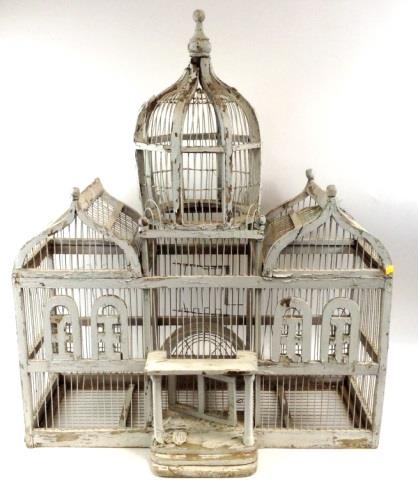
- European wirework and tole peinte: France and England produced elegant dome-top, pagoda, octagonal, and Gothic-revival wire cages from the early 19th century onward. Painted sheet-iron (tole) bases or domes with gilded stenciling appear frequently in French examples.
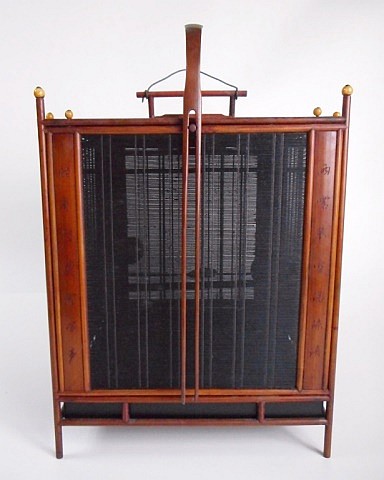
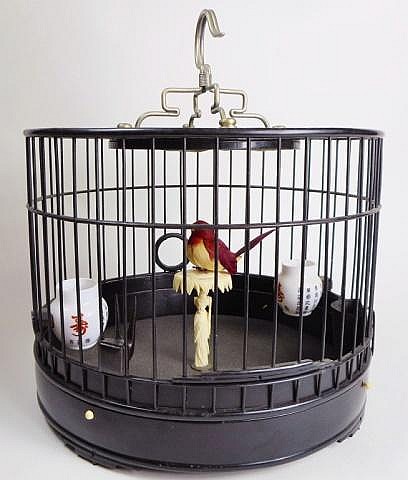
- Chinese scholar’s cages: Fine bamboo or hardwood-framed cages, usually small-to-medium sized, with exquisite accessories (porcelain or bone seed cups, carved gourd waterers, jade or horn toggles). Many date to the late Qing through Republic period.
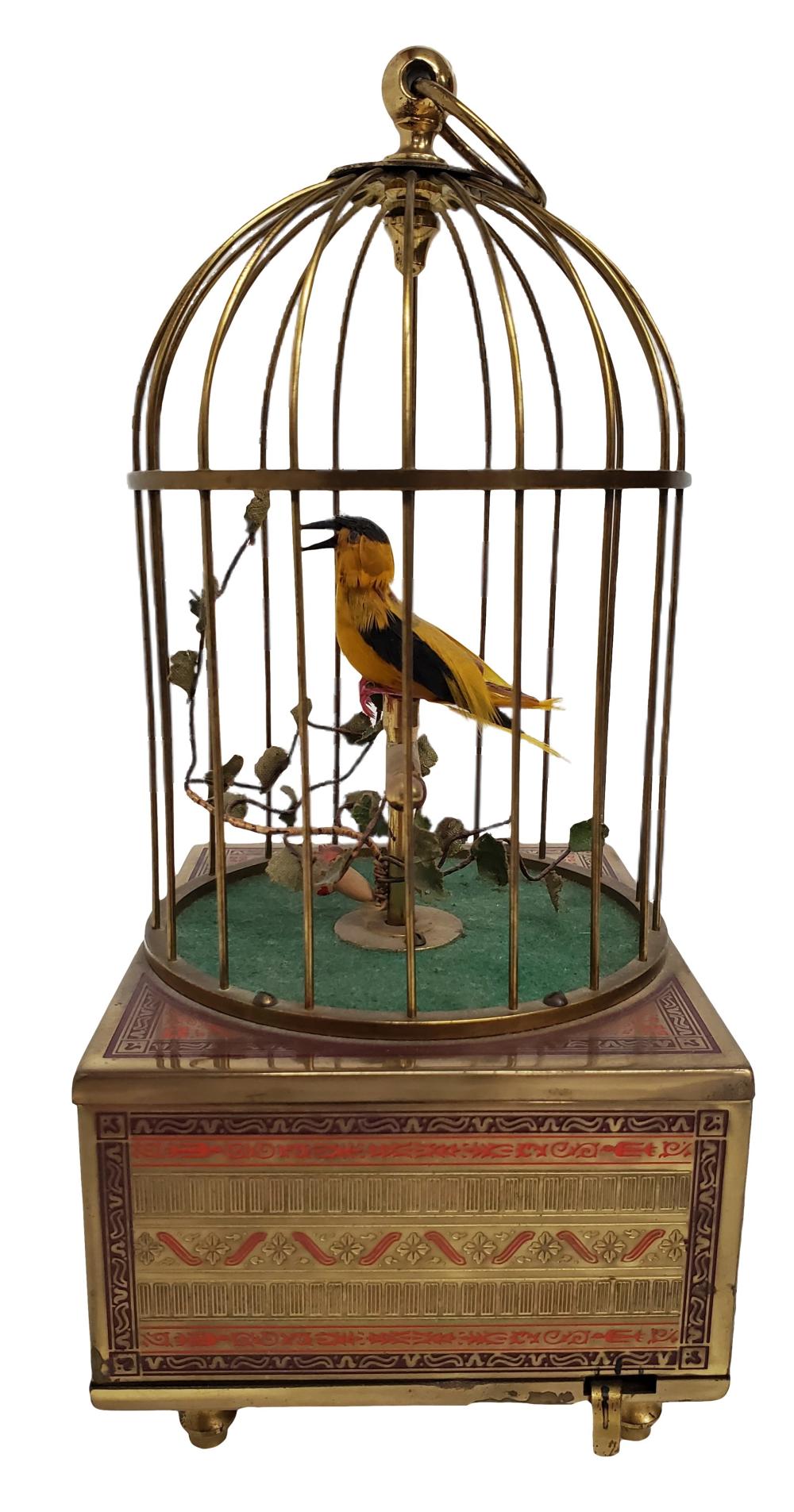
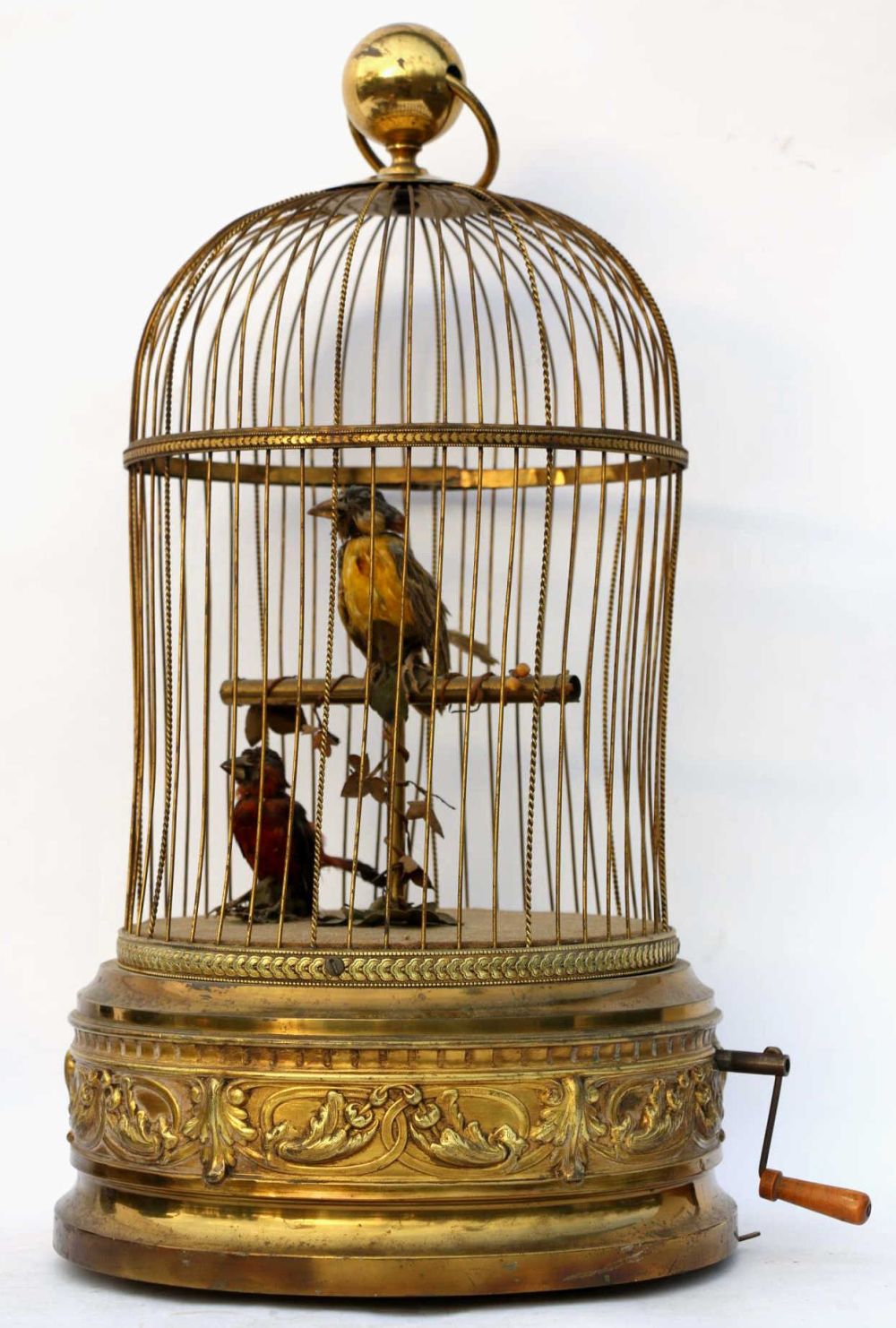
- Automata singing bird cages: Mechanical novelty cages, often from Paris or Germany, with clockwork mechanisms that animate a singing bird using bellows and whistles. These straddle the line between birdcage and automaton sculpture.
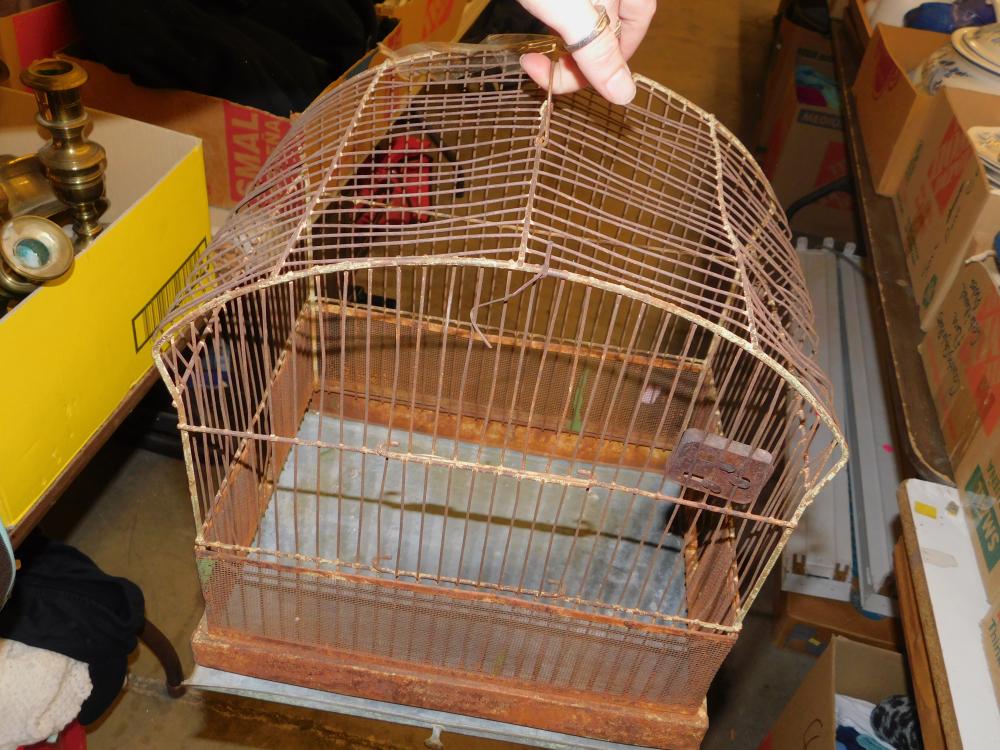
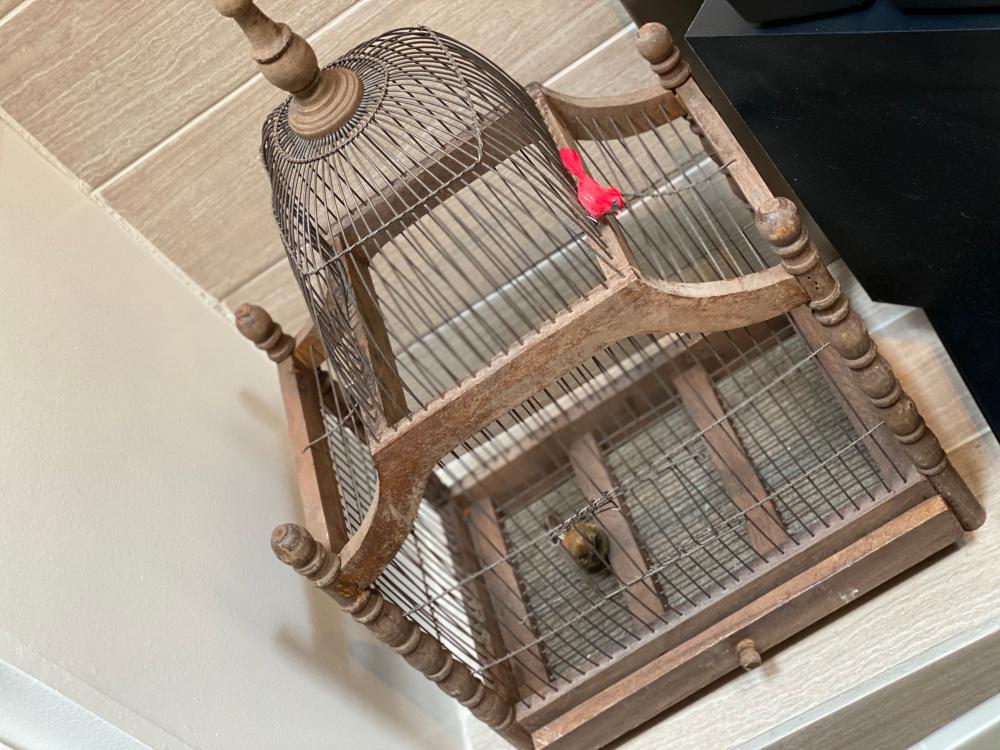
- Novelty and folk types: Black Forest carved novelty forms, travel/carriable cages, hexagonal and multi-tiered forms, and American turn-of-the-century brass-and-wire domestic cages, sometimes with cast-iron stands.
Functional vs. decorative intent
- Many antique cages were intended for live birds, but their finishes (lead-based paint, oxidized metal) are not safe for modern pet use.
- High-style and automata cages were largely ornamental from the start, prioritizing artistry over avian welfare.
Understanding category and age sets the stage for the next step: identifying the specific value drivers in materials, construction, and design.
Value Drivers: Materials, Construction, and Design Details
Materials
- Metals: Wrought iron and steel wire were common in working cages; French pieces often used sheet iron (tole) with painted and gilded decoration. Brass (solid, not plated) elevates quality; bronze elements appear on luxury European or Viennese novelty cages.
- Woods and bamboo: Tight, even bamboo slats, refined hardwood rims (e.g., hongmu or other rosewood family timbers), and delicate cane bindings indicate higher craftsmanship in Chinese cages.
- Finishes: Original tole peinte (painted sheet metal) with gilded stenciling, original japanning or lacquer, and intact shellac can significantly boost value. Cold-painted surfaces on Viennese bronzes are prized when original and unretouched.
Construction clues
- Joinery and solder: Hand-soldered joints, riveted connections, peened pins, and dovetailed or rabbetted wooden elements suggest pre-industrial or early industrial production. Spot-welded grids and uniform machine welds typically indicate later manufacture.
- Wirework: Even spacing, smooth hand-filed cut ends, and carefully curled hinges denote quality. Look for gentle variances that hint at handwork rather than machine-stamped uniformity.
- Hardware: Early slotted screws and hand-cut threads are older; Phillips screws and standardized machine screws skew later. Cast fittings with crisp edges beat soft, modern die-cast pieces.
Design and form
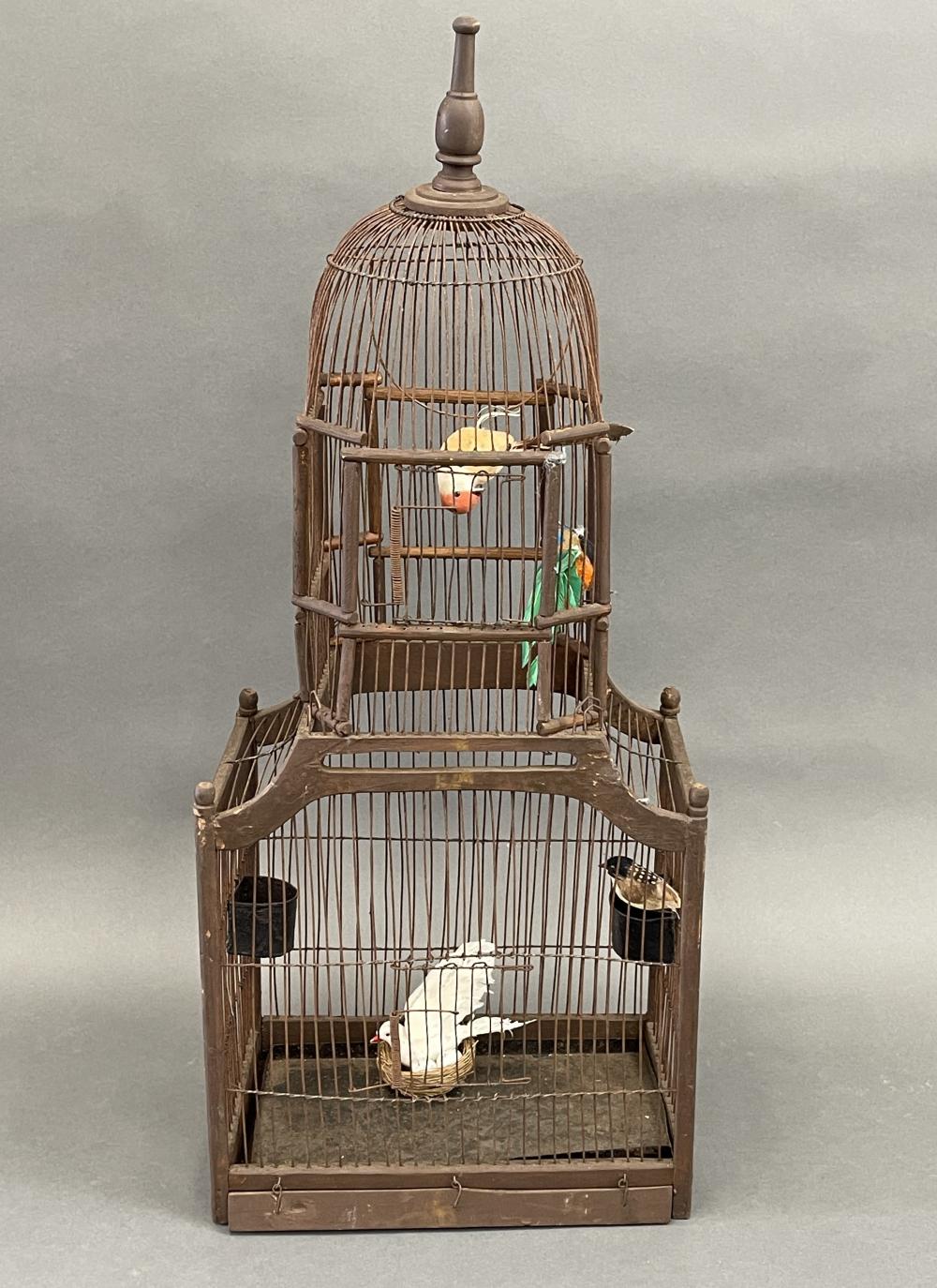
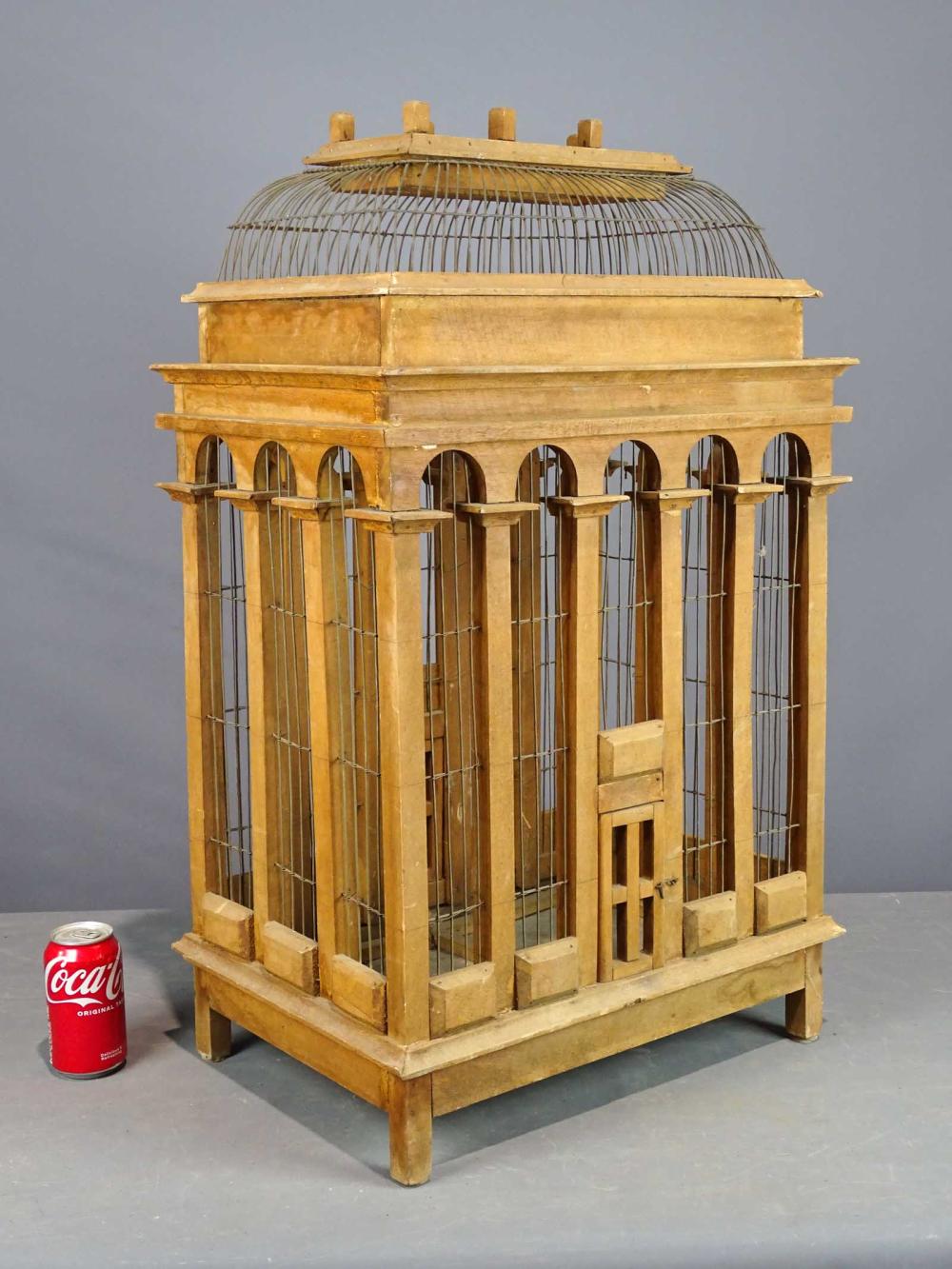
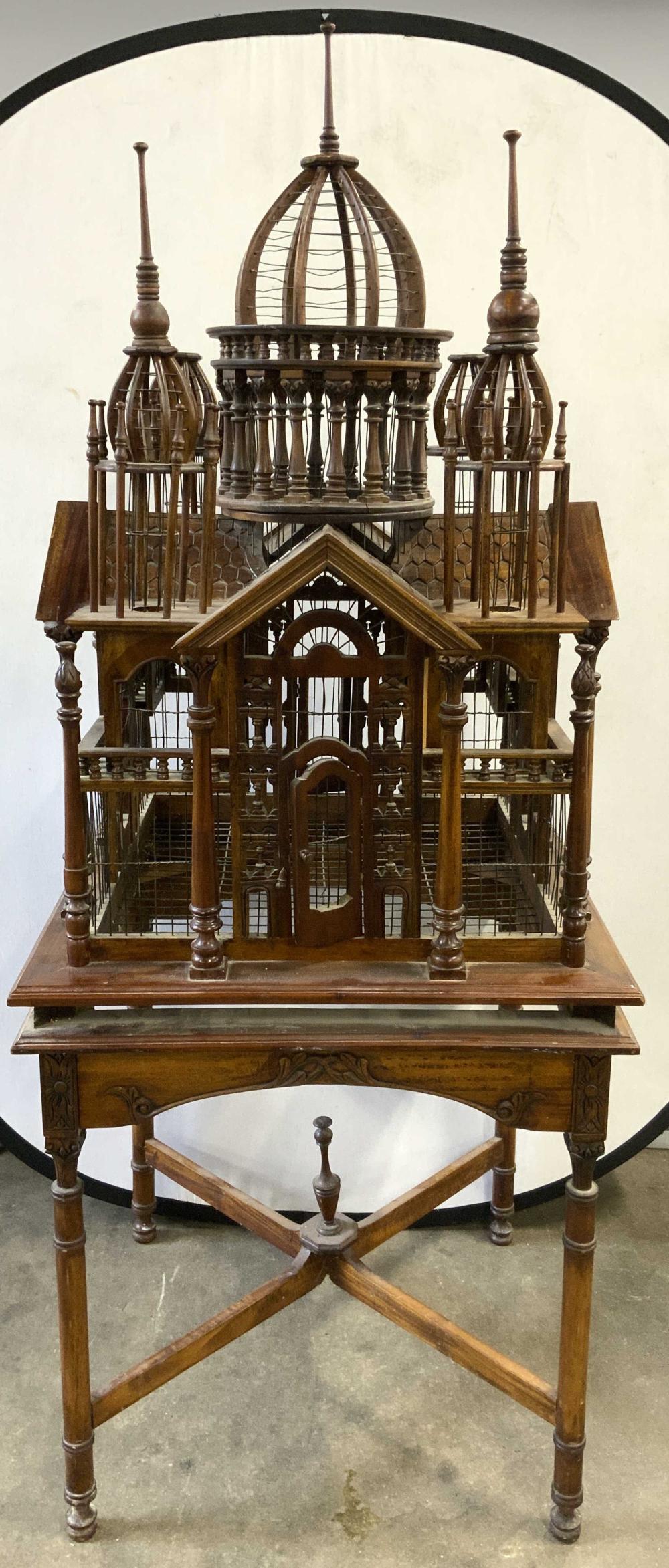
- Architectural references: Pagoda roofs, Gothic arches, and Regency domes were expensive to produce and often command higher values.
- Scale and proportion: Oversized or unusually complex forms (multi-tiered pagodas, cathedral-like cages) tend to be rarer and more valuable.
- Completeness: Original seed cups (porcelain, bone, or ivory), water droppers, perches, swings, pull-out trays, and matching stands materially affect value. Documented original stands can add as much as a condition-specific range to the price.
Surface and patina
- Honest age: Naturally oxidized metal, mellowed lacquer, and consistent wear patterns are desirable.
- Red flags: Bright, recent polishing on brass, patchy overpaint, or sprayed clear-coat varnish to “seal” rust usually reduce value.
Makers, Regions, and Period Styles to Know
France (19th–early 20th century)
- Tole and wirework cages: Paris and provincial workshops produced elegant tole bases with gilded decoration and wire domes.
- Automata ateliers: Blaise Bontems and Roullet & Decamps built renowned singing-bird mechanisms. Look for maker plaques, hand-engraved movement bridges, and quality bellows leather.
England (late Georgian to Victorian)
- Regency and Victorian wire domes: Often retail-labeled rather than maker-signed. Superior examples feature refined wire spacing, fitted domes, and architectural motifs.
Germany and Austria (late 19th–early 20th)
- Automata: Karl Griesbaum (Germany) produced singing bird mechanisms (more commonly in boxes but also in cages). Quality varies with period and condition.
- Viennese cold-painted bronze novelty cages: Small table pieces with polychrome finishes. Unrestored paint and crisp detail are key; many later repaints exist.
China (late Qing to Republic)
- Scholar’s bamboo cages: Collectible for artisanal bamboo work and accessories. Original porcelain cups (sometimes inscribed), carved gourd or horn waterers, and finely braided silk suspension cords can be as valuable as the cage itself.
- Hardwood-framed examples: Occasionally seen in rosewood family timbers; subtle joinery and minimal hardware reflect scholar taste.
United States (late 19th–mid 20th)
- Domestic brass-and-wire cages: The E. T. Hendryx Company (New Haven, CT) is a recognizable maker; earlier pieces with higher brass content and good form are more desirable. Integral or companion cast-iron stands add value.
When evaluating attribution, weigh the whole: documented materials and construction, coherent design, plausible maker or region, and period-consistent wear.
Condition, Originality, and Completeness: What Appraisers Look For
Structural integrity
- Check for broken or missing wires, warped frames, loose solder joints, and distorted domes. Sympathy in old repairs (hand-soldered, period wire) is more acceptable than modern patch jobs.
Surface condition
- Paint and lacquer: Stable, original finishes with minor losses are preferred over “restored” glossy repaints. On tole and cold-painted bronze, original decoration is paramount.
- Metal: Light, even oxidation is normal; deep pitting, active rust, or plated repairs lower value.
Accessories and hardware
- Presence of original seed cups, swings, perches, trays, door latches, finials, and especially stands can swing value dramatically.
- Automata: Working order is crucial. Bellows, springs, governor, whistle, and birdsong sequence should function. Releathered bellows and re-feathered birds are common; quality and documentation of restoration matter.
Over-restoration risk
- Stripping and refinishing to “like new” often halves value on collectible examples. Favor gentle, reversible conservation.
Safety note
- Antique finishes and metals are typically unsafe for live birds due to lead paint and corrosion. Treat antique cages as decorative or collectible objects.
Price Ranges and Market Signals
Indicative, not absolute—values vary by region, timing, and provenance:
- Common decorative 20th-century wire/brass cages (unattributed): a value that must be established from current, topic-matched sales
- Better English/French 19th-century wire or tole-and-wire domes: a value that must be established from current, topic-matched sales
- Chinese scholar’s bamboo cages with quality accessories: a value that must be established from current, topic-matched sales+ (exceptional or imperial-quality accessories can exceed this)
- Black Forest carved novelty cages: a value that must be established from current, topic-matched sales
- Automata singing bird cages (working, decent example):
- French Bontems: roughly a value that must be established from current, topic-matched sales depending on size, movement quality, and originality
- German Griesbaum or comparable: roughly a value that must be established from current, topic-matched sales
- Large or exceptional automata, luxury bronze or architectural examples: a value that must be established from current, topic-matched sales+
Market signals that move the needle:
- Documentation: maker’s plaque, retailer label, or well-documented provenance.
- Original, untouched surfaces—especially tole peinte and cold-painted bronze.
- Complete accessory suites and matching stands.
- Scarcity in form (cathedral, multi-tier pagoda, architectural showpieces).
- Verified working automata movements with minimal invasive restoration.
Research, Attribution review, and Selling Strategy
Gather evidence
- Measurements and weight: height (with and without finial), diameter or width, base footprint, and stand height; market comparisons are scale-sensitive.
- Macro photos: joints, solder points, underside of base/tray, fasteners, interior corners, movement plates (automata), and accessory details.
- Materials checks: magnet test (steel vs brass/bronze), UV light for overpaint on tole or lacquer, visual inspection of screw types and tool marks.
Date and attribute
- Labels and marks: retailer plaques (often on bases or stands), maker stamps on movement parts (automata), painted or inked shop marks inside trays.
- Construction context: hand-solder and slotted screws favor 19th-century; uniform spot welding and Phillips screws indicate later production.
- Style alignment: ensure the architecture, finish, and hardware are coherent for the purported period and region.
Compare market evidence
- Consult reputable auction and dealer sale results for similar forms, sizes, makers, and conditions. Focus on sold prices, not asking prices.
- Note restoration disclosures; prices for untouched examples set a higher benchmark.
Restoration decisions
- Prioritize stabilization over beautification: arrest active rust, secure loose joints, and clean gently.
- For tole or lacquer, dry cleaning with soft brushes and microfiber is safer than wet methods. Avoid metal polishes that cut patina.
- Automata: engage a specialist; amateur tinkering can be costly.
Selling channels
- Specialist auctions: best for automata, high-style French/English wirework, important Chinese scholar’s cages.
- Quality general auctions and vetted dealers: suitable for mid-range antiques with good design and originality.
- Direct-to-design market: interior design consignment and curated online marketplaces can realize strong decorative value for standout forms.
Quick Checklist: Determine Your Antique Birdcage Value
- Identify the type: European wire/tole, Chinese scholar’s bamboo, automata, novelty/folk, or American brass-and-wire.
- Confirm age: look for handwork, period fasteners, and finish consistency; beware “antiqued” reproductions.
- Examine materials: solid brass/bronze vs plated steel; quality bamboo and hardwoods; original tole or lacquer.
- Inspect construction: hand-soldered joints, rivets, even wire spacing, well-fitted doors and domes.
- Assess condition: structural stability, absence of aggressive overpaint or polishing, controlled oxidation.
- Check completeness: original seed cups, perches, trays, finials, swings, matching stand.
- Look for marks: maker plaques, retailer labels, movement signatures (Bontems, Roullet & Decamps, Griesbaum), inscriptions on accessories.
- Document everything: measurements, detailed photos, and any provenance.
- Compare to sold examples: similar form, maker, size, condition—note restoration status.
- Decide venue: specialist auction or dealer for high-end pieces; curated marketplaces for decorative examples.
FAQ
Q: How can I tell if my cage is a reproduction? A: Look for modern fasteners (Phillips screws), uniform spot-welded grids, artificially distressed paint, and incongruent hardware. Reproductions often have consistent, factory-perfect symmetry without the small irregularities of handwork.
Q: Are automata singing bird cages considered “birdcages” for valuation? A: Yes—market categories overlap. These are valued primarily as automata. Maker attribution, movement quality, and originality (bird, feathers, bellows) drive price more than cage utility.
Q: Should I polish brass or repaint to improve value? A: Generally no. Original surface is king. Aggressive polishing removes age and lacquer, and repainting tole or cold-painted surfaces can halve value. Opt for gentle, reversible conservation and disclose any work.
Q: Can antique cages be used for live birds today? A: It’s not recommended. Lead-based finishes, corrosion, and fragile construction pose health and safety risks. Treat quality cages as decorative or collectible objects.
Q: What single factor most increases value? A: Originality with documentation. A complete, untouched example with a maker’s plaque or strong provenance typically outperforms restored or unmarked counterparts—even when the latter looks “cleaner.”
With careful observation, disciplined documentation, and judicious conservation, you can confidently place your birdcage within its proper market tier—and unlock the worth of its whispers from the past.