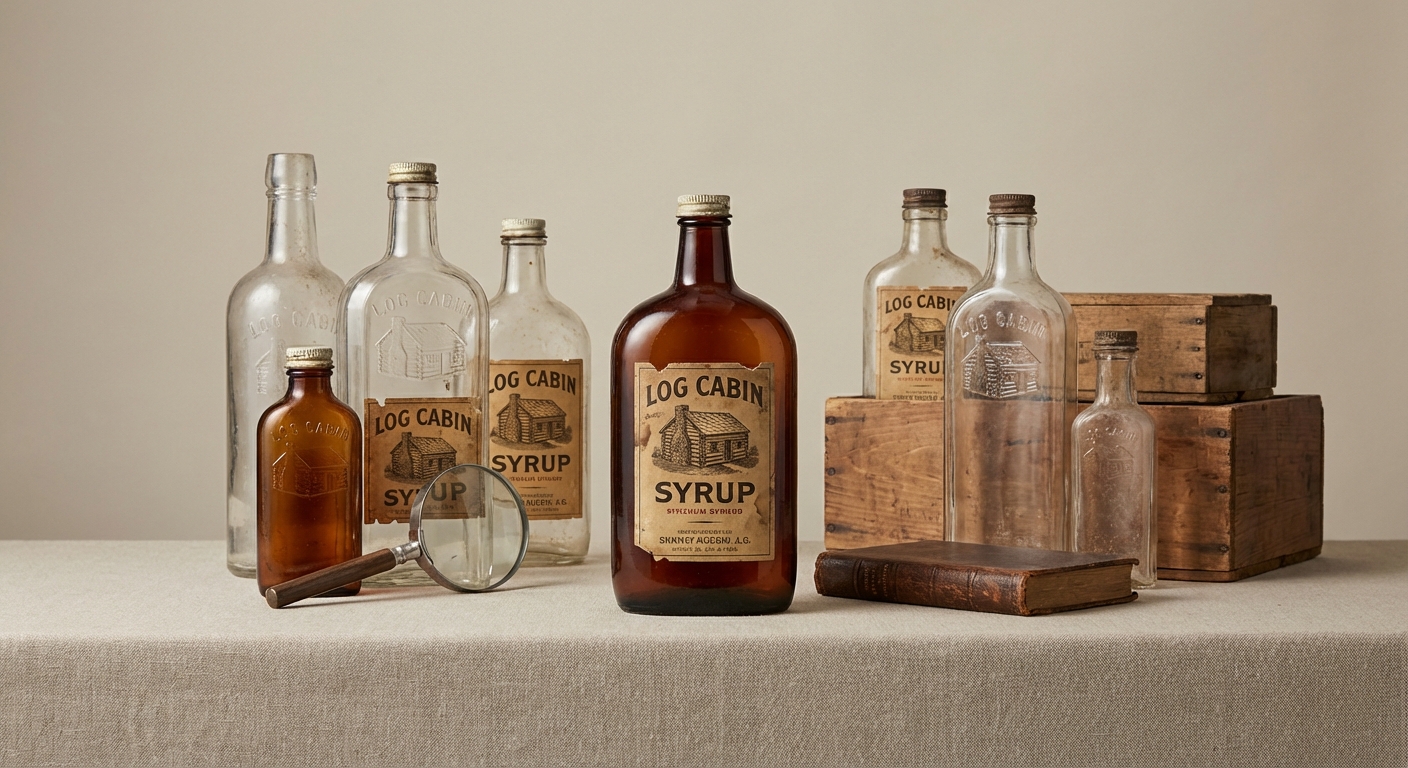
Unlocking the Treasure Discover the Value of Your Antique Log Cabin Syrup Bottles: appraisal and value basics
Unlocking the Treasure Discover the Value of Your Antique Log Cabin Syrup Bottles research should start with identification, condition, provenance, and item-specific market evidence. Use this guide to compare the signals that matter before paying for a formal appraisal or deciding whether to sell.
Antique Log Cabin syrup bottles value checklist
Antique Log Cabin syrup bottles sit at the crossroads of Americana, brand history, and early 20th-century glassmaking. While the brand is best known for its charming cabin-shaped tins, glass bottles played a major role in the company’s distribution—especially from the 1910s through the 1970s. If you’ve uncovered a bottle in a kitchen cupboard or flea market bin, this guide will help you identify what you have, estimate its age, and understand what drives collector value today.
A Brief Brand And Packaging Timeline
Knowing the brand’s history makes dating and valuing a bottle far easier:
- 1887: Patrick J. Towle introduces Towle’s Log Cabin Syrup in Minnesota, named in tribute to Abraham Lincoln’s frontier roots. Early packaging emphasized rustic imagery and the “Towle’s” name.
- Early 1900s–1920s: The brand uses both lithographed tin “cabin” containers and glass bottles. Glass typically carried paper labels; some early bottles feature embossing with “Log Cabin” or “Towle’s.”
- 1927: The Postum Company acquires the brand; Postum later becomes General Foods (1929). Branding gradually shifts from “Towle’s Log Cabin” to “Log Cabin” as a stand-alone identity.
- 1930s–1950s: Widespread use of clear glass bottles with paper labels. Makers include large American glasshouses (e.g., Owens-Illinois, Hazel-Atlas, Anchor Hocking, Brockway).
- 1950s–1970s: Design refreshes, screw-cap closures, modernized labels, and standardized sizes. The iconic tin cabins continue in parallel, often outshining bottles in collector interest.
- Late 20th century onward: Plastics and cartons gradually displace glass in grocery channels, pushing most bottle production into the past.
For collectors, the most sought-after bottles usually fall into two buckets: early “Towle’s” era pieces with embossing and scarce sizes, and mid-century examples with crisp original labels and caps.
How To Identify Genuine Log Cabin Syrup Bottles
Look for a combination of brand elements, bottle shape, and maker’s marks:
- Brand name on label: Most bottles carried paper labels rather than heavy embossing. Early labels read “Towle’s Log Cabin Syrup”; later labels read simply “Log Cabin Syrup,” often with frontier imagery or a cabin vignette.
- Embossing: Less common than on soda and medicine bottles, but examples exist. Embossed “LOG CABIN,” “TOWLE’S,” or capacity marks can appear on the shoulder or base, especially on earlier bottles.
- Form and size: Expect household-friendly forms—cylindrical or rectangular bottles with shoulders, typically in pints, quarts, or similar fluid ounces (12, 24, 32 oz). Figural glass is rarer for Log Cabin than tins, but does occur in some promotional runs.
- Closures: Metal screw caps dominate from the 1930s onward. Earlier closures can include metal caps with liners; cork is uncommon for syrup bottles compared to medicines.
- Glass color: Clear glass is most typical. Amber examples exist and can be more desirable, especially if clearly branded. Avoid confusing these with other amber syrup brands (e.g., Mrs. Butterworth’s), which have distinct figural forms.
- Maker’s marks: Look on the base for glasshouse logos and codes. Common makers include:
- Owens-Illinois: O-I mark, seen as a diamond-and-OI on earlier mid-century bottles and an oval OI on later examples. Often accompanied by a plant code and a 1–2 digit year code.
- Hazel-Atlas: An H over A monogram; widely used through the mid-20th century.
- Anchor Hocking: Anchor logo.
- Brockway: A “B” in a circle or other Brockway variants.
Be cautious: generic kitchen bottles have sometimes been relabeled by dealers to resemble Log Cabin. Scrutinize label printing quality, paper aging, and whether the label aligns with the era implied by the bottle and maker’s mark.
Dating Your Bottle: Reading The Clues
Dating relies on overlapping evidence—branding, label style, maker’s mark, and capacity or safety statements.
- Branding transitions:
- “Towle’s Log Cabin” strongly indicates a pre-1930s origin, though labels lingered regionally.
- “Log Cabin Syrup” with General Foods corporate mentions suggests mid-century.
- Maker’s marks and codes:
- Owens-Illinois: Early marks feature the O and I combined with a diamond (commonly 1930s–1950s). Later, the O and I appear within an oval (mid-century onward). A small two-digit number often corresponds to the year code when paired with a plant code—context matters to avoid misreads.
- Hazel-Atlas H-over-A points to early–mid 20th century production; the brand was active through the early 1960s.
- Anchor Hocking’s anchor symbol often indicates mid-century.
- Brockway’s “B” variants typically fall mid-century as well.
- Labels and legalese: Later labels may mention ingredients like corn syrup blends and fortification statements, as well as modernized nutrition-style info in late mid-century. Earlier labels lean on heritage imagery and simpler ingredient lines.
- Capacity statements: Fluid ounce notation became more standardized through the 20th century. Odd capacities or dual ounce/pint statements can hint at earlier packaging norms.
Cross-check at least two indicators. For example: an O-I diamond mark with a plausible mid-century year code plus a General Foods-labeled paper front likely puts your bottle in the 1940s–1950s.
What Drives Value: The 7 Key Factors
- Age and rarity: Earlier “Towle’s” embossed bottles and unusual sizes are scarcer and bring stronger prices.
- Branding clarity: Bottles with original, legible paper labels, especially with matching rear panels and shoulder seals, outperform unlabeled examples.
- Condition: Clean, haze-free glass; minimal scratches; strong label color; original cap; and no chips or cracks are crucial. Label condition is often the single biggest value swing.
- Color and form: Amber or uncommon glass colors can attract premiums when unquestionably original to Log Cabin. Figural and promotional forms can also draw attention.
- Historical crossover: Transitional branding (e.g., Postum to General Foods) or special promotions can be collectible niches.
- Provenance: Bottles traced to store displays, advertising lots, or period photographs can gain credibility and interest.
- Regional availability and demand: Prices vary by region and by venue (online auctions vs. local antiques fairs).
Realistic Price Guide: What Your Bottle Might Be Worth
Values fluctuate by market and season. This is how bottles in very good to excellent condition compare in retail or well-exposed online sales. Expect less for heavy wear, missing labels, or common variants, and more for top-tier examples.
- Common mid-century clear glass, 24–32 oz, paper label present, original cap: the most common and least expensive
- Same form with no label or heavily worn label: below labeled examples
- Early “Towle’s” embossed bottles (clear or amber), scarce sizes, clean glass: sought after, with scarce sizes bringing more
- Amber Log Cabin bottles clearly branded and complete: priced on branding and completeness
- Promotional or figural glass tied to Log Cabin brand (scarcer runs): priced on scarcity and condition
- Lot groupings (multiple common bottles with decent labels): priced by count and condition
Cabin-shaped tins typically outpace bottles in value due to their iconic form and lithography. If you have both a bottle and a matching-era tin, the pair can present well and sell stronger together.
Spotting Reproductions And Problem Pieces
- Added labels: The most common “fake” is a period-appropriate-looking label glued onto a generic bottle. Check for misfit dimensions, new paper on aged glass, or modern printing dots when loupe-inspected.
- Over-cleaning: Caustic cleaners can bleach paper labels and dull color. A too-bright label on a scuffed bottle is a red flag.
- Misidentified brands: Do not confuse other syrup and pancake brands’ bottles with Log Cabin. Shape alone is not proof; confirm branding on label or embossing.
- Marriage of parts: An original Log Cabin cap on a non-Log Cabin bottle (or vice versa) crops up occasionally. Thread fit and cap liner impressions can reveal mismatches.
Care, Cleaning, And Display
- Dry clean first: Use a soft brush to remove dust from labels; avoid moisture until you’re sure the label is stable.
- Gentle glass cleaning: For interior haze, try warm water with mild dish soap and uncooked rice as a tumbler to agitate—avoid harsh abrasives. Rinse and air-dry fully.
- Label preservation: If a label is lifting, leave it alone or consult a paper conservator. Tape and glue reduce value.
- Cap protection: If the bottle retains its original cap, avoid overtightening and keep it dry to prevent rust or liner deterioration.
- Display: Keep out of direct sunlight to prevent label fading. Use plate stands or acrylic saddles so bottles don’t rest on fragile label edges. Maintain steady, moderate humidity.
The Appraiser’s Edge: Evidence That Strengthens Your Case
When presenting a bottle for appraisal or sale, gather and document:
- Clear photos of front, back, cap, and base marks
- Close-ups of any embossing and maker’s logos
- Measurements and capacity (height, width, fluid ounces)
- A brief note on provenance (where found, any family history)
- Condition notes: chips, cracks, cloudiness, label losses, cap rust
Organized documentation reduces uncertainty and can nudge values upward by giving buyers or appraisers confidence.
Concise Practical Checklist
- Confirm brand: Original Log Cabin label or authentic embossing present
- Cross-check era: Label wording, logo style, and corporate name align
- Read the base: Identify maker’s mark and any date or plant codes
- Verify form and size: Common household sizes; unusual forms warrant closer scrutiny
- Assess glass: No cracks; minimal scratches; interior haze manageable
- Evaluate label: Original, legible, well-positioned, with period wear
- Check closure: Original cap present, period-correct finish, no forced fit
- Beware add-ons: New-looking label or cap on aged glass is a caution sign
- Photograph thoroughly: Base, embossing, cap, and label details
- Price realistically: Use the ranges above; adjust for local demand and condition
Short FAQ
Q: Are Log Cabin tins worth more than bottles? A: Often, yes. Cabin-shaped tins are highly recognizable and display well, typically bringing stronger prices than common glass bottles. Exceptional bottles, especially early embossed examples with pristine labels, can still command solid premiums.
Q: How do I date an Owens-Illinois bottle? A: Look for the O-I logo (diamond or oval style) on the base, often paired with a plant code and a two-digit number that typically indicates the year. Correlate that code with label style to avoid misinterpreting numbers that represent molds or lines.
Q: Did Log Cabin make amber glass bottles? A: Yes, though clear glass is more common. Authentic amber bottles with legitimate Log Cabin branding can be more desirable; verify that the label and any embossing match known brand elements and period glass forms.
Q: What reduces value the most? A: Missing or damaged labels, chips or cracks, heavy haze that won’t clean, and mismatched caps. Added reproduction labels also undermine confidence and price.
Q: Is a bottle without a label still collectible? A: It can be, but values are modest unless there’s strong embossing, unusual form, or a scarce color. Most unlabeled mid-century examples fall into the low-dollar range.
With a sharp eye for branding details, maker’s marks, and condition, you can accurately place your Log Cabin syrup bottle in its historical context and set a realistic value. Whether you’re building a focused syrup collection or simply curating a slice of kitchen nostalgia, the right information turns a humble pantry survivor into a well-documented piece of American advertising history.