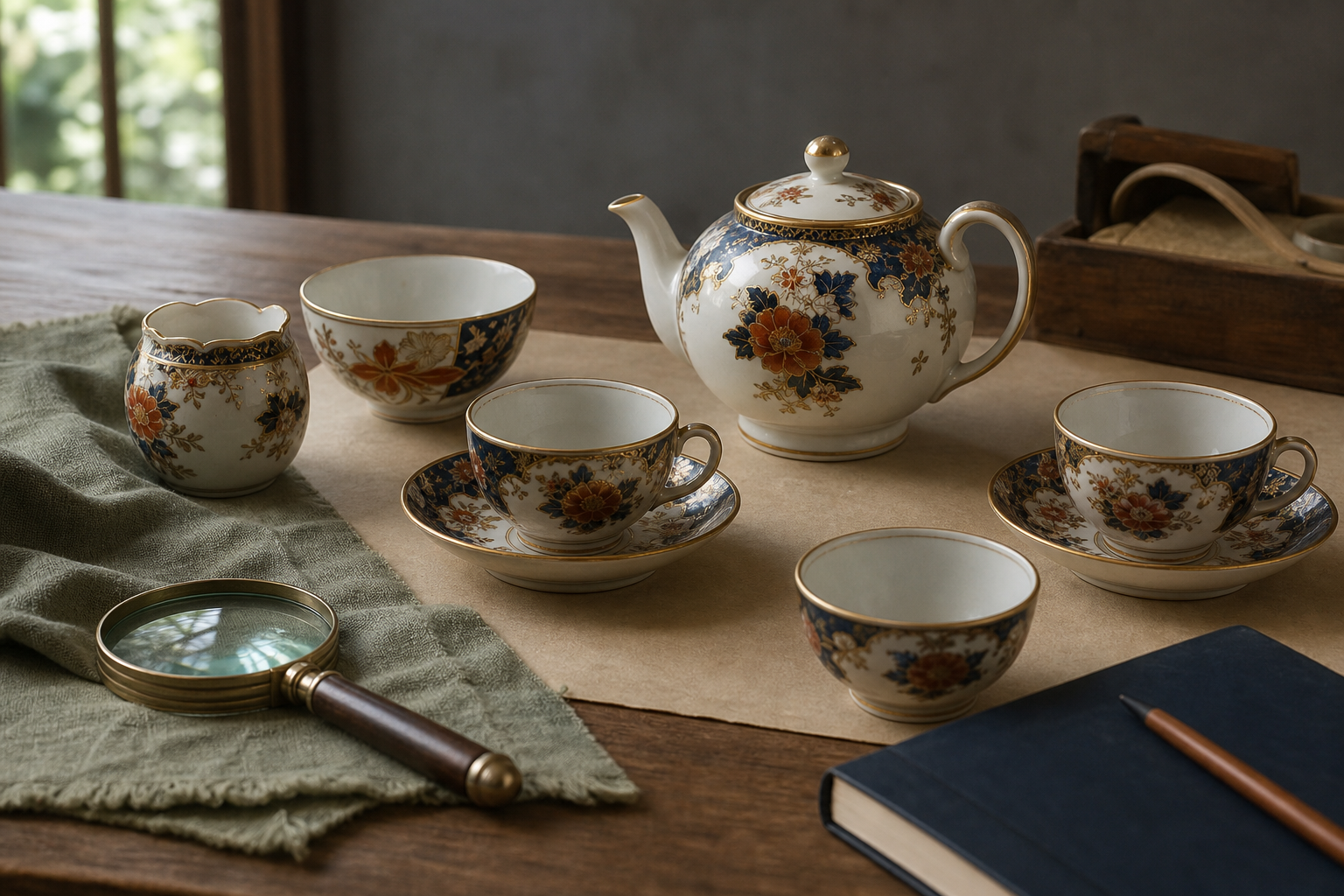
Unlocking the Secrets of Antique Japanese Tea Set Value a Collectors Guide: appraisal and value basics
Unlocking the Secrets of Antique Japanese Tea Set Value a Collectors Guide research should start with identification, condition, provenance, and item-specific market evidence. Use this guide to compare the signals that matter before paying for a formal appraisal or deciding whether to sell.
Antique Japanese tea set value checklist
Antique Japanese tea wares fascinate collectors because they sit at the crossroads of ceremony, craftsmanship, and global trade. Yet identifying what you have—and what it’s worth—can feel daunting. This guide walks you through the core elements that determine value: what constitutes a “tea set,” the styles and materials you’ll encounter, how to read marks and date your pieces, the condition and completeness factors that move price, and how dealers actually price comparable sets on today’s market.
What Collectors Mean by “Japanese Tea Set”
“Japanese tea set” covers several distinct traditions. Knowing which category your pieces fall into is the first step in valuation.
- Chanoyu (tea ceremony) wares: Traditional tea ceremony revolves around a single chawan (tea bowl), chawan stand, tea caddy (natsume), water jar (mizusashi), etc. These are not “sets” in the Western sense and are appraised individually.
- Sencha/Chinese-style tea: From late Edo into Meiji, Japanese potters made small side-handled teapots (kyusu), cups (chawan or sencha cups), a cooling pitcher (yuzamashi), and sometimes a matching tray. A “set” might include a kyusu plus 5–10 cups. Materials are often stoneware or porcelain; Banko and Tokoname are common.
- Western-style tea service: After the 1860s, kilns produced complete services for export—teapot, lidded sugar, creamer, waste bowl, 6 cups and saucers, sometimes plates and a tray. These can be porcelain (Arita/Imari, Kutani, eggshell), earthenware (Satsuma), or mixed media (lacquered wood for trays).
- Tetsubin and iron teapots: Cast-iron kettles (tetsubin) are used to heat water and can be highly collectible, especially signed Nambu or Kyoto founders. They are not “sets” but often appear alongside them in collections.
When sellers and auctioneers say “antique Japanese tea set,” they usually mean either a sencha ensemble or a Western-style porcelain service from the Meiji through early Showa eras (circa 1868–1940).
Styles and Materials That Drive Value
Certain regional styles and materials carry strong premiums. Here’s how to recognize the major types and what collectors seek.
- Satsuma (earthenware with crackle glaze): Classic Meiji Satsuma has a warm ivory body with fine crackle, dense gilt patterns, and hand-painted figural or floral scenes. Look for crisp moriage (raised enamel), detailed faces, and harmonious composition. Earlier and better pieces often show the Shimazu clan crest (a cross in a circle) in the mark cartouche. Beware late tourist wares (1920s–1930s) with garish over-decoration, muddy gilding, and “SATSUMA” stamped in English—typically lower value.
- Imari/Arita (porcelain): Imari combines underglaze cobalt blue with iron red and gilding (kinrande). Arita kilns produced both sometsuke (blue-and-white) and colorful overglaze enamel wares. Export services with tight brushwork, balanced patterning, and good gilding wear well at auction. Some cups feature “geisha lithophane” portraits visible when held to light—typically early 20th-century export, modest to mid-level value if intact.
- Kutani (porcelain): Think bold enamels—greens, reds, yellows, and purples. Ko-Kutani (17th century) is rare; most sets are 19th-century revival (Saiko Kutani) or Meiji/Taisho export. Fine Kutani shows excellent enamel density, tight linework, and signed artist or studio marks in red. Kaga region workshops produced elaborate figural and landscape scenes with copious gilding.
- Banko-yaki (stoneware): Yokkaichi’s Banko kilns are famous for purple-brown stoneware kyusu teapots with integrated clay strainers and incised or molded decoration. Signed kyusu with original cups and a tomobako (storage box) can outperform common export porcelains.
- Eggshell porcelain (極薄/eggshell): Extremely thin, light cups that ring clearly when tapped. Popular 1890–1930s, often hand-painted with scenic or figural motifs; sometimes translucent bases reveal lithophanes. Rarely top-tier, but complete services in near-mint condition find strong buyers.
- Lacquer and mixed media: Wooden or lacquered trays, or caddies with maki-e decoration, when original to a set, add value—especially if signed and in fine condition.
Within every category, execution quality matters: proportion, fluid brushwork, refined gilding, and cohesive design arrangements are the difference between common and special.
Reading Marks and Dating Your Set
Marks provide dating clues, but context and quality are equally important. Common indicators:
Country-of-origin marks (export laws)
- “Nippon” or “Hand Painted Nippon”: 1891–1921 (primarily for the U.S. market after the McKinley Tariff).
- “Japan” or “Made in Japan”: roughly 1921–1941.
- “Made in Occupied Japan” (MIOJ): circa 1947–1952.
- Pieces shipped to the UK/Europe sometimes carry different import marks; however, Japanese factory and artist marks are the more useful clues.
Kiln and style marks
- Satsuma: Look for the Shimazu crest above a studio or artist name in gold/red. Earlier high-grade works usually lack English words; later tourist pieces may have “SATSUMA” in English.
- Kutani: Red enamel marks with characters 九谷 (Kutani) followed by studio or artist. Names like Shoza appear on better Meiji creations.
- Arita/Imari: “Fuku” (福), “Kaku,” or other auspicious marks in underglaze blue or overglaze red/gold. Many are generic; assess quality alongside the mark.
- Banko: Characters 萬古 (Banko), incised or stamped on the base of kyusu and cups.
Painted vs printed marks: Hand-painted marks with variation and brush tapering often indicate better workshop pieces; transfer-printed or stamped marks are common on mass-produced wares.
Stylistic and fabrication clues
- Foot ring and base: Old Arita often shows well-finished foot rings with minor kiln grit. Satsuma bases show crackle; heavier, chalky bodies suggest later tourist ware.
- Glaze and paste: A soft, warm glaze tone and fine crackle on Satsuma; crisp, glassy glaze on Arita/Imari. Excessive orange-peel or cloudy glazes can imply lower grade or later production.
- Wear patterns: Genuine age shows even wear to gilding on rim edges, handles, and finials; sharp edges with no rub on a “claimed” Meiji piece is a red flag.
Sets vs singles: Western-style services often have matching marks; mismatched components lower value unless an old, plausible marriage is documented.
Dating is most reliable by triangulating: mark type + style + quality + wear. Treat marks as one clue, not the verdict.
How Dealers Price: Condition, Completeness, and Comparables
Condition is king. Completeness is queen. Craftsmanship and desirability shape the court. Dealers synthesize these into price.
Condition grading (typical market impact)
- Mint/near-mint: No chips, cracks, hairlines, or stains; minimal gilding loss; lids original; bright enamels. Achieves 100% of comparable prices.
- Excellent/very good: Minor rim rub and light utensil marks; faint, stable hairline on one cup may reduce 10–25%.
- Good: Small chips or hairlines on multiple pieces, visible gilding wear; 30–60% reduction, depending on severity and location (spout chips and handle cracks hurt most).
- Fair/poor: Structural cracks, stained crazing, overpainted or poorly restored areas; 70–90% reduction. Selling as parts may net more.
Completeness and configuration
- Western six-person service (teapot, sugar, creamer, 6 cups/saucers, waste bowl): Baseline for comparables. Sets with matching side plates and serving tray carry a premium.
- Sencha sets (kyusu + 5–10 cups + yuzamashi): Intact ensembles are scarcer; premiums for original fitted tomobako with inscription and seal.
- Odd numbers or replaced lids: Deduct; a single missing cup and saucer can shave 10–20% from mid-range sets, more from top-tier.
Craftsmanship and scarcity
- Hand-painted vs transfer: Clean, confident brushwork outperforms transfers.
- Gilding quality: Thick, well-laid gold that survives edge wear indicates higher grade.
- Artist/studio: Named Meiji workshops in Satsuma and Kutani can command multiples over anonymous factory work.
How the main groups compare (broad, condition-sensitive)
- Common early 20th-c. export porcelain (Imari-style, Kutani-style, eggshell): the most common and least expensive group; complete 6-person sets in very good condition sell for far more than single cups and saucers, and lithophane geisha cups bring more as a boxed set than one by one.
- Banko sencha sets: a signed kyusu and the original box put a set at the higher end; exceptional artist-signed teapots can sell higher still.
- Mid- to high-grade Meiji Satsuma tea services: well above export porcelain, depending on scale, painting, and artist; exceptional named pieces with presentation provenance can reach five figures.
- Tetsubin (for context): common unsigned 20th-c. examples are modest; signed 19th–early 20th c. founders sell for much more, with standout artists higher.
- Compare recent sold listings for the same maker, form and completeness before pricing a set.
Note: These ranges reflect typical dealer and auction outcomes for authentic pieces as of recent years. Geographic markets, fashion, and currency shifts can move the needle.
Provenance and presentation
- Tomobako: An original, signed wood box with calligraphy and seals (niji and red hanko) often adds 10–30%, sometimes more for notable artists.
- Collection history: Museum deaccessions, named collections, or period photographs can significantly enhance desirability.
Restoration detection
- UV light reveals modern overpaint/restoration; suspect uniformly opaque, glossy areas on otherwise matte gilt.
- The “ring test”: Porcelain should ring; a dull thud may indicate a crack or heavy restoration. Use caution; do not risk damage.
Finally, always confirm with comparables: same style, similar quality, matching configuration and condition, sold recently. Dealers build a comp grid before pricing.
Quick Appraisal Checklist
Use this triage to size up a set in minutes before deeper research.
- Identify the type: Western-style service, sencha set, or mixed lot?
- Material: Porcelain (thin, translucent) or earthenware (Satsuma crackle) or stoneware (Banko/Tokoname)? Cast iron is not a “set” component.
- Count completeness: Teapot, lidded sugar, creamer, 6 cups/saucers, waste bowl, tray? For sencha, kyusu + cups + yuzamashi present?
- Check marks: “Nippon” (1891–1921), “Japan” (1921–1941), “Made in Occupied Japan” (1947–1952), or Japanese kiln/artist marks (九谷, 萬古, 福, Shimazu crest).
- Assess painting: Hand-painted brushwork with variation, crisp moriage, well-applied gilding? Or flat transfers and sloppy lines?
- Inspect condition: Chips, hairlines (especially at spout/handle), lid fits, staining, glaze crazing, gilding wear. Note quantity and severity.
- Look for box and paperwork: Tomobako with calligraphy and seal? Old retailer labels?
- Evaluate age/wear consistency: Does wear match claimed period? Too-perfect gilding on “Meiji” is suspicious.
- Weigh and feel: Eggshell porcelain should feel almost weightless; Satsuma should feel heavier, with warm crackle.
- Test authenticity cues: Geisha lithophanes imply early 20th-century export; heavy English stamps like “SATSUMA” often mean later tourist ware.
- Photograph details: Marks, foot rings, brushwork close-ups, and all components for later comparison to comps.
- Establish a comp range: Find 3–5 close matches (style, condition, completeness); adjust for your set’s strengths/weaknesses.
FAQ
Q: Does “Nippon” automatically mean it’s valuable? A: No. “Nippon” dates export pieces to 1891–1921, which is useful, but value depends on craftsmanship, condition, and completeness. Many Nippon-marked wares were mass-produced; high-grade hand-painted examples bring stronger prices.
Q: How can I tell if my Satsuma is genuine Meiji and not tourist ware? A: Inspect the body and decoration: fine, even crackle on an ivory ground; controlled, intricate brushwork; crisp moriage; balanced design. Marks often show the Shimazu crest and an artist/studio name in Japanese, not English. Heavily over-decorated pieces with muddy gilding and “SATSUMA” stamped in English are usually later and lower value.
Q: Are geisha lithophane cups rare? A: They’re collectible but not rare. Most date to early 20th-century export. Condition (no cracks, intact lithophane) and completeness of a set are key. Individual cups/saucers sell modestly; boxed or unusually fine hand-painted sets do better.
Q: Do restored pieces have any market? A: Yes, but expect significant discounts. Invisible professional restoration on a scarce, artist-signed piece may be acceptable to some collectors. Amateur overpaint or discolored repairs has a steep penalty. Always disclose restoration.
Q: What matters more—marks or painting quality? A: Painting quality. Marks help date and attribute, but confident brushwork, refined gilding, and cohesive composition are what buyers pay for, provided condition and completeness are strong.
By understanding your set’s type, materials, marks, craftsmanship, and state of preservation—and by anchoring price to recent, market evidence—you’ll move from guesswork to informed appraisal. Whether you’re evaluating a delicate eggshell service or a richly gilded Satsuma ensemble, the best results come from methodical observation and disciplined use of comparables.


