What antique tea sets actually sell for
Age helps only after you know the material and maker. Porcelain, Victorian silver, Chinese export, and mid-century designer sets are different markets.
Twentieth-century porcelain. A Japanese porcelain tea set sold for $25.
Victorian silver. An Irish Victorian four-piece sterling tea set sold for $2,952.
Early-20th-century designer silver. A four-piece Georg Jensen Cosmos sterling tea set sold for $4,147.
Chinese-export silver. A Wang Hing tea set with tray sold for $8,500.
High-value outlier. An Alphonse La Paglia sterling tea set sold for $13,000.
Maker, silver grade, piece count, and whether the tray and pots still match move the number more than a date alone.
What similar items actually sold for
To help ground this guide in real market activity, here are recent example auction comps from Appraisily’s internal database. These matched sales are market context only, not an object estimate or identification, and they do not guarantee a price for your specific antique tea set.
Shown USD range: USD 25-USD 13,000. Median of these 12 USD examples: USD 1,900.
| Comparable | What sold | Auction house | Date | Lot | Source-reported amount |
|---|---|---|---|---|---|
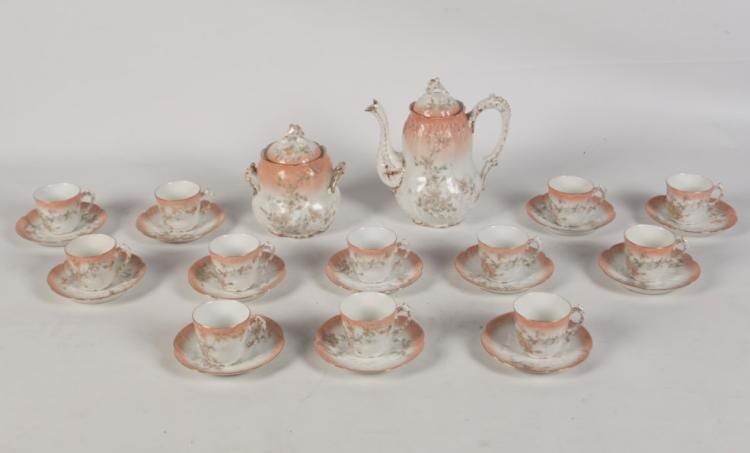 |
28 PIECE FRENCH PORCELAIN TEA SERVICE | Clements | 2015-01-18 | 241 | USD 60 (buyer’s-premium treatment unknown) |
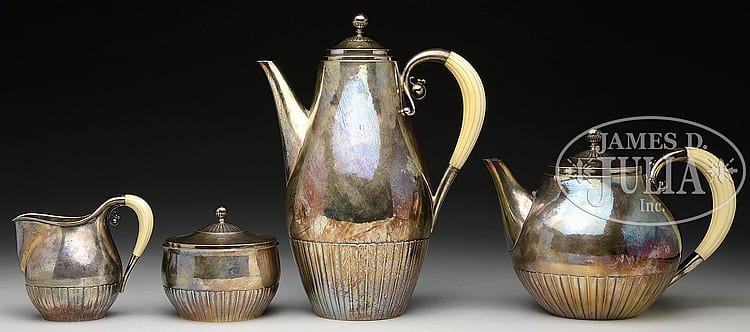 |
4 PIECE GEORG JENSEN "COSMOS" STERLING SILVER TEA SET. | James D. Julia | 2015-02-05 | 2302 | USD 4,147 (buyer’s-premium treatment unknown) |
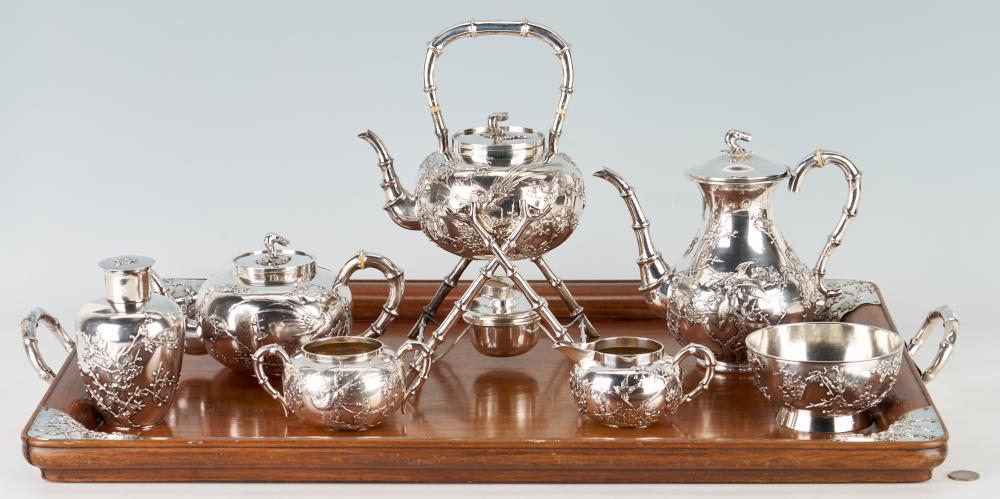 |
Wang Hing Chinese Export Silver Tea Set with Tray | Case Antiques, Inc. Auctions & Appraisals | 2024-01-27 | 1 | USD 8,500 (buyer’s-premium treatment unknown) |
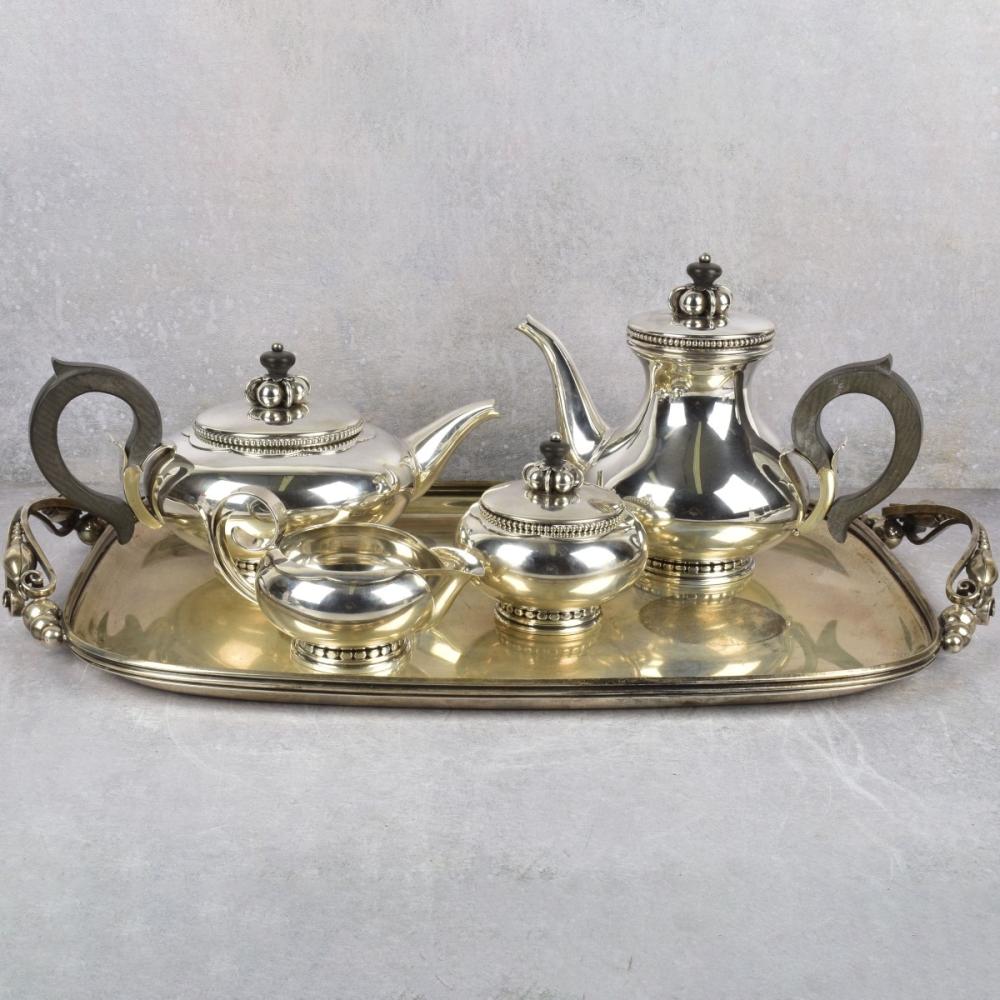 |
Alphonse La Paglia Sterling Silver Tea Set | Kodner Galleries | 2026-01-06 | 131 | USD 13,000 (buyer’s-premium treatment unknown) |
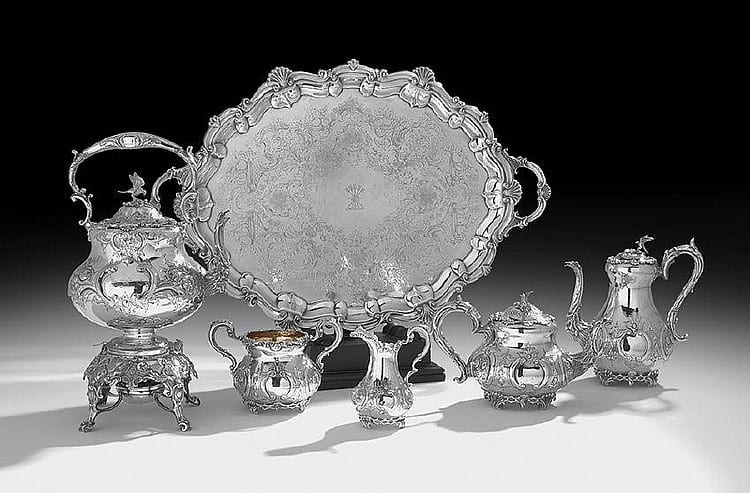 |
Irish Victorian 4-Piece Sterling Silver Tea Set | New Orleans Auction Galleries | 2015-05-30 | 323 | USD 2,952 (buyer’s-premium treatment unknown) |
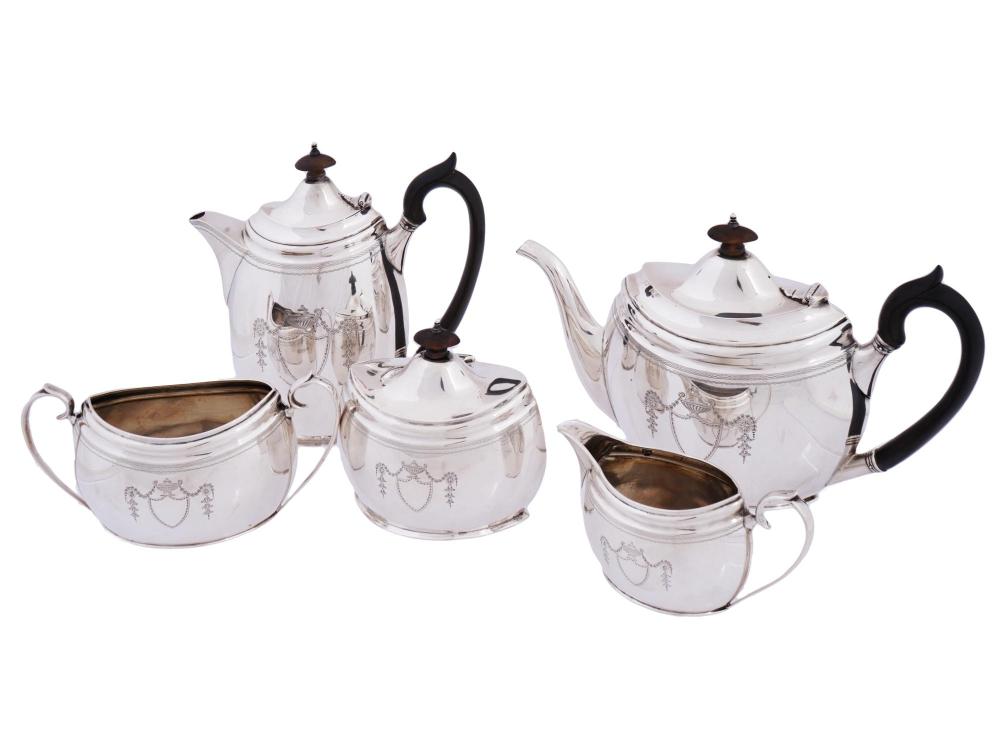 |
ANTIQUE ENGLISH BARNARD STERLING SILVER TEA SET | Antique Arena Inc | 2023-07-22 | 178 | USD 1,000 (buyer’s-premium treatment unknown) |
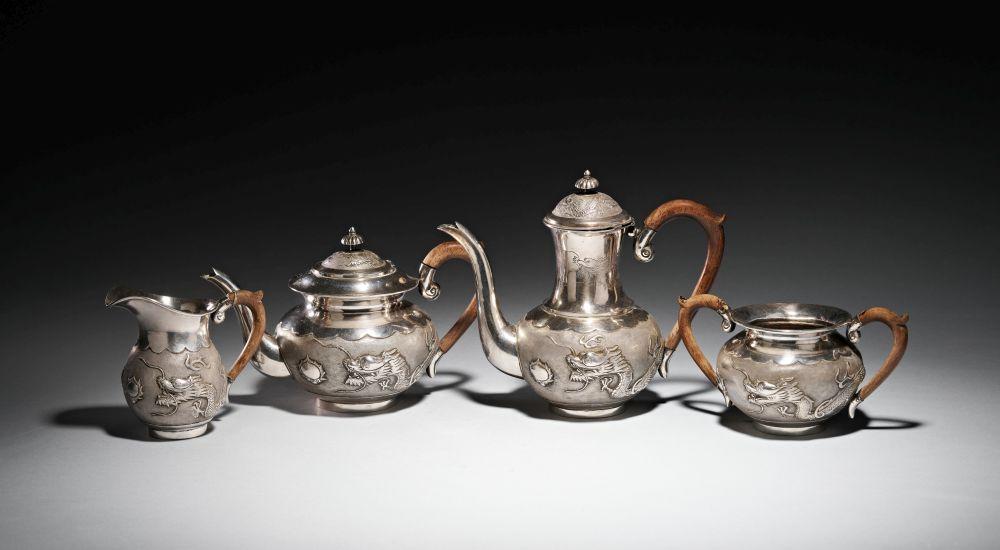 |
A CHINESE EXPORT SILVER TEA SET, 19TH/20TH CENTURY | PLAKAS | 2026-03-19 | 79 | GBP 2,200 (buyer’s-premium treatment unknown) |
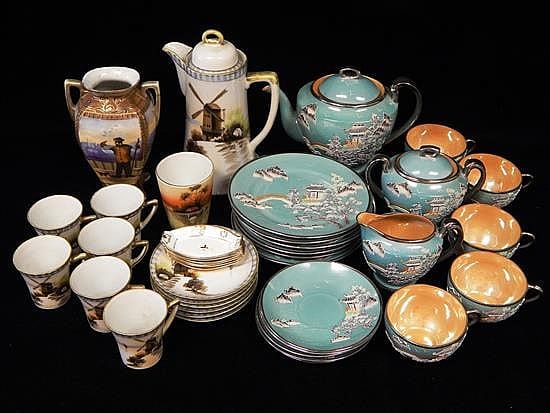 |
ASIAN: 20th C. Japanese porcelain, two tea sets, forty pieces: thirteen-piece partial coffee service, white ground with hand-painted... | Winter Associates, Inc. | 2015-03-23 | 227 | USD 25 (buyer’s-premium treatment unknown) |
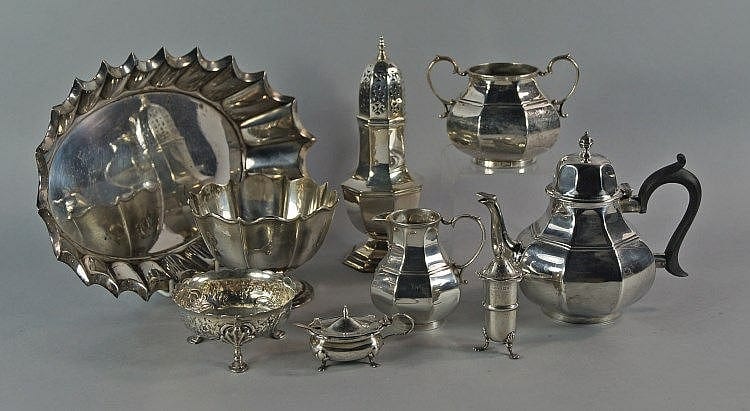 |
A Victorian silver bachelors tea service | Roseberys | 2015-02-07 | 224 | GBP 260 (buyer’s-premium treatment unknown) |
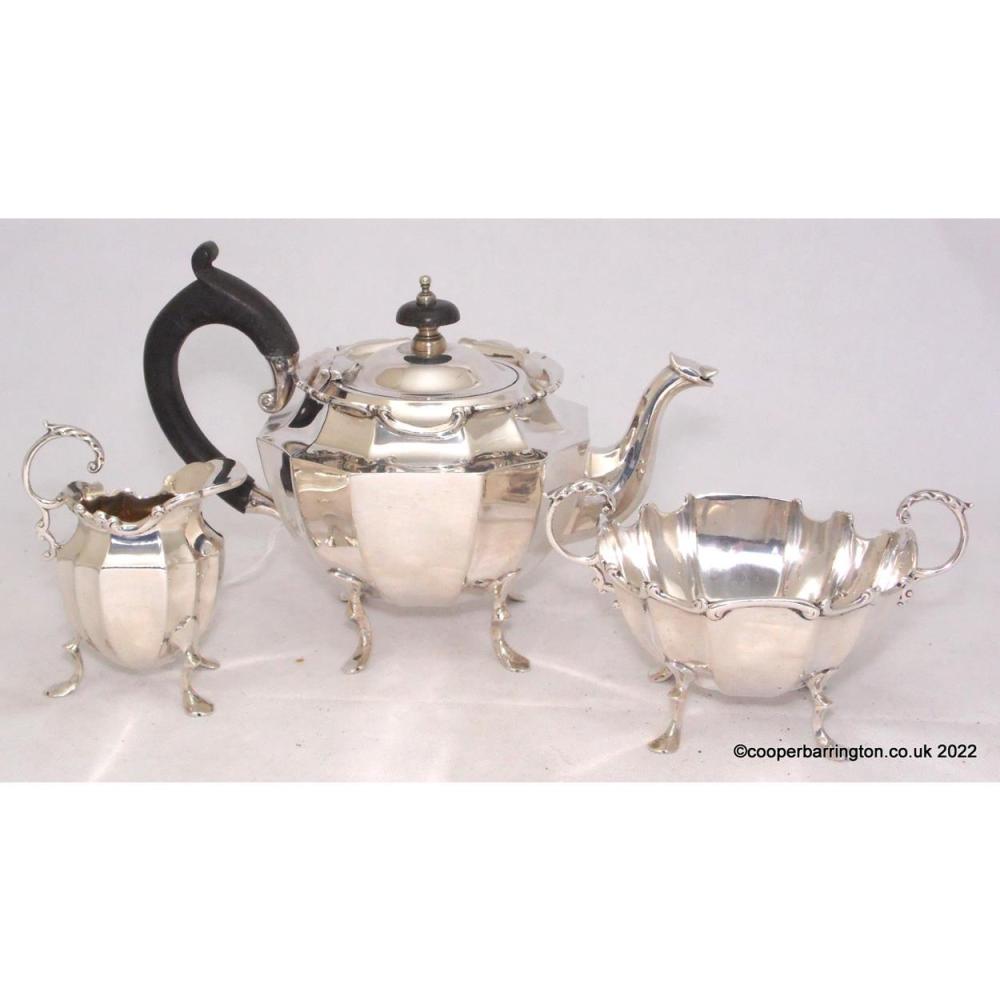 |
Fine Edwardian Solid Sterling Silver Tea Set | Cooper Barrington LLP | 2022-02-26 | 374 | GBP 280 (buyer’s-premium treatment unknown) |
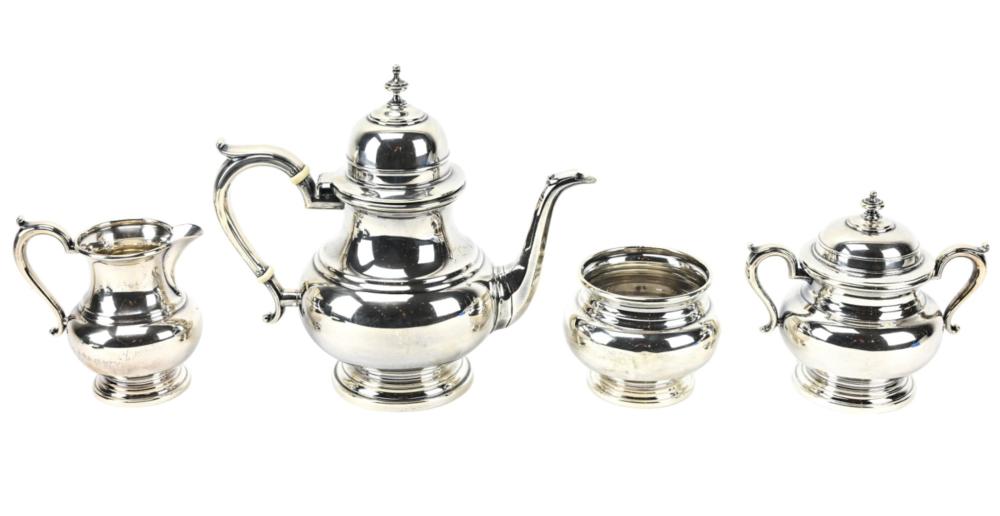 |
Antique Watson Exemplar Sterling Silver Tea Set | Greenwich Auction | 2024-02-29 | 57 | USD 700 (buyer’s-premium treatment unknown) |
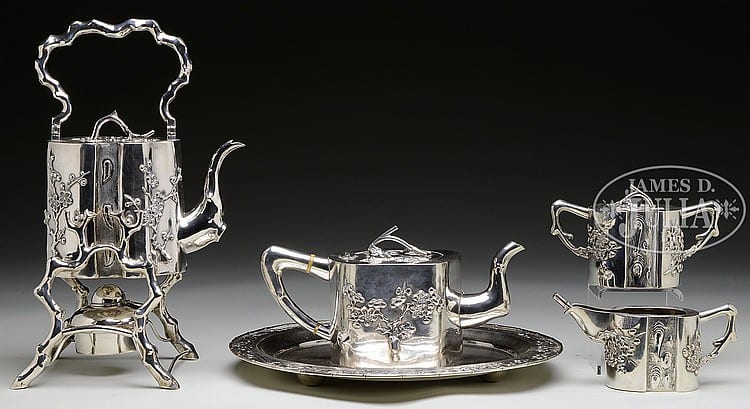 |
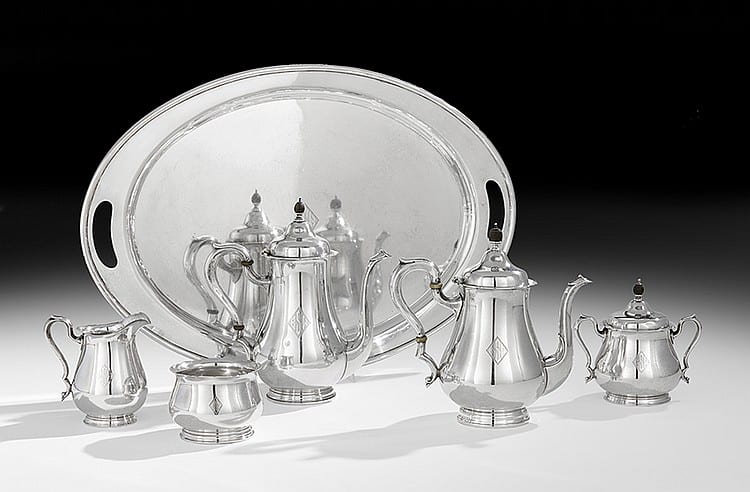
FABULOUS FIVE PIECE CHINESE STERLING SILVER TEA SET WITH ADDITIONAL SPOON. | James D. Julia | 2015-02-06 | 3197 | USD 10,072 (buyer’s-premium treatment unknown) |
 |
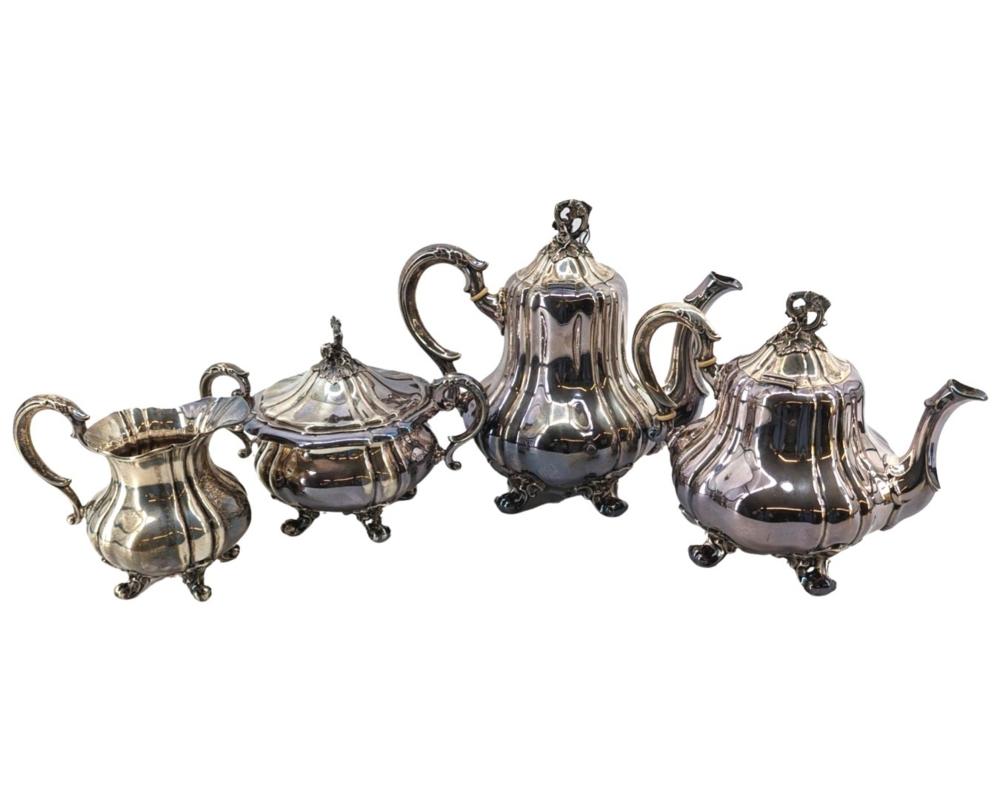
American Six-Piece Sterling Silver Tea Set | New Orleans Auction Galleries | 2015-03-20 | 78 | USD 2,600 (buyer’s-premium treatment unknown) |
 |
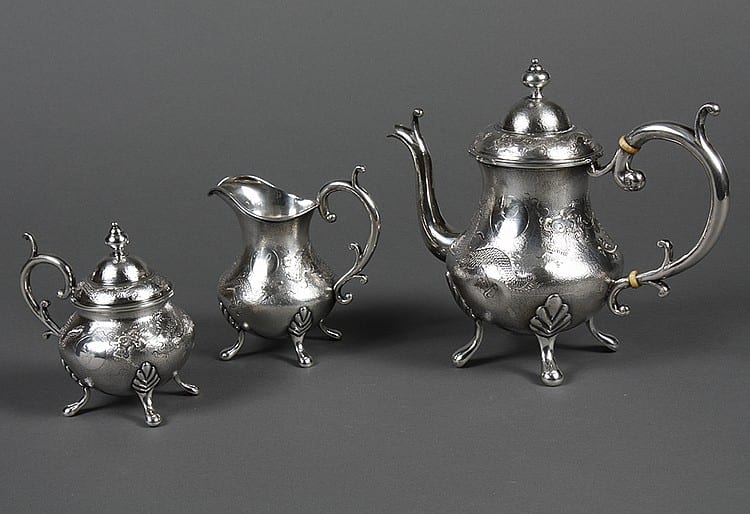
4pc. Antique German 800 Silver Tea Set | Monarch Auction and Estate Services | 2023-04-23 | 43 | USD 780 (buyer’s-premium treatment unknown) |
 |
CHINESE EXPORT SILVER TEA SET - Three piece tea set on four slipper feet. Baluster body, hammered finish, hand-chased dragon on each... | Pacific Galleries | 2015-04-04 | 209B | USD 1,200 (buyer’s-premium treatment unknown) |
How these auction records were verified
Each row retains its exact source URL, lot identity, retrieval time, access result, and immutable record hash. Inspect the public comparable provenance record.
Disclosure: prices are shown as reported by auction houses and are provided for appraisal context. Learn more in our editorial policy.
Count the pieces and read the mark
A “tea set” in the auction record may be three pieces or twenty-eight. Match the sold lot’s pot, kettle, sugar, creamer, tray, and cup count before using its price. Turn every hollow-ware piece over: sterling, 800, 900, and Chinese export marks are different markets from silver plate or unmarked porcelain.
Missing cups, a replaced finial, or a later tray usually explain why two similar-looking services land hundreds or thousands apart in the table above.
Antique tea sets attract collectors for the same reason they frustrate beginners: they look simple until you try to price one. A matching service with a respected factory mark can land in the mid-hundreds, while a named European porcelain set or a better silver service can jump into the low thousands. Age alone does not set the number. The market rewards maker, completeness, decoration quality, and honest condition.
That is why a tea set appraisal should start with the pieces in front of you, not with a generic online guess. Count the cups and saucers, look for maker marks on the underside, compare the decoration style to known factory work, and inspect every rim and handle for cracks or restoration. If you need a formal number for insurance, sale, or estate work, get a tea set appraisal instead of guessing from a single photo.

Free first look
Not sure whether this antique tea piece needs an appraisal?
Photograph the whole piece, base mark, material or glaze, pattern, dimensions, repairs, chips, cracks, and any lid or matching parts. The photo-based Screener can help identify the likely category and visible evidence gaps before you pay for documentation.
Upload photos for a free first lookFree. No card needed. The photo upload usually takes about two minutes.
The free first read is a separate photo-based Screener, not this educational article. Results usually appear within a few minutes; complex items can take longer. From photographs of your antique tea piece, it returns a preliminary category or identity read, visible evidence gaps, rough comparable market signals, and whether a human appraisal looks worthwhile; it is not a signed value conclusion. Material or construction can remain uncertain without direct examination, dimensions, provenance, or complete condition details. A written appraisal is useful when your antique tea piece needs documented specialist support for insurance, tax, an estate, authentication, litigation, or a consequential sale, but you may not need one.
Realistic price ranges by tea set type
The safest way to price a tea set is by its category, then by maker and condition. A small unmarked service with a couple of chips has a very different market from a complete Royal Vienna or Meissen set, and silver tea services move on weight, maker, and matching pieces as much as on decorative appeal.
For silver tea services, think differently: value depends on maker, sterling content, weight, and whether the pieces still form a coherent set. A plain but heavy Georgian or Victorian service can beat a prettier porcelain set because buyers are paying for metal, craftsmanship, and usable completeness.
What drives antique tea set value
- Maker and factory. Marks from Meissen, KPM, Royal Vienna, Royal Crown Derby, Gardner, and similar houses matter because the market trusts the attribution. Even when the pattern is modest, a named factory can shift the set from decorative to collectible.
- Completeness. A matched teapot, creamer, sugar bowl, cups, and saucers will nearly always outprice a drawer of loose pieces. Missing lids, replacement saucers, and mixed cup counts lower the ceiling quickly.
- Decoration quality. Hand painting, gilt work, and crisp factory enamel are rewarded. The market notices when the florals are still vibrant, the gilding is intact, and the surface has not been scrubbed into a dull sheen.
- Condition and repairs. Hairlines, crazing, rim chips, replacement handles, overpaint, and restoration all reduce desirability. A tiny nick may be acceptable on a display shelf, but it is still a bargaining point at auction.
- Material and format. Bone china, porcelain, and silver each have their own market. Miniature services, breakfast sets, and tea cup-and-saucer lots trade differently from full afternoon tea services.
Maker matters more than age
Completeness changes the story fast
Decoration quality is not decorative fluff
Hand-painted flowers, monochrome reserves, and restrained gilt can lift the appeal of even a modest service. On the other hand, fuzzy transfer decoration, overcleaned gilt, or a pattern that has been repainted too often tends to sit below the market’s emotional threshold. In antique ceramics, finish is value. Collectors notice the brushwork before they notice the story.
Condition should be judged under raking light
Use the same approach a conservator would use: put the piece under angled light, then look for a cloudy glaze, interrupted crazing, hairlines, stress cracks, or edge loss. The saucer in the gallery section shows how a crack that looks minor under room light becomes obvious once the light hits the surface diagonally. That is the sort of problem that changes the final number more than most beginners expect.
Silver services play by another rulebook
Silver tea services are less about painted decoration and more about maker, weight, and coherence. Hallmarks matter. Engraved initials are not fatal, but they can narrow the audience. A clean sterling service with matching pieces may outlive a porcelain set in value simply because buyers can melt, restore, or use it more flexibly.
How to price your set without overreaching
- Identify the maker first. Read the base mark, country mark, or silver hallmark before you compare anything else. If the mark is blurred, photograph it straight on and in raking light.
- Count every matching piece. Record cups, saucers, teapot, creamer, sugar bowl, tray, and lids. A set is worth more when the count is obvious and the pieces line up.
- Separate honest wear from damage. Tiny gilt wear is normal; a repaired handle, rim chip, or internal crack is a different matter.
- Compare against a recent sale, not a wish. Use the comps table above to anchor the range, then adjust for your own maker, condition, and completeness.
- Watch for overpolishing and overcleaning. Tea sets often lose their warmth when surfaces are scrubbed too hard, and that loss can depress the sale price even when the piece looks shiny.
- State the range honestly. A defensible appraisal gives a lower, likely, and aspirational band rather than a single heroic number.
In practice, this means a common but complete tea service might sit in the low hundreds, a named factory set can move into the mid-hundreds or low thousands, and a rare or especially decorative service can go higher. The right answer depends on how much of the original service survives and how convincing the decoration and mark really are.
Feature gallery: what collectors look for
These images show the details that decide whether an antique tea set feels ordinary or collectible. Use them as a visual checklist when you are photographing your own set for a valuation.


Quick condition checklist before you call it rare
- Check every rim, lid, spout, and handle for chips or hairlines.
- Confirm that cups, saucers, and serving pieces actually match in pattern and finish.
- Look for replacement lids, replacement handles, and restored cracks that may not show in a quick photo.
- Inspect the underside for genuine factory marks, later dealer marks, and repainting around the footrim.
- Test whether the set still feels coherent as a service, not just as a pile of attractive pieces.
When a tea set has passed these checks, you can talk about value more confidently. If it fails on several points, say so plainly in the appraisal note. Buyers trust an honest range far more than a polished but unrealistic headline number.
Long-tail search variations
- How much is an antique tea set worth today?
- What makes an antique tea set valuable?
- How do I price a porcelain tea set with missing pieces?
- Are Royal Vienna tea sets worth money?
- How can I tell if my tea set is Meissen or a later copy?
- What is a realistic price for a partial tea service?
- How much are silver tea services worth at auction?
- Does crazing lower the value of an antique tea set?
Each of those questions comes back to the same practical answer: identify the maker, count the pieces, check the decoration, and compare the result to recent sales. If the mark is strong and the service is complete, the range rises. If the set is partial or repaired, the range falls fast.
References
- Appraisily internal auction-results database, queried for antique tea set comparables on April 2, 2026.
- Appraisily Editorial Policy, including sourcing and update standards: /editorial-policy/.
- Recent sale records from Keystone Auctions LLC, Antique Arena Inc, Akiba Galleries, Hill Auction Gallery, World Auction Gallery, Leski Auctions Pty Ltd, and their published lot pages.
Choose your next step
Use the path that matches the decision you need to make about the item.
Not sure it is worth appraising?
Start with a lower-friction screen to understand the likely category, evidence, and next step.
Upload photos for a free first lookWant proof before paying?
See how a signed report documents photos, comparable evidence, condition notes, and value conclusions.
View signed report sampleNeed a signed report?
Use this for insurance, estate, donation, resale, or documented value decisions.
Need documentation now? Start signed appraisalNeed local or specialist help?
Compare directory options when the work needs in-person review or a specialist near you.
Find local specialistsSee what the report looks like
Sample reports show how photos, comparable evidence, condition notes, and a value conclusion are documented.
Next step
Get a professional value range for your antique tea set
Upload photos, maker marks, and a quick note about completeness. We’ll route your set to the right expert and return a written appraisal you can actually use.
- Made for porcelain, bone china, and silver tea services
- Useful for sale, insurance, and estate documentation
- Fast, secure, and tailored to the market reality of your set
No obligation · Secure upload · Built for collector-grade items