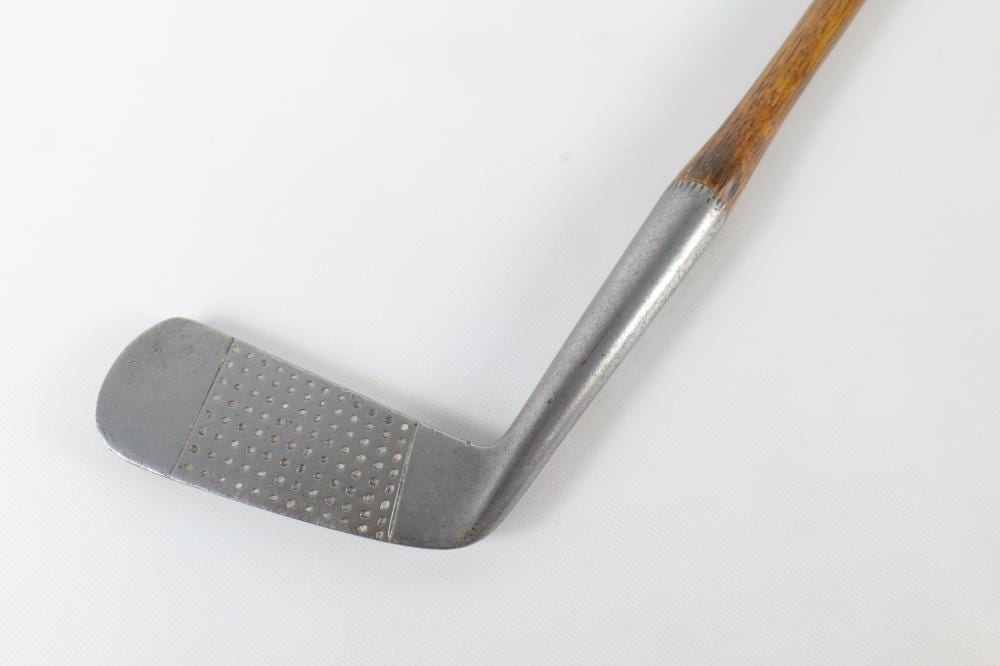
Unlocking the Past the Ultimate Guide to Antique Golf Club Identification: appraisal and value basics
Unlocking the Past the Ultimate Guide to Antique Golf Club Identification research should start with identification, condition, provenance, and item-specific market evidence. Use this guide to compare the signals that matter before paying for a formal appraisal or deciding whether to sell.
Antique golf club identification checklist
Antique golf clubs capture three intertwined stories: evolving technology, artisan craft, and the culture of a growing game. Whether you collect, appraise, or play hickory-era golf, accurate identification is the foundation for valuation, conservation, and enjoyment. This guide distills the tells that matter—construction details, marks, and period features—so you can confidently place a club in its right era, maker circle, and market tier.
How Golf Clubs Evolved: A Quick Timeline
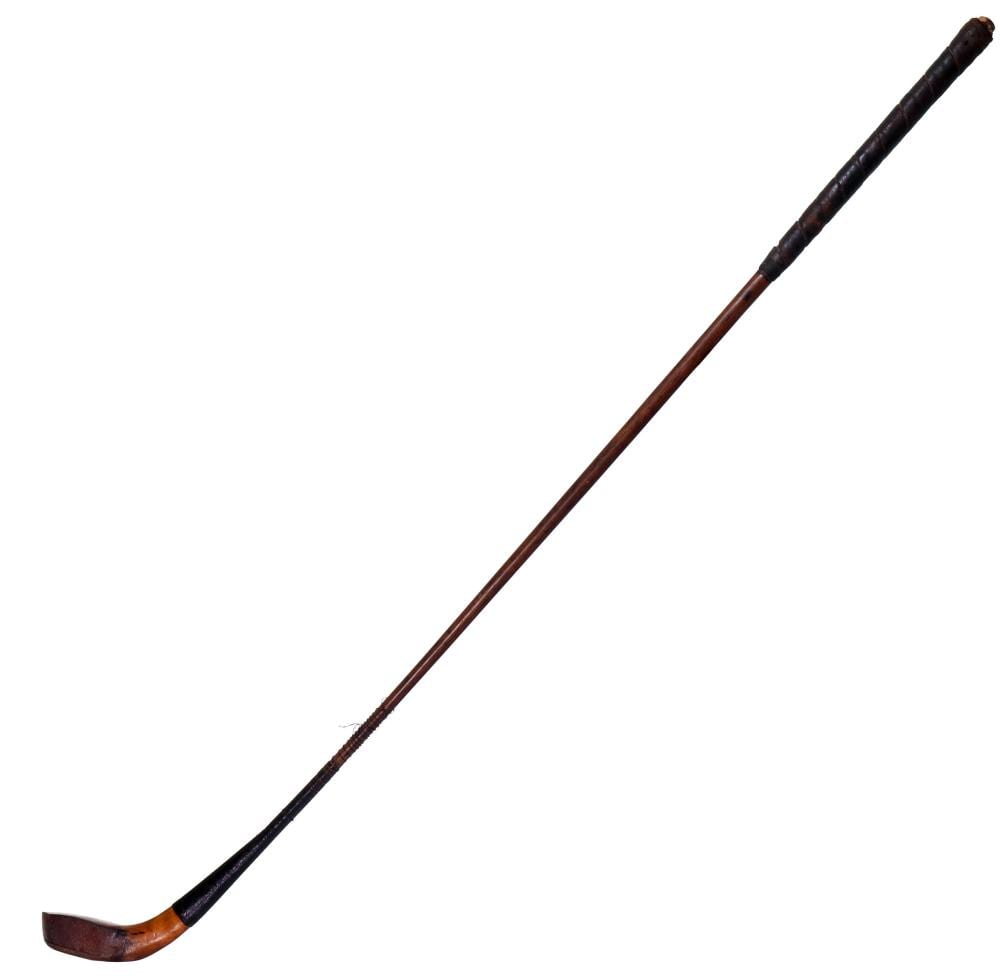
Pre-1890: Long-nose wooden clubs
- Hand-shaped long, slender heads in fruitwood (often apple, pear) with spliced (scarf) hickory shafts bound by whipping.
- Ram’s horn strip on leading edge (sole) for durability; no face insert; smooth faces.
- Loft/name system in use (play club, spoon, baffing spoon; cleeks and niblicks in iron).
1890s–c.1905: Transitional to bulger woods and modern irons
- Shorter, rounder “bulger” heads emerge; socketed necks begin to replace spliced.
- Brassie woods include a brass soleplate; ram’s horn still appears on some.
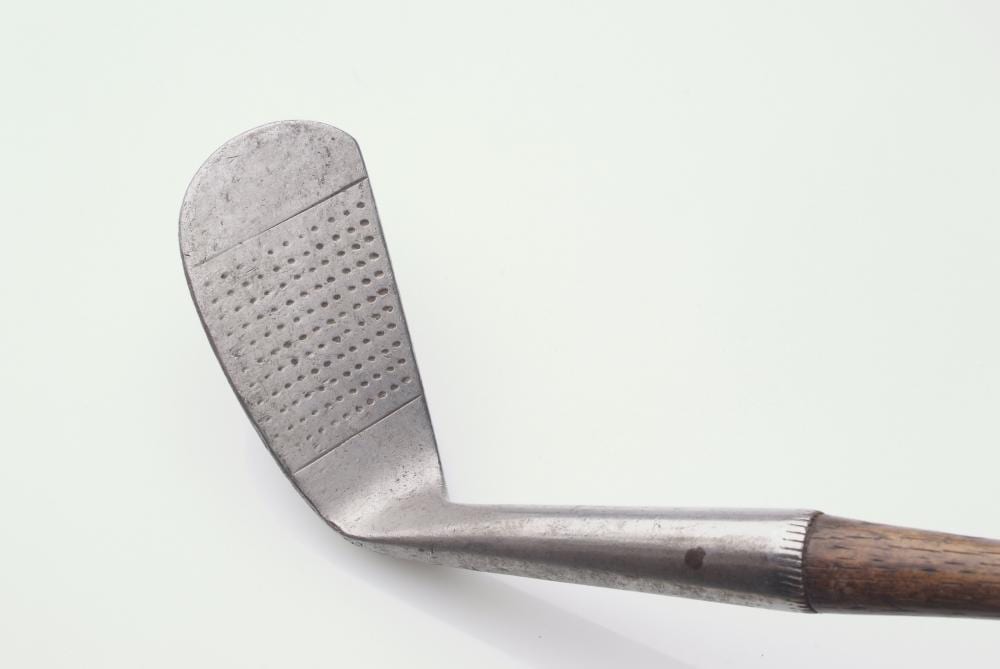
- Irons are hand-forged with smooth or dot-punched faces; early “rut niblicks,” “jiggers,” “mashies.”
- Retailer and maker stamping becomes more common.
c.1905–1910: Face scoring arrives
- Face lines/grooves and patterned punches become widespread after rules bodies permit scoring.
- Drop-forging starts supplementing hand-forging on irons; more consistent shapes.
1910s–mid-1930s: Hickory heyday
- Persimmon becomes the premier wood for heads; fiber/ivorine face inserts appear on many woods.
- Brass soleplates common; slotted screws used (Phillips arrives later, c. mid-1930s).
- Club numbering (1–9 irons) gradually displaces traditional names (mashie, niblick, etc.) by the 1920s.
Steel shafts: USGA legal 1924; R&A legal 1929
- Transition to steel accelerates early 1930s; by mid-1930s, steel dominates new production.
- Hickory-shafted clubs continue in play and sale for some years, but new hickory production declines.
Dating a club by aligning these inflection points—neck construction, face treatment, shaft material, numbering vs naming—gets you close before you even read a stamp.
Anatomy and Materials: What To Look At First
Start with a deliberate scan from head to grip. Small construction choices reveal period, region, and quality.
Head shape and construction
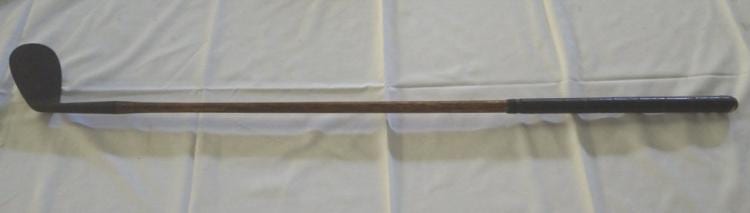
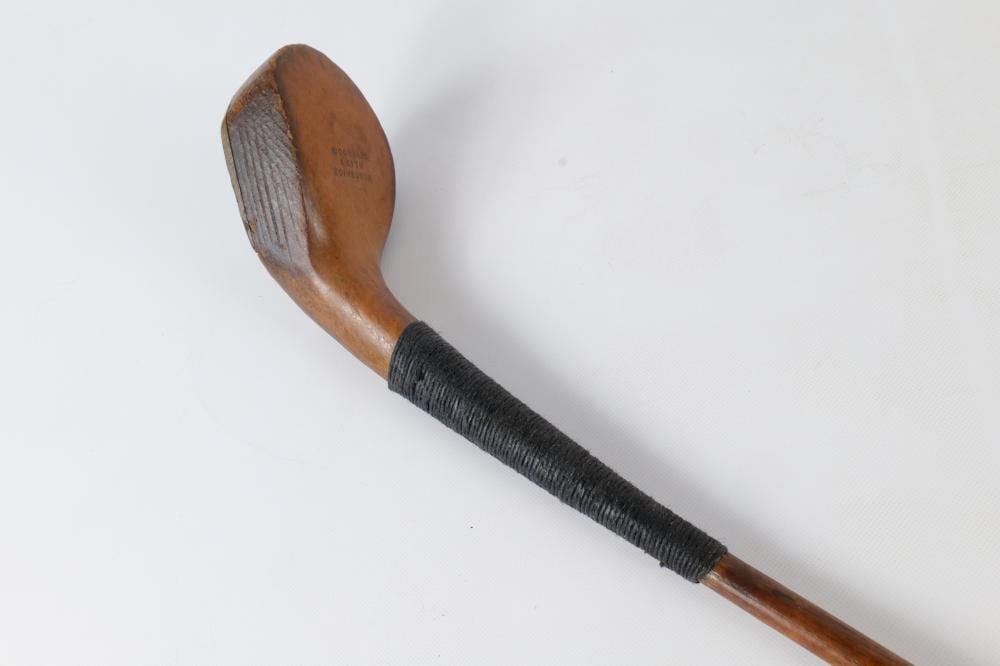
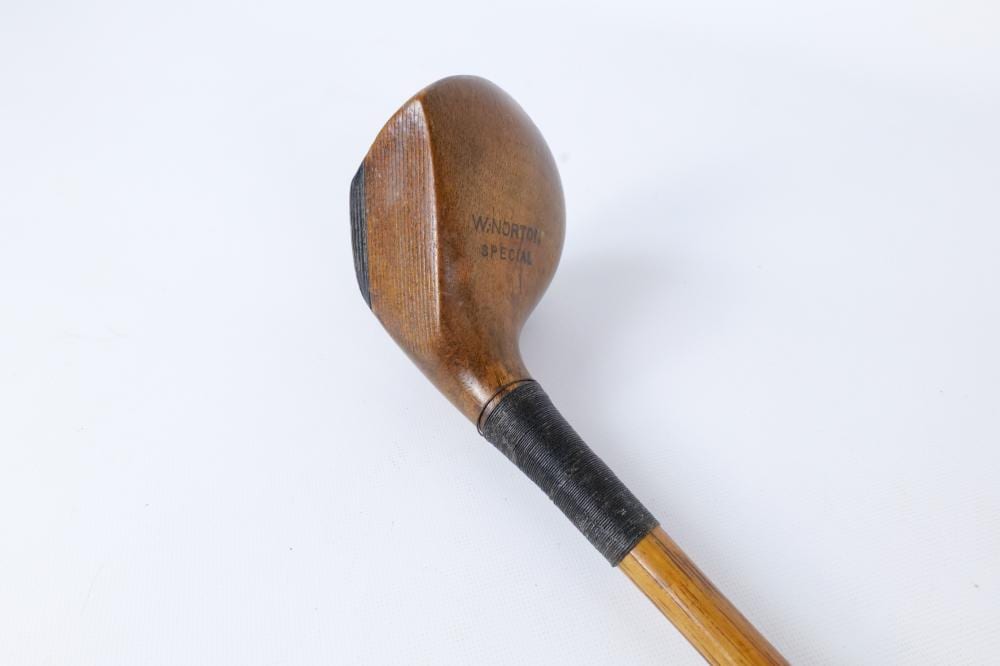
- Woods: Long-nose (pre-1890) are slender with flowing noses; “bulger” (1890s onward) are more compact and rounded. Look for spliced necks (older) versus socketed/inserted shafts (newer). Persimmon heads with fiber face inserts usually indicate early 1900s onward.
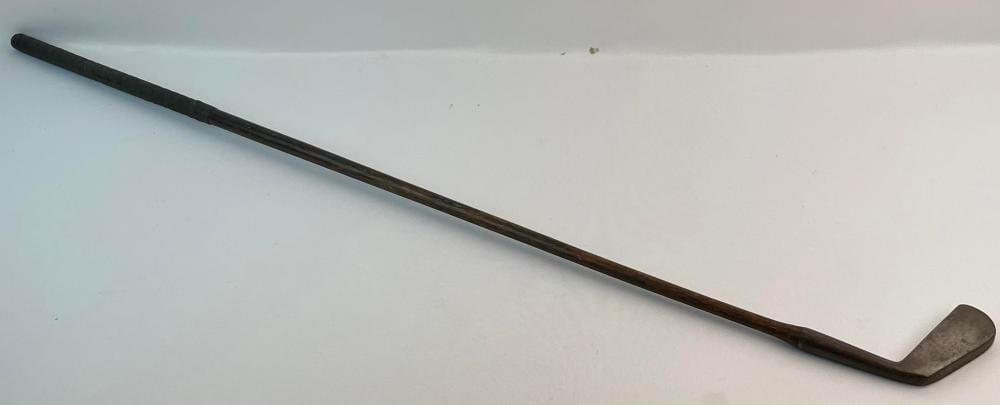
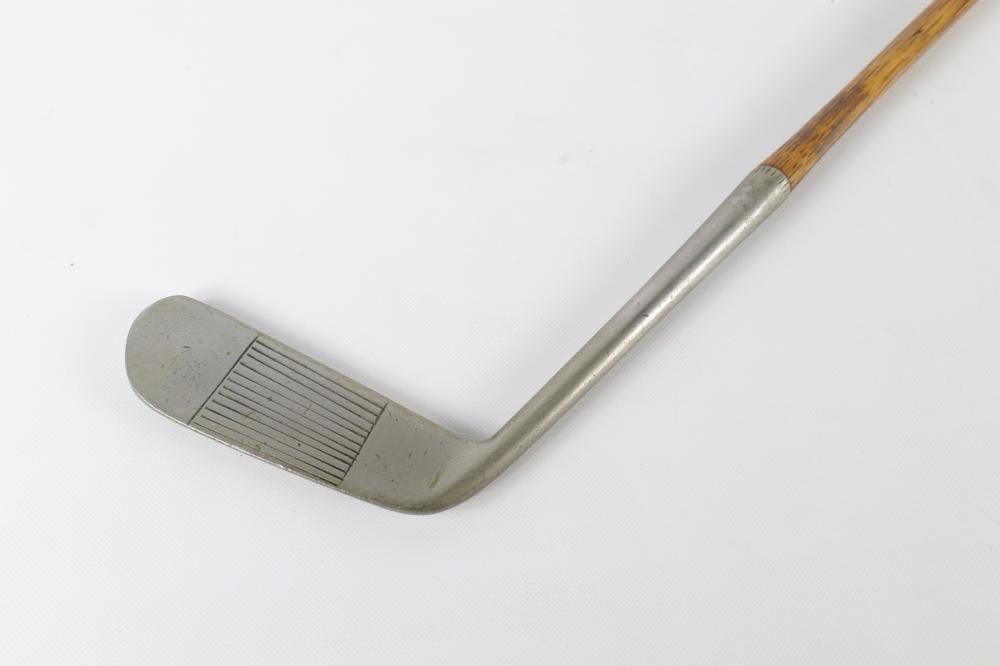
- Irons: Early blades are thin with hand-wrought profiles and tapered hosels; later drop-forged heads (1910s onward) look more uniform. Very early irons often have smooth faces; scoring/patterns arrive post-1905.
Sole and face features
- Brassie soleplates indicate a specific wood type (brassie) and often late 1890s–1920s manufacture. Screws should be slotted; Phillips-head screws point to later repairs or reproductions (Phillips becomes common mid/late-1930s).
- Ram’s horn on leading edge is common on long-nose/transitional woods and fades as fiber inserts/brass plates become standard.
- Face scoring patterns: Smooth face (pre-1905 common), dot-punched, line-scored, or diamond cross-hatch (post-1905). Deep milled grooves are later.
Neck and hosel clues
- Spliced necks with visible whipping are hallmarks of pre-1890/early 1890s woods.
- Socketed necks on woods and rolled/tapered hosels on irons become the norm thereafter.
- Repair whipping at the neck can conceal cracks or a shaft reset; original, tight whipping is a plus.
Shaft material
- Hickory: Strong, resilient, with subtle growth ring pattern; often stamped “Selected Hickory.” Straightness and lively flex matter to hickory golfers.
- Steel: If original to the head and pre-war, look for pinned or stepped steel with period ferrules; steel paired with blunt, modern-looking heads often means later.
Grips
- Early: Sheepskin/leather wraps over underlisting with twine whipping at ends; smooth, aged patina and hand wear.
- Later: Machine-applied leather or rubber compositions; modern rubber on an obviously old head suggests a regrip.
Weights and proportions
- Long-nose woods feel lighter with longer shafts; later persimmons are denser and more compact. Heavy lead backweights (visible circular lead plugs) on wood crowns/backs are normal period features, not necessarily repairs.
Document each observation; identification is cumulative.
Decoding Marks, Names, and Numbers
Marks are the fingerprints of the hickory era, but read them in context.
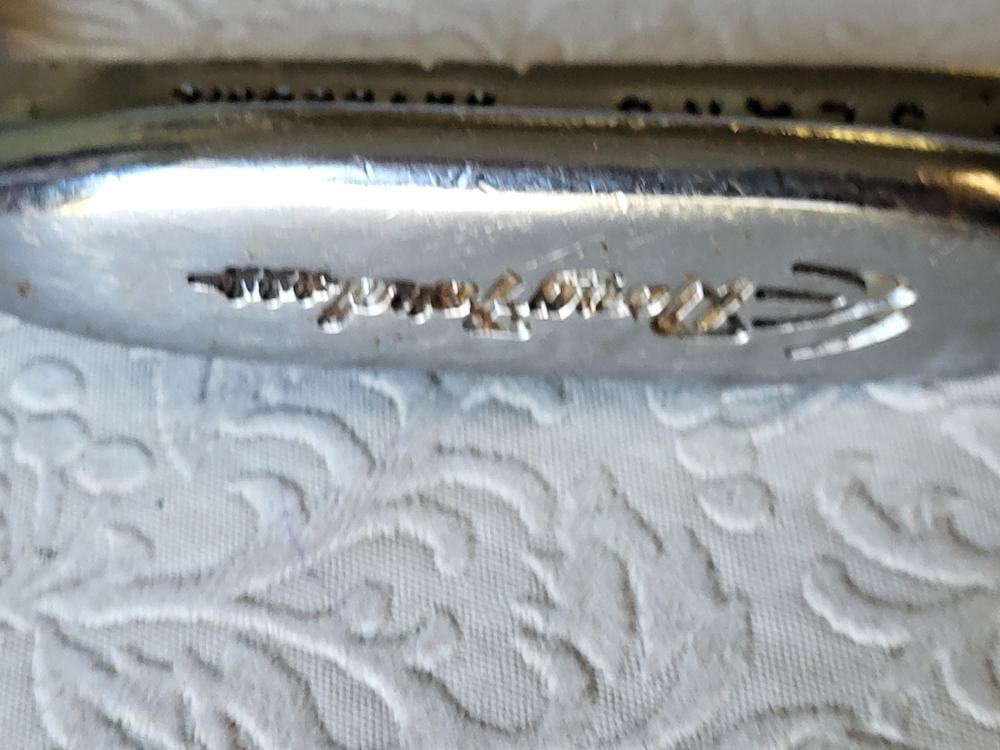
Maker’s marks and “cleek marks”
- Irons often carry a small pictorial “cleek mark” identifying the forging house. Well-known examples:
- Tom Stewart (St. Andrews): pipe symbol
- George Nicoll (Leven): hand symbol
- William Gibson (Kinghorn): star symbol
- Retailers and professionals (e.g., Forgan, Auchterlonie, Spalding, MacGregor) stamped their names; sometimes the retailer’s stamp overlays the forger’s mark.
- Multiple stamps are common; forgers supplied heads to retailers, who finished and branded.
- Irons often carry a small pictorial “cleek mark” identifying the forging house. Well-known examples:
Patent and registration stamps
- Patent numbers or dates on hosels/soles reference specific innovations (e.g., socket designs, face scoring, adjustable lies). Patent years provide tight dating anchors.
Loft names versus numbers
- Traditional names (late 19th–early 20th century):
- Woods: Play club (driver), Brassie (2W, with brass sole), Spoon (higher loft), Baffy/Baffing spoon
- Irons: Cleek (long iron), Driving iron, Mid iron, Mashie (5-ish), Spade mashie, Mashie niblick, Niblick (9-ish), Jigger (low-loft, narrow sole)
- Numbered irons become widespread during the 1910s–1920s. A fully numbered set usually indicates later hickory or early steel-shaft era.
- Traditional names (late 19th–early 20th century):
“Hand Forged,” “Drop Forged,” “Warranted”
- “Hand Forged” often signals earlier craft, but the term was also used for marketing. Surface hammering marks inside the blade cavity and irregularities suggest hand work; crisp uniform radii suggest drop-forging.
Import/export and quality grades
- Stamps like “Special,” “Hand Selected,” or “Home Model” can indicate export lines or quality tiers. Compare these with construction features to avoid overvaluing a marketing grade.
Beware over-cleaning; harsh polishing can erase shallow stamps that are crucial to identification.
Dating Clues by Club Type: Woods, Irons, Putters
Woods
- Long-nose, spliced neck, horn sole strip: pre-1890 hallmark.
- Shorter “bulger” shape, socket neck, brassie soleplates: 1890s–1920s.
- Fiber/ivorine face inserts: common from c.1905–1910 onward.
- Slotted screws on soleplates: period-correct; Phillips screws flag later interventions.
- Maker stamps typically on crown or sole; retailer names often prominent.
Irons
- Smooth face: common pre-1905. Dot-punched or line-scored faces spread post-1905.
- Cleek marks on back of blade identify forging house. Search heel-to-toe for small pictographs.
- Traditional names stamped near the toe indicate earlier production; numbers on sole/back indicate later.
- Blade shape: narrow, thin-long pre-1910; thicker soles and more uniform geometry later.
Putters
- Early wooden-headed putters mirror long-nose aesthetics; later mallets emerge.
- Schenectady (center-shafted) design patented 1903: R&A banned 1910–1951; USGA allowed. The presence of center-shafted, early characteristics with period stamping is a strong 1903–1910 indicator for UK-made examples, with broader US use thereafter.
- Aluminum-headed putters (e.g., early Spalding models) appear in the early 1900s; look for patent stamps and integral hosels.
- Lie and loft on putters vary widely; period examples often have straighter lies than modern.
Layer these clues with any patent dates and known maker/retailer histories to narrow production within a 5–10 year window.
Condition, Originality, and Value Factors
Collectors and appraisers tend to weigh these attributes:
Originality
- Matching hickory shaft, period ferrule, leather grip, and intact whipping command premiums.
- Regrips, replaced shafts, refaced irons, and retrofitted screws reduce value.
- Face re-scoring or aggressive sanding betray restoration; look for softened stamp edges.
Maker and scarcity
- Prestigious makers/retailers and distinctive cleek marks raise interest.
- Unusual patents, experimental designs, or clubs tied to specific professionals/events add scarcity.
Condition
- Woods: Check for crown cracks radiating from the neck, sole plate looseness, horn loss, and open glue lines. Stable, tight repairs with hide or fish glue are preferable to modern epoxy blobs.
- Irons: Look for excessive pitting, hosel cracks, and face integrity. Honest patina is acceptable; deep corrosion and heavy sanding are not.
- Shafts: Straightness, grain integrity, and absence of wormholes count. Slight warps can sometimes be corrected; fractures cannot.
Playability (for hickory golf)
- Balanced swing weights, straight shafts, and sound heads attract hickory golfers, a robust niche buyer base. Pre-1900 long-nose clubs are less often played and more often displayed; 1910s–1920s mashies/niblicks in good order are sought after for play.
Provenance
- Signed grip caps, retailer labels, or documented ownership histories can significantly enhance value.
Care, Conservation, and Safe Cleaning
Preserve history; don’t erase it.
Cleaning
- Dry brush dirt; use a barely damp cloth for stubborn grime. Avoid steel wool or power buffing that erases tool marks and stamps.
- For irons, light oil and a soft cloth can inhibit rust after cleaning. Do not chase a mirror finish.
Wood care
- Wipe with a tiny amount of raw linseed oil on a soft cloth, then thoroughly buff; avoid soaking shafts or heads.
- Keep whipping tight; if loose, re-wrap with linen or waxed thread in the original pattern.
Shafts and grips
- Maintain ambient humidity; avoid attics/garages with big swings. Store vertically or supported along the shaft’s length to prevent set.
- Condition leather grips sparingly with a neutral, archival leather dressing. Avoid silicone products.
Repairs
- Period-appropriate adhesives (hide/fish glue) and slotted screws maintain authenticity. If you must replace hardware, match slot size and head profile; save all removed parts in a labeled bag.
Storage and display
- Keep out of direct sunlight and away from heat sources. Use padded rests that contact shafts, not just heads.
Practical Identification Checklist
Step 1: Scan construction
- Spliced vs socketed neck on woods
- Smooth vs scored face on irons
- Soleplate presence; screw type (slotted vs Phillips)
Step 2: Note materials and features
- Horn strip, brass sole, lead backweight, face insert
- Hickory vs steel shaft; ferrule style
- Grip material and wrapping
Step 3: Read the marks
- Maker/retailer names; cleek mark pictographs
- Patent numbers or dates
- Loft names vs numbered designations
Step 4: Cross-check with timeline
- Align features with known eras (e.g., smooth face + hickory + named lofts = pre-1910)
- Steel shaft legality (US 1924, R&A 1929) narrows windows
Step 5: Assess condition and originality
- Look for regrips, replaced shafts, refacing, modern screws
- Verify stamp crispness and consistent wear patterns
Step 6: Watch for reproductions
- Artificially uniform aging, Phillips screws, metric hardware, modern fonts, overly shiny polyurethane finishes
Step 7: Document
- Photograph marks, face, neck, sole, and grip; record measurements and weights for comparison
Short FAQ
Q: Where are cleek marks usually located on antique irons? A: On the back of the blade, typically mid-blade or near the toe. They can be small; clean gently and use oblique light to see them.
Q: How can I tell if a brassie’s soleplate is original? A: Look for slotted screws with period slot widths, aged brass consistent with the rest of the head, and tight fit. Phillips screws, bright modern brass, or misaligned plates suggest replacement.
Q: Are smooth-faced irons always pre-1905? A: Smooth faces are strongly associated with pre-1905, but some smooth-faced irons were made slightly later. Use additional clues—stamps, hosel style, and shaft—to corroborate.
Q: Is it okay to regrip an antique with modern rubber? A: For play, a reversible leather rewrap is preferred. Modern rubber reduces originality and value; if you must regrip, keep the original materials and document the change.
Q: Can antique hickory clubs be safely played? A: Many 1910s–1920s clubs can, if shafts are straight, heads sound, and whipping secure. Have them inspected, avoid hard range balls, and warm up gently to reduce stress on century-old materials.
With a practiced eye for construction, marks, and period features—and a light conservation touch—you’ll move from guesswork to grounded identification, unlocking both the past and the true potential of the clubs in your hands.