
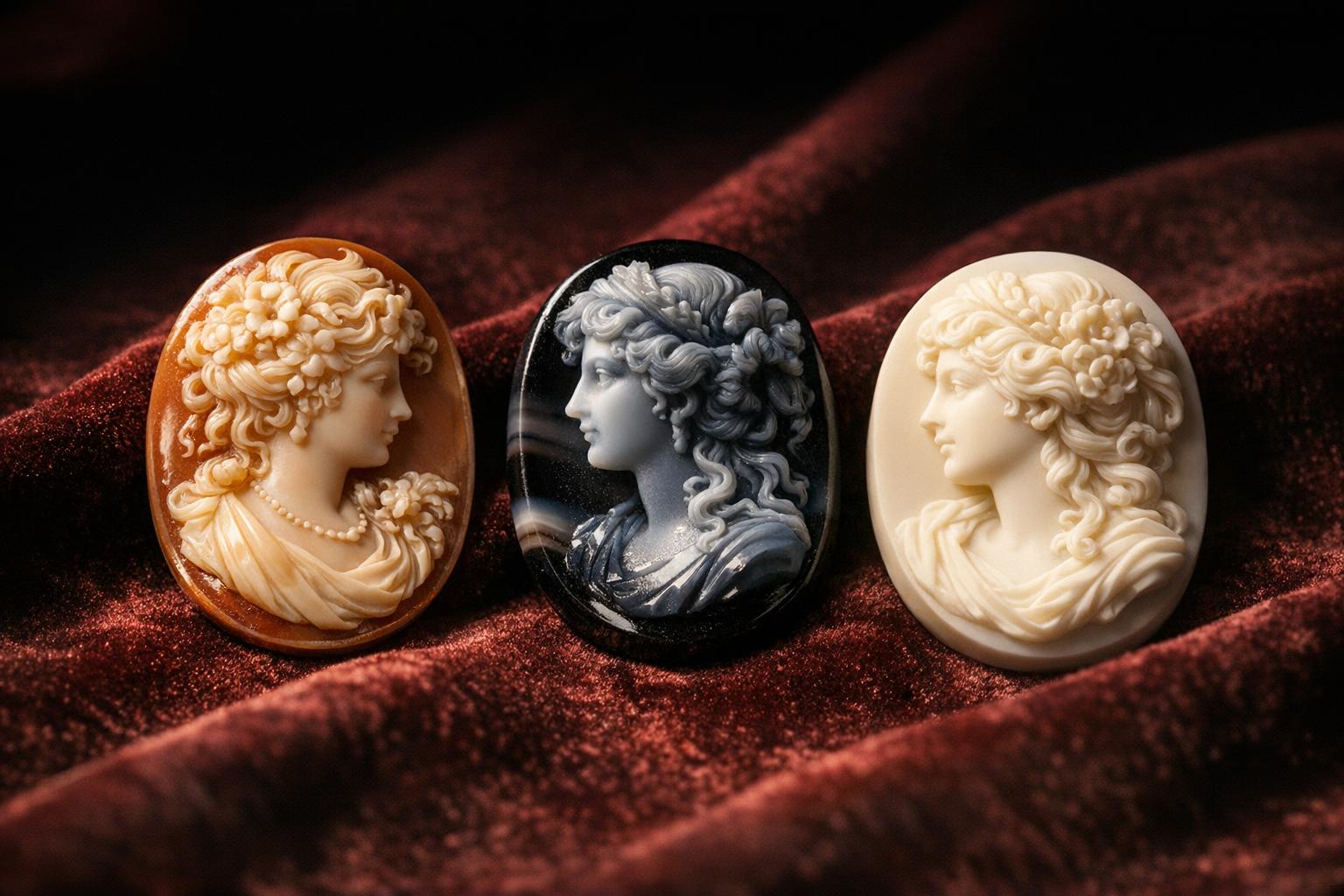
Unlocking the Mystery Determining the True Value of Antique Cameos: appraisal and value basics
Unlocking the Mystery Determining the True Value of Antique Cameos research should start with identification, condition, provenance, and item-specific market evidence. Use this guide to compare the signals that matter before paying for a formal appraisal or deciding whether to sell.
Antique cameos value checklist
Antique cameos sit at the intersection of sculpture, jewelry, and social history. Their value can swing from modest to museum-worthy depending on the material, the depth and quality of carving, the mount, subject matter, condition, and provenance. This guide distills what seasoned appraisers look for so you can analyze your cameo with clarity and confidence.
Cameo 101: What You’re Looking At
- Definition: A cameo is a relief carving where the design is raised from its background. It is the opposite of an intaglio (incised carving).
- Common subjects:
- Mythological figures (Flora, Medusa, Athena, Bacchus)
- Classical profiles and allegories (the Four Seasons, the Arts)
- Portrait miniatures (often Victorian)
- Fauna (gryphons, eagles), and scenic carvings
- Cameo habillé: a figure wearing real jewelry (e.g., a diamond earring set into the carving)
- Periods:
- Late 18th–19th century “Grand Tour” era: wealthy travelers commissioned or bought cameos in Rome, Naples, and Idar-Oberstein.
- Victorian popularity surge, especially in shell.
- Early 20th century: continued production; later, some mechanized/molded examples enter the market.
Key value principle: The cameo plaque itself (material and carving quality) typically drives value more than the mount, unless the mount is high-karat, signed, or stylistically important.
Materials and Techniques: Shell, Hardstone, Lava, Coral, Glass, and Ceramic
Understanding the substrate is step one. Materials strongly influence both age expectations and value.
Shell cameos
- Typical shells: helmet shell (Cassis) and queen conch (Strombus/Eustrombus).
- Color: white to cream relief over peach, pink, brown, or orange ground.
- Traits: Lightweight, warm to the touch, slightly translucent at thin edges when backlit. Fine Victorian examples show crisp hair strands and undercutting.
- Notes: Shell is softer than hardstone; edges can show layering; surface can develop warping or dryness cracks if poorly stored.
Hardstone (agate/onyx/sardonyx)
- Banded chalcedony with contrasting layers: white relief over black/brown/grey ground.
- Traits: Heavier than shell, colder to the touch, glassy luster, takes a high polish. Deep undercutting and refined detail signal top craftsmanship.
- Idar-Oberstein (Germany) produced many 19th-century hardstone cameos; some 20th-century examples involved mechanized/ultrasonic processes—look for repetitive tool marks and less nuanced modeling.
“Lava” cameos
- Usually carved from soft volcanic stone or tuff sourced near Vesuvius; colors include grey, taupe, tan, and brown.
- Traits: More porous and matte; detail can be excellent but often less glossy than hardstone.
- Note: “Lava” is a trade term; not literal molten-lava glass.
Coral cameos
- Colors: salmon, oxblood, angel skin.
- Traits: Dense, warm, and can take a fine polish; good antique coral cameos can command strong prices, especially in high-karat mounts.
Glass and ceramic cameos
- Glass cameo (including layered “cameo glass”): either molded relief or acid-etched/engraved layers.
- Pressed glass cameos are usually molded; look for seam lines and uniformity.
- Jasperware (e.g., Wedgwood) ceramic plaques with white relief on colored ground are common; collectible but usually less valuable than fine shell/hardstone unless rare/early or in important mounts.
Telling carved from molded/printed:
- Carved: subtle asymmetries, variation in hair strands, undercutting behind curls, tool chatter under magnification.
- Molded: repetitive patterning, soft/rounded transitions, seam lines, bubbles, or “orange-peel” texture in glass/resin.
Avoid destructive tests such as hot needle probing. Use magnification, light, and non-invasive tools.
Dating Clues in Mountings, Backs, and Style
While subject matter and materials offer clues, mounts and findings often provide the most reliable dating hints.
Clasps and pin assemblies (brooches)
- Open C-clasp and long pin stem extending beyond the brooch edge: common in mid-19th century.
- Tube hinges (a long cylindrical hinge barrel): mid- to late-19th century indicator.
- Trombone and early safety catches: late 19th to early 20th century.
- Rollover safety catch: c. 1910 onward.
- Note: Components can be replaced—use multiple indicators.
Mount construction
- Hand-fabricated collet bezels, crimped settings, and closed backs with foil or fabric liners are typical of 19th century pieces.
- Pinchbeck (gold-like copper-zinc alloy) mounts: Georgian to early Victorian.
- 15ct gold (common in the UK until 1932), 9ct, 10k, 14k, 18k gold; sterling silver mounts also found.
- Cast mounts and mass-produced settings are more common in 20th century pieces.
Hallmarks and maker’s marks
- European gold/silver hallmarks can date and locate manufacture.
- Italian carver signatures sometimes appear (e.g., Saulini family, Girometti). Beware later-added or spurious signatures—confirm stylistic consistency.
Subject and style
- Neoclassical mythological themes: especially Grand Tour era.
- Hairstyle, drapery, and jewelry depicted can hint at period tastes (Victorian vs. Edwardian vs. Deco).
- Cameo habillé with diamonds became a fashionable 19th-century novelty; Deco mounts may introduce platinum and geometric details.
Use stylistic clues in tandem with hardware analysis for a defensible date range.
What Drives Value: A Practical Framework
Tier 1: Material and carving quality
- Deep undercutting, precise facial anatomy, lifelike hair, and clean transitions elevate value.
- Hardstone and fine coral often rank higher than shell; exceptional shell can outrank mediocre hardstone.
- Large plaques with sustained detail are rarer and more valuable.
Tier 2: Subject matter and rarity
- Desirable: recognizable mythological portraits, signed portrait likenesses, complex multi-figure scenes, unusual allegories, high-style Art Deco compositions.
- Less sought-after: generic profiles with soft detail; heavily repeated molds.
Tier 3: Mount and precious metal content
- High-karat gold or platinum with period-consistent craftsmanship adds intrinsic and collector value.
- Original mounts generally preferred; sympathetic period remounts can be acceptable; crude modern remounts detract.
Tier 4: Age and provenance
- Documented Grand Tour purchases, maker-attributions, or family provenance increase confidence and transparency.
- Early pieces in excellent condition are scarcer.
Tier 5: Condition
- Detractors: nose/chin chips, edge losses, cracks, significant warping (shell), visible regluing, over-polishing, unstable settings.
- Minor wear and warm patina are expected; structural damage is heavily penalized.
Market channel and valuation type
- Retail replacement value (for insurance) is higher than fair market value (secondary market) or immediate liquidation value.
- Auction results can be volatile; dealer asking prices reflect curation and guarantees.
Expect top-tier, signed 19th-century hardstone cameos in fine gold mounts to command significantly higher prices than unsigned, generic shell cameos in base-metal settings.
Spotting Reproductions and Common Pitfalls
Resin or plastic “cameos”
- Lightweight, warm, uniform color; often glossy with rounded detail.
- Under magnification: micro-bubbles; mold seams; homogeneous material through any chips.
- Many fluoresce under UV; not definitive but can help.
Pressed glass
- Seam lines on edges; glassy luster; often consistent relief thickness; may show mold ripples.
“Improved” antiques
- Added signatures: look for inconsistent toolwork near signature; different tool finish or patina inside letter grooves.
- Over-polished faces: loss of crisp detail, “flat” noses or lips.
- Glued breaks: translucent glues along fracture lines; modern adhesives often clear and glassy.
Misidentified “lava”
- Some are molded composition or ceramic; check for porosity and tool traces. True carved stone shows cut marks under magnification.
Mount-swap mismatches
- Antique plaque in a modern mount (or vice versa) reduces cohesion and value; joint brazing color and toolwork reveal later alterations.
Machine-assisted hardstone
- Regular, parallel tool lines; shallow, uniform modeling; lack of sharp undercutting. Not all machine-assisted pieces are low-value, but they’re generally less prized by collectors of hand-carving.
When in doubt, weigh multiple signs. A single anachronistic component does not always condemn a piece, but a pattern of inconsistencies should lower expectations.
Care, Storage, and Appraisal Strategy
Handling and cleaning
- Avoid ultrasonic cleaners, chemical dips, and ammonia.
- Shell and coral are sensitive to acids, heat, and dryness. Clean gently with a slightly damp, soft cloth and mild soap if needed; dry promptly.
- Hardstone tolerates more, but treat all cameos conservatively.
- Do not soak shell; avoid prolonged sunlight or heat which can warp or bleach.
Storage
- Store separately in padded compartments to prevent abrasion.
- Maintain stable humidity; avoid extremes. A breathable jewelry box with silica gel can help regulate moisture.
- Keep perfumes, hairspray, and cosmetics away; put jewelry on last.
Repairs and conservation
- Stabilize loose mounts before wear; a professional jeweler can adjust bezels.
- For cracks or breaks in the plaque, consult a conservator; avoid DIY glues which are often irreversible and value-damaging.
Documentation and appraisal
- Record measurements (in mm), weight (in grams), material identification, mount metal (and hallmarks), clasp/hinge type, subject description, and condition notes.
- Distinguish valuation purposes:
- Insurance replacement value: retail-oriented.
- Fair market value: what a willing buyer and seller might agree upon (often based on comparable sales).
- Liquidation value: immediate sale estimate to a dealer/wholesaler.
- Non-destructive metal testing (XRF) is preferable to acid testing. Photograph hallmarks and backs.
Quick valuation checklist
- Identify the substrate: shell, hardstone, lava, coral, glass, ceramic, or resin.
- Assess carving quality with 10x magnification: look for undercutting, crisp hair strands, clean features.
- Check size and thickness: larger, well-carved plaques usually command more.
- Examine mount construction: metal type, hallmark, hinge/clasp style, hand-fabricated vs. cast.
- Date indicators: C-clasp/tube hinge (19th c.), safety catches (20th c.). Note possible replacements.
- Subject matter: mythological, portrait, or generic? Unusual or signed subjects add value.
- Condition: chips, cracks, warping, repairs, over-polishing, or glue lines.
- Consistency: do plaque, mount, and style align chronologically?
- Photograph front, back, edges, hallmarks; record measurements and observations.
- Compare with recent sales of similar materials, subjects, and quality; adjust for mount metal and condition.
FAQ: Antique Cameos
Q: How can I quickly tell shell from plastic? A: Under magnification, shell shows natural growth striations and unevenness; edges may be slightly translucent when backlit. Plastic often has mold seams, micro-bubbles, and overly uniform surfaces. Weight and “feel” help: plastic is very light and warm; shell has a cooler, more substantial feel for its size. Avoid hot-needle testing.
Q: Are cracked or chipped cameos worthless? A: Not necessarily. Minor, stable edge nicks or hairlines reduce value but may still be acceptable if the carving is superb or rare. Breaks through the face, obvious regluing, or structural instability are serious detractors. Condition adjustments depend on rarity, material, and mount.
Q: Should I remove the cameo from its mount to inspect it? A: Generally no. Removing a plaque risks damage and may disturb original settings or liners. Most appraisal observations—material, carving quality, mount construction, and hallmarks—are possible without disassembly. If removal is necessary, have a jeweler experienced with antique settings perform it.
Q: Do left-facing profiles bring a premium? A: While left-facing portraits are less common than right-facing in some periods, orientation alone is not a strong value driver. Quality of carving, material, subject, condition, and mount matter far more.
Q: What’s the best way to insure an antique cameo? A: Obtain a written appraisal specifying “retail replacement value,” with clear photos and a detailed description (material, size, mount, marks, subject, date range, condition). Update every few years as markets shift.
By training your eye to material, execution, construction, and condition, you’ll separate the merely old from the truly exceptional—and value your antique cameos with professional-level precision.


