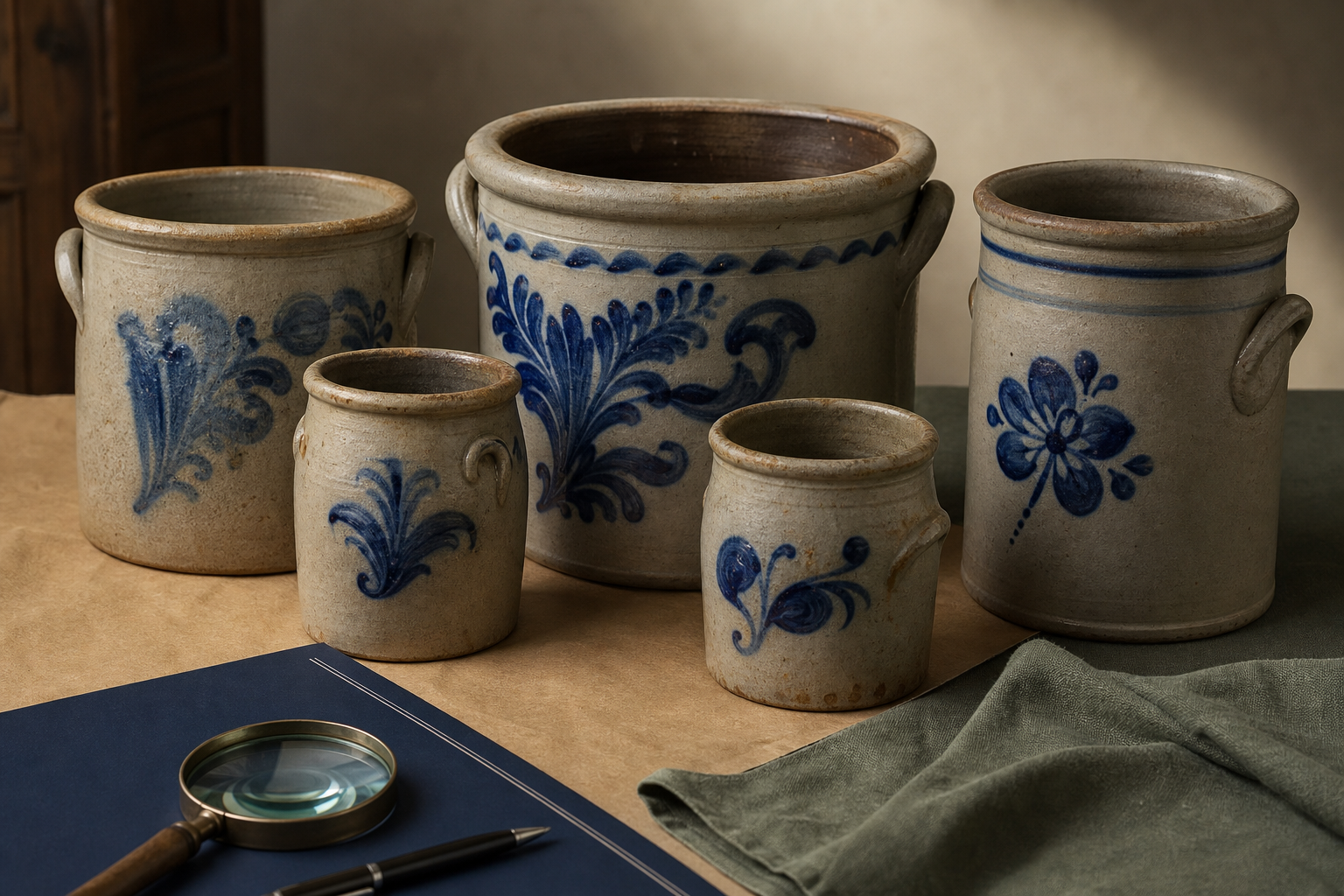
Unlocking the Charm of Nostalgia Understanding the Value of Antique Crocks in Todays Market: appraisal and value basics
Unlocking the Charm of Nostalgia Understanding the Value of Antique Crocks in Todays Market research should start with identification, condition, provenance, and recent comparable sales. Use this guide to compare the signals that matter before paying for a formal appraisal or deciding whether to sell.
Antique crock value checklist
Antique stoneware crocks occupy a sweet spot in the antiques world: they’re charming, useful, ruggedly beautiful, and often more affordable than fine art—yet the best examples can command serious money. For appraisers and enthusiasts alike, understanding the forms, glazes, makers, and condition cues behind these humble workhorses unlocks both historical context and current market value.
Below is a structured guide to identifying, evaluating, and buying or selling antique crocks with confidence.
What Exactly Is an “Antique Crock”?
“Crock” is a broad, collector-friendly term for heavy stoneware containers used for food storage and fermentation (pickles, butter, sauerkraut) from the early 19th through early 20th centuries. Related forms include jars, churns, jugs, and kegs. Hallmarks include:
- Material: High-fired stoneware (vitrified body) in gray to buff tones.
- Glazes: Salt glaze (producing an “orange-peel” surface), Albany slip (a chocolate-brown iron-rich glaze often used inside), and later Bristol glaze (a smooth, opaque white or off-white).
- Decoration: Plain utilitarian bodies, brushed cobalt-blue motifs (birds, flowers, leaves, hearts, tulips), incised designs, and stenciled advertising.
- Capacity marks: Painted or stamped numerals (1, 2, 3, etc.) indicating gallons.
- Forms: Early ovoid (bulging) bodies with applied lug handles; later straight-sided forms with molded handles and factory stamps.
Crocks were produced across the United States and in Europe, with dense clusters of American production in the Northeast (New York, Pennsylvania), Mid-Atlantic (Maryland), and Ohio River Valley/Midwest (Ohio, Indiana, Wisconsin, Minnesota, Illinois, Missouri).
How to Identify Age, Region, and Maker
Collectors and appraisers read crocks much like a detective story. Look at the body form, glaze, decoration, handle construction, and marks.
Body form
- Early (early-mid 19th century): Ovoid bodies, tall shoulders, narrow mouths, and applied lug or strap handles. Bases may show turning rings from wheel-throwing.
- Later (late 19th–early 20th century): Straighter sides, more standardized volumes, molded or pulled handles, and factory consistency.
Glazes and surfaces
- Salt glaze: A slightly pebbled surface created by throwing salt into the kiln; common throughout the 19th century. Gray to buff body with blue or simple utilitarian finish.
- Albany slip: Chocolate-brown interior (sometimes exterior) glaze popular from the mid-late 19th century.
- Bristol glaze: White/off-white sanitary glaze common around 1900 and later, especially on jugs and churns.
Decoration
- Cobalt blue: Freehand or brushed designs (birds on branches, florals, wreaths, hearts) raise desirability. In some regions the blue “bleeds” slightly into the glaze—normal and often attractive.
- Incised vs. brushed: Incised (cut into clay) decoration and script can be earlier and region-specific.
- Stenciling: Found on late-19th to early-20th-century crocks; advertising pieces from general stores, creameries, or butchers are sought after.
Marks and stamps
- Northeast greats: Manhattan and New York makers like the Crolius and Remmey families, and Baltimore and Philadelphia potters, often signed or impressed pieces with names and addresses. High desirability.
- Ohio/Midwest: Notable firms include Red Wing (Minnesota), Western Stoneware (Illinois), White Hall, Robinson Ransbottom (Ohio), and Uhl (Indiana). Red Wing’s wing logo and stamps (evolving over time) are iconic.
- Capacity numerals: A large hand-painted “3,” “4,” etc., often accompanied by a maker stamp or store name.
- Regional clays: Ohio and Indiana bodies can show characteristic hues and densities different from Northeastern grays.
Construction cues
- Applied handles vs. molded: Early applied lug handles with finger impressions suggest handwork. Later molded handles and crisp factory symmetry hint at later production.
- Turning rings and base wear: Uneven or concentric rings indicate wheel work; honest base wear supports age.
Condition: The Value Driver You Can’t Ignore
Condition is paramount. Stoneware is sturdy, but heavy use and kiln quirks abound. Learn the vocabulary and how it affects price:
- Chips: Rim chips and base chips are common. Small, old, non-distracting chips lower value modestly; large bites reduce value more significantly.
- Hairlines: Fine cracks, often along the rim or body. Structural hairlines (visible inside and out) impact value more than superficial crazing.
- Cracks: Through-body cracks and star (spider) cracks reduce value substantially; stabilization or professional conservation helps structurally but still affects pricing.
- Stains and mineral lines: Harmless in moderation; can be sympathetically cleaned. Deep oil stains or harsh chemical bleaching can be problematic.
- Glaze pops, kiln kisses, and manufacturing flaws: Often accepted as part of the piece’s history. Non-structural kiln flaws usually have a smaller impact.
- Restoration: A key appraisal factor. Overpaint, fill, and new glaze can dramatically change value. Check carefully with oblique light; UV inspection can reveal overpaint on lighter glazes.
As a rule of thumb, collectors pay a premium for:
- Undamaged rims and handles.
- Crisp cobalt decoration with appealing subject matter.
- Clear stamps and advertising.
- Strong, even glaze without heavy discoloration.
What’s Hot: Motifs, Makers, and Sizes
- Cobalt-decorated Northeast stoneware: Birds on branches, elaborate florals, and named examples tied to known potters or merchants can command the market’s attention.
- Early signed pieces: Incised or impressed Manhattan and Baltimore makers can reach four to five figures at auction when condition and decoration align.
- Advertising crocks: Late-19th to early-20th-century stenciled pieces with bold typography or pictorial logos are popular with crossover collectors of Americana and regional history.
- Red Wing and Western Stoneware: Clean examples with strong stamps or a prominent red wing remain reliably collectible.
- Size matters: Display-friendly sizes (2–6 gallons) are easier to sell than very large 20–30 gallon behemoths, which are striking but hard to ship and place in modern homes.
Realistic Price Ranges in Today’s Market
Values are highly conditional and regional, so compare recent sold crocks of the same maker, size and decoration. This is how the main groups compare in the current market:
- Plain utilitarian crocks (Midwest/Ohio Valley, late 19th–early 20th c.)
- 1–2 gallon: the most common and least expensive; price depends on maker and condition
- 3–5 gallon: usually a little more than the smaller sizes
- Cobalt-decorated Northeast/ Mid-Atlantic (mid-19th c.)
- Simple motifs or minimal decoration: above plain crocks
- Attractive birds, florals, hearts, or named examples: sell well above simple decoration
- Rare or exceptional signed pieces by notable makers: the top of the market in standout cases
- Advertising crocks and jars (c. 1890–1920)
- Simple stencils: usually modest
- Bold graphics, scarce merchants, or excellent condition: sell for considerably more
- Butter churns with stenciling or factory marks
- Common sizes: price depends on glaze and condition
- Oversize 20–30 gallon crocks
- Condition, maker, and shipping feasibility are decisive; many sell locally because they are costly to ship
Note: Shipping risk and cost depress prices for large pieces online. Local markets, estate sales, and regional auctions can outperform or underperform national averages depending on collector density.
Red Flags and Reproductions
The popularity of rustic décor has spurred a flood of reproductions and “country look” pieces. Telltales include:
- Too-perfect uniform glaze with no wheel marks or turning rings; overly glossy surfaces without salt-glaze texture.
- Artificial “crazing” that looks contrived or sits only on the surface paint layer.
- Crisp, modern fonts for numbers or advertising that don’t align with period typefaces.
- Lightweight bodies or chalky, porous clay lacking the weight and ring of high-fired stoneware.
- Generic “USA” marks or modern country-store branding with no historical counterpart.
- Fresh cobalt “blue” that sits on top of the glaze like paint rather than being integrated and slightly bled into the fired surface.
When in doubt, compare to verified examples, study regional styles, and examine under strong, angled light. For high-value items, a professional appraisal and UV inspection can detect restoration.
Best Practices for Care, Display, and Use
- Cleaning: Use mild soap and water with a soft cloth. Avoid bleach or harsh chemicals that can etch glaze or fix stains permanently. For mineral stains, try a gentle soak in warm water; dry thoroughly.
- Handling: Support the base—never lift by the rim or handles alone, especially on larger pieces or anything with a hairline.
- Environment: Avoid extreme temperature swings; don’t leave stoneware outdoors in freezing climates. Use felt pads under bases to protect shelves and minimize scratches.
- Food use: Period stoneware was intended for food, but unknown glazes and old residues make modern food contact risky. If you choose to use for dry storage, line containers or use food-safe inserts.
- Repair: Amateur epoxy and overpaint reduce value. For significant pieces, consult a conservator; keep receipts and documentation.
Buying and Selling Strategy
- Appraisal and comps: Assess maker, decoration, capacity, and condition first. Compare to recent sales of similar pieces and adjust for condition.
- Sourcing: Estate sales, regional auctions, and reputable dealers remain reliable. Watch for local advertising crocks tied to hometown merchants.
- Photography for selling: Use natural, even light. Publish rim and base close-ups, handle views, marks, and any flaws. Full-disclosure listings build trust.
- Shipping: Double-box with rigid foam around the crock, pad interior voids, and secure handles separately if fragile. Insure generously.
- Timing: Fall and winter see increased interest in home décor; specialty Americana sales can bring premium prices for high-quality or rare examples.
Quick Reference Checklist: Appraise an Antique Crock in Minutes
- Identify form and size
- Note capacity (gallons), ovoid vs. straight-sided, and handle type.
- Examine glaze and decoration
- Salt-glaze texture, Albany or Bristol glaze, cobalt motifs or stencils.
- Locate marks
- Maker stamps, merchant names, town marks, and capacity numerals.
- Evaluate condition
- Check rim, base, and handles for chips; look for hairlines/cracks; note stains and glaze pops; check for restoration.
- Judge authenticity
- Weight, turning rings, period-appropriate fonts, integrated cobalt, and overall age wear.
- Compare comps
- Match maker, motif, size, and condition to recent sales; adjust for shipping complexity.
Frequently Asked Questions
Q: Are all crocks with blue decoration valuable? A: Blue decoration generally boosts value, but subject matter, quality, maker, and condition matter more. A common, lightly brushed leaf on a heavily cracked crock may bring less than a plain but pristine piece by a desirable maker.
Q: How can I tell if my crock is Red Wing? A: Look for the wing logo, Red Wing Stoneware/Union Stoneware stamps, and typical capacity numerals. Wing size and stamp style evolved over time. Form, clay color, and handle style can also support identification.
Q: What size sells best? A: Two- to six-gallon crocks balance display appeal and manageable weight, making them strong sellers. Oversize crocks impress in person but can be difficult and costly to ship.
Q: Does restoration kill the value? A: Professional, well-documented conservation may preserve value in rare pieces. Amateur overpaint or undisclosed repairs can cut value dramatically. Always disclose restoration when selling.
Q: Are advertising crocks a good buy? A: Yes—especially pieces with bold typography or graphics tied to local history. Scarce merchants and excellent condition can push values well above generic stenciled examples.
Antique crocks embody both utility and artistry, carrying local histories from potters’ kilns to today’s collections. With a practiced eye for form, glaze, marks, and condition, you can navigate the market confidently, avoid reproductions, and recognize the pieces that deserve a place in your collection—or your appraisal report.


