Unlock the Past a Collectors Guide to Antique Flintlock Pistol Identification: appraisal and value basics
Unlock the Past a Collectors Guide to Antique Flintlock Pistol Identification research should start with identification, condition, provenance, and recent comparable sales. Use this guide to compare the signals that matter before paying for a formal appraisal or deciding whether to sell.
Antique flintlock pistol identification checklist
Antique flintlock pistols are touchstones of craftsmanship and history. They also present identification challenges: overlapping styles, wide regional variation, mixed parts, later conversions, and modern reproductions can confuse even seasoned collectors. This guide distills practical, field-ready methods to identify, date, and evaluate flintlock pistols with confidence.
How a Flintlock Works—and Why It Matters
Knowing the anatomy is the key to reading age, origin, and originality.
- Lock: The heart of the pistol. The cock (often called the hammer) holds the flint. When released, it strikes the frizzen (steel), shaving sparks into the priming pan. The frizzen flips open as the charge ignites through the touch-hole.
- Pan and frizzen: Early- to mid-18th century locks usually have a simple pan; late-18th to early-19th locks often show “waterproof” raised pans and tighter frizzen fit. Some late-quality locks use a small roller on the frizzen spring for smoother action.
- Cock shapes: Early cocks can be ring-necked or with pronounced arches; by the mid-18th century, the elegant “swan-neck” cock predominates on quality arms. Massive, utilitarian cocks tend to indicate martial pistols or later trade work.
- Safeties: Half-cock is universal. Additional features can signal type and date: a “dog” safety catch (doglock) is 17th-century; sliding safeties behind the cock are common on late-18th to early-19th century pocket and boxlock pistols.
Lock design variants often pinpoint regional origin and era:
- Snaphaunce (17th century): separate pan cover and steel; earlier than true flintlock.
- Doglock (late 17th century): external safety “dog” behind the cock; mostly on military long arms, less common on pistols.
- True flintlock (late 17th–early 19th century): integrated pan cover and steel (frizzen).
- Miquelet (Spanish/Italian/Ottoman): external mainspring, distinctive bridled jaws, and bold external sear parts; used from the 17th into the 19th century.
Pay attention to lockplate shape and finish. Flat plates with beveled edges and pointed tails can suggest 18th-century English and French styles; rounded tails and robust plates often read as later or martial.
Typology and Timeline: What Kind of Pistol Is It?
Understanding form and purpose narrows identification dramatically.
- Holster/Officer’s pistols (c. 1700–1800): Single-shot, belt or saddle holster size, 10–16 inch barrels, usually smoothbore. Often with brass furniture, wooden ramrods early, later iron or horn-tipped.
- Duelling pistols (c. 1770–1830): Slim, elegant, typically in pairs, high-quality locks and triggers. Smoothbore early; rifled examples appear later. Makers like Wogdon, Twigg, Manton, Durs Egg, or top French ateliers are signatures of quality. Expect refined sights, set triggers on some, and fine engraving.
- Queen Anne pistols (mid-18th century): Turn-off cannon barrels that screw off for loading; breech forms the chamber. Often with silver-wire inlay, rococo carving. London and Continental centers made many.
- Boxlock pocket pistols (late 18th–early 19th century): Compact, action contained in the frame, often with screw-off barrels and sliding safety. Commonly proofed in London, Birmingham, or Liège.
- Martial pistols (18th–early 19th century): Sturdy, larger bores, thick stocks, and iron or brass mounts. British examples often have “TOWER” lock markings and Crown over “GR” for George III; Continental armies used their own patterns and state marks.
- Ottoman/Balkan pistols (18th–19th century): Long, slender barrels; lavish silver or niello mounts; miquelet locks with bold external springs.
Dating tips by feature cluster:
- 1700–1750: Rococo lines, raised carving around lock and barrel tang, cannon barrels on Queen Anne types, ring- to early swan-neck cocks.
- 1750–1790: Swan-neck cocks, better steel quality, sleeker stocks, London or St Etienne proofs; rise of fine duelling pistols.
- 1790–1815: Napoleonic wartime production; martial pistols abundant. Waterproof pans, roller frizzen springs on quality pieces, Birmingham proofs post-1813.
- 1815–1835: Transition era; many flint pistols continue, but percussion appears. Late flintlocks can be very refined (duelling/target) or utilitarian (trade guns).
- Post-1830s: New flintlocks largely for export or tradition-bound markets; many earlier pistols were converted to percussion.
Reading Markings and Proofs
Markings are your primary shortcuts to origin and authenticity. Examine the barrel breech, underside flats, and lockplate inside and out.
- British proofs:
- London: Crown over GP (Gunmakers’ Proof) and Crown over V (View). London company marks appear from the 17th century, with consistent crowned GP/V in the 18th–19th.
- Birmingham (post-1813): Crown over BP (Proof) and Crown over BV (View). Prolific on late flint and early percussion pistols.
- Ordnance marks: Broad Arrow indicates government property; Crown over inspection numbers on stocks and barrels; “TOWER” on locks for Board of Ordnance assembly. Crown over GR (George III) or ER/VR on later pieces; on flintlocks, GR is common.
- Belgian (Liège) proofs:
- ELG in an oval stamped on breech or under-barrel indicates Liège proof. Without crown typically 1811–1893; crowned oval after 1893. The perron (tower-like) and star-over-letter inspector marks are common adjuncts.
- French proofs:
- St Etienne, Paris, and provincial poinçons. Pre-Revolution marks may be crowned letters; Revolutionary and Napoleonic periods use different monograms and stars. High-grade pieces may have maker signatures (e.g., Boutet) and atelier marks.
- Spanish/Italian:
- Miquelet pistols often bear regional control marks (Eibar, Barcelona, Brescia). Spanish barrels sometimes show maker names and decorative silver inlays.
- American:
- Early American pistols often used imported locks and barrels; proofs may be absent. Government models (e.g., early 19th-century U.S. martial) bear U.S. and inspector cartouches on the stock.
Maker names on lockplates can be genuine, spurious, or retail. English retail names (Ketland, Twigg, Manton) appear widely; check that the name style, engraving quality, and pistol form align with known periods. A grand name on a low-grade piece is a red flag.
Stock and furniture stamps: Look for inspector cartouches in ovals on military stocks, assembly numbers inside trigger guards or on ramrods, and small file marks indicating hand fitting.
Construction Clues: Barrel, Stock, Furniture, and Finish
- Barrels:
- Profiles: Early pistols favor octagonal or octagon-to-round barrels; swamped (slightly flared) barrels appear on quality 18th-century work. Queen Anne “cannon” barrels flare at the muzzle.
- Bore: Many martial pistols run roughly 16–20 bore (about .62–.66 inch), though variation is common. Duelling pistols often .50–.58. Pocket pistols smaller.
- Rifling: Dueling and target pistols can be rifled; most martial and pocket pistols are smoothbore.
- Sights: Simple bead or low blade front sights are common; refined duellers use improved rear notches, sometimes adjustable on later examples.
- Stocks:
- Wood: European walnut predominates; American pieces may appear in maple or cherry. Ornate Continental examples may show carved bone or silver overlays.
- Carving: Bold rococo relief carving around the tang and lock screams mid-18th century. By c. 1770+, carving is restrained; checkered wrist appears on higher-grade pieces.
- Repairs: Spliced fore-ends, filled cracks at the lock mortise, and replaced fore-end caps affect value. Look for consistent tool marks and patina at any repair seam.
- Furniture:
- Brass is common on British and many Continental pistols; iron on martial examples; silver mounts on luxury and Ottoman/Balkan arms.
- Trigger guards evolve from bulbous finials to sleeker bows; duelling pistols may have spur-style guards for better control.
- Butt caps: Half or full caps with grotesque faces (early), then simpler domes; eared caps (with side projections) can indicate mid-18th century.
- Finish:
- Surfaces should show age-consistent wear: softened edges but not smeared details. Industrially even polishing or anachronistically bright blueing often indicates refinish or reproduction.
Original vs. Altered: Conversions, Reconversions, Restorations, and Reproductions
- Percussion conversions: Many period flintlocks were converted in the 19th century. Look for plugged or modified pan, removed frizzen screw boss, and a drum-and-nipple or bolted percussion bolster at the breech. Conversion marks often mismatch the surrounding patina.
- Reconversions to flint: Dealers sometimes restore converted pistols back to flint to increase appeal. Telltales:
- New or re-cut pan in the barrel or breech plate with crisp corners amidst older metal.
- Freshly drilled frizzen screw hole or replaced frizzen spring.
- Cock that doesn’t match lock wear patterns; misaligned flint strike on frizzen face.
- Replaced parts: Cocks, frizzens, top jaws, ramrods, and screws are commonly replaced. Compare engraving style, screw slot wear, and patina between parts. Screw slots with modern machine-perfect symmetry on an otherwise hand-cut pistol are suspect.
- Refaced frizzens: Period practice. A thin steel plate brazed to the frizzen face can be legitimate if the aging is consistent.
- Modern reproductions: Often Italian or Indian manufacture. Indicators include metric threads, modern steel stamps, faux “aged” engraving, and proofs that post-date flint era. Wood may be over-sanded with pore fillers that don’t match age, and patina can appear uniformly sprayed rather than naturally varied.
Aim for a whole-object reading: small inconsistencies are common on working arms; a chorus of mismatches signals assembly or reproduction.
Condition, Rarity, and Value Factors
Collectors and appraisers consider:
- Maker and quality: Top London names (Manton, Wogdon, Durs Egg, Twigg) and French masters command premiums. Crisp engraving, refined architecture, and superior lock work increase value.
- Type desirability: Cased pairs of duelling pistols lead the market; complete martial pistols with strong markings are dependable; ornate miquelet pistols appeal to decorative arts collectors.
- Completeness: Original ramrod, matching pair number (1 and 2 stamped on breech tangs or in the case), intact case accessories, and untouched screws matter.
- Condition: Sharp edges, deep proofs, minimal pitting at the breech, and tight wood-to-metal fit are good signs. Honest patina beats aggressive cleaning. Avoid active corrosion.
- Provenance: Named owners, regimental markings, or solid archival documentation add value.
- Legibility of marks: Clear proofs and maker stamps support confident attribution and stronger appraisals.
Handle with care. Never dry-fire a flintlock on an original frizzen; it can chip or scar the steel. Use a leather pad if you must test function, or better, avoid “snapping” entirely.
Field Checklist for Quick ID
- Identify the lock type:
- True flintlock vs miquelet vs snaphaunce/doglock traits.
- Cock shape (ring-neck, swan-neck) and presence of extra safeties.
- Check for conversion:
- Pan and frizzen intact? Signs of drum-and-nipple or plugged pan?
- Reconversion clues: new pan cut, mismatched patina.
- Read the marks:
- Barrel breech flats and underside for proofs (London/Birmingham, Liège ELG, French poinçons).
- Lockplate for maker/retailer; stock for inspector cartouches on martial pistols.
- Assess construction:
- Barrel profile (octagon-to-round, swamped, turn-off), bore size, rifling.
- Stock wood and carving; furniture material and style; sighting arrangement.
- Judge originality:
- Consistent wear and tool marks; matching engraving; period screws.
- Ramrod originality; pair numbers where applicable.
- Note condition:
- Pitting at breech, cracks at lock mortise, replaced parts, active rust.
- Record thoroughly:
- Overall length, barrel length, bore measurement, weight, detailed photos of lock inside/out and all marks.
What similar items actually sold for
To help ground this guide in real market activity, here are recent example auction comps from Appraisily’s internal database. These matched sales are market context only, not an object estimate or identification, and they do not guarantee a price for your specific flintlock pistol.
Shown USD range: USD 320-USD 10,925. Median of these 8 USD examples: USD 700.
| Comparable | What sold | Auction house | Date | Lot | Source-reported amount |
|---|---|---|---|---|---|
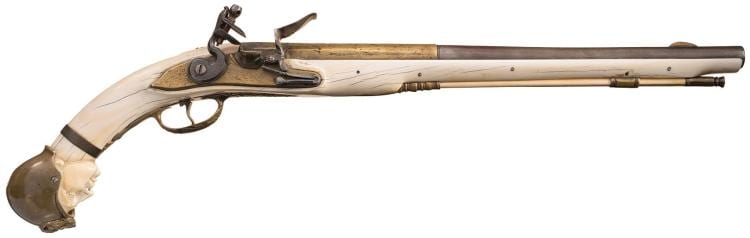 |
Carved Flintlock Pistol | Rock Island Auction Company | 2016-12-04 | 3210 | USD 10,925 |
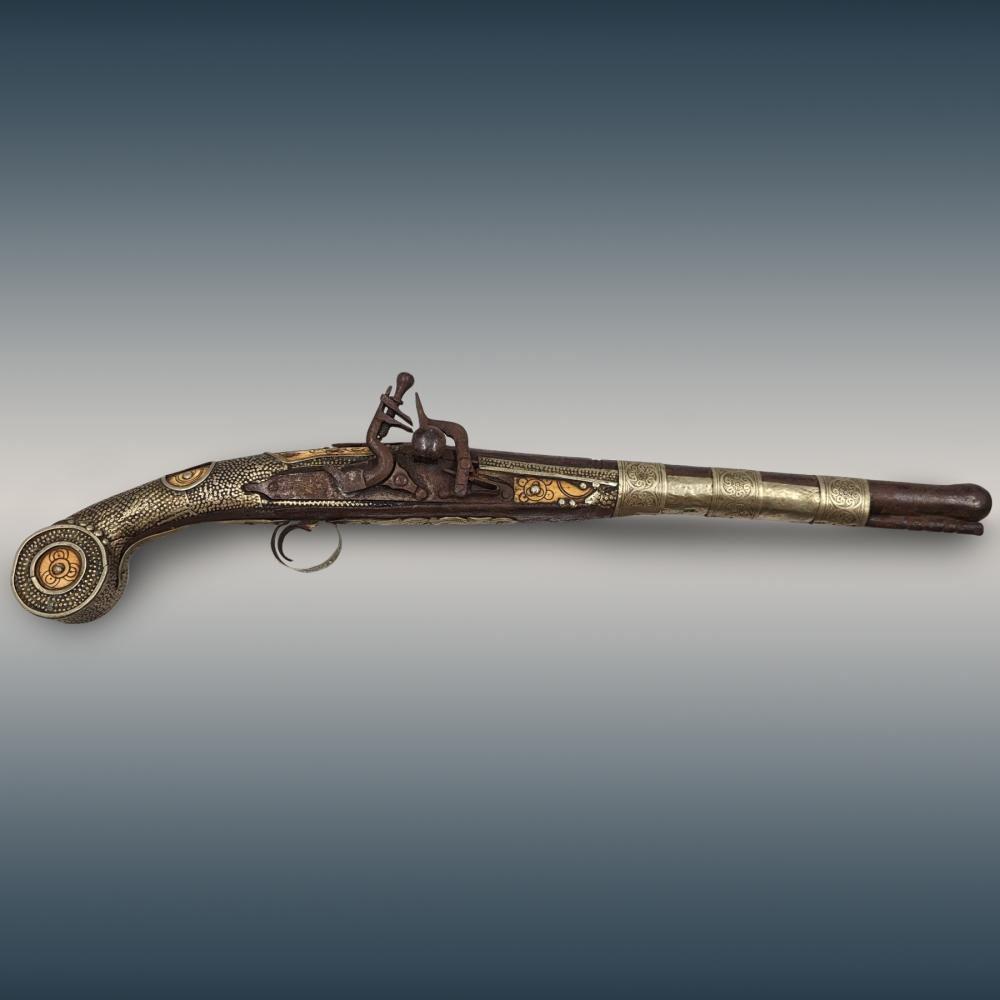 |
Antique Flintlock Pistol With Bone Inlaid Decoration | RB Fine Arts | 2024-06-29 | 151 | USD 320 |
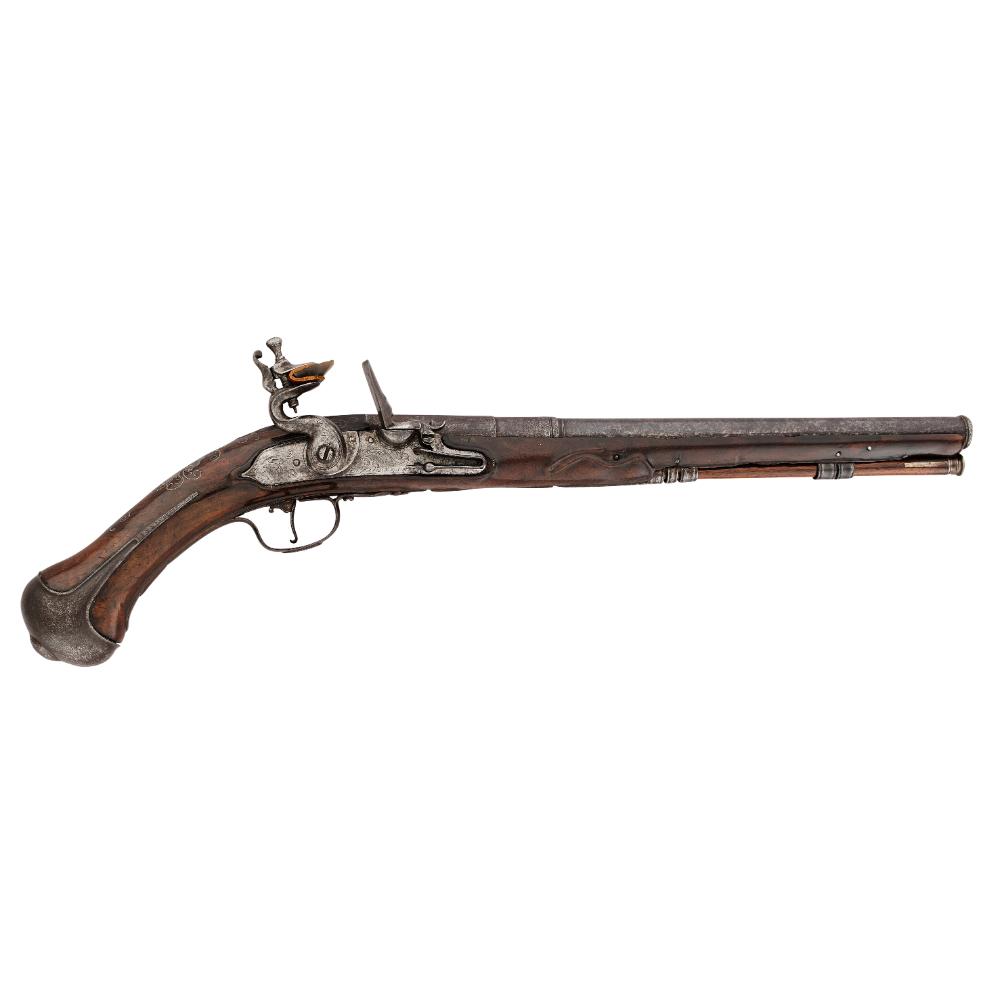 |
‡ A RARE EARLY 25 BORE FLINTLOCK HOLSTER PISTOL BY L. SANDERSN (SIC) OF LONDON, CIRCA 1670 | Olympia Auctions | 2025-09-24 | 43 | GBP 750 |
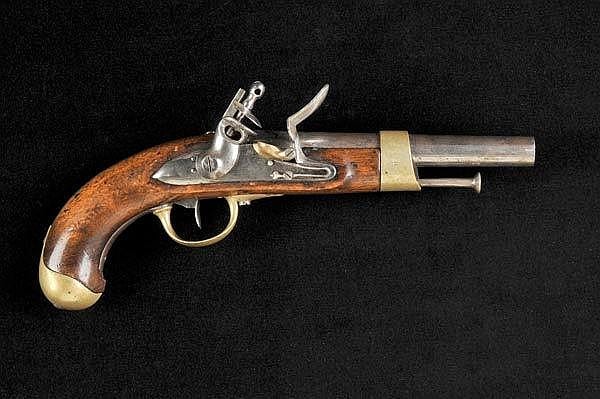 |
* Pistol. A Napoleonic Wars French flintlock pisto | Dominic Winter Auctions | 2015-11-13 | 671 | GBP 620 |
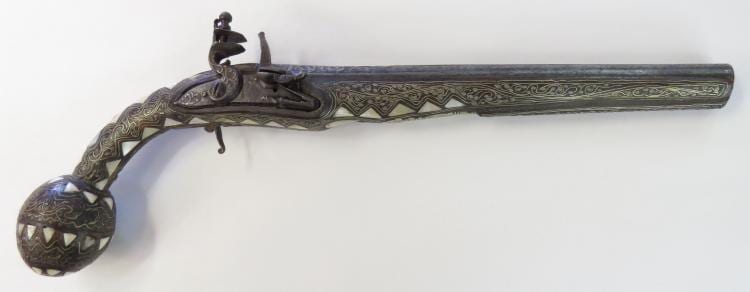 |
A SYRIAN FLINTLOCK PISTOL | Auctions Imperial LLC | 2018-05-19 | 208 | USD 425 |
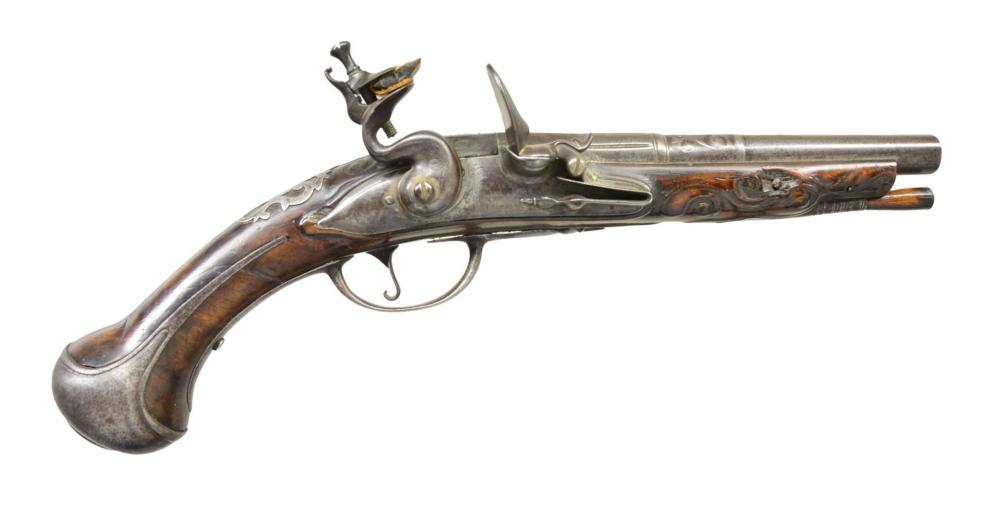 |
BAREND PENTERMAN ORNATE DUTCH FLINTLOCK PISTOL. | Poulin Antiques & Auctions | 2023-05-14 | 3567 | USD 750 |
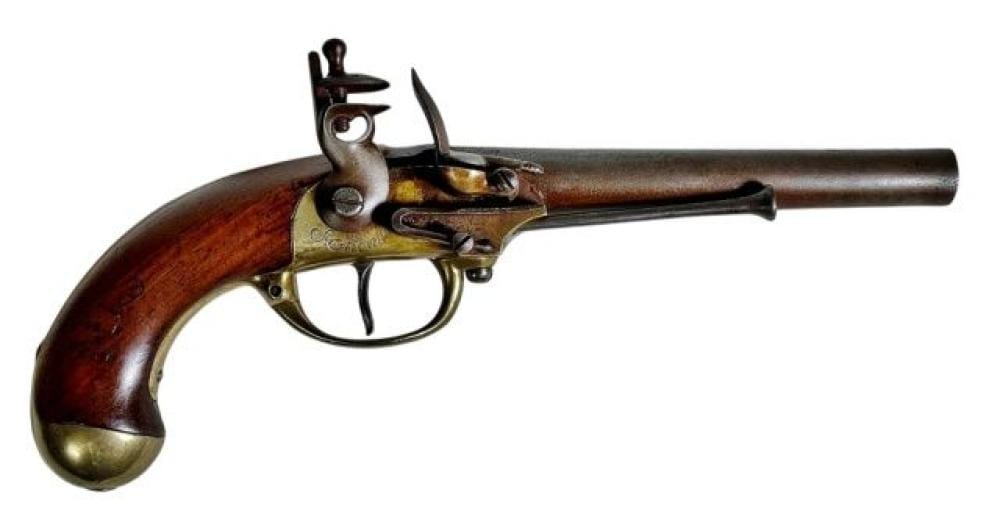 |
French M1777 Flintlock Cavalry Pistol, St. Etienne | J. James Auctioneers and Appraisers | 2025-12-06 | 101 | USD 2,100 |
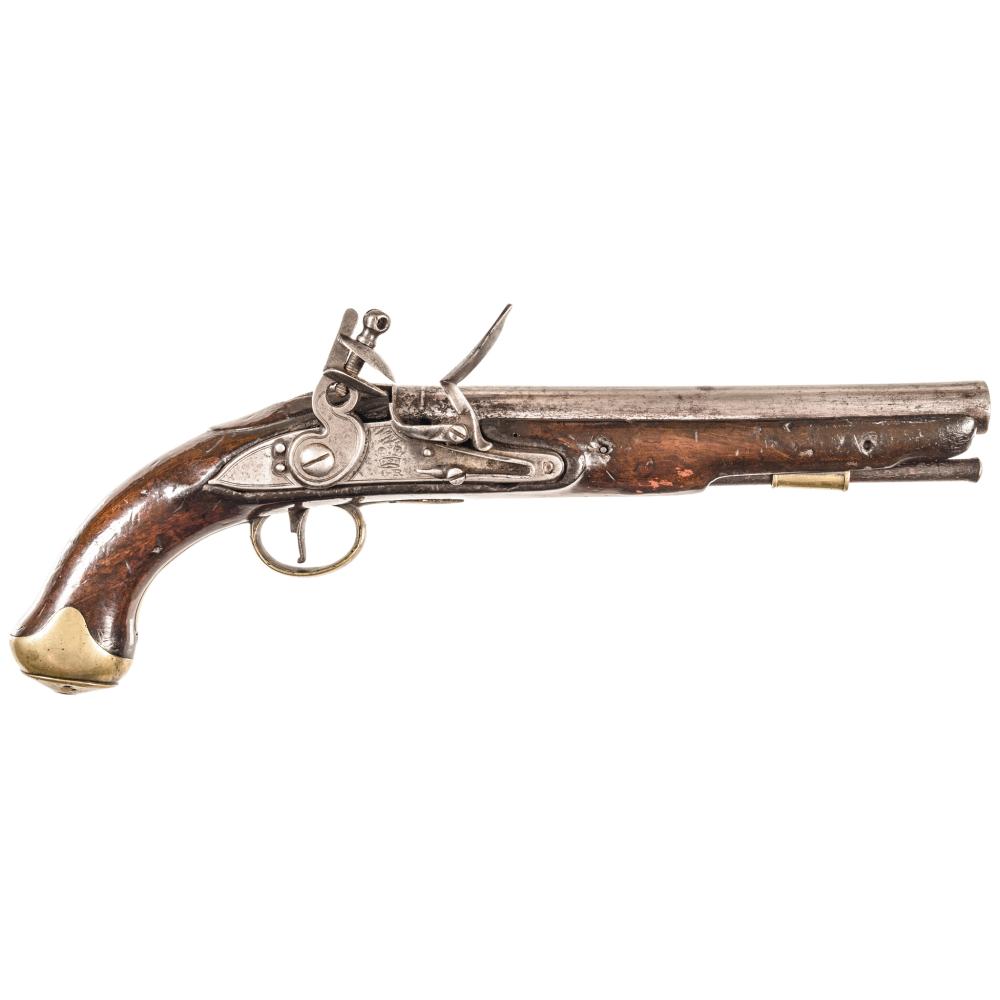 |
c. 1780-1810 British Regiment Light Dragoon Pattern Flintlock Pistol | Early American History Auctions | 2019-06-01 | 329 | USD 2,700 |
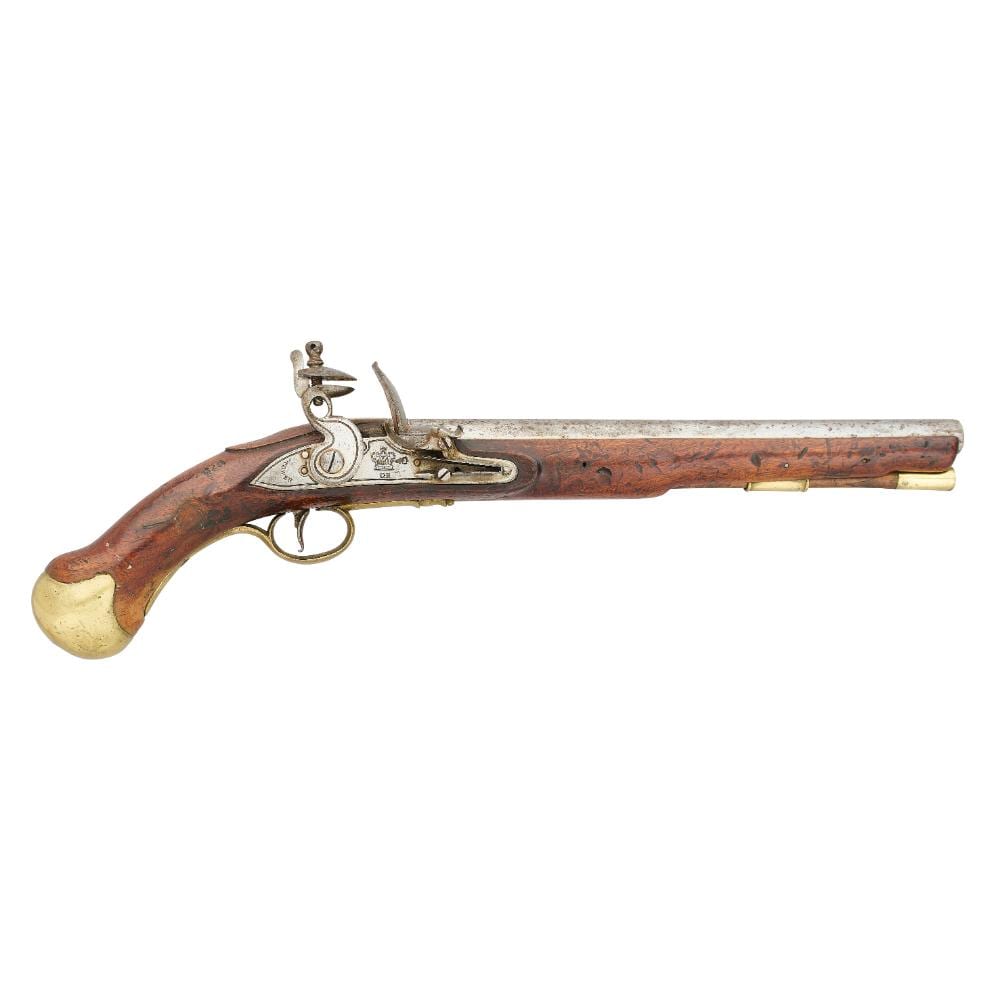 |
A 28 BORE FLINTLOCK 1801 PATTERN LONG SEA SERVICE PISTOL, CIRCA 1800 | Olympia Auctions | 2025-12-04 | 332 | GBP 1,000 |
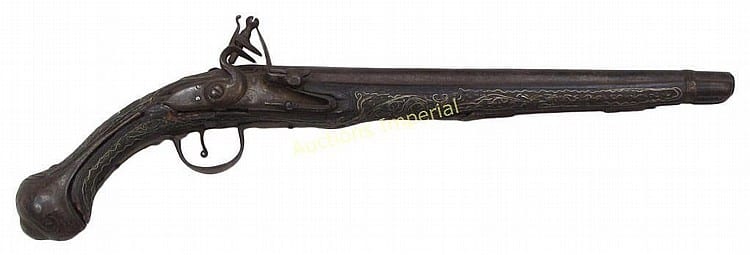 |
AN OTTOMAN FLINTLOCK PISTOL | Auctions Imperial LLC | 2015-03-21 | 307 | USD 325 |
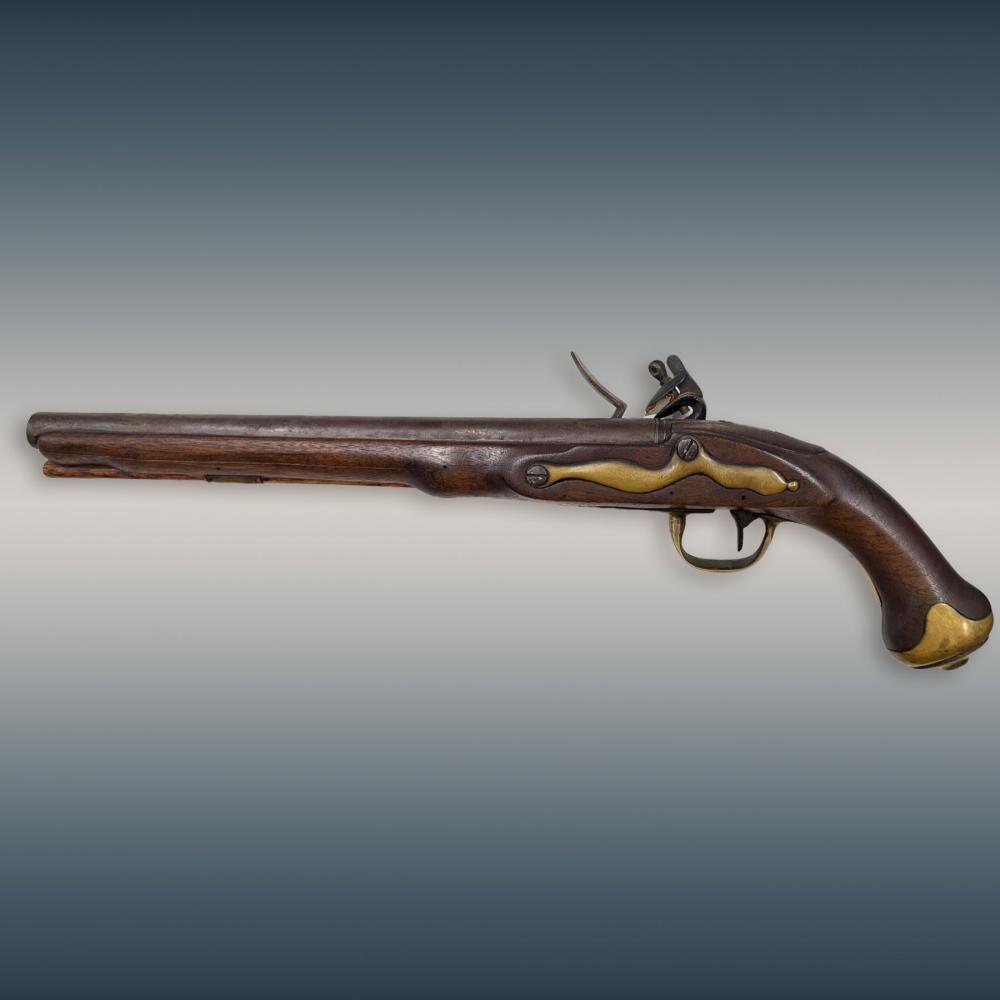 |
Antique Wood And Brass Flintlock Pistol With An Engraved Name | RB Fine Arts | 2024-08-31 | 160 | USD 650 |
How these auction records were verified
Each row is tied to its lot identity, retrieval time, access result, and immutable record hash. Live source access was blocked; the exact record matched Appraisily's immutable pipeline provenance. Inspect the public comparable provenance record.
Free photo check
Not sure if your item is worth appraising? Let us take a look.
Upload a photo, tell us what you know, and get a free photo check. If a full appraisal makes sense, we will say so.
Free. No card needed. Takes about two minutes.
FAQ
Q: How can I estimate the bore size without specialized gauges? A: Use calipers to measure the muzzle diameter in inches and compare to common bores (e.g., ~.62–.66 for many British martial pistols; pocket pistols smaller). For accuracy, a soft lead slug lightly tapped into and out of the bore gives a better read on rifling and diameter.
Q: What’s the difference between a percussion conversion and a reconversion to flint? A: A percussion conversion modifies a flint pistol to fire percussion caps (adding a nipple/bolster and removing the pan). A reconversion attempts to return a converted pistol to flint by restoring the pan, frizzen, and cock. Original untouched flintlocks are generally more desirable than reconversions.
Q: Are all flintlock pistols considered antiques? A: Most original flintlocks predate the mid-19th century and are antiques. However, modern reproductions exist. Identification of proofs, maker marks, construction methods, and patina helps distinguish originals from replicas. Always verify local regulations regarding antique firearms.
Q: How do I safely inspect the lock without damaging the pistol? A: Remove the lock carefully after backing out the lock screws, supporting the stock. Photograph the inside before handling. Avoid dry-firing; do not pry with screwdrivers that don’t fit the slots. Reinstall gently to avoid chipping the mortise edges.
Q: What single feature most strongly indicates a high-end duelling pistol? A: Quality of the lock and trigger combined with refined architecture. A crisp, fast lock (often with a roller frizzen spring), fine checkering, neatly filed sights, and flawless wood-to-metal fit—often in a cased pair—are reliable hallmarks of top-tier duelling pistols.
By combining lock taxonomy, proof-reading, construction analysis, and a sharp eye for originality, you can unlock the past embedded in a flintlock pistol—and make sound identification and appraisal decisions.