
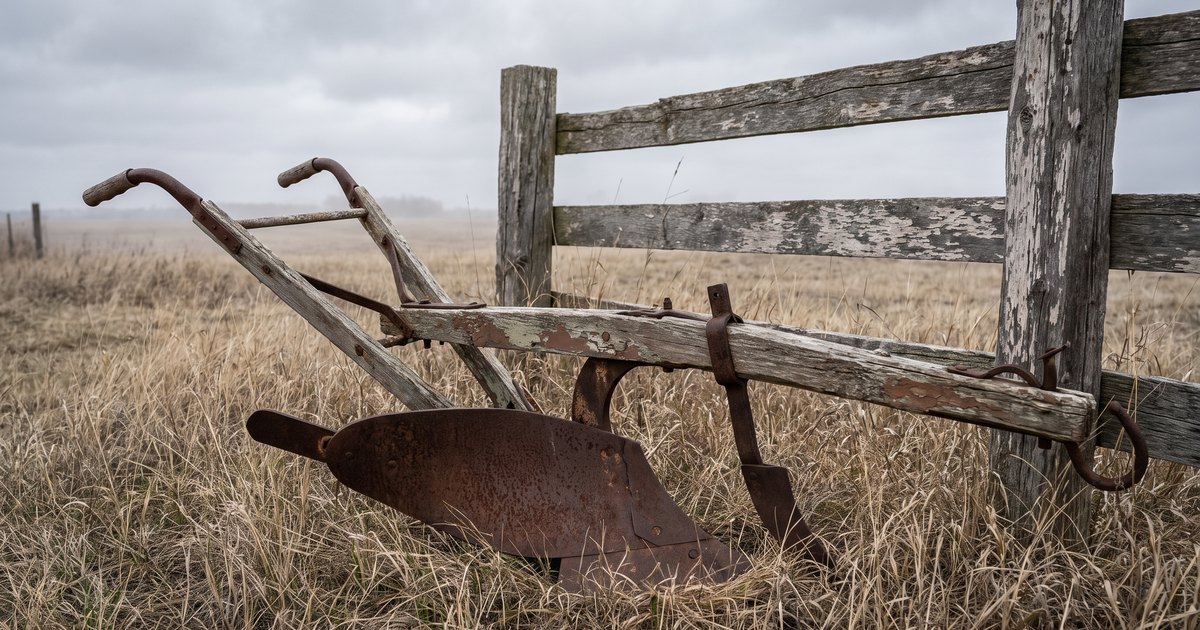
Unearthed Treasures Discovering the Hidden Value of Antique Horse Drawn Plows: appraisal and value basics
Unearthed Treasures Discovering the Hidden Value of Antique Horse Drawn Plows research should start with identification, condition, provenance, and recent comparable sales. Use this guide to compare the signals that matter before paying for a formal appraisal or deciding whether to sell.
Antique horse-drawn plow value checklist
Antique horse-drawn plows sit at the crossroads of American and European agricultural history, industrial innovation, and rural craftsmanship. For appraisers and collectors, they offer a case study in how design, region, and condition translate into market value. Whether rescued from a barn, a fence row, or a country auction, these iron-and-wood workhorses can reveal surprising worth—if you know where to look.
Below, you’ll find a structured guide to identifying, dating, evaluating, and pricing antique horse-drawn plows, from common walking plows to scarce sulky and hillside variants.
Why These Plows Still Matter To Appraisers
- Historical innovation embodied. The shift from wood-and-iron hybrids to steel, and then to chilled cast iron, maps neatly onto 19th-century industrial progress. John Deere’s 1837 steel plow and James Oliver’s chilled cast iron process (commercialized in the late 1860s) reshaped farming—and are sought touchpoints in collections.
- Regional stories. Hillside plows from New England and the Pacific Northwest, prairie breakers from the Midwest, and vineyard cultivators from Europe reflect localized needs and techniques.
- Decorative and functional demand. Decorators prize unmolested lines and patina; living-history farms and draft-horse enthusiasts value completeness and operational integrity. Two buyer pools mean broader demand.
- Shrinking supply. Barn cleanouts and “yard art” repurposing have reduced intact survivors, especially for riding (sulky) and gang plows with complex linkages and seats.
Anatomy And Types: Know What You’re Looking At
Recognizing components clarifies value and makes part-matching easier.
Key parts on a walking moldboard plow:
- Beam: the backbone, wood or iron/steel.
- Handles: often hardwood, sometimes with maker stenciling. Replacement handles are common.
- Frog: the iron frame that holds the share and moldboard.
- Share: the cutting edge; replaceable; steel shares often replaced over time.
- Moldboard: curves and turns the soil; wood-faced on very early examples, iron or steel thereafter.
- Landside: stabilizes along the furrow wall.
- Coulter: a vertical knife or disc that slices ahead of the share.
- Clevis: adjustable hitch at the front, attaches to singletree/evener.
Common horse-drawn types:
- Walking plows: single-bottom, operator walks behind. By far the most common on the market.
- Sulky plows: riding plows with seat and two wheels; foot or lever lift for the bottom. Popular from the 1870s into the 1910s.
- Gang plows: two or more bottoms, often riding, used on larger acreages; scarcer and heavy.
- Hillside/side-hill plows: reversible (left- and right-hand) to work sloped ground without forming a terrace; valued for specialized design.
- Special-purpose implements: subsoilers, listers, and cultivators (e.g., Planet Jr.)—often misidentified as “plows.” Cultivators have multiple small shovels/teeth rather than a single moldboard bottom.
Left- vs. right-hand matters. Most plows are right-hand (throwing soil to the right). Left-hand examples exist and, in some regions, draw a premium due to scarcity.
Makers, Marks, And Dating Clues
Identifying the maker and narrowing the date range is where much of the value unfolds.
Major manufacturers to know:
- John Deere (Moline, Illinois): Early steel plows from the 1840s onward; later walking and sulky lines. Look for cast or stamped “Deere,” “Deere & Co.,” deer logos, and Moline marks.
- Oliver Chilled Plow Works (South Bend, Indiana): Promoted “chilled” cast iron wear surfaces; model numbers often cast into frogs or beams. Expect “OLIVER,” “SOUTH BEND,” and “CHILLED” markings.
- International Harvester (IHC, formed 1902): Consolidated brands; look for “IHC” and model tags on sulky frames.
- J.I. Case: Plows and riding plows with CASE eagles on castings.
- Syracuse Chilled Plow Co.: Distinct chilled-iron components; Syracuse, New York marking.
- Moline Plow Co.: Precursor to the Minneapolis-Moline merger; Moline-marked walking and riding plows.
- Parlin & Orendorff (P&O), Emerson-Brantingham, Vulcan, Massey-Harris (Canada), and Planet Jr. (notably for cultivators).
Where to find marks:
- Castings on the frog, beam brackets, and coulter arms.
- Moldboard or landside casting numbers (e.g., bottom numbers that indicate size/pattern).
- On sulky plows: brass or steel data plates on the frame; seat castings can also carry brand identification.
- Wooden handles: faint stenciling or branded maker names; often faded but worth hunting.
Dating clues:
- Fasteners: square nuts and hand-forged bolts point to late 19th century; hex nuts dominate after ca. 1900–1915. Thread uniformity improves after the 1890s.
- Materials: wood beams and wood moldboard facings indicate mid-19th century; full metal beams become common by the late 1800s. Chilled-iron wear parts popularized in the 1870s–1890s.
- Patent dates: cast or stamped patent dates narrow production windows; note that parts were used across multiple years.
- Color and stencil: original paint (Deere green/yellow highlights, Oliver red/green/black, Case gray/orange accents) and gold stenciling help date. Authentic surviving paint raises value significantly.
- Form and features: mechanical foot-lifts, steering levers, and true-ratcheting lifts are later refinements on sulky models (1890s onward).
Provenance:
- Farm ledgers, dealer receipts, period photographs, or known original ownership can lift a piece from decorative to documented, adding 10–40% depending on the story and corroboration.
Condition, Completeness, Market Values
Condition and completeness are value levers; market context sets the ceiling.
What appraisers scrutinize:
- Completeness: Is the coulter present? Original clevis and evener hardware? On sulky plows, are both wheels, the seat, and lift mechanism intact? Missing seats, lift arms, or wheels are costly to replace and depress value.
- Matching parts and bottom pattern: Mixed-brand or incorrect bottom parts (e.g., Oliver frog with non-matching share) lower value. Matching casting numbers indicate correctness.
- Wear and metal health: Edge wear is expected; deep pitting at structural points, bent beams, or cracked frogs are red flags. Old brazed repairs are historically sympathetic; crude stick-welds reduce value.
- Wood: Original handles with readable stencil are premium. Replacement handles that match period patterns are acceptable; rough new lumber substitutes are not.
- Finish: Honest patina is desirable; aggressive sandblasting and glossy modern paint usually lower collector value (though decorators may still buy).
- Functionality: For living-history users, the lift works, the share can take an edge, and the frame tracks straight.
Common damage and devaluers:
- Yard-art modifications (welded planters), torch cuts, and non-reversible alterations.
- Fire damage (scaling, loss of temper).
- Missing or mismatched seat (sulky): correct cast seats by maker add notable value.
- Over-restoration: incorrect modern colors or powder-coat finishes.
Safety note: Expect lead-based paint on pre-1978 items. Use proper PPE when cleaning.
Typical market ranges (North America; regional variance expected):
Demand drivers:
- Region: Prairie states favor big riding plows; New England prizes hillside types; vineyard districts recognize specialty cultivators.
- Season: Spring and early summer shows/auctions see stronger farmstead-decor demand.
- Event tie-ins: Anniversaries for Deere/Oliver/IHC can spur interest.
A fast case example:
Conservation vs. restoration:
- For collector value, stabilize rather than refinish: gentle dry brushing, light oil or microcrystalline wax on iron, citrus-based cleaner on wood, and avoid irreversible coatings. Save every original bolt you can.
Transport and storage:
- Walking plow weight: ~75–150 lb; sulky: 400–900 lb. Disassemble thoughtfully; tag parts; pad mating surfaces. Store off concrete to avoid wicking moisture; light oil film prevents flash rust.
Quick Appraiser’s Checklist
- Identify type: walking, sulky, gang, hillside, or cultivator (not a plow).
- Confirm maker: check castings, data plates, and handle stencils; note all numbers/letters.
- Match parts: ensure frog, landside, moldboard, and share patterns align by maker/number.
- Assess completeness: handles, clevis, coulter, wheels, seat, lift mechanisms.
- Inspect condition: cracks, bends, brazed vs. crude weld repairs, pitting at stress points.
- Evaluate finish: original paint/stencil present? Avoid over-cleaning; preserve patina.
- Date indicators: fastener styles, patent dates, materials (wood vs. steel vs. chilled iron).
- Rarity factors: left-hand, hillside, early steel, regional makers, unusual sizes.
- Provenance: gather any documents, farm histories, or photos; record oral history with dates.
- Market fit: collector vs. decorator vs. functional user; set expectations accordingly.
- Safety: assume lead paint; wear PPE when handling/cleaning.
- Photography: capture orthogonal views, close-ups of marks, and any repairs; include measurements.
FAQ: Antique Horse-Drawn Plows
Q: How can I tell a plow from a cultivator? A: A moldboard plow has a single bottom (share and moldboard) designed to cut and flip a furrow. Cultivators have multiple smaller shovels or teeth for weeding and soil aeration and often multiple gangs—no large moldboard.
Q: Are repainted plows worth less? A: Usually, yes—at least to collectors. Original paint and stencil can add significant value. Sensitive, period-correct conservation can be acceptable; bright modern paint tends to push the item into decorator territory, which can still sell but often at a lower collector price.
Q: Where are maker’s marks most likely to survive? A: On cast iron parts like the frog, landside, and coulter arm, and on sulky frames and seats. Handle stencils fade but can sometimes be coaxed out under good light. Always photograph and rub clean gently—don’t grind.
Q: What replacement parts are acceptable? A: Period-correct shares and handles are common and generally accepted. Mismatched bottoms or non-period modern hardware will reduce value. When replacing wood, follow original profiles and bolt patterns; retain original iron where possible.
Q: Do left-hand plows bring more? A: Often they do, because they’re scarcer and were used in specific conditions. Premiums vary by region and buyer interest but can add a healthy margin over equivalent right-hand examples.
—
The hidden value in antique horse-drawn plows lies in the details: a casting number in the right place, an intact lift, a correctly shaped handle, a trace of stencil on oak. Approach them like mechanical folk art—practical, regional, and storied—and they’ll repay the careful eye with both historical insight and strong appraisals.