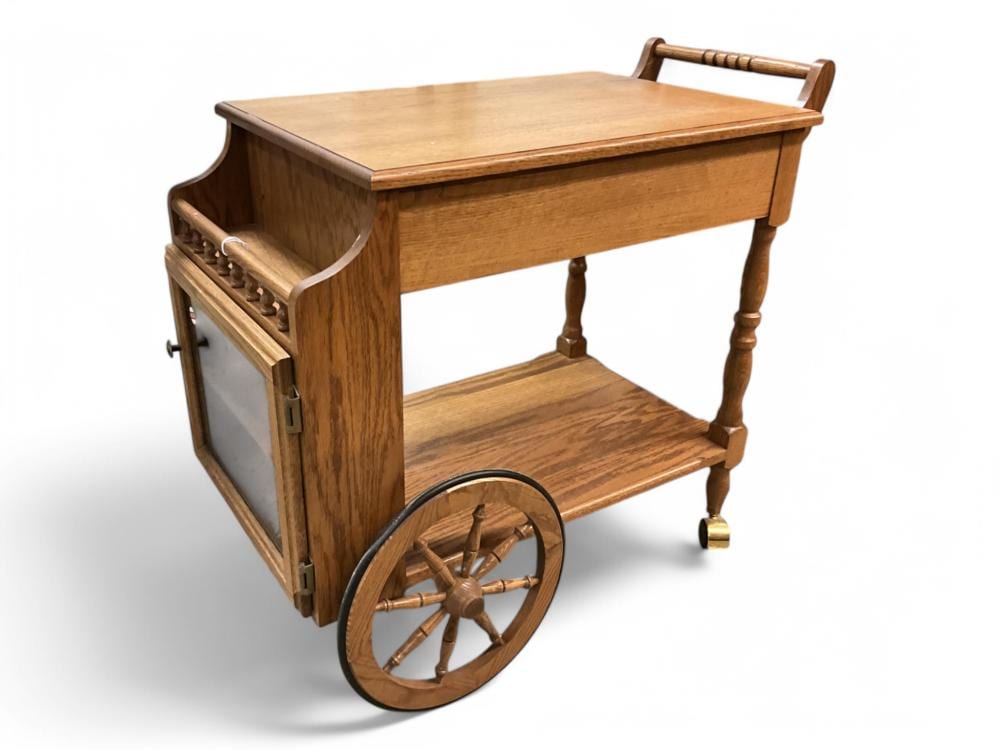
Uncovering the Worth How to Determine Your Antique Tea Carts True Value: appraisal and value basics
Uncovering the Worth How to Determine Your Antique Tea Carts True Value research should start with identification, condition, provenance, and recent comparable sales. Use this guide to compare the signals that matter before paying for a formal appraisal or deciding whether to sell.
Antique tea cart value checklist
Antique tea carts—also called tea trolleys, serving carts, or drinks trolleys—blend utility with design. Whether yours is a Regency-style mahogany example with brass gallery rails or a mid-century Italian brass-and-glass showstopper, its value depends on the intersection of age, design, condition, completeness, and current demand. This guide walks you through how to identify, assess, and value your piece with confidence, so you can decide whether to sell, insure, or simply understand what you own.
Identify What You Have
Start by classifying the cart’s type, materials, and design features. Tea carts evolved through the late 19th century into mid-20th-century bar carts; each period leaves clues.
Core types:
- Edwardian/Regency revival tea trolleys (c. 1900–1930): Often mahogany or walnut, drop-leaf tops, turned legs, brass gallery rails, and bottle wells.
- Art Deco/Streamline (c. 1925–1940): Chrome, nickel, or tubular steel frames; glass or Bakelite accents; geometric lines.
- Mid-century modern (c. 1945–1970): Teak, walnut, or rosewood; clean lines; removable trays; Danish and Italian designs; brass or chrome frames with smoked or clear glass.
- American Colonial Revival and cottage styles (1920s–1950s): Maple, oak, or birch; spindle legs; practical forms with modest ornament.
Common features and what they suggest:
- Drop-leaf sides: Popular on earlier 20th-century English and American tea carts; hinges and rule joints can help date.
- Bottle or decanter wells: Often indicates use as drinks trolley; carved or inset circles point to refined cabinetry.
- Removable tray: Quality carts have fitted trays with molded edges; mid-century Danish examples frequently use teak.
- Gallery rails: Brass galleries and pierced galleries are typical on higher-end English pieces.
- Casters: Early 20th-century carts often use small rubber-tyred metal casters; porcelain or wooden wheels are earlier; plastic casters indicate later replacements.
Materials and finishes:
- Woods: Mahogany, walnut, and oak for Edwardian/Regency revival; teak and rosewood for MCM Scandinavian; maple/birch for American traditional.
- Metals: Brass (solid or plated), chrome, nickel, sometimes steel; check for patina vs plating loss.
- Surfaces: Glass (clear, smoked), goatskin parchment (Aldo Tura), laminate or Bakelite accents on Deco pieces.
- Finishes: Shellac common before 1920s; nitrocellulose lacquer post-1920s; polyurethane or conversion varnish are later or refinish indicators.
Construction cues:
- Joinery: Hand-cut dovetails are rare on trolleys but indicate earlier, high-quality work; machine dovetails and dowel joinery became standard later.
- Screws and hardware: Slotted screws are consistent with pre-mid-century; Phillips head became widespread after the 1930s. Stamped hardware is later than cast.
- Veneer thickness: Thin, uniform veneers with plywood cores suggest later mass production; thicker veneer and solid lipping point to quality.
Take clear photos of the top, undersides, joints, and casters—these images help you compare features and spot maker identifiers.
Maker, Origin, and Dating Clues
Maker and origin can swing value dramatically. Look for labels, stamps, brands, and construction tells.
Where to look:
- Underside of trays and top; inside aprons; near caster plates; along stretcher rails; inside drawers if present.
- Paper labels (often rectangular with printed logos), brass plaques, burned-in brands, or impressed stamps.
Notable makers and attributions:
- British and English firms: Waring & Gillow, Maple & Co., Edwards & Roberts (earlier high-quality), later E-Gomme/G-Plan and Ercol for modernist trolleys. Kaymet (aluminium trays) for later serving trolleys. High-end Regency revival with fine brasswork often points to quality cabinet shops.
- American: Baker, Drexel, Kittinger, Kindel, Dunbar (Edward Wormley), Heywood-Wakefield (rattan/modern maple), Paul McCobb (Planner Group), Romweber. Department store labels (John Wanamaker, Macy’s) can appear on private-label carts.
- Scandinavian and Italian mid-century: Danish teak trolleys by Johannes Andersen, Poul Hundevad, Kai Kristiansen; Swedish examples by Yngve Ekström; Italian brass-and-glass by Cesare Lacca, Ico Parisi, Aldo Tura. These can command strong premiums.
Dating by details:
- Deco chrome and tubular steel frames cluster 1925–1940; often with mirrored or glass tiers.
- Teak/rosewood, floating trays, and minimal hardware point to 1950s–1960s Scandinavia.
- Glossy goatskin parchment and sculptural brass frames point to 1950s–1960s Italian luxury.
Even when unmarked, stylistic DNA and construction can sufficiently attribute a piece to a region or circle, which helps anchor value.
Condition, Completeness, and Restoration Impact
Two carts of the same model can vary by multiples in price due to condition and completeness.
Structure:
- Check wobble, joint gaps, and split wood at mortises. Loose legs or stretcher failure knocks value.
- For metal frames, inspect welds and joints for cracks or repairs.
Surfaces and finish:
- Original finish with even patina is prized. Over-stripping or glossy modern poly reduces appeal on older wooden carts.
- Veneer chips, water rings, and heat marks matter; small, well-executed touch-ups are acceptable, while large patches or mismatched grain are not.
Hardware and casters:
- Original brass galleries, handles, and casters help retain value. Replaced casters (especially plastic) reduce it; period-appropriate replacements are better than modern mismatches.
- On chrome/nickel, look for pitting and loss. Minor clouding is acceptable; flaking plating is costly to remedy.
Glass and accessories:
- Original glass of proper thickness (often 6–8 mm on quality mid-century pieces) is best. Replacement glass, if cut to exact fit and edge profile, is acceptable but should be disclosed.
- Removable trays should be present and fit snugly; missing trays or bottle cradles typically reduce value.
Odor and environment:
- Smoke, mildew, or pet odors can be dealbreakers. Sun fading can ghost outlines on wood and laminate.
Restoration guidelines:
- Conservation-grade cleaning and wax/polish are usually value-positive.
- Sensitive refinishing may be acceptable on mid-century pieces if professionally done; on earlier carts, refinishing often reduces value 10–30%.
- Re-plating brass/chrome is expensive; a clean, even patina often sells better than bright new plating unless top-tier design warrants the expense.
Think in terms of condition tiers:
- Excellent: Original, minimal wear, fully functional, all parts present.
- Very good: Light wear, small touch-ups, no structural issues.
- Good: Visible wear, minor losses or competent repairs.
- Fair: Noticeable damage, replaced parts, instability.
- Poor: Significant damage; restoration project.
Condition affects price more than many owners expect. The same model could bring 2–4x more in excellent versus fair condition.
Market Demand and Value Types
There isn’t one “right” value—context matters. Identify both demand drivers and which value type you need.
Demand drivers:
- Design appeal: Sculptural brass-and-glass or sleek teak sells faster than heavy, bulky forms.
- Size: Compact carts with good proportions fit modern spaces; oversized or awkward pieces move slowly.
- Trend cycles: Brass/Italian pieces are strong; traditional colonial forms are steadier but softer.
- Regional preferences: Scandinavian pieces sell briskly in Nordic and design-centric markets; English mahogany may do better in the UK and Northeast US.
Value types you may encounter:
- Fair Market Value (FMV): Price between willing buyer and seller with no compulsion—used for estate and tax contexts; often aligned with auction results net of premium.
- Auction hammer price: What the gavel falls at; seller nets hammer minus commission; buyer pays hammer plus premium.
- Retail asking/realized: Dealer prices reflect overhead, curation, and guarantees; typically 1.3–2.0x auction levels for comparable condition.
- Insurance replacement value: Cost to replace with like kind/quality from a dealer on a reasonable timeline; often higher than FMV.
Timing and liquidity:
- Auctions trade speed for price uncertainty; dealers offer certainty but buy at a discount; private sales can land between.
- Fees, shipping, and restoration costs must be factored when comparing offers.
Price Benchmarks and How to Estimate Yours
Use category benchmarks as a starting bracket, then refine by maker, condition, and demand. Ranges below reflect typical pieces in the US/UK markets as of recent years; exceptional examples fall outside.
- English Edwardian/Regency revival mahogany or walnut with gallery rails: $400–1,500 (top-tier cabinet shops or exceptional condition higher).
- American 1930s–1950s maple/oak traditional carts: $150–700 (Heywood-Wakefield or uncommon forms toward the top).
- Art Deco chrome or nickel with glass: $700–2,500 (iconic designs higher).
- Danish mid-century teak/rosewood tray trolleys: $400–1,800 depending on maker and condition.
- American mid-century designer pieces:
- Paul McCobb Planner Group: $800–2,000
- Dunbar/E. Wormley: $2,500–8,000
- Italian mid-century brass/glass luxury:
- Cesare Lacca: $1,800–5,000
- Aldo Tura (goatskin parchment): $3,000–12,000+
- Rattan/bamboo coastal: $300–1,200 depending on form and condition.
How to estimate yours in five steps:
- Identify category and likely maker/region. If unmarked, attribute by materials, construction, and silhouette.
- Gather 6–12 recent comparable sales, not just asking prices. Note condition, dimension, and features (trays, galleries, bottle wells).
- Adjust for condition with a simple factor: Excellent 1.0; Very good 0.85; Good 0.7; Fair 0.5; Poor 0.3.
- Adjust for venue: Auction-derived FMV baseline; retail estimate equals FMV × 1.3–1.8; insurance value equals retail for like-kind replacement.
- Sanity-check against rarity and design appeal: Add 10–30% for standout design or documented provenance; subtract similarly for oversized, awkward, or incomplete examples.
Example: A Danish teak tray trolley comparable sold at auction for $1,200 in very good condition. Yours is good with minor veneer nicks and a replaced caster: $1,200 × 0.7 ≈ $840 FMV. Retail replacement might be $1,200 × 1.5 ≈ $1,800.
Practical Checklist
- Photograph from all angles, including undersides, joints, and casters.
- Record dimensions, materials, finish type, and weight feel (solid vs light).
- Locate and photograph any labels, stamps, or brands.
- Test stability and caster function; note wobble or repairs.
- Check trays, bottle wells, galleries—confirm presence and fit.
- Evaluate surface wear; avoid aggressive cleaning before documenting.
- Note odors, sun fading, and environmental damage.
- Compile 6–12 comparable sales with dates and venues.
- Decide value type needed: FMV, retail, auction, or insurance.
- If selling, plan light conservation, accurate descriptions, and full disclosure.
FAQ
Q: Is a refinished tea cart worth less than one with original finish? A: Usually yes, especially for earlier wooden carts. Original finish with honest wear is preferred. Sensitive, period-appropriate refinishing on mid-century pieces can be acceptable, but expect a 10–30% reduction versus an excellent original.
Q: How much do missing casters or trays affect value? A: It depends on rarity. On common carts, missing or modern casters can cut value by 15–30%. Missing fitted trays or bottle cradles can reduce value by 20–40% because they change function and completeness.
Q: Should I re-plate brass or chrome before selling? A: Only if the design and market support the cost. For many carts, a proper clean and wax is better. Re-plating high-end Italian or Deco pieces can pay off; for traditional wooden carts, original patina often sells best.
Q: What’s the difference between a tea cart and a bar cart in valuation? A: The terms overlap. Purist tea carts (drop leaves, wooden tops) lean traditional and command moderate values; sculptural bar carts (brass/chrome with glass, Italian/MCM design) often bring stronger prices due to current demand.
Q: Are maker labels essential for strong value? A: Not essential, but helpful. Distinctive design and quality can carry value even unmarked, especially for Scandinavian and Italian pieces. A verified label or documented attribution typically boosts price confidence and sale speed.
By identifying what you have, documenting condition and completeness, and aligning it with recent comparable sales and the right value type, you can confidently estimate your antique tea cart’s true worth. Whether you’re preparing for an appraisal, listing for sale, or updating insurance, a methodical approach turns a charming cart into a well-understood asset.


