
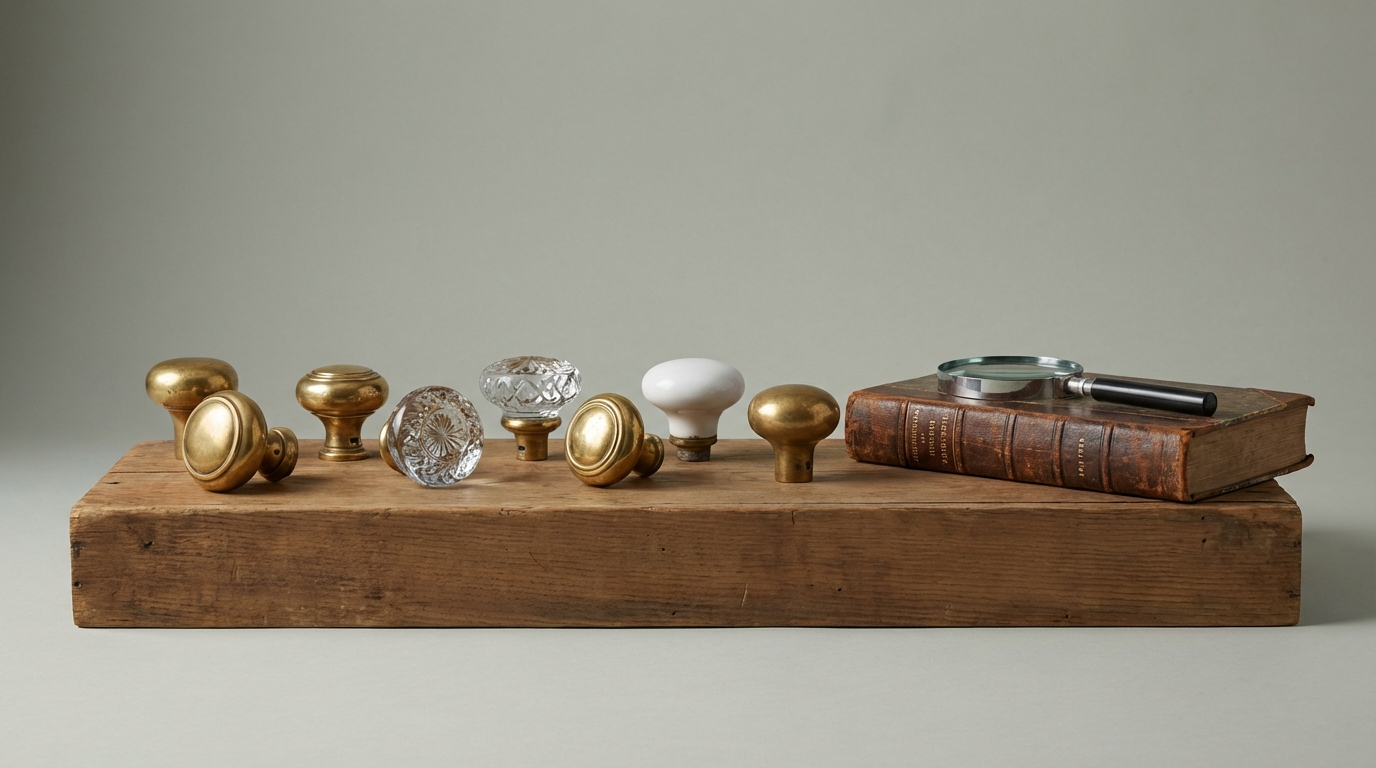
The Ultimate Guide to Identifying Antique Door Knobs Elevate Your Homes Vintage Charm: appraisal and value basics
The Ultimate Guide to Identifying Antique Door Knobs Elevate Your Homes Vintage Charm research should start with identification, condition, provenance, and recent comparable sales. Use this guide to compare the signals that matter before paying for a formal appraisal or deciding whether to sell.
Antique door knob identification checklist
Antique door knobs are more than functional hardware—they’re compact works of art that quietly reveal a home’s era, craftsmanship, and taste. Whether you’re appraising a collection, restoring a period property, or hunting at flea markets, knowing how to identify, date, and value antique knobs will help you preserve history and avoid reproductions. This guide breaks down materials, styles, maker marks, and diagnostic details so you can confidently elevate your home’s vintage charm.
Start With Anatomy, Tools, and Measurements
Before dating a knob, get familiar with the parts and the quick tools that make identification accurate.
Anatomy
- Knob head: the part you grip (glass, porcelain, metal, or early plastic).
- Shank/ferrule: the collar connecting knob to spindle, usually brass or iron.
- Spindle: the square rod that passes through the lock (commonly 1/4" or 5/16" square).
- Set screw or threaded connection: secures knob to spindle.
- Rosette or backplate: the plate against the door surface; can be simple or highly ornamental.
- Escutcheon: keyhole cover (sometimes integrated with the backplate).
- Lock case: mortise or rim lock; often carries maker marks and patent dates.
Essential tools for field identification
- Tape measure or calipers (diameter of knob, spindle size, backplate length).
- Magnet (detects iron/steel versus nonferrous brass/bronze).
- Loupe or magnifier (surface wear, casting seams, maker stamps).
- UV flashlight (tests for uranium glass glow; checks repairs).
- Scale (weight can help separate solid bronze from thin plated steel).
- Soft cloth and mild cleaner (for revealing marks under grime).
Typical measurements to note
- Knob diameter: 2.0–2.5 inches is common; small bedroom/bath knobs may be ~1.8–2.1 inches.
- Backplate length: 5–12 inches; long, ornate Victorian plates can exceed 10 inches.
- Spindle size: 1/4" square is most common; 5/16" appears on heavier-duty sets.
These baseline checks quickly narrow era, quality, and whether parts are mismatched.
Materials and Finishes: Tactile Clues That Date and Value
Material is the fastest way to place a knob in the right period and price tier.
Glass and crystal (c. 1900–1940s)
- Faceted glass knobs (8-, 10-, or 12-point) are hallmarks of early 20th-century homes.
- Colors: clear is common; amethyst (“sun-purple”), pale green, amber, milk glass, and rare cobalt or ruby exist. Amethyst often indicates manganese decolorizer used pre-WWI; extended UV exposure can deepen the tint.
- Indicators of age: subtle bubbles, straw marks, uneven facets, starburst centers, heavy weight. Uranium glass glows green under UV.
- Red flags for reproductions: overly crisp facets with no high-spot wear, lightweight feel, modern Phillips-head mounting screws.
Porcelain/ceramic (c. 1840s–1880s; later Colonial Revival reprises)
- White ironstone knobs with brass or iron ferrules were popular in mid-19th century. Expect fine crazing and a warm ivory tone.
- Bennington (agate) porcelain shows tan-to-brown marbling; highly collectible and earlier than most glass knobs.
- Hand-painted florals or transfer patterns appear on quality Victorian sets.
- Check the ferrule: cast brass ferrules with softened edges and set-screw dimples suggest age.
Brass and bronze (c. 1860s–1930s)
- Victorian cast-bronze knobs range from restrained ringed profiles to deep-relief Aesthetic and Eastlake patterns.
- Bronze tends to a warmer, reddish tone compared to bright yellow brass; both develop rich patina and verdigris in recesses.
- Finishes you may encounter: japanned (black/brown), copper flash, nickel plate (popular 1890–1930), lacquered or oxidized finishes. Genuine age shows uneven wear, especially on high points and edges.
Iron and steel (c. 1850s–early 1900s)
- Black japanned iron knobs were utilitarian, often paired with rim locks. A magnet confirms ferrous metal.
- Heavy, solid feel and multi-layered paint from generations of redecorating are common.
Early plastics (Bakelite, Catalin; c. 1920s–1940s)
- Less common for knobs than for pulls, but they exist in Art Deco settings. Warm to the touch and often in marbled browns or butterscotch.
- Rubbing with a cloth can release a formaldehyde-like scent on genuine Bakelite.
Material alone doesn’t finalize a date, but it brackets the likely period and signals value. Porcelain and ornate bronze are early; glass and nickel-plated brass trend later.
Styles and Eras: Let Ornament Tell the Story
Patterns, proportions, and backplates quickly reveal the design movement.
Early/Mid-19th Century (Federal, Greek Revival)
- Simple brass knobs, minimal ornament. Often paired with rim locks or small rosettes.
- Porcelain becomes common by the 1840s–1870s, typically white or Bennington.
High Victorian (c. 1860s–1890s)
- Eastlake and Aesthetic Movement: geometric borders, sunflowers, incised lines, and naturalistic motifs. Deeply cast bronze or brass with large matching backplates and keyhole escutcheons.
- Entry sets may feature oversized plates (8–12 inches) and elaborate patterns.
Art Nouveau (c. 1890–1910)
- Organic “whiplash” curves, floral swirls, asymmetry. Bronze or brass with fluid lines.
Arts & Crafts (c. 1900–1920)
- Understated, hand-wrought look. Hammered textures, square nuts, simple rectangular backplates. Bronze or copper finishes.
Colonial Revival (c. 1900–1940)
- Rope borders, urn motifs, egg-and-dart details; revival of earlier classical tastes. Polished brass or nickel finishes.
Art Deco (c. 1920–1940)
- Geometric, stepped forms and streamlined profiles. Glass and nickel-plated hardware are common. Octagonal glass knobs become ubiquitous.
Match the knob to its backplate and lock. Mixed-era pairings (e.g., Deco glass with Victorian backplate) often indicate later replacements.
Maker Marks, Patents, and Hardware Architecture
Identifying manufacturers and understanding how knobs attach to spindles strengthens your dating.
Where to find marks
- Lock case: remove the faceplate screws and slide the mortise lock out; look for stamped names (e.g., Yale & Towne, P.F. Corbin, Sargent & Co., Russell & Erwin/Russwin, Reading, Lockwood, Norwalk, Mallory Wheeler) and patent dates.
- Backplates and rosettes: stamped logos on the reverse.
- Knob shanks: occasional patent numbers, “PAT’D” or “PAT. APPL’D FOR” marks.
Spindle connection types
- Threaded spindle system (earlier): both knobs screw onto a threaded spindle. The shank interior has female threads. Look for a small locknut or telltale thread wear—common in mid-to-late 19th century sets.
- Set-screw system (later): a square spindle passes through both knobs; one or both shanks have a lateral set screw. This becomes the standard by the early 20th century. Slotted set screws are period-correct; Phillips screws are later or replacements.
Lock types
- Rim locks (surface-mounted) typically pair with early porcelain or simple metal knobs.
- Mortise locks (in-door cavity) dominate from the 1880s onward, spanning Victorian through Deco. Hub sizes typically match 1/4" or 5/16" spindles.
Backset and proportions
- Deep backsets and long, ornamented plates often indicate exterior entry sets or grand Victorian interiors. Smaller, plain rosettes skew later and more utilitarian.
If you find a patent date on the lock or shank, remember it gives a “no earlier than” date for the hardware—it doesn’t guarantee the exact manufacturing year.
Authenticity: Distinguishing Antique From Reproduction
Reproductions fill the market, and many are attractive. These clues help you separate genuine age from modern lookalikes.
Wear patterns
- Authentic high-point wear: softened edges on motifs, thinning of plating at the most-touched areas, polish from hands on one side of the knob more than the other.
- Patina in crevices: real verdigris, not faux paint; dust and oxidization where fingers can’t reach.
- Glass: tiny nicks on facet edges and an older, heavier feel. Starburst centers may be slightly off-center.
Fasteners and machining
- Slotted screws are period; Phillips-head appears mid-20th century onward.
- Threads: metric set screws and overly crisp machine marks point to modern manufacture.
- Shank interior: uniform bright machining and perfectly sharp corners suggest new production.
Materials and finishes
- Brass plating over steel (a magnet sticks to the backplate) can be antique or reproduction; judge by weight, finish depth, and wear. Repro plating is often too perfect or uniformly “antiqued.”
- Amethyst glass can be genuine “sun-purple” or intentionally UV-treated modern glass. Cross-check with bubbles, facet wear, and shank hardware to confirm.
Fit and standards
- Many reproductions aim for modern tubular latch systems and may not fit traditional square spindles without adapters. If the parts assume a modern spindle or privacy pin, treat with caution when evaluating as antique.
When evaluating value for appraisal, document your observations with close-up photos of wear, any marks, and how the knob meets the spindle.
Condition, Value Drivers, and Gentle Conservation
Collectors and appraisers consider completeness, rarity, and integrity above all.
What drives value
- Rarity of pattern and material (e.g., high-relief Aesthetic bronze; unusual glass colors like cobalt; early Bennington porcelain).
- Maker-marked sets with matching backplates, escutcheons, and working locks.
- Condition: crisp casting, minimal dents, intact set-screw threads, glass free of chips or clouding.
- Completeness: pairs of knobs, original spindle, screws, strike, and plates add significantly to value.
Common condition issues
- Glass: facet chips, cloudy interior, loose shank cement.
- Porcelain: hairline cracks, staining around ferrules, rim chipping.
- Brass/bronze: dents, dezincification (pinkish patches), stripped set-screw holes.
- Iron: rust pitting; lock internals seized.
Conservation tips
- Avoid aggressive polishing that removes patina; it can cut value. Clean gently with mild soap and water; dry thoroughly.
- For brass/bronze, use a non-abrasive cleaner sparingly, then microcrystalline wax to seal. Test inconspicuously first.
- For glass, remove surface paint with a gentle citrus stripper; avoid ammonia on lacquered metal parts.
- For iron, a light application of penetrating oil and 0000 steel wool can arrest active rust; neutralize and wax afterward.
- Stabilize loose glass-to-shank joints with appropriate conservation-grade adhesives if needed, or seek a specialist.
Safety notes
- Old glass may be leaded; brass and bronze can contain lead. Wear gloves and a mask when sanding or polishing. Keep chemicals off painted surfaces you intend to preserve.
Practical Identification Checklist
Use this quick pass to sort, date, and appraise:
- Record measurements: knob diameter, backplate length, spindle size (1/4" vs 5/16").
- Test material: magnet for iron/steel; UV for uranium glass; weight and warmth for bronze vs plated steel; Bakelite smell test if applicable.
- Examine connection: threaded spindle (earlier) vs set screw (later); slotted vs Phillips screws.
- Match styles: Victorian/Eastlake relief, Art Nouveau curves, Arts & Crafts hammered textures, Colonial Revival borders, Art Deco geometry.
- Check for marks: remove the mortise lock to inspect for maker stamps and patent dates; look behind backplates.
- Assess wear and patina: natural high-point wear, consistent oxidation, facet nicks on glass.
- Reject red flags: metric set screws, uniform faux patina, overly crisp machining, mismatched parts from different eras.
- Evaluate completeness: pair of knobs, matching plates, spindle, escutcheon, strike; document any missing pieces.
- Grade condition: chips, cracks, stripped threads, seized locks; note repair feasibility.
- Decide on conservation: clean gently, preserve patina, stabilize rather than refinish.
Integrating Antique Knobs Into Modern Doors
If your goal is to install antiques:
Compatibility
- Measure your door’s thickness and backset. Traditional sets assume square spindles and mortise locks, not modern tubular latches.
- Adapters and conversion latches exist to pair antique knobs with contemporary doors, but not all sets will adapt cleanly.
Best practices
- Keep matched sets together on the same door for proper spindle length and rosette fit.
- Use slotted screws with appropriate head profiles for visual authenticity.
- Protect original finishes with wax rather than lacquer; it remains reversible.
Documentation
- Photograph and label each component during removal or installation; note maker marks and positions for future reference.
Short FAQ
Q: Are all purple-tinted glass knobs antique? A: Not necessarily. True “sun-purple” results from manganese in pre-WWI glass exposed to UV over time. Some modern glass is intentionally UV-treated to mimic the color. Confirm age by examining facet wear, bubbles, shank hardware, and fastener types.
Q: How do I tell brass from bronze, and does it matter? A: Bronze tends to be warmer and redder than brass and often used in higher-grade Victorian hardware. Both are non-magnetic and develop verdigris. Weight, color tone, and casting quality help distinguish them. Bronze, especially with deep relief, can command higher values.
Q: My antique glass knob spins or wobbles. Can it be fixed? A: Often yes. The glass was originally cemented into the shank; the old compound can fail. A careful re-cement with appropriate adhesive can stabilize it. Avoid excess glue and protect the original finish; when in doubt, consult a restoration professional.
Q: Are Phillips-head screws always a sign of reproduction? A: Phillips screws became common mid-20th century. Finding them on a knob doesn’t automatically mean the knob is new—someone may have replaced the screws. Treat them as a caution flag and verify other age indicators.
Q: What adds the most value to a door knob set? A: Completeness and quality: a matched pair of knobs with their original backplates, spindle, escutcheon, strike, and a maker-marked mortise lock in good condition. Rare patterns (Aesthetic, ornate bronze) and unusual glass colors also lift value.
With these criteria—material, style, hardware architecture, maker marks, and honest wear—you’ll be well-equipped to identify authentic antique door knobs, date them within a few decades, and steward them with appropriate care. Whether appraising or restoring, accuracy and restraint protect both beauty and value.


