
Your Old Timer knife’s value starts with five facts
There is no reliable brand-wide price. The sold lots below are boxed or tin-packaged 94OT / 940T Old Timers, not a used pocket knife without papers.
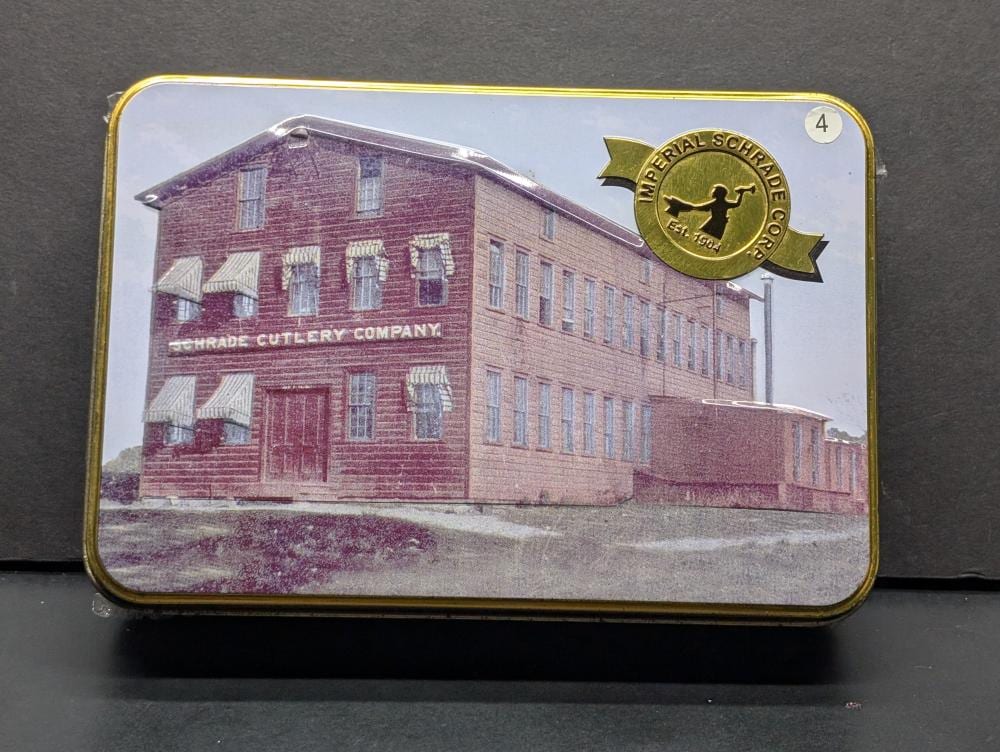
Tin-packaged 94OTW trapper. A Schrade building tin with an Old Timer 94OTW gunstock trapper sold for $22.
Another tin-packaged Old Timer 94OTW gunstock trapper sold for $28.
NIB two-blade in tin. A Schrade building tin with a two-blade Old Timer 940TW sold for $28.
Boxed anniversary 940T. A Sterling Fur Outfitters 25th-anniversary Imperial Schrade Old Timer 940T with box sold for $35.
High-value in this set. Another boxed anniversary Old Timer 940T sold for $45.
Start by recording the model number, manufacturer wording, blade pattern, honest condition, and original box or papers. Then compare only with sold knives that match that combination.
- Model: copy every number and letter, such as a pattern ending in “OT.”
- Wording: copy the maker and country wording exactly as it appears.
- Configuration: count blades and note the handle, shield, and size.
- Condition: record sharpening loss, pitting, cracks, blade play, and snap.
- Completeness: keep the correct box, tin, paperwork, or sheath with the item.
Start with the exact knife, not a brand-wide price
Old Timer is a product family, not one pattern. A stockman, trapper, lockback, and fixed-blade knife can share branding while attracting different buyers. Even within one model family, a boxed anniversary issue and a used everyday example are not interchangeable.
Record the model and maker wording as one identity
Copy the model exactly, including letters, and record the manufacturer and country wording separately. Wording is a lead, not proof by itself: replacement blades, mixed parts, and later branding can make a one-clue date unreliable. The broader old pocket knife identification guide explains how to stack maker, pattern, construction, and condition evidence.
Separate production details without overclaiming a year
Photograph the shield, handle texture, liners, bolsters, blade layout, and packaging before searching. Compare that complete set of details with dated catalogs or specialist references. If the evidence only supports “earlier USA-marked example” or “later imported example,” use that narrower description instead of inventing a precise manufacture date.
Grade the condition buyers will actually see
Condition is not a single adjective. A knife may look clean in a closed photograph while hiding shortened blades, weak snap, side-to-side play, pitting, or a cracked handle. Those differences can make an otherwise similar sold lot a poor comparable.
Blade evidence
Show the full profile of every blade. Note sharpening loss, broken tips, deep scratches, active rust, pitting, and whether the blade sits centered when closed.
Mechanism evidence
Describe opening resistance, half-stop if present, closing snap, lockup, and blade play. Do not force a stiff or damaged joint merely to test it.
Handle evidence
Look for cracks at pins and bolsters, shrinkage, missing shield, repairs, gaps, and impact damage. Photograph both sides under plain light.
Completeness evidence
Match boxes, tins, inserts, papers, and sheaths to the model. Packaging adds useful context only when it belongs with the knife.
Do not polish away patina or sharpen the blade before documenting it. Gentle dust removal is different from irreversible restoration. If active corrosion needs treatment, record the before condition and use a conservator-appropriate approach.
Read the retained auction results as a range, not a promise
The proof set below contains exact sold lots retained by the article evidence preflight. It is deliberately narrow: mostly boxed or unopened 94OT-family knives. These auction results are market context only, not an object estimate or identification. That makes them useful for those configurations and a weak shortcut for a different model or a heavily used knife.
What similar items actually sold for
To help ground this guide in real market activity, here are recent example auction comps from Appraisily’s internal database. These matched sales are market context only, not an object estimate or identification, and they do not guarantee a price for your specific item.
Shown USD range: USD 22-USD 45. Median of these 5 USD examples: USD 28.
| Comparable | What sold | Auction house | Date | Lot | Source-reported amount |
|---|---|---|---|---|---|
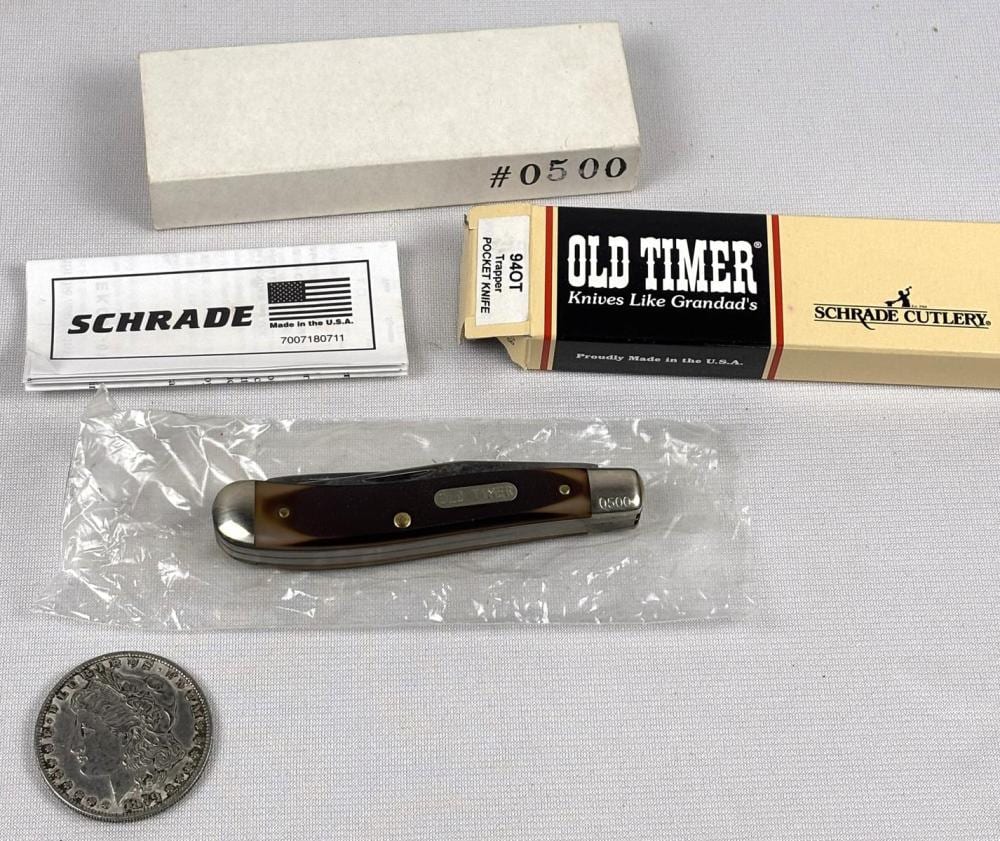 |
Sterling Fur Outfitters 25th Anniversary Imperial Schrade Old Timer 940T Pocket Knife w/ BoxSource blocked; provenance matched | One Source Auctions | 2026-02-02 | 42 | USD 35 (buyer’s-premium treatment unknown) |
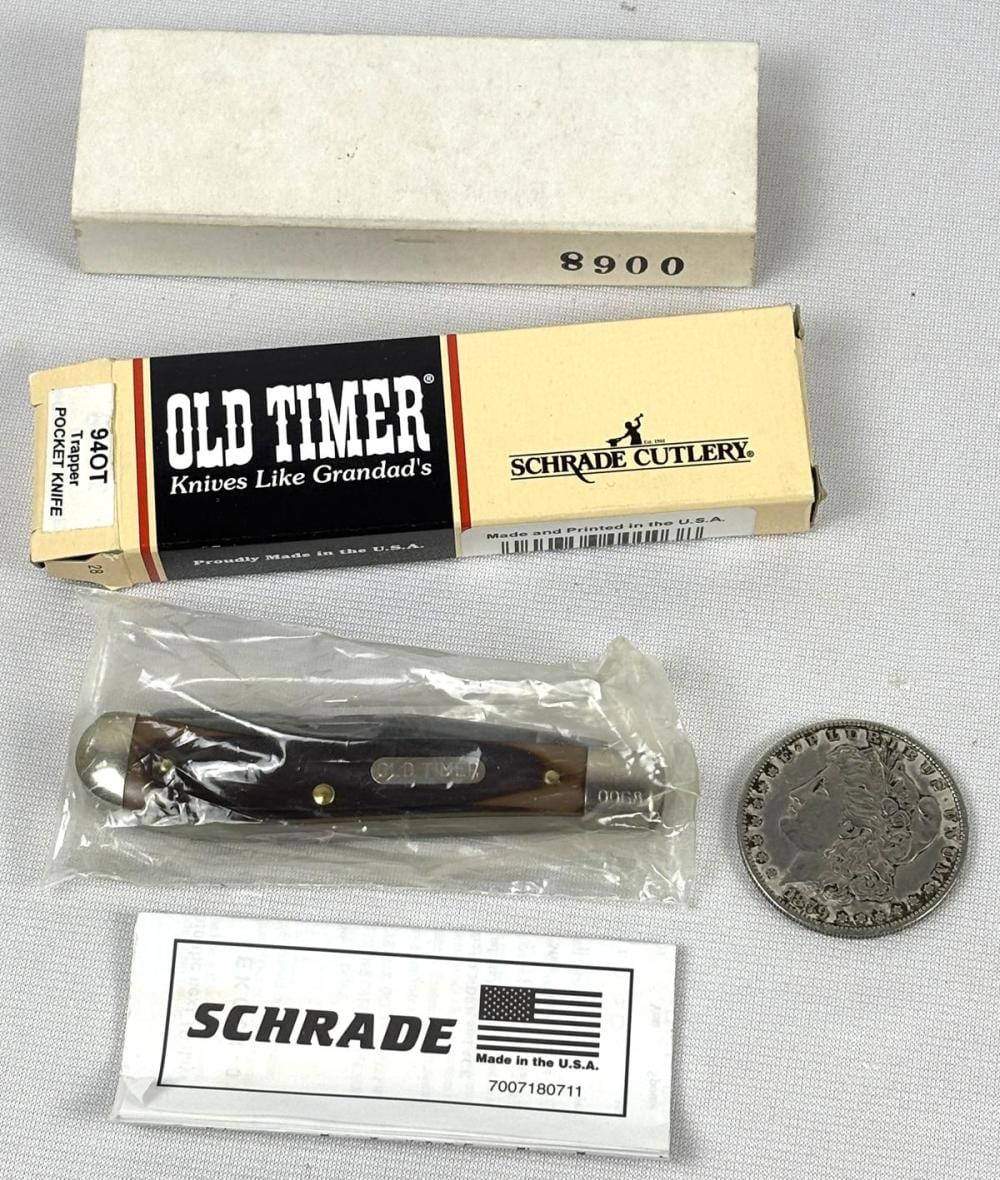 |
Sterling Fur Outfitters 25th Anniversary Imperial Schrade Old Timer 940T Pocket Knife w/ BoxSource blocked; provenance matched | One Source Auctions | 2025-12-08 | 19 | USD 45 (buyer’s-premium treatment unknown) |
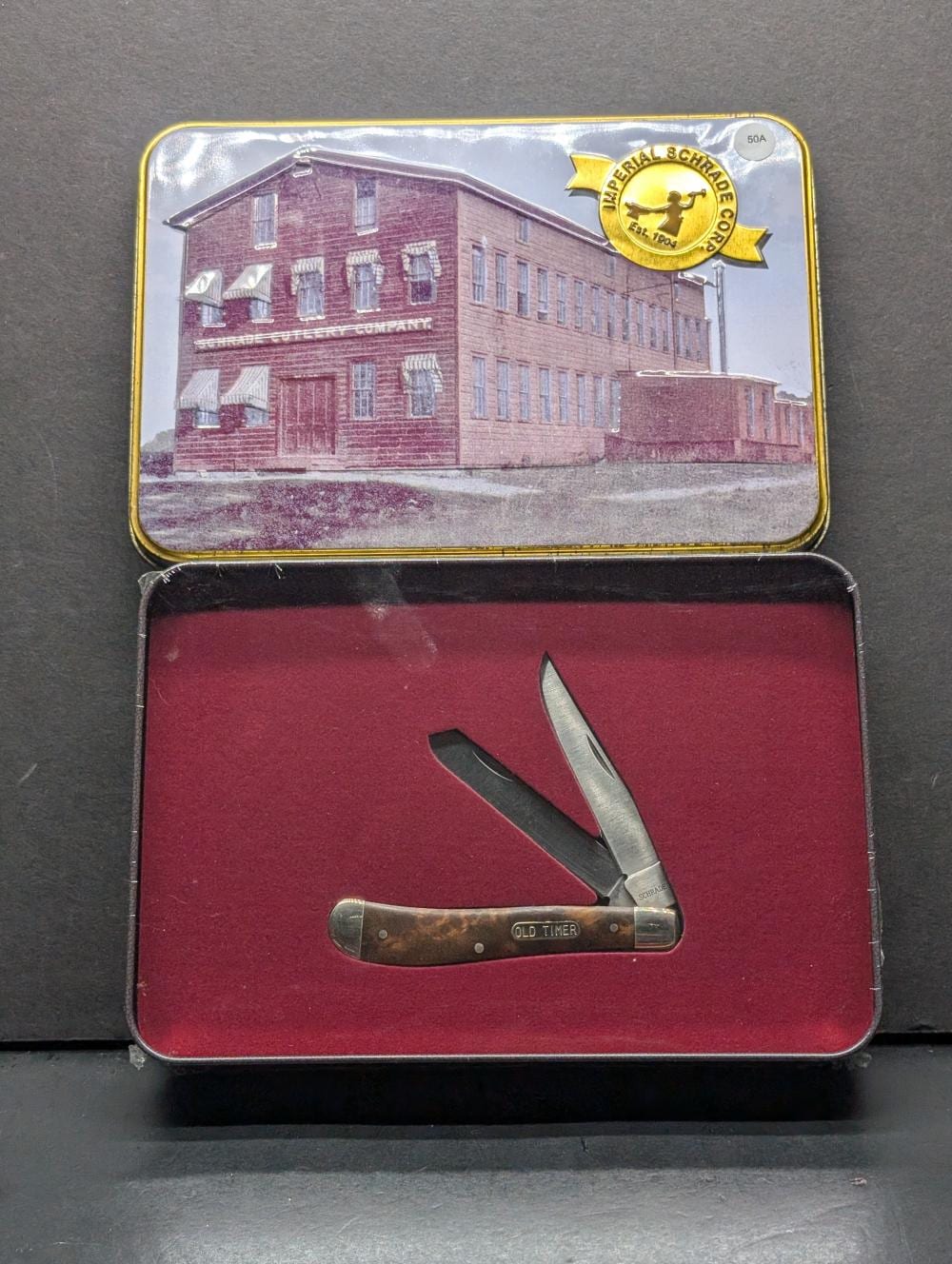 |
Schrade Cutlery Company Building Tin SCTIN W/940TW contains Two Blade Old Timer Pocket Knife NIBSource blocked; provenance matched | Richard L. Edwards Auctioneer | 2025-05-31 | 50A | USD 28 (buyer’s-premium treatment unknown) |
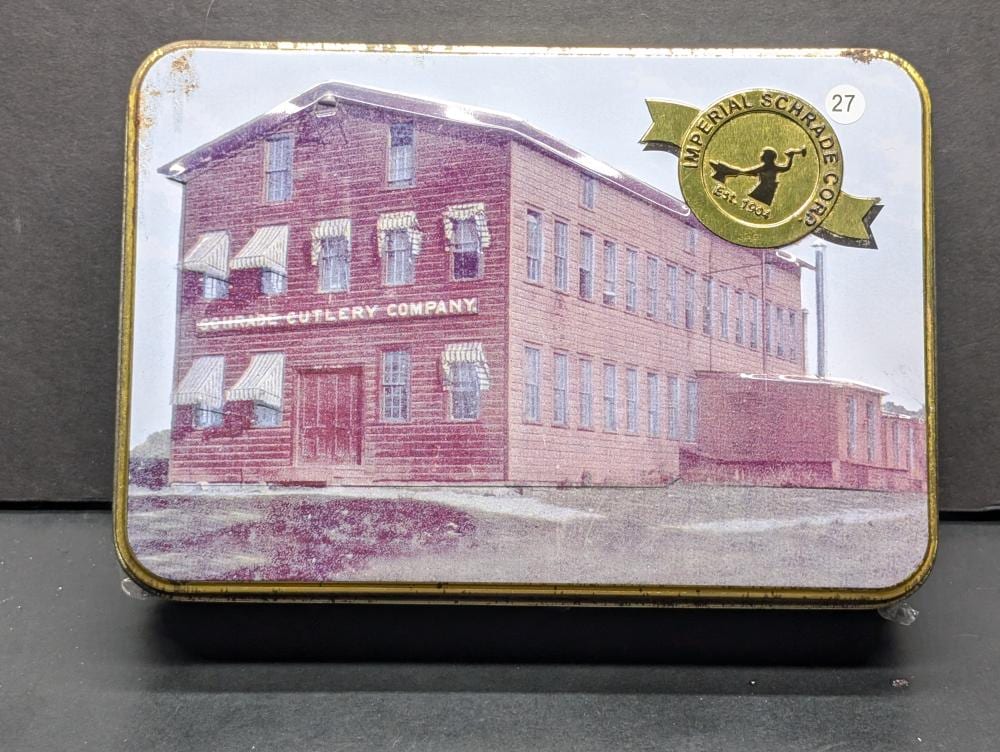 |
Schrade Building (Tin rusted) w/ Old Timer 94OTW Gunstock Trapper 6.9in SS Pocket Knife in new condition -NIP UnopenedSource blocked; provenance matched | Richard L. Edwards Auctioneer | 2025-05-31 | 27 | USD 28 (buyer’s-premium treatment unknown) |
 |
Schrade Building Tin with Old Timer 94OTW Gunstock Trapper 6.9in Traditional Folding Pocket Knife 2 SS Blades, NIP - UnopenedSource blocked; provenance matched | Richard L. Edwards Auctioneer | 2025-05-31 | 4 | USD 22 (buyer’s-premium treatment unknown) |
How these auction records were verified
Each row retains its exact source URL, lot identity, retrieval time, access result, and immutable record hash. Live source access was blocked; the exact record matched Appraisily's immutable pipeline provenance. Inspect the public comparable provenance record.
Disclosure: prices are shown as reported by auction houses and are provided for appraisal context. Learn more in our editorial policy.
Adjust a comparable before using it
- Match the pattern first. Prefer the same model and blade configuration; do not price a different pattern from a familiar brand name.
- Match condition second. Compare unused with unused and sharpened with sharpened. Account for cracks, pitting, blade loss, snap, and play.
- Match completeness. A correct box or tin, paperwork, sheath, and unopened packaging can define a different collectible package.
- Read the sale terms. Check currency, date, lot identity, and whether buyer’s premium treatment is known. Source-reported amounts are not automatically the buyer’s all-in cost.
Use several close results to build a working interval, then explain every adjustment. If the only matches differ in model or condition, widen the interval and lower confidence rather than forcing a precise number.
Photograph the evidence before selling or appraising
- Closed knife from both sides, with a ruler for scale
- Every blade fully open, photographed safely
- Model number and manufacturer wording in sharp side light
- Blade tips, edges, spine, kick, and nail nicks
- Pins, bolsters, shield, liners, and handle cracks
- Box or tin end label, papers, and sheath
- Short notes on snap, lockup, play, and repairs
Choose the next step that fits the decision
For an ordinary sale, your model record, condition photographs, and several close sold lots may be enough to set an asking range. Photograph the model marks and condition so a written report can use that evidence. A written appraisal becomes more useful when the knife is rare, the configuration is disputed, several valuable knives must be documented together, or a third party requires a reasoned report.
For broader comparison, see the vintage Old Timer pocket knife guide. If the model or pattern remains uncertain, start with old pocket knife identification. Collectors comparing brands may also use the Case XX pocket knife value guide.
Find a specialist when the evidence stays unclear
Search available specialists by location and service. Confirm current credentials, scope, fees, and availability directly with the provider.
Search the appraiser directoryQuestions about Old Timer knife value
Are vintage Old Timer knives worth anything?
Yes, but value depends on the exact model, production details, condition, and completeness. Retained auction results on this page show that similar boxed 94OT-family examples can still produce different prices.
How can I tell what year an Old Timer knife was made?
Record the exact model number, manufacturer and country wording, handle and shield details, blade arrangement, and packaging. Compare that complete combination with dated catalogs or a specialist reference instead of assigning a year from one word alone.
How do I check how much my Old Timer knife is worth?
Identify the exact model and variant, grade the blade and mechanism honestly, note the box and papers, then compare with recent sold lots that match those features. Adjust for differences rather than copying the highest result.
Does the original box increase value?
A correct box or tin can matter when buyers treat the knife as a collectible set, but its effect is not a fixed percentage. Match the packaging to the exact model and compare complete sets with complete sets.
Should I clean an old pocket knife before selling it?
Avoid aggressive polishing, sanding, or sharpening before documenting the knife. Photograph it first and distinguish stable patina from active corrosion; irreversible cleaning can remove evidence buyers use to judge originality.
Search variations this guide answers
- Are vintage Old Timer knives worth anything?
- Old Timer knife value guide by model number
- How to value a Schrade Old Timer pocket knife
- Old Timer 94OT pocket knife sold prices
- Does an Old Timer knife box increase value?
- How condition changes an Old Timer knife price
- How to identify an Old Timer pocket knife
- USA-made Old Timer knife value
Sources and method
Auction comparables were selected from Appraisily’s governed auction-data pipeline and bound to an immutable provenance record. Read the editorial policy for how evidence, uncertainty, and updates are handled. Manufacturer and marketplace pages can help identify current offerings, but asking prices were not used as realized-sale proof.