Lot description
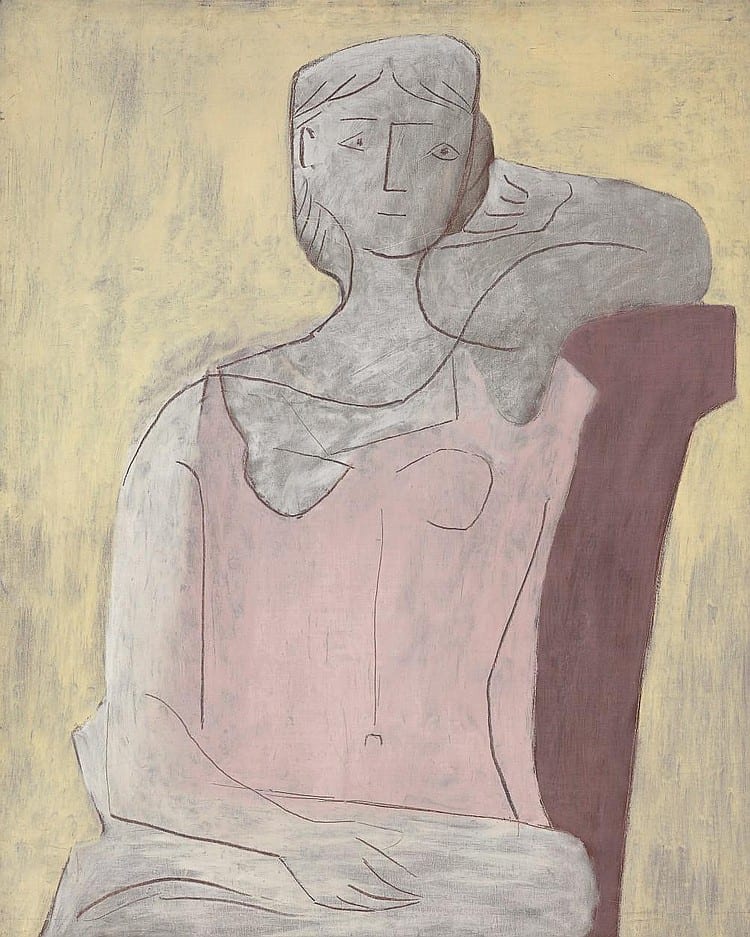
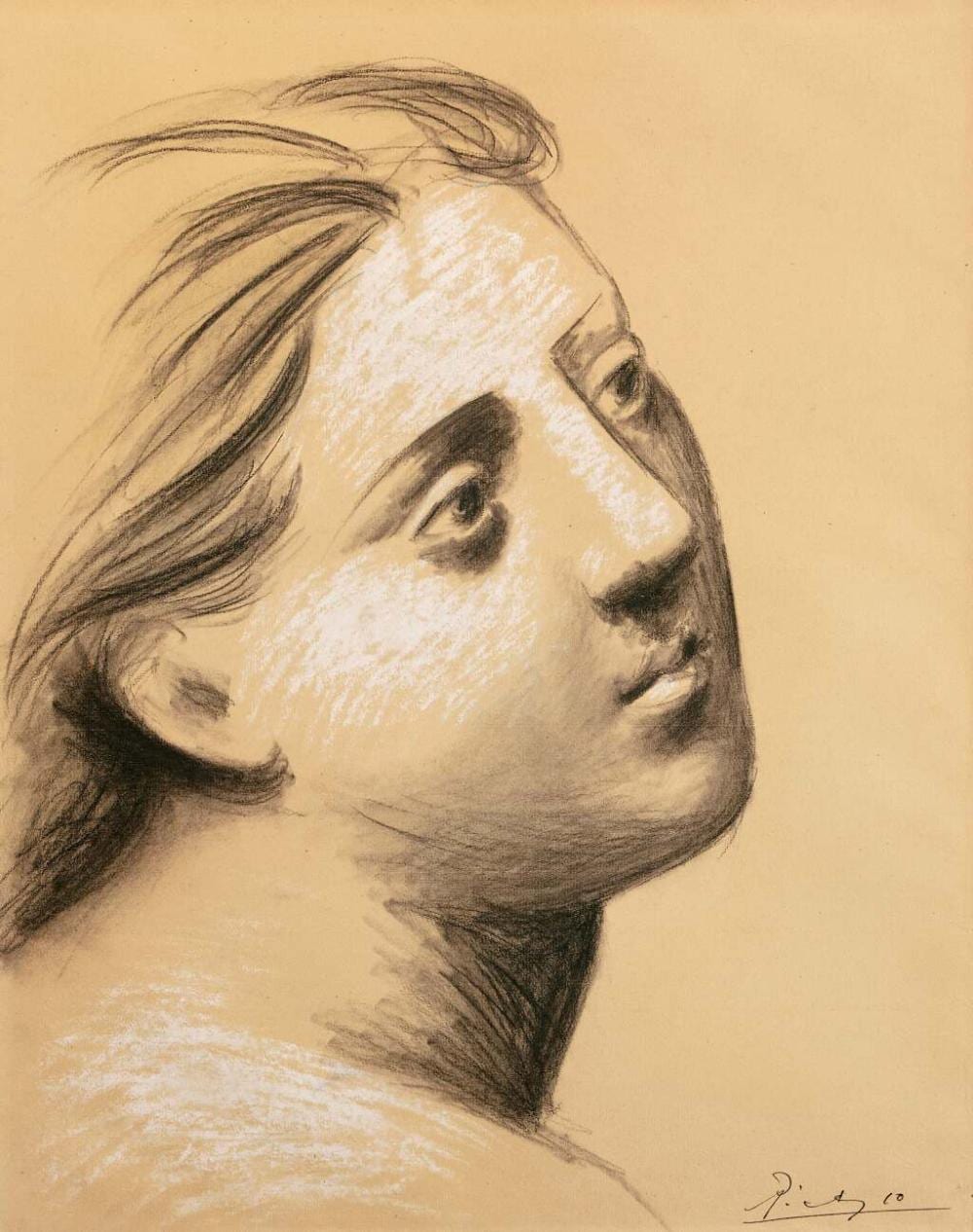
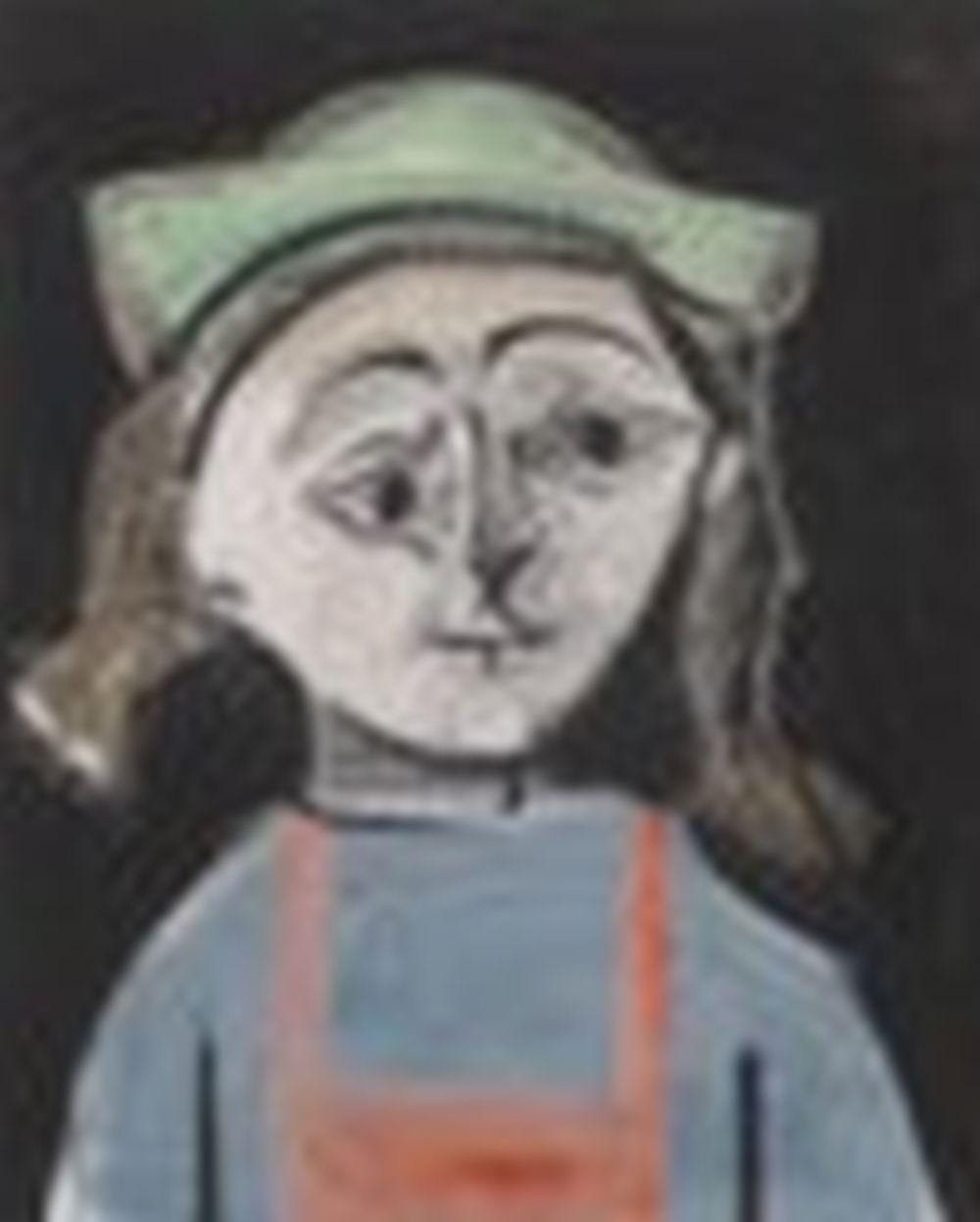
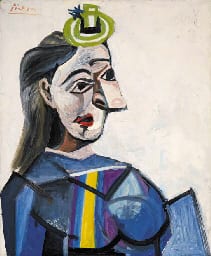
Buste de femme (Dora Maar) signed 'Picasso' (upper left) and dated '23. Avril 42' (upper right); dated again '23 Avril 42' (on the stretcher) oil on canvas 283/4 x 235/8in. (73 x 60cm.) Painted on 23 April 1942 PROVENANCE Galerie Beyeler, Basel. Acquired from the above by the family of the present owner. LITERATURE C. Zervos, Pablo Picasso, vol. XII,, oeuvres de 1942 et 1943, Paris 1960, no. 45 (illustrated, p. 22). ed. Beyeler, Picasso, Basel 1968, p. 105 (illustrated in colour). "Basler Zeitung", 7 March 1984, p. 37 (illustrated). ed. The Picasso Project, Picasso's Paintings, Watercolors, Drawings and Sculpture, A Comprehensive Illustrated Catalogue 1885-1973: Nazi Occupation 1940-1944, San Francisco 1999, no. 42-044 (illustrated p. 129). EXHIBITION Basel, Galerie Beyeler, Picasso, Werke 1932-1965, 1967, no. 23 (illustrated in colour). St. Gallen, Kunstverein, Kunst als t„gliches Erlebnis, 1974, no. 79. St. Gallen, Kunstverein, Ostschweizer Privatbesitz, 1977, no. 28. Basel, Galerie Greub, Resonanzen, 1984, pl. 9 (illustrated in colour; illustrated again on the backpage of the catalogue). NOTES Dora Maar was a twenty-nine year old artist and photographer closely associated with the Surrealists when she first met Picasso at the Deux-Magots caf‚ in Paris in 1936. Over the next nine troubled years which spanned the Spanish Civil War, the outbreak of the Second World War, the Occupation and final liberation of Europe, she would be Picasso's lover, companion and muse. The long series of portraits that Picasso painted of this striking and remarkable young woman are widely regarded as being among the finest achievements in his oeuvre. Mature and intelligent, Dora Maar was the first of Picasso's women to be an artist herself. A former lover of George Bataille, she was an accomplished painter and photographer and a respected member of the Surrealist circle. She was, therefore, as much an ally for the fifty-five year old Picasso as she was a support. Dora Maar had first charmed Picasso with her fluent Spanish, her deep, husky voice and her austere beauty. More than any other feature, however, and more than was the case with any of Picasso's other lovers, it was Dora's face that came to obsess the Spaniard and which was to become one of his chief mediums of expression during the turbulent years of upheaval and conflict they spent together. As Alfred Barr first pointed out, Picasso's 'Weeping Woman' series of portraits of Dora act as a 'postscript' to 'Guernica' and in many ways the developments of the war years can also be read in his almost continuous portrayal of his lover's face. Picasso declared that for him Dora had a 'Kafkaesque' personality and as a result he often portrayed her trapped in a room, as a bird imprisoned behind bars or as the apparent victim of torture, tied to a chair. 'For me', Picasso said, 'she's the weeping woman. For years I've painted her in tortured forms, not through sadism, and not with pleasure, either; just obeying a vision that forced itself on me. It was the deep reality, not the superficial one.' ( Life with Picasso, Fran‡oise Gilot, London 1965, p. 122.) Buste de Femme is a relatively late portrait of Dora executed in the spring of 1942 at the beginning of Paris' third year of Occupation. The last full-portrait Picasso would paint of Dora Maar was made in October of the same year and, as in Buste de Femme, it depicts Dora looking puffy in the face and bruised by emotion. Picasso has used the features of Dora's face in these works as if they were a well-known and familiar landscape that has been scarred by the ravages of war. In Buste de Femme Dora's hair is streaked with grey and, not for the first time, Picasso renders the texture and colour of her skin with the cold and pale flesh tones of a carcass. Dora's features, only slightly twisted and distorted in this work, are dominated by the large, sad, black eyes that, although not weeping, seem to be full of tears. Her mouth too, small and red, is twisted into the shape of a moan or perhaps a self-pitying cry. Seemingly imprisoned in her dress with its bold, coloured stripes and sharp, angular folds, this tragic figure is adorned with an extraordinary and ridiculous little hat which for Picasso was always a symbol of both Dora's individuality and of her mental instability. 'Among the objects tangled in the web of life,' Picasso and Dora's close friend the Surrealist poet Paul Eluard wrote, 'the female hat is one of those that require the most insight, the most audacity. A head must dare to wear a crown.' Dora Maar was famous for the extraordinary little hats she wore and which often appear as coquettish or comic adornments to her noble features in Picasso's portraits of her. After her nervous breakdown which coincided with the end of the war, the death of her close friend Nusch Eluard and the end of her relationship with Picasso, Picasso remarked that Dora had always been crazy. 'Think of the crazy hats she wore', he later told John Richardson. Earlier, however, Picasso had endearingly described Dora in a 1937 poem as 'devilishly enticing in her disguise of tears and her marvellous hat' (poem, 18 February 1937). In Buste de Femme the extraordinary little green hat combines with the brilliant colours of Dora's dress to generate a powerful sense of gaiety and of fashion that operates in direct contrast to the harrowing features of her tired and emotion-filled face. Looking away from the viewer to the right of the painting, the traumatic evidence of having seen and suffered too much in one so young is carved into the features by Picasso's bold, incisive brushwork. In looking at this portrait of Dora Maar, it is as if we are witnessing the unfolding of a tragedy as it is experienced in the reaction and external appearance of this noble and unique woman. 'I have not painted the war', Picasso commented at this time, 'because I am not the kind of painter who goes out like a photographer for something to depict. But I have no doubt that the war is in these paintings that I have done.' ('Picasso is Safe' article by Peter D. Whitney, San Francisco Chronicle, 5 March 1944.).