Lot description
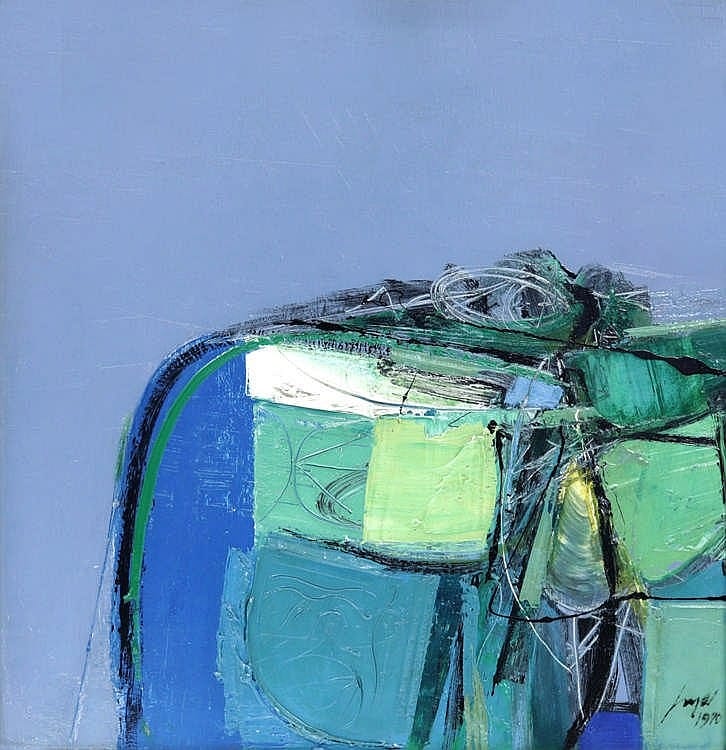
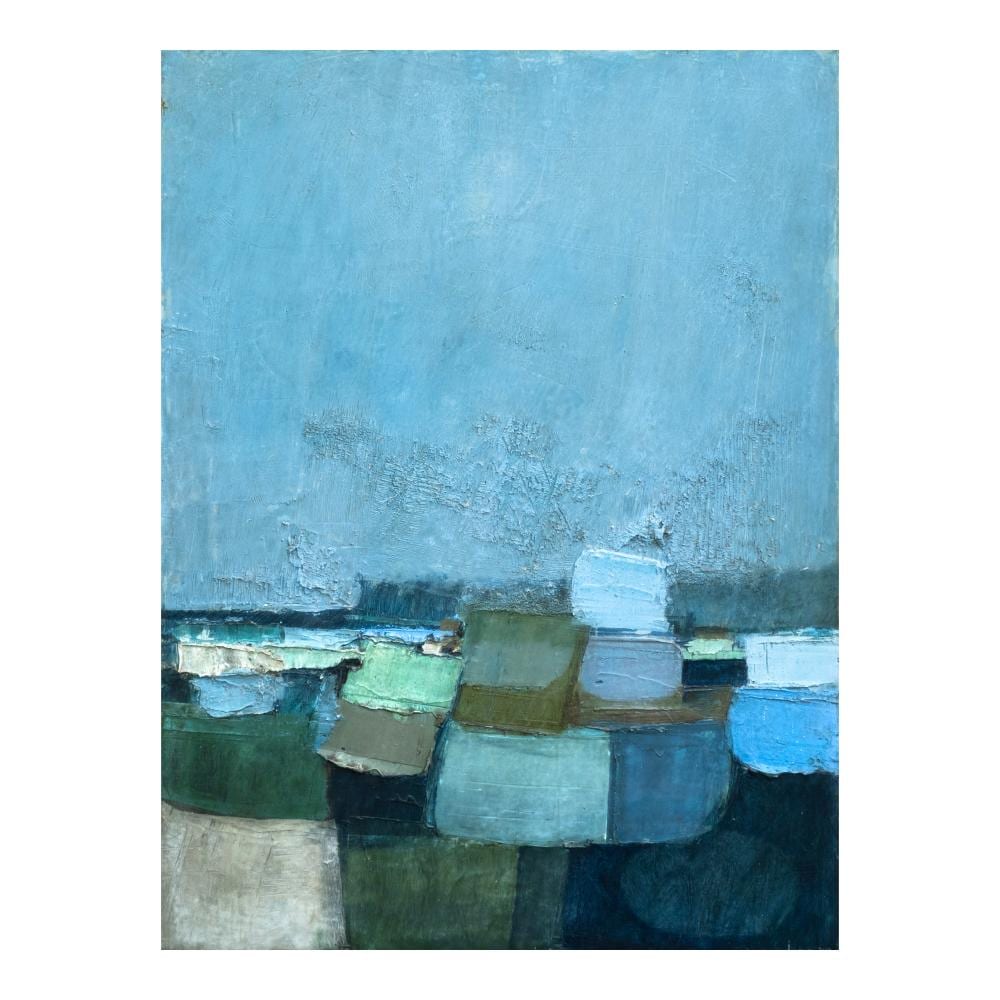
Nilad signed, titled and dated "May 17, 1970" (verso) oil on wood 32" x 24" (81 cm x 61 cm) Accompanied by a certificate issued by Mr. Alexander Richard Joya Baldovino confirming the authenticity of this lot PROVENANCE The Luz Gallery EXHIBITED The Luz Gallery, Joya: 13th One-Man Exhibition, Makati, 1 - 13 December 1970 "Nilad, a plant of average height and oftentimes curved. Its wood is compact and dense, like molavin (molave) wood. In places where mangle or mangroves abound, the place is called "Manglar;" that is why if nilad abounds in one area, the place is called "Maynilad." Over time, the place became known as "Manila," as it was corrupted [by the Spanish]. The fruit of the nilad is green, fleshy, and has three small, crooked horns." Joya's Nilad and his search for an indigenous and personal idiom The depiction of old "Maynilad" was only one of Joya's ventures into seriality and geometric expressionism, and his abandonment of abstract expressionism, borne of his profound exposure to our country's pre-colonial past while pursuing higher studies abroad. Was it a result of homesickness? Or a profound realization of a decolonized past that ran in parallel with the resurgence of nationalism and a nationalist historiography, particularly in the late 1960s, as spearheaded by Teodoro Agoncillo and Renato Constantino? Joya wrote in his book of drawings, "Serial designs, basically oriental in concept, have become much of an obsession among occidental modern painters." For Joya, seriality is not a novel concept that only became more dominant with the rise of Pop Art in the West but is inherently Oriental; it is ubiquitous in ancient Chinese handscroll paintings and Philippine indigenous art, most notably burial jars, pottery, weaving, embroidery, metalcraft, and the mystical antinganting (amulet). Seriality is omnipresent in nature through patterns, and nature was paramount to our pre-colonial ancestors' daily lives. Our forebears believed in diwatas, the spiritual beings residing in nature and the guardians of harmony and balance—the sky deities, mountain spirits, river guardians, animal spirits —and the anitos or ancestral spirits who, in many indigenous cultures, journeyed into the spirit world through a voyage across the waters, a most important element for an archipelagic people. Up to now, our indigenous peoples, who safeguard the traditions of our ancestors, are the custodians and defenders of our natural wealth against exploitation. Joya's venture into this language of abstraction is therefore rooted in the indigenous and the paramount importance of nature, which is an artist’s best teacher. It is a creative introspection that looks inward rather than outward. Like the nilad plant, whose flowers are densely clustered, and the collectivist, tight-knit character of our cultures, Joya's geometric abstraction consolidates ideas and concepts. In contrast, in his action paintings, each stroke demands attention and individuality. Joya's Nilad can be likened to an excavated artifact that intrigued the eminent artist, one that ingeniously tells the story of a rich, indigenous past. For Joya, seriality, manifested through art, offers and symbolizes a unifying aspect for the presentday Filipino people who have always been diverse yet always connected through a shared history of reverence for nature. It is also a way to reclaim one's indigenous identity and history, a reflection of our collective pride, our constant and protracted struggles and triumphs in reexploring and redefining what it truly means to be a Filipino, that is, honoring the diversity of our native past and the role our indigenous countrymen play in preserving and defending these identities. By also painting pictures of a pre-colonial past, Joya shows an inherent preference for landscapes and, therefore, a predisposition towards nature, to which our pre-colonial ancestors gave much reverence, deeming it the "alpha" and the "omega" of life. In this way, Joya reconnects with them in spirit and art.