Lot description
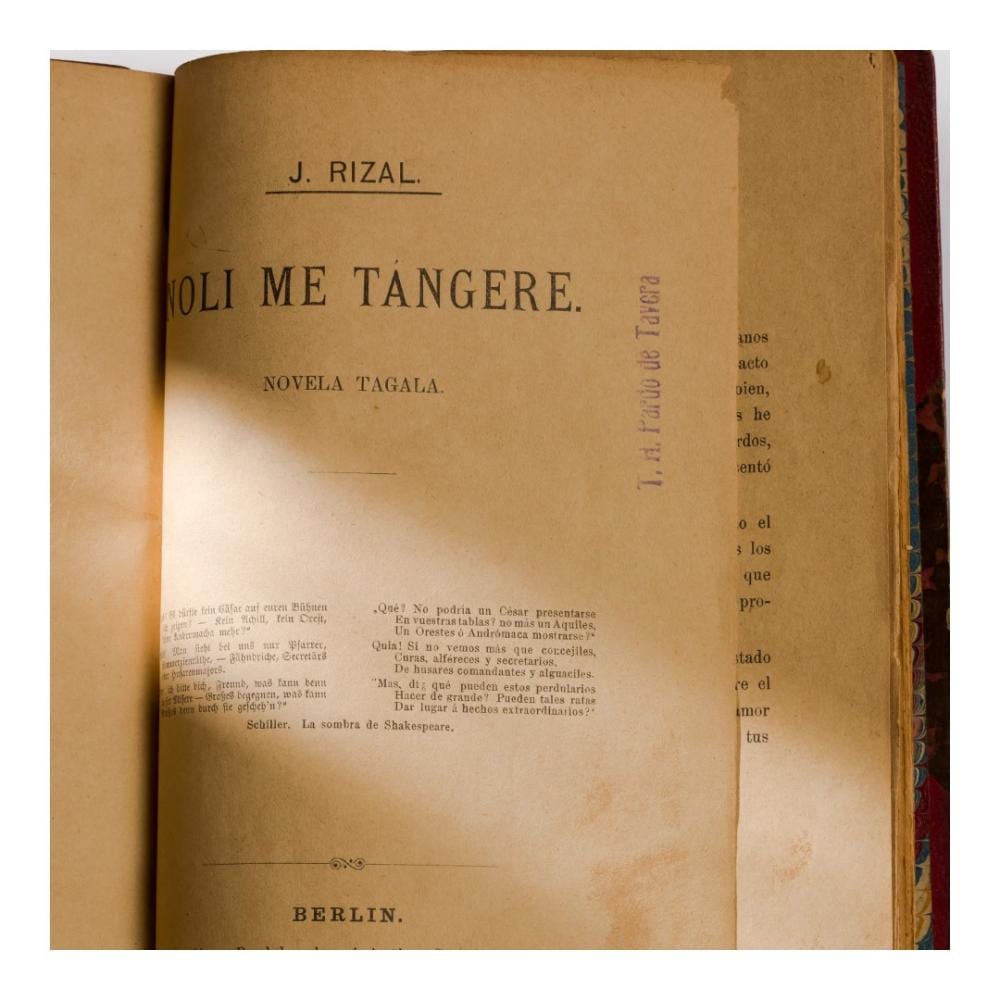
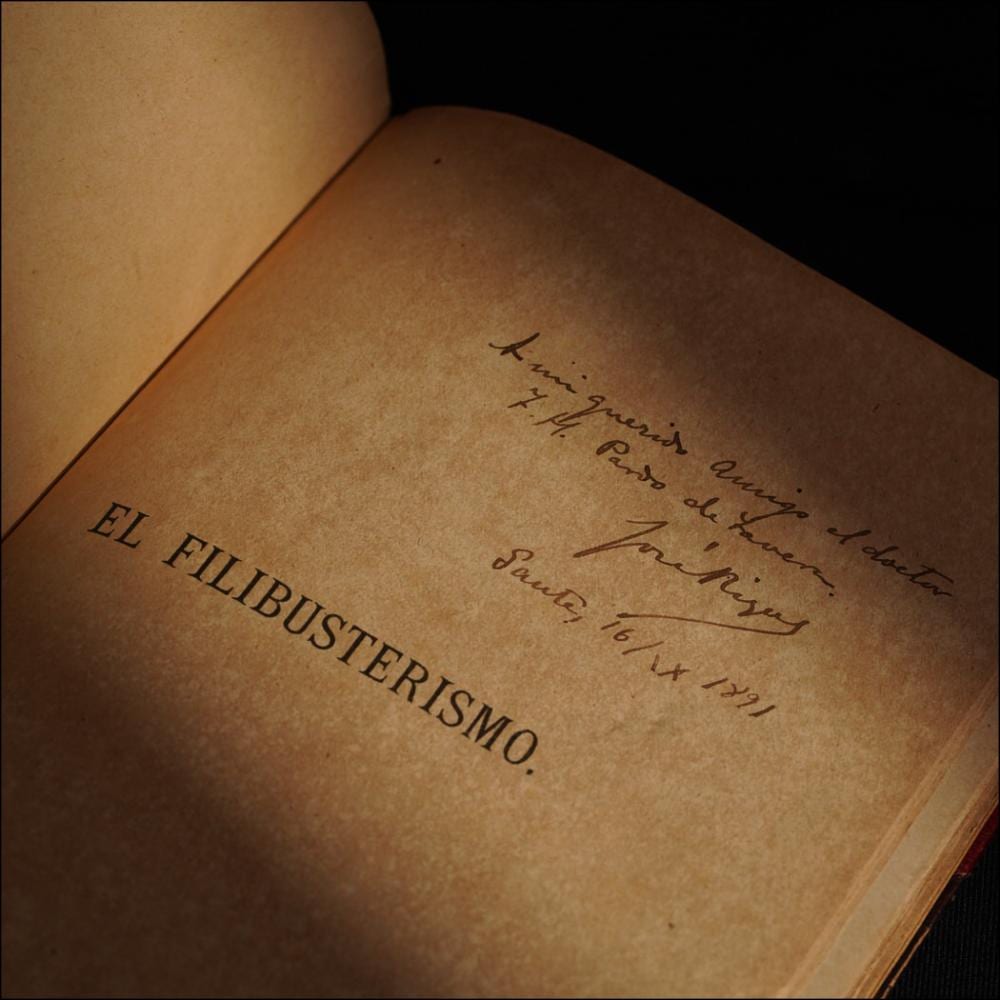
El Filibusterismo Signed and dedicated “A mi querido amigo el doctor T. H. Pardo de Tavera, Jose Rizal, Gante, 16/ IX 1891” (To my dear friend, the doctor T. H. Pardo de Tavera, Jose Rizal, Ghent, 16 September 1891) Boekdrukkerij F. Meyer-Van Loo, Vlaanderenstraat, 60 First Edition, Ghent 1891 PROVENANCE From the collection of Don Trinidad Pardo de Tavera, as evidenced by an ex libris with his name on the marbled endpaper on the inside front cover and his name stamped on the title page as “Dr. T.H. Pardo de Tavera.” Printed when Jose Rizal was both emotionally and financially exhausted, the masterpiece El Filibusterismo contains fewer pages and was produced in fewer copies than his first book, the Noli Me Tangere. It is thus considered far rarer than his Noli Me Tangere. It is also the most poignantly produced, marshaling all that Rizal had to offer, together with funds raised from fellow Filipinos across Asia and Europe—in France, Belgium, the Philippines, and China. This edition’s unique value comes from the National Hero’s signature added below a dedication to Dr. Trinidad Pardo de Tavera. Signed September 16, 1891, it predates the commonly known printing date and is literally the press’s first copy. Rizal held this very book, personally sending Pardo de Tavera a message with it. Letters to his close friend Jose Basa in Hong Kong and others detail the lengths to which Rizal went to have El Filibusterismo printed. First of all, he moved from Paris (away from the high-living temptations of the Exposition of 1889) to save money and to find not just cheaper living quarters but also an inexpensive printing shop. He found it in Ghent, Belgium, at the Boekdrukkerij F. Meyer-Van Loo at No. 60 Vlaanderen Street, which extended installment terms to him. Rizal rented a room at a low-rent boarding house near the press at No. 47 Henegouwen Street. He shared it with Jose Alejandrino, then a student in chemical engineering. Together, they skipped meals and checked the galleys. Alejandrino would later become a prominent general of the First Philippine Republic. Even with the “pay as you print” arrangements, Rizal struggled. He exhausted the first loan sent by Jose Basa and became so desperate that he threatened to abandon the project and burn the manuscript. Rizal would wind up pawning jewelry his mother had given him, skipping meals, and, when he could afford it, living on tea and biscuits to scrape together the funds. A wealthy friend, Valentin Ventura—a fencing companion shown in his most famous photograph with Rizal and Juan Luna in Paris—finally stepped in. When he learned of Rizal’s dire predicament, he sent the much-needed funds to complete the printing. Described as the sequel (or continuacion) of the Noli Me Tangere, the masterpiece El Filibusterismo is as much a revealing account of Jose Rizal’s own life as it is a roadmap to revolution. The book sounded two alarms on its first pages: a message from Rizal’s confidante Ferdinand Blumentritt, who suggested that "filibusterers (subversives)" were the only logical outcome of Spanish oppression; and a provocative dedication to the martyred Padres Gomez, Burgos, and Zamora, which vividly attacked their tormentors. The Fili would thus strike a stronger blow for the cause of revolution, a far more direct call to action and change than the reformist Rizal, who was better known in the Noli. For that reason, the Spanish colonial government and their friar-accomplices did all they could to block the reading of the book. Both distribution and possession were condemned and banned. Those caught with it were arrested and imprisoned. Reports indicate that a shipment of 800 books—likely half the print run—sent to Hong Kong, a hotbed of Filipino resistance, was either lost, confiscated, or destroyed. This El Filibusterismo is thus an irreplaceable piece of Rizal’s own personal narrative — as well as an important part of the Philippines’ history.