Have one like this?
Upload a photo for a free check of what yours may be worth.
Lot description
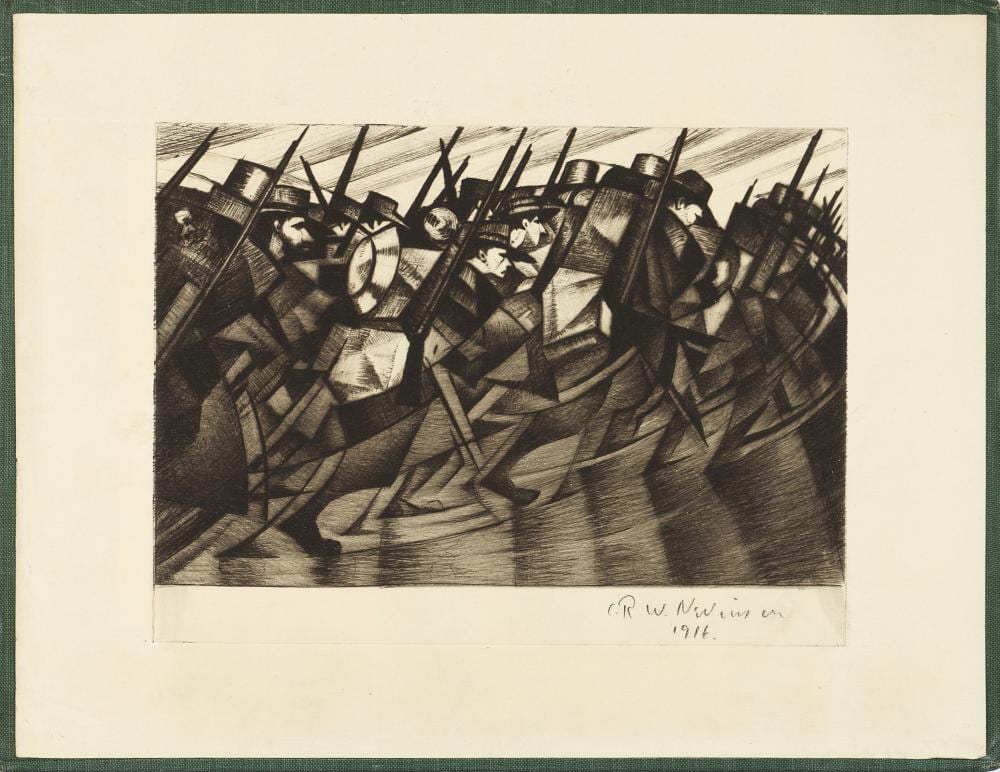
CHRISTOPHER RICHARD WYNNE NEVINSON (BRITISH 1889-1946) RETURNING TO THE TRENCHES Drypoint, 1916, a good impression with rich burr and tone, on laid paper with watermark partly visible (possibly F.J. Head & Co.), signed and dated in pencil lower right, from the edition of 75, with full margins, in good condition, loose in the original copy of the book Modern War Paintings (1917), the etching contained in a side sleeve inside the back cover. This copy numbered 63 out of an edition of seventy-five copies of the book that includes the etching with a colour frontispiece with captioned tissue guard Column on the March, twenty-four monochrome plates. Original green cloth-backed boards, the titles are printed in black to paper spine and front cover labels, some lower pages are untrimmed. Measurements: 15 x 20cm; 6 x 8in (plate); 22 x 28cm; 8 1/2 x 11in (sheet); unframed Unable to enlist in the British army for health reasons, Nevinson volunteered to serve in autumn 1914 with a Red Cross ambulance unit serving northern France and Belgium. The experience left a damaging impression upon him. The suffering and dehumanisation of soldiers which he encountered is powerfully expressed in the present work. Here the mass of marching troops, which the Futurists celebrated as glorifying the means of liberating the world from the moribund past, were for Nevinson a damning indictment of the real human cost of conflict. It was this viciousness that ultimately engendered his break with Futurism in 1919. Nevinson incorporates the technical properties of the medium to remarkable effect. The sharp, incised lines express a mechnical violence and vigour. The larger, swooshing elements of the lower half of the composition blend the soldiers’ legs in to a turbulent sea, driven onwards by some inexorable force; mechanised war’s total eradication of autonomy and humanity. Powerfully however he retains the last vestiges of individuality through the profiles of the figures’ faces, briefly, as they pass through the central passage of the work, and then once more into the anonymous mass.