Lot description
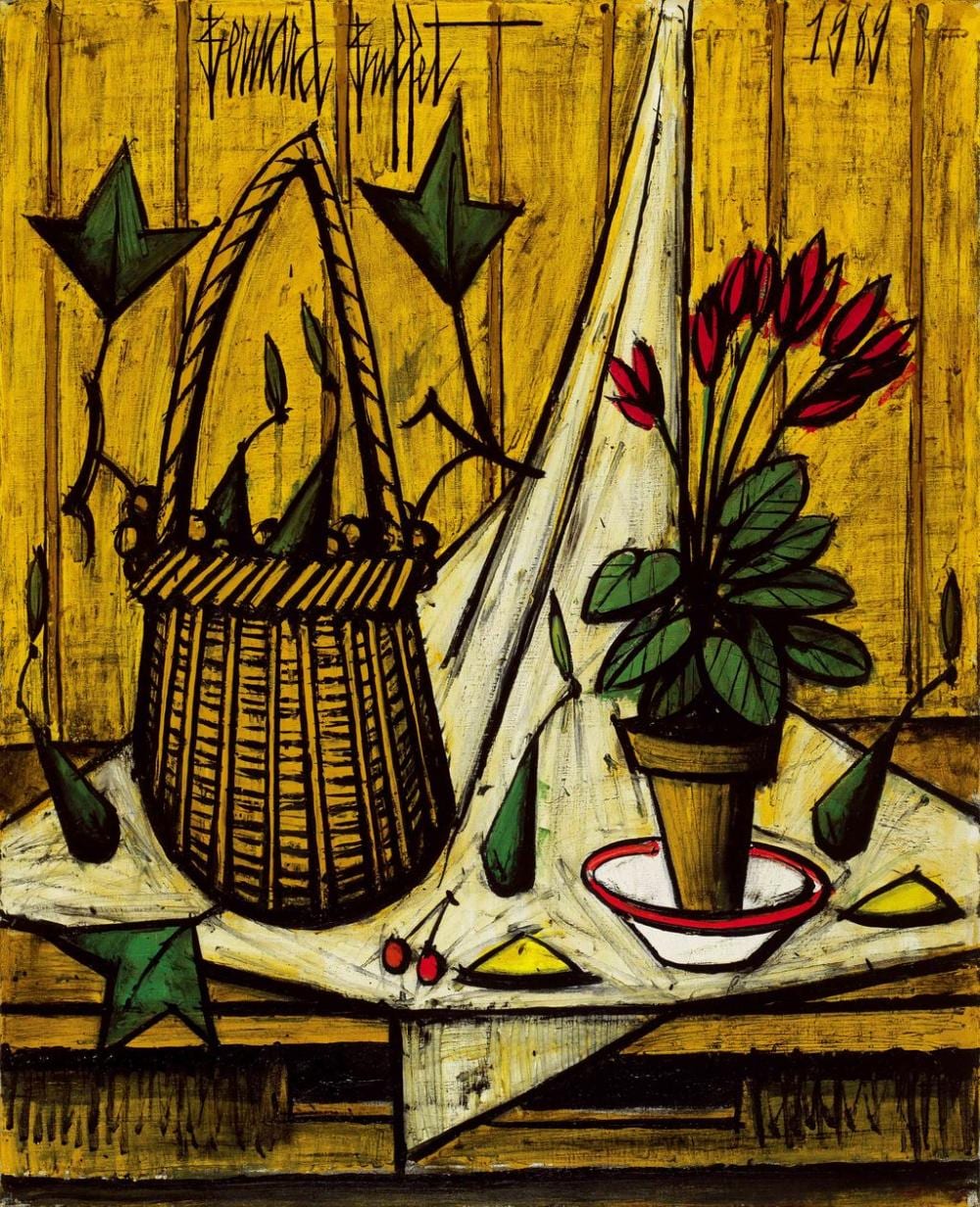
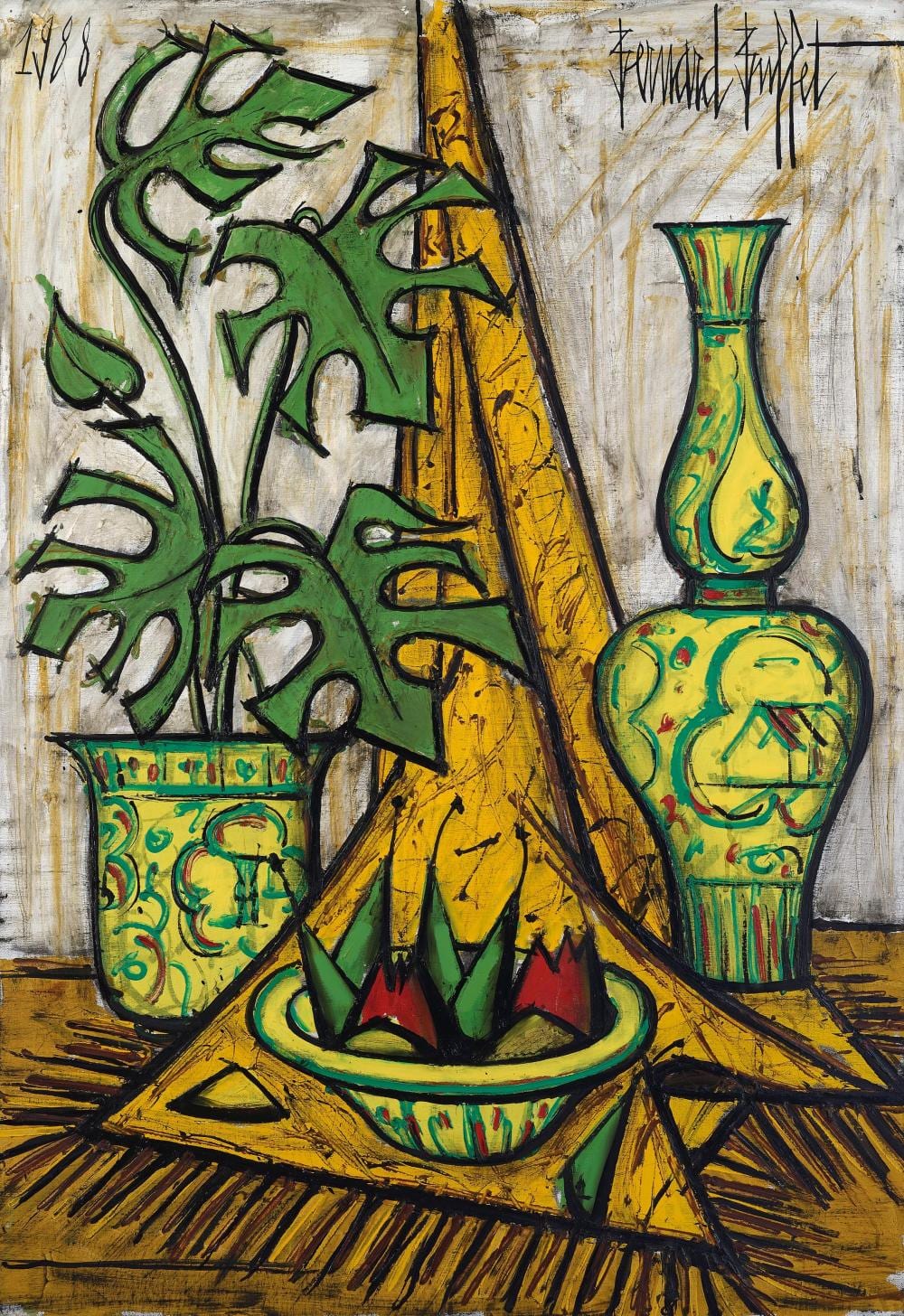
蔓綠絨靜物 Nature morte au philodendron 簽名右上:Bernard Buffet 年代左上:1988 題名畫框:Nature morte au philodendron Signed upper right Bernard Buffet and dated upper left 1988 Titled on the strecher Nature morte au philodendron 賞析: 貝爾納.畢費1928年7月10日出生在巴黎第17區。畢費10歲開始學畫, 14歲在浮日廣場的夜校班遇到繪畫上的啟蒙導師:達伯夫耶先生(Mr. Darbefeuille)。15歲年進入巴黎國立高等美術學院鄂簡.納伯恩(Eugène Narbonne)工作室見習,在美院學習時,畢費已經被公認非常具有才華。在 1947年,19歲的他舉辦了人生第一次個展,迴響熱烈,展品全數售出。同年在 巴黎的秋季沙龍上,作品《生病的男人》(L'Homme accoudé)引來評論家讚 譽。雷蒙.科尼亞(Raymond Cogniat)代表法國政府買下作品 《公雞》(Le Coq mort)。1948年,年僅20歲即事業有成的畢費,遇見足以改變他一生的天 才少年皮耶.貝傑(Pierre Bergé;亦是後來伊夫.聖羅蘭Yves Saint Laurent 一輩子的事業伴侶和愛人)。在其幫助下畢費於30歲前即登上了事業的巔峰, 期間畫出了他的著名代表作《戰爭的恐怖:槍手》(Horreur de la guerre: Les fusillés),1954成為當時以具象為繪畫為主,法國表現主義畫派的代表人物, 戰後對抗抽象繪畫的的青年才俊。 畢費儘管本性靦腆,在藝術面前是一個不會妥協讓步的人。但其一生卻不乏跌宕起伏且很早便聲名鵲起。在 那個時代,巴黎仍是風起雲湧的藝術之都,年僅20歲(1948年)即加入了反抽象藝術團體,畢費結識了莫 里斯.布瓦泰爾(Maurice Boitel)和路易.維耶爾莫(Louis Vuillermoz)二人後來均成為巴黎畫派「青年 繪畫」的發起者。在當時的巴黎繪畫領域更是百花齊放,氣勢蓬勃。各大畫廊中,畢卡索(Pablo Picasso) 和馬諦斯(Henri Matisse)等名家之作與「新巴黎畫派」或「青年繪畫」等新興流派同台亮相,關於寫實主 義、具象和抽象風格的討論熱火朝天。而貝爾納.畢費則被視為該畫派最富盛名的代表人物之一,終其一生 都堅持「新寫實主義」(Neo-Realist style)的繪畫創作。他選擇用具象的黑色線條和戲劇性的畫面去描寫 一個「寫實主義者」內心的痛苦。獨樹一幟的風格,隨著年歲的增長,他筆下的線條愈發消瘦鋒利,創作出 一系列前所未見的造型和題材。 作為在亞洲享有極高知名度的法國藝術家,畢費的作品同樣有濃厚的東方情懷。畢費素以身邊所見所聞為 題,早期作品以描繪周遭借喻所思所感,以表現性的風格,透過不同的人物肖像、動物、靜物和城市風景繪 畫,寄託感懷,如一方煙缸、一盞檯燈、昆蟲標本等靜物素材。而「瓶花」又為畢費靜物作品中常見的創作 主題,隨著歲月不斷改變,物換星移間生活的物件出現的次數或有增減。花,藝術家一生最愛之一,貫穿了 各個時期的筆觸,見證了藝術家從經典手法到另一個對繪畫的新體驗與感悟。那一期間作品中多為方桌一 隅,玻璃瓶內的花朵,在藝術家帶有具象和表現手法,傳達植物生生不息的生命力。強韌有力的筆觸,襯托 耀眼鮮明的色彩,畫面流露著當時瀰漫於歐洲社會的沉鬱氣氛。剛毅線條為畫面添加侵略感,然有時亦壓抑 霸氣而顯得內斂。 作品《蔓綠絨靜物》屬於畢費靜物系列中特別帶有濃濃東方符號的作品,藝術家以粗獷有力的黑色線條勾勒 透明玻璃花瓶,而較為柔和的黑線條勾勒東方的瓷器。三件瓷器均衡擺放在畫面的左右和中間,果盤中翠 青的梨子在一抹杏黃綢緞下映襯得出色,兩者搭配鮮明,色彩一致且互相呼應。線條利落地描繪出水果的姿 態,果盤兩側是來自日本伊萬里燒的瓷器。畢費以比較細膩的黑線條,描繪日本葫蘆形花瓶輪廓,又以明黃 為底配以赭石、湖藍、綠松色,在邊處抹上幾道複合著黑線勾勒出絢爛而繁複的東方樣式。與葫蘆瓶相對稱 的龜背竹,碩大向上伸展的枝葉輪廓,葉子和葉柄彷彿要衝破界限的限制,渾身散發著一股讓人不可小覷的 氣燄。新穎的構圖將觀者的視覺焦點由畫中央牽引至後方的景緻,畫面的平衡感得到延展,熾熱的力量彷彿 要從重心處擴散至四面八方。而個性十足的簽名與書寫年代方式,無疑是畢費特有的標籤,不是隱身於畫面 的一隅,而是主體一旁作為畫面平衡構圖的要角。 畢費一生致力於繪畫創作,時間長達50餘年,其中主題則以馬戲團小丑、鬥牛士、肖像、風景、花卉、靜 物為多。從1940年代崛起於藝壇之後,1950年代,畢費專注繪畫,畫面多以憂鬱寡歡的肖像來表達法國人 在戰後的不安心境。到了1960年代,畢費筆下的人與物在尖銳粗曠的線條下更顯高亢激昂。此件《蔓綠絨 靜物》作品是晚期畢費瓶花靜物系列中,東方色彩最為濃重的一幅,過往的作品中花瓶多呈歐式細長的倒三 角狀,本件作品尤為突出了東方伊萬里燒瓷器的華貴,紋飾複雜用筆頗為細膩,可見藝術家對東方文化的熱 忱。與此同時遠在東方的日本藏家對畢費的鍾情是自1970年代開始。究其原因除了藝術不分國界此主因,畢 費以物喻情的藝術本質更是暗合東方人內斂含蓄的修身性格,其筆下尖銳簡練的線條和獨特的空間處理,與 日本傳統版畫有著某種異曲同工之妙。 1963年,日本銀行家岡野喜一郎(1917-1995)在東京一場畢費個展上對其作品一見鍾情,1973年這位收 藏家在跨越半個地球在日本靜岡縣三島的駿河町成立了世界第一座貝爾納.畢費美術館(Musée Bernard Buffet)長期展示上千張畢費的作品。畢費在寫實主義上的堅持其實更像是一種具有洞鑒式的勇氣與睿智, 同樣欣賞畢費才華的還有與之相識友誼共五十載的傳奇人物畫商莫里斯.賈尼耶(Maurice Garnier),自 1970年代後期之後的三十年間,不遺餘力繼續將畢費的影響力推動到法國海外,並促成多個重要美術館展 覽,例如蘇黎世希丹文中心(Seedamm Cultural Center, Zurich, 1983)、東京小田急美術館(The Odakyu Museum, Tokyo, 1987)、莫斯科普希金美術館(Pouchkine Museum, Moscow, 1991)、高雄市立美術館 (1996)等。 Catalogue Note: Bernard Buffet was born on July 10, 1928 in the 17th arrondissement of Paris. Buffet started learning to paint when he was 10 years old. He met his first art mentor, Mr. Darbefeuille, at a night school in the Place des Vosges when he was 14. At the age of 15, Buffet entered the École Nationale Supérieure des Beaux-Arts (French National School of Fine Arts) and interned at Eugène Narbonne’s studio. Buffet’s talent was already beginning to be recognized during the internship. At age 19 in 1947, Buffet held his first solo exhibition, where all of his works were instantly sold. At the Autumn Salon during the same year, Buffet’s work titled L’Homme Accoudé received many positive reviews from critics. Raymond Cogniat also bought Le Coq Mort for the French government. Buffet had a successful career at the mere age of 20. In 1948, he met the boy genius, Pierre Bergé, who would change his whole life. (Pierre Bergé later became Yves Saint Laurent’s lifelong business partner and lover.) With Bergé’s support, Buffet reached the peak of his career before turning 30. During this course of eight years, Buffet created the famous and iconic Horreur de la guerre: Les fusillés. In 1954, he became a representative figure in French Expressionism that took figurative painting as the predominant style; he was a young “expressionist” artist who resisted abstract paintings after the war. Despite having a shy personality, Buffet is the type of person who never compromises in front of art. However, he experienced many ups and downs throughout his life as he became famous at such a young age. Paris was still the vigorous capital of art at that time, and the 20-year old Buffet joined the Anti-Abstract Art Group in 1948. Buffet met Maurice Boitel and Louis Vuillermoz, both of whom later initiated La Jeune Peinture (“Young Picture”) of the School of Paris. Back then, the world of painting was blooming and prospering in Paris. Masterpieces by Pablo Picasso and Henri Matisse were showcased at major galleries alongside emerging art genres such as the “New School of Paris” and “Young Picture.” There were heated discussions about realism as well as figurative and abstract styles. Buffet was recognized as one of the most famous representative figures of this genre of painting as he persisted in applying the “Neorealism” to his paintings throughout his life. He chose to use figurative black lines and dramatic scenes to demonstrate a “realist’s” internal pain. As Buffet grew older, the unique lines he drew also became thinner and sharper as he created a series of unprecedented looks and themes. As a widely renowned French artist in Asia, Buffet’s work also contain a strong blend of Eastern sentiment. Buffet often used objects in his surroundings as themes. His early works expressed his thoughts and feelings by depicting the people, things, or objects around him. Buffet painted different character portraits, animals, still life, and urban landscapes in an expressive style. He deposited his feelings in visible objects; some examples of the common objects in his still life paintings include an ashtray, a lamp, as well as insect specimens. Vase de Fleurs contains the most common creative theme among Buffet’s still life paintings. The frequency of these daily objects’ appearance in Buffet’s paintings changed over time. Flowers are one of the artist’s lifetime favorites—the strokes of painting through different periods of time demonstrate the artist’s growth from painting in classic styles to developing new experiences and feelings. During that period of time, most of Buffet’s work featured the corner of a table. The artist applied figurative, expressionist techniques in painting flower petals inside a glass bottle with the plant’s strong vitality. Buffet combined steady, powerful pen strokes with vivid, vibrant colors to express the depressed atmosphere in Europe at that time. The steady lines added an invasive feeling to the image, yet this sense of aggressiveness was somehow mitigated by repression. The painting Nature Morte au Philodendron is one of a few in Buffet’s still life series to contain more obvious symbols from the East. As opposed to the artist’s usual way of outlining clear glass vases by bold black lines, more gentle black lines were used to outline the Eastern porcelain ware in this painting. The three pieces of porcelain ware are positioned on the left, right, and center of the image. The green pears in the fruit tray look outstanding near a piece of apricot yellow satin. The vivid contrast between these two colors reflect complexity and consistency. The lines neatly outline the fruits, and the fruit tray was accompanied by porcelain ware from Imari, Japan. Buffet used finer black lines to outline a Japanese gourd-shaped vase, and filled in the space on the sides by drawing brilliant, complex eastern patterns with ocher, lake blue, and turquoise lines on the bright yellow background in addition to the black outlines. In symmetry to the gourdshaped vase, the Swiss cheese plant has large leaves that stretch upward with leaves and petioles breaking through boundary limitation in a powerful expression. The novel composition guides viewers’ visual focus from the center of the painting to its rear view, which not only balances the image but also spreads a passionate energy through it. Finally, the personalized signature with date is undoubtedly Buffet’s trademark—instead of hiding in one corner, the signature is included in the main body to balance image composition. Buffet dedicated his whole life to painting for as long as over 50 years. His themes primarily included circus clowns, bullfighters, portraits, landscapes, flowers, and still life. After Buffet rose to popularity in the art industry during the 1940s, he focused on painting in the 1950s when he mostly produced depressing portraits to express the French people’s restless mind after the war. During the 1960s, the characters and objects in Buffet’s paintings appeared even more complicated in sharp and bold lines. This painting Nature Morte au Philodendron is the most oriental one in Buffet’s Vase de Fleurs still life series created later on in his career. Most of the vases in Buffet’s previous works displayed an European style, narrow inverted triangle shape. In this piece of work, the elegance of Eastern porcelain ware from Imari is emphasized through delicate, complex patterns and pen strokes as a demonstration of the artist’s passion about Eastern culture. Meanwhile, Japanese collectors in the East also fell in love with Buffet’s works since the 1970s. Other than the reason that art is without borders, Buffet’s metaphoric artistic nature is also favored by the implicit culture in the Eastern world. Perhaps Buffet’s sharp, simple lines and unique spatial arrangement shared some kinds of similarities with Japanese traditional prints. At one of Buffet’s solo exhibition in Tokyo in 1963, the Japanese banker Kiichiro Okano (1917-1995) fell in love with Buffet’s work at first sight. Half a world away, this collector established the world’s first Bernard Buffet Museum (Musée Bernard Buffet) in Suruga-machi in Mishima Shizuoka, Japan in 1973. The museum displays over a thousand pieces of Buffet’s paintings for an extended period of time. Buffet’s persistence in Realism was based on straightforward courage and wisdom. Buffet’s talent was recognized by the legendary gallerist Maurice Garnier, who was also Buffet’s friend for over 50 years. Since the late 1970s, Maurice Garnier had worked to promote Buffet’s influences outside France during the thirty years that followed. He also facilitated several important art museum exhibitions at places such as the Seedamm Cultural Center, Zurich in 1983, the Odakyu Museum, Tokyo in 1987, Moscow’s Pouchkine Museum in 1991, and the Kaohsiung Museum of Fine Arts in 1996.